Stanza · Audio guide
Fort St. Angelo Audio Guide
A place to remember. A story to take with you.
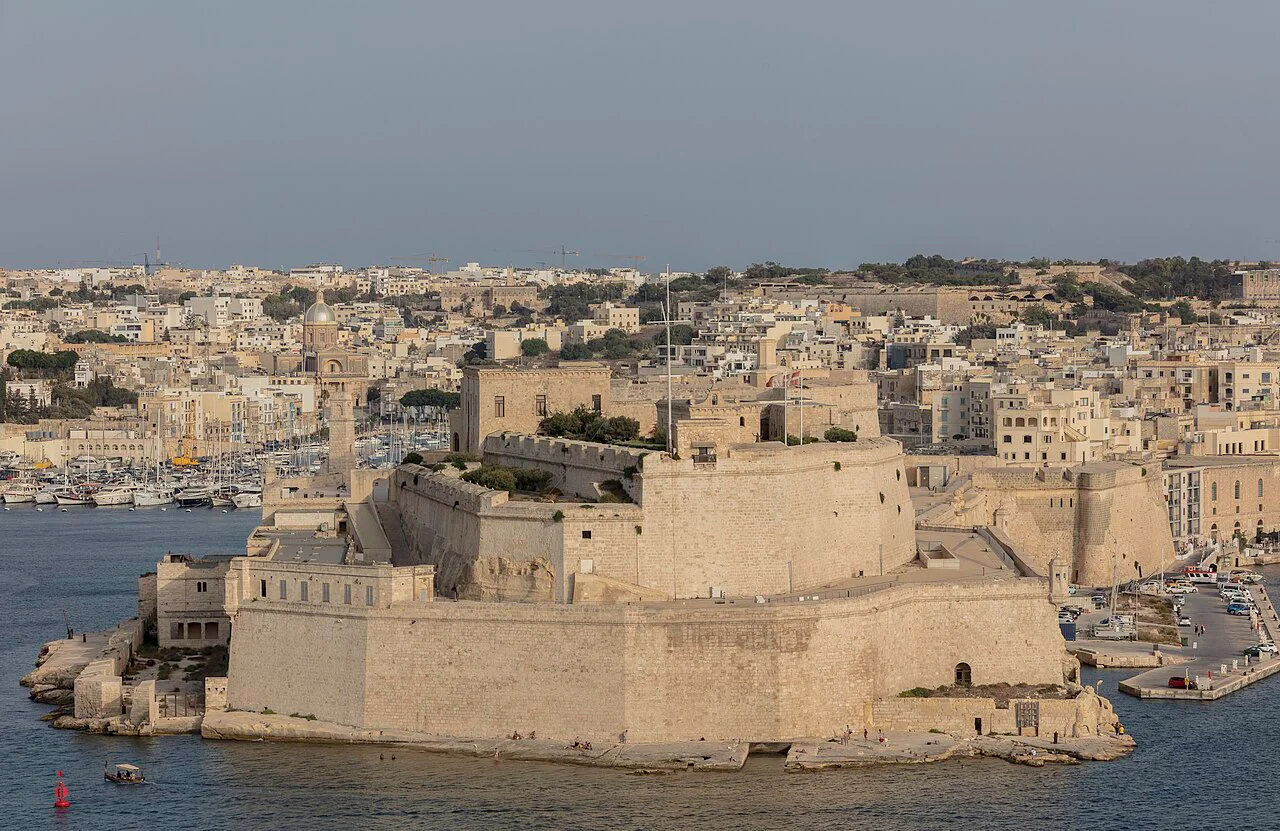
Fort St. Angelo is a bastioned fort located at the centre of the Grand Harbour in Birgu, Malta. It served as the headquarters for the Order of Saint John during the Great Siege of Malta in 1565.
Download Stanza, then search for “Fort St. Angelo”.
About the tour
One guide. Your kind of visit.
Fort St. Angelo is a bastioned fort located at the centre of the Grand Harbour in Birgu, Malta. It served as the headquarters for the Order of Saint John during the Great Siege of Malta in 1565.
Ready when you are.
- 01Get the free Stanza app.
iOS & Android
- 02Find your guide.
“Fort St. Angelo”
- 03Download before you go.
Works offline
Audio guide / 13 narrated stops
Inside the guide
Get to know a few of the stories before you go. Open a stop to read more.
01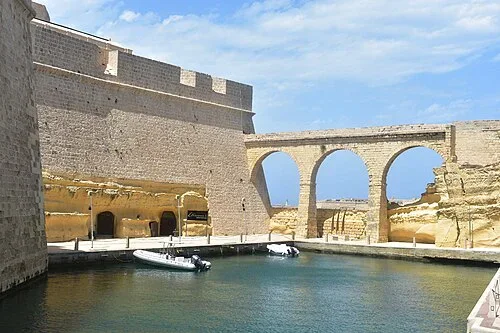 Main Gateway & Sea-Filled Moat
Approach Along the Ditch
Welcome to Fort St Angelo, the limestone stronghold at the tip of Birgu, in the middle of Malta's Grand Harbour. The fort covers about thirteen thousand square metres of rock at the water's edge. People have been fortifying this spot for some eight centuries. The way in crosses the ditch that separates the fort from the town, the old boundary line of the fortress. The story here runs in layers. First came a medieval castle, the Castle by the Sea. Then the Knights of St John rebuilt it into a gunpowder fortress. It commanded the defence of Malta during the Great Siege of 1565. Later it served as a naval base, and after a restoration finished in 2015 it opened to visitors. This tour follows that spine, from the outer gate to the highest ramparts.
Shoka at English Wikipedia · CC BY-SA 3.0
02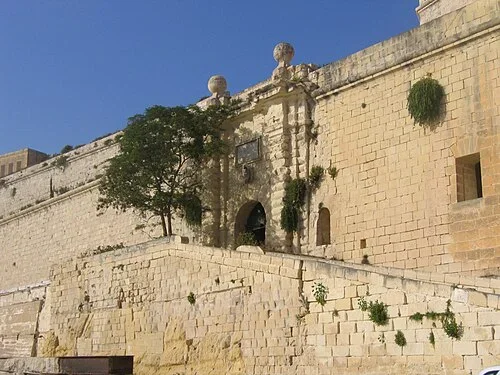 Main Gateway & Sea-Filled Moat
The Main Gate
The deep ditch around the fort was cut by the Knights of St John themselves. When the Order landed in Malta in 1530 and chose Birgu as its base, workers cut through the rock to turn the old castle into an island fortress of its own. Water fills that ditch today, so the approach runs over a bridge and through this gate. Above the arch sits a carved coat of arms. It belongs to Carlos de Grunenbergh, the engineer whose rebuilding in the 1690s gave the fort the shape it keeps today. His sea batteries, further along, carry the rest of that story.
Shoka at English Wikipedia · CC BY-SA 3.0
03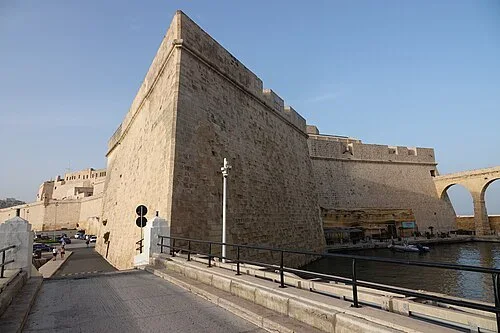 D'Homedes Bastion & Landfront Ramparts
D'Homedes Bastion
The great angled mass of stone facing the approach is the D'Homedes Bastion, built by 1536 under Grand Master Juan de Homedes. The Knights' arrival had triggered a complete rethink, because gunpowder had changed warfare and a medieval castle could not stand against it. So the old walls gained bulk and angle, stone shaped to catch and deflect cannon shot. Behind the bastion rose a second work, a tall cavalier designed by Antonio Ferramolino and built between 1542 and 1547. Its roof carried eight gun embrasures, with magazines and a beacon on top. Later the bastion itself was converted into a gunpowder magazine. Part of it was destroyed by bombing in the Second World War, and the repairs went on into the 1990s.
Listen in the appPhoto: Nenea hartia · CC BY-SA 4.0
04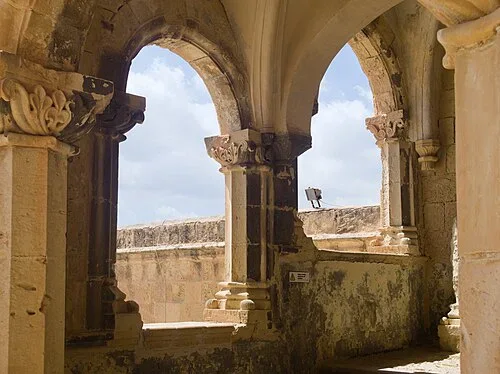 Castral Enclosure & Medieval Origins
Castrum Maris: The Castle by the Sea
Long before the Knights, this was the Castrum Maris, the Castle by the Sea. Documents first name it in the 1240s, when Paulinus of Malta held the island. Masonry traced among the newer works may reach back further still, perhaps to the twelfth century. Emperors and kings appointed their own castellans here to hold the crown's interests, a practice Emperor Frederick the Second began in 1220. The carved Gothic arches here are the noble castle's surviving face, built for lords rather than for cannon. One small trace turned up during modern renovations, a medieval window found walled shut. It had been blocked soon after the Knights arrived, sealed away as the fortress grew around it.
Listen in the appPhoto: Man77 · CC BY-SA 4.0
05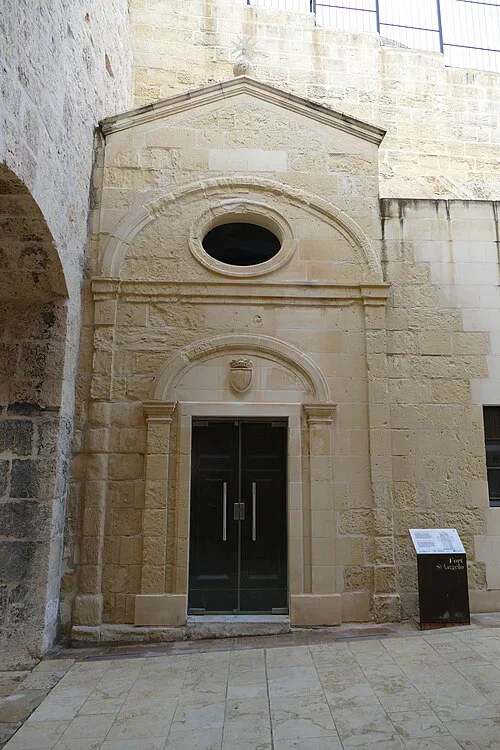 Castral Enclosure & Medieval Origins
The Castellan's Castle
An inventory of weapons and supplies survives from 1274. It lists a garrison of about a hundred and fifty men, then serving the short-lived Angevin rule. The same records show two chapels already inside the walls, and both of those chapels still stand in the fort today. Life here was that of a working household and garrison post. Under the later Aragonese crown, families like the de Nava held the post of castellan, safeguarding the king's interests. Their power had a hard edge. It stopped at the ditch, and beyond that line the castellan had no jurisdiction at all.
Listen in the appPhoto: Kritzolina · CC BY-SA 4.0
06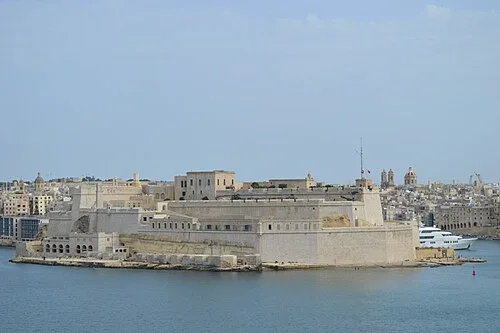 Grunenbergh's Tiered Sea Batteries
Seen from the water, the fort shows its final shape. In the 1690s Carlos de Grunenbergh rebuilt St Angelo into the form it keeps today, paying for the four sea batteries himself. His design added four gun batteries stepping down the seaward face, all aimed at the entrance of the Grand Harbour. By the time the French arrived in 1798 the fortress mounted some eighty guns, and forty-eight of them were trained on the harbour mouth. The French then used the fort as the headquarters of their army during the short occupation.
Listen in the appPhoto: Continentaleurope · CC BY-SA 4.0
07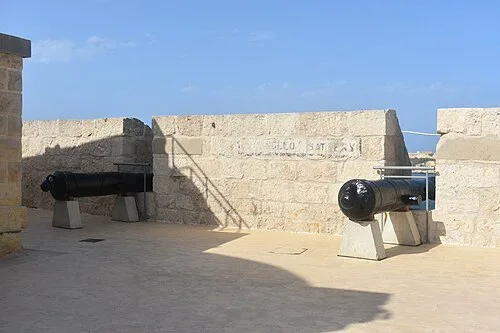 Grunenbergh's Tiered Sea Batteries
A Battery Under Three Flags
These guns stand on a platform that has served under three flags. Of the four sea batteries, the British heavily altered three, while the fourth keeps most of its original features. In the 1860s one battery was rebuilt to house heavy nine-inch guns. The Navy took the fort over at the start of the twentieth century and commissioned it like a ship, a stone frigate afloat on stone. It was first named HMS Egmont, and renamed HMS St Angelo in 1933. In the Second World War the garrison mounted Bofors anti-aircraft guns, manned first by the Royal Marines and later by the Royal Malta Artillery. The fort took sixty-nine direct hits during the war years, and was restored afterwards. When the Navy left Malta in 1979, the fort passed to the Maltese government.
Listen in the appPhoto: Continentaleurope · CC BY-SA 4.0
08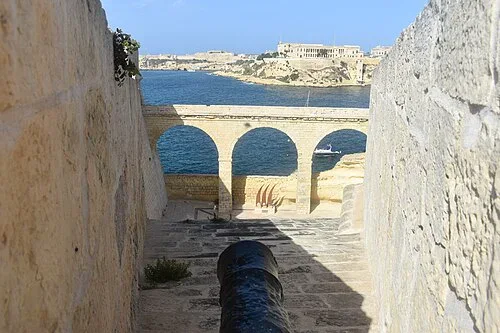 De Guiral Waterline Battery & Great Siege Command
De Guiral Waterline Battery and the Senglea Repulse
Down at the waterline sits a small battery named for Chevalier Francesco de Guiral, who commanded here during the Great Siege. On 15 July 1565 the Ottomans launched a massed assault across the water against Senglea, packed into troop boats. The guns of this battery fired at point-blank range across the creek, destroying the boats as they came and breaking the attack. Height mattered less here than closeness, because a gun at sea level could strike a hull directly where higher batteries fired over the target. The low embrasures and the flat stretch of water show how short that range was.
Listen in the appPhoto: Continentaleurope · CC BY-SA 4.0
09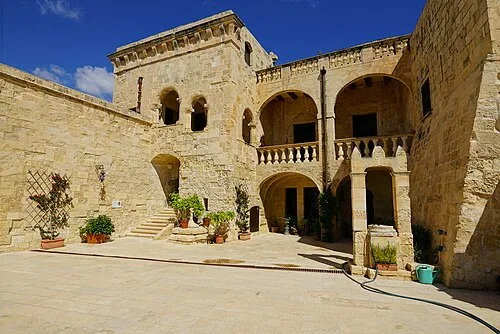 Upper Fort & Grand Master's Enclave
The Grand Master's Enclave
When the Order of St John arrived in 1530, they found the old castle partly abandoned and in ruins. They restored it and made it their seat, refurbishing the Castellan's House as the residence of the Grand Master himself. This courtyard, with its loggia and arches, belonged to that magisterial residence. More than four centuries later, the story came full circle. On 5 December 1998 Malta signed a treaty granting the upper part of the fort, including this house and the Chapel of St Anne, back to the Sovereign Military Order. The grant runs for ninety-nine years with limited extraterritoriality, so the Order's flag flies here again beside the flag of Malta.
Listen in the appPhoto: Redeemer · CC BY-SA 4.0
10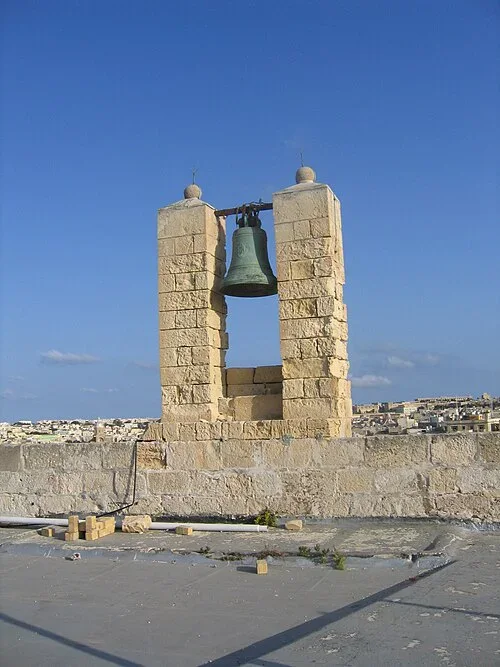 Upper Fort & Grand Master's Enclave
Headquarters of the Great Siege
From these high ramparts the whole harbour lies in one sweep, and in 1565 this height was the vantage of command. Fort St Angelo served as the headquarters of Grand Master Jean de Valette and the Order of St John throughout the Great Siege of Malta. The defence of the island and its harbours was directed from here, through the Ottoman assaults, and the fort itself never fell. No account pins down the exact room de Valette worked from. The command post was the fortress as a whole. A bell hangs between two stone pillars on the roof, high above the water where the siege was decided.
Listen in the appShoka at English Wikipedia · CC BY-SA 3.0
- 11
Chapel of St Anne
Two medieval chapels, two rededications, and a place of worship reaching back to antiquity.
- 12
The Egyptian Column and the Sanctuary of Astarte
An Egyptian granite column in the chapel, and the legend of a temple of Astarte on this rock.
- 13
The Harbour Panorama
Why Valletta rises across the water, and what this fort has meant to every power in the harbour.
Fort St. Angelo
Frequently asked questions
How much does the guide cost?
Free app download. Listed guide price: $0.99. Guide price shown in the app. Audio guide only. Venue admission is separate.
Can I listen without internet?
Yes. Download the guide’s audio, images, and maps in the app before your visit. Your downloaded content is then available offline.
Can I listen in my language?
This audio guide is available in 15 languages, including English.
Do I need to follow a schedule?
No. This is a self-guided experience. Choose your stops, pause whenever you like, and return to a story at your own pace.
At your own pace
Explore Fort St. Angelo.
Download Stanza, then search for “Fort St. Angelo”.
Free app download · Guide price shown in the app
Keep exploring
Nearby audio guides
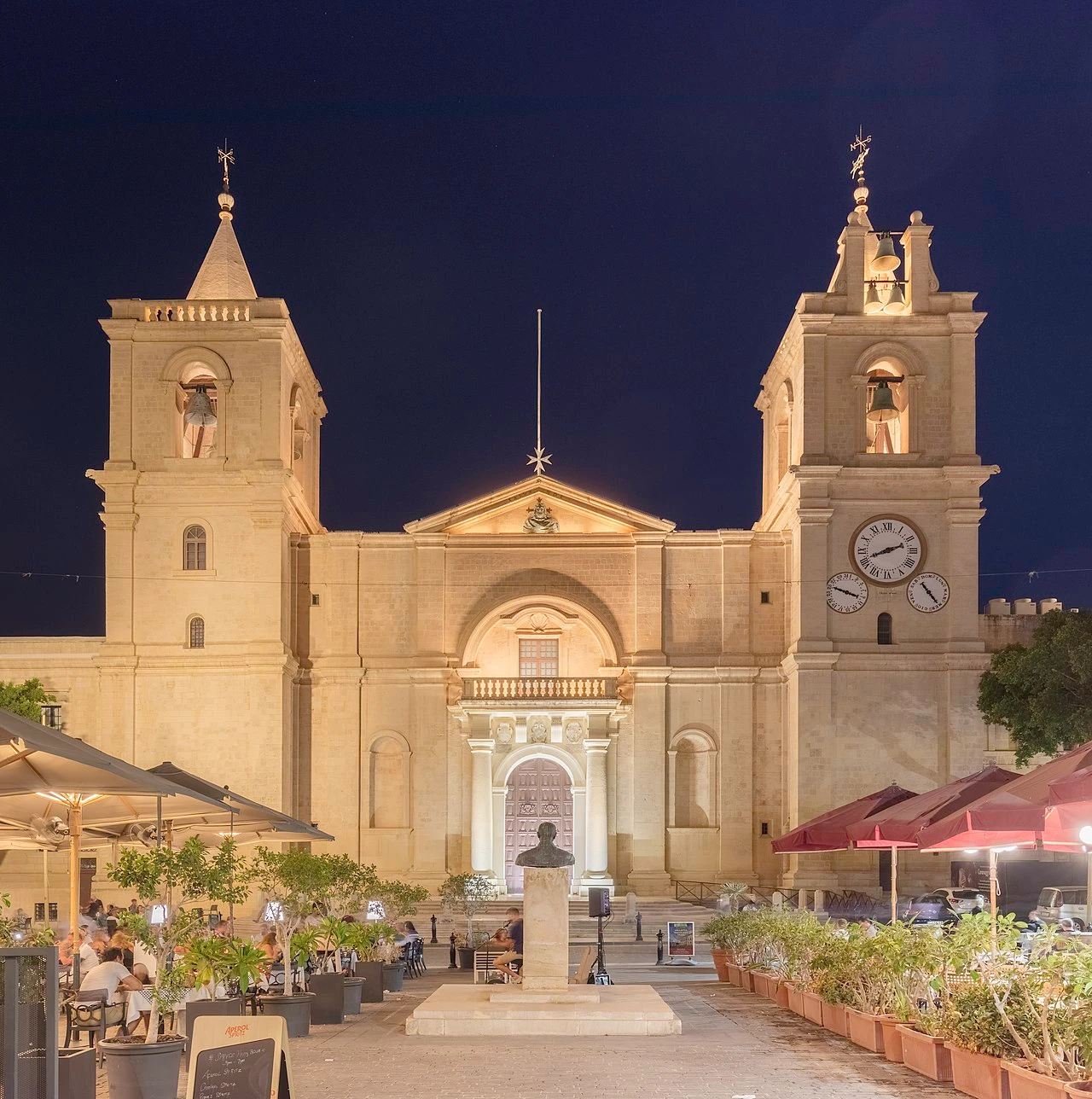
Valletta · 1 km
St. John's Co-Cathedral
Content & sources
Diego Delso · CC BY-SA 4.0
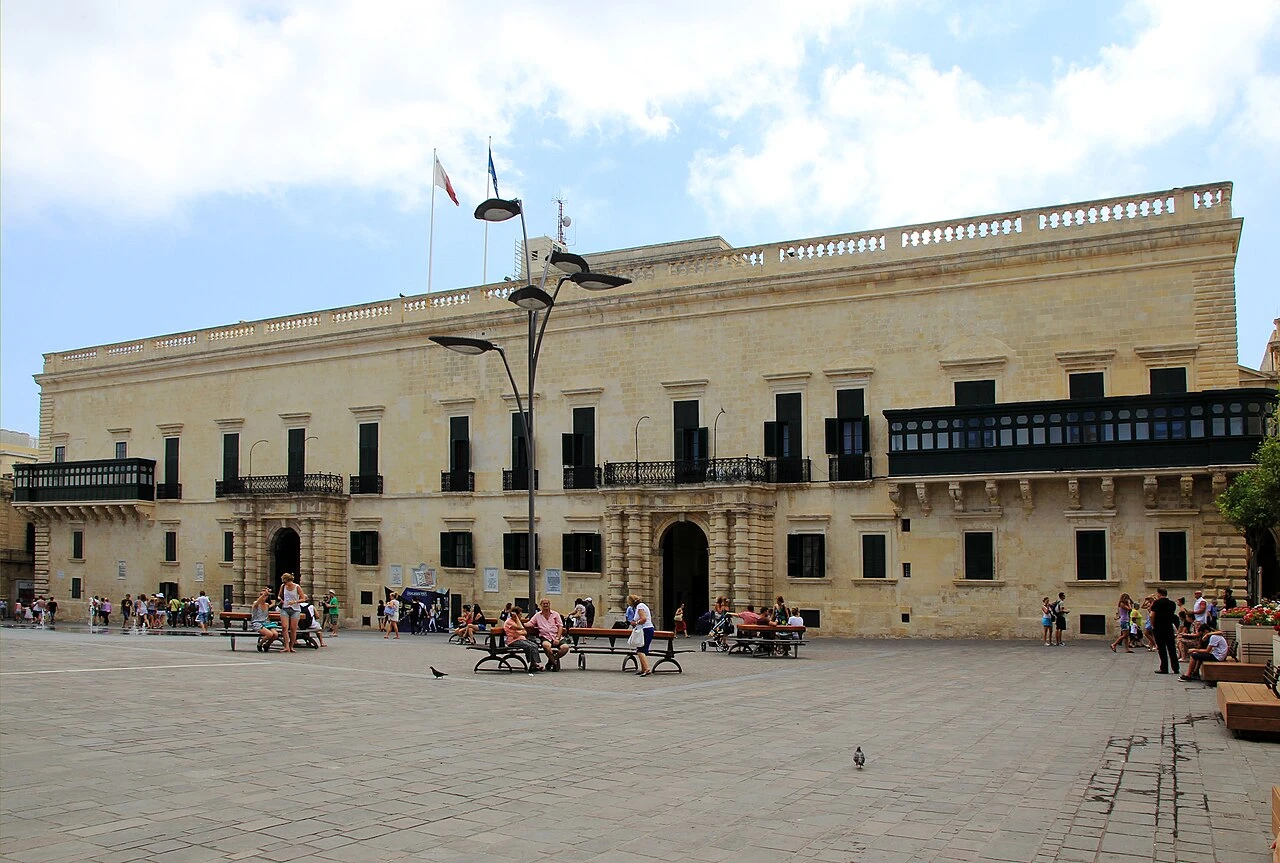
Valletta · 1 km
Grandmaster's Palace
Content & sources
Photo: Karelj · Public domain
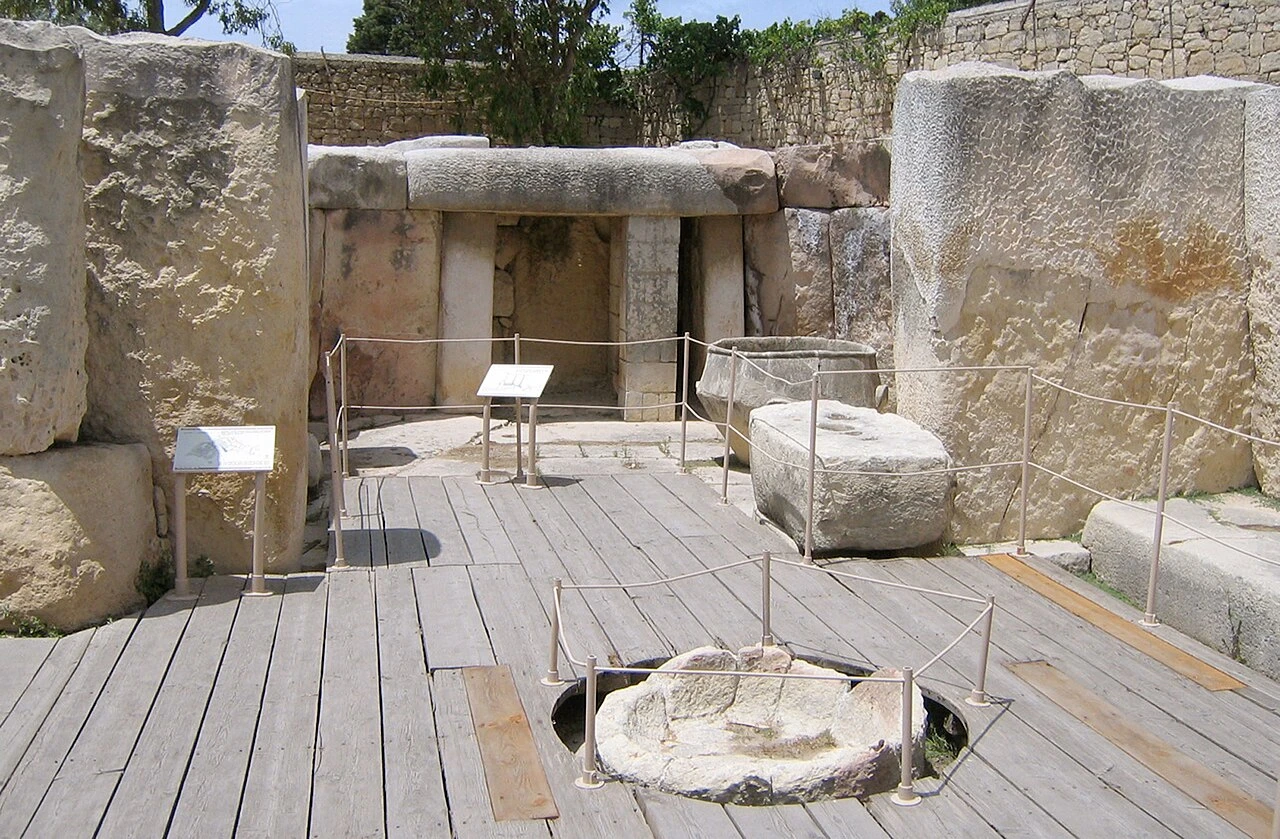
Tarxien · 3 km
Tarxien Temples
Content & sources
Joonas L. · CC BY 2.0
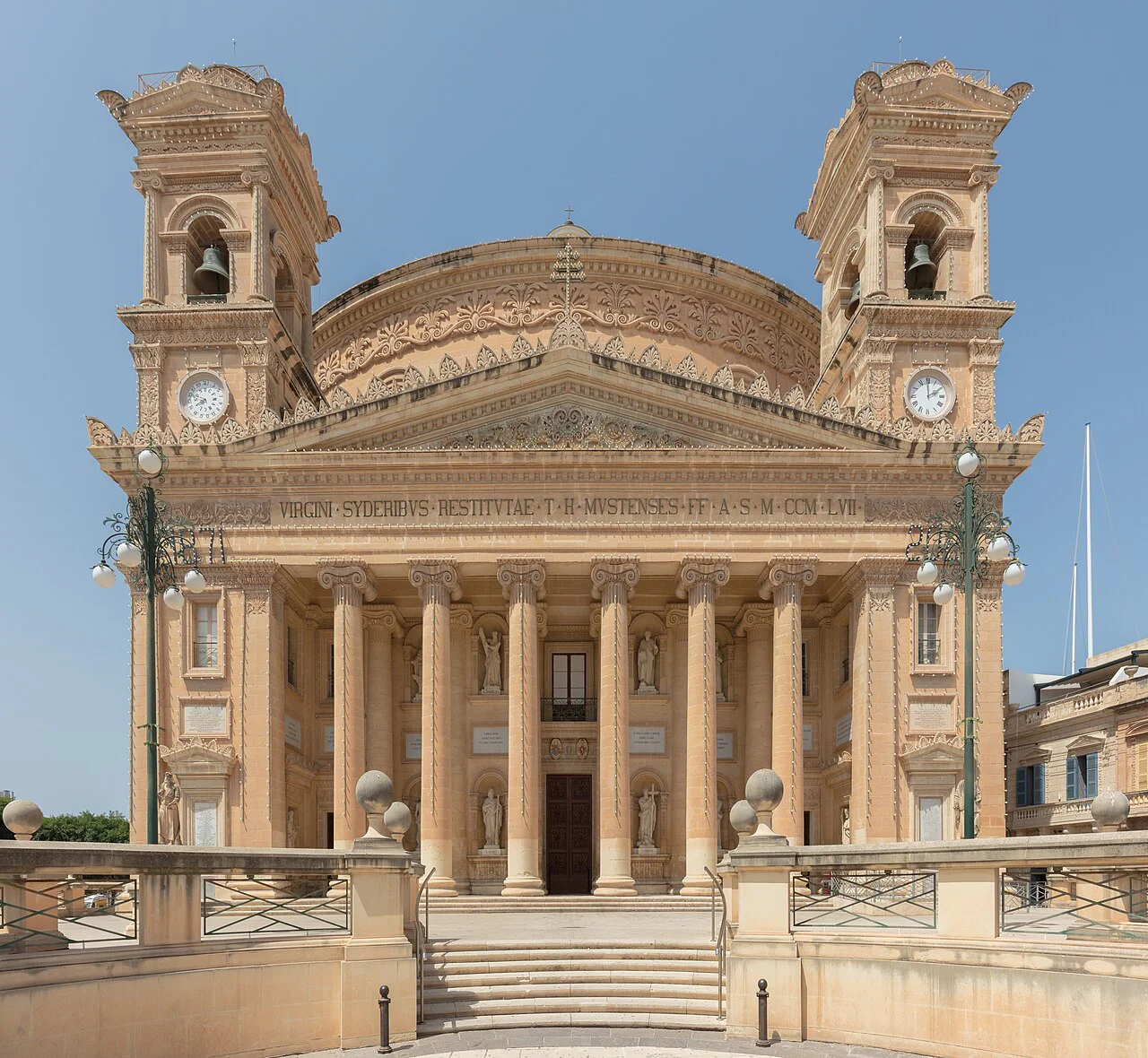
Mosta · 9 km
Rotunda of Mosta
Content & sources
Diego Delso · CC BY-SA 4.0