Stanza · Audio guide
Paquimé Audio Guide
A place to remember. A story to take with you.
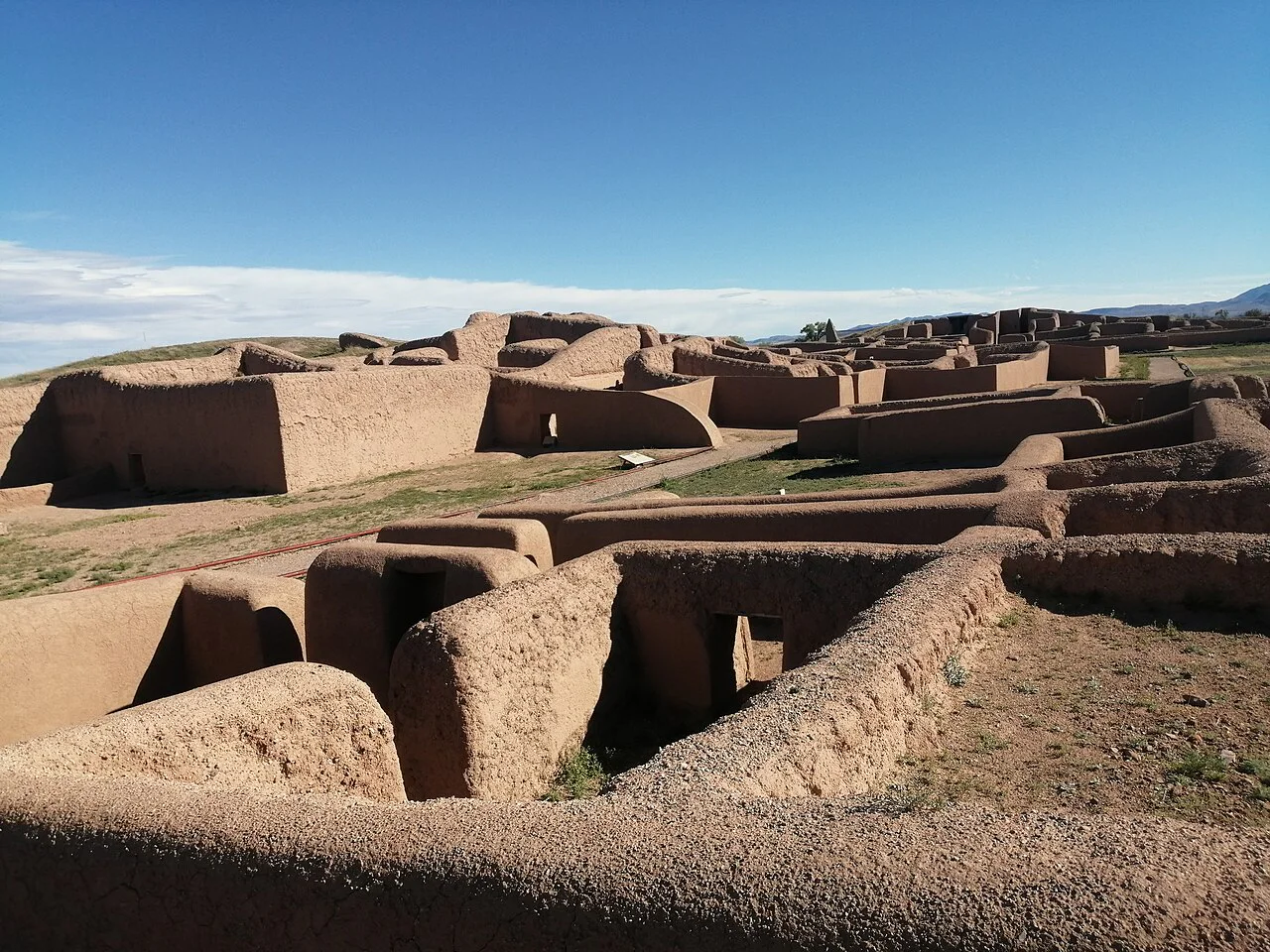
Casas Grandes is a prehistoric archaeological site located in the northern Mexican state of Chihuahua. The site was constructed by the Mogollon culture and is designated as a UNESCO World Heritage Site.
Download Stanza, then search for “Paquimé”.
About the tour
One guide. Your kind of visit.
Casas Grandes is a prehistoric archaeological site located in the northern Mexican state of Chihuahua. The site was constructed by the Mogollon culture and is designated as a UNESCO World Heritage Site.
Ready when you are.
- 01Get the free Stanza app.
iOS & Android
- 02Find your guide.
“Paquimé”
- 03Download before you go.
Works offline
Audio guide / 12 narrated stops
Inside the guide
Get to know a few of the stories before you go. Open a stop to read more.
01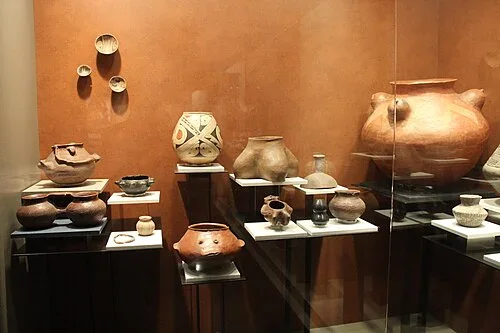 Museum of the Cultures of the North
Paquimé Pottery in the Museum of the Cultures of the North
Welcome to Paquimé, the great prehistoric city of the Chihuahuan desert. These vessels in the Museum of the Cultures of the North were made by the Mogollon people, who built and lived in the city whose ruins lie just outside. Paquimé grew into one of the largest and most complex settlements of northwestern Mexico, and in 1998 it was listed as a UNESCO World Heritage Site. The potters here were famous for their work. They gave their vessels white or reddish surfaces, then painted them with designs in blue, red, brown or black. Some bowls and jars were shaped as human figures, painted faces and bodies formed in clay. In its day, this pottery was sometimes considered finer than the contemporary pottery of the area. It travelled far. Traders carried it north into what is now New Mexico and Arizona, and south through northern Mexico. The pots in this case came out of the ruins nearby, and they open the story of a city that lived by making and moving things.
Gary Todd · CC0
02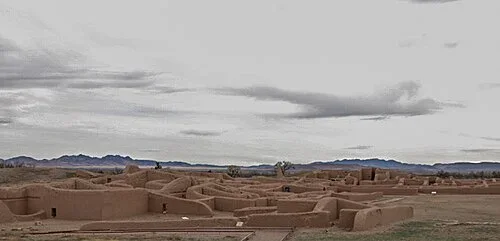 Main Entrance and interpretive Path
First View of the Great Houses
Francisco de Ibarra rode into this valley in 1565 and found a city of ruins. The Spanish called the place Casas Grandes, the great houses, because that is what rose out of the plain. Nobody was living in them. The nomads camped nearby, probably Suma or Jano, hunted and gathered for a living and told Ibarra they had not built the city. They spoke of its former inhabitants as people of another time. Ibarra had visited the region a few years earlier and described well-dressed farming towns with irrigation canals and food to spare. The ruins he found here were something older and stranger. Centuries later, the archaeologist Stephen Lekson noticed something about the map. Paquimé sits almost exactly on the same north-south line as Chaco Canyon and Aztec Ruins, far to the north in the United States, off by only a few kilometres. Chaco rose first, then Aztec, then Paquimé. Lekson proposed that their ruling elites shared a ceremonial connection, a chain of power handed down the line. That idea remains controversial, and it is not as widely accepted as often reported. Many archaeologists point instead to Paquimé's roots in the local Mogollon culture.
Photo: Monchislpz29 · CC BY-SA 4.0
03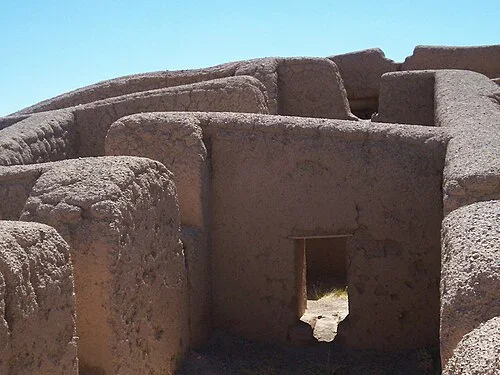 The Multi-Story Adobe Apartment Complexes
The T-Shaped Doorway
Every wall in this city is made of the same humble recipe. Mud and gravel were mixed, shaped into blocks and left to dry in the sun. The blocks run about fifty-six centimetres thick and roughly a metre long, and they were probably formed and dried right where they stand. The builders seem to have plastered the walls inside and out. Adobe like this needs constant care, but in a dry desert it can last for centuries. The doorway here is the city's signature shape. Its top curves down at the corners into a T, wide at the shoulders and narrow at the base. T-shaped doorways are a hallmark of Puebloan architecture far to the north, in the southwest of what is now the United States. Finding them at Paquimé is evidence of shared building knowledge between the two worlds. The same northern link shows up in another detail inside the houses, stone disks set at the base of ceiling-support columns. A desert city in Mexico, built the way the Pueblo people built.
Listen in the appDiSchamelrider (talk) (Uploads) · CC0
04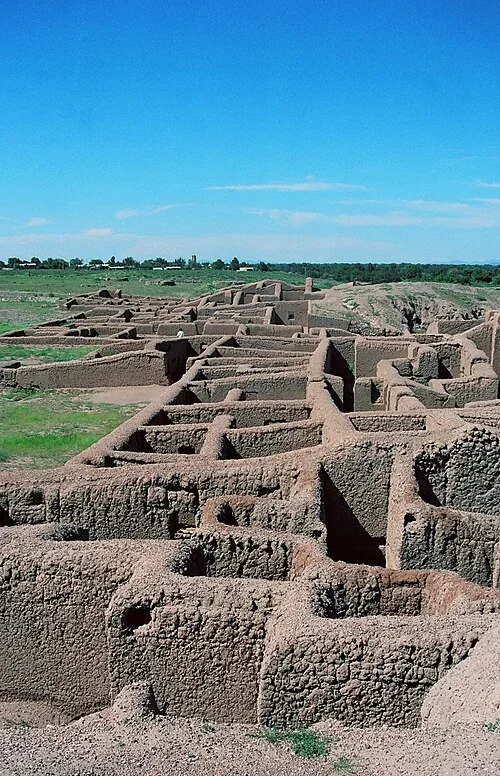 The Multi-Story Adobe Apartment Complexes
Apartment City: Six Stories of Adobe
Around the year 1340, Paquimé burned. What rose afterwards changed the scale of the city completely. The small buildings were replaced with multi-story apartment blocks, adjoining rooms stacked one level above another. At several corners the walls still stand twelve to fifteen metres high, and they point to original buildings of six or seven stories. The principal structure ran about 240 metres from north to south, and the city as a whole held roughly 2,000 adjoining rooms. It was generally rectangular, made of three separate units joined by galleries and lines of lower buildings. From this height the layout reads like a honeycomb, rooms and plazas repeating across the ruins. People lived here the way apartment dwellers do, in spaces that ranged from closet-sized rooms to open courtyards. A burned village became a vertical city of adobe.
Listen in the appPhoto: Cholugo666 · CC BY-SA 3.0
05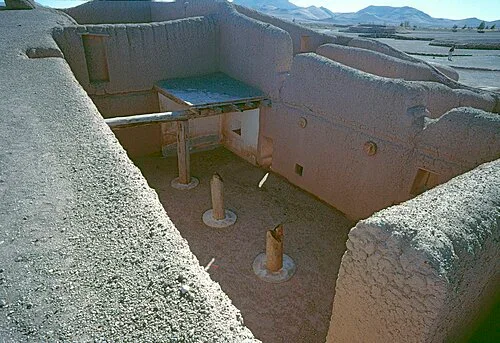 The Ceremonial Chambers and the Sacred Meteorite
The Room with the Meteorite
One find in these rooms came from the sky. Excavators discovered an iron meteorite in one of the rooms of the city. It weighs about 2,300 kilograms, and it had been carefully wrapped in linen. Whoever placed it there had gone to great trouble for a stone that fell from the heavens, and reverence seems the likeliest reason. The meteorite left Paquimé long ago. It is on display today in the Smithsonian's hall of geology and gems in Washington, an object from this desert room among the gems of the world.
Listen in the appPhoto: HJPD · CC BY 3.0
06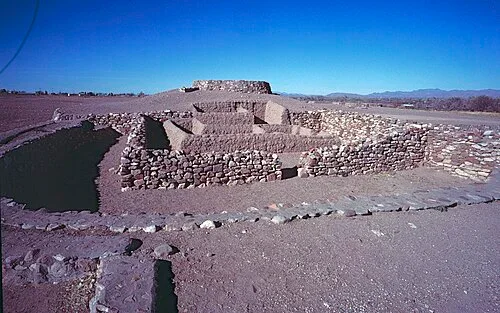 The House of the Wells and Water System
The House of the Wells
A city of thousands cannot live in the desert without engineering, and Paquimé's answer was water. From its earliest days the settlement ran on a single unified system. Channels carried water out to the residences, so households drew from the network rather than from the river itself. Beneath the streets, underground drains carried it away again. Reservoirs stored the supply against the dry months, and the city even had a sewage system. All of this was built by people working with stone, earth and gravity. The stone-lined structures here belong to that works, channels and holding basins set into the ground. In a valley where rain is scarce and the river runs at a distance, water was the city's first monument.
Listen in the appPhoto: HJPD · CC BY 3.0
07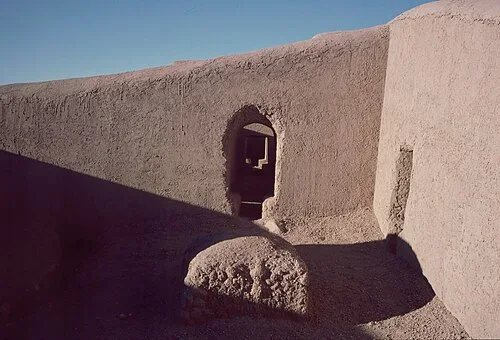 The House of the Wells and Water System
How the City Began
Before the apartment towers, Paquimé was a scatter of small neighbourhoods. Settlement in the valley began after the year 1130, when people started gathering into small communities on this broad, fertile ground along the Casas Grandes river. The city began as twenty or more clusters of houses, each cluster arranged around its own plaza behind an enclosing wall. The earliest dwellings were single-story adobe rooms, along with circular and semi-circular pit houses set partly into the earth. The fields depended on irrigation, fed by the river and its tributaries. Every grand thing Paquimé later became grew out of these modest, well-watered courtyards.
Listen in the appPhoto: HJPD · CC BY-SA 3.0
08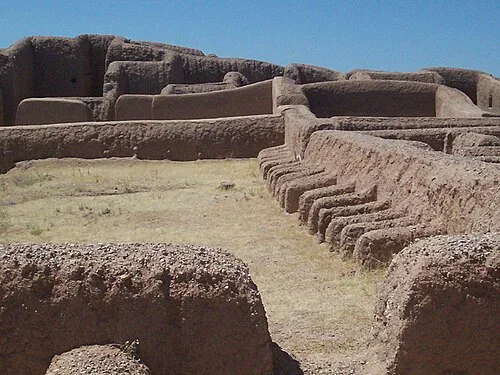 The Scarlet Macaw Breeding Pens
Scarlet macaws belong in the rainforest, hundreds of kilometres south of here. At Paquimé, they lived in a row of small adobe pens at the centre of the city. Excavation of one compound turned up eggshell fragments, bird skeletons and traces of wooden perches. The picture that emerges is a breeding operation. The community imported an initial population of scarlet macaws from Mesoamerica and raised them in captivity, the earliest known specialised macaw breeding facility in North America. The birds were prized for their feathers, which were considered sacred and played a part in Mesoamerican rituals. The macaws were not the only goods on the move. Paquimé's craftspeople worked copper into bells and ornaments, and drilled beads from the shells of marine molluscs, brought up from the distant coast. A desert city, dealing in feathers, copper and sea shell.
Listen in the appDiSchamelrider (talk) (Uploads) · CC0
09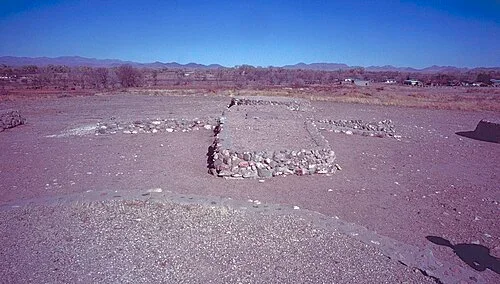 The Ceremonial Mounds and Plazas
Effigy Mound on the West Side
This low mound, outlined in stone in the shape of a cross, sits on the western side of the city. A stone wall and the reservoirs divide Paquimé into an eastern half and a western one, and the two halves speak different languages in earth. On the east stand rectilinear structures of puddled adobe, used mainly for domestic work and manufacturing. The west side is given over to open earth mounds lined in stone, built for public display. The division is symbolic. The eastern half leans toward the Puebloan peoples of North America, the western mounds toward the cultures of Mesoamerica to the south. Paquimé stood between two worlds and built both into its own ground plan, one half facing each way.
Listen in the appPhoto: HJPD · CC BY 3.0
10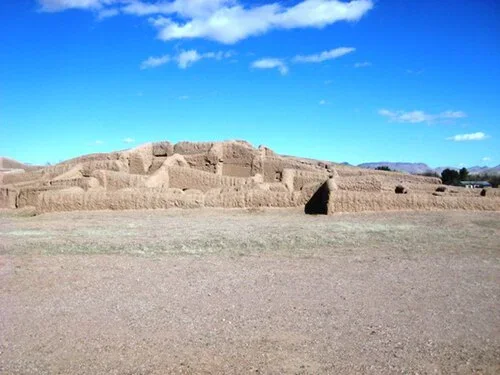 The Ceremonial Mounds and Plazas
The Ceremonial Mounds
The great raised platform here belongs to a row of ceremonial structures on the western side of the city. These mounds were built up from fill and stone, raised above the plaza level so they could hold public ceremonies in view of the community. They were probably once covered with lime paint, which would have made them gleam pale against the brown adobe city, though that covering is a likelihood rather than a certainty. Alongside the ballcourts and the market area, these platforms formed the public face of Paquimé. Here the rituals of a city of thousands had their stage, in earth and stone raised toward the sky.
Listen in the appPhoto: Aromgom · Public domain
- 11
The I-Shaped Ballcourt
The I-shaped ballcourt that carried a Mesoamerican ritual a thousand kilometres north.
- 12
What Became of Paquimé
The empty city, the nomads' explanation, and the pottery tradition that still lives.
Paquimé
Frequently asked questions
How much does the guide cost?
Free app download. Listed guide price: $0.99. Guide price shown in the app. Audio guide only. Venue admission is separate.
Can I listen without internet?
Yes. Download the guide’s audio, images, and maps in the app before your visit. Your downloaded content is then available offline.
Can I listen in my language?
This audio guide is available in 15 languages, including English.
Do I need to follow a schedule?
No. This is a self-guided experience. Choose your stops, pause whenever you like, and return to a story at your own pace.
At your own pace
Explore Paquimé.
Download Stanza, then search for “Paquimé”.
Free app download · Guide price shown in the app
Keep exploring
Audio guides — Mexico
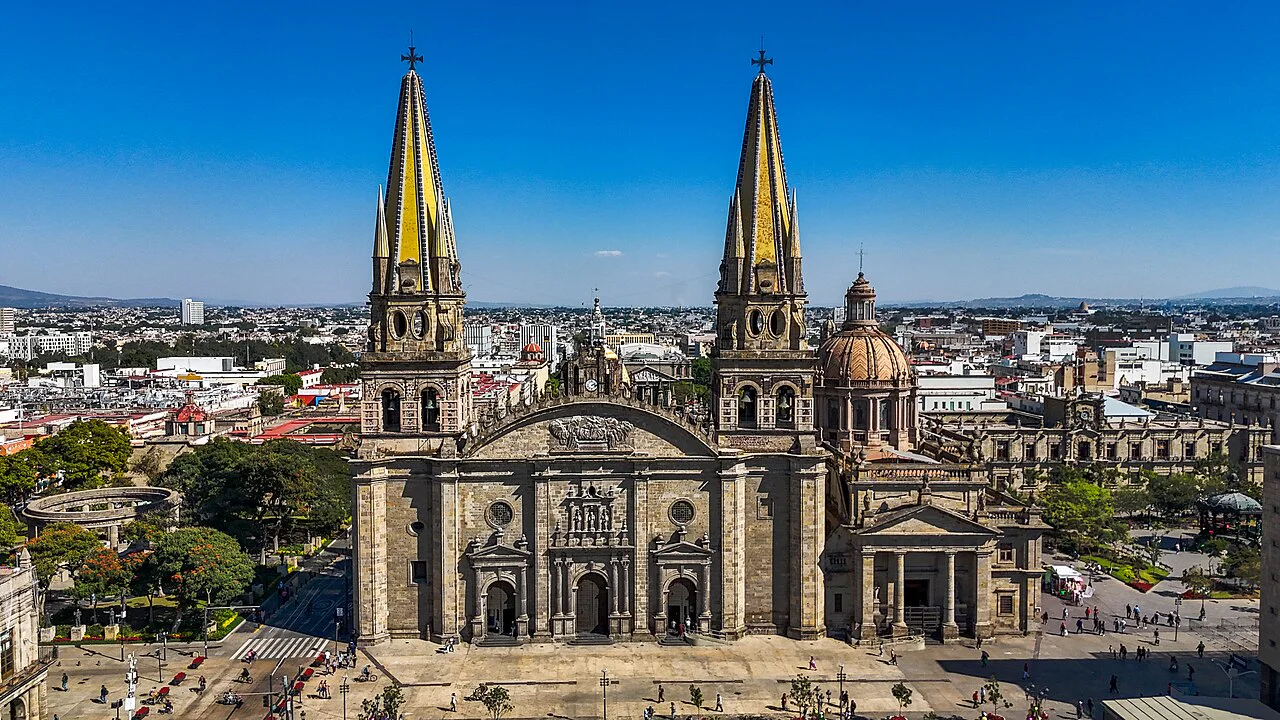
Guadalajara
Catedral metropolitana de Guadalajara
Content & sources
Photo: ProtoplasmaKid · CC BY-SA 4.0
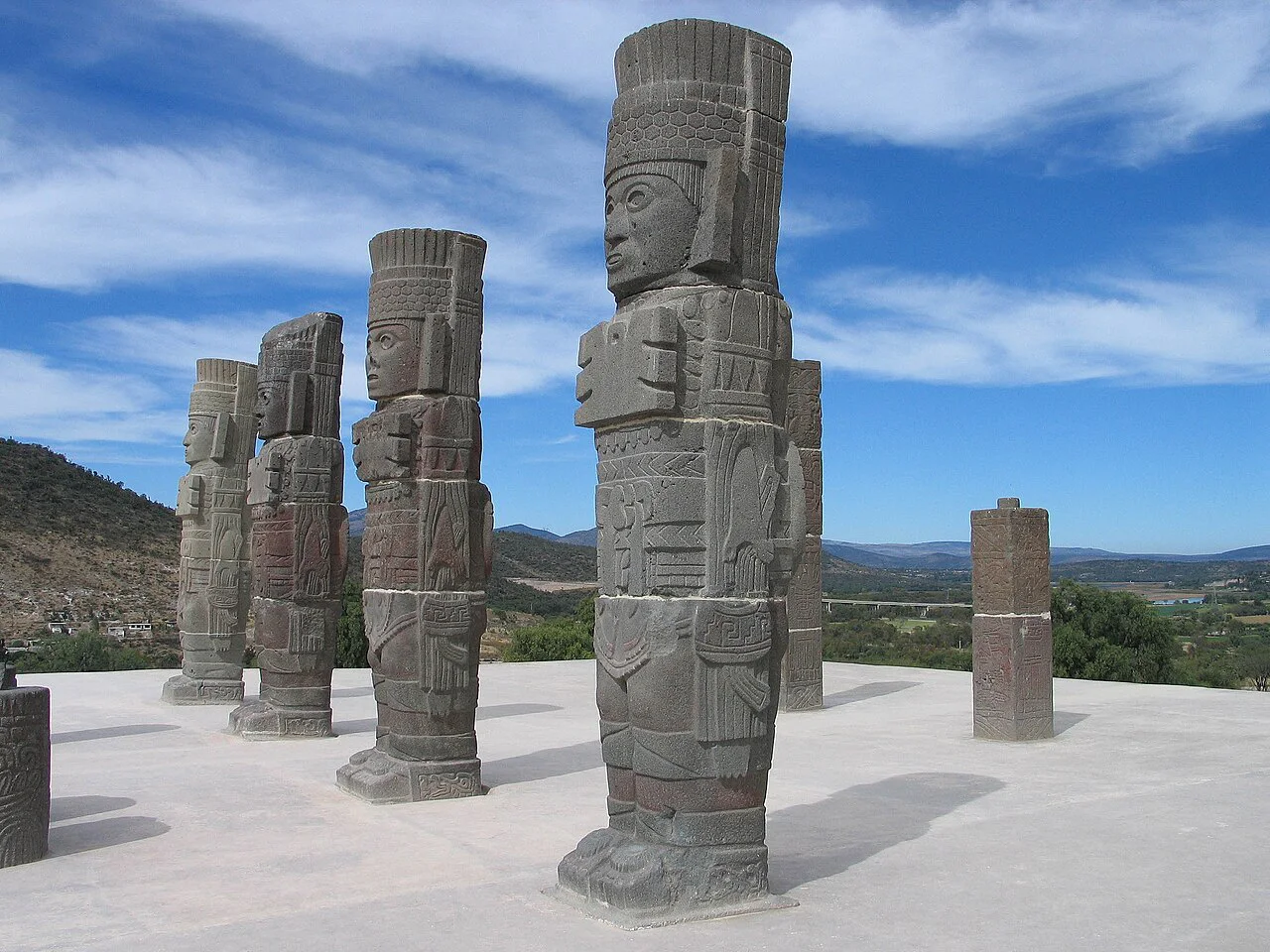
Tula
Tollan-Xicocotitlan
Content & sources
User:Luidger · CC BY-SA 3.0
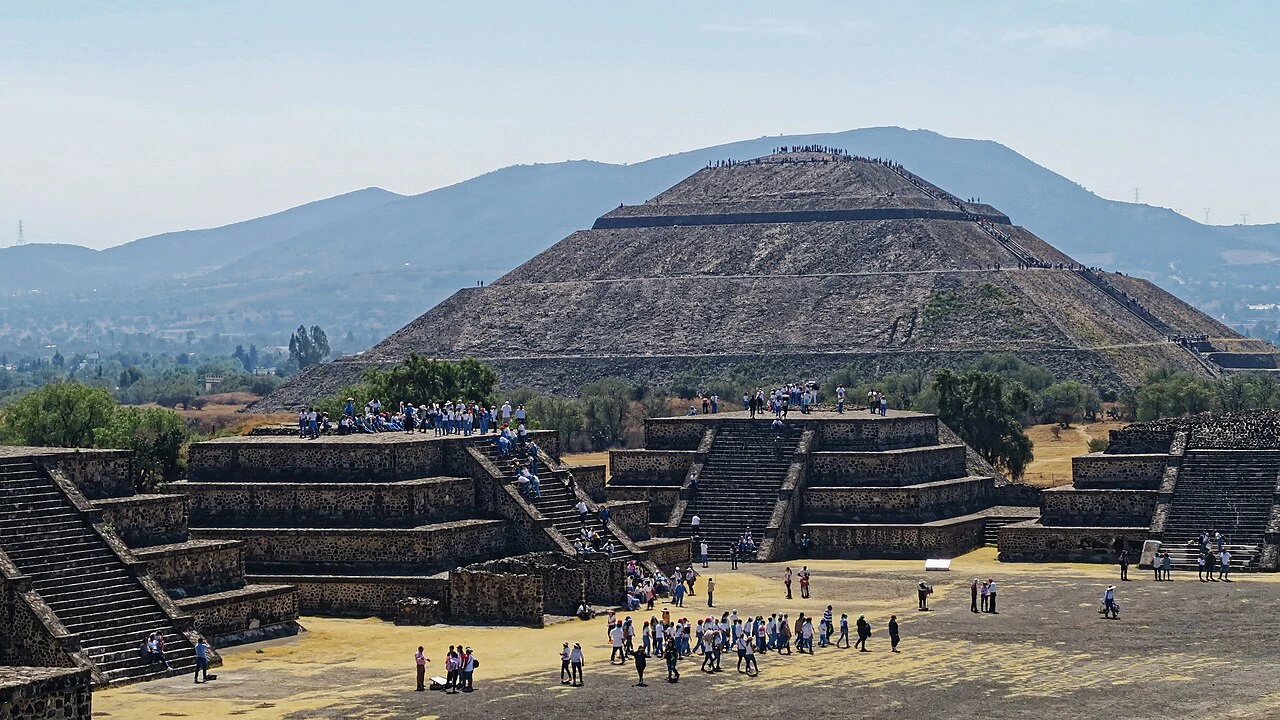
San Francisco Mazapa
Teotihuacan
Content & sources
Burkhard Mücke · CC BY-SA 4.0
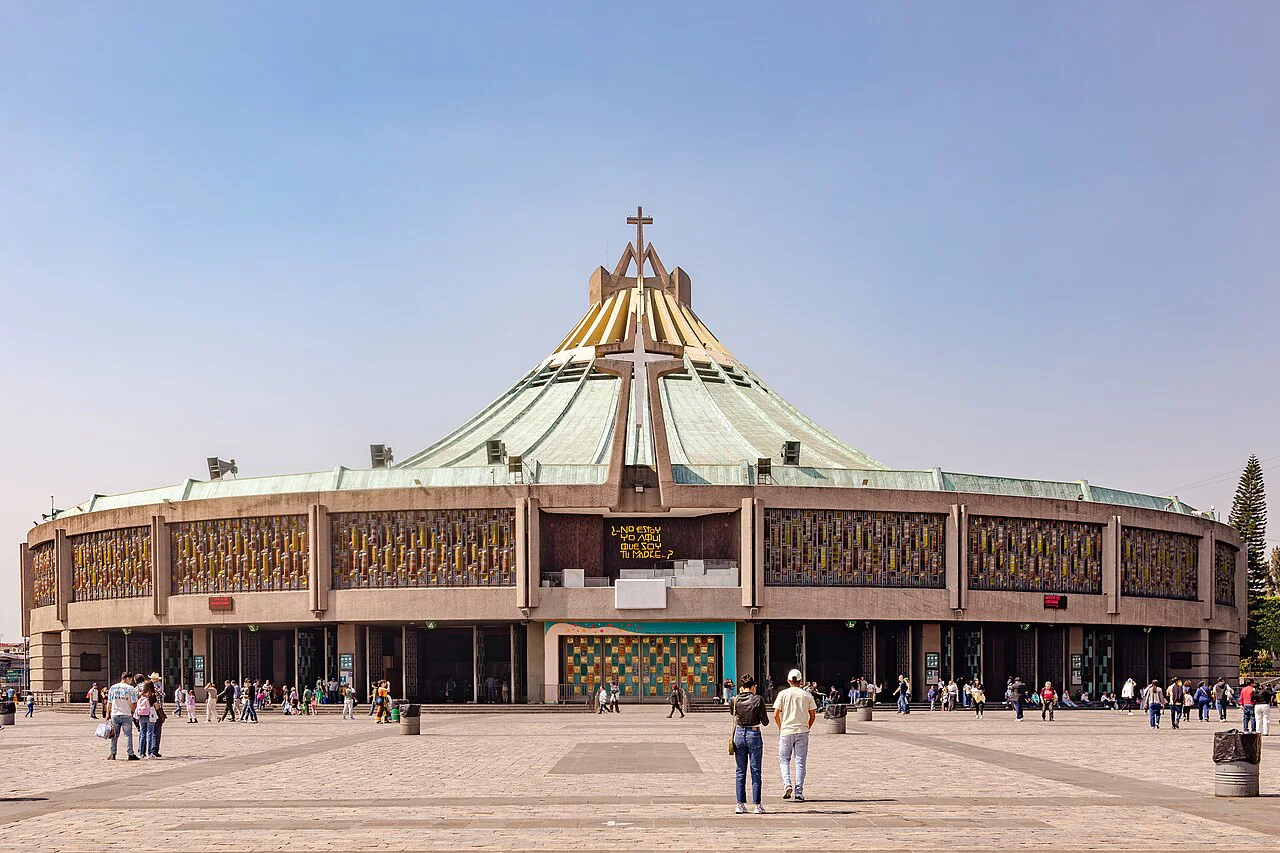
Mexico City
Basílica de Santa María de Guadalupe
Content & sources
Photo: Arne Müseler · CC BY-SA 3.0 de