Stanza · Audio guide
Maya Devi Temple, Lumbini Audio Guide
A place to remember. A story to take with you.
Maya Devi Temple is an ancient Buddhist temple located at the UNESCO World Heritage Site of Lumbini, Nepal. It is the main temple at the site traditionally considered the birthplace of Gautama Buddha.
Download Stanza, then search for “Maya Devi Temple, Lumbini”.
About the tour
One guide. Your kind of visit.
Maya Devi Temple is an ancient Buddhist temple located at the UNESCO World Heritage Site of Lumbini, Nepal. It is the main temple at the site traditionally considered the birthplace of Gautama Buddha.
Ready when you are.
- 01Get the free Stanza app.
iOS & Android
- 02Find your guide.
“Maya Devi Temple, Lumbini”
- 03Download before you go.
Works offline
Audio guide / 8 narrated stops
Inside the guide
Get to know a few of the stories before you go. Open a stop to read more.
01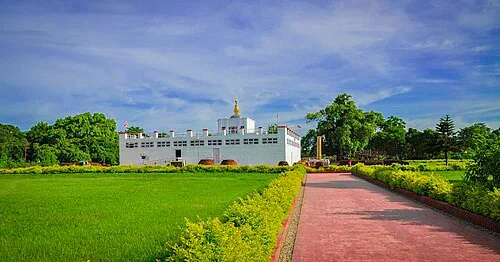 Sacred Garden Approach and Temple Pavilion
Approach to the Maya Devi Temple
Welcome to Lumbini, in the flat Terai plains of southern Nepal. This green garden is the place Buddhists honour as the birthplace of Prince Siddhartha Gautama, the man who became the Buddha. It shares that standing with only three other places: Bodh Gaya, Sarnath and Kushinagar, which mark his enlightenment, his first sermon and his passing. Pilgrims come from across the world to walk this red brick path to a plain white building. The building looks modest for such a famous site, and that is deliberate. It is a modern protective cover, raised over ancient brick shrines that could not survive in the open. Everyone takes off their shoes before going in, and a visit takes well under an hour. The garden and its monuments are protected as a UNESCO World Heritage Site.
Photo: Bibek Raj Pandeya · CC BY-SA 4.0
02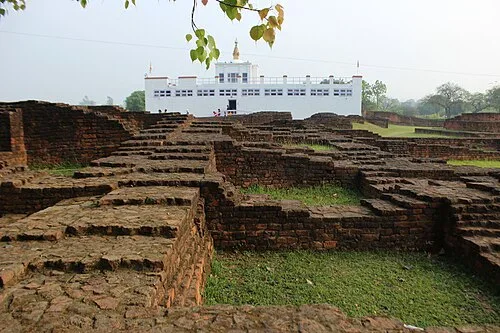 Exposed Monastic Ruins and Votive Stupas
The Ancient Monastic Ruins
All around the white temple, low walls of red brick break through the grass. These are the foundations of ancient monasteries and votive stupas, the small offering mounds built by generations of devotees. Brick shrines first rose here in the third century BCE, and building on the spot went on for many centuries. Each era repaired what time had broken, or raised new structures beside the old. What looks like a single ruin is really many buildings, layered one over another across more than two thousand years. Monks lived and studied in these halls, and pilgrims prayed among them. The pattern is a familiar one: a monastery complex grows around the shrine that gave it reason to exist. Here, the shrine at the centre was the birthplace itself.
Photo: Sanu N · CC BY-SA 4.0
03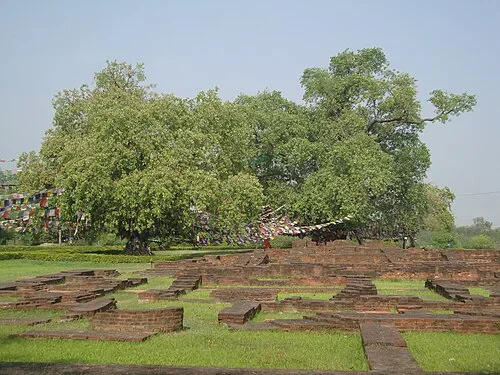 Exposed Monastic Ruins and Votive Stupas
The Sacred Tree and the Two Queens
This is the sacred tree of Lumbini, hung with strips of coloured prayer flags, and the story here belongs to two sisters. Queen Maya was the wife of King Shuddhodana of Kapilavastu and a princess of the Koliya kingdom. According to Buddhist tradition, she died just seven days after giving birth, and was reborn in the Tusita heaven. Her younger sister Mahapajapati Gotami raised the child in her place. Gotami's own part in the story came later, and it mattered deeply. She became the first woman ordained as a Buddhist nun by the Buddha himself, the founding figure of the female monastic order. The flags fluttering from the branches, and the offerings left at the brick ruins below, are not museum props. People still come here to pray.
Listen in the appSantosh Khatiwada · CC BY-SA 4.0
04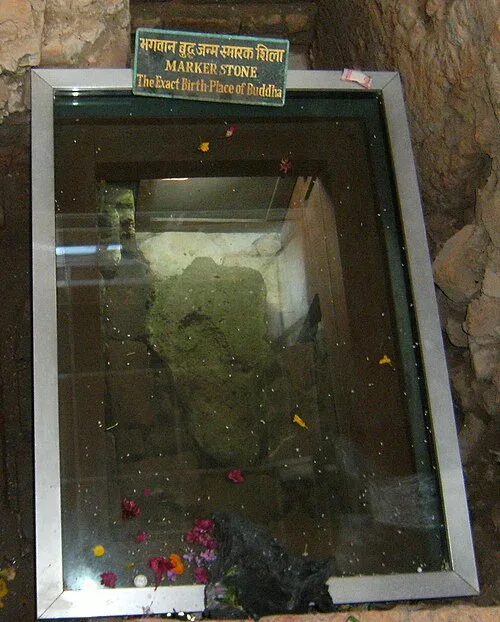 Inner Sanctum: The Nativity Marker Stone
The Nativity Marker Stone
Behind glass, scattered with flower petals left by pilgrims, lies a simple slab of stone. The sign above it says plainly: the exact birth place of Buddha. The story it anchors begins before the birth. Buddhist tradition tells that Queen Maya dreamed of a white elephant carrying a lotus, entering her right side. The dream was read as a prophecy that her child would become a world ruler or a Buddha. As the birth drew near, she set out for her father's kingdom of Koliya. On the way she stopped to rest in the garden of Lumbini, under a Sal tree, and there went into labour. Her son, Prince Siddhartha, was born in 623 BCE, by the traditional dating. The marker stone is honoured as the very spot.
Listen in the appผู้สร้างสรรค์ผลงาน/ส่งข้อมูลเก็บในคลังข้อมูลเสรีวิกิมีเดียคอมมอนส์ - เทวประภาส มากคล้าย · CC BY 3.0
05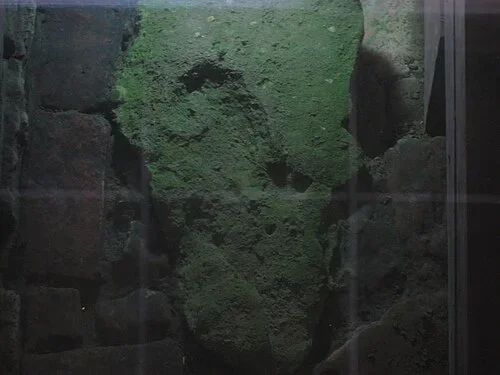 Inner Sanctum: The Nativity Marker Stone
Beneath the Bricks: The 6th-Century BCE Timber Shrine
The temple floor hides something older than every brick wall in the garden. From 2010, a team of archaeologists began digging beneath the temple. It brought together UNESCO, Durham University, Nepal's Department of Archaeology and the Lumbini Development Trust, with the Government of Japan funding the work. Three years in, they made a remarkable find. Postholes in the soil, dated by radiocarbon testing to the sixth century BCE, traced the outline of a timber shrine. That places it within the lifetime of the Buddha himself, and makes it the earliest scientifically dated Buddhist shrine in South Asia. The timber shrine marked out a sacred space centuries before any stone or brick was laid. Visitors now walk elevated catwalks above the excavation, looking down through the layers.
Listen in the appwonker from London, United Kingdom · CC BY 2.0
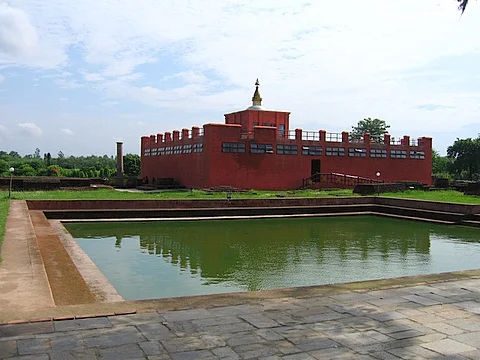
06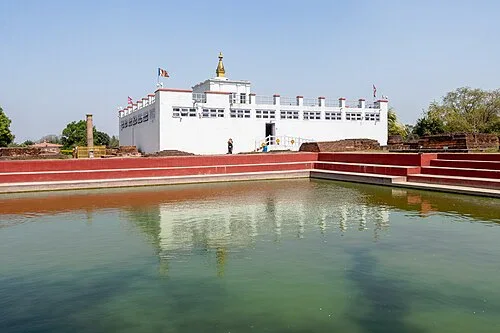 Pushkarani Sacred Pool
The Pushkarani Sacred Pool
Directly beside the temple lies a square tank of brick, with steps leading down to the water. This is the Pushkarani, the sacred pool of Lumbini. Tradition gives it a place in the birth story. Queen Maya is said to have bathed here in ritual purification before she gave birth. The newborn Siddhartha received his first ablution in the same water. On a still day the white temple stands reflected whole in the pool, which makes this one of the most photographed views in the sanctuary.
Listen in the appPhoto: Bijay Chaurasia · CC BY-SA 4.0
07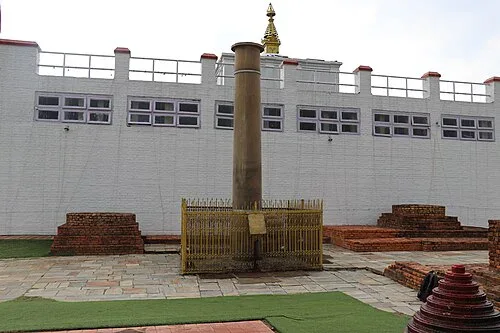 The Ashoka Pillar of Lumbini
The Ashoka Pillar
A single sandstone column stands fenced beside the temple wall, plain and unadorned. It was raised by Ashoka, emperor of the Mauryan dynasty, who made a royal pilgrimage to Lumbini around 249 BCE. Carved into the stone is an inscription in the Brahmi script, written in the Pali language. In it, the emperor names Lumbini as the birthplace of the Buddha and records his homage to the spot. The inscription also records something practical: the emperor granted the village exemption from taxes. That short text did more than honour the site. It fixed Lumbini's identity in writing, so that long after the garden fell to ruin, the birthplace could be found again.
Listen in the appPhoto: Imsurit · CC BY-SA 4.0
08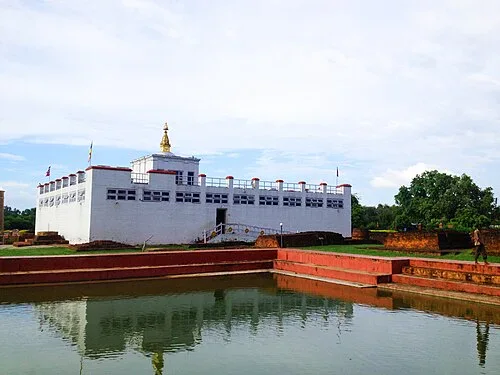 Sacred Bodhi Tree Reflection Grounds
Lumbini Today: A Living Sanctuary
From the garden's edge, the white temple, the pool and the tree shade all sit together in one calm view. Veneration of this one spot has continued, broken only by the centuries when the garden lay forgotten. The modern cover over the ancient shrines was completed in the early 2000s. Pilgrims still arrive barefoot, and they still leave flowers, as their predecessors did when the brick monasteries stood whole. The stillness of this garden is what most visitors carry away.
Listen in the appPhoto: Harry Poudel · CC BY-SA 4.0
Maya Devi Temple, Lumbini
Frequently asked questions
How much does the guide cost?
Free app download. Listed guide price: $0.99. Guide price shown in the app. Audio guide only. Venue admission is separate.
Can I listen without internet?
Yes. Download the guide’s audio, images, and maps in the app before your visit. Your downloaded content is then available offline.
Can I listen in my language?
This audio guide is available in 15 languages, including English.
Do I need to follow a schedule?
No. This is a self-guided experience. Choose your stops, pause whenever you like, and return to a story at your own pace.
At your own pace
Explore Maya Devi Temple, Lumbini.
Download Stanza, then search for “Maya Devi Temple, Lumbini”.
Free app download · Guide price shown in the app
Keep exploring
Audio guides — Nepal
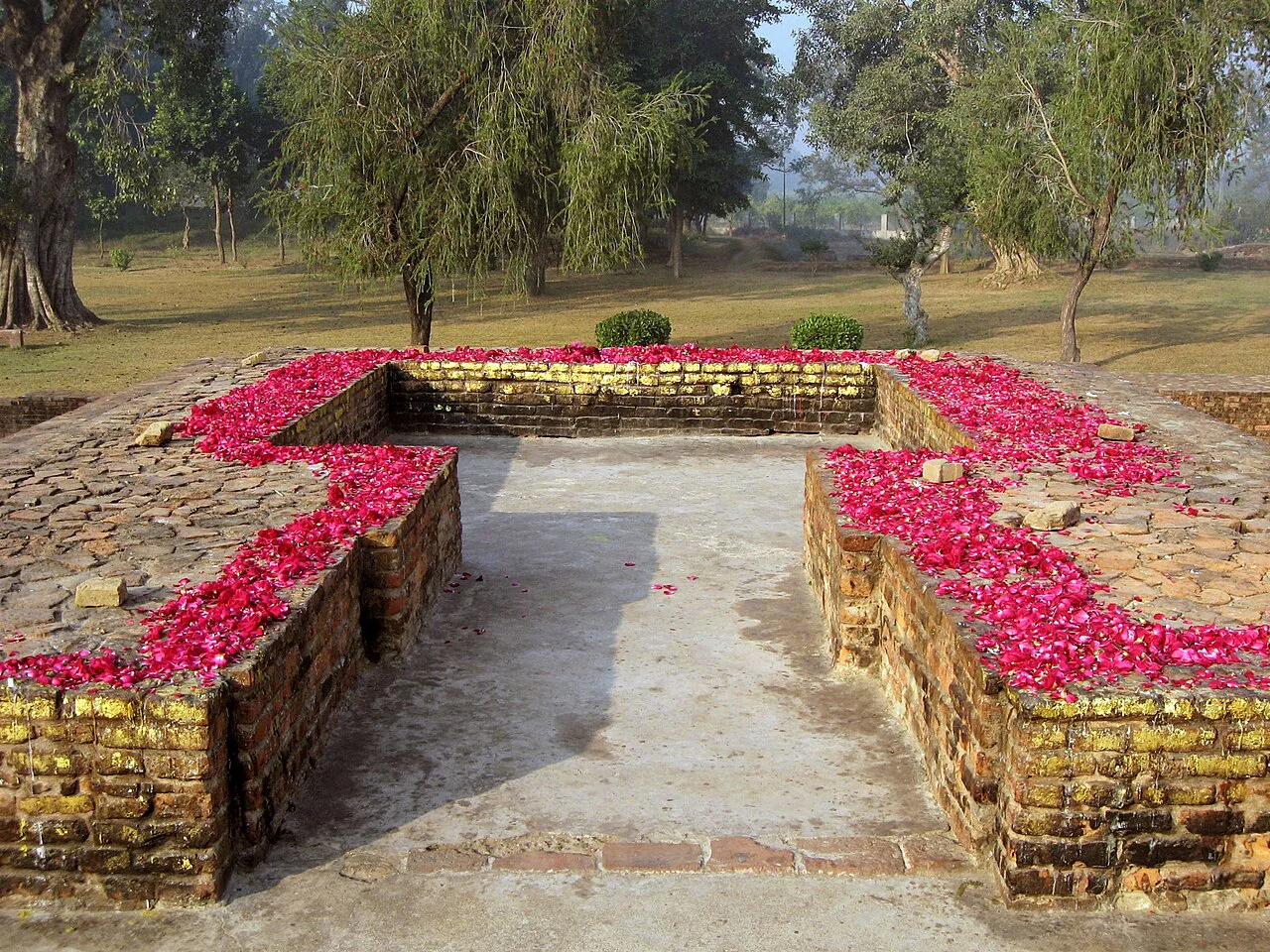
Sravasti · 122 km
Jetavana
Content & sources
myself · CC BY-SA 2.5
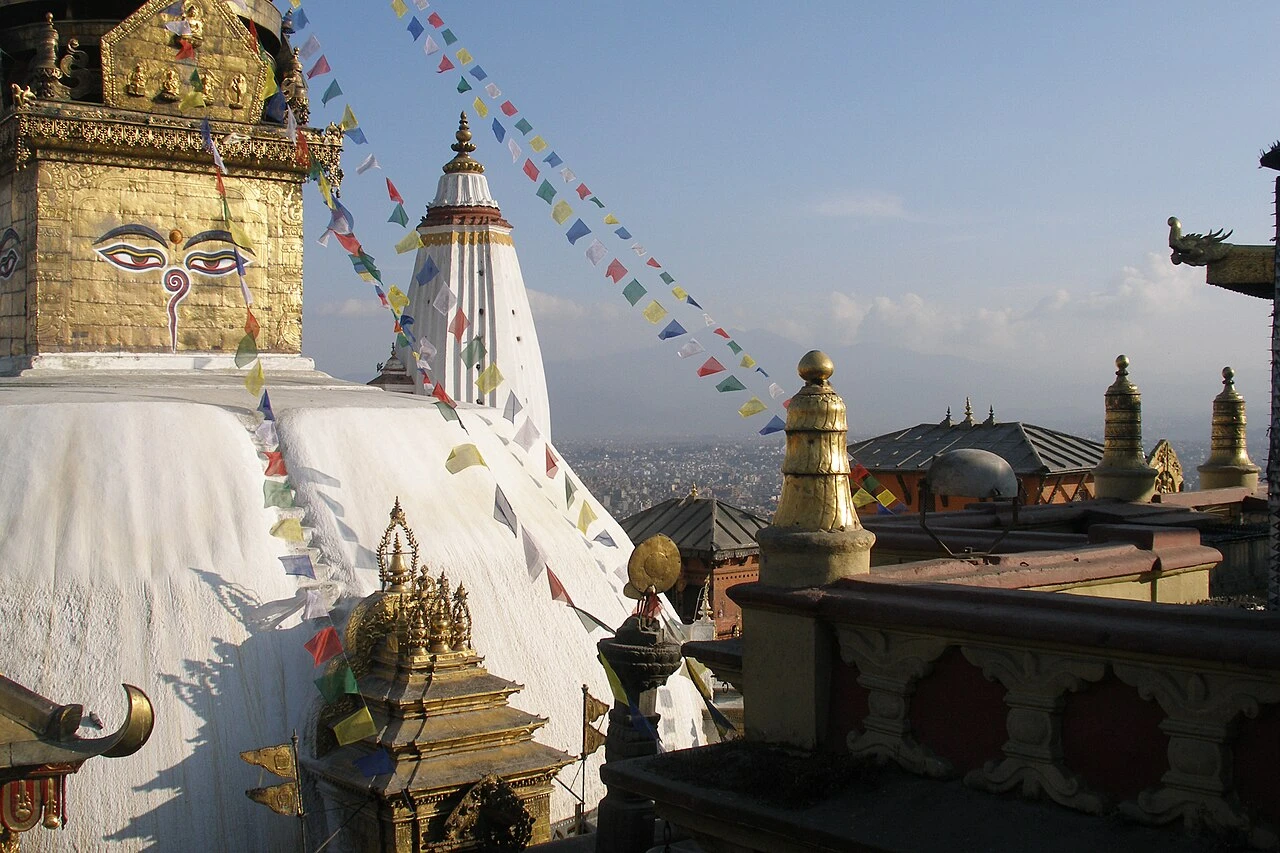
Kathmandu Metropolitan City
Swayambhunath
Content & sources
Vyacheslav Argenberg · CC BY 4.0
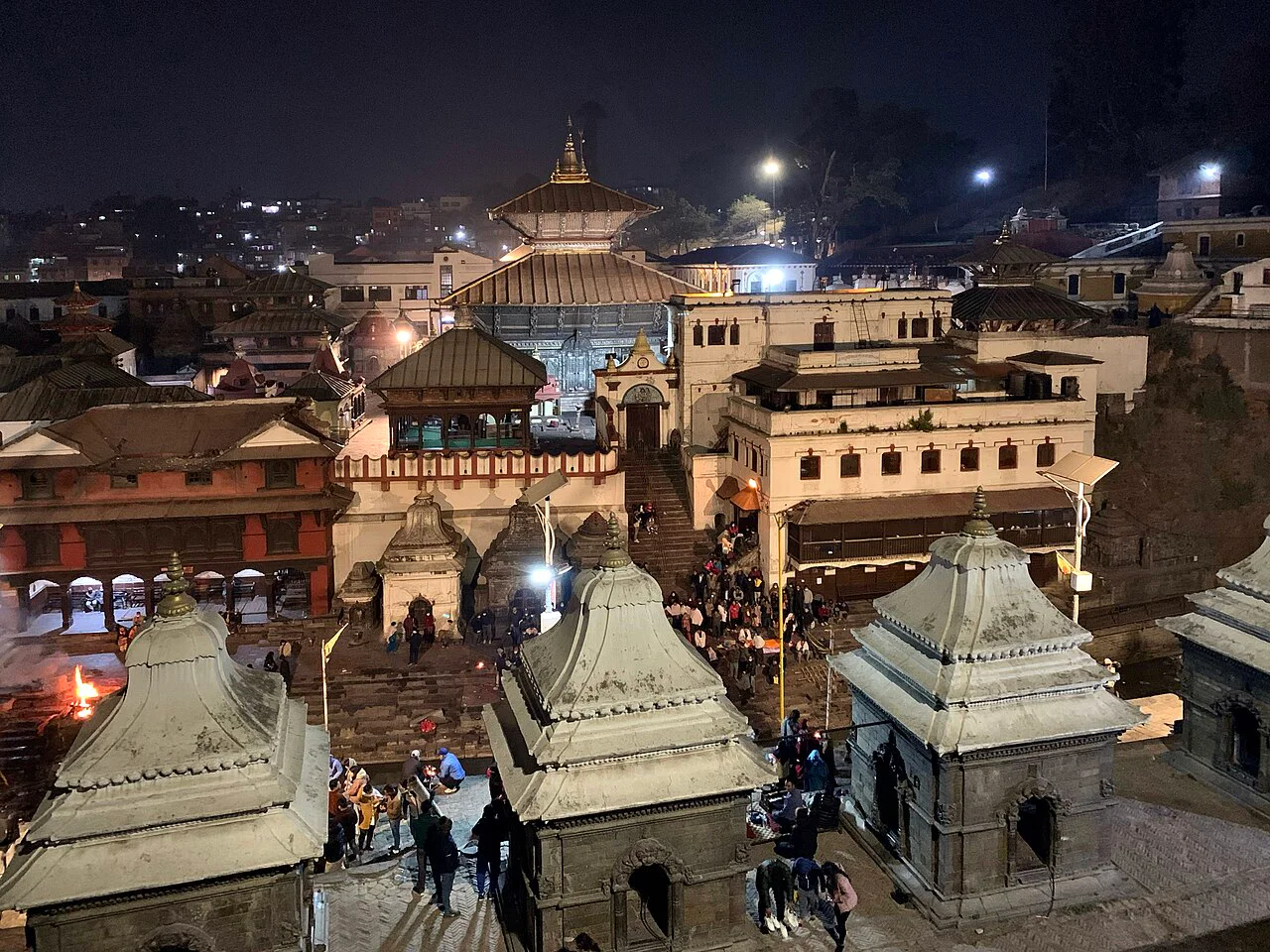
Kathmandu
Pashupatinath Temple
Content & sources
Photo: Chainwit. · CC BY-SA 4.0
Kathmandu
Boudha Stupa
Content & sources
Etter Studio · CC BY 2.0