Languages
15Mosteiro da Batalha Audio Guide
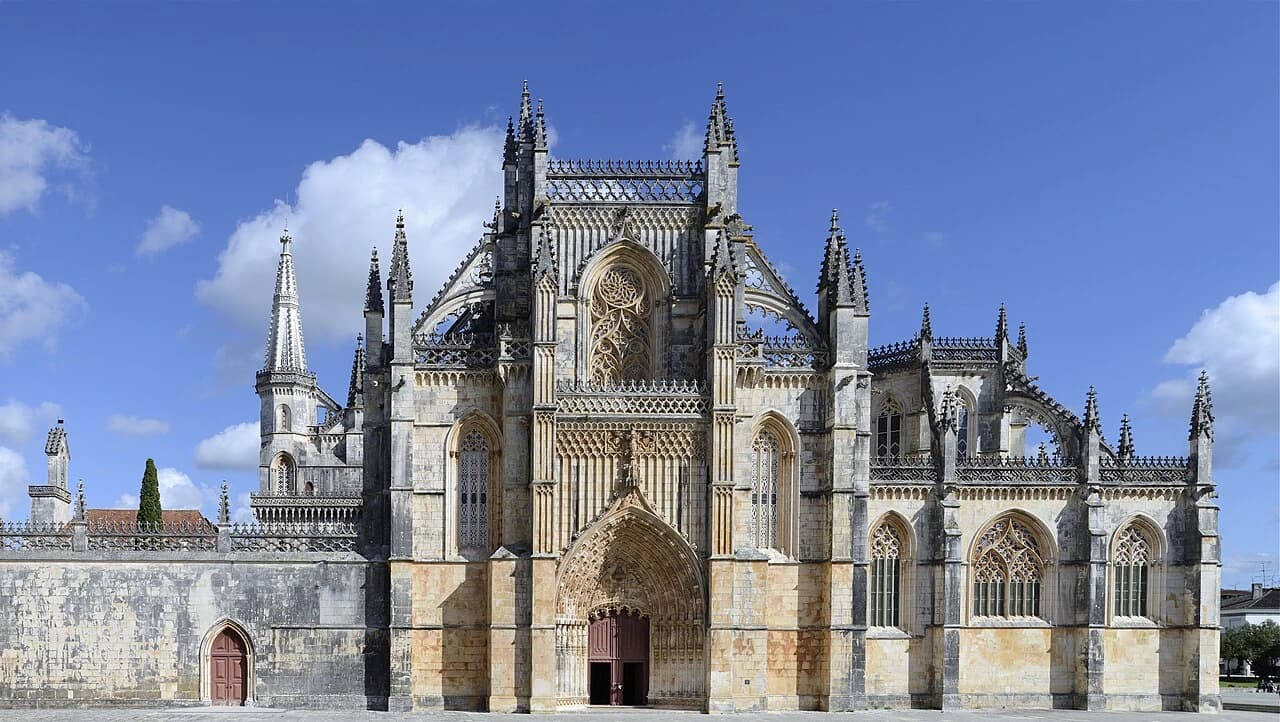
Mosteiro da Batalha is a landmark in Batalha, Portugal. Explore it with Stanza's GPS-triggered offline audio guide — available in 15 languages.
Quick Facts
26
Stops
15
Languages
100%
Offline
📍 Batalha, Portugal · 39.6592°N, -8.8261°E
About Mosteiro da Batalha
A Dominican convent built to commemorate the victory of the Portuguese over the Castilians in the 1385 Battle of Aljubarrota. It is a masterpiece of Gothic and Manueline architecture and a UNESCO World Heritage site.
Mosteiro da Batalha is also known as Mosteiro da Batalha, Monastery of Saint Mary of the Victory, Mosteiro de Santa Maria da Vitória, Monastery of Batalha, and 1 other names in various languages.
This self-guided audio tour features 26 narrated stops organized across 7 sections. As a monastery, Mosteiro da Batalha offers a unique cultural experience in the heart of Batalha, Portugal.
The Stanza audio guide is available in 15 languages and works entirely offline — download the complete tour including audio narration, maps, and images before your visit. As you walk through Mosteiro da Batalha, GPS-triggered narration plays automatically at each point of interest.
Last updated:
What you will hear
The Main Portal
Examine the Western facade and its grand portal, which features a profusion of 78 statues depicting biblical figures.
The Portal Tympanum
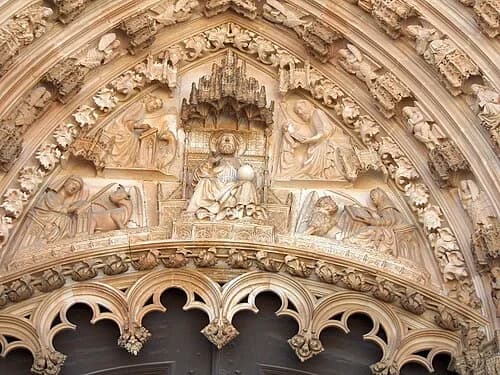
Direct your attention to the center of the archway, known as the tympanum. Here, a central relief depicts Christ in Majesty seated on a throne. He is surrounded by the four Evangelists—Matthew, Mark, Luke, and John—each represented by their traditional symbolic animals. This scene provides the spiritual anchor for the entire portal entrance. Above this relief, the architecture becomes almost weightless. Look at the incredibly delicate stone tracery that resembles lace or fine weaving. It is difficult to imagine that such thin, airy forms were carved from solid limestone without breaking. This mastery of the material reflects the height of late Gothic technique, where masons pushed stone to its physical limits to create a sense of divine grace. The contrast between the solid, grounded figures of Christ and the Evangelists and the ethereal stone 'lace' above highlights the dual nature of the monastery as both a sturdy royal burial site and a house of prayer. The precision of the chisel work here shows why Batalha was a center for architectural innovation in the fifteenth century.
The High Nave
Step inside to experience the impressive verticality of the church, rising over 32 meters while maintaining a strikingly narrow width.
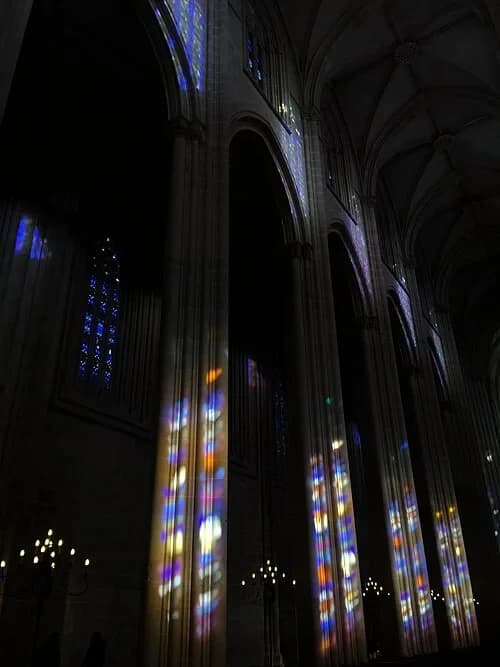
Reflections on Stone
As you stand among the massive fluted columns, notice how they act as canvases for the windows above. Especially in the late afternoon, the low angle of the sun causes the stained glass to project vibrant pools of blue and purple light onto the stone surfaces. These colors are not static; they drift slowly as the day ends, softening the hard edges of the limestone. This is a moment to experience the quiet, contemplative atmosphere that defined the lives of the monks who once lived here. For centuries, this interplay of light and shadow provided the backdrop for their daily prayers and meditations. The rhythmic patterns of the columns and the soft, colorful reflections create a sense of stillness. It is a visual reminder of the building’s purpose as a place of rest and reflection, where the physical structure of the monastery interacts with the natural environment. The effect is most pronounced on the smooth, vertical ridges of the pillars, which catch the light and create a striped pattern of color that stretches toward the floor.
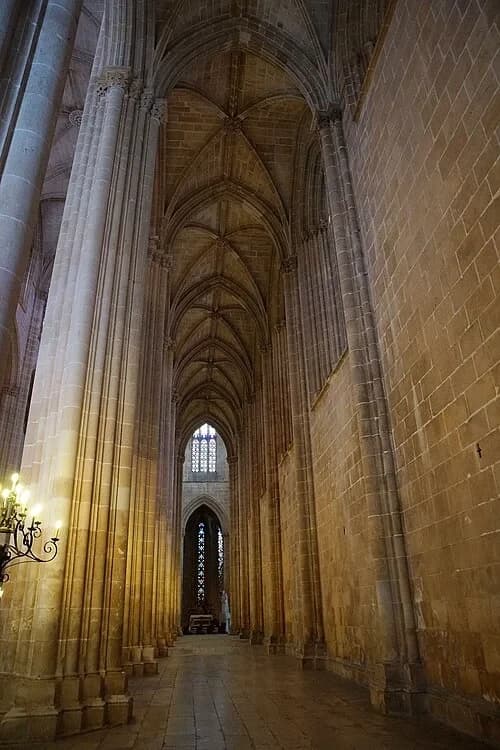
The High Nave
The interior of the church is defined by a striking sense of verticality. While the nave rises to a height of over 32 meters, it is only 22 meters wide. These narrow proportions create a soaring effect that pulls your gaze directly upward toward the ribbed vaulting. Unlike many other great cathedrals of the era, this space is notably austere and lacks elaborate internal decoration or complex altarpieces along the walls. This simplicity is purposeful, shifting the focus away from individual objects and toward the sheer volume of the space and the light filtering in. Here, the architecture itself is the main subject. Massive fluted columns rise like petrified trees, supporting the weight of the roof while allowing for large expanses of wall. This design choice emphasizes the interaction between the solid stone and the empty air, making the environment feel more present and intentional. The lack of clutter ensures that the scale of the building is fully felt, emphasizing the ambition of the monarchs who commissioned such a vast and hollowed-out space for their religious devotion.
The Founder's Chapel
Visit the first royal pantheon in Portugal, home to the joint tomb of King João I and Queen Philippa of Lancaster and their children.
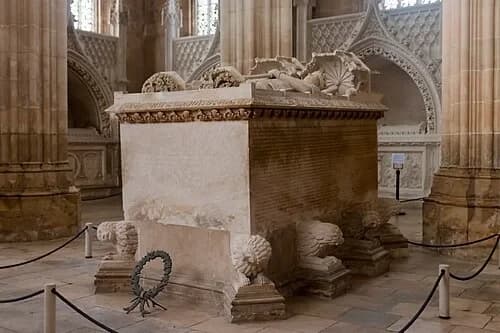
Tomb of King John I of Portugal and Philippa of Lancaster
1434
The centerpiece of the Founder's Chapel is the joint tomb of King João I and his queen, Philippa of Lancaster. This is a significant funerary monument that highlights both a personal bond and a national alliance. Notice that the carved figures of the King and Queen are shown lying side-by-side, holding hands. This gesture was highly unusual for royal tombs of the period and served as a clear symbol of their marital unity. Beyond their personal relationship, the tomb represents a vital political connection. Philippa was the daughter of John of Gaunt, and her marriage to João I cemented the Treaty of Windsor in 1386. This alliance between Portugal and England is one of the oldest diplomatic partnerships in the world that remains in effect today. The tomb is covered in intricate heraldry and inscriptions that celebrate their reign and their children, who became known as the 'Illustrious Generation.' By placing their tomb at the heart of this dedicated chapel, they established Batalha as the permanent resting place for the Aviz dynasty, ensuring their legacy was preserved in stone.
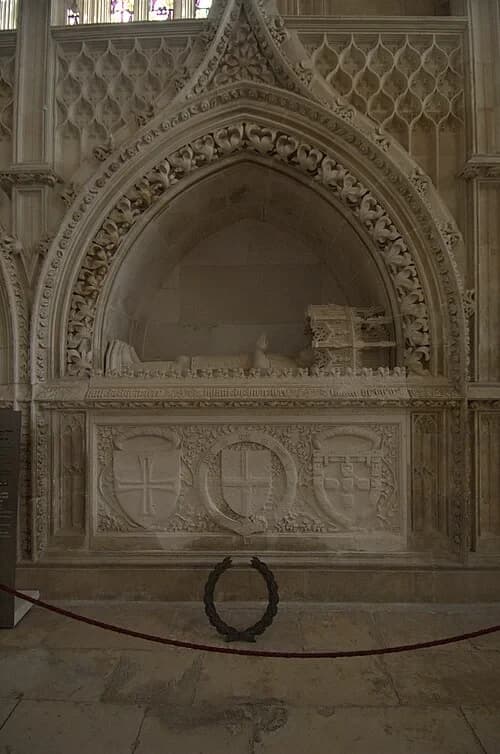
Tomb of Henry the Navigator
Among the tombs lining the walls of the Founder’s Chapel is that of Prince Henry the Navigator. As one of the children of King João I and Philippa of Lancaster, Henry became one of the most influential figures in Portuguese history. While he was not a sailor himself, he was the primary patron and organizer of the early voyages that launched the Age of Discovery. His tomb is rich with heraldic detail that tells the story of his life and international connections. Look for the emblem of the Order of the Garter, a prestigious English order of chivalry that reflects his heritage through his mother. Other symbols on the tomb represent his role as the Grand Master of the Order of Christ. Henry's legacy is tied to the mapping of the African coast and the development of new navigational techniques, efforts that ultimately turned Portugal into a global maritime power. His placement here, alongside his parents and brothers, reinforces the collective impact of his family on the nation's rise to prominence as a leader in global exploration.
The Royal Cloister
Explore the synthesis of Gothic and Manueline styles in the stone traceries of the Royal Cloister.
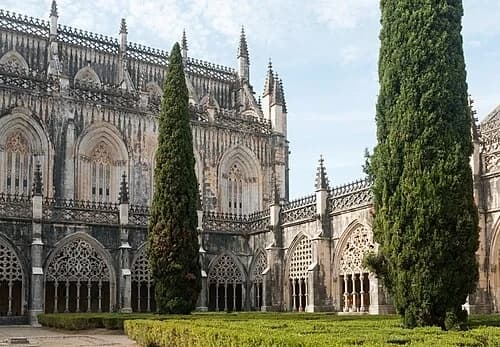
The Royal Cloister
The Royal Cloister, also known as the Cloister of King João I, is a place of balance and quiet beauty. The primary structure you see is rooted in the Gothic style, characterized by its pointed arches and sturdy columns. However, if you look at the intricate stone screens within the arches, you are seeing a later addition by King Manuel I. These decorative traceries are prime examples of the Manueline style, added nearly a century after the cloister was first built. The central garden is designed with strict symmetry, featuring manicured hedges and paths that provided a structured environment for the monks. This space served as the heart of the monastic community, offering a place for walking, prayer, and silent meditation away from the grand scale of the main church. The contrast between the simple, functional Gothic framework and the flamboyant, detailed carvings of the window screens illustrates the evolving wealth and artistic ambition of the Portuguese crown. It remains a tranquil spot that highlights the transition from medieval austerity to Renaissance decorative complexity.
The Chapterhouse
Enter the square Chapterhouse to see the daring 19-meter unsupported star-vault and the Tomb of the Unknown Soldier.
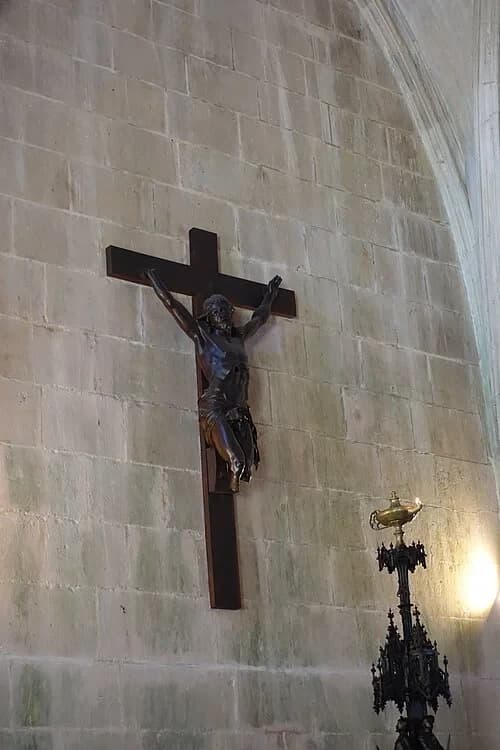
Christ of the Trenches
Hanging in the Chapterhouse is a crucifix with a profound history, known as the 'Christ of the Trenches.' This object was carried by Portuguese soldiers onto the battlefields of Flanders during the First World War. It was positioned in the front lines, providing a source of spiritual comfort for the men living in the chaos of the trenches. During the heavy fighting, the crucifix was struck and damaged by enemy shellfire, leaving it scarred but largely intact. After the war, it was brought back to Portugal as a powerful symbol of the soldiers' resilience and faith under fire. Its placement here, within the medieval walls of Batalha, creates a direct link between the monastery's origins as a monument to a 14th-century battle and the sacrifices made in the 20th century. The worn and damaged surface of the figure serves as a tactile reminder of the reality of combat, grounding the grand architectural surroundings in a story of individual survival and collective national memory. It remains one of the most poignant artifacts in the entire monastery complex.
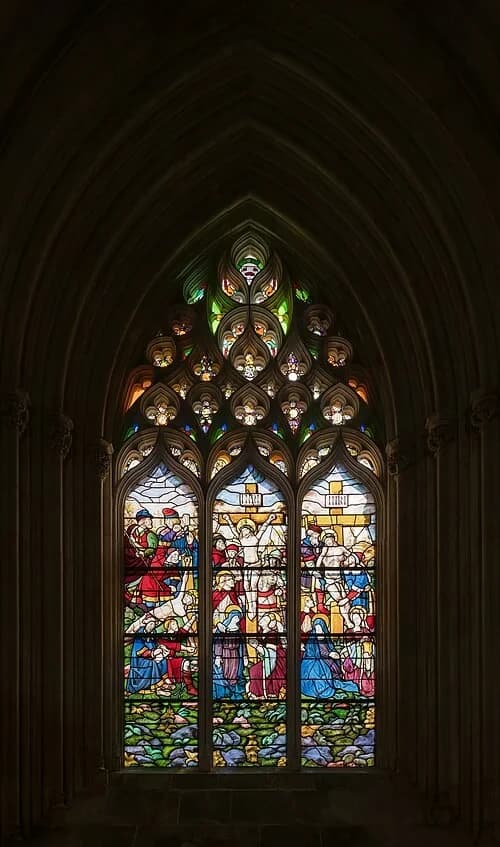
Chapterhouse Stained Glass
The stained glass in the Chapterhouse represents a significant departure from the earlier Gothic windows seen elsewhere in the monastery. Dating from the 16th century, these panels embrace the Renaissance style, favoring depth and realism over the flat, symbolic representations of the previous century. The window depicts pivotal scenes from the life of Christ, rendered with a newfound attention to human anatomy and architectural perspective. Unlike the vibrant, abstract patterns of the Gothic glass, these images function more like paintings, using light to create a sense of three-dimensional space within the stone frame. The colors are often more varied and the transitions between shades more subtle, reflecting the evolving techniques of master glassmakers who traveled across Europe. This window serves as a visual bridge, connecting the medieval foundations of Batalha with the intellectual and artistic currents of the Portuguese Renaissance. Notice the detailed backgrounds and the expressive faces of the figures, which were designed to be clearly legible from the floor of the room below.
The Monastic Dormitory and Treasury
See the artifacts of monastic life and the verified POI painting of Ferdinand the Holy Prince.
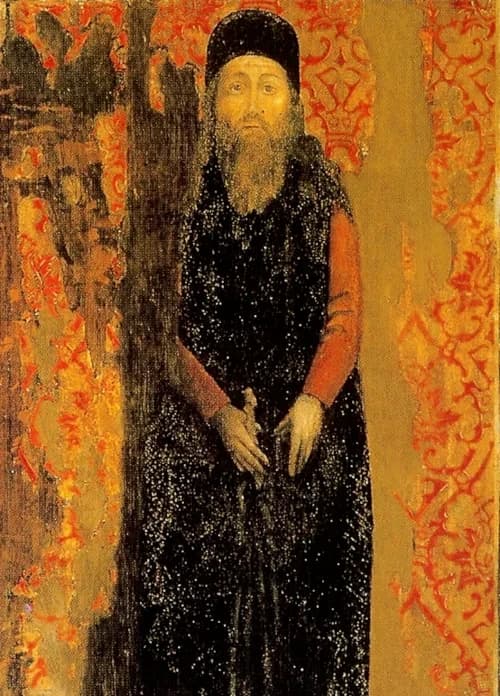
Triptych of Ferdinand the Holy Prince
http://www.wikidata.org/.well-known/genid/39f6b0d04fe4dfd1bb38689e6c2dce10 · 1450
Prince Ferdinand was the youngest member of the "Illustrious Generation," the children of King João I and Philippa of Lancaster. This portrait captures the solemnity of a man who became a national martyr. In 1437, during a disastrous Portuguese military campaign in Tangier, Ferdinand was taken captive by the Marinid forces. The ransom demanded for his release was the strategic city of Ceuta, which Portugal had conquered decades earlier. Ferdinand refused the trade, choosing to remain in captivity rather than see his country lose its important North African foothold. He spent the remaining years of his life in increasingly harsh conditions in Fez, eventually dying there in 1443. His steadfastness in the face of suffering earned him the posthumous title of the "Holy Prince." This triptych highlights his devotion, showing him in a contemplative pose that reflects his reputation for piety. His story became a cornerstone of Portuguese national identity, representing the ideal of putting the needs of the state above individual life. The painting emphasizes his status as a royal prince while acknowledging the heavy cost of his commitment to the kingdom's expansion.
Cloister of King Afonso V
Observe the shift to a simpler, more sober Gothic style in this second cloister, used for the monks' daily work.
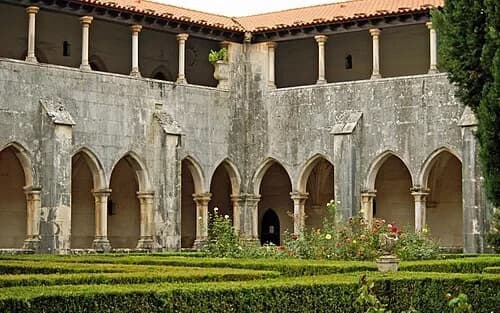
Cloister of King Afonso V
Built in the mid-15th century, the Cloister of King Afonso V represents a different phase of the monastery’s history. While the Royal Cloister is famous for its elaborate stone screens, this area is characterized by a simpler, more traditional Gothic style. It served as the practical heart of the monastery, where the monks conducted their daily affairs. The two-story structure features clean lines and repetitive arches that create a sense of order and quiet focus. This was where the domestic life of the community unfolded, away from the grand ceremonial spaces used by the royal family. The lack of heavy ornamentation reflects the architectural preferences of King Afonso V's reign, emphasizing functionality and structural integrity. Walking through these corridors, one can more easily imagine the rhythmic life of the monks—the sounds of their sandals on the stone and the low murmur of their daily tasks. The garden in the center was managed for utility as much as beauty, providing a secluded space for contemplation. This contrast between the royal and the monastic sections highlights the dual purpose of Batalha as both a dynastic monument and a working religious house.
Want to hear the rest?
Download the Stanza app to unlock all 26 stops and full GPS-guided navigation.
Frequently Asked Questions
How long does the Mosteiro da Batalha audio tour take?
The Mosteiro da Batalha audio guide includes 26 narrated stops. Most visitors spend 45 minutes to 1.5 hours exploring the complete tour, though you can listen at your own pace and skip or revisit any stop.
Is the Mosteiro da Batalha audio guide available in my language?
Stanza supports 15 languages: English, Spanish, French, German, Italian, Portuguese, Russian, Japanese, Chinese, Korean, Arabic, Hindi, Polish, Dutch, Hebrew. Check the guide in the app to confirm the languages currently available for this tour.
Can I use the audio guide offline at Mosteiro da Batalha?
Yes! Download the complete Mosteiro da Batalha tour — including all audio, maps, and images — before your visit. The Stanza app works completely offline, so you don't need WiFi or mobile data at the venue.
How much does the Mosteiro da Batalha audio guide cost?
The Stanza app is free to download. Free and paid audio guides are available; current prices are shown in the app.
How do I use the Stanza audio guide at Mosteiro da Batalha?
Download the free Stanza app, search for "Mosteiro da Batalha", and download the tour. When you arrive at the venue, the app uses GPS to detect your location and automatically plays the relevant narration as you move between points of interest — completely hands-free.
What makes the Stanza audio guide different from other Mosteiro da Batalha tours?
Stanza offers GPS-triggered narration that plays automatically as you walk through Mosteiro da Batalha — no need to manually select stops. The tour is available in 15 languages, works fully offline, and includes 26 expertly narrated stops with images and historical context.
What other audio guides are available near Mosteiro da Batalha?
Stanza offers multiple audio guides in Batalha, Portugal and nearby areas. After downloading the app, browse the map to discover all available tours near Mosteiro da Batalha. Each guide can be downloaded for offline use.