Languages
15Castelo de Óbidos Audio Guide
Castelo de Óbidos is a landmark in Óbidos, Portugal. Explore it with Stanza's GPS-triggered offline audio guide — available in 15 languages.
Quick Facts
23
Stops
15
Languages
100%
Offline
📍 Óbidos, Portugal · 39.3642°N, -9.1576°E
About Castelo de Óbidos
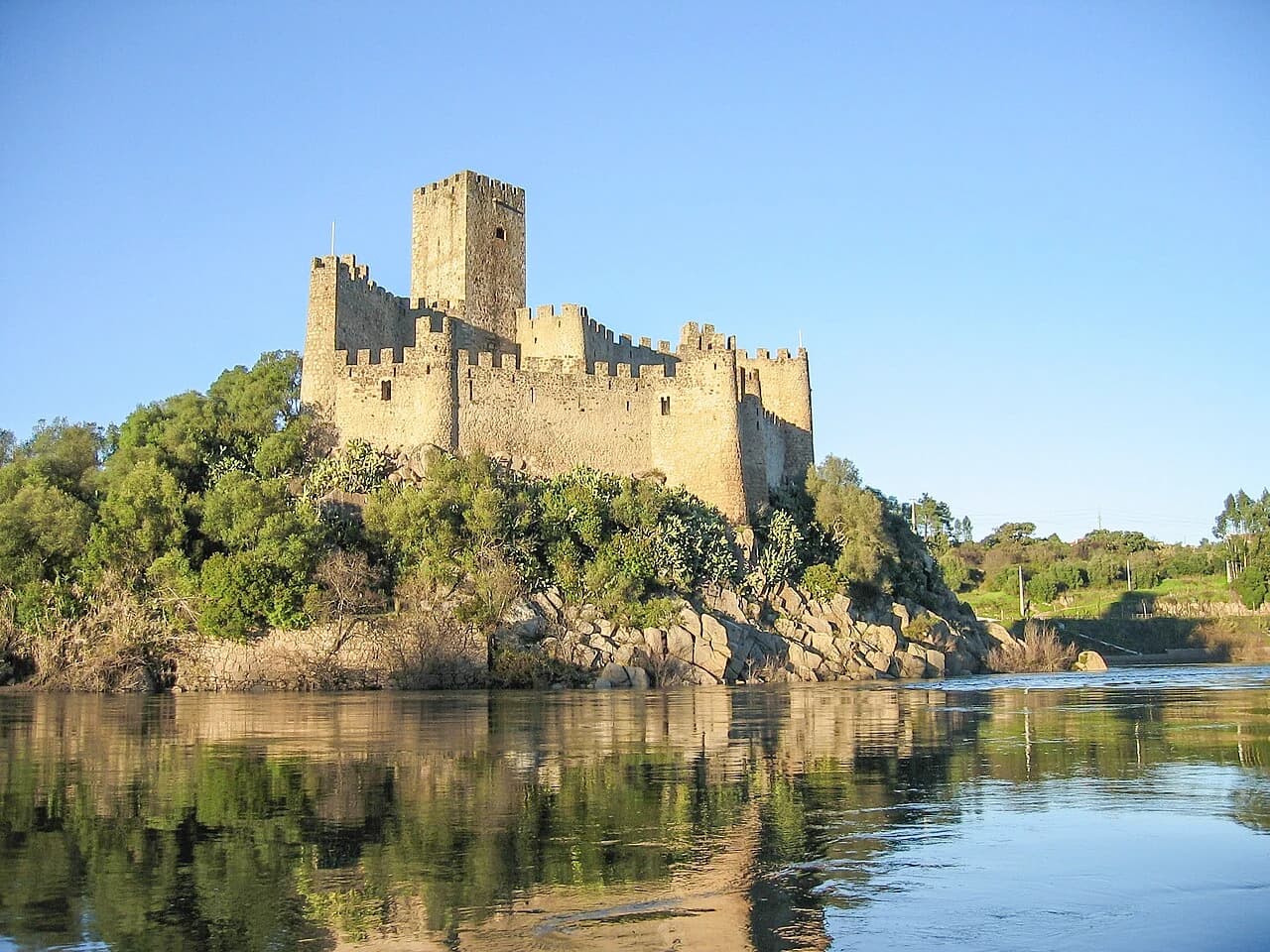
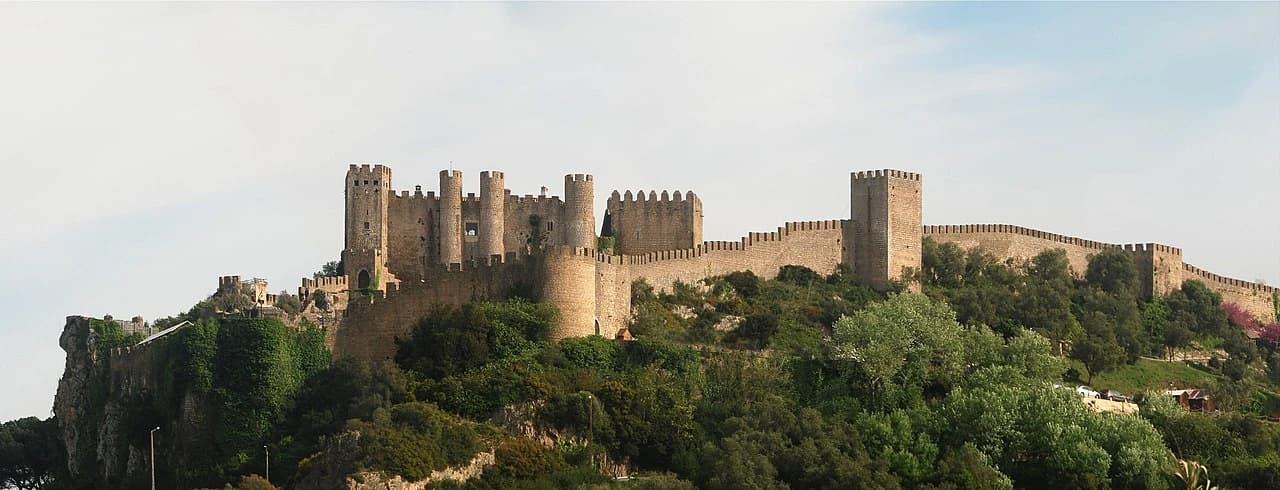
The Castle of Óbidos is a well-preserved medieval castle that dominates the historic walled town of Óbidos. It is classified as a National Monument and currently functions as a luxury hotel.
Castelo de Óbidos is also known as Castle of Obidos, Obidos Castle, Óbidos Castle, Castelo de Obidos, and 4 other names in various languages.
This self-guided audio tour features 23 narrated stops organized across 7 sections. As a castle, Castelo de Óbidos offers a unique cultural experience in the heart of Óbidos, Portugal.
The Stanza audio guide is available in 15 languages and works entirely offline — download the complete tour including audio narration, maps, and images before your visit. As you walk through Castelo de Óbidos, GPS-triggered narration plays automatically at each point of interest.
Last updated:
What you will hear
The Walled Vision of Óbidos
An establishing stop showing the castle and town from a distance to highlight its unique position on the hill and the fully enclosed medieval circuit.
The Queen's Hillside
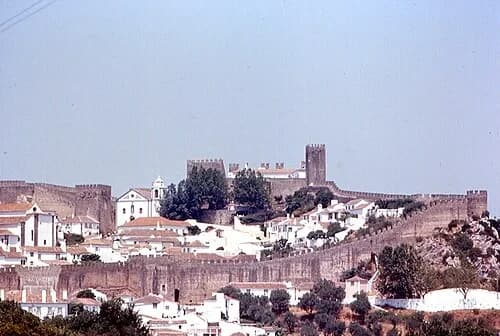
Welcome to one of the most remarkably preserved medieval sites in Portugal. This castle stands on a limestone ridge about 79 meters above sea level, providing a natural defensive position that has been occupied for millennia. Since 1910, it has been recognized as a National Monument. One of the most unique aspects of this venue is the "Town of the Queens" tradition. In 1282, King Dinis first gifted the entire town of Óbidos to his wife, Queen Isabel, as part of her dowry. This generous gesture established a custom that endured for over five centuries, with successive kings passing the town to their queens until 1834. This royal patronage ensured the town was well-maintained and protected, resulting in the beautiful preservation you see today. Looking across the hillside, you can see how the settlement cascades down from the castle walls. The limestone foundations provide a solid base for the fortifications that have stood watch over the surrounding plains for generations, marking a boundary that was once the frontier of a young nation.
Porta da Vila: The Royal Entrance
The main entrance to the town, where visitors are introduced to the tradition of the 'Town of the Queens' and the iconic Portuguese azulejo tiles.
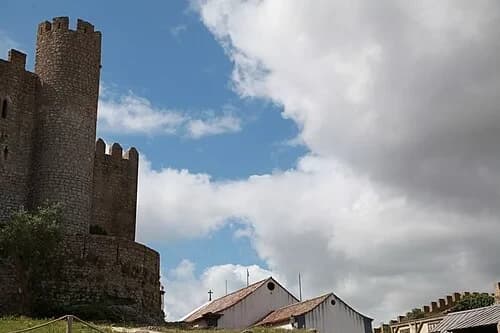
The Towering Keep
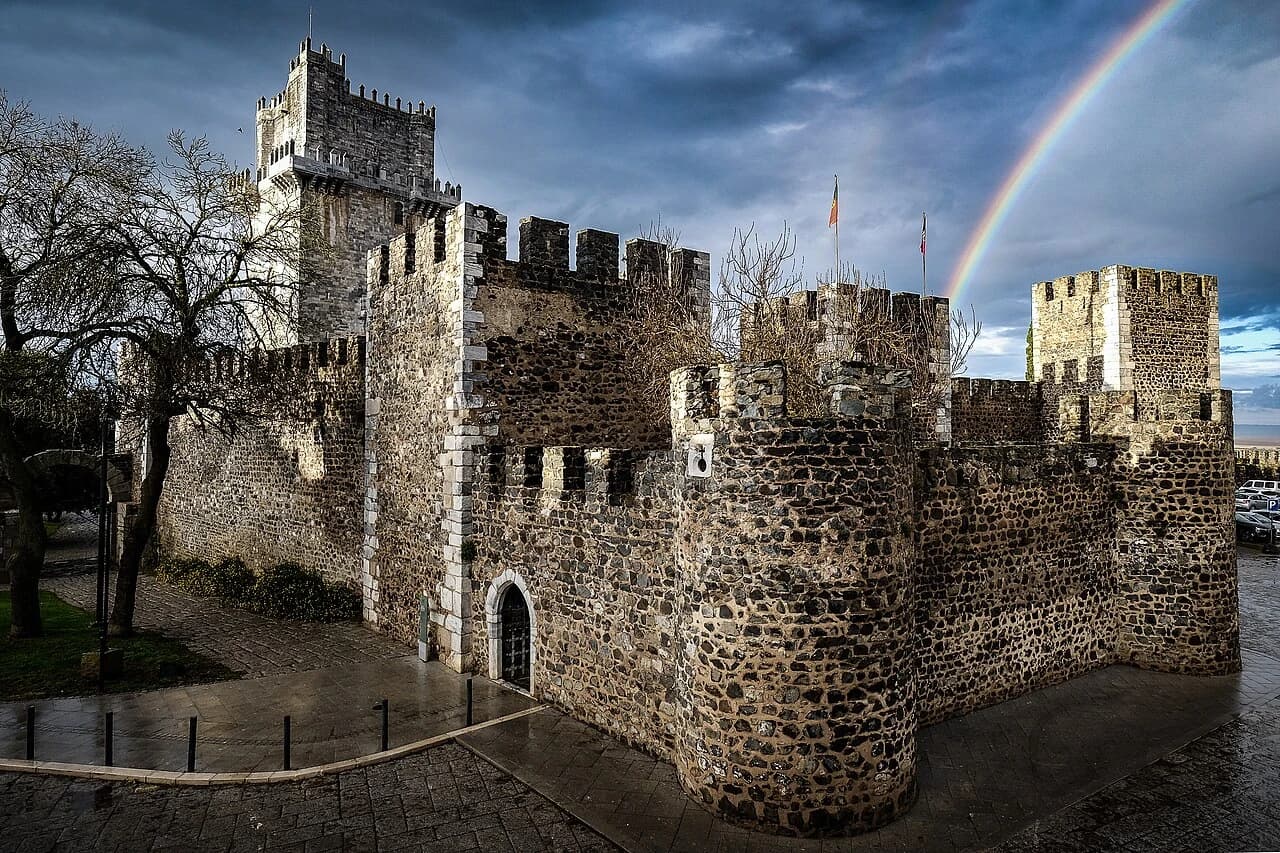
The castelejo, or inner citadel, serves as the most heavily fortified part of the entire complex. Before the current Christian medieval structures were built in the 12th century, this site held deep Muslim roots dating back to at least the 8th century. When you look at the masonry, the heavy stone blocks reveal the defensive priorities of the builders. Notice the crenelated battlements along the top of the walls. These upright blocks, called merlons, provided essential cover for archers, who could shoot from the gaps, known as crenels, and then duck back for protection. This architectural style was standard for the era, prioritizing durability and functionality over decorative flair. The sheer scale of these walls was intended to intimidate any would-be attackers and provide a secure refuge for the local population during times of conflict. The transition from Islamic to Christian architecture over the centuries has left a layered history in the stones themselves, though much of what is visible today reflects the massive rebuilding efforts of the later Middle Ages. Today, the keep stands as the highest point of the fortress, overlooking the winding streets below.
Church of Santiago and the Royal Passage
Located near the castle, this church was historically connected to the palace, serving the queens who resided here.
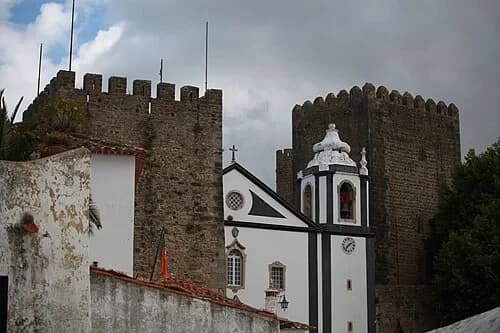
Bells and Battlements
Looking at the skyline, there is a striking visual contrast between the whitewashed church bell tower and the dark, massive stone of the castle keep. This juxtaposition highlights two different aspects of life here: the spiritual and the defensive. The heavy stone of the keep is a reminder of the 1148 event known as the Ruse of Óbidos. During the Reconquista, King Afonso Henriques managed to capture the town from the Moors not through a long and bloody siege, but through clever military strategy. Tradition holds that a small group of soldiers used a surprise tactic to enter the fortifications, catching the defenders off guard. This successful ruse allowed the first King of Portugal to secure this strategic ridge with minimal losses. The bell tower, standing brightly beside the weathered military walls, represents the Christian town that flourished after that conquest. While the castle speaks of war and protection, the church tower reflects the daily life and faith of the community that thrived under royal protection for centuries. This visual duo serves as a permanent reminder of the town’s shift from an Islamic outpost to a Christian royal stronghold.
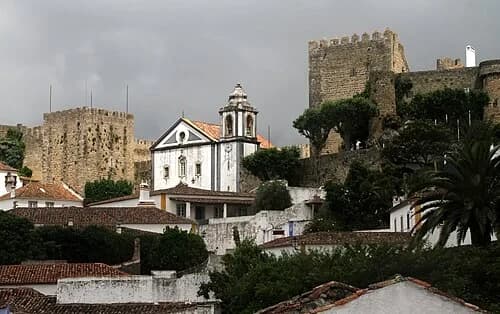
Church of Santiago
The church stands directly at the doorstep of the castle, illustrating the close relationship between the royal residence and religious life. Historically, the queens of Portugal who stayed in the palace had a private, direct passage leading from their quarters into this church. This allowed them to attend mass in seclusion, avoiding the public streets and maintaining their royal dignity away from the common townspeople. This kind of architectural link was a common feature in royal palaces across Europe, ensuring that the sovereign could fulfill their religious duties without security risks. From your current vantage point, you can see how the church's entrance faces the castle's inner gate, making it almost an extension of the royal apartments. While the interior has undergone various changes over the years, its physical position remains a testament to the privileged lifestyle of the queens of Óbidos. The bells of this church would have been some of the first sounds the royal guests heard each morning, signaling the start of the liturgical day. Its placement reflects a time when the boundary between the sacred and the crown was physically intertwined.
The Castle Keep and Military Might
The 'castelejo' or inner citadel, where the history of the 1148 Reconquista and the 1246 siege comes to life.
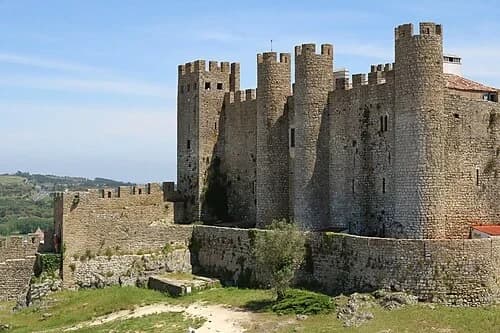
The Inner Citadel
This area of the fortress is central to the Loyalty of Óbidos story, which solidified the town's reputation for unbreakable military resolve. In 1246, Portugal was gripped by a civil war between King Sancho II and his brother, the future King Afonso III. While much of the country eventually sided with Afonso III, the defenders of Óbidos remained fiercely loyal to Sancho II. Even when Afonso III’s forces arrived to besiege the walls, the town refused to surrender. Legend says they held out for a significant time, and even after King Sancho II had fled to exile in Toledo, the town only opened its gates once they were certain of his fate. This display of steadfastness impressed even their enemies, and ever since, the town has carried a reputation for being exceptionally loyal. The massive walls and towers of the citadel you see today were the very defenses that withstood that 13th-century pressure. It remains a point of local pride that the town's character was forged in such a moment of political crisis, earning it a special place in national history.
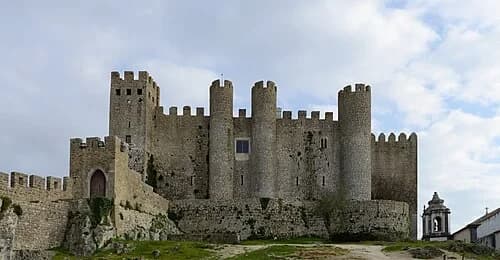
Fortress to Palace
The building before you is a complex puzzle of different eras. While the massive base consists of 12th-century military stonework built for war, the upper sections tell a very different story. During the 16th century, these levels were modified to transform the rugged fortress into a more comfortable and refined royal residence. You can see evidence of this shift in the windows. While the lower towers feature small, narrow slits designed specifically as defensive openings for archers, the upper floors boast larger, more decorative openings that allowed for light and views. This transition from a purely functional stronghold to a place of royal leisure reflects a time when Portugal was becoming wealthier and more stable. The monarchs required spaces that reflected their status, not just their military power. Despite these residential upgrades, the building never lost its defensive character. The thick stone walls and crenelated rooflines served as a constant reminder that even in a palace, safety was paramount. The blend of whitewashed plaster on some sections further softens the imposing medieval stone, illustrating how the building's purpose softened over time.
The Inner Courtyard and Topiary
The heart of the citadel, featuring the well-preserved courtyard that reflects the town's prosperity under royal patronage.
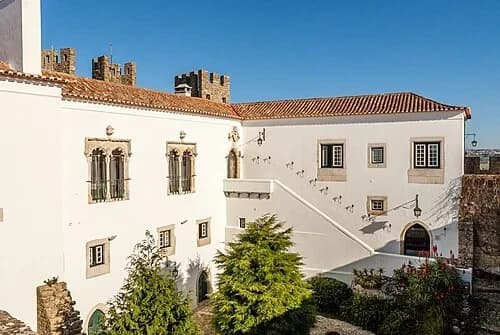
The Grand Staircase
This external staircase is a clever piece of historical architectural design. By placing the stairs on the outside of the building, the architects ensured that the lower floors could remain dedicated to utilitarian tasks, such as storage or housing for guards, while the upper levels remained exclusive to the elite guests and royalty. This allowed residents to move directly between the courtyard and their private quarters without having to pass through the busy or dirty work areas on the ground floor. As you look at the wall along the stairs, notice the iron sconces. In the centuries before electricity, these would have held burning torches to light the way for guests arriving after sunset. The placement of these stairs also added a layer of security; the entrance to the royal apartments was elevated, making it easier to defend if the courtyard was ever breached. The simple, functional design of the staircase integrates with the whitewashed walls, leading the eye up toward the decorative windows of the residential floor. This layout clearly separated the world of service from the world of the court.
Royal Interiors and the Dining Hall
A glimpse into the life of the Portuguese queens, with interiors that blend medieval stone with modern luxury.
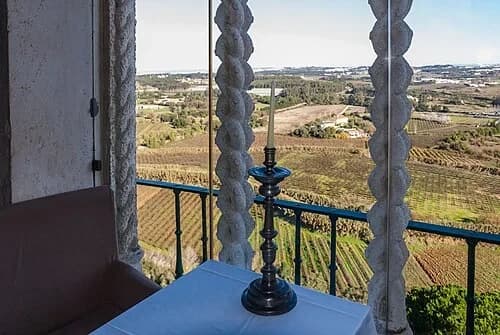
A Royal Perspective
Looking through these windows offers a view that has changed remarkably little in its essentials over the centuries. Below the castle walls, you can see the fertile plains of the Estremadura region, filled with vineyards and orchards. Historically, this agricultural land was the primary source of wealth for Óbidos. The castle served as the central collection point for taxes, which were often paid in kind with produce from these very fields. From this elevated position, the residents of the palace could monitor the activity in the valley, watching the seasonal changes from planting to harvest. This surrounding land was a key reason why Óbidos was such a valuable wedding gift; the income from these agricultural holdings provided the queens with their own independent revenue. Even today, the region is famous for its fruit, especially the sour cherries used to make the local liqueur, Ginjinha. The vista stretches out toward the horizon, providing a sense of the strategic advantage this hilltop provided, allowing the castle's occupants to see approaching visitors or potential threats long before they reached the gates.
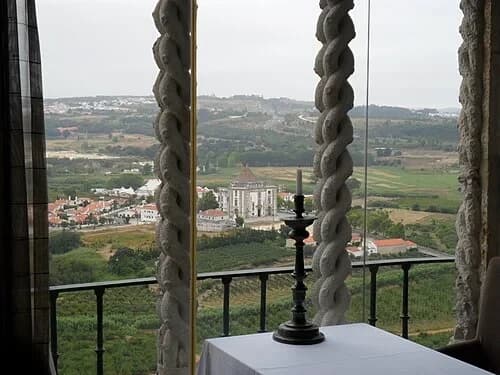
Dining with History
The interior of the Pousada offers a rare opportunity to experience the castle’s domestic life. This space, once the Great Hall of the royal palace, has been repurposed as a dining area. While you sit here, you are occupying the same halls where Portuguese monarchs and their guests once gathered for feasts and courtly business. One of the most practical features of this ancient construction is immediately apparent: the climate. The immense thickness of the original stone walls acts as natural insulation. Even during the peak of a scorching Portuguese summer, the interior remains remarkably cool and temperate without the need for modern systems. This thermal mass was essential for making the fortress habitable in an era before temperature control. Looking around, the high ceilings and heavy masonry remind us that this was a place designed for status and security. The transition from a royal hall to a public dining room allows the heritage of the building to be lived in rather than just observed. It transforms the castle from a static monument into a functional part of the town’s modern hospitality.
Walking the 1,565-Meter Wall
The signature experience of Óbidos: walking the entire perimeter of the medieval walls that protected the town for centuries.
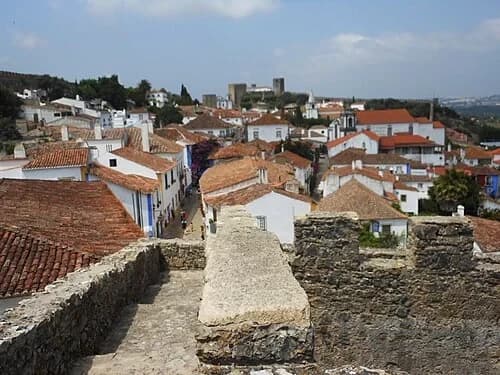
The Sea of Tile
Looking down from the height of the walls, the urban fabric of Óbidos reveals its secrets. The view is dominated by a sea of traditional orange terracotta roof tiles, punctuated by whitewashed chimneys and narrow slivers of white wall. This density was not accidental; it was a calculated defensive choice. By building the houses so closely together and keeping the streets narrow and winding, the town’s designers created an internal maze. If an invading force managed to breach the main gates, they would find themselves in a labyrinth where their numbers and heavy equipment would be a disadvantage. Local defenders, who knew every alley and rooftop, could easily harass intruders from above. The traditional tile roofing has a practical side too, designed to shed the winter rains effectively. From this height, you can see how the town has remained remarkably contained within its original footprint, avoiding the sprawling modern development seen in many other European cities. The consistency of the colors—the white lime-wash and the earthy orange tiles—creates a harmonious aesthetic that has come to define the visual identity of this historic Portuguese town.
Want to hear the rest?
Download the Stanza app to unlock all 23 stops and full GPS-guided navigation.
Frequently Asked Questions
How long does the Castelo de Óbidos audio tour take?
The Castelo de Óbidos audio guide includes 23 narrated stops. Most visitors spend 45 minutes to 1.5 hours exploring the complete tour, though you can listen at your own pace and skip or revisit any stop.
Is the Castelo de Óbidos audio guide available in my language?
Stanza supports 15 languages: English, Spanish, French, German, Italian, Portuguese, Russian, Japanese, Chinese, Korean, Arabic, Hindi, Polish, Dutch, Hebrew. Check the guide in the app to confirm the languages currently available for this tour.
Can I use the audio guide offline at Castelo de Óbidos?
Yes! Download the complete Castelo de Óbidos tour — including all audio, maps, and images — before your visit. The Stanza app works completely offline, so you don't need WiFi or mobile data at the venue.
How much does the Castelo de Óbidos audio guide cost?
The Stanza app is free to download. Free and paid audio guides are available; current prices are shown in the app.
How do I use the Stanza audio guide at Castelo de Óbidos?
Download the free Stanza app, search for "Castelo de Óbidos", and download the tour. When you arrive at the venue, the app uses GPS to detect your location and automatically plays the relevant narration as you move between points of interest — completely hands-free.
What makes the Stanza audio guide different from other Castelo de Óbidos tours?
Stanza offers GPS-triggered narration that plays automatically as you walk through Castelo de Óbidos — no need to manually select stops. The tour is available in 15 languages, works fully offline, and includes 23 expertly narrated stops with images and historical context.
What other audio guides are available near Castelo de Óbidos?
Stanza offers multiple audio guides in Óbidos, Portugal and nearby areas. After downloading the app, browse the map to discover all available tours near Castelo de Óbidos. Each guide can be downloaded for offline use.