Languages
15Mosteiro de São Martinho de Tibães Audio Guide
Mosteiro de São Martinho de Tibães is a landmark in Braga, Portugal. Explore it with Stanza's GPS-triggered offline audio guide — available in 15 languages.
Quick Facts
30
Stops
15
Languages
100%
Offline
📍 Braga, Portugal · 41.5558°N, -8.4794°E
About Mosteiro de São Martinho de Tibães
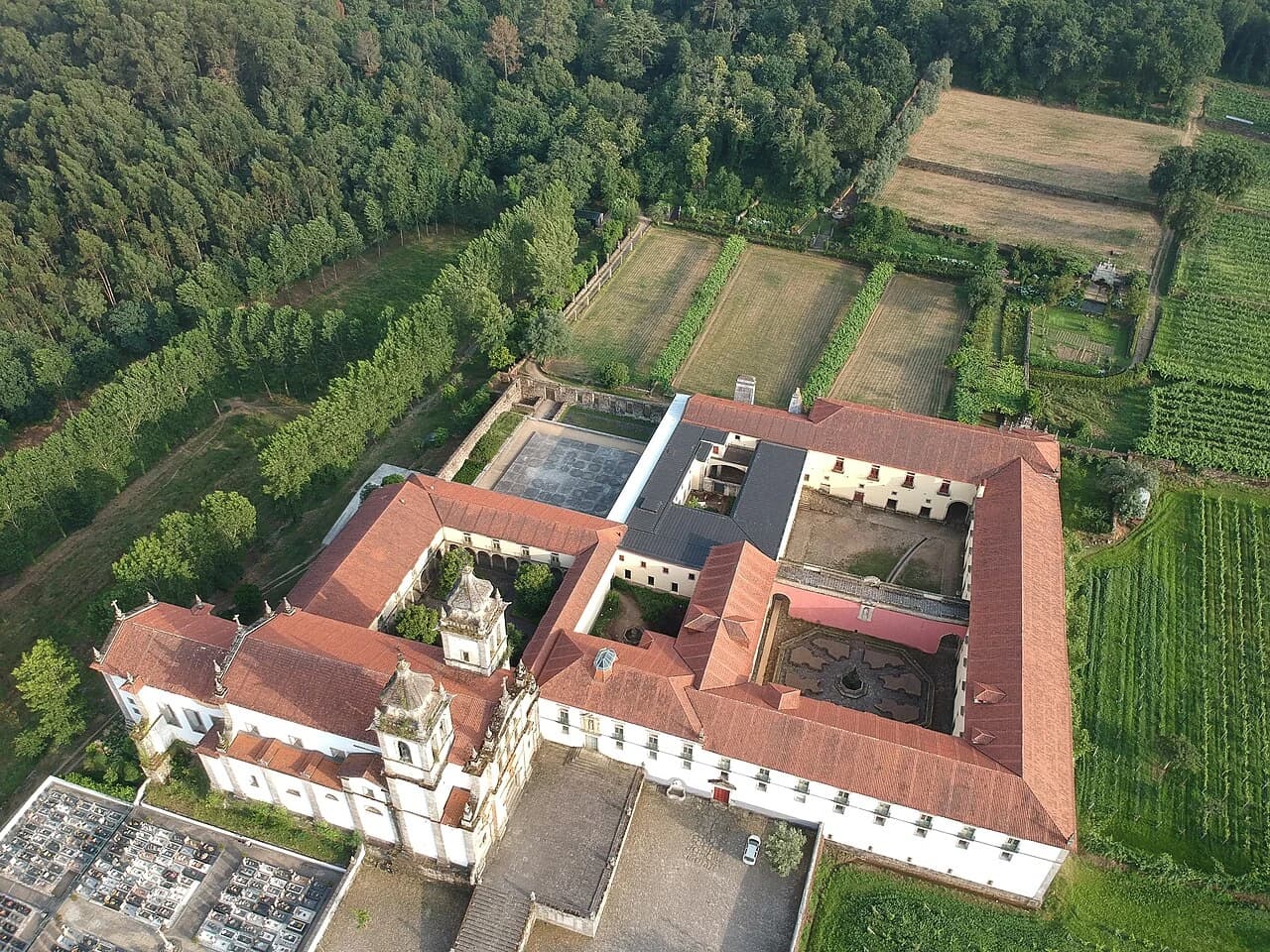
The Monastery of São Martinho de Tibães is a historic former Benedictine monastery known for its elaborate Baroque interior and extensive gardens. It currently serves as a cultural site and protected monument in the Braga region.
Mosteiro de São Martinho de Tibães is also known as Tibães Monastery, Convento de Tibães, Igreja de Tibães, Conjunto formado pelo Cruzeiro, Igreja e Mosteiro de Tibães, Fontes e construções Arquitectónicas da Quinta de Tibães, and 4 other names in various languages.
This self-guided audio tour features 30 narrated stops organized across 7 sections. As a monastery, Mosteiro de São Martinho de Tibães offers a unique cultural experience in the heart of Braga, Portugal.
The Stanza audio guide is available in 15 languages and works entirely offline — download the complete tour including audio narration, maps, and images before your visit. As you walk through Mosteiro de São Martinho de Tibães, GPS-triggered narration plays automatically at each point of interest.
Last updated:
What you will hear
The High Choir and Pipe Organ
Highlights the signature Rococo pipe organ and the Benedictine tradition of liturgical chant in the ornate choir stalls.
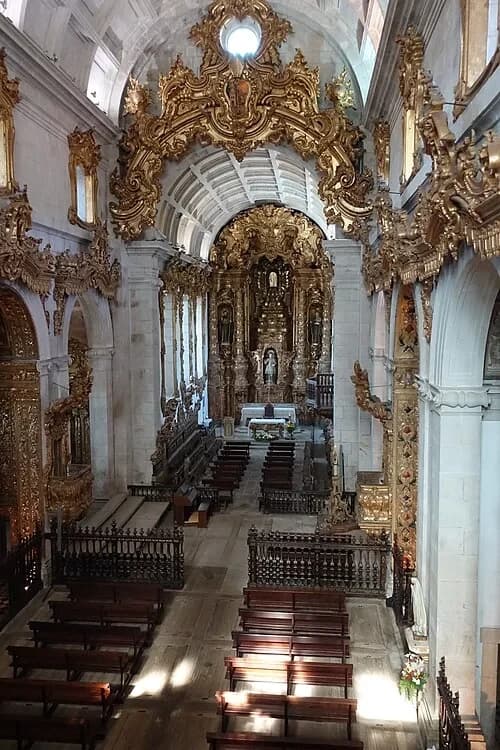
The High Choir
The High Choir was a space reserved strictly for the monastic community. Located above the main entrance, it provided the monks with a sense of spiritual and physical seclusion from the public gathered in the nave below. From the beautifully carved wooden choir stalls, the monks would assemble up to seven times a day to perform the Divine Office. The architecture here was carefully considered for acoustic resonance, ensuring that their liturgical chants would carry clearly throughout the church. Standing in this area, you can appreciate the unique perspective the monks had, looking down toward the main altar from a position of relative privacy. This separation was a key part of their monastic life, allowing them to participate in the public liturgy while maintaining the boundaries of their enclosed world. The layout of the stalls and the large central lectern are functional reminders of the centuries spent in study and song that defined the daily routine of the Benedictines at Tibães.
The Grand Sacristy
Examines the 'Seven Virtues' statues and the Evangelist paintings, while telling the story of the 1809 French invasion survival.
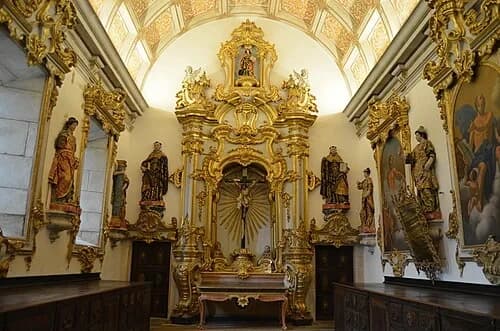
The Grand Sacristy
The Grand Sacristy is the setting for a famous local legend known as the 'Miracle of the French Invasion.' In 1809, as Napoleon's troops were approaching the monastery with the intent to loot its riches, a local surgeon named Domingos José intervened. He convinced the French officers that the monastery was being used as a hospital for their own sick and wounded soldiers, thereby sparing the building from destruction. This elegant space served as the preparation area for the monks before they entered the church for services. The room is dominated by high-quality 18th-century furniture, designed to hold the precious vestments and liturgical vessels used in the rituals. In the center, a large crucifix hangs as a reminder of the room's sacred purpose. The balance of the architecture and the refinement of the woodwork here offer a calmer, more intellectual atmosphere compared to the overwhelming gold of the church, reflecting the practical and administrative functions of the sacristy.
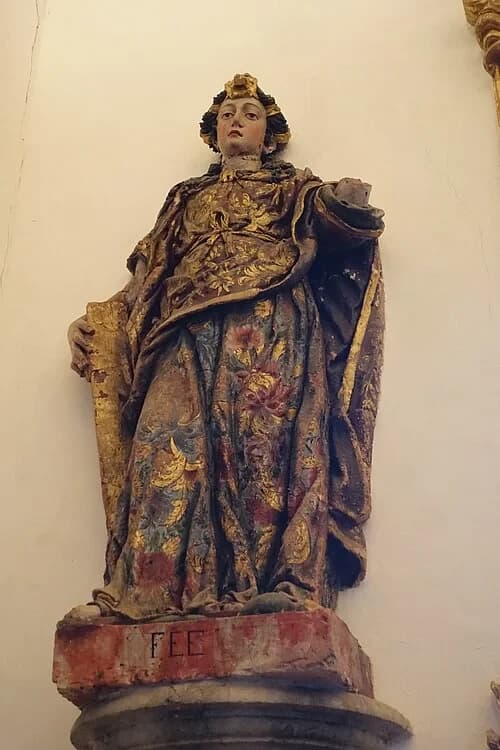
The Statue of Faith
The statue labeled 'FEE,' which is the archaic Portuguese word for Faith, is one of several allegorical figures representing the virtues within the sacristy. What makes this statue particularly interesting is the use of the 'estofado' technique on her robes. This decorative process involved first applying a layer of gold leaf to the carved figure. Then, a layer of paint was applied over the gold. Finally, while the paint was still slightly tacky, an artisan would carefully scratch away thin lines of the paint to reveal the shimmering gold underneath, creating intricate patterns that mimic the look of precious brocade fabrics. This technique gave the sculptures a realistic, luxurious appearance that was highly prized in Baroque art. Faith holds a staff, symbolizing her role as a guide and a source of strength for the monastic community. The detail on her garments is a fine example of the craftsmanship found throughout Tibães, where even smaller allegorical figures were treated with the utmost artistic care.

Saint Luke
http://www.wikidata.org/.well-known/genid/904c32332e4aac5f9c87c859daedb3c7
In this verified painting, we see Saint Luke, the patron saint of artists and physicians, shown at work as he paints a portrait of the Virgin Mary and the Christ Child. This image is especially significant at Tibães because the monastery functioned as a major creative center. For centuries, Tibães was essentially a vast workshop where the unique Baroque and Rococo styles of the Minho region were developed, refined, and then exported to other Benedictine houses. Architects, sculptors, and painters lived and worked here, sharing ideas and training apprentices. This creative energy is what produced the incredible 'talha dourada' and architecture you see throughout the complex. The depiction of Luke as a painter legitimizes the artistic pursuits of the monks and the craftsmen they employed, presenting art as a holy act of devotion. Notice the detail of the ox beside Luke, his traditional symbol, and the way the light highlights his focused expression as he translates the divine image onto his canvas.
The Monastic Kitchen
Illustrates the daily life and self-sufficiency of the monks, featuring the massive stone fireplace and vaulted ceilings.
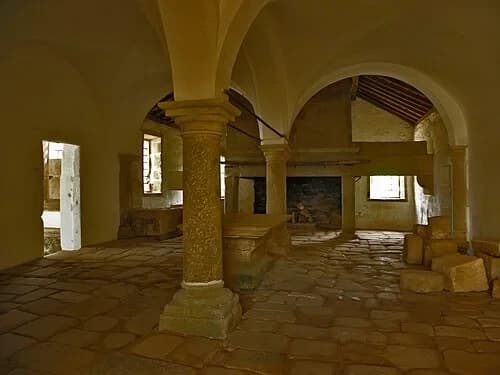
The Monastic Kitchen
Moving into the Monastic Kitchen, the scale of the architecture shifts from the decorative to the purely functional. Massive granite columns support a series of sturdy vaulted ceilings, designed to withstand the heat and humidity of a space that fed dozens of monks and laborers every day. The monastery was largely self-sufficient, and most of the ingredients used here were grown directly on the surrounding 40-hectare estate. This included cereals, vegetables, olive oil, and wine produced in the gardens and fields visible beyond the monastery walls. The stone-paved floor and plain walls reflect the utilitarian nature of the room, yet the sheer size of the pillars suggests the importance of communal dining in the daily Rule of Saint Benedict. Food preparation was a ritual that required significant organization and manpower to sustain the community. As you look around, you can imagine the large wooden tables and heavy copper vessels that once filled this room. This space provided the physical sustenance necessary for the monks to maintain their rigorous and disciplined schedule of prayer and labor.
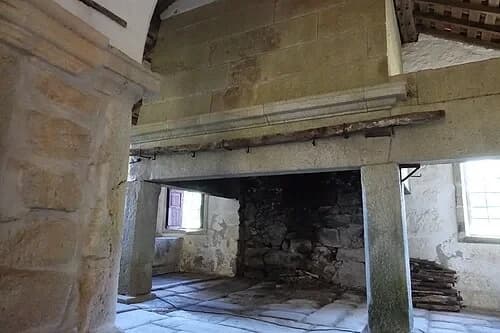
The Great Stone Hearth
The centerpiece of the kitchen is the Great Stone Hearth, a monumental structure built from massive, rough-hewn granite blocks. Its sheer scale is a testament to the volume of food required to support the inhabitants of this vast complex. Meals for the entire community were cooked here over open flames, with large cauldrons suspended from iron hooks and long skewers used for roasting. The hearth is designed with a wide opening to allow multiple tasks to occur simultaneously, while the high stone chimney above channeled away the smoke from the constant fires. It is a space defined by sensory memories—the smell of wood smoke, the heat radiating from the stones, and the rhythmic sound of preparation. This fireplace was more than just a stove; it was the engine that kept the monastery running through the seasons. The dark stains and wear on the stone tell a story of centuries of continuous use. It represents the intersection of the spiritual life and the practical necessities of living in a large-scale communal institution, where even a simple meal required significant engineering.
The Apothecary
Highlights the Benedictine commitment to science and community service through the preserved 18th-century pharmacy.
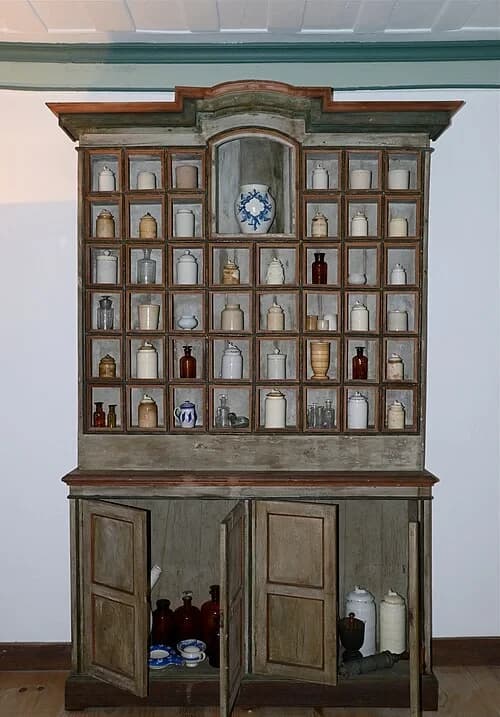
The Apothecary Cabinet
This well-preserved 18th-century apothecary cabinet demonstrates the monks' deep involvement in science and medicine. The cabinet is divided into dozens of small, numbered drawers and pigeonholes, each designed to store specific botanical ingredients or prepared remedies. The Benedictines followed a long tradition of monastic medicine, where the study of nature and the care of the sick were seen as divine duties. Many of the herbs used in these preparations were harvested from the monastery's own specialized botanical gardens. The monks were skilled botanists, documenting the properties of various plants and refining recipes for ointments, tinctures, and medicinal powders. The design of the cabinet is both practical and elegant, with muted green and red paintwork that has aged over time. It served as the inventory for the monastery's pharmacy, which was often the only source of reliable medical care for many miles around. By maintaining such a sophisticated facility, the Order positioned itself as a center of local knowledge and charity, blending spiritual service with early scientific inquiry into the natural world.
The Grand Baroque Staircase
A MUST-SEE monumental outdoor feature that leads visitors through the Seven Virtues via allegorical fountains.
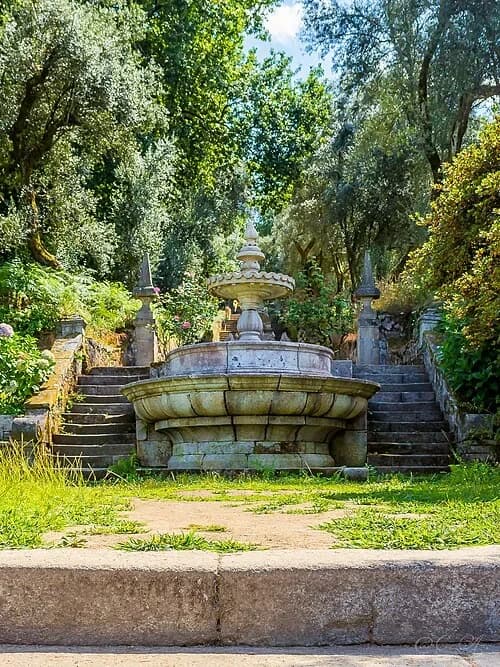
The Cascading Waterways
The gardens of Tibães are defined by their complex water engineering, visible in the cascading basins that follow the natural slope of the hill. Water is channeled through a series of decorative stone conduits and stepped fountains, creating a continuous flow that travels from higher springs toward the monastery complex. This system demonstrates the technical skill of the 18th-century designers who integrated the site's natural topography with the formal requirements of a Baroque garden. There is a deliberate contrast between the rigid, sharp lines of the carved stone basins and the lush, untamed growth of the surrounding trees and ferns. This movement of water was both functional—providing irrigation for the various crops and gardens—and contemplative. For the monks, the sight and sound of the moving water served as a background for their silent reflections. The interplay of stone, water, and light shifts throughout the day, creating different moods within the estate. This hydraulic system remains one of the most impressive features of the grounds, highlighting the mastery over the landscape required to sustain such a massive institution.
The Monastic Estate and Aqueduct
Showcases the vast 40-hectare estate (Cerca) and the engineering of the 17th-century aqueduct.
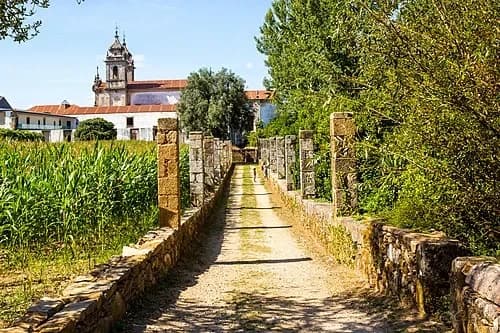
The Monastic Path
The Monastic Path winds through the 'Cerca', the enclosed 40-hectare estate surrounding the primary monastery buildings. These stone-lined walkways were designed for both practical access and spiritual exercise. As the monks walked through orchards, olive groves, and vineyards, they were protected by three-meter-high stone walls that physically blocked out the outside world. This enclosure was vital for maintaining the 'clausura'—the traditional state of monastic seclusion. The paths are flanked by stone pillars and low walls, creating a structured environment within the diverse agricultural landscape. Walking here, one can imagine the monks engaged in silent prayer or meditative reading, their only company the rustle of leaves and the distant sound of water from the aqueducts. These routes connected the different functional areas of the estate, from the agricultural fields to the more formal gardens and remote chapels. The path represents the Benedictine balance of 'Ora et Labora'—prayer and work—where the act of walking through the productive landscape was itself a form of devotion and engagement with the world.
The Chapel of São Bento
The spiritual destination at the summit of the gardens, featuring tiled walls depicting the life of Saint Benedict.
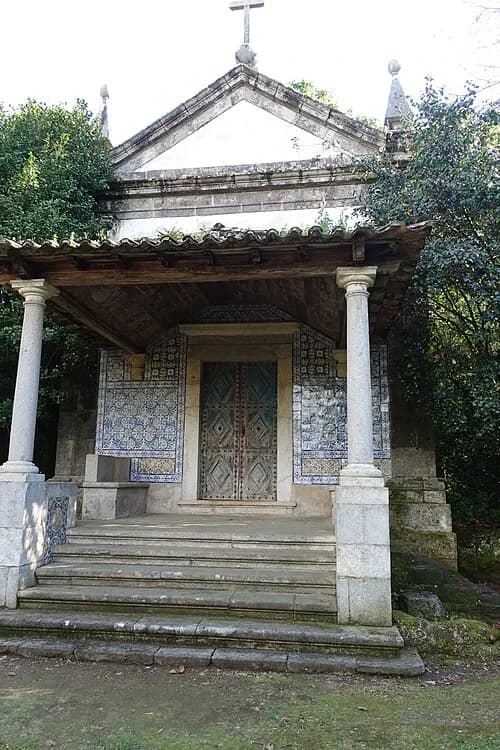
Chapel of Saint Benedict
Reaching the Chapel of Saint Benedict marks the spiritual and physical high point of the garden ascent. The architecture is simple and restrained, featuring a deep porch supported by stone columns and decorated with traditional blue and white tile panels. This small building served as a site for solitary prayer and meditation, away from the busier communal spaces of the main monastery church. The climb up the hill to reach this point was intended to be both a physical challenge and a symbolic journey toward higher spiritual understanding. From the shaded porch, one could look out over the vast estate, seeing the fruits of the monks' labor laid out below. The tiled entrance, known as an 'alpendre', provides a clear transition from the natural world of the gardens to the sacred interior of the chapel. Its modest scale and peaceful location reflect the Benedictine emphasis on humility and interiority. This chapel was the ultimate destination for many of the liturgical processions that once wound their way through the grounds on specific feast days.
Want to hear the rest?
Download the Stanza app to unlock all 30 stops and full GPS-guided navigation.
Frequently Asked Questions
How long does the Mosteiro de São Martinho de Tibães audio tour take?
The Mosteiro de São Martinho de Tibães audio guide includes 30 narrated stops. Most visitors spend 45 minutes to 1.5 hours exploring the complete tour, though you can listen at your own pace and skip or revisit any stop.
Is the Mosteiro de São Martinho de Tibães audio guide available in my language?
Stanza supports 15 languages: English, Spanish, French, German, Italian, Portuguese, Russian, Japanese, Chinese, Korean, Arabic, Hindi, Polish, Dutch, Hebrew. Check the guide in the app to confirm the languages currently available for this tour.
Can I use the audio guide offline at Mosteiro de São Martinho de Tibães?
Yes! Download the complete Mosteiro de São Martinho de Tibães tour — including all audio, maps, and images — before your visit. The Stanza app works completely offline, so you don't need WiFi or mobile data at the venue.
How much does the Mosteiro de São Martinho de Tibães audio guide cost?
The Stanza app is free to download. Free and paid audio guides are available; current prices are shown in the app.
How do I use the Stanza audio guide at Mosteiro de São Martinho de Tibães?
Download the free Stanza app, search for "Mosteiro de São Martinho de Tibães", and download the tour. When you arrive at the venue, the app uses GPS to detect your location and automatically plays the relevant narration as you move between points of interest — completely hands-free.
What makes the Stanza audio guide different from other Mosteiro de São Martinho de Tibães tours?
Stanza offers GPS-triggered narration that plays automatically as you walk through Mosteiro de São Martinho de Tibães — no need to manually select stops. The tour is available in 15 languages, works fully offline, and includes 30 expertly narrated stops with images and historical context.
What other audio guides are available near Mosteiro de São Martinho de Tibães?
Stanza offers multiple audio guides in Braga, Portugal and nearby areas. After downloading the app, browse the map to discover all available tours near Mosteiro de São Martinho de Tibães. Each guide can be downloaded for offline use.