Languages
15Sé de Braga Audio Guide
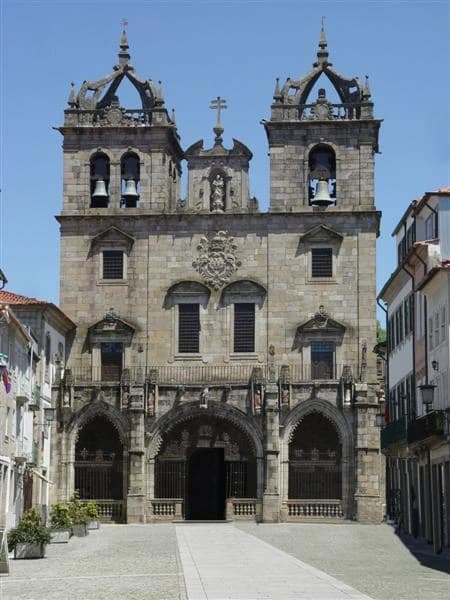
Sé de Braga is a landmark in Braga, Portugal. Explore it with Stanza's GPS-triggered offline audio guide — available in 15 languages.
Quick Facts
16
Stops
15
Languages
100%
Offline
📍 Braga, Portugal · 41.5500°N, -8.4270°E
About Sé de Braga
Braga Cathedral is the oldest cathedral in Portugal, featuring a complex architectural blend of Romanesque, Gothic, and Baroque styles. It serves as the seat of the Archdiocese of Braga and remains an important site for religious pilgrimage.
Sé de Braga is also known as Sé de Braga, Se de Braga, Se de Braga, Catedral de Braga.
This self-guided audio tour features 16 narrated stops organized across 8 sections. As a cathedral, Sé de Braga offers a unique cultural experience in the heart of Braga, Portugal.
The Stanza audio guide is available in 15 languages and works entirely offline — download the complete tour including audio narration, maps, and images before your visit. As you walk through Sé de Braga, GPS-triggered narration plays automatically at each point of interest.
Last updated:
What you will hear
The Romanesque Nave
Focus on the original 11th-century structure that served as the foundation for the oldest cathedral in Portugal.
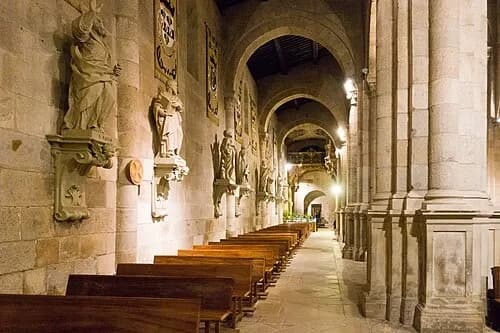
The Romanesque Nave
Inside the main body of the cathedral, you are standing within the original 11th-century Romanesque core. This style is defined by a sense of massive weight and permanence. Notice the thick, sturdy pillars and the characteristic rounded arches that support the roof. Unlike the pointed arches of later Gothic styles, these semicircular forms were the primary architectural solution of the early Middle Ages. The cathedral's history hasn't always been stable; in 1135, a major earthquake struck the region, destroying the original towers and causing significant damage. This event led to centuries of rebuilding and stylistic additions, yet the Romanesque foundations survived. Looking at the sheer scale of the masonry, it is easy to understand how it has endured for nearly a thousand years. The simplicity of the forms here provides a stark contrast to the more ornate chapels added later. These pillars do more than just hold up the ceiling; they represent the structural and historical bedrock of the church. The unadorned stone surfaces reflect the austerity of the early religious orders in Braga, creating a space focused on light, shadow, and the raw strength of the granite construction.
The Gilded Baroque Organs
Highlight the spectacular 18th-century pipe organs, which are masterpieces of Portuguese gilt wood carving (talha dourada).
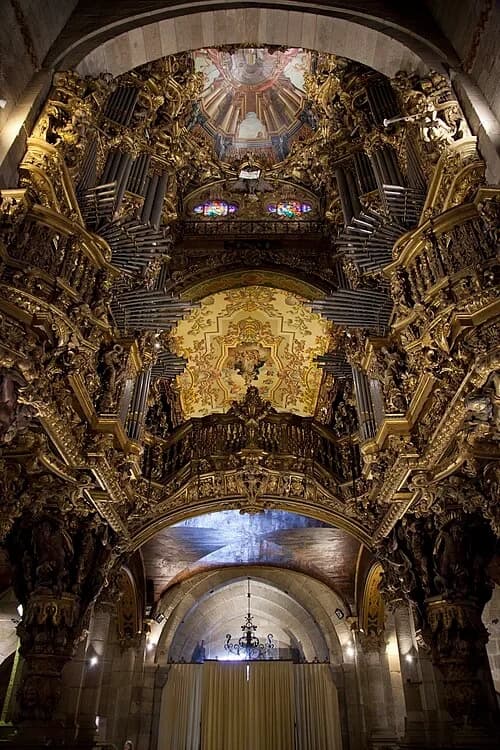
The High Choir
If you look upward from the nave, the architectural tone of the cathedral shifts dramatically. While the ground level is dominated by somber Romanesque stone, the upper reaches, specifically the High Choir, are a celebration of 18th-century Baroque design. This period favored theatricality, movement, and light, which is perfectly encapsulated in the decorated ceiling and the massive pipe organs. The transition from the lower level to the upper level tells the story of the cathedral's long evolution. What began as a simple, fortress-like church was gradually transformed into a space of immense visual complexity. The perspective from the nave toward the choir is intended to draw the eye toward heaven, using the ornate carvings and painted scenes to create a sense of wonder. The gold highlights and deep colors of the ceiling paintings contrast sharply with the gray granite below. This layering of styles was intentional; it demonstrated that the church remained a living, evolving institution that could adapt to the tastes and spiritual needs of different eras. The High Choir represents the pinnacle of this artistic ambition, turning the functional space of the singers into a permanent exhibition of Baroque craftsmanship.
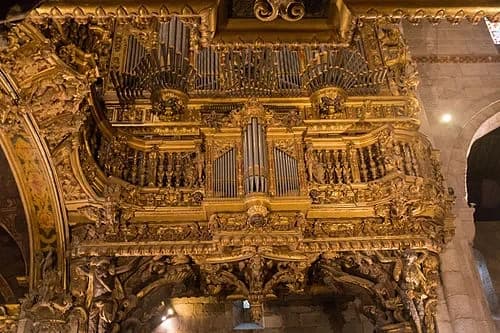
The Gilded Baroque Organs
The two massive organs facing each other across the choir are among the most famous features of the cathedral. They are premier examples of the Portuguese 'talha dourada' technique, where intricate wood carvings are covered in a thin layer of gold leaf. These particular works were crafted by the renowned sculptor Marceliano de Araújo in the 18th century. As you examine the ornate casework, you will see a wild array of sculptural figures. Angels, cherubs, and even mythical creatures appear to strain under the weight of the massive organ pipes, their bodies twisting in dramatic Baroque poses. The detail is so dense that it can take several minutes for the eye to pick out individual characters from the golden mass. Beyond their visual impact, the placement of the two organs was a functional choice. By having them face each other, the cathedral achieved a unique surround-sound effect long before modern technology existed. During major services, the music would wash over the congregation from both sides, creating an immersive acoustic experience. These instruments are still in use today, continuing a tradition of liturgical music that has filled this space for hundreds of years.
The Manueline Main Chapel
Showcase the early 16th-century reconstruction by João de Castilho, representing the height of Portuguese Gothic architecture.
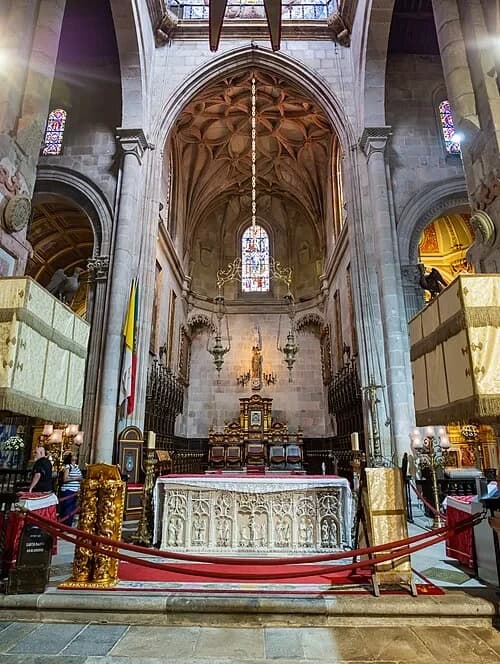
The Main Chapel
The Main Chapel is the liturgical heart of the cathedral and a standout example of the Manueline style, a uniquely Portuguese transition from Gothic to Renaissance. This space was reconstructed in the early 16th century under the direction of architect João de Castilho, who was one of the era's most prominent builders. The most striking feature is the ceiling, which showcases complex star rib vaulting. Notice how the stone ribs branch out and intersect to form intricate geometric patterns, a signature of Manueline craftsmanship. This design wasn't just decorative; it allowed for a much higher ceiling and larger windows, flooding the sanctuary with light. The height of the chapel is intended to create a sense of verticality, drawing your gaze toward the stained glass windows at the far end. Below, the altar is filled with dense ornamental detail that complements the geometry above. This chapel represents a moment in Portuguese history when the nation’s wealth from global exploration was being poured into its most significant religious sites. Every surface, from the base of the altar to the highest point of the vault, demonstrates a level of technical skill that marked the peak of late-medieval stone carving in the region.
The Chapel of Glory and Royal Tombs
Visit the final resting place of significant figures, connecting the cathedral to the founders of the Portuguese nation.
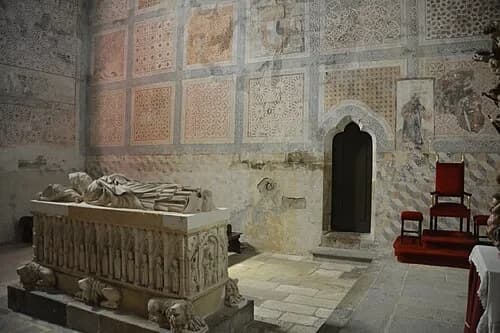
The Chapel of Glory
The Chapel of Glory, dating to the 14th century, preserves a distinct Gothic atmosphere that feels quite different from the grander, more ornate parts of the cathedral. Here, the focus is on architectural purity and geometric patterns. If you look at the walls, you will see decorative motifs that differ significantly from the Romanesque or Baroque elements found elsewhere in the building. These patterns give the space a unique character, reflecting the artistic trends of the mid-1300s. This area is also deeply tied to the history of the Portuguese nation. Nearby is the Chapel of the Kings, which houses the tombs of Count Henrique and Countess Teresa. They were the parents of Afonso Henriques, the very first King of Portugal. Their presence here highlights the cathedral's role as a royal pantheon and a symbol of national identity. The Chapel of Glory itself was commissioned by Archbishop Gonçalo Pereira, who wanted a dignified space for prayer and burial. The somber lighting and the cool tones of the stone create a reflective environment, suitable for its historical function as a place of rest for some of the most powerful figures in Braga’s history.
The Chapel of São Geraldo
Explore the chapel dedicated to the city's patron saint, famous for its Baroque gilding and historical tile panels.
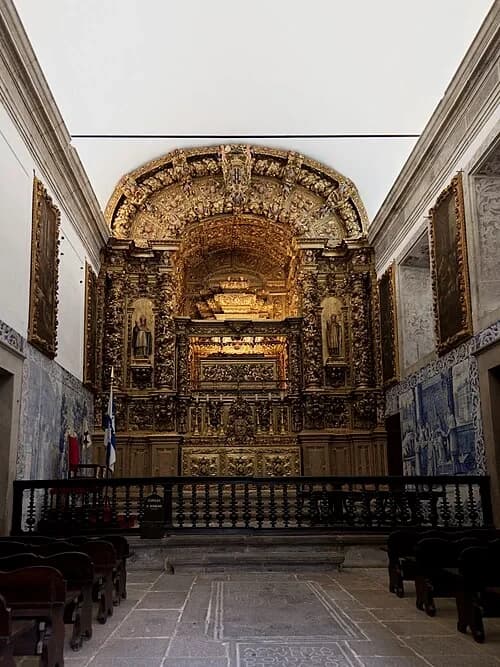
Chapel of Saint Gerald
This chapel is dedicated to Saint Gerald, the patron saint of Braga and a figure central to the city’s identity. The interior is a dazzling example of how Baroque art was used to honor local religious history. Your attention is immediately drawn to the altarpiece, which is heavily gilded and features the dramatic, sweeping lines typical of the 18th century. However, the most distinctive feature of the chapel is the tilework on the walls. These blue-and-white azulejos are a quintessential Portuguese art form. They don't just provide decoration; they tell a story. The panels depict key moments from the life of Saint Gerald, illustrating his miracles and his interactions with the people of Braga. For the original congregation, many of whom were unable to read, these tiles functioned like a storybook, making the life of the saint accessible and relatable. By combining the divine gold of the altar with the earthly, local narratives on the tiles, the chapel creates a bridge between universal church teachings and the specific history of this community. It remains a place of deep local devotion, where the spiritual legacy of the city’s patron is kept alive through both art and prayer.
The Cloister of Saint Amaro
A peaceful transition space housing significant archaeological artifacts and the historic pillory.
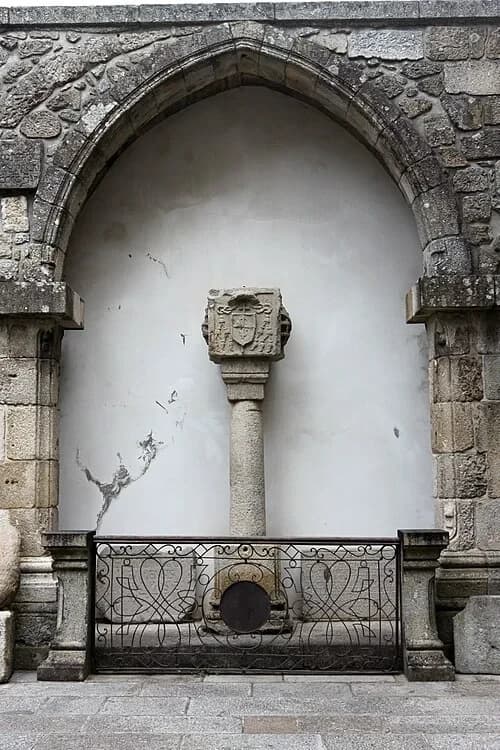
The Cathedral Pillory
Standing in the cathedral complex is this granite column known as a pillory, or 'pelourinho.' While it might look like a simple decorative pillar, it was once a powerful symbol of authority and justice. In medieval and early modern Portugal, a pillory represented the administrative and judicial autonomy of a town or a powerful entity. In this case, it served as a constant reminder that the Archbishop of Braga held significant legal power. For centuries, the Archbishop was not just a spiritual leader but a temporal lord with the right to judge and punish crimes within the city. If you look at the top of the column, you can see a carved coat of arms, which signifies this jurisdictional claim. Public punishments or announcements would often take place near the pillory, making it a focal point of civic life. It stands today as a silent witness to a time when the lines between church and state were interwoven. The weathered stone, with its heraldic carvings, provides a tangible link to the administrative history of Braga, showing how the cathedral’s influence extended far beyond the walls of the sanctuary and into the daily legal lives of its citizens.
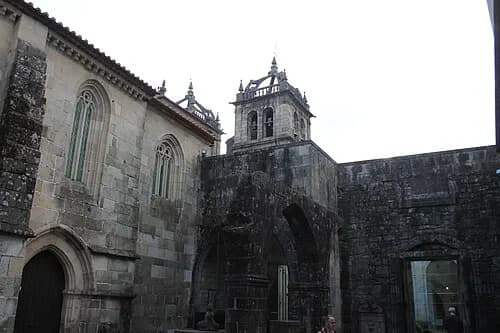
The Cloister of Saint Amaro
Stepping out into the Cloister of Saint Amaro provides a different perspective on the cathedral’s history. This outdoor space acts as an open-air archive, housing various architectural fragments that have been salvaged or replaced during the building’s many renovations. As you walk through, you can see weathered granite capitals, window frames, and stone carvings that once adorned other parts of the complex. There is a profound contrast here between the natural, gray granite exposed to the elements and the glittering gold-leaf interiors found within the sanctuary. The cloister's design includes pointed Gothic window frames that look out into the central courtyard, creating a play of light and shadow on the stone floors. Beyond its peaceful atmosphere, this area serves a practical purpose as a connector. It links the main sanctuary to the museum complex, where many of the cathedral’s most precious treasures are kept. It is a place to appreciate the sheer physicality of the building—the weight of the stone and the skill required to shape it over nearly a thousand years. The quiet of the cloister offers a moment of reflection before moving on to the more detailed exhibits of the museum.
The Cathedral Treasure-Museum
End the interior visit with the cathedral's most precious liturgical objects and relics.
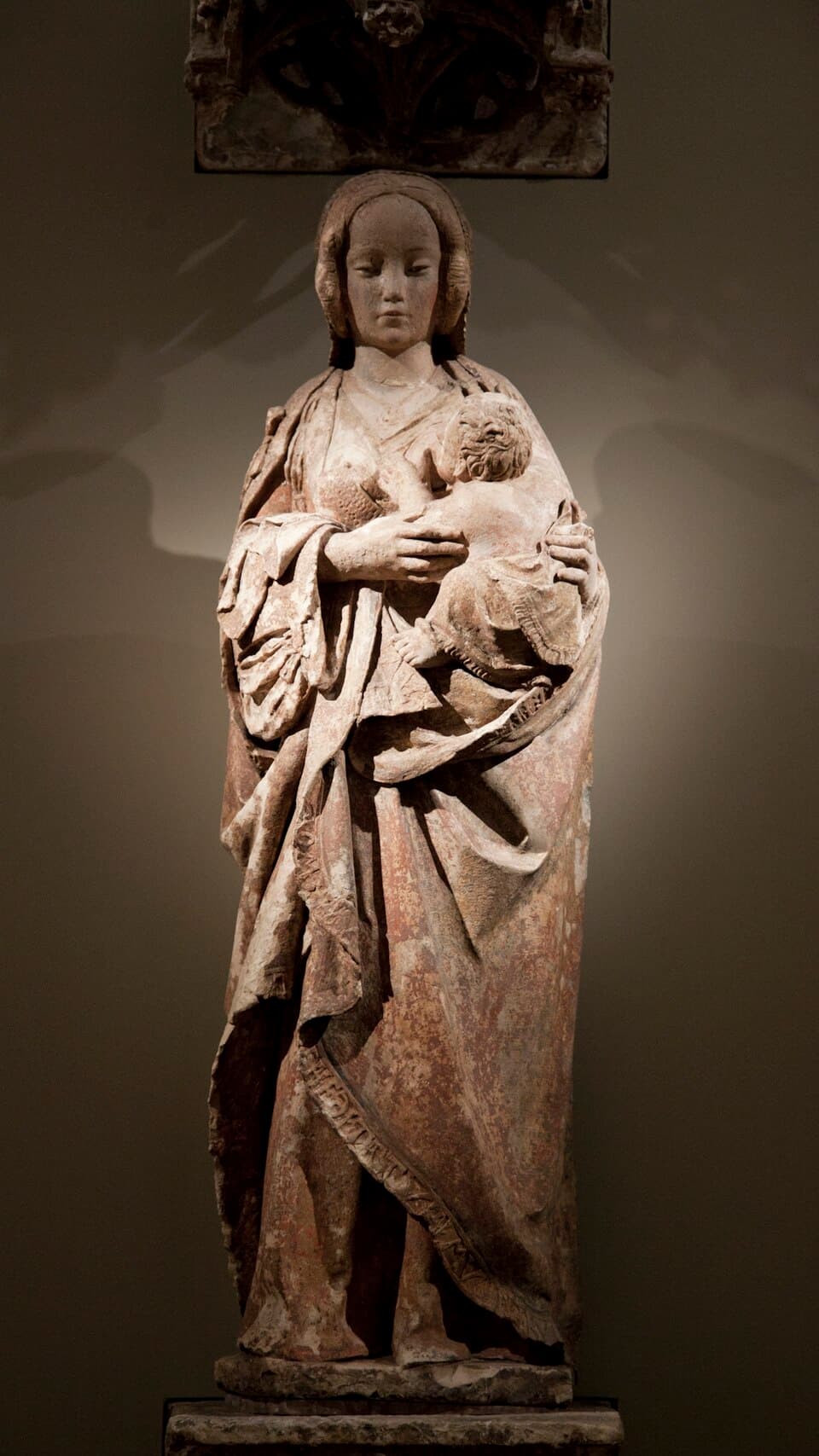
The Madonna of Milk
Inside the cathedral's museum, you will find this remarkable 16th-century sculpture known as the 'Madonna of Milk,' or 'Madona do Leite.' It features a rare and intimate iconography of the Virgin Mary nursing the infant Jesus. This type of depiction was intended to emphasize the humanity of Christ and the nurturing role of his mother. Look closely at the stone, and you can still see small remnants of the original paint, giving a hint of how colorful this piece would have been when it was first created. The sculptor captured a very gentle, maternal expression on Mary's face, which is one of the reasons the image became so popular with the local people. It offered a more approachable, human version of a divine figure. For centuries, mothers from Braga would come to pray before this image, seeking protection for their children. The sculpture’s survival is significant, as such intimate portrayals of nursing were sometimes censored in later centuries. Here, it remains a powerful example of 16th-century religious art that prioritized emotional connection and naturalism. The softness carved into the hard stone continues to resonate with visitors, standing as one of the museum's most evocative pieces.
The Exterior Apse and 'Madona do Leite'
View the iconic exterior of the main chapel, featuring the statue of 'Our Lady of Milk,' a symbol of the cathedral.
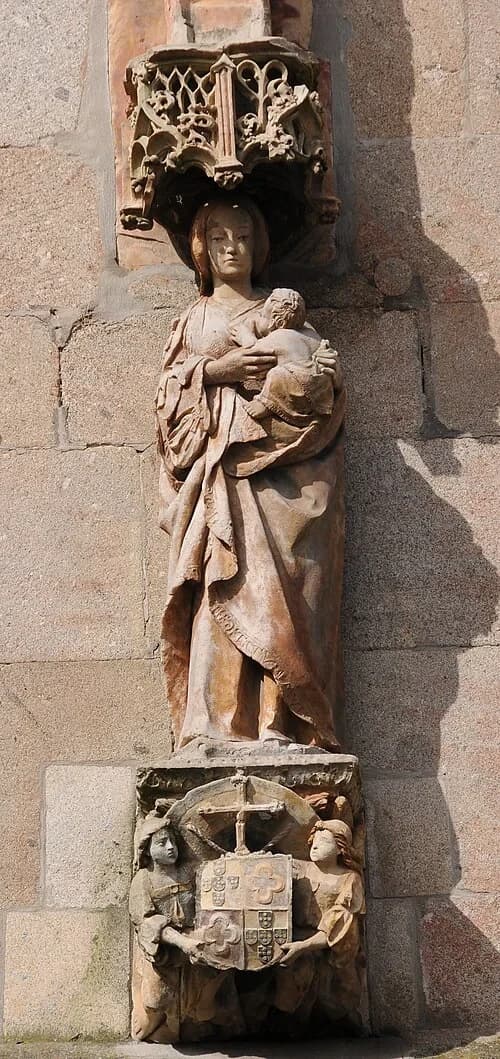
The Madonna of the Exterior
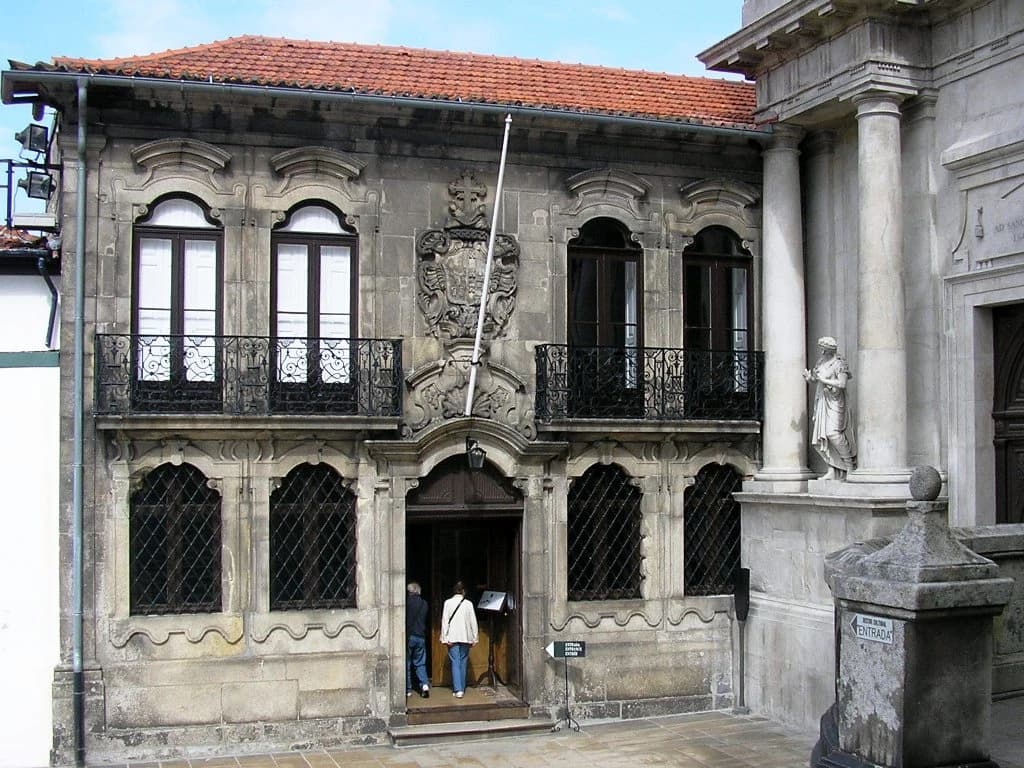
High on the exterior wall of the main chapel, overlooking the street, is an iconic sculpture of the Madonna. This figure is purposefully placed directly above the carved coat of arms of Archbishop Diogo de Sousa, who was a major patron of the cathedral’s 16th-century renovations. By placing the Virgin Mary in such a prominent, public position, the church was making a clear statement about divine protection over the city. This specific image, often referred to as a version of the 'Madona do Leite,' became a deeply important symbol for the families of Braga. It represented the cathedral’s watchful eye over the community and its domestic life. Unlike the art kept inside the sanctuary, this sculpture was visible to everyone passing by, regardless of whether they entered the church. It served as a constant spiritual presence in the daily lives of the citizens. The sculpture’s placement at a high elevation helps protect it from the wear and tear of the street level, allowing the fine details of the stone carving to remain visible from below. It stands as a final, public reminder of the deep connection between the cathedral’s religious authority and the people it served.
Want to hear the rest?
Download the Stanza app to unlock all 16 stops and full GPS-guided navigation.
Frequently Asked Questions
How long does the Sé de Braga audio tour take?
The Sé de Braga audio guide includes 16 narrated stops. Most visitors spend 45 minutes to 1.5 hours exploring the complete tour, though you can listen at your own pace and skip or revisit any stop.
Is the Sé de Braga audio guide available in my language?
Stanza supports 15 languages: English, Spanish, French, German, Italian, Portuguese, Russian, Japanese, Chinese, Korean, Arabic, Hindi, Polish, Dutch, Hebrew. Check the guide in the app to confirm the languages currently available for this tour.
Can I use the audio guide offline at Sé de Braga?
Yes! Download the complete Sé de Braga tour — including all audio, maps, and images — before your visit. The Stanza app works completely offline, so you don't need WiFi or mobile data at the venue.
How much does the Sé de Braga audio guide cost?
The Stanza app is free to download. Free and paid audio guides are available; current prices are shown in the app.
How do I use the Stanza audio guide at Sé de Braga?
Download the free Stanza app, search for "Sé de Braga", and download the tour. When you arrive at the venue, the app uses GPS to detect your location and automatically plays the relevant narration as you move between points of interest — completely hands-free.
What makes the Stanza audio guide different from other Sé de Braga tours?
Stanza offers GPS-triggered narration that plays automatically as you walk through Sé de Braga — no need to manually select stops. The tour is available in 15 languages, works fully offline, and includes 16 expertly narrated stops with images and historical context.
What other audio guides are available near Sé de Braga?
Stanza offers multiple audio guides in Braga, Portugal and nearby areas. After downloading the app, browse the map to discover all available tours near Sé de Braga. Each guide can be downloaded for offline use.