Languages
15Mosteiro de Santa Clara-a-Velha Audio Guide
Mosteiro de Santa Clara-a-Velha is a landmark in Coimbra, Portugal. Explore it with Stanza's GPS-triggered offline audio guide — available in 15 languages.
Quick Facts
15
Stops
15
Languages
100%
Offline
📍 Coimbra, Portugal · 40.2028°N, -8.4335°E
About Mosteiro de Santa Clara-a-Velha
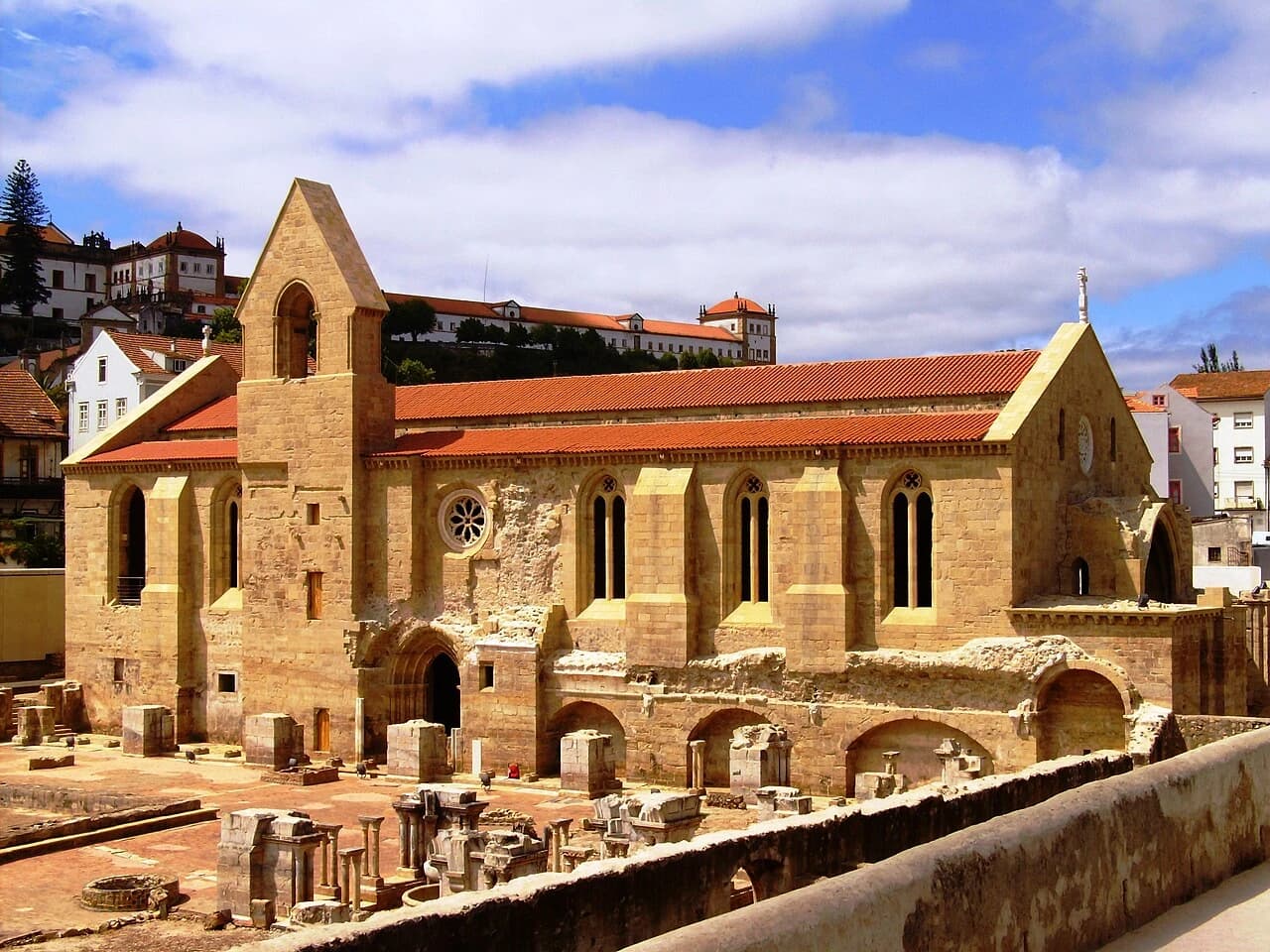
This 14th-century Gothic monastery was famously abandoned due to recurring floods from the Mondego River. Today, the site functions as an important historical monument and archaeological complex featuring well-preserved ruins.
Mosteiro de Santa Clara-a-Velha is also known as Mosteiro de Santa Clara-a-Velha (primitivo), Mosteiro de Santa Clara, Paço de Santa Clara, Mosteiro de santa clara, and 4 other names in various languages.
This self-guided audio tour features 15 narrated stops organized across 5 sections, including The Artistic Legacy: Splendor of the Clarissas, The Sunken Monastery: A Battle with the River, The Gothic Church: A Masterpiece of Stone, The Queen's Shrine: Legacy of Saint Isabel, The Cloister and Fountain: Echoes of Daily Life. As a monastery, Mosteiro de Santa Clara-a-Velha offers a unique cultural experience in the heart of Coimbra, Portugal.
The Stanza audio guide is available in 15 languages and works entirely offline — download the complete tour including audio narration, maps, and images before your visit. As you walk through Mosteiro de Santa Clara-a-Velha, GPS-triggered narration plays automatically at each point of interest.
Last updated:
What you will hear
The Artistic Legacy: Splendor of the Clarissas
Feature the monastery's most significant artworks (now in the museum) to explain the order's historical wealth and devotion.
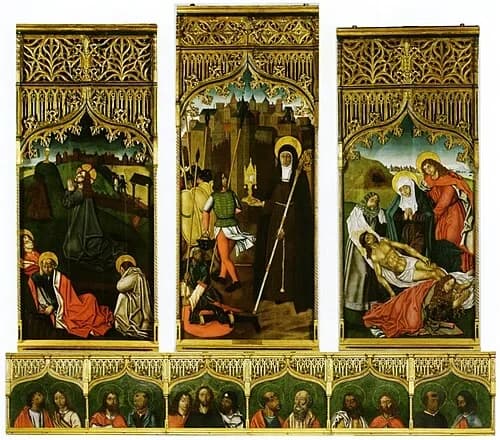
Triptych of Santa Clara
1480s
Devotion to Saint Clare of Assisi sits at the heart of this fifteenth-century painting, a work that offers a glimpse into the spiritual interior of the monastery. The Clarissas, or Poor Clares, took strict vows of poverty, yet their monastery was anything but plain. This triptych reflects the significant wealth and royal patronage the order enjoyed. Intricate Gothic frames and the generous use of gold leaf signal that the sisters were supported by the highest levels of Portuguese society, including the Royal family. The central figure of Saint Clare is depicted with icons representing her leadership and piety. These paintings were not mere decorations; they were essential tools for meditation and prayer, focusing the nuns' thoughts on the life of their founder. Even within their lives of seclusion and silence, the sisters were surrounded by high art that connected their local community to broader European religious traditions. The survival of such delicate painted surfaces is a remarkable contrast to the rugged stone ruins found outside.
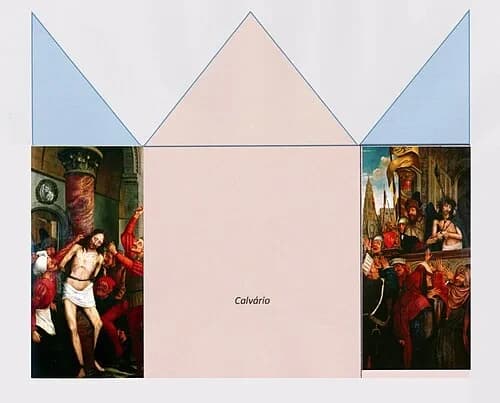
Triptych of the Passion of Christ
Quinten Metsys · 1510s
International artistic influences are strikingly evident in this triptych of the Passion of Christ. Created in the style of the Flemish master Quentin Metsys, these panels demonstrate that Coimbra was not an isolated religious outpost but part of a vibrant European network of cultural exchange. The scenes of the Flagellation and 'Ecce Homo' are crowded and dramatic, designed to provoke deep religious contemplation and empathy in the viewer. The detailed realism in the faces of the figures is a hallmark of the Antwerp school, which was highly influential in Portugal during this period. The nuns would have used these powerful images as focal points for their devotions, especially during the liturgical season of Lent. The presence of such high-quality Flemish-influenced art within the monastery suggests that the Clarissas had sophisticated tastes and access to the best workshops of the day. By the time this was painted, the monastery was already fighting a losing battle against the rising river, yet its interior continued to be filled with the finest European craftsmanship available.

Triptych of the Apparition of Christ to the Virgin
Garcia Fernandes · 1531
In 1531, the artist Garcia Fernandes produced this emotive work, marking a distinct evolution in the aesthetic life of the monastery. Moving away from the rigid, stylized forms of the earlier Gothic period, this painting embraces the fluid lines and humanistic focus of the Portuguese Renaissance. The scene depicts Christ appearing to his mother, the Virgin Mary, a subject chosen for its deep emotional resonance. Notice the softness in the facial expressions and the more naturalistic treatment of the clothing compared to older works in the collection. Garcia Fernandes was a prominent figure in the Luso-Flemish school, and his presence here indicates that the monastery remained an important center for artistic commission well into the sixteenth century. This shift in style occurred as the community struggled with the increasing frequency of floods, yet they continued to invest in works that reflected the changing artistic tastes of the era. The transition seen in these panels represents a broader cultural movement in Portugal, where traditional religious subjects were reinterpreted through a more modern, expressive lens.
The Sunken Monastery: A Battle with the River
Transitions the visitor from the center down the walkway toward the ruins, focusing on the environmental history of the site.
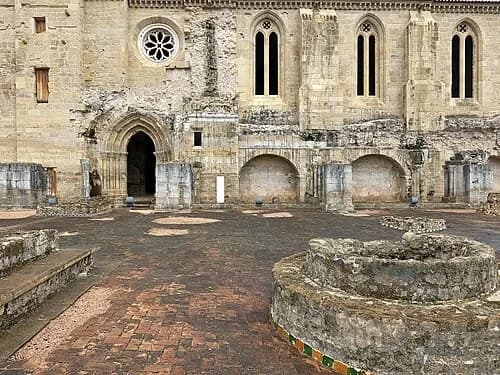
The Church Facade
Architectural historians classify this building as a masterpiece of Mendicant Gothic. The primary designer was Domingos Domingues, a royal architect renowned for his significant work at the Monastery of Alcobaça. His influence is visible in the clean lines and balanced proportions of the facade. Unlike the more ornate cathedrals of the era, mendicant churches often prioritized a certain level of austerity in keeping with the values of the religious orders that occupied them. However, because this was a royal foundation, it still possesses a monumental presence. The building was officially recognized as a National Monument in 1910, acknowledging its status as one of the most significant medieval structures in the country. Though the exterior is weathered from centuries of submersion, the strength of the original design remains clear. The thick limestone walls were built to withstand the test of time, though the builders likely never anticipated they would spend centuries under a thick layer of river mud. The facade serves as the public face of what was once a highly private, enclosed community of women.
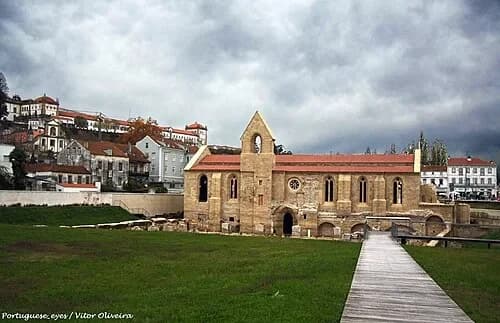
Overview of the Ruins
April 28, 1286, marks the laying of the very first stone at this site. Looking across the expanse of the ruins today, you can see the results of decades of construction that culminated in the church's consecration in 1330. From this elevated perspective, the most striking detail is how low the monastery sits compared to the modern city of Coimbra on the hills above. This geography was the monastery's greatest challenge. The Mondego River, visible nearby, was a constant and persistent threat. Over the centuries, the riverbed rose through the accumulation of silt, effectively trapping the monastery in a bowl. By the time the nuns finally left in the seventeenth century, the water was frequently rising several meters inside the church. The site you see today is actually the result of removing thousands of tons of mud to reveal the original fourteen-century foundations. The scale of the church nave and the surrounding monastic buildings highlights the importance of this complex, which served as a major center for both religious life and royal burial for over three hundred years.
The Gothic Church: A Masterpiece of Stone
Explores the interior of the church, highlighting the signature stone-vaulted ceilings and Gothic proportions.
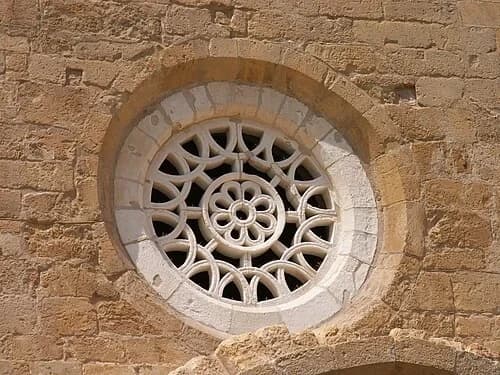
The Rose Window
Light enters the church through the intricate circular geometry of the rose window. This architectural feature was the primary light source for the nuns, who gathered in the church several times a day and night for prayer services. The precision of the stone carving is exceptional, especially considering it survived for hundreds of years while completely submerged in river mud. The pattern consists of repeating circular motifs that create a sense of balanced, infinite symmetry. In the medieval mind, such geometry was often seen as a reflection of divine order. During the morning hours, the sun would have cast complex shadows across the stone floor of the nave, marking the passage of time for a community whose lives were strictly regulated by the liturgical calendar. While many other decorative elements of the monastery were lost to time or flooding, the rose window remains as one of the best-preserved examples of fourteenth-century stonework on the site. Its survival is a testament to the skill of the local masons who carved these delicate shapes from durable limestone.
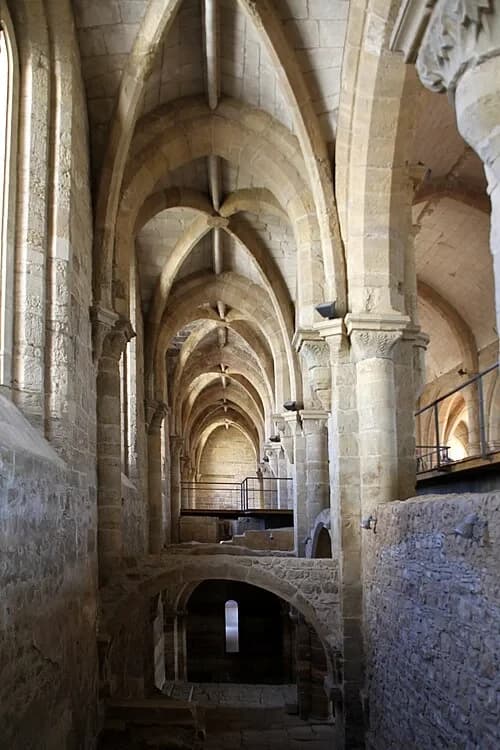
The Stone Vaulted Nave
Why did the architect Domingos Domingues choose to build these massive stone-vaulted ceilings? Most mendicant churches of the thirteenth and fourteenth centuries used simpler, less expensive wooden roofs. Implementing a full stone vault was a technically ambitious and incredibly costly move that required the direct financial support of Queen Isabel. These vaults provided a more monumental and permanent feel to the interior, but they also added immense weight to the structure. The engineering required thick, sturdy walls to counteract the outward pressure of the stone arches. When you look at the columns and arches today, keep in mind that the original floor is actually much further below the current walking surface. Centuries of silt deposits raised the ground level significantly before the site was abandoned. The height you see now is only a portion of the original vertical space. The decision to use stone instead of wood may have been a royal preference for grandeur, but it also inadvertently helped the structure survive the heavy pressure of the mud and water that eventually filled the nave for over three centuries.
The Queen's Shrine: Legacy of Saint Isabel
Focuses on the original location of Queen Isabel's tomb and her role as the monastery's patron.
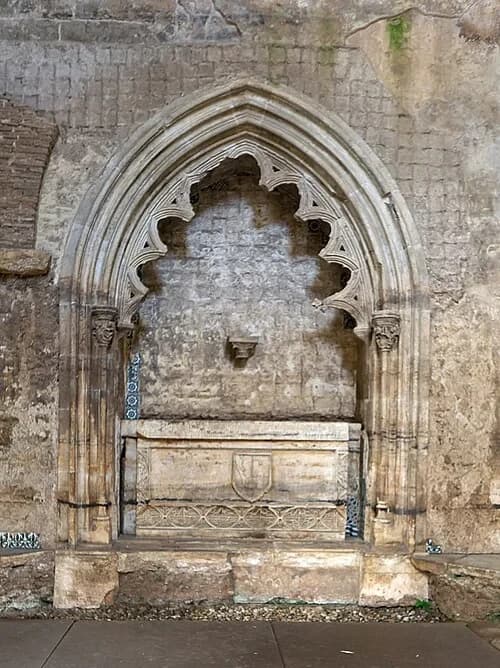
The Gothic Burial Arch
Burial within these walls was a privilege reserved for the highest ranks of society, including royalty and the nobility. This specific archway originally served as a niche for a tomb. The inner edge of the arch features a 'multilobed' or wavy design, which is a signature decorative element of fourteenth-century Portuguese Gothic architecture. This style adds a sense of lightness and movement to the otherwise heavy stone walls. For the wealthy patrons of the monastery, being buried close to the altar and the prayers of the nuns was seen as spiritually beneficial. These burial niches were once highly decorated, often containing carved sarcophagi and painted heraldry. While the tombs themselves were mostly moved to higher ground when the monastery was abandoned in 1677, the architectural frames remain. The detail in the stonework here shows the transition from the simpler Romanesque forms of the past to the more complex and ornamental Gothic style. Each lobed curve was hand-carved, requiring significant skill to maintain the precise rhythm and depth across the entire span of the archway.
The Cloister and Fountain: Echoes of Daily Life
Covers the communal areas of the monastery, the archaeological excavation, and the Gothic fountain.
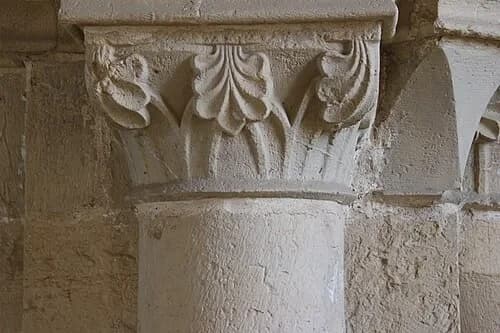
Carved Foliage Capital
Looking closely at the tops of the columns, you can see intricate 'botanical' or foliage motifs that are typical of fourteenth-century stonework. These carvings were created from local limestone, which provided a relatively soft surface for the masons to work with, allowing for high levels of detail in the leaves and vines. However, this same softness made the stone vulnerable to the environmental conditions of the site. For over three hundred years, these capitals were submerged in acidic river water and silt. The chemicals in the water have left a visible mark on the stone, softening some of the sharper edges and creating a unique weathered texture. Despite this, the skill of the original carvers is still apparent in the rhythm and variety of the designs. No two capitals are exactly alike, as each mason brought a slightly different interpretation to the foliage themes. These decorative elements provided a touch of natural beauty to the interior stone forest of the nave and cloister. They represent a moment in time when medieval craftsmen began to look more closely at the natural world for their artistic inspiration.
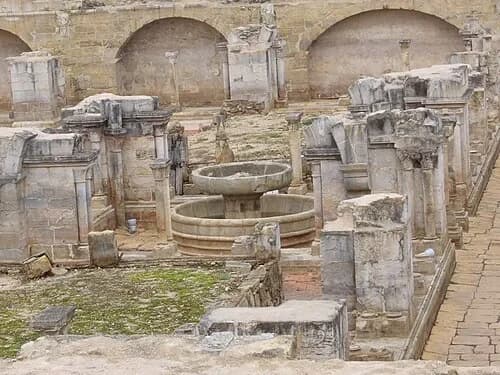
The Gothic Fountain
Source of fresh water and ritual purification, this circular stone fountain sits at the very center of what was once the cloister garden. It is considered one of the best-preserved monastic fountains in Portugal from the Gothic era. The nuns used this water for daily necessities as well as for the ritual washing of hands before entering the refectory or the church. Its simple, elegant design features a large lower basin and a smaller upper tier, allowing water to flow continuously. In a community defined by strict rules and repetitive daily tasks, the fountain was a functional necessity that also served as a focal point for the garden. The durability of its construction allowed it to survive centuries of burial under river silt, which actually protected the stone from freezing and thawing cycles. The presence of a dedicated water system within the cloister highlights the sophisticated planning that went into the monastery's design. Today, it stands as a clear visual link to the daily rhythms of medieval monastic life, where every element of the architecture served a specific spiritual or practical purpose.
Want to hear the rest?
Download the Stanza app to unlock all 15 stops and full GPS-guided navigation.
Frequently Asked Questions
How long does the Mosteiro de Santa Clara-a-Velha audio tour take?
The Mosteiro de Santa Clara-a-Velha audio guide includes 15 narrated stops. Most visitors spend 45 minutes to 1.5 hours exploring the complete tour, though you can listen at your own pace and skip or revisit any stop.
Is the Mosteiro de Santa Clara-a-Velha audio guide available in my language?
Stanza supports 15 languages: English, Spanish, French, German, Italian, Portuguese, Russian, Japanese, Chinese, Korean, Arabic, Hindi, Polish, Dutch, Hebrew. Check the guide in the app to confirm the languages currently available for this tour.
Can I use the audio guide offline at Mosteiro de Santa Clara-a-Velha?
Yes! Download the complete Mosteiro de Santa Clara-a-Velha tour — including all audio, maps, and images — before your visit. The Stanza app works completely offline, so you don't need WiFi or mobile data at the venue.
How much does the Mosteiro de Santa Clara-a-Velha audio guide cost?
The Stanza app is free to download. Free and paid audio guides are available; current prices are shown in the app.
How do I use the Stanza audio guide at Mosteiro de Santa Clara-a-Velha?
Download the free Stanza app, search for "Mosteiro de Santa Clara-a-Velha", and download the tour. When you arrive at the venue, the app uses GPS to detect your location and automatically plays the relevant narration as you move between points of interest — completely hands-free.
What makes the Stanza audio guide different from other Mosteiro de Santa Clara-a-Velha tours?
Stanza offers GPS-triggered narration that plays automatically as you walk through Mosteiro de Santa Clara-a-Velha — no need to manually select stops. The tour is available in 15 languages, works fully offline, and includes 15 expertly narrated stops with images and historical context.
What other audio guides are available near Mosteiro de Santa Clara-a-Velha?
Stanza offers multiple audio guides in Coimbra, Portugal and nearby areas. After downloading the app, browse the map to discover all available tours near Mosteiro de Santa Clara-a-Velha. Each guide can be downloaded for offline use.