Languages
15Convento dos Capuchos Audio Guide
Convento dos Capuchos is a landmark in Colares, Portugal. Explore it with Stanza's GPS-triggered offline audio guide — available in 15 languages.
Quick Facts
20
Stops
15
Languages
100%
Offline
📍 Colares, Portugal · 38.7844°N, -9.4382°E
About Convento dos Capuchos
A historic, austere 16th-century Franciscan monastery known for its integration into the natural landscape and use of cork-lined cells. It is located within the Sintra-Cascais Natural Park.
Convento dos Capuchos is also known as convent of the Capuchos, Convento de Santa Cruz da Serra de Sintra, Convento da Cortiça, Convento dos Capuchos.
This self-guided audio tour features 20 narrated stops organized across 6 sections, including The Portico of the Rocks, Terreiro do Campanário and the Church Facade, The Church and the Shell Altar, Terreiro da Fonte: The Heart of the Courtyard, The Refectory and Kitchen, Monastic Cells and Cork Insulation. As a monastery, Convento dos Capuchos offers a unique cultural experience in the heart of Colares, Portugal.
The Stanza audio guide is available in 15 languages and works entirely offline — download the complete tour including audio narration, maps, and images before your visit. As you walk through Convento dos Capuchos, GPS-triggered narration plays automatically at each point of interest.
Last updated:
What you will hear
The Portico of the Rocks
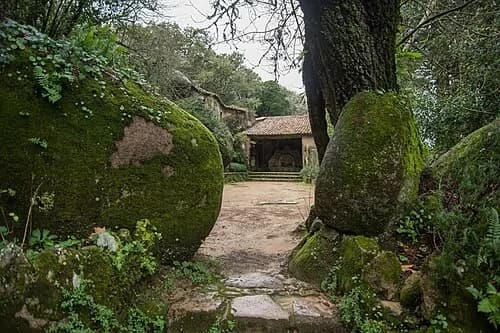
This dramatic entrance features two massive granite boulders that form a natural gateway, illustrating the convent's perfect integration with the Sintra landscape.
The Portico of Rocks
Two enormous granite boulders frame the narrow entrance here, creating a gateway that feels more like a cave than a building. According to local tradition, the Legend of Dom João de Castro tells of how he became lost while hunting in these woods. He allegedly slept beneath a large rock and had a dream instructing him to build a temple in this very spot. His son eventually saw that vision realized. This narrow gap acts as a physical threshold, forcing visitors to leave the openness of the forest and enter the confined, contemplative space of the convent. Passing through this tight space was a symbolic act for the friars, representing their departure from the secular world and their entry into a sacred life. The scale of the stones makes the human presence feel small and insignificant, which was exactly the spiritual state the community aimed to cultivate. Looking up, you can see how the moss grows most heavily in the shadows where the boulders lean toward one another. These stones have likely remained in this exact position for thousands of years, long before the convent was even a dream.
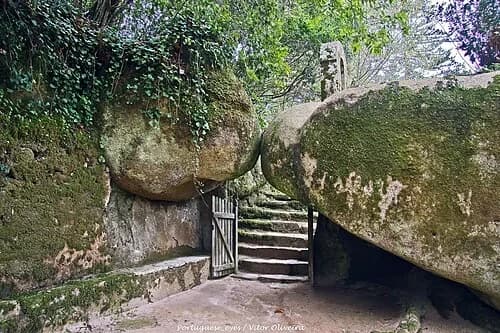
Gateway of Granite
The architectural approach taken by the designer, Frei Pedro de Antória, was remarkably unconventional for the sixteenth century. Instead of clearing the land to create a flat building site, he chose to work around the existing geological features. You can see how the stone steps and the simple wooden gate are wedged directly into the mountain's granite outcrops. This site emphasizes the theme of 'Integration with Nature,' where human construction is forced to yield to the terrain. The steps are uneven and follow the natural slope of the hill, requiring careful footing. This design choice served as a constant reminder to the friars of the physical reality of the earth they lived upon. The gate itself is small and functional, lacking any decorative carvings or symbols of status. It was meant only to provide security and enclosure while remaining as inconspicuous as possible. Over time, the roots of nearby trees have begun to snake around the stone bases, further blurring the line between the convent and the forest. The damp earth floor just beyond the gate remains cool even during the height of the Portuguese summer.
Terreiro do Campanário and the Church Facade
The exterior of the church is remarkably humble. This area introduces the community's spiritual center and their simple methods of communication via the bell tower.
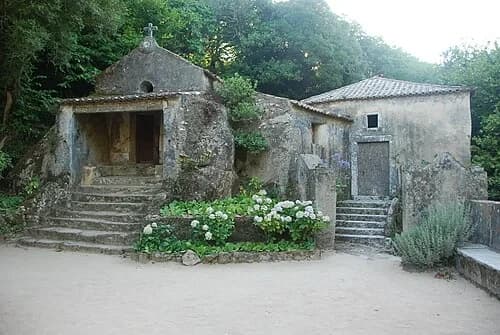
The Humble Church Facade
The exterior of the church stands in stark contrast to the grand cathedrals built across Portugal during the Age of Discovery. Its facade resembles a simple, rustic cottage, featuring rough, unpainted plaster and modest stone steps. There are no towering spires, intricate rose windows, or ornate statues here. This architectural restraint was a deliberate statement of the community's radical embrace of poverty. While royal architects were busy using wealth from trade to build the Manueline masterpieces of Lisbon and Sintra, the friars here focused on the bare essentials. The small, dark doorway and the low roofline were designed to keep the focus inward rather than drawing attention to the building itself. The plaster is weathered and stained by the mountain mist, which gives the structure an organic, earthy appearance. Even the small cross atop the gable is plain and unadorned. The friars believed that true spiritual richness was found in the absence of material distraction, and this humble entryway was the first lesson for anyone seeking to join their ranks. Notice how the steps are worn smooth in the center from centuries of quiet arrivals.
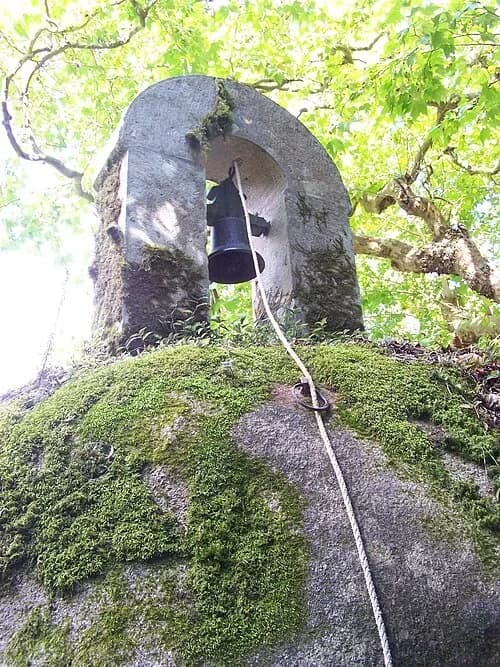
The Courtyard Bell
Hanging within a simple granite arch is the convent's small bell. For the eight friars who lived here at any given time, this bell was the voice of their community. Its chime governed their daily existence, signaling the precise moments for collective prayer and humble meals. In a place where silence was a central and strictly enforced rule of life, the sound of the bell was the primary connection to the passage of time. It broke the stillness of the mountain forest to call the brothers from their individual meditations. The bell is modest in size, reflecting the lack of vanity that defined the Capuchos. The rope would have been pulled from below, sending a sharp, clear ring echoing through the narrow corridors and small courtyards. Because the convent is nestled so deeply into the hillside, the sound was naturally contained within the complex, keeping the friars' world focused and secluded. Today, the bell hangs silent, and its metal surface has weathered alongside the stone arch that supports it. A thin layer of moss has grown around the base of the arch, where water drips from the overhanging tree branches after a mountain rain.
The Church and the Shell Altar
Inside the church, the decoration is minimal but unique, featuring mosaics made from local materials like shells and broken tiles rather than precious metals.
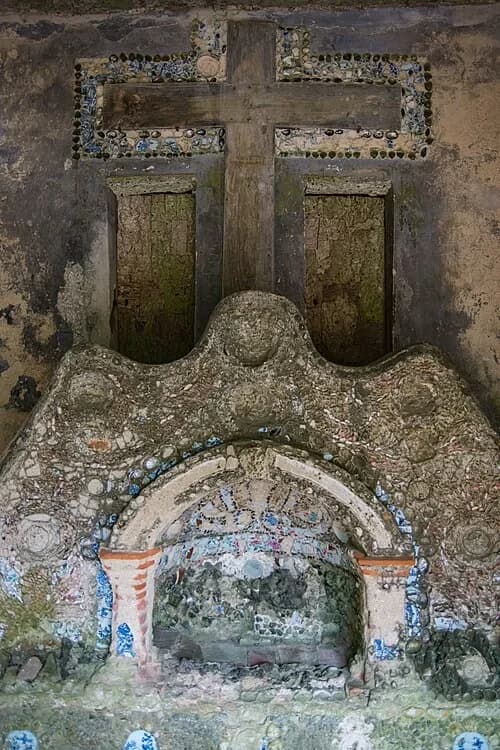
Detail of the Mosaic
Getting closer to the altar mosaic reveals the meticulous labor that went into its creation. The patterns are formed from a variety of small, humble items: smooth river pebbles, jagged seashells, and shards of traditional blue-and-white tiles. These tile fragments, or azulejos, were likely salvaged from broken pieces that could no longer be used for their original purpose. By arranging these shards into geometric and floral motifs, the friars created a durable and decorative surface that cost them nothing but their time and patience. This technique demonstrates that even in a life of extreme austerity, the desire to honor their faith through craft remained strong. Each small piece was hand-pressed into the mortar, creating a dense, textured surface that is surprisingly resilient. The blue and white colors of the tile fragments stand out clearly, offering a rare bit of brightness in the otherwise somber interior. This mosaic work was a quiet, meditative task that perfectly complemented the friars' lifestyle. If you look closely at the edges, you can see how the different shapes were fitted together to fill every gap, resulting in a complex, puzzle-like finish that covers the entire lower section of the altar.
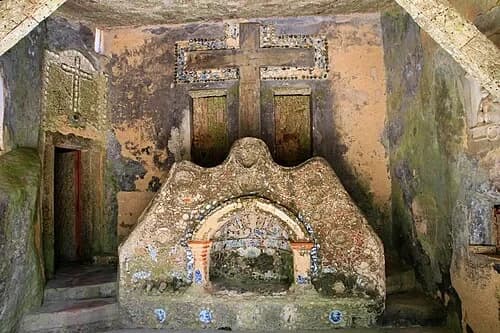
The Shell Altar
Stepping inside the church, you will find an altar unlike any other in Portugal. In keeping with their vow of poverty, the friars avoided the use of expensive materials like gold leaf, fine marble, or rare woods. Instead, they decorated this sacred space with materials found in their local environment. This altar is covered in a unique mosaic made from thousands of small seashells and fragments of broken pottery. This 'poor man's mosaic' represents a deliberate choice to find beauty and divinity in what others would have discarded. The shells were likely gathered from the nearby Atlantic coast, while the pottery shards provide small pops of color against the earthy tones of the stone. This decorative technique shows that while the friars rejected material wealth, they did not reject beauty or the human urge for artistic expression as a form of devotion. The altar remains a tactile, organic centerpiece of the church. The uneven surfaces of the shells catch the dim light entering through the small windows, creating a subtle, shimmering effect that would have accompanied the friars' hushed prayers. It is a testament to a life where creativity was born from necessity.
Terreiro da Fonte: The Heart of the Courtyard
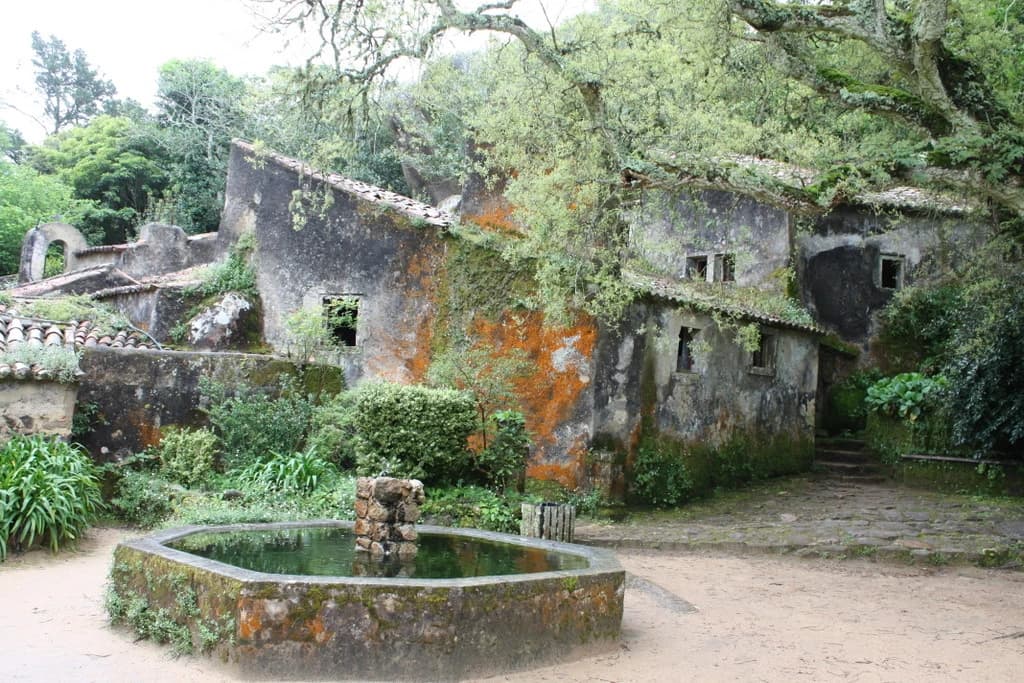
The central courtyard served as the social heart of the convent, featuring an octagonal fountain and seating carved directly into the rock.
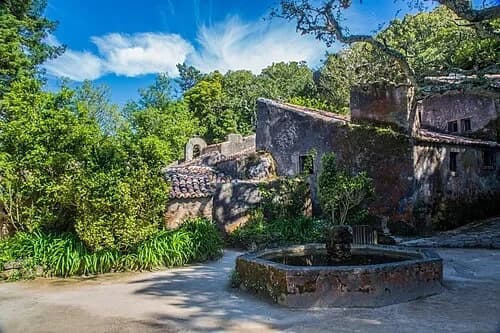
The Heart of the Fountain
We are now in the Terreiro da Fonte, the heart of the convent complex. This central courtyard is anchored by an octagonal fountain. For a community living in isolation, water was the most vital resource, and this fountain provided a steady supply for drinking and basic hygiene. This area served as the social and spiritual hub of the convent. It was one of the few places where the eight friars could gather together for rare moments of fellowship and communal activity. The courtyard is small and enclosed by high stone walls and the surrounding forest, which helped to preserve the sense of seclusion. The fountain itself is plain and functional, lacking the ornate mythological figures often found in European courtyard fountains of the era. The sound of trickling water would have been a constant background element to life here, providing a peaceful, rhythmic accompaniment to the friars' work. The stone around the fountain's base is dark with moisture, a result of centuries of use. This space highlights how the convent was designed as a self-sustaining unit, where the most basic elements of life—water, stone, and silence—were prioritized above all else.
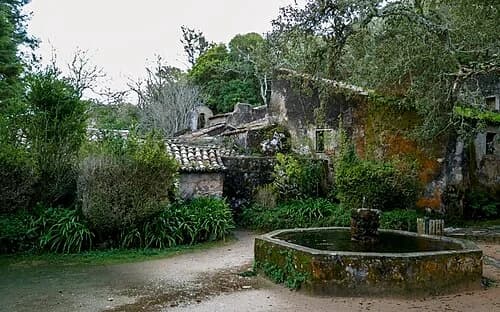
Seating Carved in Stone
Arranged around the central fountain are several stone benches. These seats were not brought here; they were carved directly from the massive granite boulders that form the convent's foundation. This integration of furniture and landscape reflects the practical and humble nature of the site. The courtyard's layout is intentionally tight and somewhat labyrinthine, a design choice intended to keep the friars' attention focused inward on their spiritual state rather than on the vastness of the outside world. Here, the brothers could sit in quiet contemplation while listening to the water of the fountain. This courtyard was also where they performed daily chores like washing their simple robes. The proximity of the benches to the water source was a matter of pure functionality. Notice the height and depth of the seats, which are relatively low to the ground and have no backrests, discouraging any sense of physical comfort or luxury. The granite is cool to the touch and often damp from the mountain air. This space reinforces the idea that even during their moments of 'rest' or community, the friars remained physically connected to the hard, unyielding stone of their mountain home.
The Refectory and Kitchen
The friars ate in silence while sitting on the floor around a massive stone table, a gift from King D. Henrique that embodies their vow of poverty.
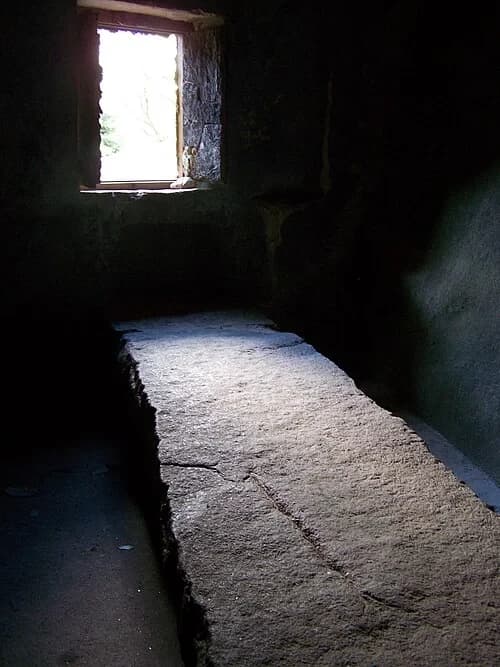
The Refectory Table
In the refectory, the center of the room is dominated by a massive stone slab that served as the community's dining table. This impressive piece of granite was a gift from Cardinal-King Dom Henrique, one of the convent's royal patrons. Despite the high-status origin of the table, the daily rituals here were remarkably humble. The eight friars did not use chairs; instead, they sat directly on the cold stone floor to eat their simple meals of vegetables, bread, and water. Meals were conducted in total silence. While the brothers ate, one designated member would stand at a small pulpit and read aloud from holy scriptures, ensuring that their minds remained focused on spiritual matters even while nourishing their bodies. This discipline was a key part of their ascetic lifestyle. The slab is heavy and unpolished, with a rough texture that has been worn down in places over centuries of use. The room is small, with low ceilings that trap the cool mountain air, making the act of dining a somber and focused experience. The simplicity of the food and the environment was intended to prevent any indulgence in the pleasure of eating, keeping the friars' needs strictly to the minimum required for survival.
Monastic Cells and Cork Insulation
The most famous feature of the convent: tiny cells lined with thick cork to protect the friars from the mountain's dampness and cold.
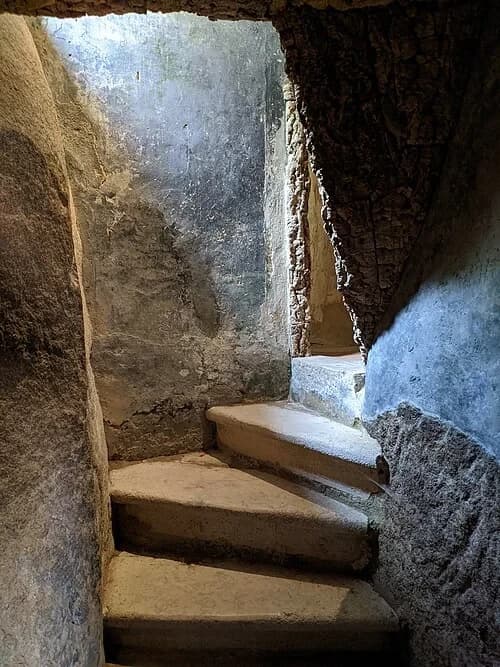
Steps Through the Bark
As you climb these narrow, winding stairs, you are surrounded by a texture rarely seen in architecture: thick, rugged sheets of cork bark. This local material was harvested from the surrounding forests and stripped from the cork oaks to line the convent's coldest corridors. The friars didn't use this bark for decoration or comfort in a conventional sense; it was a matter of survival. The Sintra mountains are notorious for their damp, bone-chilling mists, and the granite walls of the convent naturally absorb that moisture. This cork lining acted as a vital thermal barrier, trapping what little heat the small buildings could retain during freezing winter nights. Furthermore, the soft, spongy nature of the bark served a secondary spiritual purpose by dampening the sound of the friars' footsteps. In a community dedicated to silence and contemplation, the cork helped maintain an environment of perpetual quiet. Each step on these stairs is a reminder of how the friars adapted natural resources to meet their most basic needs for warmth and silence.
Want to hear the rest?
Download the Stanza app to unlock all 20 stops and full GPS-guided navigation.
Frequently Asked Questions
How long does the Convento dos Capuchos audio tour take?
The Convento dos Capuchos audio guide includes 20 narrated stops. Most visitors spend 45 minutes to 1.5 hours exploring the complete tour, though you can listen at your own pace and skip or revisit any stop.
Is the Convento dos Capuchos audio guide available in my language?
Stanza supports 15 languages: English, Spanish, French, German, Italian, Portuguese, Russian, Japanese, Chinese, Korean, Arabic, Hindi, Polish, Dutch, Hebrew. Check the guide in the app to confirm the languages currently available for this tour.
Can I use the audio guide offline at Convento dos Capuchos?
Yes! Download the complete Convento dos Capuchos tour — including all audio, maps, and images — before your visit. The Stanza app works completely offline, so you don't need WiFi or mobile data at the venue.
How much does the Convento dos Capuchos audio guide cost?
The Stanza app is free to download. Free and paid audio guides are available; current prices are shown in the app.
How do I use the Stanza audio guide at Convento dos Capuchos?
Download the free Stanza app, search for "Convento dos Capuchos", and download the tour. When you arrive at the venue, the app uses GPS to detect your location and automatically plays the relevant narration as you move between points of interest — completely hands-free.
What makes the Stanza audio guide different from other Convento dos Capuchos tours?
Stanza offers GPS-triggered narration that plays automatically as you walk through Convento dos Capuchos — no need to manually select stops. The tour is available in 15 languages, works fully offline, and includes 20 expertly narrated stops with images and historical context.
What other audio guides are available near Convento dos Capuchos?
Stanza offers multiple audio guides in Colares, Portugal and nearby areas. After downloading the app, browse the map to discover all available tours near Convento dos Capuchos. Each guide can be downloaded for offline use.