Languages
15Palácio de Estói Audio Guide
Palácio de Estói is a landmark in Faro, Portugal. Explore it with Stanza's GPS-triggered offline audio guide — available in 15 languages.
Quick Facts
13
Stops
15
Languages
100%
Offline
📍 Faro, Portugal · 37.0966°N, -7.8956°E
About Palácio de Estói
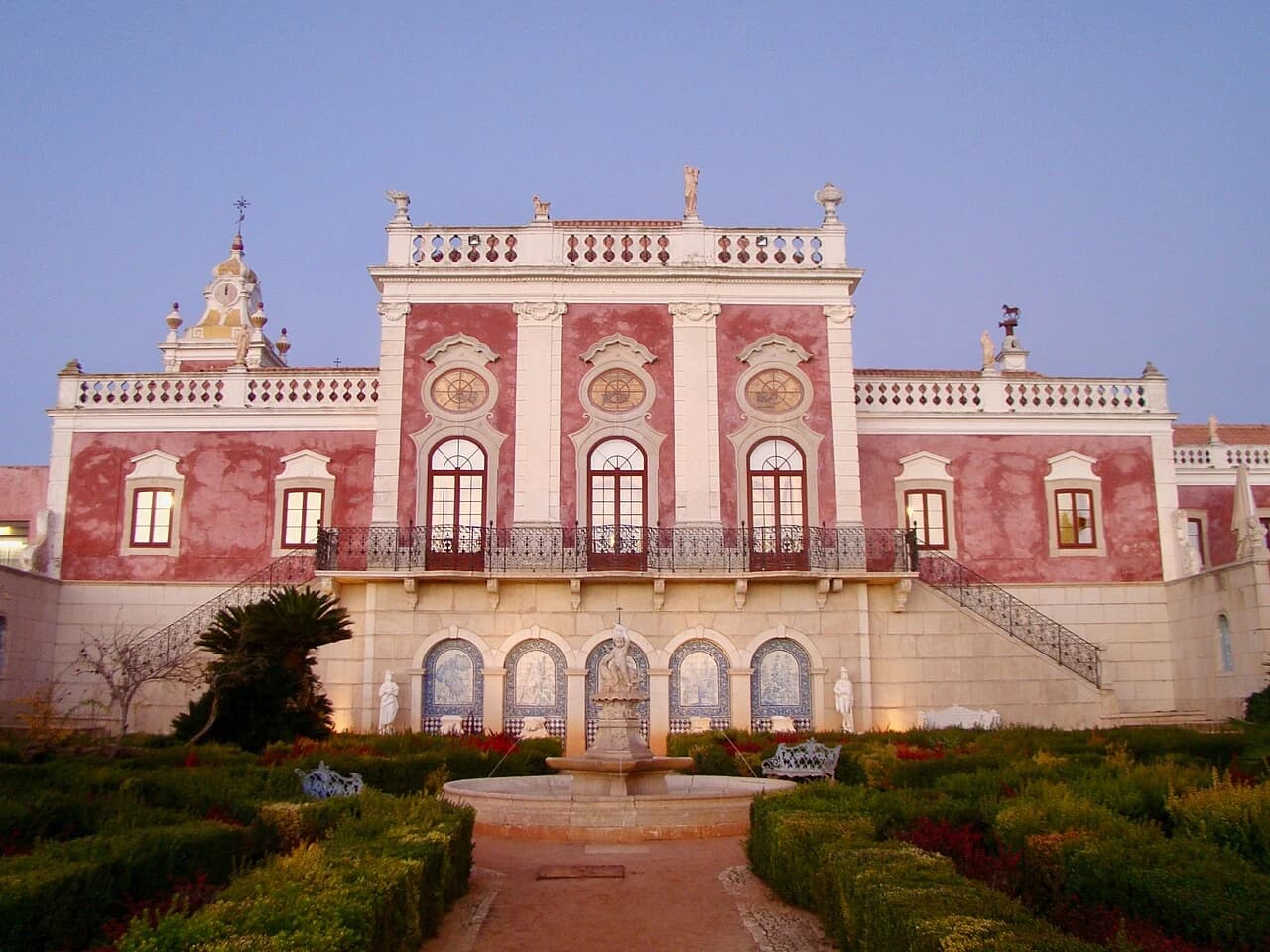
A 19th-century Rococo palace featuring ornate gardens and elaborate tile work, currently functioning as a pousada. It stands as a significant example of romantic architecture in the Algarve region.
Palácio de Estói is also known as Estoi Palace, Casa de Estói, Palácio de estoi, Palácio de estói, and 6 other names in various languages.
This self-guided audio tour features 13 narrated stops organized across 9 sections. As a palace, Palácio de Estói offers a unique cultural experience in the heart of Faro, Portugal.
The Stanza audio guide is available in 15 languages and works entirely offline — download the complete tour including audio narration, maps, and images before your visit. As you walk through Palácio de Estói, GPS-triggered narration plays automatically at each point of interest.
Last updated:
What you will hear
The Jardim do Carrascal and U-Shape Layout
Explores the original Enlightenment-era entrance and the U-shaped courtyard that defines the palace's horizontal orientation.
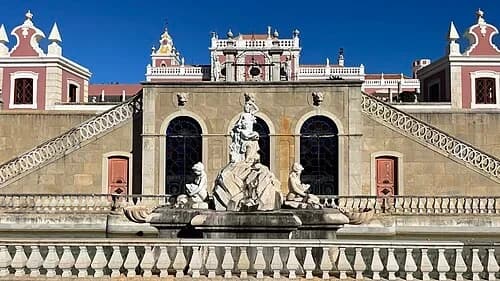
The Monumental Garden Stairs
The gardens of the palace are organized into a strict three-tiered layout, a hallmark of Mediterranean estates of this era. This second level is defined by a monumental double staircase that sweeps around a central fountain. These stairs were more than just a grand aesthetic choice; they were integral to the estate's sophisticated water management system. Designers incorporated a series of aqueducts and fountains throughout the terraces to manage the flow of water across the steep terrain. While the upper levels served as formal decorative spaces for the owners and their guests, the water directed here eventually irrigated the vast citrus groves and agricultural lands located at the lowest level of the property. The architecture blends stone balustrades with the lush greenery of the Algarve. As you climb, you can see how the built environment works in harmony with the natural slope of the land. This ensures that every drop of water served both a decorative and a productive purpose for the estate’s survival, sustaining the agricultural output that funded this luxury.
The Azulejo Corridors
Introduces the interior transition where traditional Portuguese tilework meets the opulent wrought iron and marble of the 19th-century restoration.
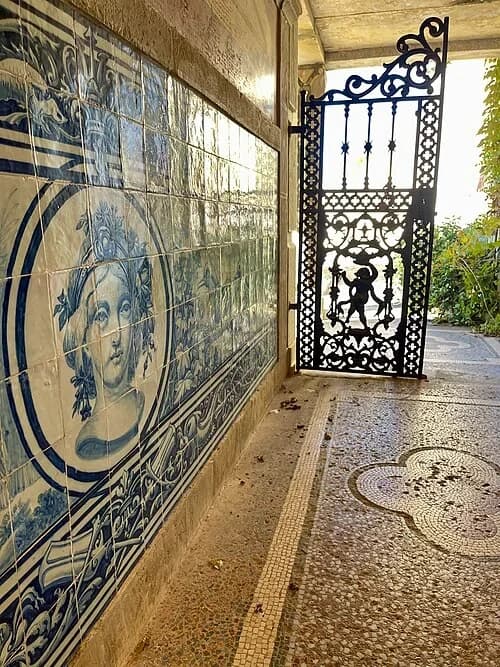
The Tiled Gallery
Transitioning from the bright, open garden terraces, this shaded corridor offers a cooler environment defined by traditional Portuguese artistry. The walls are lined with extensive blue-and-white azulejo tile panels, a hallmark of national design that dates back centuries. These particular panels depict various scenes that echo the garden’s themes, creating a narrative link between the interior and exterior spaces. Looking down reveals mosaic floor patterns, which were crafted with meticulous precision to complement the surrounding architecture. An intricate wrought iron gate punctuates the passage, serving as both a functional security measure and a display of late 19th-century metalwork craftsmanship. The contrast between the brilliant white of the palace walls and the deep blues of the tiles is especially striking when the afternoon sun hits the gallery at an angle. This space was designed to provide a comfortable promenade for residents, allowing them to enjoy the estate's beauty while remaining protected from the intense heat of the Algarve summers.
The Great Hall (Louis XV Salon)
Showcases the height of luxury within the palace, featuring gilded stucco, Rococo furniture, and mythological ceiling frescoes.
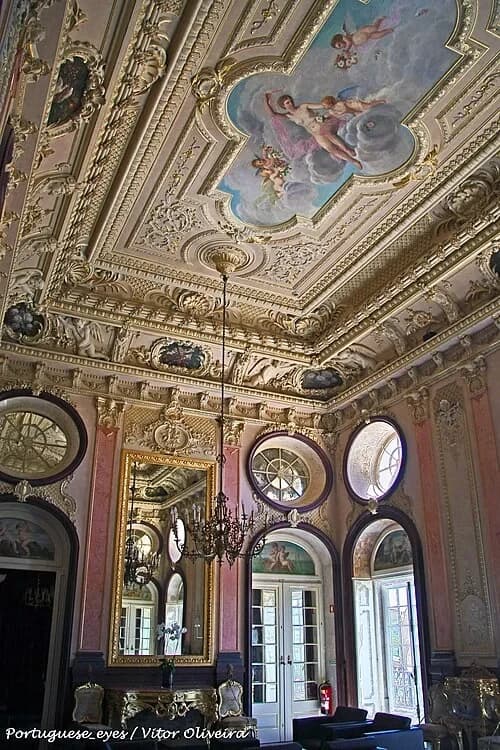
The Great Hall
The Great Hall brings you into the heart of the palace’s Louis XV style interior. This room is part of a larger suite of twenty-eight richly ornamented spaces, each showcasing a level of opulence that was rare for the region at the turn of the twentieth century. Above you, the ceiling and walls are covered in intricate gilded stucco work, where delicate patterns of leaves and scrolls catch the light. This gilded decoration was specifically designed to interact with the tall French doors that lead back out onto the garden terraces. During the day, sunlight pours through these large glass panes, causing the gold leaf to shimmer and brighten the entire space. The room was used for grand receptions and formal gatherings, intended to overwhelm guests with its display of wealth and European fashion. Despite its restoration for modern use, much of the original decorative spirit remains, from the polished floors to the mirrored surfaces that expand the sense of scale. It serves as a reminder of the Viscount's desire to bring Parisian-inspired luxury to his rural Portuguese retreat.
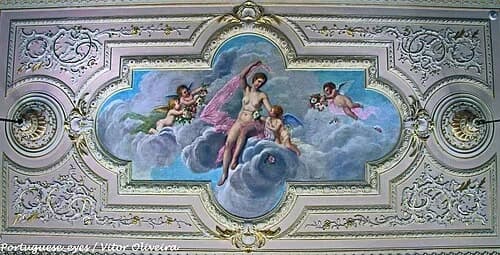
Mythological Ceiling Fresco
The ceiling fresco above you is the work of the artist Meira, who was commissioned to handle much of the interior’s restoration and decorative painting. The central composition features a mythological theme, populated by a host of cherubs, celestial figures, and allegories of beauty. Soft blues and pinks dominate the clouds, creating an airy, light-filled atmosphere that makes the ceiling feel like an opening to the heavens. This level of artistic detail was a central part of the Viscount's plan to impress the social elite of Portugal. When the palace was officially inaugurated in 1909, an estimated 5,000 visitors attended the grand celebration, many of whom had never seen such a concentrated display of wealth and modern artistry in the Algarve. Meira’s work reflects the late Romantic preference for classical myths and idealized beauty. The painting is framed by heavy plaster moldings, further enhancing its importance as the room’s focal point. Even today, the fresco remains remarkably well-preserved, standing as a primary example of the high-quality craftsmanship that defined the estate’s golden age.
The Sala Azul and Private Rooms
A more intimate look at the palace's interior, featuring mural paintings of garden scenes and delicate stained glass.
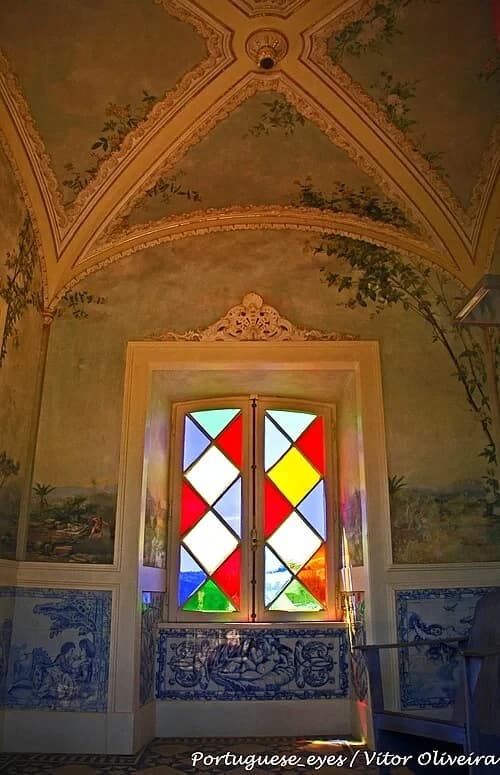
The Blue Room Window
The Sala Azul, or Blue Room, was designed as a more intimate living space, yet it continues the theme of grand artistic expression. One of its most striking features is the window set with diamond-patterned stained glass. The vibrant colors of the glass cast changing patterns across the floor as the sun moves across the sky throughout the day. Surrounding the window are mural paintings that depict lush garden scenes, complete with architectural elements and flora that mirror the actual gardens outside. These murals served a specific purpose: they were intended to bring the beauty of the outdoors into the private living quarters, creating a seamless visual experience for the residents. By painting the walls with landscapes, the designers effectively expanded the room, making it feel like a pavilion set within the park rather than an enclosed interior. This technique was popular in high-style European residences of the 19th century, emphasizing a connection to nature through art. The room's cool color palette provides a refreshing contrast to the warmer tones found in the formal reception halls.
The Monumental Garden Staircase
Transitions from the interior to the three-tiered garden complex via grand stone stairs adorned with large tile panels.
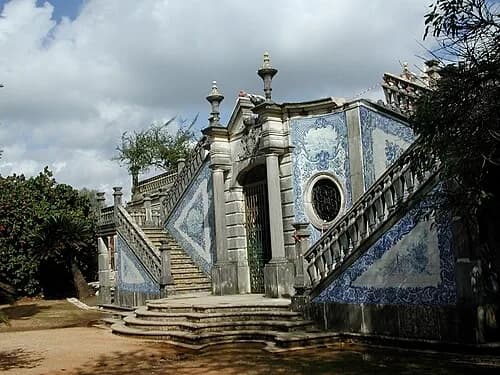
The Grand Tiled Staircase
As you move through the gardens, the scale of the grand exterior staircase becomes apparent. Unlike the more private interior stairs, this structure is meant for public display, acting as an outdoor gallery. The walls flanking the steps are covered in massive blue-and-white tile panels. These panels weren't just decorative; they were a deliberate statement of the owner’s wealth and refined artistic taste. In the early 20th century, commissioning such large-scale custom tile work was an enormous expense, signaling the Viscount's status to anyone walking through the public-facing areas of his estate. The scenes depicted on the tiles vary, often showing classical landscapes or allegorical figures that complement the statues found throughout the grounds. By placing these high-art elements in an outdoor setting, the architect transformed a simple functional element—a set of stairs—into a major architectural feature. This integration of tile, stone, and landscape is a signature of Portuguese garden design, where the transition between the built environment and the cultivated nature of the park is intentionally blurred to create a unified artistic experience.
The Upper Terrace and Belvederes
Explores the top level of the garden, where visitors can find decorative structures with stained glass and views over the estate.
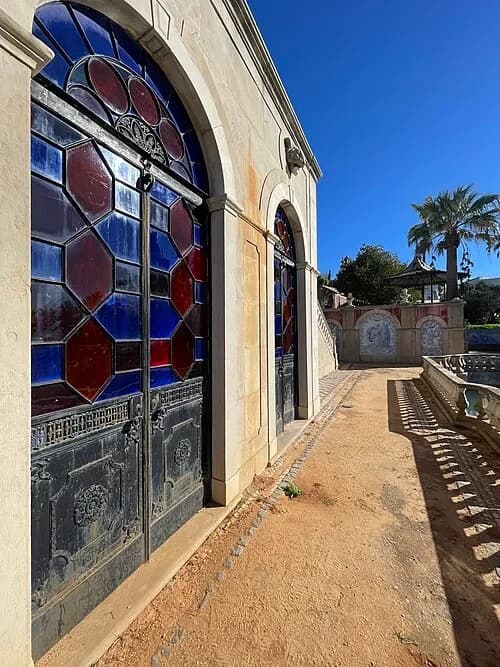
The Upper Terrace
The upper terrace represents the highest level of the garden's formal hierarchy. Here, you will find a series of 'belvederes,' or tea rooms, designed for leisure and social interaction. These pavilions feature stained glass panels in their doors, adding vibrant color to the stone structures. From this vantage point, the owners and their guests could enjoy panoramic views of the entire estate, looking down over the tiered gardens, the fountains, and the agricultural lands beyond. This area was a vital social hub, where small parties would gather to enjoy the afternoon breeze and the expansive Algarve horizon. The placement of these tea rooms was strategically chosen to provide the best possible perspectives of the palace's facade and its symmetric garden layout. The architecture here is more delicate than the lower terraces, reflecting its purpose as a place for refined conversation and relaxation. Standing on this top level offers the clearest understanding of the Viscount's grand design, showing how the palace sits in perfect alignment with the long central axis of the gardens stretching out below toward the horizon.
The Fonte de Ossónoba (Middle Terrace)
Focuses on the central water feature of the second level, a masterpiece of marble sculpture and hydraulic engineering.
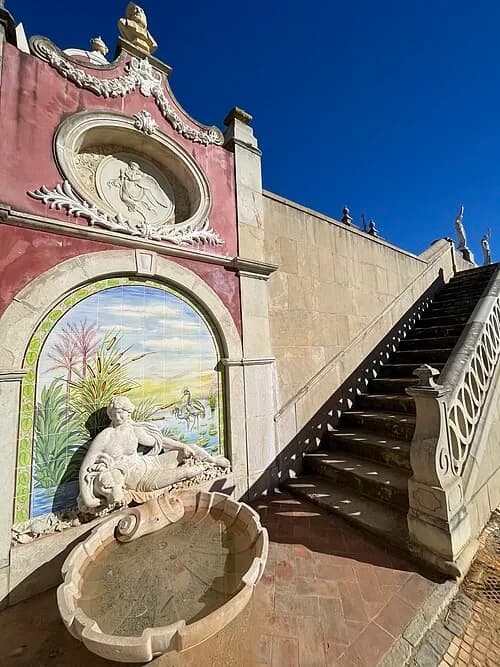
The Reclining Nymph
Resting on one of the garden's lower levels is a graceful marble sculpture of a reclining nymph. Below her, a shell-shaped basin catches water, creating a serene and classical focal point. This figure is one of many statues found throughout the estate that were specifically imported from Italy during the palace's final restoration phase. The Viscount was determined to fulfill a 'Rococo' fantasy, and Italian marble work was considered the gold standard for achieving that level of elegance and sophistication. The nymph is depicted in a relaxed pose, her form carved with a softness that contrasts with the weathered stone of the surrounding architecture. These sculptures were not merely decorations but characters in a larger theatrical landscape designed to evoke the myths of antiquity. By incorporating these high-quality imports, the estate's designers aimed to place Palácio de Estói on par with the great palaces of Europe. The sound of water dripping into the basin adds a sensory layer to the experience, reinforcing the cooling effect of the shade and the lush vegetation that frames this quiet corner of the monumental gardens.
The Sala da Cascata and Three Graces
Reaches the lower garden level to see the famous Italian-imported sculpture of the Three Graces set in a grotto-like niche.
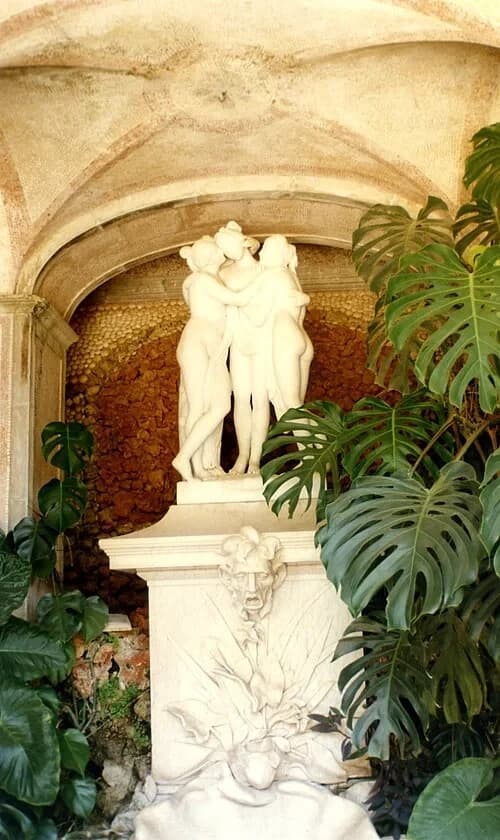
The Three Graces
Tucked away in the 'Sala da Cascata,' or Waterfall Room, is a sculpture depicting the Three Graces. Like many of the statues on the grounds, this set was imported from Italy to bring a classical European elegance to the estate. The figures are set against a rough, stone-encrusted wall that mimics a natural cave or waterfall setting. This rugged texture provides a sharp contrast to the smooth carving of the figures and the large, waxy leaves of the monstera plants that thrive in this humid environment. The combination of the damp stone, the shade, and the transpiration from the lush vegetation creates a cooling 'sunken garden' effect. In the height of a Portuguese summer, this would have been one of the most comfortable spots on the property. The Three Graces, representing charm, beauty, and creativity, were appropriate guardians for a room dedicated to the refreshing power of water. The atmosphere here is intentionally heavy and humid, a dramatic shift from the sunny, open terraces above. It demonstrates how the palace gardens used varied microclimates and artistic styles to provide different sensory experiences for visitors.
The Clock Tower and Legacy
Concludes the tour with a view of the palace tower, reflecting on its 1909 inauguration and its modern life as a luxury Pousada.
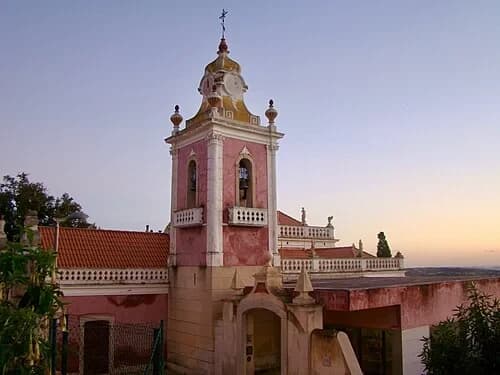
The Legacy Tower
The history of the Palácio de Estói is as dramatic as its architecture. In 1866, the original owner, José Maria Pereira do Carvalhal, died without direct heirs. His will stipulated that if no suitable family member could be found, the entire estate should be sold to provide for the poor of Faro. For decades, the property fell into a deep state of decline, its gardens overgrown and its structures crumbling. It wasn't until José Francisco da Silva purchased the ruins late in the 19th century that the palace's rebirth began. He spent twenty years and a vast fortune to complete the 'eclectic' masterpiece we see today. However, the 20th century brought further periods of neglect until 1977, when the site was finally designated as a Property of Public Interest by the Portuguese government. This legal protection paved the way for its modern transformation into a luxury hotel, ensuring that the Viscount's vision would be preserved for future generations. The building survived against the odds, transitioning from a private monument of wealth to a public treasure that continues to overlook the citrus groves stretching toward Faro.
Want to hear the rest?
Download the Stanza app to unlock all 13 stops and full GPS-guided navigation.
Frequently Asked Questions
How long does the Palácio de Estói audio tour take?
The Palácio de Estói audio guide includes 13 narrated stops. Most visitors spend 45 minutes to 1.5 hours exploring the complete tour, though you can listen at your own pace and skip or revisit any stop.
Is the Palácio de Estói audio guide available in my language?
Stanza supports 15 languages: English, Spanish, French, German, Italian, Portuguese, Russian, Japanese, Chinese, Korean, Arabic, Hindi, Polish, Dutch, Hebrew. Check the guide in the app to confirm the languages currently available for this tour.
Can I use the audio guide offline at Palácio de Estói?
Yes! Download the complete Palácio de Estói tour — including all audio, maps, and images — before your visit. The Stanza app works completely offline, so you don't need WiFi or mobile data at the venue.
How much does the Palácio de Estói audio guide cost?
The Stanza app is free to download. Free and paid audio guides are available; current prices are shown in the app.
How do I use the Stanza audio guide at Palácio de Estói?
Download the free Stanza app, search for "Palácio de Estói", and download the tour. When you arrive at the venue, the app uses GPS to detect your location and automatically plays the relevant narration as you move between points of interest — completely hands-free.
What makes the Stanza audio guide different from other Palácio de Estói tours?
Stanza offers GPS-triggered narration that plays automatically as you walk through Palácio de Estói — no need to manually select stops. The tour is available in 15 languages, works fully offline, and includes 13 expertly narrated stops with images and historical context.
What other audio guides are available near Palácio de Estói?
Stanza offers multiple audio guides in Faro, Portugal and nearby areas. After downloading the app, browse the map to discover all available tours near Palácio de Estói. Each guide can be downloaded for offline use.