Stanza · Audio guide
Paço dos Duques de Bragança Audio Guide
A place to remember. A story to take with you.
A 15th-century medieval manor built by the first Duke of Braganza, currently serving as a national monument and museum. It is noted for its distinctive red-brick chimneys and extensive collection of…
Download Stanza, then search for “Paço dos Duques de Bragança”.
About the tour
One guide. Your kind of visit.
A 15th-century medieval manor built by the first Duke of Braganza, currently serving as a national monument and museum. It is noted for its distinctive red-brick chimneys and extensive collection of tapestries and art.
Ready when you are.
- 01Get the free Stanza app.
iOS & Android
- 02Find your guide.
“Paço dos Duques de Bragança”
- 03Download before you go.
Works offline
Audio guide / 14 narrated stops
Inside the guide
Get to know a few of the stories before you go. Open a stop to read more.
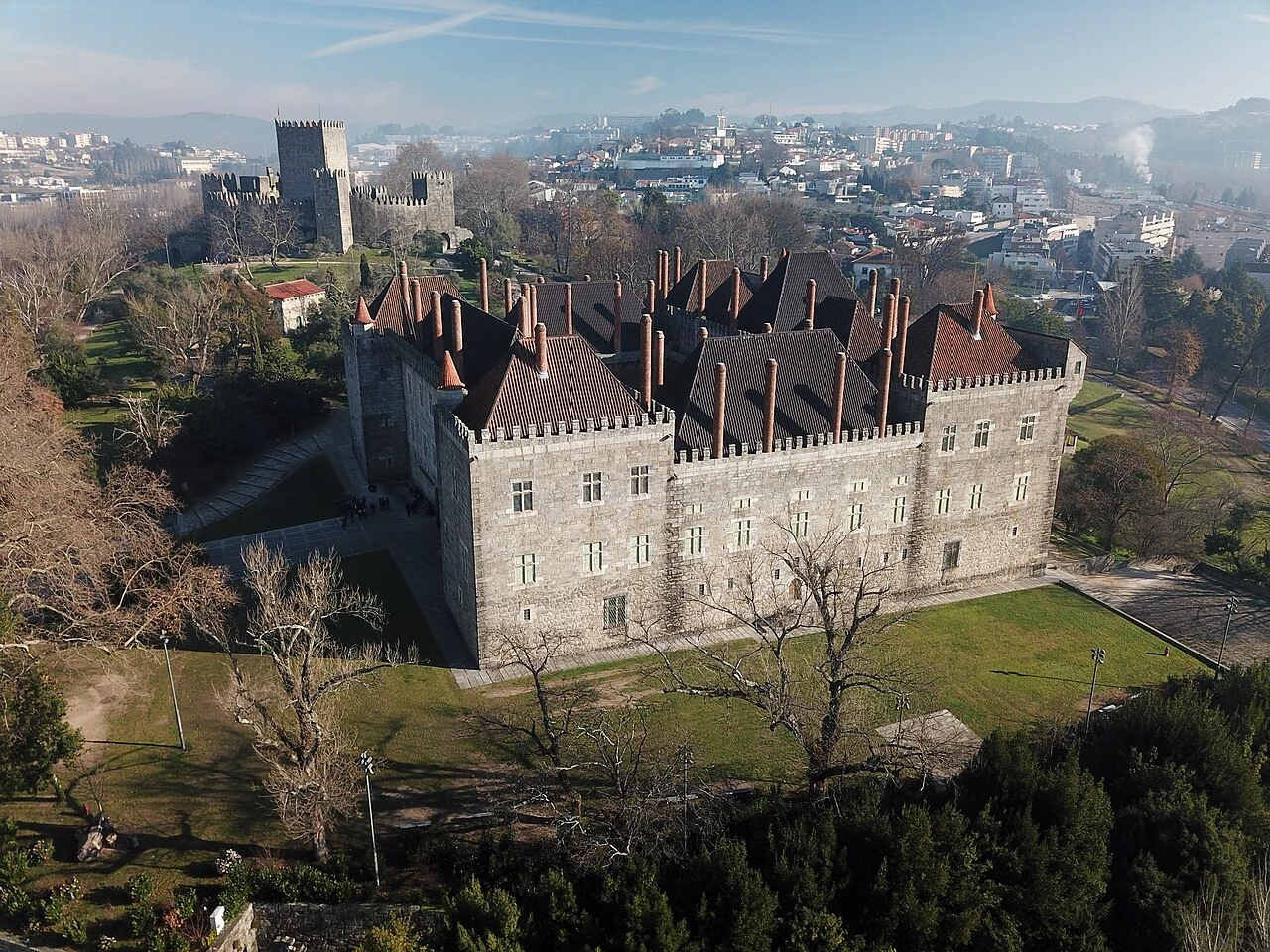
01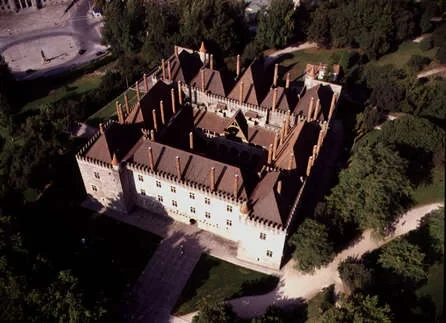 Arrival at the Holy Hill
The Braganza Palace Overview
Welcome to one of Northern Portugal's most visited sites, attracting over 376,000 visitors in 2024. Seen from the air, as in the photograph on your screen, the Paço dos Duques de Bragança shows a distinct rectangular layout. Construction of this imposing residence began between 1420 and 1422 for the 1st Duke of Braganza, marking a shift toward palatial living for the Portuguese nobility. The structure is built around a large central courtyard, a design that ensured natural light and fresh air reached the interior chambers. While it appears solid and medieval, much of what you see is the result of extensive 20th-century rebuilding. This site has served as a seat of power, a military barracks, and eventually a ruin before its restoration. It stands atop the 'Sacred Hill' of Guimarães, a location chosen for its strategic and symbolic importance to the kingdom. As we progress through the tour, we will move from these broad external views into the intimate spaces where the dukes once lived and governed. The walk begins at the base of the palace walls, where the history of the nation’s first kings is cast in bronze.
The original uploader was Rei-artur at Portuguese Wikipedia. · Attribution
02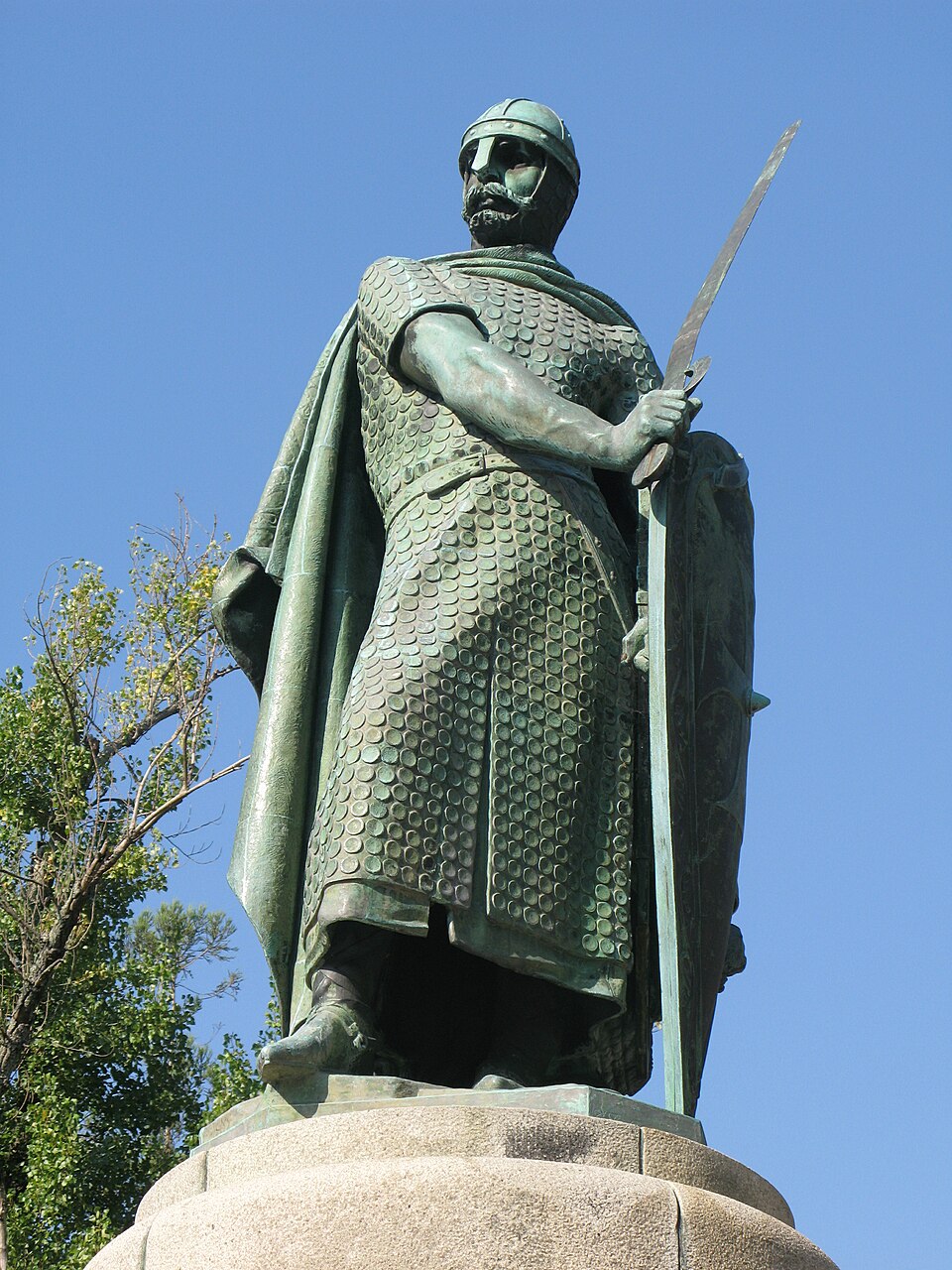 Arrival at the Holy Hill
Statue of Afonso Henriques
This iconic bronze figure represents Afonso Henriques, the very first King of Portugal, whose legacy permeates every corner of Guimarães. Although he lived centuries before the construction of the palace itself, his presence here on the 'Sacred Hill' is foundational. This area is widely considered the cradle of the Portuguese nation, and this statue captures that martial spirit perfectly. Notice the intricate detail of the chainmail and the weight of the heavy shield he carries. His sword is gripped firmly, a visual reminder of the struggles and battles that led to the birth of the kingdom in the 12th century. The sculptor chose to depict him not as a distant monarch, but as a rugged warrior-king, ready to defend the newly formed borders. His gaze is fixed outward, overlooking the lands he fought to unite. This statue serves as a bridge between the early medieval history of the castle nearby and the later, more refined era represented by the palace of his descendants. It is a popular gathering point for visitors who come to pay respects to the founder of the nation before entering the grand residence.
Béria Lima de Rodríguez · CC BY-SA 3.0
03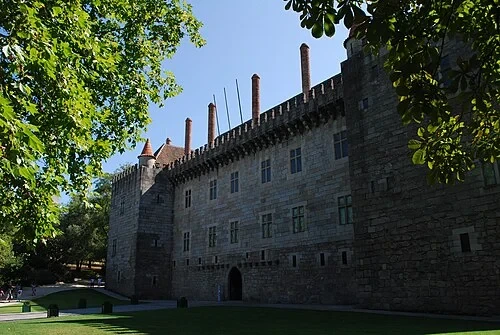 The Grand Facade and the Six Chimneys
The Grand Granite Facade
The exterior of the palace is defined by massive, hand-cut granite masonry blocks that give the building its formidable, fortress-like appearance. While the walls look impenetrable today, there was a time when they were viewed quite differently by the local population. During the 17th and 18th centuries, the palace fell into a period of extreme neglect. It became so dilapidated that it essentially served as a free stone quarry for the people of Guimarães. Locals would come here to dismantle sections of the walls, carrying off these very same granite blocks to construct their own houses in the town below. This history of pillaging explains why large portions of the original medieval fabric were missing when restoration efforts finally began. The imposing, solid presence you see now is a reconstruction of that lost grandeur, carefully reassembling the site's dignity. The variation in the color and weathering of the stones hints at which parts remained through the centuries and which were rebuilt. Looking at the smooth, regular courses of stone today, it is hard to imagine the palace as a hollow shell stripped of its skin by its own neighbors.
Listen in the appPhoto: Concierge.2C · CC BY-SA 3.0
04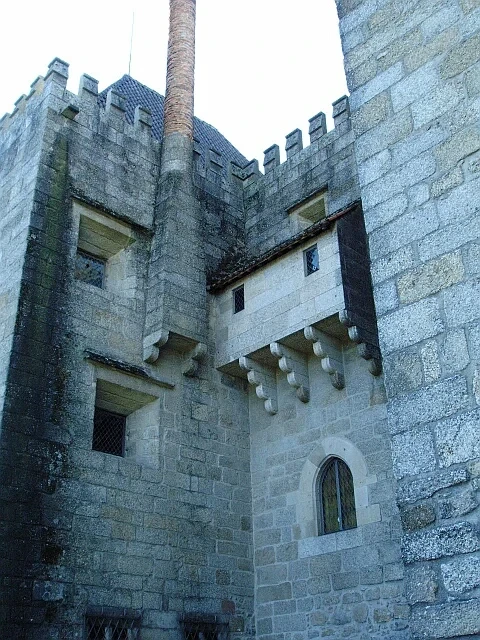 The Grand Facade and the Six Chimneys
The Brick Chimneys
One of the most striking features of the palace roofline is the array of tall, cylindrical brick chimneys rising toward the sky. There are exactly 39 of these prominent structures, which have become a signature element of the building's silhouette. Interestingly, the chimneys you see now are largely a product of a massive 22-year restoration project that took place between 1937 and 1959. The goal of the lead architect was to recapture a specific, perhaps idealized, medieval aesthetic that had been lost during the centuries of the building’s decay. The choice of brick creates a warm, textural contrast against the cold grey granite of the lower walls. In the 15th century, such a large number of chimneys was a clear sign of immense wealth and comfort, indicating that many rooms were equipped with fireplaces to ward off the damp chill of Northern Portugal. While some critics argue this forest of chimneys is a romanticized addition rather than a strictly historical one, they undoubtedly contribute to the unique character of the palace. Each one is topped with a simple conical cap, designed to allow smoke to escape while preventing rain from entering the hearths below.
Listen in the appa m · CC BY 2.0
05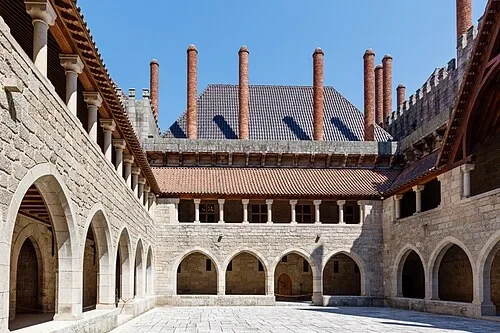 The Central Courtyard
The central courtyard is the architectural heart of the palace. However, this courtyard is also the center of a long-standing architectural debate. The reconstruction you see here was led by architect Rogério de Azevedo during the mid-20th century. Azevedo faced significant criticism for his approach, with many experts accusing him of creating a 'romanticized' version of the Middle Ages. Instead of following strict historical evidence, he leaned into a gothic-revival style that matched the nationalist spirit of the time. This resulted in a space that feels like a perfect medieval film set, complete with arched galleries and heavy stonework that may not have existed in this exact form originally. Despite these academic disagreements, the courtyard successfully evokes the atmosphere of a 15th-century ducal residence. The play of shadows across the granite arcades changes throughout the day, highlighting the rhythmic pattern of the windows that look down into the square. It remains a quiet sanctuary from the bustling city streets just beyond the palace gates.
Listen in the appMarmontel · CC BY 2.0
06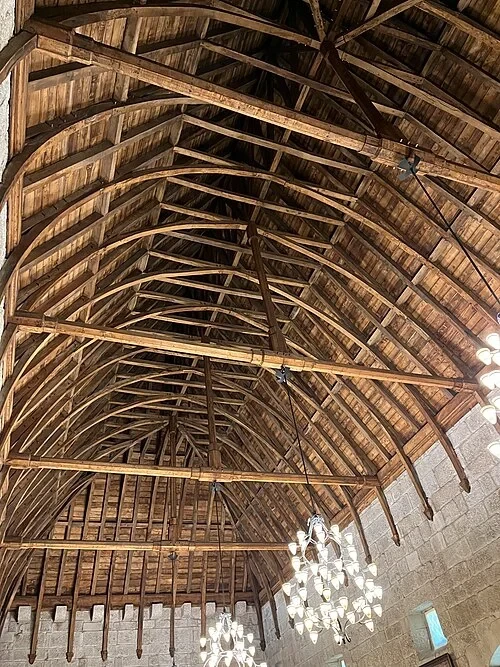 The Grand Reception Halls
The Ship-Keel Ceiling
Look up at the ceiling of this grand hall to see a remarkable display of late-medieval carpentry. The intricate woodwork features a technique where the heavy timber beams are shaped like the inverted keel of a ship. This architectural choice served two purposes. First, it was a sophisticated feat of engineering, allowing the builders to span large, open rooms without the need for central support columns that would clutter the floor space. Second, it was a deliberate nod to Portugal’s burgeoning maritime identity during the 15th century. As the Age of Discovery began, the sea became central to the kingdom's power and imagination, and this 'nautical' architecture brought that influence indoors. The dark wood has been carefully treated and preserved, showing the precise joinery required to create the arching ribs that hold up the roof. The repetition of the beams creates a sense of rhythm and height, drawing the eyes upward toward the shadows of the rafters. It is a style that reflects the dual nature of the Braganza dukes—landowners with deep roots in the granite soil of Guimarães, yet also figures closely tied to the global ambitions of the Portuguese crown.
Listen in the appdlovins99 · CC0
07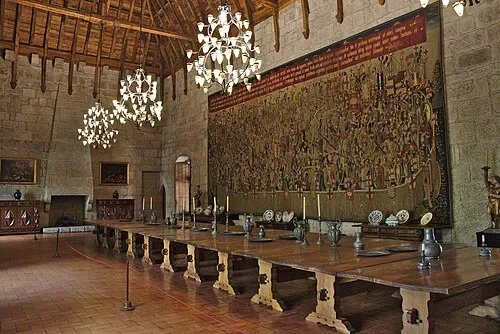 The Grand Reception Halls
The Pastrana Tapestries
Covering the walls of this hall are copies of the massive Pastrana tapestries, woven in Madrid at the Royal Tapestry Factory; the originals, which rank among the most significant Flemish textiles in the world, are kept in the collegiate church of Pastrana in Spain. These vibrant, densely woven scenes depict the military expeditions of King Afonso the Fifth into North Africa. The artistic style is a classic example of 'horror vacui,' a Latin term meaning 'fear of empty space.' Every single inch of the composition is packed with detail: soldiers in gleaming plate armor, unfurling banners, horses in mid-stride, and the chaotic machinery of 15th-century warfare. These were not just decorations; they functioned as powerful medieval political propaganda. By displaying these tapestries, the owners were broadcasting the military might and religious crusading zeal of the Portuguese monarchy to every visiting dignitary. The weaving technique required incredible skill, using fine threads to capture the textures of cold metal, flowing silk, and the expressive faces of the men in battle. Notice how the perspective is flattened, stacking the armies on top of one another to create a sense of overwhelming scale. To look at these walls is to see the history of a kingdom written in thread, celebrating victories that shaped the borders of the empire.
Listen in the appHalley Oliveira · CC BY-SA 2.0
08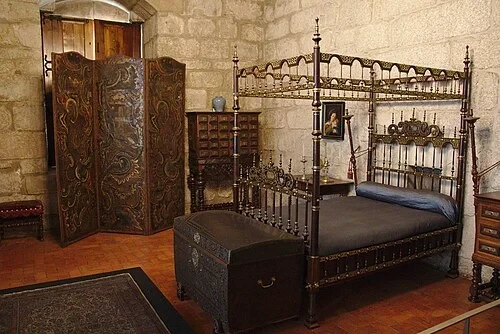 The Private Chambers and Baroque Art
The Duchess's Bedroom
This chamber, known as the Duchess's Bedroom, offers a glimpse into the more private and domestic side of life within these granite walls. The room is outfitted with heavy, dark wood furniture, including a traditional canopy bed designed to retain heat and provide privacy in the drafty palace. However, the elegance seen here today was completely absent for over a century. In 1807, during the French invasions of Portugal, what was left of the palace was repurposed as basic military barracks, a utilitarian function that stripped the building of its noble character. For over a hundred years, until 1935, these floors were trodden by soldiers rather than dukes, and the walls were likely covered in simple plaster. The current arrangement of furniture is a careful reconstruction, intended to evoke the 15th-century origins of the house. The contrast between the current refined atmosphere and its long history as a crowded garrison is a reminder of how close the palace came to being lost entirely. Today, the quiet stillness of the room allows you to appreciate the craftsmanship of the carved wooden chests and the small altar used for daily prayers.
Listen in the appHalley Oliveira · CC BY-SA 2.0
09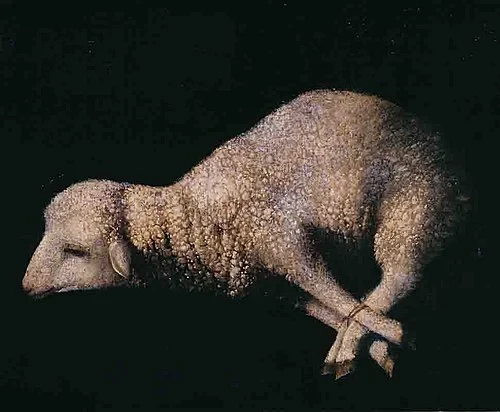 The Private Chambers and Baroque Art
The Paschal Lamb
The painting before you, known as the Paschal Lamb, is a profound example of Portuguese Baroque art. It is attributed to Josefa de Óbidos, a remarkable figure who was one of the very few women to achieve professional prominence as an artist in the 17th century. The composition is stark and powerful, focusing entirely on a single lamb with its feet bound. This imagery represents the Agnus Dei, or the 'Lamb of God,' a traditional Christian symbol of sacrifice and purity. Josefa’s skill is evident in the way she handled light and shadow; the deep, dark background pushes the subject forward, making the animal seem almost three-dimensional. Pay close attention to the delicate, tactile rendering of the wool, where you can almost see the individual curls and the soft texture of the coat. The bound feet add a sense of vulnerability and quiet resignation to the scene, reflecting the religious devotion common in the Baroque period. This painting is a highlight of the palace’s art collection, showcasing a mastery of realism that was rare for its time. It serves as a spiritual anchor within the gallery, inviting viewers to pause and reflect on the quiet, somber beauty of the work.
Listen in the appJosefa de Óbidos · Public domain
10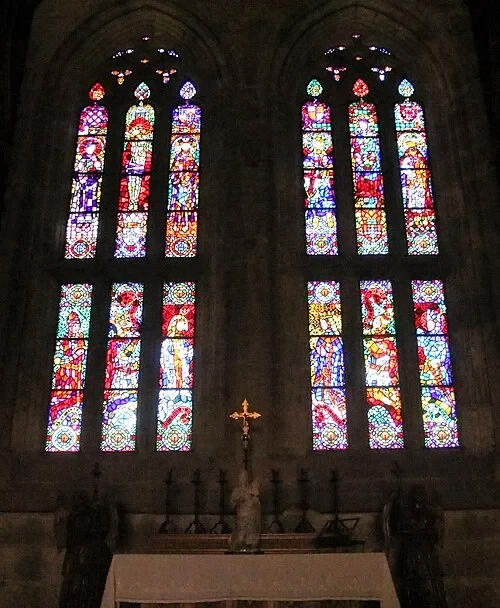 The Palace Chapel
The Chapel Windows
The palace chapel is a space defined by light and color, thanks to the vibrant stained-glass windows that line its walls. These windows are notable for their strong Flemish influence, characterized by rich, saturated tones and detailed figurative work that was popular in Northern Europe during the late Middle Ages. As the sun moves across the sky, the interior of the chapel is transformed by shifting patterns of red, blue, and gold light, creating an atmosphere that feels separate from the heavy stone hallways outside. For generations, this space was the spiritual heart of the House of Braganza, where the family gathered for daily mass, baptisms, and quiet contemplation. The iconography in the glass depicts various saints and biblical scenes, serving as a visual guide for the faithful who would have sat here. While much of the palace was built for defense or display of power, the chapel was built for the soul. The craftsmanship of the glasswork demonstrates the international reach of the dukes, who imported the finest artistic styles from across the continent to furnish their residence. The tall, narrow openings of the windows help to draw the gaze upward, emphasizing the height and sacred nature of the room.
Listen in the appPhoto: Werner100359 · CC BY-SA 4.0
- 11
The Presidential Wing
Discover the modern dual role of the palace as both a public museum and an official residence for the Portuguese President.
- 12
Church of Saint Michael
Visit the humble Romanesque chapel where legend holds the first King of Portugal was baptized nearly a millennium ago.
- 13
The Centennial Plane Tree
Find a moment of quiet reflection under the massive, ancient canopy of the palace gardens' most historic residents.
- 14
The Sacred Hill
Look across the hill to see the relationship between castle and palace, summarizing centuries of Portuguese national identity.
Paço dos Duques de Bragança
Frequently asked questions
How much does the guide cost?
Free app download. Listed guide price: $0.99. Guide price shown in the app. Audio guide only. Venue admission is separate.
Can I listen without internet?
Yes. Download the guide’s audio, images, and maps in the app before your visit. Your downloaded content is then available offline.
Can I listen in my language?
This audio guide is available in 15 languages, including English.
Do I need to follow a schedule?
No. This is a self-guided experience. Choose your stops, pause whenever you like, and return to a story at your own pace.
At your own pace
Explore Paço dos Duques de Bragança.
Download Stanza, then search for “Paço dos Duques de Bragança”.
Free app download · Guide price shown in the app
Keep exploring
Nearby audio guides
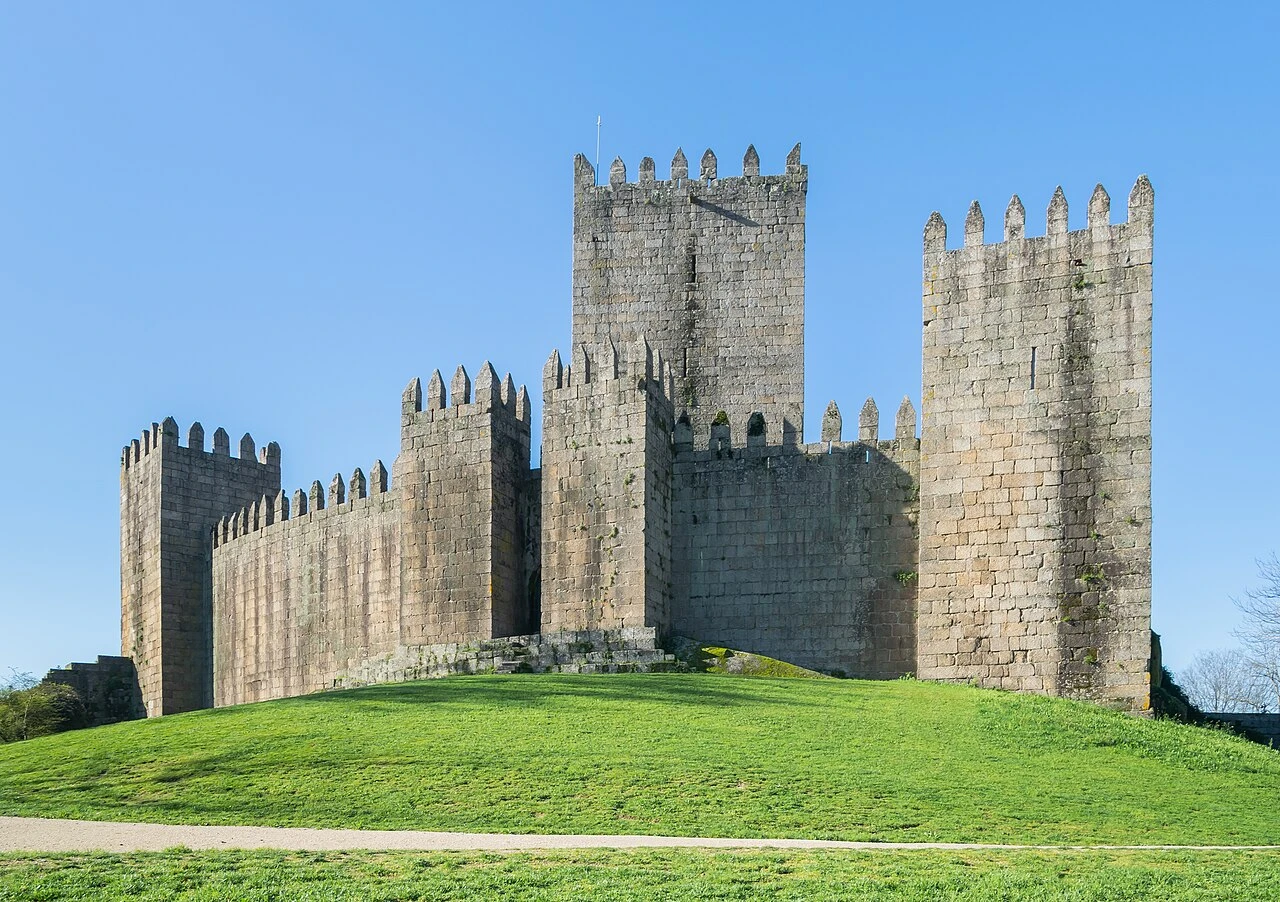
Guimarães · 1 km
Guimarães Castle
Content & sources
Krzysztof Golik · CC BY-SA 4.0
Guimarães · 9 km
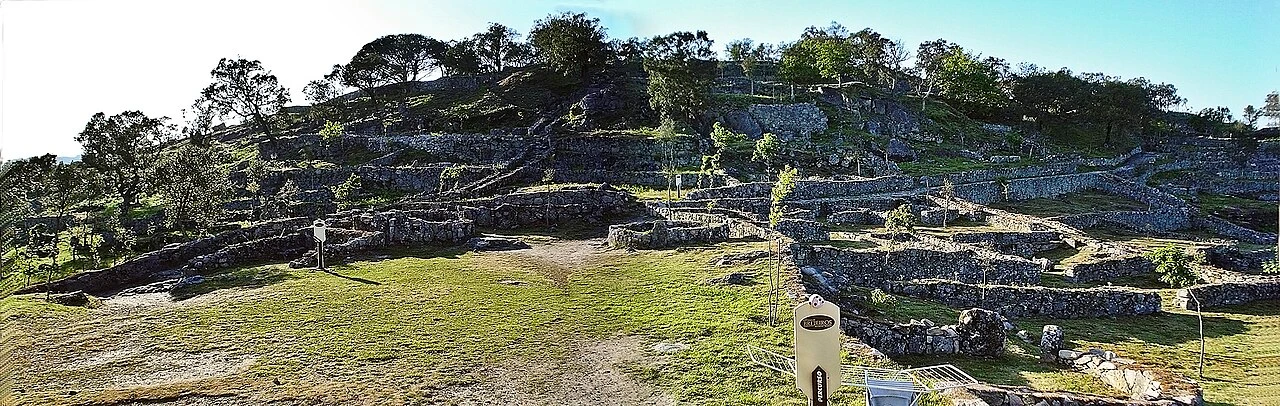
Citânia de Briteiros
Content & sources
Lansbricae · CC BY-SA 3.0
Braga · 15 km
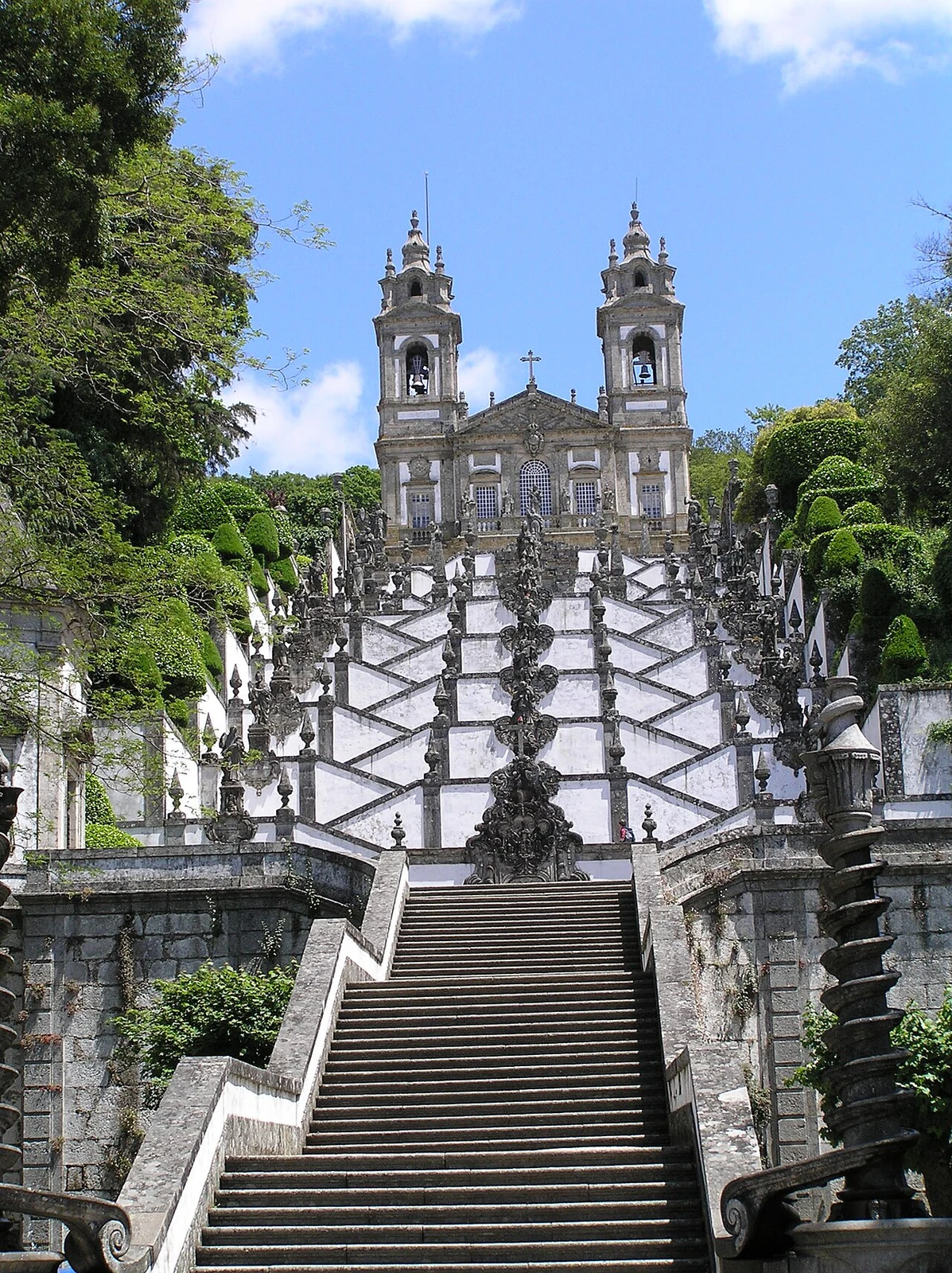
Tenões
Content & sources
Botafogo · Public domain
Braga · 16 km
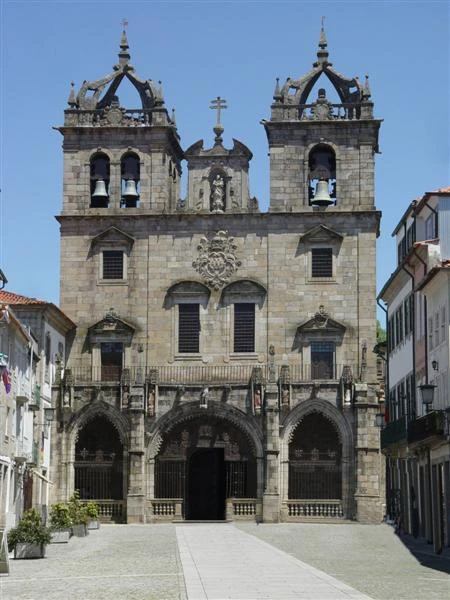
Braga Cathedral
Content & sources
Photo: Snitrom · CC BY-SA 3.0