Languages
15Santuário de Nossa Senhora dos Remédios Audio Guide
Santuário de Nossa Senhora dos Remédios is a landmark in Lamego, Portugal. Explore it with Stanza's GPS-triggered offline audio guide — available in 15 languages.
Quick Facts
21
Stops
15
Languages
100%
Offline
📍 Lamego, Portugal · 41.0917°N, -7.8164°E
About Santuário de Nossa Senhora dos Remédios
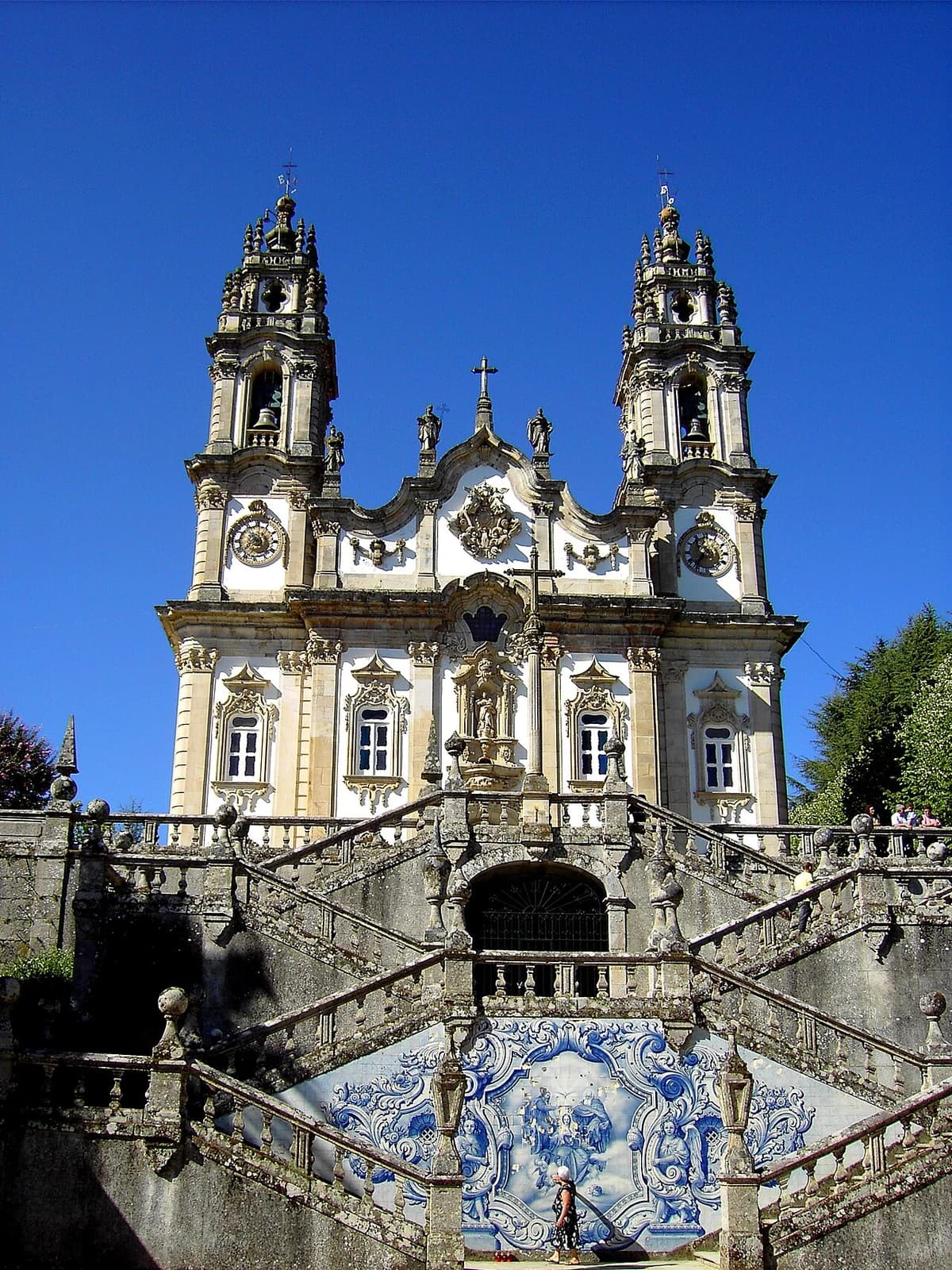
This iconic 18th-century sanctuary is a renowned Rococo pilgrimage church perched on a hill overlooking the city of Lamego. It is famous for its monumental Baroque staircase featuring elaborate tile work and fountains.
Santuário de Nossa Senhora dos Remédios is also known as Santuário da Nossa Senhora dos Remédios, Santuário da nossa senhora dos remédios, Santuário de nossa senhora dos remédios, Santuario de Nossa Senhora dos Remedios.
This self-guided audio tour features 21 narrated stops organized across 8 sections. As a church, Santuário de Nossa Senhora dos Remédios offers a unique cultural experience in the heart of Lamego, Portugal.
The Stanza audio guide is available in 15 languages and works entirely offline — download the complete tour including audio narration, maps, and images before your visit. As you walk through Santuário de Nossa Senhora dos Remédios, GPS-triggered narration plays automatically at each point of interest.
Last updated:
What you will hear
The Path of Blue and White
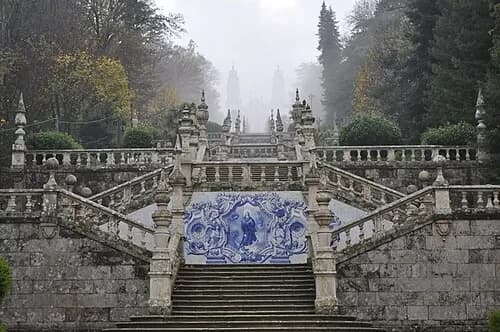
As visitors climb the first flights, they encounter the traditional Portuguese azulejos (tiles) that decorate the landings, blending religious art with the granite architecture.
The Misty Ascent
The climb follows a rhythmic pattern of nine distinct flights of stairs, punctuated by wide landings that offer a chance for rest. The architects used clever perspective tricks to influence your perception of the journey. By narrowing or widening certain sections, they made the church at the summit appear even more distant and ethereal than it actually is. This creates a sense of a heavenly destination that feels just out of reach, encouraging the traveler to keep moving upward. As you gain elevation, the sensory experience of the site changes. The echoes of the city below are gradually muffled by the dense canopy of trees. On cooler days, a light mist often clings to the hillside, partially obscuring the view and heightening the feeling of focus. The surrounding woods, predominantly chestnut and oak, form a natural frame for the grey stone of the stairs. This interaction between the controlled, geometric lines of the masonry and the wilder, organic shapes of the forest is a hallmark of the site's design. Each flight of steps brings a slightly different view, rewarding the effort of the climb with a shifting landscape that leads the eye toward the sky.
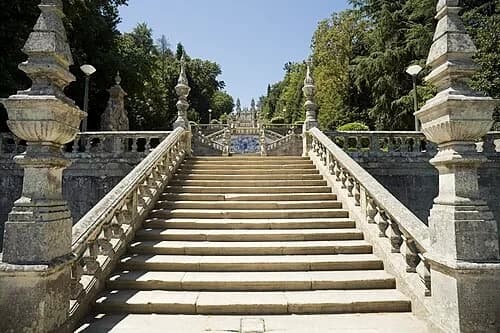
The Granite Flights
The sheer weight of the materials used in this staircase is staggering. Each balustrade and decorative urn is carved from solid granite, requiring immense skill to transport and install on such a steep incline. Look closely at the stone railings; they are not merely functional but serve as a canvas for Baroque ornamentation. The heavy urns that punctuate the landings are a classic feature of the period, adding a sense of weight and importance to the architecture. Anchoring these massive elements to the side of Monte de Santo Estevão was a significant engineering feat for the 18th and 19th centuries. The foundations must resist the natural erosion of the hillside while supporting tons of carved stone. This durability is why the staircase remains so well-preserved today. The grey stone contrasts sharply with the green foliage, creating a clean, structured line that cuts through the wild forest. This section of the path highlights the mastery of local stonemasons who spent decades shaping the mountain into this processional way. The repetitive patterns of the balusters provide a visual cadence to the walk, marking each step as you continue toward the more elaborate courtyards above.
The Courtyard of Kings
The 'Pátio dos Reis' is a major theological landing featuring eighteen statues representing the kings of Israel, illustrating the genealogy of the Virgin Mary.
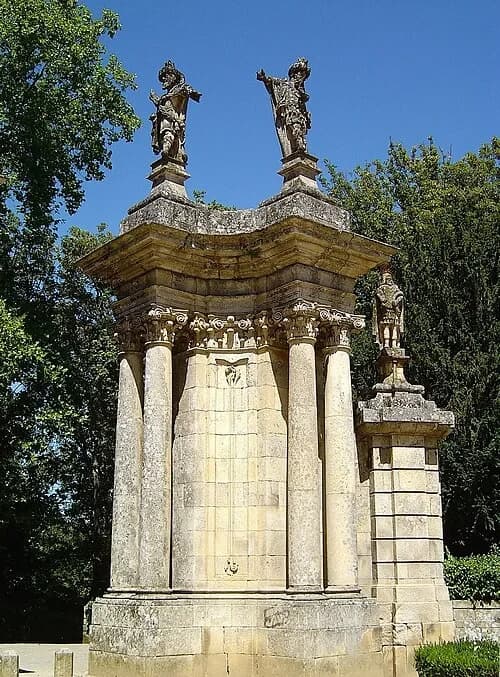
The Statues of Royalty
Each of the eighteen figures in the Court of Kings was carved with specific details to distinguish one royal ancestor from another. They are depicted in various poses—some holding scrolls, others with hands raised in gesture, or resting on their swords. Their clothing and regalia, from crowns to flowing robes, are rendered with a surprising amount of detail given the stubborn nature of the local granite. These statues served as a visual encyclopedia for visiting pilgrims, many of whom were illiterate and relied on such artworks to understand biblical stories and genealogies. The varying heights and positions of the figures create a dynamic skyline around the courtyard, ensuring that you are watched by these stony figures as you pass through. This elaborate theological program was intended to transform a simple walk up the hill into a profound educational experience. The weathering on the stone adds a layer of character, as if they have aged naturally over the centuries since they were first placed here. These carvings represent the high point of the artisanal labor dedicated to the sanctuary, showing how stone could be manipulated to tell a complex narrative of ancestry and divine providence. They remain some of the most recognizable features of the entire staircase complex.
The Fountain of Giants
This central landing is dominated by the 'Fonte dos Gigantes,' a monumental obelisk fountain that serves as a physical and symbolic center of the staircase.
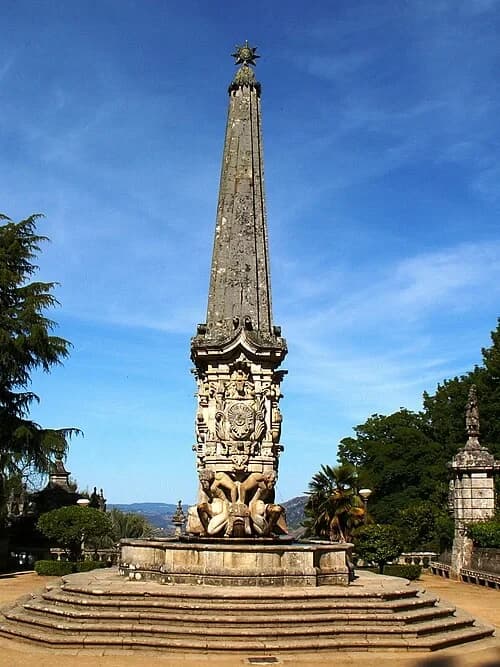
Details in Stone
At the foot of the 15-meter spire, look for the powerful stone figures carved into the base. These are the 'giants' or atlantes, depicted in poses of extreme effort as if they are physically holding up the entire weight of the obelisk on their shoulders. This type of dramatic, figurative support is typical of late Baroque and Rococo architecture. While the lower sections of the staircase focus on more formal, straight-edged Baroque design, the details here at the midpoint become more expressive and playful. You may notice more curves, scrolls, and intricate flourishes in the stonework. This transition into the Rococo style reflects the long duration of the site's construction, as tastes evolved over the decades. The muscularity of the giants is rendered with bold strokes in the grey granite, creating a sense of dynamic tension that brings the stone to life. This area of the fountain is rich with smaller decorative elements that reward a closer look, from the way the water flows over the carved basins to the ornate crests integrated into the spire's pedestal. These figures serve as a sturdy but highly decorative foundation, representing the labor and strength required to maintain such a grand spiritual monument on the rugged slopes of the mountain.
The Final Ascent and Pilgrims' Chapels
The upper flights of the staircase are punctuated by small chapels and stone monuments, offering moments of rest and reflection before reaching the church.
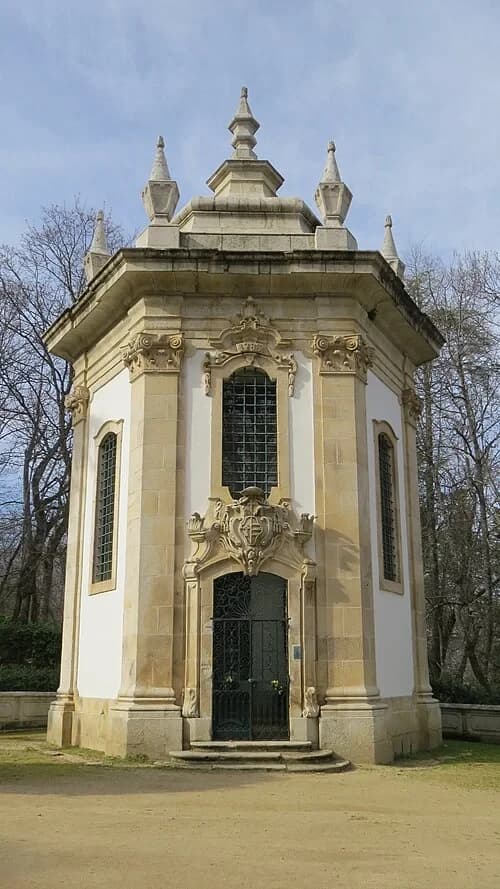
The Pilgrims' Chapel
As you continue upward, you will encounter several small, octagonal buildings like this one. These are side chapels, designed to provide private spaces for prayer, meditation, and much-needed rest. For the pilgrims who have been making this steep climb since the Middle Ages, these structures were vital sanctuaries from the sun or rain. Many of these chapels were added during the peak of the 18th-century construction boom; look for dates such as '1784' carved into the stonework above the doors. Inside, they typically housed small altars or religious scenes for reflection. Their octagonal shape is a common feature in Baroque religious architecture, symbolizing rebirth and the transition between earth and heaven. By spacing these chapels throughout the journey, the designers ensured that the climb was not just a physical test, but a rhythmic sequence of activity and stillness. Even today, they remain peaceful corners where the sounds of the surrounding forest are the only distraction. The simple, whitewashed walls and granite trim of these chapels mirror the style of the main sanctuary at the top, creating a cohesive visual language that follows you all the way to the peak of Monte de Santo Estevão.
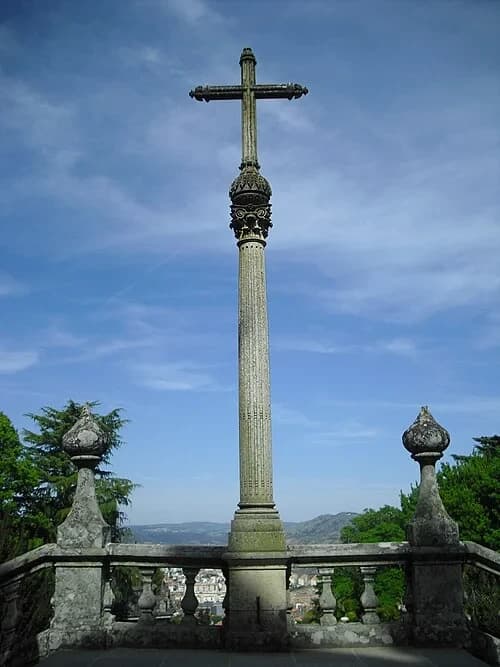
The Stone Cross
Standing at the edge of the upper terrace, this ornate stone cross, known as a 'cruzeiro,' serves as a symbolic beacon for the entire region. Its position was chosen so it would be visible to travelers and pilgrims as they approached Lamego from across the wide Douro valley. The cross is perched atop a tall, slender column decorated with intricate carvings that reflect the late-Baroque style popular during the sanctuary’s mid-stage construction. These carvings often include floral patterns and religious motifs, showcasing the high level of craftsmanship that even smaller architectural elements received. In Portuguese culture, the cruzeiro is more than just a religious symbol; it is a point of orientation and a landmark that defines the entrance to a holy site. This particular cross frames the expansive view of the town and the distant hills, creating a powerful intersection between the sacred art of the sanctuary and the natural landscape. The stone has developed a rich patina of moss and lichen over the years, further blending the man-made object with the elements. It remains a quiet point of reflection for those who reach the summit, marking the boundary where the processional stairs end and the church’s courtyard begins, standing as a silent landmark over the valley below.
The Baroque Masterpiece of Lamego
The main facade of the sanctuary, completed over 155 years, displays a beautiful transition from Baroque to Rococo styles, anchored by its twin bell towers.
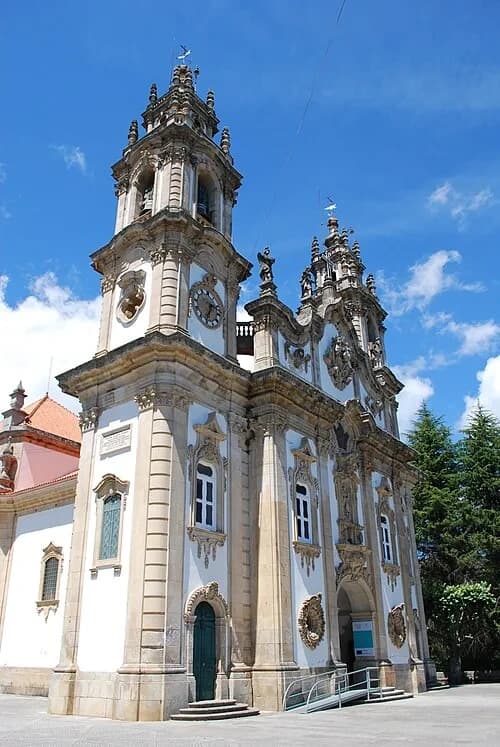
The Sanctuary Facade
The sanctuary's facade is dominated by two symmetrical bell towers that rise high above the forest canopy. At the center of the upper pediment, you can see a statue of Our Lady of Remedies, to whom this entire complex is dedicated. Interestingly, the site’s religious history dates back even further than the current 18th-century building. Originally, the summit was home to a small chapel dedicated to Saint Stephen, built in the 14th century. However, by the 1500s, devotion had shifted toward the Virgin Mary, under the title of 'Remedies' or 'Our Lady of Cures.' This change in focus prompted the massive expansion and the eventual construction of the Baroque church you see today. The facade is a masterclass in the use of vertical lines to draw the eye upward, from the ornate portal at the base to the crosses atop the towers. Every detail, from the curved window frames to the decorative stone finials, was designed to create a sense of movement and divine light. This architectural grandeur transformed the mountain from a simple site of local worship into one of the most important pilgrimage destinations in the country. The church serves as the spiritual heart of the climb, housing the revered image that thousands come to visit every year during the September festivities.
The Spiritual Heart: Sacred Art and Tiles
Inside, the sanctuary houses the revered image of Our Lady of Remedies. The interior is rich with devotional art, including elaborate tile murals and religious artifacts.
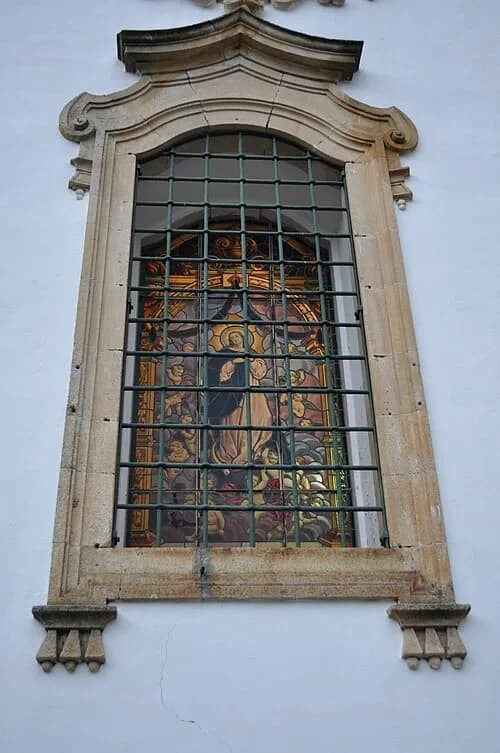
The Sacred Window
The window is encased in a robust stone frame that reflects the sanctuary's overall Baroque aesthetic, characterized by its undulating curves and heavy ornamentation. At the center of the painted glass panel is the figure of the Virgin Mary, shown ascending and surrounded by a host of joyful cherubs. In Baroque architecture, windows like this were more than simple light sources; they were carefully engineered to stage a 'divine' experience for those inside. Designers manipulated sunlight to create a high contrast, making the sacred figures appear to glow with their own internal light against the dimmer interior of the church. This effect was intended to inspire awe and suggest a physical manifestation of the holy. Unlike the colorful stained glass typical of earlier Gothic cathedrals, this Baroque style often favored naturalistic details painted directly onto the glass. The presence of cherubs, or putti, adds a sense of movement to the scene, emphasizing a triumphant atmosphere. The iron grating on the exterior casts a rhythmic shadow that shifts throughout the day, further animating the light inside.
The Silent Witness: The 700-Year-Old Chestnut
Near the sanctuary stands a chestnut tree estimated to be over 700 years old, a living monument that predates the current building and has witnessed centuries of pilgrimage.
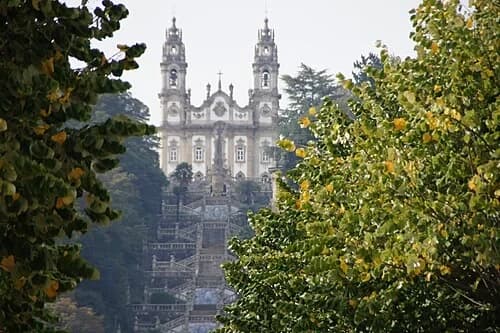
The Forest Frame
While the stone buildings of the sanctuary were mostly constructed in the 18th century, the nature surrounding them is significantly older. Nearby stands an ancient chestnut tree with a massive, deeply furrowed trunk. Estimates suggest this tree has stood for 700 years, making it a living witness to the history of Monte de Santo Estevão long before the current church was built. This tree is part of the larger Parque de Santo Estêvão, a dense forest that surrounds the church and the monumental staircase. The park was intentionally designed to provide a cool, shaded environment for pilgrims as they ascended the 686 steps. The canopy of trees created a sharp contrast to the open, sunny city of Lamego below, helping to transition visitors into a more meditative state. The scent of damp earth and the rustle of leaves replaced the noise of the town, offering a natural sanctuary for prayer. Today, the park remains a popular retreat for locals and visitors, who often use these shaded paths for quiet walks and summer picnics.
The Summit: A View Over Lamego
The tour concludes at the sanctuary viewpoint, where visitors can look back down the monumental staircase toward the city of Lamego and the Douro valley beyond.
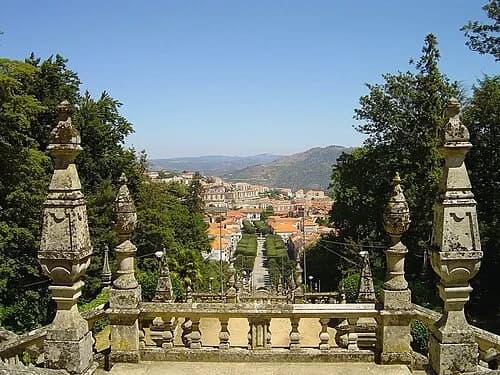
View Over Lamego
Standing on the upper terrace in front of the church, the entire city of Lamego unfolds along a perfectly straight axis. This vantage point allows you to appreciate the remarkable linear perspective created by the monumental staircase, which aligns directly with the city's main boulevard in the distance. For many throughout history, however, this view was earned through a much more arduous journey than a simple walk. It is a long-standing tradition for the most devout pilgrims to climb all 686 granite steps on their knees. This act of penance or gratitude is typically performed to fulfill a 'promessa'—a sacred vow made to Our Lady of Remedies in exchange for perceived help during times of illness or hardship. From this height, the city below appears distant, emphasizing the sanctuary’s role as a place apart from worldly concerns. Beyond the rooftops of the town, the rolling hills of the Douro region stretch toward the horizon. If you look all the way to the end of the straight path, you can see how it aligns perfectly with Lamego’s main boulevard.
Want to hear the rest?
Download the Stanza app to unlock all 21 stops and full GPS-guided navigation.
Frequently Asked Questions
How long does the Santuário de Nossa Senhora dos Remédios audio tour take?
The Santuário de Nossa Senhora dos Remédios audio guide includes 21 narrated stops. Most visitors spend 45 minutes to 1.5 hours exploring the complete tour, though you can listen at your own pace and skip or revisit any stop.
Is the Santuário de Nossa Senhora dos Remédios audio guide available in my language?
Stanza supports 15 languages: English, Spanish, French, German, Italian, Portuguese, Russian, Japanese, Chinese, Korean, Arabic, Hindi, Polish, Dutch, Hebrew. Check the guide in the app to confirm the languages currently available for this tour.
Can I use the audio guide offline at Santuário de Nossa Senhora dos Remédios?
Yes! Download the complete Santuário de Nossa Senhora dos Remédios tour — including all audio, maps, and images — before your visit. The Stanza app works completely offline, so you don't need WiFi or mobile data at the venue.
How much does the Santuário de Nossa Senhora dos Remédios audio guide cost?
The Stanza app is free to download. Free and paid audio guides are available; current prices are shown in the app.
How do I use the Stanza audio guide at Santuário de Nossa Senhora dos Remédios?
Download the free Stanza app, search for "Santuário de Nossa Senhora dos Remédios", and download the tour. When you arrive at the venue, the app uses GPS to detect your location and automatically plays the relevant narration as you move between points of interest — completely hands-free.
What makes the Stanza audio guide different from other Santuário de Nossa Senhora dos Remédios tours?
Stanza offers GPS-triggered narration that plays automatically as you walk through Santuário de Nossa Senhora dos Remédios — no need to manually select stops. The tour is available in 15 languages, works fully offline, and includes 21 expertly narrated stops with images and historical context.
What other audio guides are available near Santuário de Nossa Senhora dos Remédios?
Stanza offers multiple audio guides in Lamego, Portugal and nearby areas. After downloading the app, browse the map to discover all available tours near Santuário de Nossa Senhora dos Remédios. Each guide can be downloaded for offline use.