Languages
15Torre de Belém Audio Guide
Torre de Belém is a landmark in Lisbon, Portugal. Explore it with Stanza's GPS-triggered offline audio guide — available in 15 languages.
Quick Facts
18
Stops
15
Languages
100%
Offline
📍 Lisbon, Portugal · 38.6914°N, -9.2158°E
About Torre de Belém
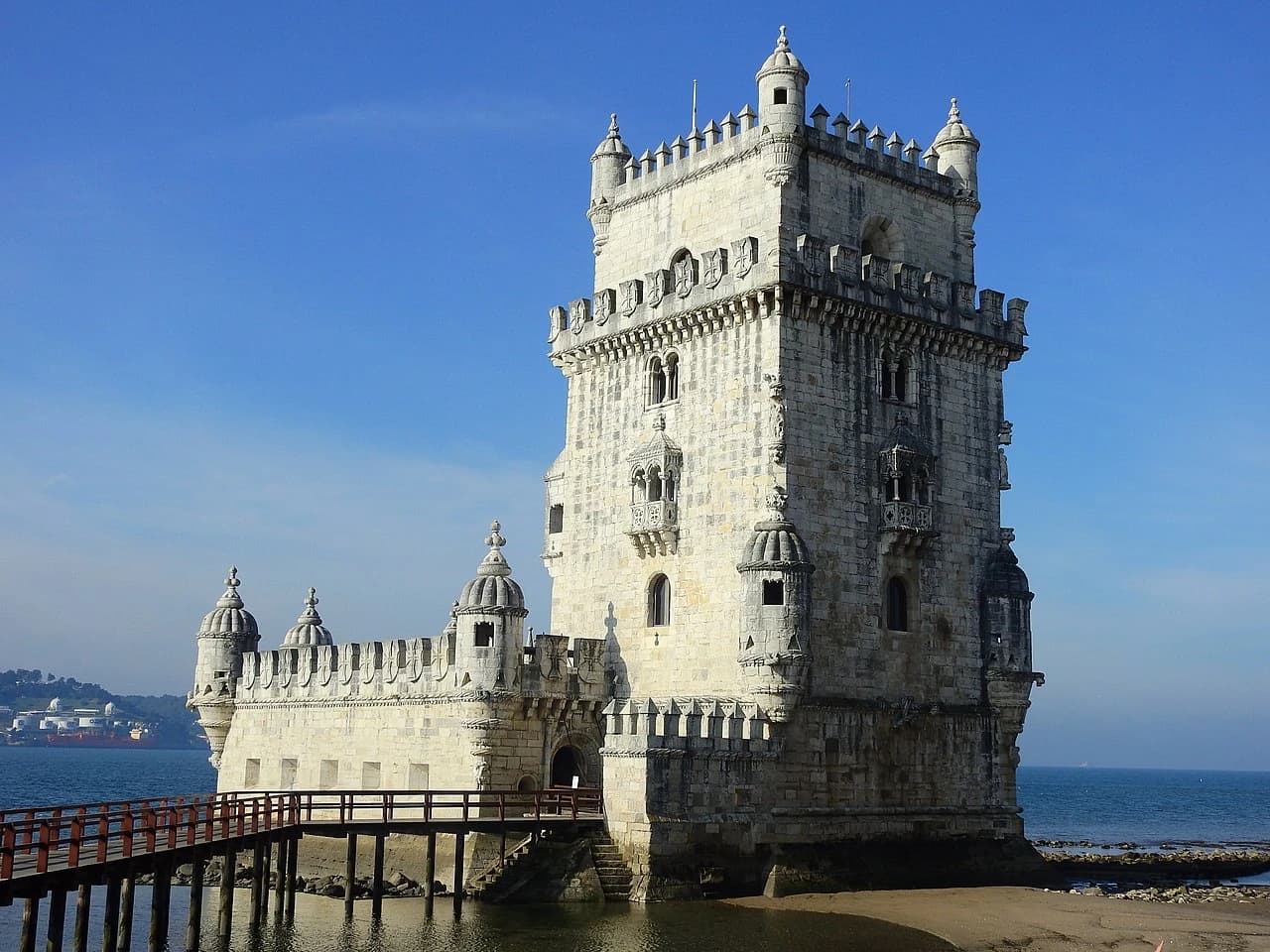
The Belém Tower is a 16th-century fortified tower located in Lisbon, Portugal. It served historically as a ceremonial gateway to Lisbon and a fortress protecting the city's harbor.
Torre de Belém is also known as Belem Tower, Baluarte do Restelo, Torre de são vicente a par de belém, Torre de são vicente de belém, and 3 other names in various languages.
This self-guided audio tour features 18 narrated stops organized across 8 sections. As a tower, Torre de Belém offers a unique cultural experience in the heart of Lisbon, Portugal.
The Stanza audio guide is available in 15 languages and works entirely offline — download the complete tour including audio narration, maps, and images before your visit. As you walk through Torre de Belém, GPS-triggered narration plays automatically at each point of interest.
Last updated:
What you will hear
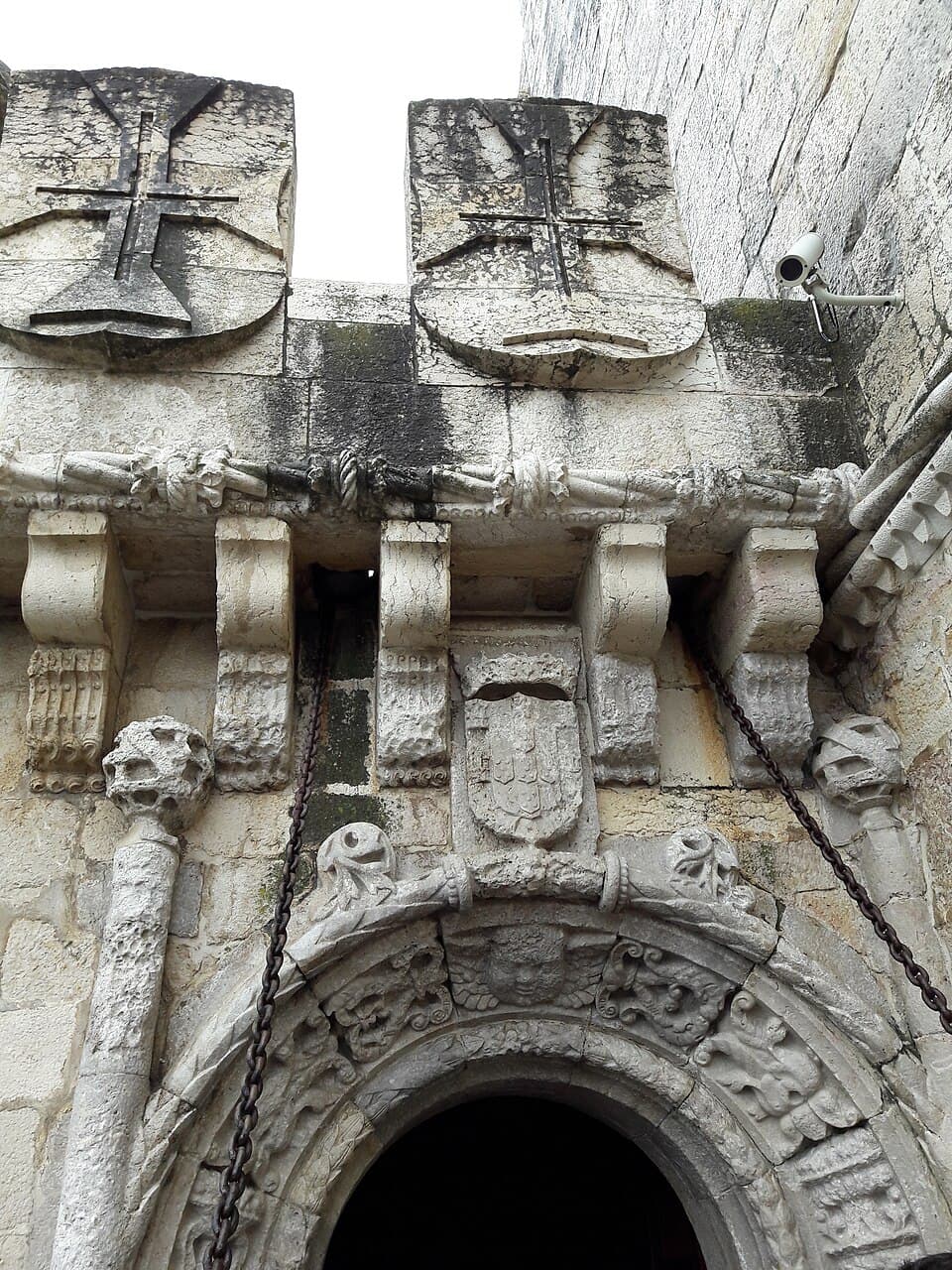
The Drawbridge and Royal Portal
Focus on the ceremonial entrance and the royal symbolism of King Manuel I.
Symbols of Royal Power
Positioned prominently above the entrance are the three defining symbols of the Portuguese Empire under King Manuel I. In the center, you will find the royal coat of arms, asserting the monarch's political sovereignty. Flanking it are armillary spheres, which were advanced navigational instruments used by explorers to calculate their position based on the stars. These spheres became the personal emblem of the King, representing the global reach of his reign. You will also see the Cross of the Order of Christ, a powerful military and religious order that played a vital role in financing and organizing the voyages of discovery. Together, these stone carvings functioned as political branding, projecting a message of power, advanced scientific knowledge, and divine mission to every visitor and foreign envoy. This imagery solidified the identity of the Portuguese Empire as a world leader in maritime technology and exploration, ensuring that anyone entering the tower understood the status of the kingdom they were visiting.
The Artillery Bastion
Explore the revolutionary military design of the casemates and the low-angle gun emplacements.
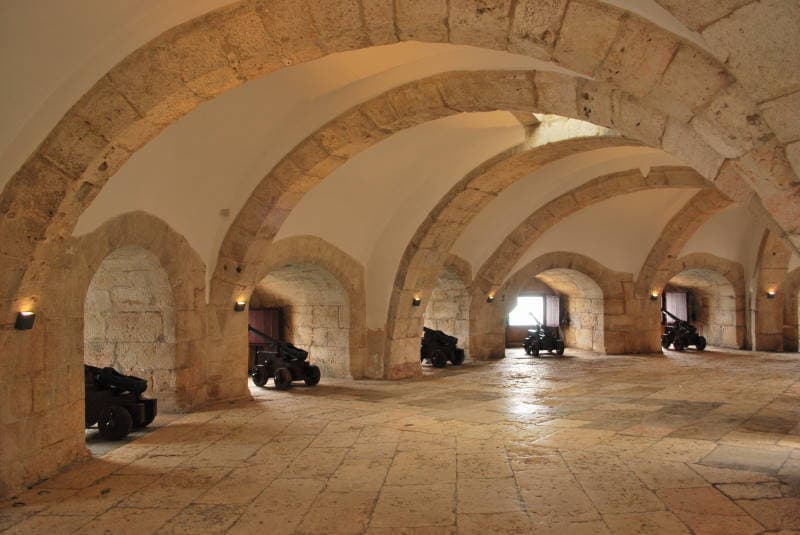
The Underground Cannon Battery
This hexagonal space represents a significant advancement in 16th-century military engineering. Unlike the tall, thin towers of the Middle Ages, this lower bastion was designed specifically to accommodate heavy artillery. The room features a revolutionary defensive strategy known as 'tiro rasante,' or low-angle fire. The 17 embrasures, or openings in the walls, were positioned close to the water's surface. This allowed the garrison to fire cannonballs at such a low trajectory that they would skip across the surface of the Tagus River, much like a stone skipped across a pond. This technique was devastatingly effective, as it ensured the projectiles would strike the wooden hulls of enemy ships exactly at the waterline, causing them to sink rapidly. The thickness of the stone walls here was engineered to absorb the massive recoil of the cannons and withstand returning fire from hostile vessels. Standing in this damp, echoes-filled space, you can imagine the thunderous noise and intense heat that would have filled the room during a naval engagement.
The Bastion Terrace
Transition to the open terrace to highlight the Moorish influence and the tower's decorative pinnacles.
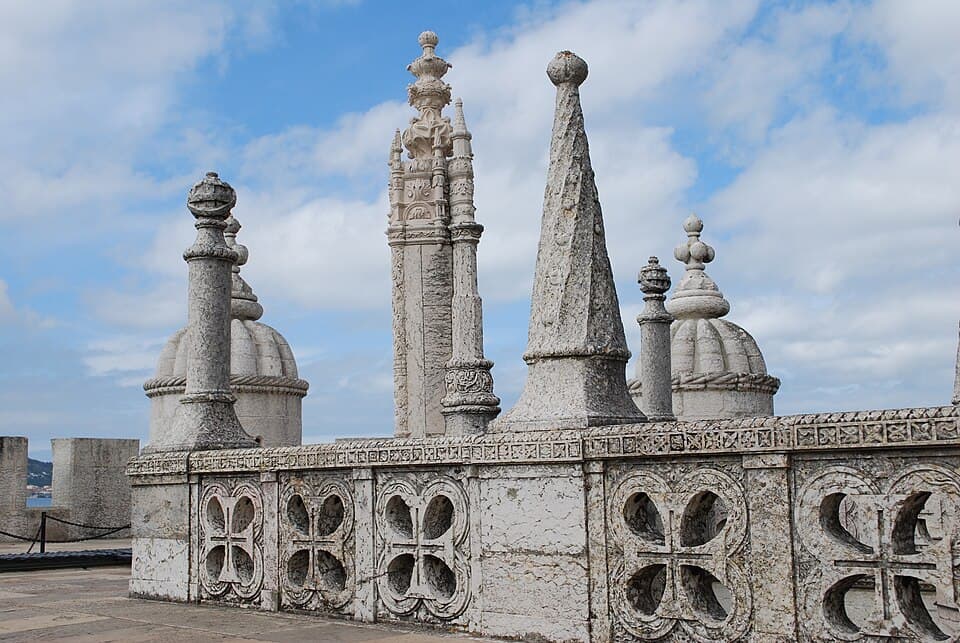
Late Gothic Stone Pinnacles
The detailed carvings you see on the terrace and the surrounding pinnacles are made from 'lioz' limestone, a high-quality stone found in the Lisbon region. This material was prized for its durability and the fine detail it allowed masons to achieve. This terrace acts as a gallery for Manueline artistry, where the transition from military function to decorative celebration is most apparent. While the lower levels are dominated by thick, plain walls for defense, the upper sections are adorned with delicate shields, crosses, and botanical motifs. The pinnacles and crenellations are not just for protection; they are designed to catch the light and create a sense of verticality and grandeur. This decorative layer transformed what could have been a grim military block into a celebrated architectural jewel. It reflects the wealth of the Portuguese crown during the 16th century, showing that even a defensive structure was expected to embody the beauty and sophistication of the Renaissance era.
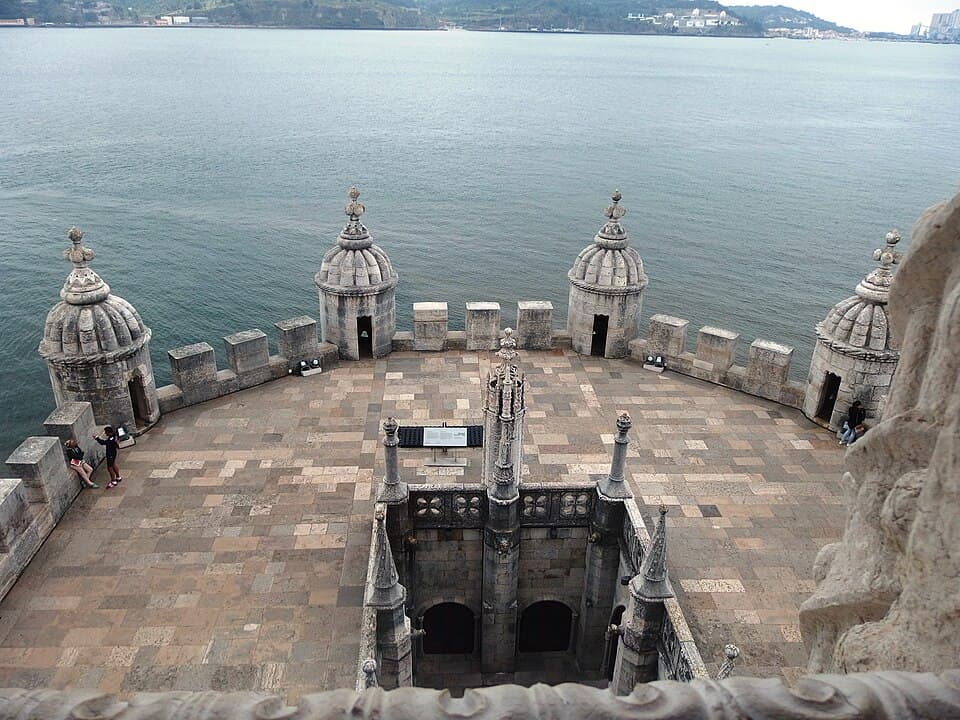
The Upper Bastion Terrace
As you step onto the upper terrace of the bastion, you are surrounded by the tower's most recognizable features: the watchtowers, also known as 'guerites.' These small circular structures were where sentries kept a constant watch for approaching ships. Notice the distinct Moorish influence in their design, specifically the melon-shaped domes and the ribbed decorative elements. These features are a direct result of his career in North Africa, where he studied and built fortifications for the Portuguese crown. Instead of a purely utilitarian look, the watchtowers are elegantly styled, blending Islamic aesthetic traditions with European military needs. Each corner of the bastion is equipped with one of these towers, ensuring there were no blind spots in the fortress's defense. From here, you can also see the battlements that protected soldiers as they moved across the terrace. This level served as a secondary defensive platform, allowing soldiers to fire down upon any enemy that managed to bypass the lower cannon battery.
The Virgin of Safe Homecoming
Introduce the spiritual beacon for Portuguese sailors departing for unknown lands.
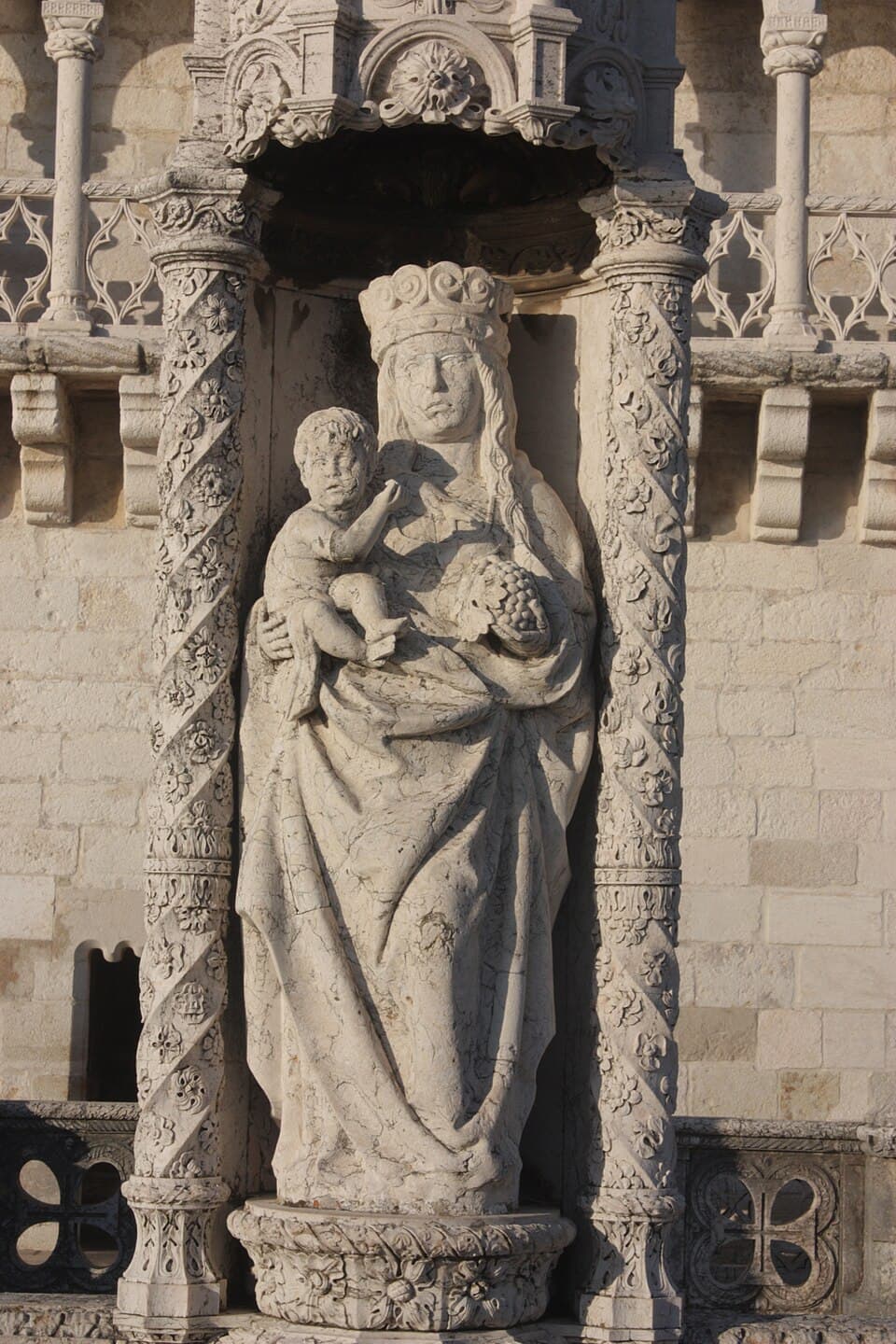
The Virgin of Belém
This statue, known as the Virgin of Belém or the Virgin of Safe Homecoming, held immense spiritual significance for the mariners of the 16th century. Before departing on voyages that could last years—and from which many would never return—sailors would look to this figure for protection and a safe return to Portuguese shores. The statue depicts the Virgin Mary holding the infant Jesus. If you look closely at the Child's hand, you will notice he is holding a bunch of grapes. In religious iconography, this symbolizes the 'promised land,' a fitting metaphor for the explorers seeking new territories across the Atlantic and Indian Oceans. The statue is framed by two twisted Manueline columns, further emphasizing its importance within the tower’s decorative scheme. For the garrison stationed here, the Virgin was a daily reminder of their duty and the divine favor believed to accompany the empire’s maritime ambitions. Even today, it remains a symbol of hope and a connection to the human side of the Age of Discovery.
The Rhinoceros Gargoyle
Highlight the quirky historical detail of the 1515 rhinoceros gift to King Manuel I.
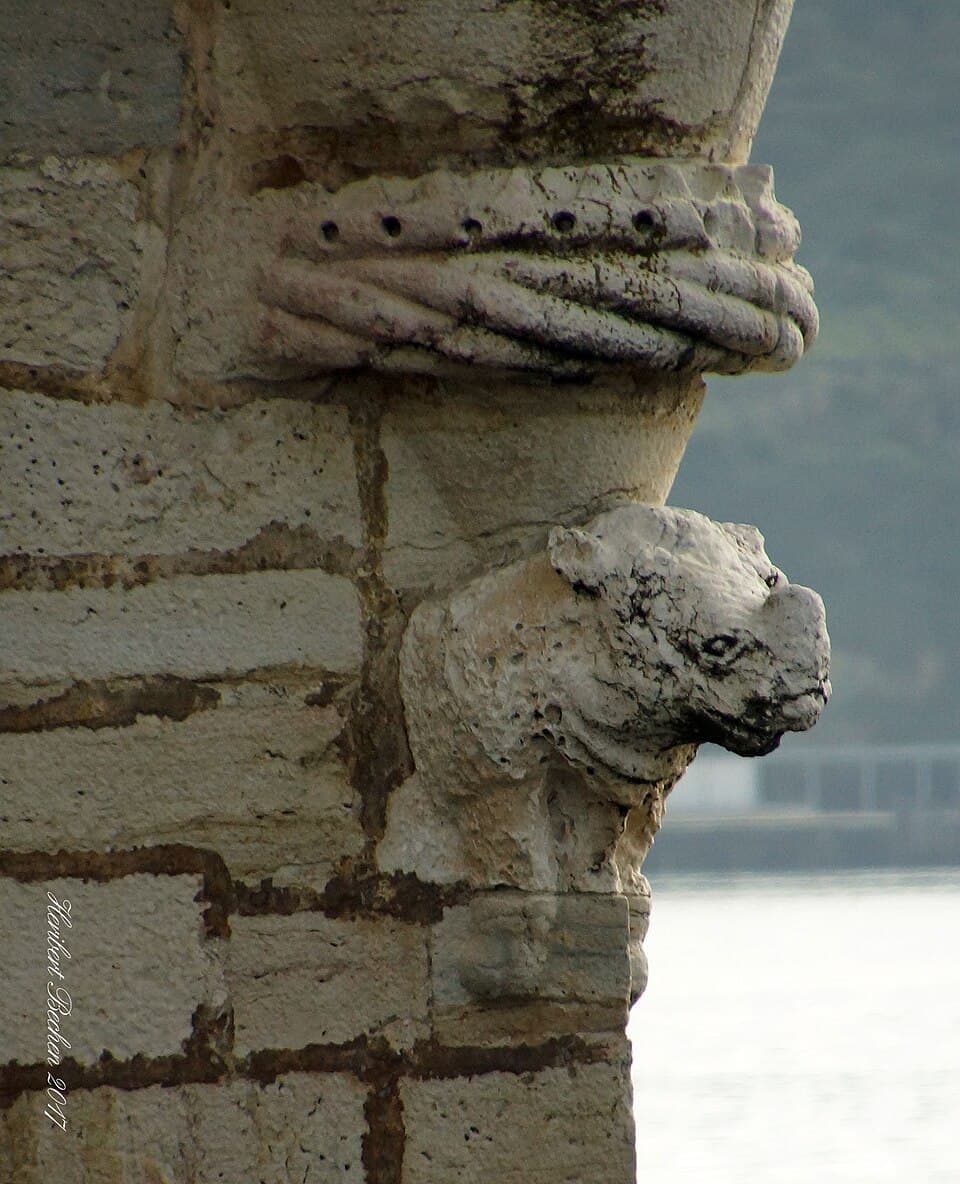
The 1515 Rhinoceros Gargoyle
Located at the base of the northwestern watchtower is one of the most curious and famous carvings in Portugal. This gargoyle depicts a rhinoceros, marking the first time this animal was ever represented in Western European art. The carving was inspired by a real animal sent as a gift from the Sultan of Gujarat to King Manuel I in 1515. The rhinoceros's arrival in Lisbon caused a massive sensation, as such creatures were previously only known through ancient texts. King Manuel famously organized a fight between the rhinoceros and an elephant to see if the two animals were truly enemies, as legends claimed. Later, the King decided to send the rhinoceros as a gift to the Pope in Rome. Tragically, the ship carrying the animal was wrecked in a storm off the coast of Italy, and the rhinoceros, chained to the deck, drowned. Despite the tragedy, the animal's likeness was captured here in stone, serving as a permanent testament to the exotic wonders the Portuguese were bringing back from their overseas territories.
The Governor's Hall
The first floor of the tower, which served as the administrative office for the fort's Alcaide.
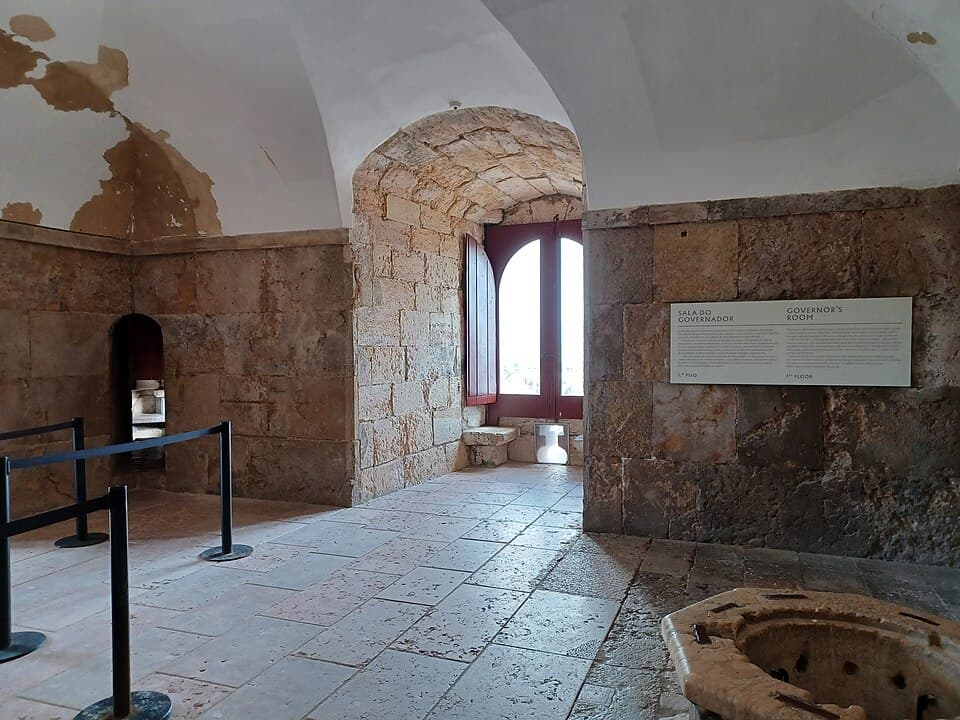
The Governor's Administrative Hall
As you move inside the first floor of the tower, you enter the Governor's Hall. This octagonal room served as the headquarters for the 'Alcaide,' or Governor, who was responsible for the oversight of the entire garrison and the defense of this section of the Tagus. The room is functional yet prestigious, with thick stone walls that provided safety from external bombardment. From this central location, the Governor could easily access the four corner watchtowers to inspect the sentries on duty. These guards kept a 24-hour vigil, watching for incoming fleet ships, merchant vessels, or potential enemy threats. The architecture of the room is designed for acoustics and visibility, allowing for efficient communication within the small command staff. Standing here, you can imagine the administrative buzz of the 1500s, with maps being unfurled and logs being kept of every ship that passed by the tower's heavy cannons. It was the nerve center of the fort, ensuring that Lisbon’s primary maritime defense remained alert and organized at all times.
The Chapel and Audience Hall
Combine the upper floors to show the intricate Manueline vaulting and the site of royal audiences.
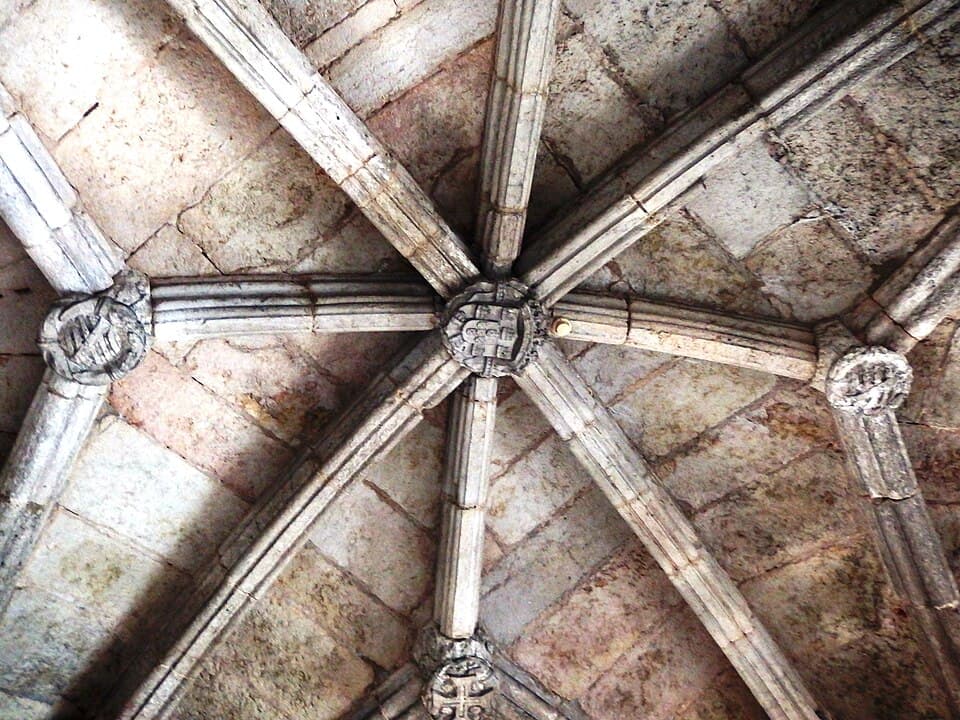
The Chapel's Vaulted Ceiling
The fourth floor of the tower housed the private chapel, a space dedicated to prayer and reflection for the Governor and the resident garrison. The most significant feature of this room is its vaulted ceiling. This is a masterwork of Manueline architecture, characterized by stone ribs that intersect in complex geometric patterns. Where the ribs meet, you can see decorative central bosses, some of which feature royal or religious emblems. This style of vaulting was not just for beauty; it was a sophisticated way to distribute the weight of the stone ceiling down into the walls. In a structure so heavily focused on military strength and global exploration, the chapel served as a vital spiritual anchor. Here, soldiers would pray for protection before battle, and the Governor would seek divine guidance in his duties. The quiet, cool atmosphere of this room, with its intricate stone patterns overhead, offers a peaceful contrast to the heavy artillery levels and the high-security dungeons located at the base of the tower.
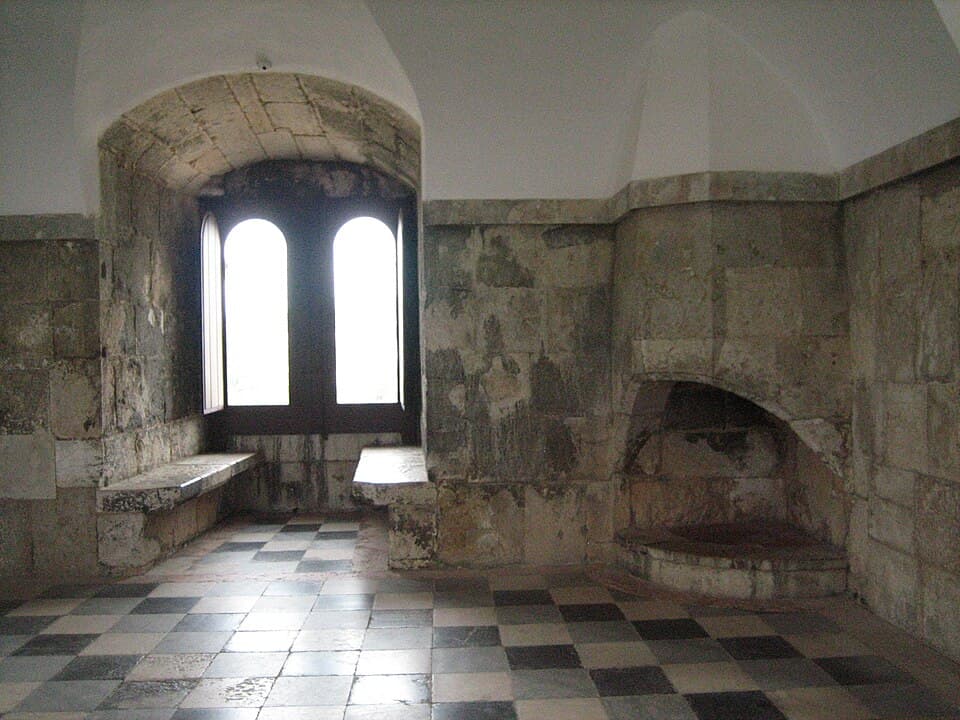
The Royal Audience Hall
The Royal Audience Hall was the primary space for receiving important guests and conducting official business within the tower. One of its most charming and practical features are the 'conversadeiras,' or stone window seats, built directly into the thick walls. These seats allowed high-ranking officials to sit and converse while enjoying the natural light and views from the windows. The room also features a large fireplace, a necessary addition to combat the river’s humidity and provide a comfortable environment for diplomatic meetings. This hall was meant to impress; the height of the room and the quality of the masonry signaled the importance of the activities taking place within. Whether receiving a ship's captain or a foreign ambassador, the Audience Hall provided a formal setting that represented the dignity of the Portuguese crown. The combination of defensive strength and residential comfort here perfectly illustrates the dual nature of the Torre de Belém as both a fierce protector of the harbor and a sophisticated representative of the state.
The Roof Terrace
The climax of the visit, offering the highest panoramic views of the Tagus and the city.
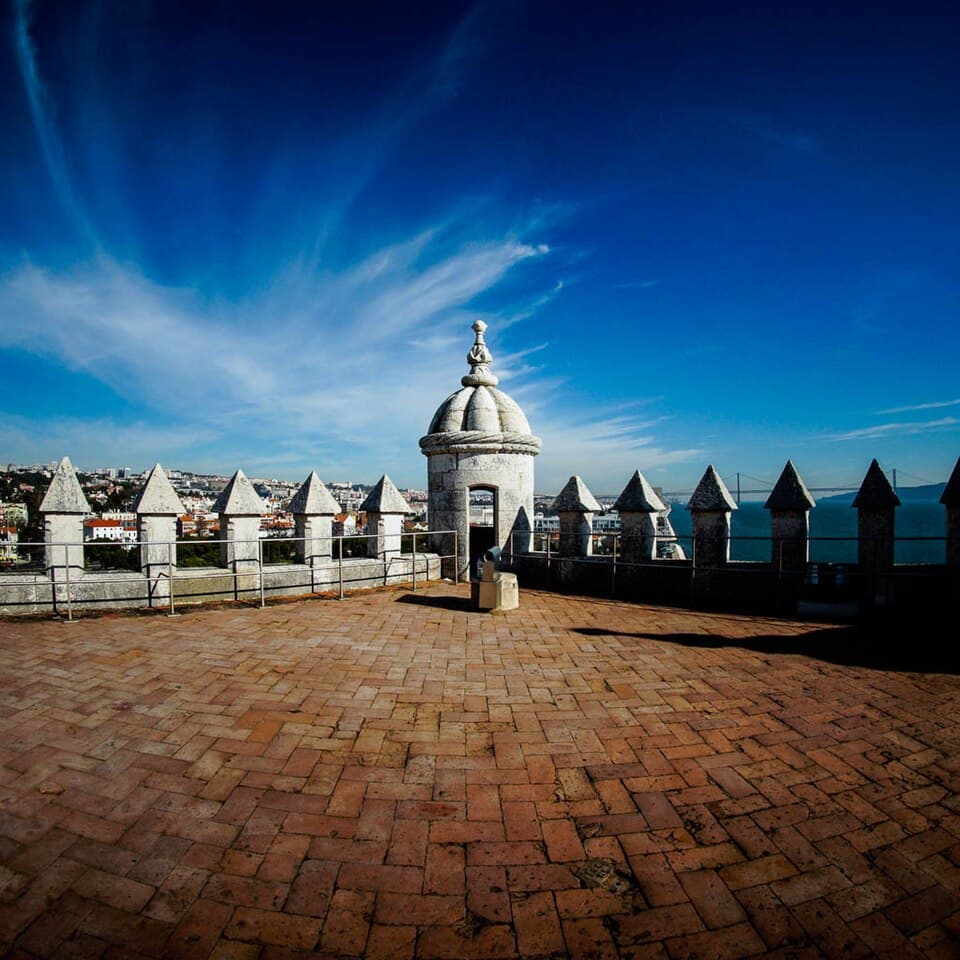
The Panoramic Roof Terrace
The climax of your visit is the panoramic roof terrace at the very top of the tower. From this height, you are rewarded with a 360-degree view that encompasses the Tagus River, the Atlantic horizon, and the entire historic district of Belém. Historically, this was the most critical lookout point in the entire harbor defense system. Guards stationed here could spot incoming vessels miles before they reached the city, using flags or lights to signal the nearby Jerónimos Monastery and other coastal forts. To the north, you can see the sprawling city of Lisbon, while to the south, the vast river opens up toward the sea. The terrace is surrounded by battlements and small decorative pinnacles, providing a sense of the tower’s defensive capabilities even at its highest point. This vantage point allows you to appreciate the strategic location King Manuel I chose for his sentinel, positioned perfectly to command the entrance to his capital and watch over the gateway to his global empire.
Want to hear the rest?
Download the Stanza app to unlock all 18 stops and full GPS-guided navigation.
Frequently Asked Questions
How long does the Torre de Belém audio tour take?
The Torre de Belém audio guide includes 18 narrated stops. Most visitors spend 45 minutes to 1.5 hours exploring the complete tour, though you can listen at your own pace and skip or revisit any stop.
Is the Torre de Belém audio guide available in my language?
Stanza supports 15 languages: English, Spanish, French, German, Italian, Portuguese, Russian, Japanese, Chinese, Korean, Arabic, Hindi, Polish, Dutch, Hebrew. Check the guide in the app to confirm the languages currently available for this tour.
Can I use the audio guide offline at Torre de Belém?
Yes! Download the complete Torre de Belém tour — including all audio, maps, and images — before your visit. The Stanza app works completely offline, so you don't need WiFi or mobile data at the venue.
How much does the Torre de Belém audio guide cost?
The Stanza app is free to download. The current listed price for the Torre de Belém audio guide is $2.99; app-store region and currency may affect the final price.
How do I use the Stanza audio guide at Torre de Belém?
Download the free Stanza app, search for "Torre de Belém", and download the tour. When you arrive at the venue, the app uses GPS to detect your location and automatically plays the relevant narration as you move between points of interest — completely hands-free.
What makes the Stanza audio guide different from other Torre de Belém tours?
Stanza offers GPS-triggered narration that plays automatically as you walk through Torre de Belém — no need to manually select stops. The tour is available in 15 languages, works fully offline, and includes 18 expertly narrated stops with images and historical context.
What other audio guides are available near Torre de Belém?
Stanza offers multiple audio guides in Lisbon, Portugal and nearby areas. After downloading the app, browse the map to discover all available tours near Torre de Belém. Each guide can be downloaded for offline use.