Languages
15Padrão dos Descobrimentos Audio Guide
Padrão dos Descobrimentos is a landmark in Lisbon, Portugal. Explore it with Stanza's GPS-triggered offline audio guide — available in 15 languages.
Quick Facts
13
Stops
15
Languages
100%
Offline
📍 Lisbon, Portugal · 38.6937°N, -9.2057°E
About Padrão dos Descobrimentos
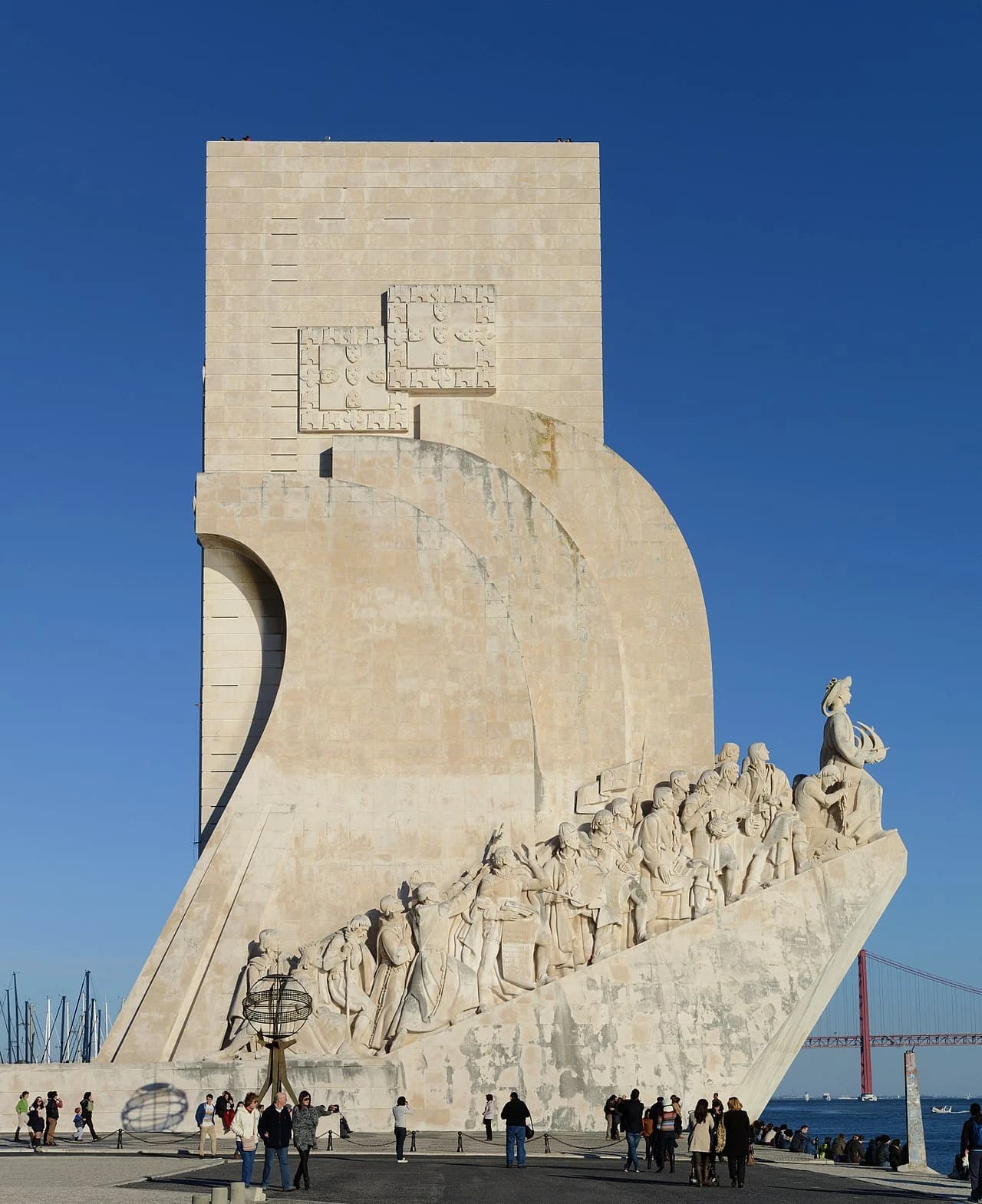
The Padrão dos Descobrimentos is a monument located on the northern bank of the Tagus River in Lisbon, Portugal. It celebrates the Portuguese Age of Discovery, depicting explorers, monarchs, and other figures important to the era.
Padrão dos Descobrimentos is also known as Monument of the Discoveries, Padrão das Descobertas, Monumento aos Navegantes, Monumento aos Descobrimentos.
This self-guided audio tour features 13 narrated stops organized across 7 sections. As a memorial, Padrão dos Descobrimentos offers a unique cultural experience in the heart of Lisbon, Portugal.
The Stanza audio guide is available in 15 languages and works entirely offline — download the complete tour including audio narration, maps, and images before your visit. As you walk through Padrão dos Descobrimentos, GPS-triggered narration plays automatically at each point of interest.
Last updated:
What you will hear
The Monument and the Compass Rose
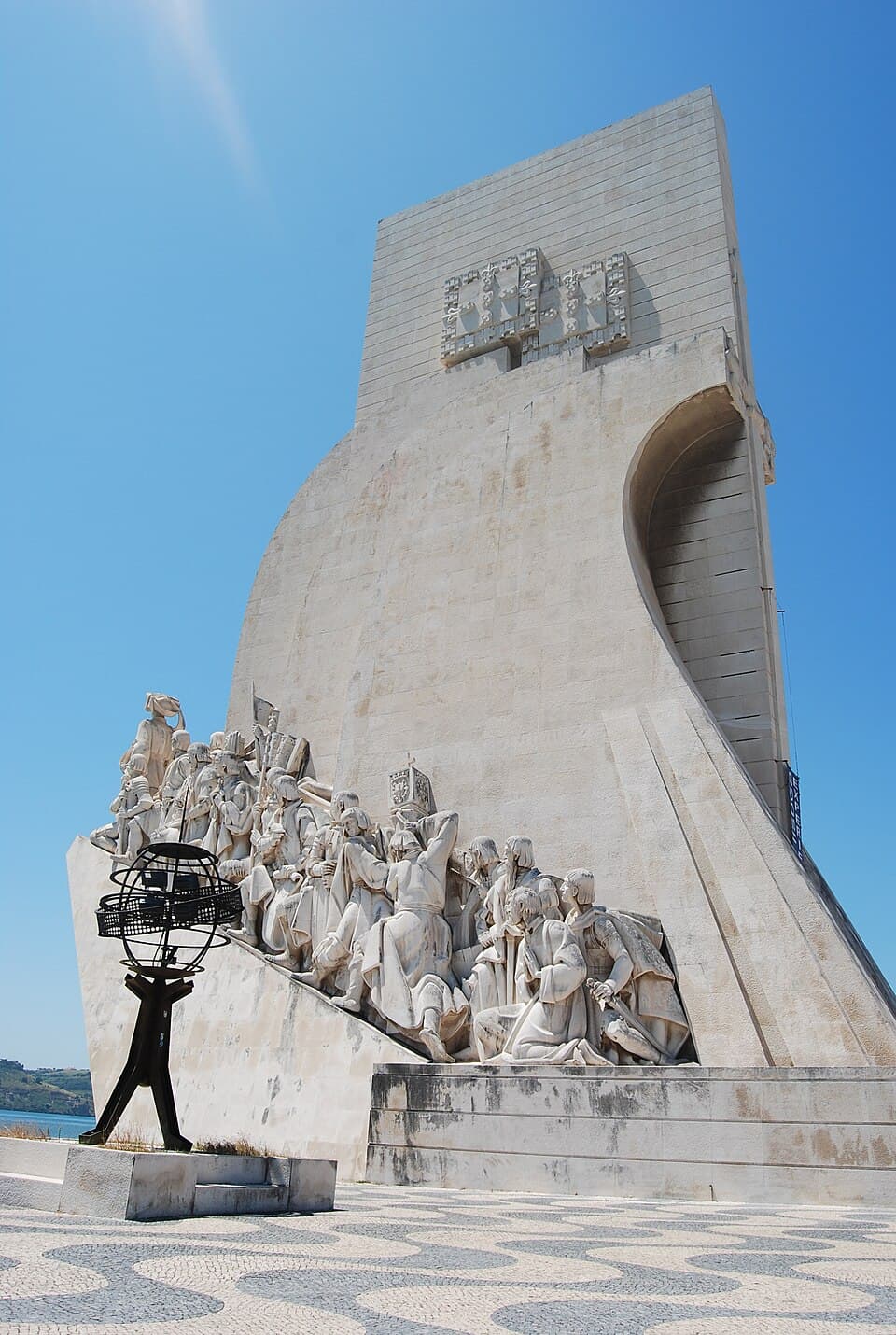
Start with a wide establishing shot of the monument's caravel shape and the scale of the plaza.
The Prow of the Caravel
Welcome to the Padrão dos Descobrimentos, or the Monument to the Discoveries. Standing before you is one of Lisbon’s most iconic landmarks, a towering 56-meter structure designed to resemble the stylized prow of a caravel—the type of agile sailing ship that powered the Portuguese Age of Discovery. If you look up, you can see the sheer scale of this concrete and stone structure as it appears to set sail directly into the waters of the Tagus River. The monument was designed by the primary architect José Ângelo Cottinelli Telmo. While it feels like an ancient tribute, this permanent stone version was actually inaugurated on August 9, 1960. The date was chosen with great significance, marking exactly 500 years since the death of Prince Henry the Navigator, the man standing at the very front. The monument is framed as a grand 'procession' of 33 distinct figures, including explorers, cartographers, and artists. Together, they capture the immense scale of Portugal's maritime ambitions and the collective effort it took to chart unknown horizons during the 15th and 16th centuries.
Mapping the Known World
Focus on the massive 50-meter diameter mosaic pavement, a diplomatic gift that tracks Portuguese voyages.
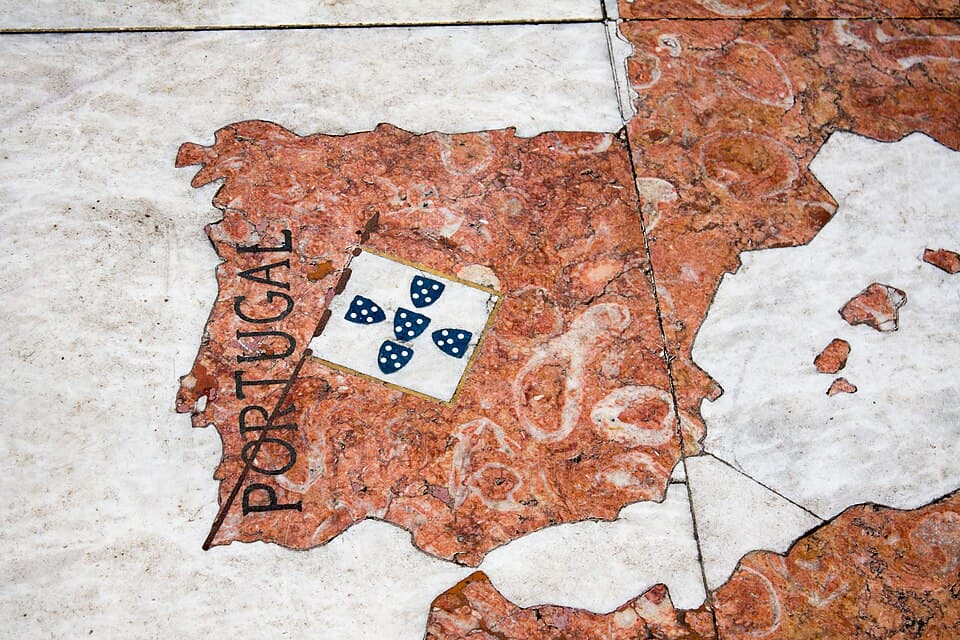
The Mappa Mundi Detail
Taking a closer look at the center of the giant pavement mosaic, you can spot the depiction of Portugal itself, marked clearly alongside the royal coat of arms. This specific area of the map has gained some modern fame as well; it served as a location for a challenge in the reality show 'The Amazing Race,' where contestants had to use the map to calculate the historical route taken by Ferdinand Magellan. The beauty of this mosaic lies not just in its design, but in its materials. The pavement is crafted using 'lioz' limestone, a rare and highly prized variety found only in the Lisbon and Sintra regions. You can identify it by its distinct cream and reddish hues, which give the map a warm, organic glow under the sun. This stone has been used in Portugal’s most significant monuments for centuries because of its durability and fine grain. As you look at the lines and dates carved into these stones, you are seeing a permanent record of the moment when different continents first began to connect through maritime trade.
Henry the Navigator at the Prow
Highlight the central figure of the monument, Prince Henry, who leads the procession into the Tagus River.
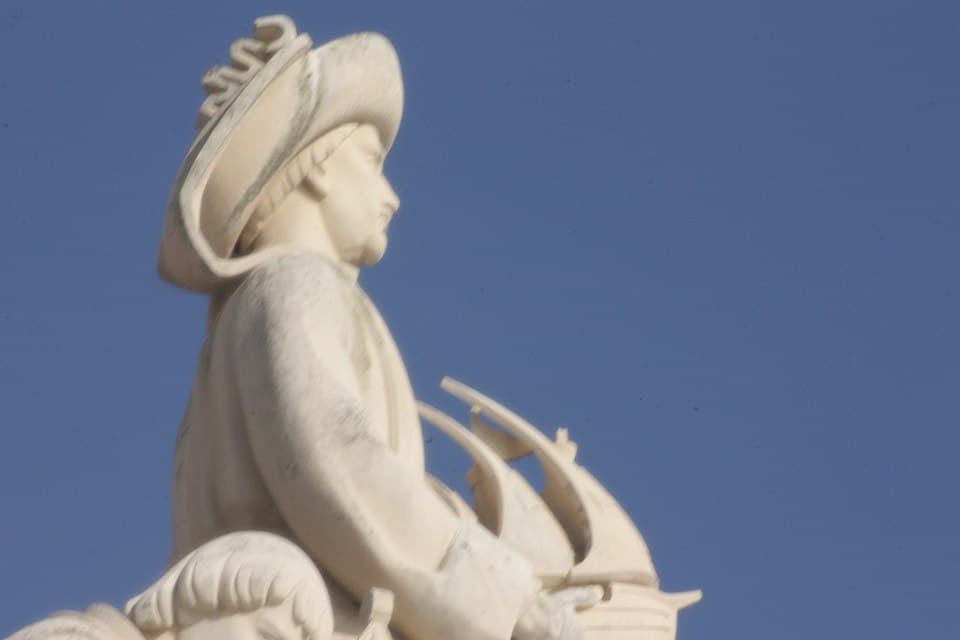
Henry the Navigator
At the very tip of the monument, looking out over the river, stands the most prominent figure of the procession: Prince Henry the Navigator. While his title suggests he was a seasoned sailor, Henry actually spent most of his life on land. He was the visionary patron and financier who founded the famous navigation school at Sagres and organized the early expeditions that began the Age of Discovery. Notice the object he holds carefully in his hands. It is a small model of a caravel. This wasn't just a decorative choice by the sculptor; the caravel was the cutting-edge technology of its time. With its lateen, or triangular, sails, it allowed explorers to sail against the wind, a feat that older, bulkier ships couldn't manage. By holding this model, Henry is presented as the architect of the technology and the strategy that allowed Portugal to push further south along the African coast than anyone had ever dared before. He stands as the bridge between medieval tradition and the modern era of global exploration.
The Eastern Profile: Explorers and Conquerors
Examine the right side of the monument (facing the river), featuring the men who reached India, Brazil, and circumnavigated the globe.
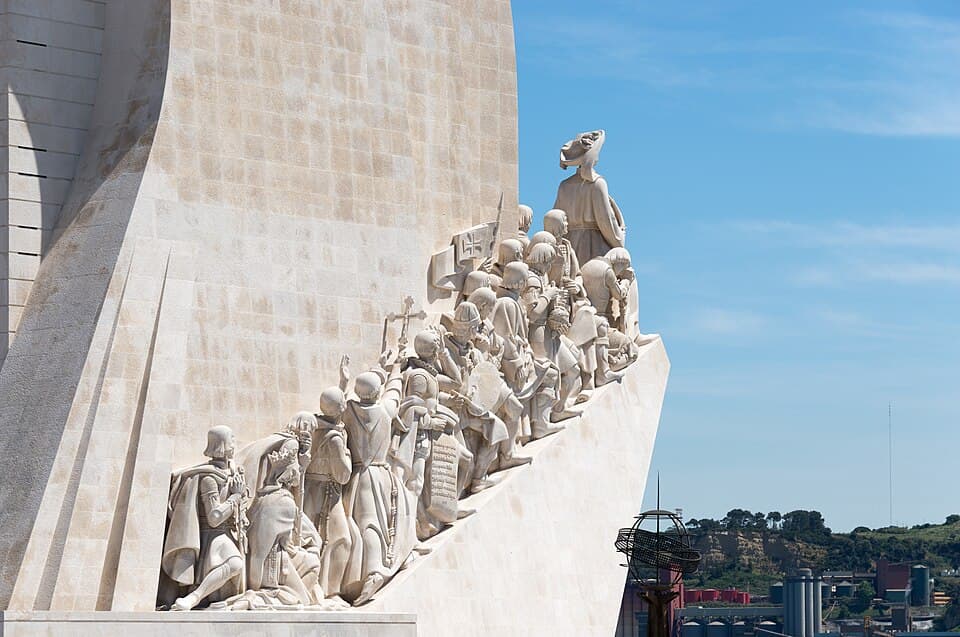
The Eastern Profile
If you look at the eastern profile of the monument—that is the right side when you are facing the water—you are looking at the line of 'Explorers and Conquerors.' These are the men who actually stood on the decks of the ships and faced the perils of the open sea. Among the 16 figures on this side, you’ll find legends like Vasco da Gama, the first European to reach India by sea, and Pedro Álvares Cabral, who is credited with the discovery of Brazil. Observe the artistic composition of this group. The sculptor intentionally created a sense of intense forward momentum. The figures are not standing still; they are leaning forward, as if battling a strong headwind or eager to reach the horizon. Their capes seem to flutter behind them, and their gazes are fixed firmly on the distance. This dynamic posture captures the spirit of an era defined by curiosity and the relentless drive to expand the known world, regardless of the dangers that lay ahead in the deep, uncharted waters.
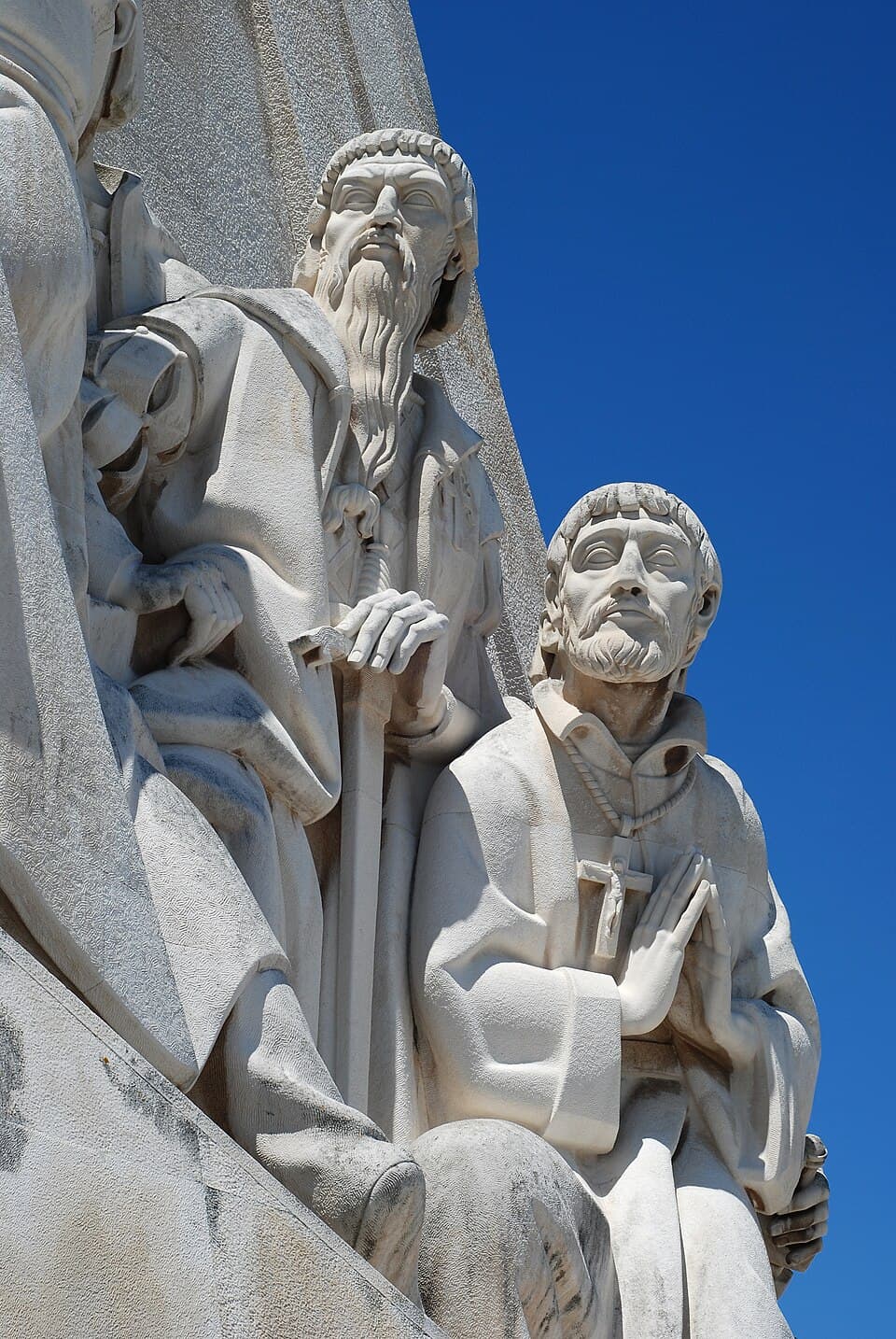
Sculptural Details and Materials
While the monumental scale of the Padrão dos Descobrimentos is what first catches the eye, the true artistry lies in the fine details crafted by sculptor Leopoldo de Almeida. As you look closely at the figures, notice the incredible textures of their clothing, the individual expressions on their faces, and the intricate carvings of the religious icons they carry. Almeida managed to give these massive stone figures a sense of human personality and historical weight. The exterior you see is a cladding of rose-tinted limestone brought from quarries in Leiria and Sintra. This specific stone was chosen for its aesthetic beauty and its ability to withstand the harsh, salty air and high winds of the Lisbon waterfront. However, the stone is only the skin; the core of the monument is actually made of reinforced concrete, providing the structural strength needed to support such a tall, narrow shape. This combination of traditional stonework and modern engineering ensures that the detailed expressions of the figures remain preserved against the elements for generations to come.
The Western Profile: Poets and Intellectuals
Examine the left side, which honors the 'brains' of the era—scientists, mathematicians, and the only woman on the monument.
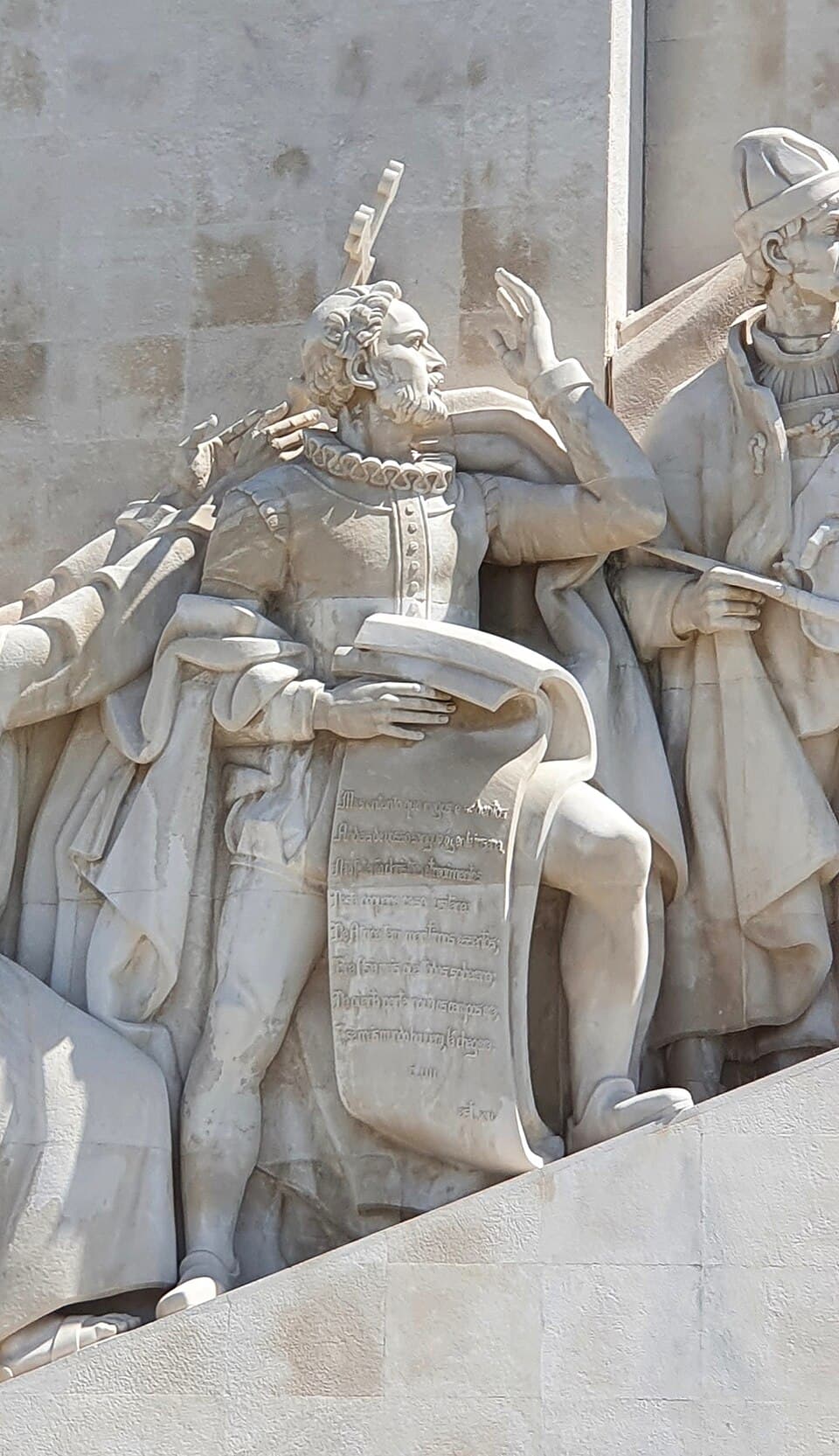
Luís de Camões the Poet
Among the thinkers on the western side, you will see a man holding a scroll close to his chest. This is Luís de Camões, Portugal’s most celebrated national poet. He lived during the height of the empire and is best known for his epic poem, 'Os Lusíadas.' This masterpiece immortalized the voyages of Vasco da Gama and the spirit of the Portuguese people, blending historical fact with classical mythology. You might wonder why a poet is placed alongside warriors and explorers. The reason is that the written word was essential to the legacy of the Discoveries. Without Camões, the heroism and the tragedy of these voyages might have faded into dry historical records. His poetry gave the era its soul and its lasting identity. He reminds us that a nation’s greatness is defined not just by the land it conquers or the gold it finds, but by the stories it tells and the culture it creates. For the Portuguese, Camões is a figure of immense pride, representing the enduring power of the Portuguese language across the continents his countrymen explored.
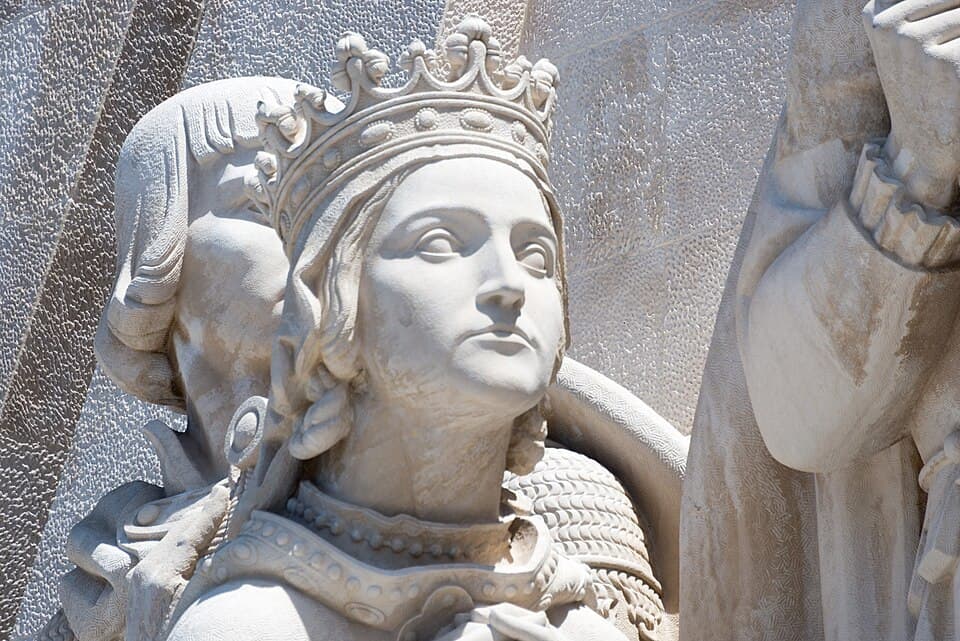
Queen Philippa of Lancaster
Amidst the dozens of male figures on the monument, there is only one woman: Queen Philippa of Lancaster. You can find her on the western side, identifiable by her regal attire. Her presence is a testament to her extraordinary influence on Portuguese history. Originally from England, she married King John I of Portugal in a union that solidified the oldest diplomatic alliance in the world, the Anglo-Portuguese Alliance, which remains in effect today. Philippa was the mother of the 'Ínclita Geração,' or the Illustrious Generation—a group of princes that included Henry the Navigator. She was known for bringing the refined culture of the English court to Lisbon and for her deep commitment to the education and moral upbringing of her children. It was under her influence that her sons were encouraged to seek glory through discovery rather than just traditional warfare. Her strategic importance and her role as the matriarch of the era's greatest leaders earned her this solitary, prestigious place on the monument, standing as a symbol of the vital link between the two nations.
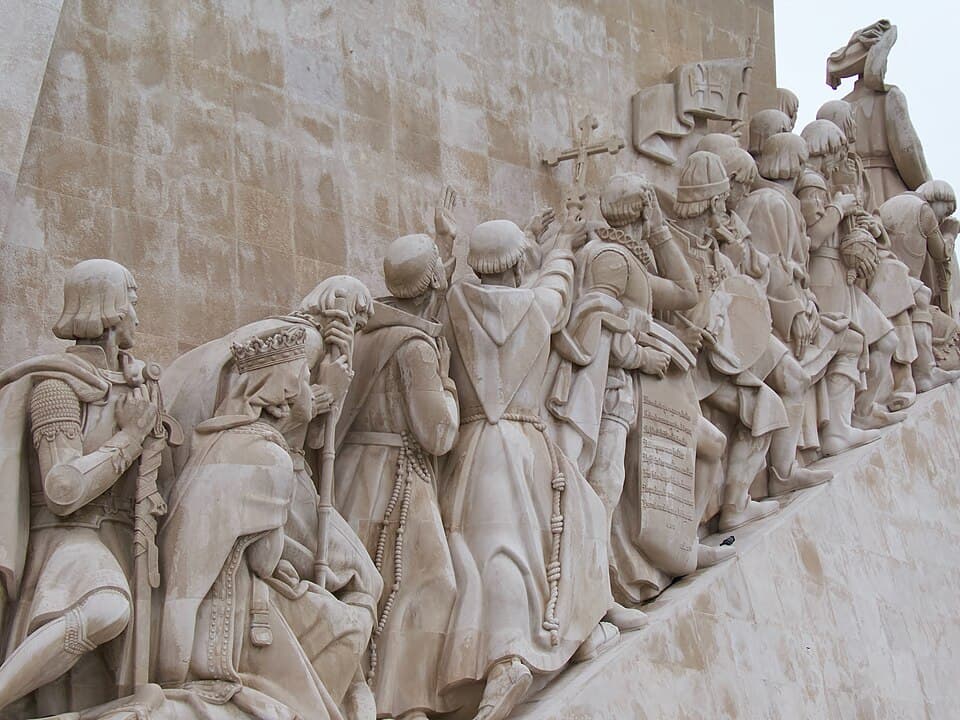
The Western Profile
Now, let’s look at the western profile, which is the left side as you face the river. While the other side celebrated the explorers who sailed the ships, this side honors the 'Brains of the Discoveries.' Here, you see the poets, mathematicians, astronomers, and chroniclers. These individuals provided the intellectual and cultural framework that supported the maritime expansion. In the mid-15th century, sailing was as much a science as it was an adventure. The figures on this side represent the scholars who refined maps, calculated the stars, and recorded the history of the voyages for future generations. By including them, the monument reminds us that the Age of Discovery was a massive societal effort involving the full spectrum of Portuguese life, not just the military or the nobility. It shows that the pen and the compass were just as vital to the success of the empire as the sword and the rudder. Notice how these figures are often depicted with books, scrolls, or instruments, highlighting their role as the keepers of knowledge.
The Sword of Avis
Look at the northern facade to see the symbolic sword of the royal dynasty that sponsored these voyages.
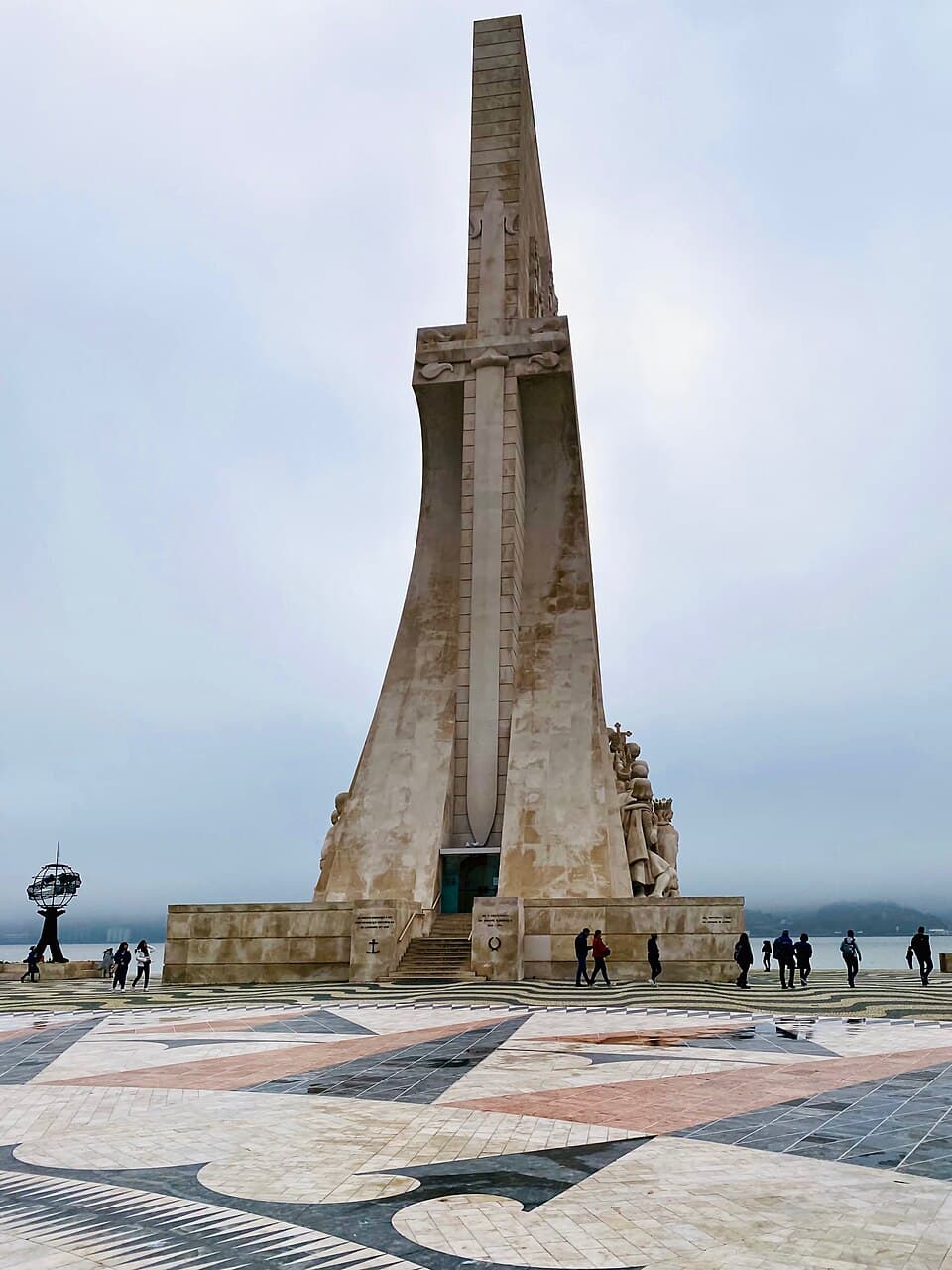
The Sword of Avis
If you walk around to the north facade—the side facing the city and the road—you will see a striking architectural feature: a massive vertical carving of a sword stretching up the center of the monument. This represents the Sword of the House of Avis, the royal dynasty that reigned over Portugal during its era of greatest expansion. It serves as a symbol of the protection and power of the crown over the maritime endeavors depicted on the other sides. At the base of this towering sword, you will find the entrance into the monument's interior. While the structure looks solid from the outside, it actually houses a variety of spaces. Inside, there is an auditorium that can seat up to 101 people, often used for cultural films and presentations about Lisbon’s history. There are also exhibition spaces that host rotating displays related to the city's heritage. The sword effectively marks the gateway from the public square into the heart of the memorial, inviting visitors to transition from admiring the exterior art to learning more about the history inside.
Navigational Legacy
Conclude the tour by the riverside, looking back at the symbols of Portuguese maritime science.
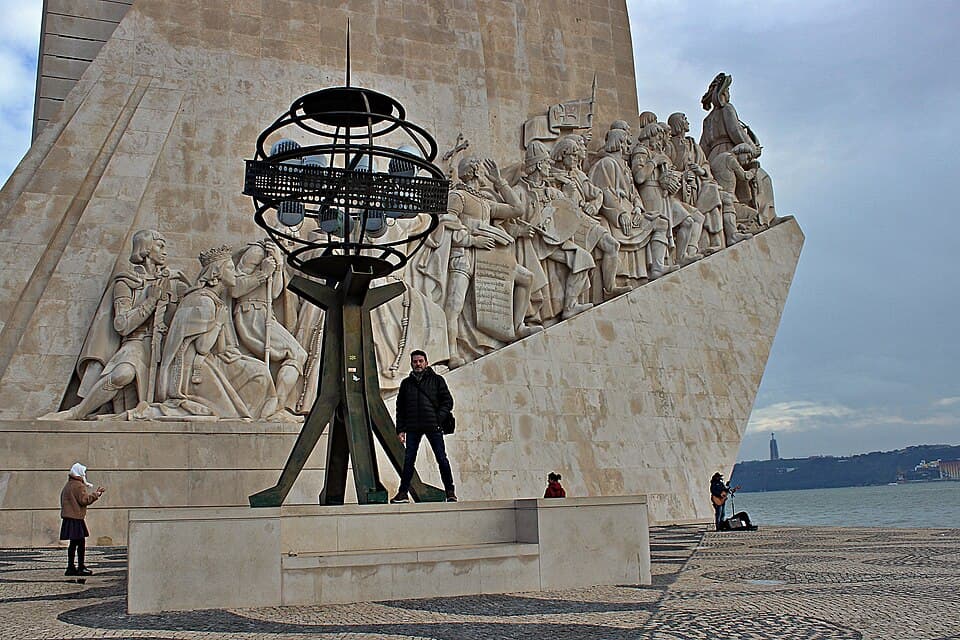
The Armillary Sphere
As we conclude our tour, notice the large metal Armillary Sphere sitting at the base of the monument near the river. This ancient astronomical instrument was used by navigators to determine their coordinates by mapping the stars and the celestial equator. In the 15th century, this was the height of scientific technology, allowing sailors to navigate the open ocean without needing to stay within sight of land. Because of its vital importance to the empire's success, the Armillary Sphere became a personal symbol of King Manuel I and, eventually, a symbol of the Portuguese crown itself. If you look at the modern national flag of Portugal, you will see the Armillary Sphere featured prominently behind the shield. It serves as a permanent reminder of the nation's maritime heritage. Reflecting on this scientific tool, combined with the bravery of the figures depicted on the monument, we can see how a small nation on the edge of Europe used knowledge, technology, and courage to permanently reshape the map of the world.
Want to hear the rest?
Download the Stanza app to unlock all 13 stops and full GPS-guided navigation.
Frequently Asked Questions
How long does the Padrão dos Descobrimentos audio tour take?
The Padrão dos Descobrimentos audio guide includes 13 narrated stops. Most visitors spend 45 minutes to 1.5 hours exploring the complete tour, though you can listen at your own pace and skip or revisit any stop.
Is the Padrão dos Descobrimentos audio guide available in my language?
Stanza supports 15 languages: English, Spanish, French, German, Italian, Portuguese, Russian, Japanese, Chinese, Korean, Arabic, Hindi, Polish, Dutch, Hebrew. Check the guide in the app to confirm the languages currently available for this tour.
Can I use the audio guide offline at Padrão dos Descobrimentos?
Yes! Download the complete Padrão dos Descobrimentos tour — including all audio, maps, and images — before your visit. The Stanza app works completely offline, so you don't need WiFi or mobile data at the venue.
How much does the Padrão dos Descobrimentos audio guide cost?
The Stanza app is free to download. The current listed price for the Padrão dos Descobrimentos audio guide is $1.99; app-store region and currency may affect the final price.
How do I use the Stanza audio guide at Padrão dos Descobrimentos?
Download the free Stanza app, search for "Padrão dos Descobrimentos", and download the tour. When you arrive at the venue, the app uses GPS to detect your location and automatically plays the relevant narration as you move between points of interest — completely hands-free.
What makes the Stanza audio guide different from other Padrão dos Descobrimentos tours?
Stanza offers GPS-triggered narration that plays automatically as you walk through Padrão dos Descobrimentos — no need to manually select stops. The tour is available in 15 languages, works fully offline, and includes 13 expertly narrated stops with images and historical context.
What other audio guides are available near Padrão dos Descobrimentos?
Stanza offers multiple audio guides in Lisbon, Portugal and nearby areas. After downloading the app, browse the map to discover all available tours near Padrão dos Descobrimentos. Each guide can be downloaded for offline use.