Stanza · Audio guide
Mosteiro dos JerónimosAudio guide
A place to remember. A story to take with you.
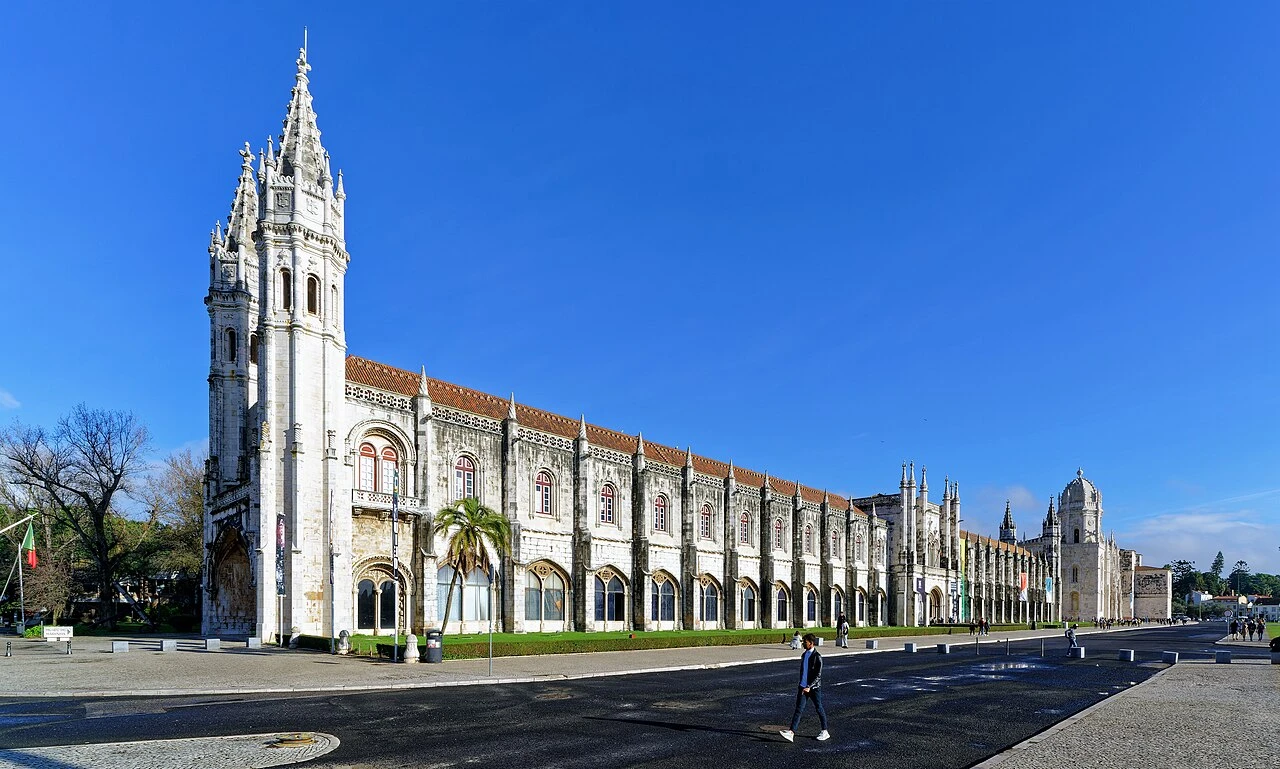
A historic monastery located in Santa Maria de Belém, within the Lisbon District of Portugal. It is recognized as a cultural heritage site.
Download Stanza, then search for “Mosteiro dos Jerónimos”.
About the tour
One guide. Your kind of visit.
A historic monastery located in Santa Maria de Belém, within the Lisbon District of Portugal. It is recognized as a cultural heritage site.
Ready when you are.
- 01Get the free Stanza app.
iOS & Android
- 02Find your guide.
“Mosteiro dos Jerónimos”
- 03Download before you go.
Works offline
Audio guide / 29 narrated stops
Inside the guide
Get to know a few of the stories before you go. Open a stop to read more.
01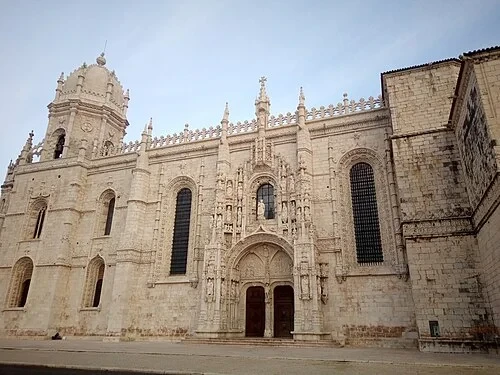 The South PortalThe South Portal
Welcome to one of the most significant monuments of Lisbon. The Jerónimos Monastery was built using a specific type of gold-colored stone known as lioz limestone, which gives the structure its warm, characteristic glow. Construction on this massive complex began in 1501 and spanned exactly 100 years. This ambitious project was not funded by the royal treasury alone; it was primarily supported by a five percent tax on the lucrative spice trade from Africa and the Orient, commonly referred to as the 'pepper tax.' Standing before the South Portal, you are at the symbolic gateway to the Age of Discovery. The scale of the portal reflects the immense wealth and religious devotion of an empire at the height of its maritime power. While it appears to be the main entrance, it is technically a side door. Its presence here marks the transition from the city to the sacred space of the monks, providing a permanent stone record of Portugal’s global ambitions during the 16th century.
Hugo Ferreira · CC BY-SA 4.0
02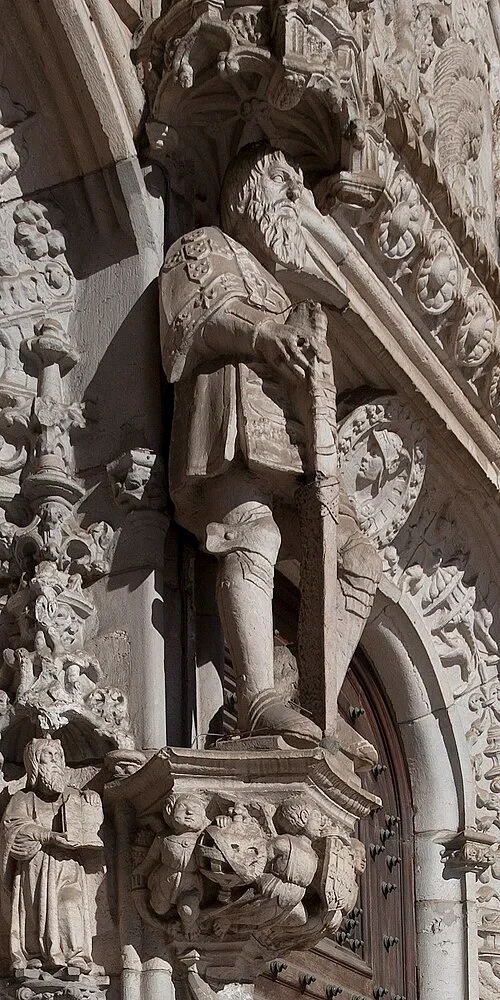 The South PortalPrince Henry the Navigator
Positioned prominently on the central pillar between the two entrance doors is a statue of Prince Henry the Navigator. He is depicted in traditional 15th-century attire, wearing a tabard emblazoned with the cross of the Order of Christ and holding a sword. As a pivotal figure in the early days of the Age of Discovery, Prince Henry established the schools of navigation and funded the early expeditions that eventually allowed Portugal to reach the spice markets of India. His role was so essential that his image is given a place of honor at the very threshold of the church. The construction of this entire monastery was made possible by the wealth generated through the maritime routes he helped pioneer. By placing his statue here, the architects acknowledged the link between the worldly success of the kingdom's explorers and the religious foundations of the state. He remains a symbol of the curiosity and daring that defined this era of Portuguese history.
Photo: Manuelvbotelho · CC BY-SA 4.0
03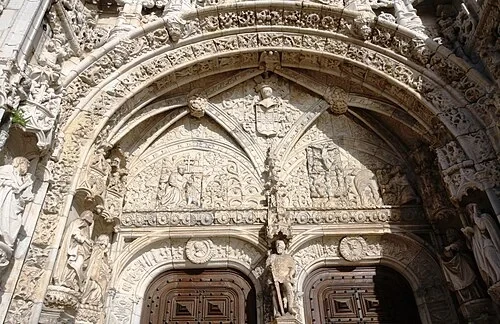 The South PortalThe Life of Saint Jerome
Direct your eyes to the dense cluster of carvings located just above the portal doors. These intricate scenes depict the life of Saint Jerome, the 5th-century scholar who translated the Bible into Latin and became the namesake of the Hieronymite monks who lived here. Alongside these religious narratives, you will find the prominent coat of arms of Portugal, signifying the close relationship between the Church and the Crown. This architectural approach is characteristic of the Manueline style, which used stone to communicate complex stories and symbols to the faithful. In an age where most people could not read, these facades functioned as a 'stone book,' offering theological lessons and historical reminders through visual art. Every niche, pinnacle, and floral motif was designed with symbolic intent, blending the life of a saint with the identity of a nation that saw its maritime expansion as a divine mission. The craftsmanship required to create such detail in limestone was a significant investment of both time and resources.
Listen in the appJosé Luiz · CC BY-SA 3.0
04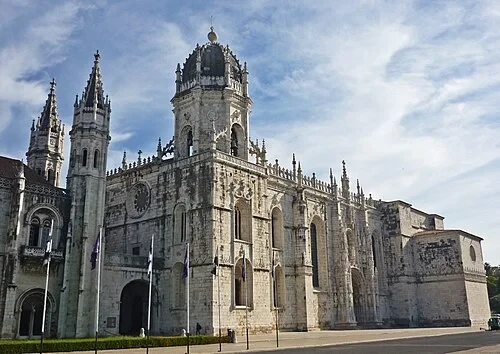 The Western Portal and Main EntranceThe Architecture of Power
The South Portal is a towering example of late Gothic architecture, standing 32 meters high and stretching 12 meters wide. Despite its grand proportions and central placement, this was actually designed as a side entrance to the church of Santa Maria de Belém. The architect, João de Castilho, was responsible for integrating over 40 individual statues into this single facade, creating a vertical display of religious and political power. Notice the strong verticality of the pinnacles and the way the sculptures are layered to draw the eye upward. This density of decoration served a specific purpose: to showcase the unprecedented wealth and cultural reach of the Portuguese Empire to all visitors and passing sailors. By using such a large number of figures and intricate motifs, the architect created a sense of abundance that matched the prosperity brought in by the spice trade. The portal stands as one of the most complex and ambitious sculptural projects of its time, demonstrating the technical skill of the masons and the financial power of the royal patronage.
Listen in the appPhoto: SchiDD · CC BY 3.0
05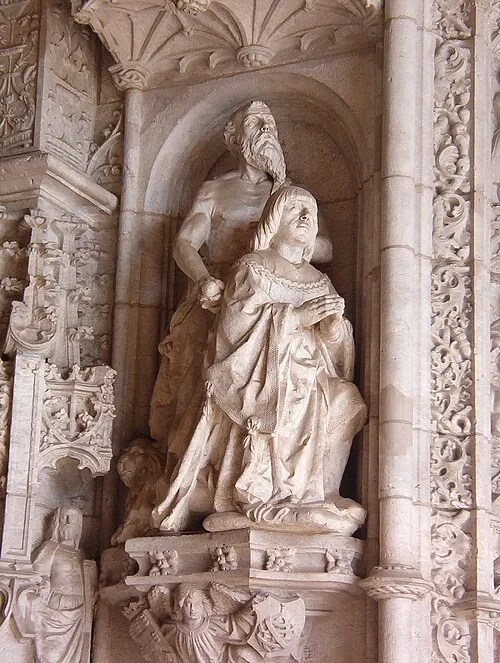 The Western Portal and Main EntranceKing Manuel I
Among the many figures on the portal, look for the statue of a kneeling king, which was crafted by the sculptor Nicolau Chanterene. This figure represents King Manuel I, the founder of the monastery and the primary patron of the building project. He is shown in a posture of humble prayer, reflecting the religious devotion that he wished to project. Beside him is his patron, Saint Jerome, who appears as a spiritual guide for the monarch. Chanterene was a master of the Renaissance style, which is evident here in the more naturalistic treatment of the faces and the realistic folds of the clothing compared to older Gothic traditions. On the opposite side of the portal, a matching statue depicts the king's wife, Maria of Aragon. Placing the royal family at the entrance of the church served as a permanent reminder of their role in establishing this sacred site. These statues bridge the gap between the divine world inside the church and the royal authority that commissioned and maintained the monastery for a century.
Listen in the appPedro Dias from Portugal · CC BY 2.0
06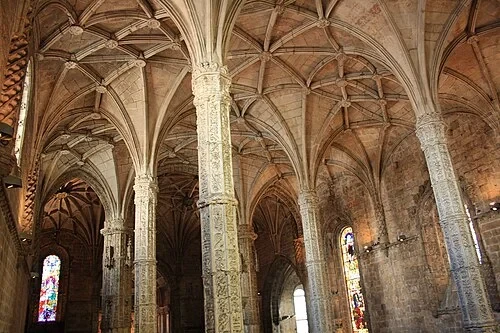 The Church of Santa Maria de BelémThe Church Nave
Entering the Church of Santa Maria de Belém, the interior space opens into a vast, unified hall. The design is known as a 'hall-church,' meaning the central nave and the side aisles are built to the same height. This architectural choice removes the traditional vertical divisions found in many cathedrals, creating a single cavernous area that feels remarkably light and airy. The slender octagonal columns are a hallmark of this design, rising toward the ceiling and branching out like stone palm trees. These pillars were carved with delicate geometric and organic patterns that enhance the sense of upward movement. Despite being constructed from solid stone, the interior conveys a sense of weightlessness, a technical achievement that was meant to inspire a feeling of the divine in those who gathered here. This hall was designed to accommodate large numbers of people, serving as the setting for important state religious ceremonies and providing a quiet space for the monks' daily liturgical duties.
Listen in the appPhoto: FrDr · CC BY-SA 4.0
07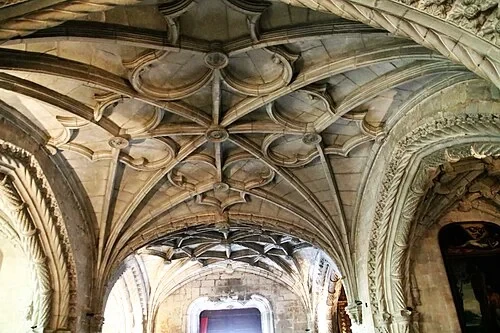 The Church of Santa Maria de BelémThe Floating Vault
If you look straight up, you can see one of the most daring engineering feats of the 16th century. The vaulting over the transept is a single-span structure that measures 30 meters across, supported only by the slender columns you saw earlier. The intricate ribbing spreads across the ceiling in a pattern that resembles a giant spiderweb. This design was not just for decoration; the ribs distribute the immense weight of the stone roof, allowing the interior to remain open and uncluttered. This vaulting proved its structural integrity during the devastating earthquake of 1755, which destroyed much of Lisbon but left this ceiling almost entirely intact. The survival of such a wide stone span was a testament to the skill of the late Gothic builders who understood how to balance mass and tension. The geometry of the crossing creates an impression of a floating stone canopy, making it one of the most important examples of vaulting technology in European architectural history. It remains a primary point of interest for those studying historical construction techniques.
Listen in the appPhoto: Werner100359 · CC BY-SA 4.0
08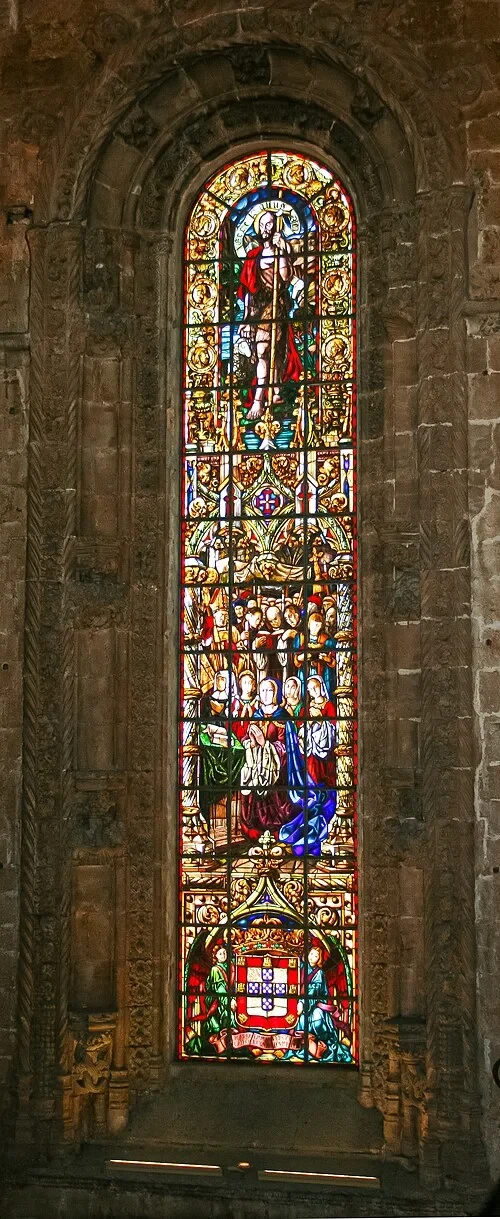 The Church of Santa Maria de BelémVisions in Glass
The atmosphere within the church is profoundly influenced by the play of light through its stained-glass windows. These windows feature a range of deep colors and depict traditional religious figures, which were intended to provide both beauty and spiritual instruction. As sunlight passes through the glass, it casts shifting patterns of blue, red, and gold across the pale limestone walls and floors. For the Hieronymite monks who spent many hours each day in prayer here, this light transformed the somber stone interior into a more divine space. Their prayers were often focused on the safety and success of the navigators who were departing for unknown lands from the nearby harbor. The light and color within the church served as a constant reminder of the spiritual mission that underpinned the worldly expansion of the Portuguese Empire. Even on overcast days, the windows maintain a soft illumination that emphasizes the height and volume of the nave, ensuring the space always feels connected to a source beyond its stone walls.
Listen in the appPhoto: Szilas · CC0
09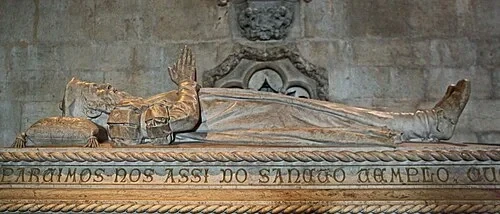 The Tomb of Vasco da GamaTomb of Vasco da Gama
Near the entrance of the church lies the tomb of Vasco da Gama, one of the most famous figures in world history. He was the explorer who discovered the direct sea route to India in 1497, an achievement that shifted the balance of global trade and established Portugal as a maritime superpower. The tomb features a recumbent effigy of da Gama, showing him with his hands joined in prayer. This location is particularly significant because tradition holds that da Gama spent his final night in prayer at this very site before embarking on his historic voyage. At that time, only a small chapel stood where the monastery is now. The tomb was placed here to honor his role in the nation's expansion and to connect his memory with the religious heart of the empire. The sarcophagus itself is decorated with intricate motifs that reflect his status and the era of exploration he helped define. His presence here ensures that every visitor is reminded of the human daring that funded the construction of this monumental church.
Listen in the appLark Ascending · Public domain
10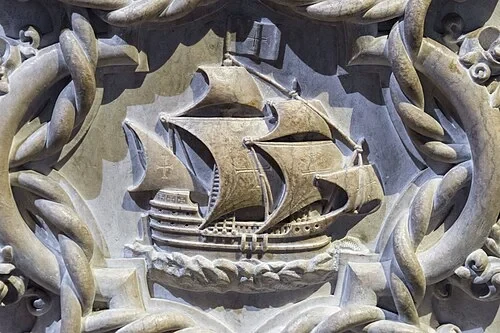 The Tomb of Vasco da GamaThe Explorer’s Caravel
If you examine the side of Vasco da Gama’s tomb, you will find detailed carvings that honor his maritime achievements. The most significant feature is the depiction of a caravel, the small, highly maneuverable ship that was the primary tool of Portuguese explorers. These vessels were essential for navigating the long and difficult routes to Africa and the Orient. Surrounding the ship are various nautical motifs, including twisted ropes and symbols of navigation that are characteristic of the Manueline style. These maritime elements are not just decorative; they serve to sanctify the technology of discovery, placing the tools of the explorer on the same level as traditional religious symbols. By carving these ships and ropes into stone, the craftsmen created a permanent link between the explorer's career at sea and his final resting place within the church. This style of decoration reminds us that the monastery was built not just for prayer, but as a monument to the seafaring culture that defined Portugal during the 16th century. The carving of the caravel remains a clear visual reference to the voyages that changed the course of history.
Listen in the appxiquinhosilva from Cacau · CC BY 2.0
Mosteiro dos Jerónimos
Frequently asked questions
How much does the guide cost?
Free app download. Listed guide price: $1.99. Guide price shown in the app. Audio guide only. Venue admission is separate.
Can I listen without internet?
Yes. Download the guide’s audio, images, and maps in the app before your visit. Your downloaded content is then available offline.
Can I listen in my language?
Stanza supports 15 languages. Check the app for the languages available for this guide.
Do I need to follow a schedule?
No. This is a self-guided experience. Choose your stops, pause whenever you like, and return to a story at your own pace.
At your own pace
Explore Mosteiro dos Jerónimos.
Download Stanza, then search for “Mosteiro dos Jerónimos”.
Free app download · Guide price shown in the app
Keep exploring
Nearby audio guides
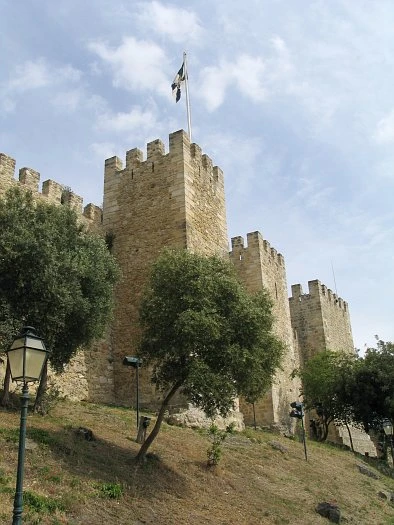
Lisbon
Castelo de São Jorge
Content & sources
Photo: Rotatebot · CC BY-SA 2.0
Lisbon
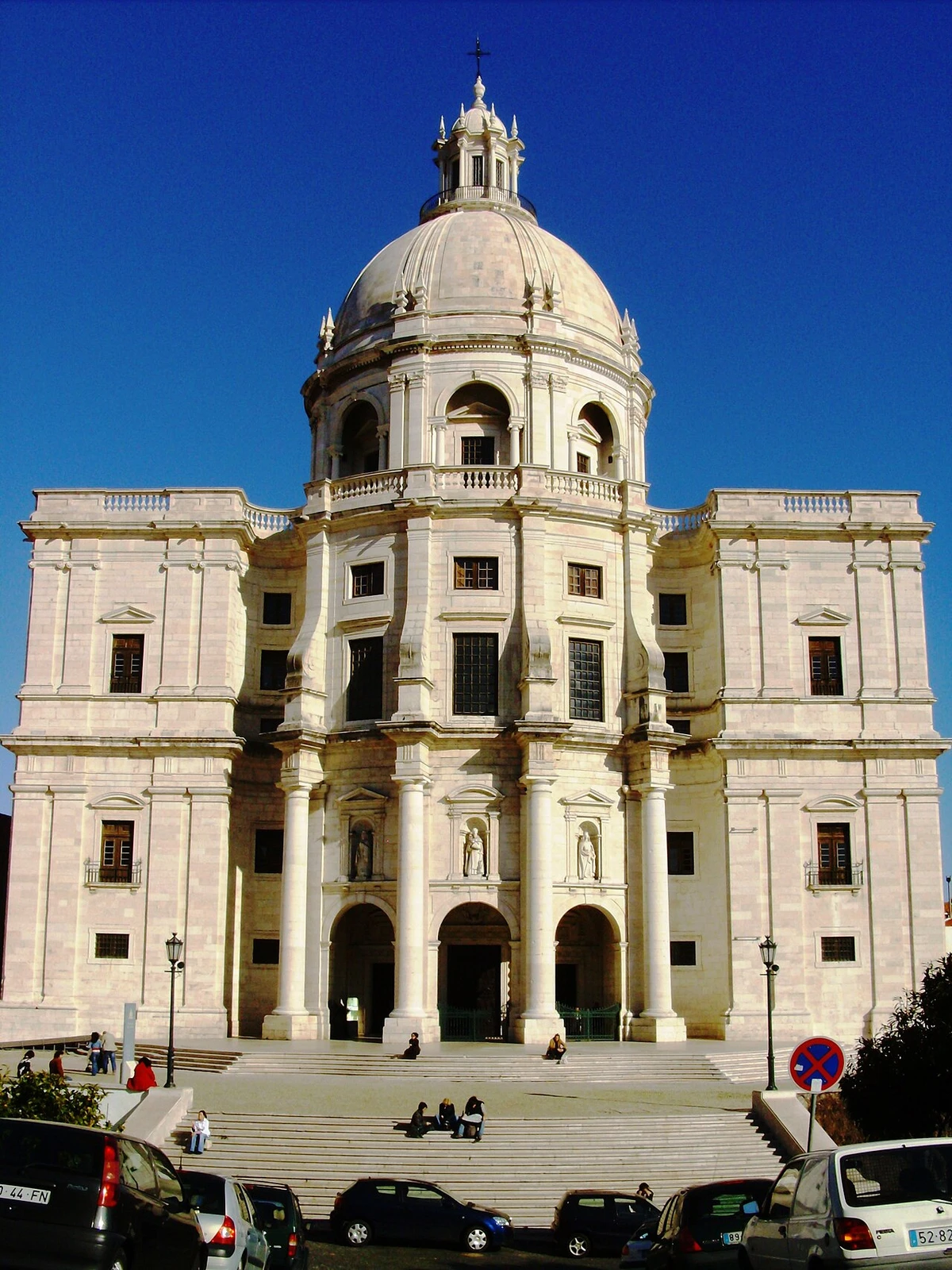
Igreja de Santa Engrácia
Content & sources
Photo: Carlos Luis M C da Cruz · Public domain
Lisbon
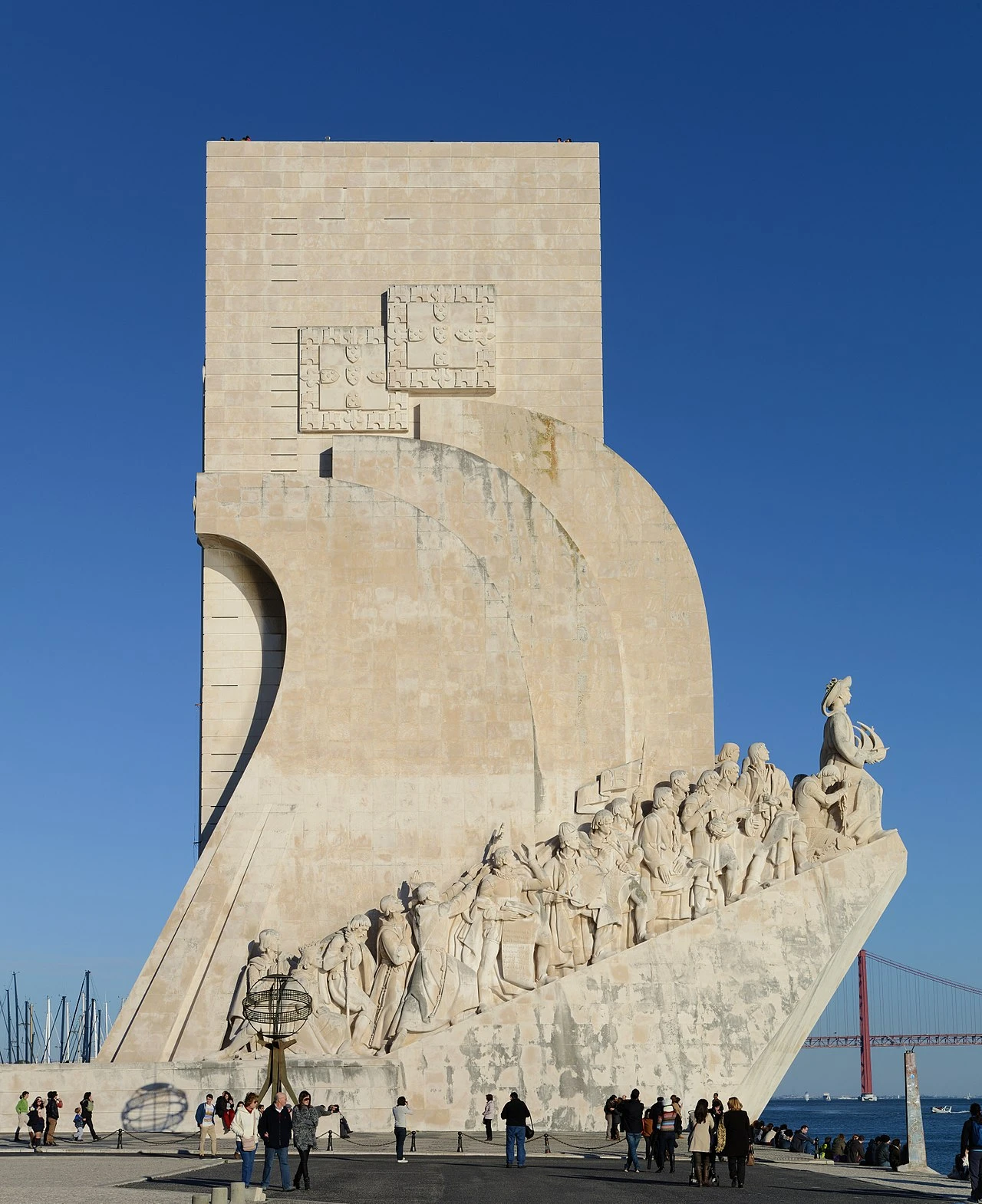
Padrão dos Descobrimentos
Content & sources
Photo: Alvesgaspar · CC BY-SA 4.0
Lisbon
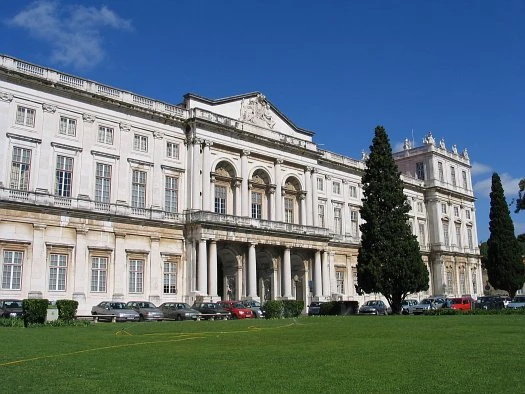
Palácio Nacional da Ajuda
Content & sources
Photo: OsvaldoGago · CC BY-SA 2.0