Languages
15Sé de Lisboa Audio Guide
Sé de Lisboa is a landmark in Lisbon, Portugal. Explore it with Stanza's GPS-triggered offline audio guide — available in 15 languages.
Quick Facts
27
Stops
15
Languages
100%
Offline
📍 Lisbon, Portugal · 38.7099°N, -9.1330°E
About Sé de Lisboa
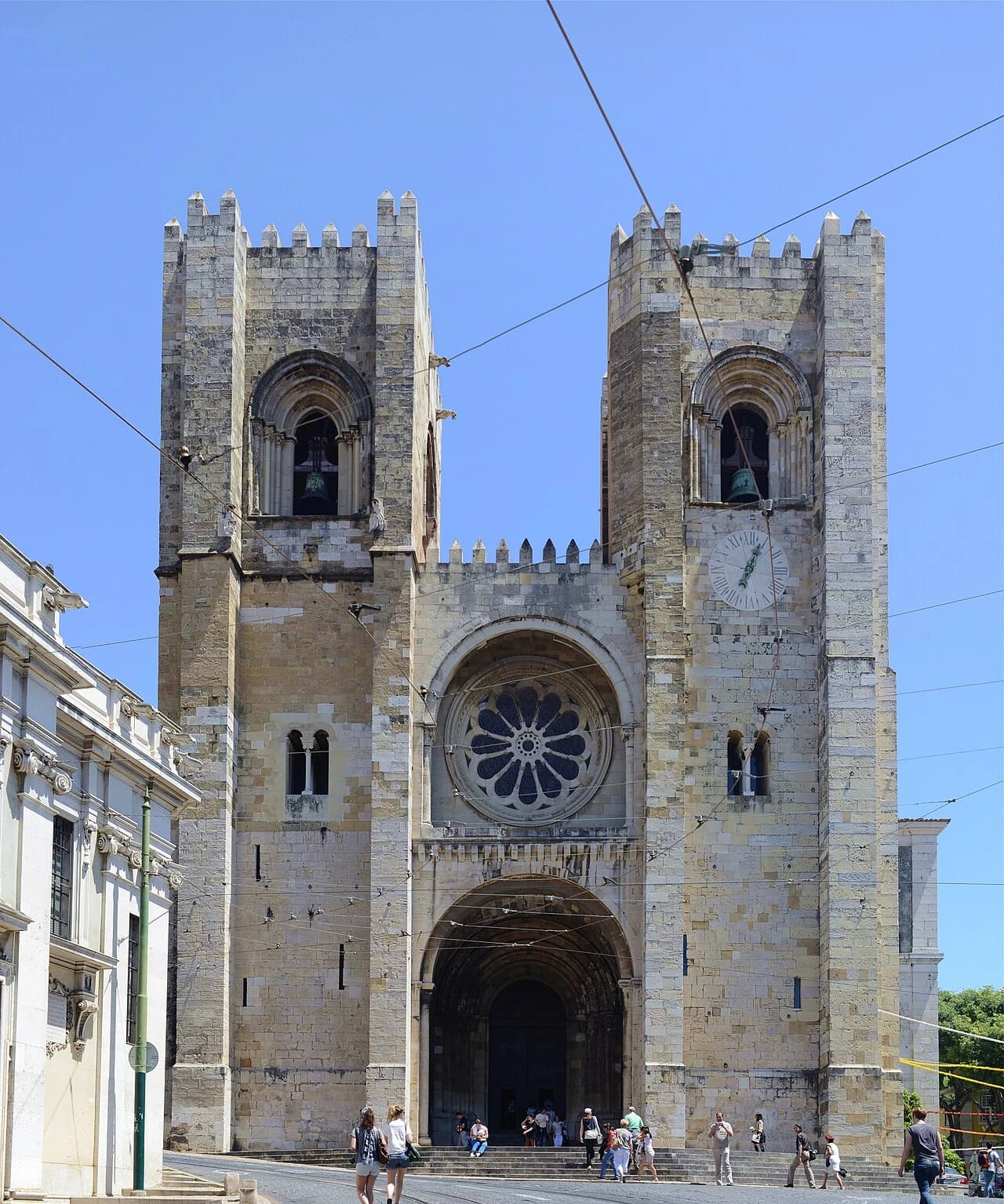
Lisbon Cathedral is the oldest church in the city and serves as the seat of the Patriarchate of Lisbon. It is a historic Catholic cathedral featuring a mix of architectural styles, primarily Romanesque and Gothic.
Sé de Lisboa is also known as Sé de Lisboa, Igreja Paroquial da Sé Patriarcal, Catedral de Lisboa, Igreja de Santa Maria Maior, and 1 other names in various languages.
This self-guided audio tour features 27 narrated stops organized across 8 sections. As a cathedral, Sé de Lisboa offers a unique cultural experience in the heart of Lisbon, Portugal.
The Stanza audio guide is available in 15 languages and works entirely offline — download the complete tour including audio narration, maps, and images before your visit. As you walk through Sé de Lisboa, GPS-triggered narration plays automatically at each point of interest.
Last updated:
What you will hear
The Romanesque Portal
Focusing on the transition from exterior to interior. I selected images of the main entrance and the Norman-style carved capitals.
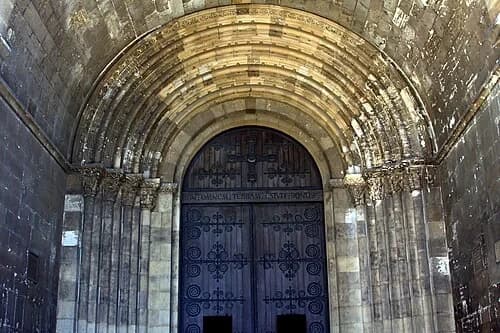
The Main Portal
The main entrance you see here was completed in the early 13th century. It features a series of concentric, receding arches known as archivolts. This design is a hallmark of the Romanesque style, creating a sense of depth and weight that characterizes Norman-influenced buildings of the period. Each layer of stone pulls the eye inward, symbolically moving the visitor from the secular world outside into the hallowed space of the church. The solid, heavy proportions are reflective of an era where architectural strength was paramount. While the portal may seem simple compared to later, more ornate Gothic entrances, its power lies in its rhythmic repetition of form. The arches rest on clusters of columns, many of which still feature their original medieval carvings. This entrance has served as the primary gateway for pilgrims, kings, and commoners for over eight hundred years. Its survival through numerous seismic events is a testament to the skill of the medieval stonemasons who shaped these massive blocks to create a lasting gateway for the city's primary place of worship.
The Romanesque Nave
The heart of the 12th-century structure. I used a wide nave shot and a view of the barrel vault to show the solemn atmosphere.
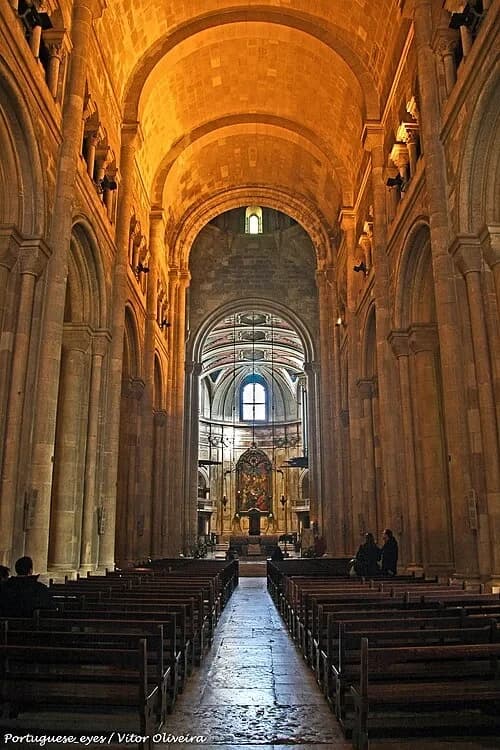
The Romanesque Nave
The interior of the cathedral offers a stark contrast to the bustling city streets outside. This is the oldest part of the building, preserving the original 12th-century Romanesque design. The environment is deliberately solemn and dark, with light restricted by the thick, defensive walls. High above, a heavy barrel-vaulted ceiling spans the central space, a design choice that requires massive pillars and walls for support. This architectural heaviness was intended to emphasize a sense of sanctuary and permanence. In the medieval mind, the church was a refuge from the chaos of the world, and the dim lighting helped focus the worshipper's attention on the liturgy and the divine. As you walk through this space, you are experiencing the same scale and atmosphere that medieval pilgrims did nearly nine centuries ago. The floor plan follows the traditional Latin cross shape, though centuries of additions and repairs have added layers of complexity to the original layout. Despite the later Baroque and Gothic modifications elsewhere in the building, the nave remains the core of the cathedral's historic identity.
The Baptistery of Saint Anthony
A site of deep local significance. I used images showing the font and the azulejo tiles depicting St. Anthony's life.
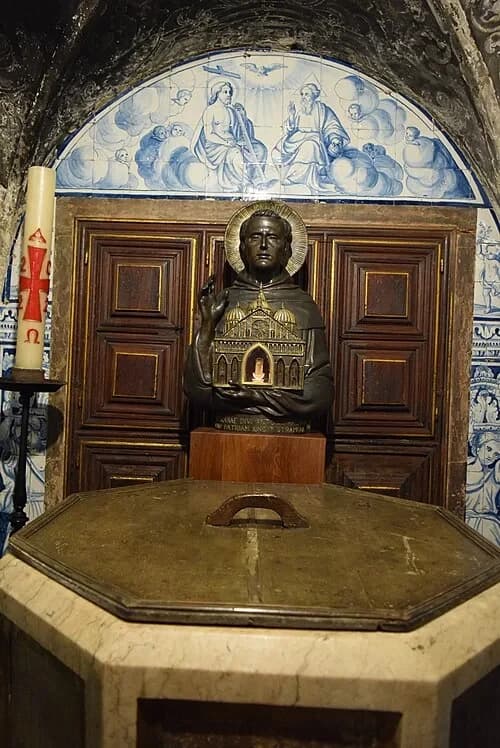
The Font of Saint Anthony
In this dedicated area, you will find a simple stone baptismal font that dates back to the late 12th century. According to long-standing local tradition, Saint Anthony of Lisbon—who is widely known elsewhere as Saint Anthony of Padua—was baptized right here shortly after his birth in 1195. Anthony was born just a short walk from the cathedral, and this space serves as a major pilgrimage site for those who come to honor him. The font itself is humble, carved from solid stone, reflecting the period's functional religious aesthetic. Surrounding the font, you can see various wall decorations and commemorative elements that tell the story of the saint’s life and his connection to the city. While Anthony is famous globally for his miracles, to the people of Lisbon, he is 'one of their own.' This small chapel-like area provides an intimate space for reflection, contrasting with the grand scale of the main nave. It serves as a reminder that the cathedral has been the spiritual heart of the community for generations, marking the milestones of life for both the famous and the forgotten.
Chapel of Bartolomeu Joanes
A 14th-century funerary chapel. I selected the portal and the merchant's tomb to illustrate the rise of the medieval middle class.
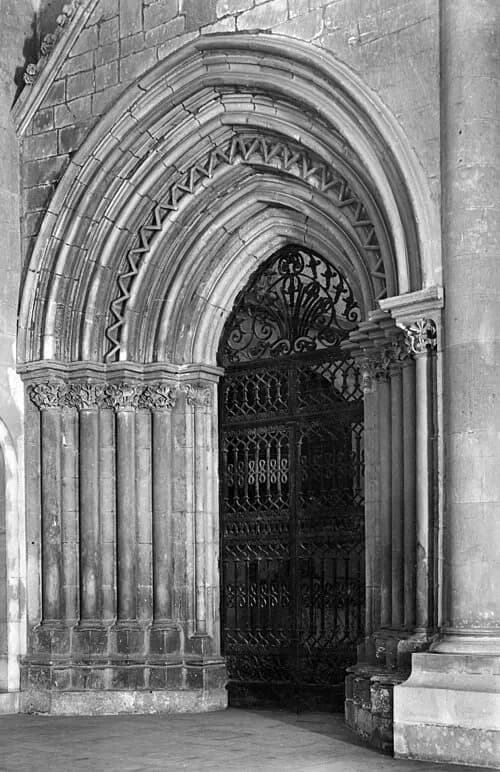
Chapel of the Merchant
This entrance leads to the funerary chapel of Bartolomeu Joanes, a significant figure from the 14th century. What makes this space particularly interesting is that Joanes was not a member of the nobility; he was a wealthy merchant. His ability to fund a private chapel within the city's primary cathedral reflects the growing power and influence of the middle class during this period. As you enter, you may notice a subtle shift in the architectural style. While much of the cathedral is Romanesque, this area features more pointed Gothic arches, which were becoming the dominant style when the chapel was built. This transition represents a shift toward more vertical, elegant forms compared to the heavy, rounded arches of the earlier century. The chapel served as both a burial place and a space for private masses to be said for the soul of the benefactor. It demonstrates how successful trade and commerce allowed individuals to leave a lasting mark on the religious landscape of Lisbon, securing their legacy through stone and art alongside the city's bishops and kings.
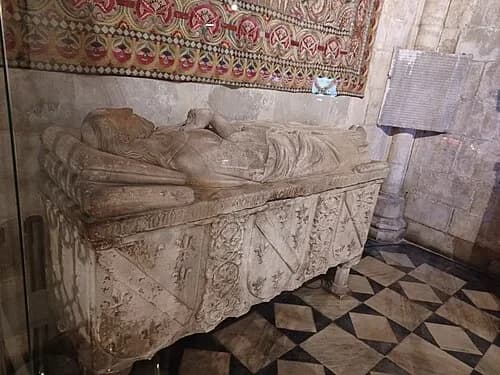
Tomb of the Benefactor
The centerpiece of this private chapel is the stone tomb of Bartolomeu Joanes. Carved in the 14th-century Gothic style, the sarcophagus features a recumbent figure on the lid, depicting the merchant in a peaceful, eternal sleep. This type of funerary art was common for the era, intended to portray the deceased in a state of perpetual prayer or rest. If you examine the sides of the stone chest, you will see intricate carvings that include heraldic symbols and decorative motifs typical of the late Middle Ages. These details were meant to signify the status and piety of the individual buried within. The fact that a merchant could afford such an elaborate tomb inside the cathedral highlights the social shifts of the 1300s. Joanes used his considerable fortune to ensure his memory would be preserved in the most prestigious religious building in Lisbon. The tomb remains a well-preserved instance of medieval funerary sculpture, offering a glimpse into the artistic tastes and social aspirations of the city's rising mercantile class during the transition from the Romanesque to the Gothic era.
The Transept and Lantern Tower
The intersection of the nave and the sanctuary. I used a high-angle architectural shot and the verified painting POI.

Glorificação de São Vicente by Pedro Alexandrino
Pedro Alexandrino de Carvalho · 1781
In this space, you can see a significant work by the 18th-century painter Pedro Alexandrino de Carvalho. The painting, titled 'Glorificação de São Vicente,' depicts Saint Vincent of Saragossa in a moment of divine exaltation. Vincent is the patron saint of Lisbon, and his connection to this cathedral is ancient; his relics were brought here from Cape Saint Vincent in the 12th century by King Afonso Henriques. The artwork is a classic example of the Baroque style, characterized by dramatic, high-contrast lighting and a sense of movement. Notice the saint’s kneeling posture and his upward gaze, which are intended to evoke a deep emotional response in the viewer. The painting was part of the extensive renovations that took place after the 1755 earthquake, reflecting the artistic tastes of the time. The theatricality of the composition was meant to inspire piety and reverence, reminding the faithful of the saint's protection over the city. Vincent is often shown with his symbols, the crows that are said to have guarded his body, and his image remains a central part of Lisbon's religious identity.
A Tale of Two Organs
Highlighting the cathedral's musical heritage. I used images of the Baroque and modern Flentrop instruments.
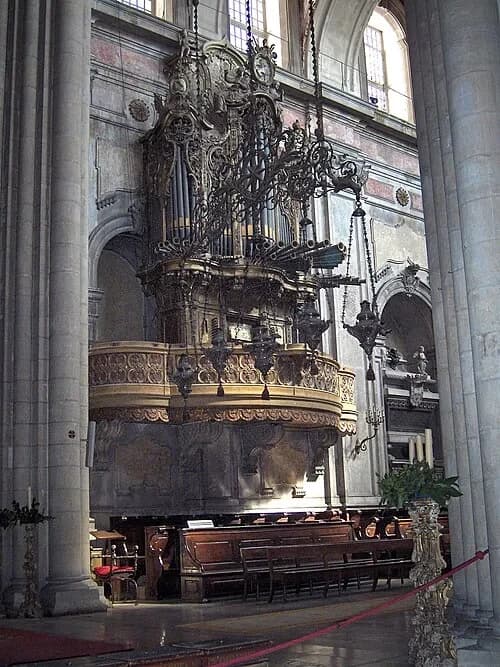
The Historic Organ
On the side of the sanctuary stands an impressive Baroque organ, easily recognized by its intricate wood-carving and lavishly gilded details. During the 18th century, such instruments were more than just tools for music; they were powerful symbols of a church's prestige and wealth. The complex facade of pipes and decorative carvings was designed to be as visually stunning as the music it produced was aurally magnificent. The Sé de Lisboa has a long and storied musical tradition, and the organ played a central role in both daily services and grand state occasions. Notice the craftsmanship involved in the gold-leafing and the small figures that often decorate these massive instruments. The Baroque style favored this type of exuberant, detailed work, which was intended to engage all the senses during worship. While more modern instruments have since been added to the cathedral to meet contemporary musical needs, this historic organ remains a functional piece of art. It serves as a reminder of the era when Lisbon was at the height of its imperial wealth and the cathedral was the center of a rich, sensory religious culture.
The Gothic Ambulatory
A masterpiece of Portuguese Gothic. I selected images showing the ribbed vaulting and the radiating chapels.
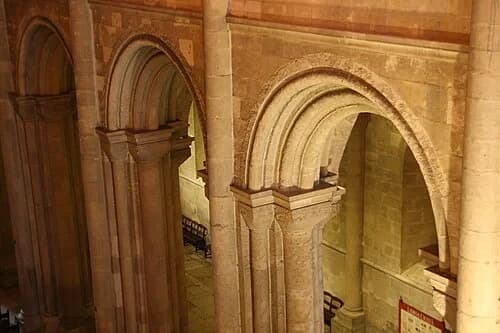
The Gothic Ambulatory
Moving behind the high altar, you enter a curved architectural masterpiece known as the ambulatory. Constructed in the 14th century, this space marks a significant stylistic shift from the heavy Romanesque nave you saw earlier to the more soaring Gothic style. One of the most prominent features here is the transition to ribbed vaulting overhead. These intersecting stone ribs distribute weight more effectively than the earlier barrel vaults, allowing for taller structures and a lighter feel. This walkway was designed with a very practical purpose in mind. During the Middle Ages, pilgrims traveled from across Europe to pay respects to the relics of Saint Vincent. The ambulatory allowed these visitors to circulate around the main chapel and view the various smaller shrines without disturbing the priests performing mass at the high altar. It functioned as a sort of religious traffic management system, keeping the flow of people moving smoothly through the back of the church. As you walk this same path today, you can appreciate how the design successfully balances the needs of private devotion with the requirements of formal public worship.
Chapel of Santa Ana and Noble Tombs
Focusing on the high-quality 14th-century funerary art. I included the verified POI for Maria de Vilalobos and a religious painting POI.
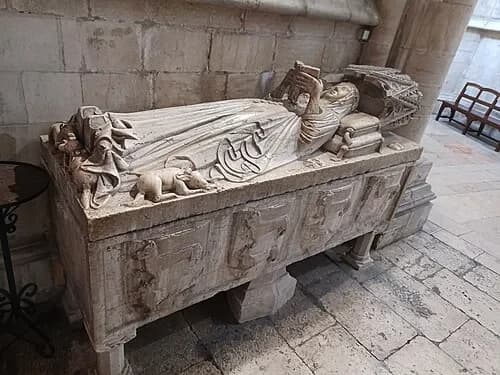
Tomb of Maria de Vilalobos
1360
Notice the detailed carving on this 14th-century tomb, which serves as the final resting place for Maria de Vilalobos. Unlike many tombs of the era that show figures in a state of eternal sleep or prayer, this recumbent figure is depicted reading a Book of Hours. This specific detail is historically significant as it reflects both her personal piety and her literacy, which was a mark of high social standing for women during the Middle Ages. The book itself is rendered with great care, showing the folds of the pages. At the feet of the figure, you will see small dogs carved into the stone. In medieval funerary art, dogs were frequently used as symbols of loyalty and fidelity, following the deceased even into the afterlife. The sarcophagus is further decorated with heraldic shields and religious motifs that would have been familiar to 14th-century observers. The choice of a Book of Hours as her primary attribute suggests that her identity was deeply connected to her intellectual and spiritual life. This tomb provides a personal, human glimpse into the life of a noblewoman from 700 years ago, preserved in the quiet shadows of the ambulatory.
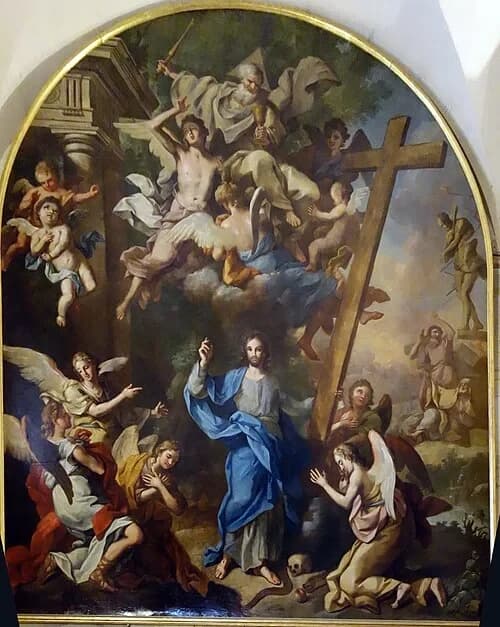
Cristo Salvador do Mundo by Pedro Alexandrino
Pedro Alexandrino de Carvalho · 1778
The peripheral chapels of the ambulatory often house artworks that invite a more personal and intimate form of reflection. Among these is a depiction of Christ as Savior of the World, attributed to the prolific 18th-century Portuguese painter Pedro Alexandrino. His work is characterized by a soft, dramatic use of light that was typical of the late Baroque and Neoclassical transition. By placing such significant religious paintings in these smaller, side-lit spaces, the cathedral creates opportunities for visitors to step away from the grand, public scale of the main nave. These chapels were designed to feel like private rooms for prayer. The architecture of the ambulatory naturally muffles the echoes of the larger building, making these spots ideal for contemplating the artwork. Pedro Alexandrino’s style often emphasized the humanity and approachability of religious figures, which suited the devotional needs of the people in the 1700s. While the high altar focuses on spectacle and communal worship, paintings like this one remind us that the cathedral also served as a collection of smaller, individual sanctuaries where people could find a sense of peace amidst the city’s busy history.
Want to hear the rest?
Download the Stanza app to unlock all 27 stops and full GPS-guided navigation.
Frequently Asked Questions
How long does the Sé de Lisboa audio tour take?
The Sé de Lisboa audio guide includes 27 narrated stops. Most visitors spend 45 minutes to 1.5 hours exploring the complete tour, though you can listen at your own pace and skip or revisit any stop.
Is the Sé de Lisboa audio guide available in my language?
Stanza supports 15 languages: English, Spanish, French, German, Italian, Portuguese, Russian, Japanese, Chinese, Korean, Arabic, Hindi, Polish, Dutch, Hebrew. Check the guide in the app to confirm the languages currently available for this tour.
Can I use the audio guide offline at Sé de Lisboa?
Yes! Download the complete Sé de Lisboa tour — including all audio, maps, and images — before your visit. The Stanza app works completely offline, so you don't need WiFi or mobile data at the venue.
How much does the Sé de Lisboa audio guide cost?
The Stanza app is free to download. Free and paid audio guides are available; current prices are shown in the app.
How do I use the Stanza audio guide at Sé de Lisboa?
Download the free Stanza app, search for "Sé de Lisboa", and download the tour. When you arrive at the venue, the app uses GPS to detect your location and automatically plays the relevant narration as you move between points of interest — completely hands-free.
What makes the Stanza audio guide different from other Sé de Lisboa tours?
Stanza offers GPS-triggered narration that plays automatically as you walk through Sé de Lisboa — no need to manually select stops. The tour is available in 15 languages, works fully offline, and includes 27 expertly narrated stops with images and historical context.
What other audio guides are available near Sé de Lisboa?
Stanza offers multiple audio guides in Lisbon, Portugal and nearby areas. After downloading the app, browse the map to discover all available tours near Sé de Lisboa. Each guide can be downloaded for offline use.