Languages
15Palácio Nacional de Mafra Audio Guide
Palácio Nacional de Mafra is a landmark in Mafra, Portugal. Explore it with Stanza's GPS-triggered offline audio guide — available in 15 languages.
Quick Facts
26
Stops
15
Languages
100%
Offline
📍 Mafra, Portugal · 38.9369°N, -9.3264°E
About Palácio Nacional de Mafra
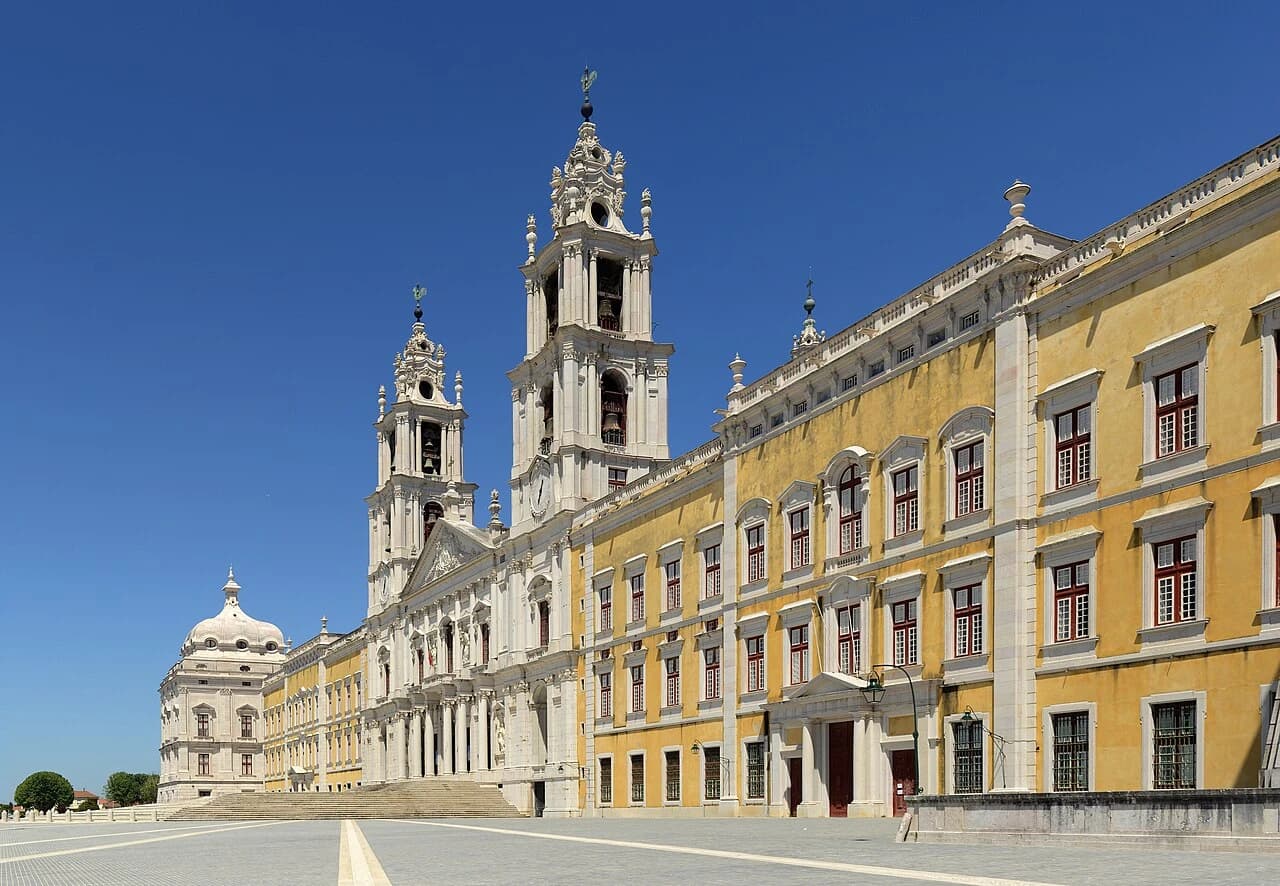
The Palace of Mafra is a monumental Baroque and Neoclassical palace, basilica, and convent complex built in the 18th century. It stands as one of the most significant architectural achievements of the Portuguese Enlightenment.
Palácio Nacional de Mafra is also known as Mafra National Palace, Palacio Nacional de Mafra, Convento e Basílica de Mafra, Real Edifício de Mafra, and 4 other names in various languages.
This self-guided audio tour features 26 narrated stops organized across 6 sections, including The Vestibule and Italian Sculpture, The Basilica of Our Lady and Saint Anthony, The Ensemble of Six Pipe Organs, The Bell Towers and Historical Carillons, The Convent Infirmary and Pharmacy, The Royal Bedrooms and Daily Life. As a palace, Palácio Nacional de Mafra offers a unique cultural experience in the heart of Mafra, Portugal.
The Stanza audio guide is available in 15 languages and works entirely offline — download the complete tour including audio narration, maps, and images before your visit. As you walk through Palácio Nacional de Mafra, GPS-triggered narration plays automatically at each point of interest.
Last updated:
What you will hear
The Vestibule and Italian Sculpture
Focuses on the grand entrance hall and the 'School of Sculpture' theme, featuring Italian Baroque marble works.
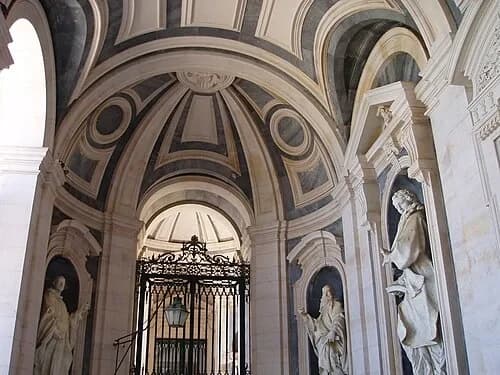
The Main Vestibule
The transition from the bright, sun-drenched square to this cool, stone-lined entrance marks your arrival into the palace proper. This vestibule introduces the "School of Sculpture" theme, as Mafra functioned as a critical training ground for generations of Portuguese artists. The niche statues you see around you were part of an unprecedented commission of marble figures, many of which were crafted by local apprentices under the guidance of foreign masters. The architect, João Frederico Ludovice, was responsible for this grand design. He was trained in Italy, and his work here masterfully blends the dramatic flourishes of Italian Baroque with traditional Portuguese tastes and materials. Notice the heavy arches and the play of light against the grey and white surfaces. This space was designed to impress visitors immediately, establishing a sense of gravitas and permanence. It reflects a time when the Portuguese monarchy sought to foster domestic talent, turning the palace construction site into a living academy of the fine arts. Many of the techniques refined here became the standard for national monumental architecture.
The Basilica of Our Lady and Saint Anthony
The spiritual heart of the complex, showcasing the grand nave and the verified 'Assumption of Our Lady' painting.

Assumption of Our Lady
André Gonçalves · 1730
The "Assumption of Our Lady" serves as the central iconographic focus of the Basilica’s sanctuary. This painting depicts the Virgin Mary being carried upward into the heavens by a host of celestial figures. Notice the dynamic sense of movement within the composition; the swirling clouds and the dramatic, upward gazes of the witnesses below create a powerful vertical pull. This visual energy perfectly mirrors the actual architecture of the Basilica, guiding the viewer's attention from the earthly floor toward the light-filled dome above. It is a masterpiece of Baroque storytelling, where emotion and motion are used to inspire religious fervor. The figures are rendered with a softness and luminosity that contrast with the structured marble surroundings, drawing the eye directly to the spiritual climax of the narrative. As the centerpiece of the altar, it anchored the most sacred rituals performed here, ensuring that the theme of divine ascent was always present in the minds of those attending Mass. The play of shadow and light on the canvas adds a sense of depth that draws the viewer into the heavenly scene.
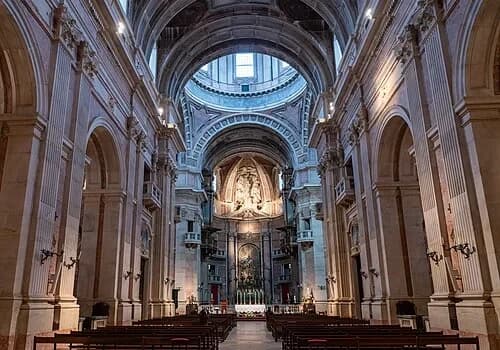
The Basilica Nave
Entering the Basilica nave offers a genuine moment of awe, as the scale and color of the interior reveal themselves. The space is defined by an elegant combination of pink and grey marbles, which draw the eye upward toward the soaring arches and the massive central dome. This area was the spiritual heart of the entire complex. Interestingly, the Basilica was inaugurated in 1730, decades before many other sections of the palace were even close to completion. This early priority highlights the King’s desire to establish the religious center of his vow as the first functioning part of the site. The sheer height and volume of the nave were intended to create a sense of celestial grandeur, making anyone standing below feel small in the presence of the divine. Every element, from the patterned floors to the rhythmic placement of the columns, was carefully calculated to produce a balanced, harmonious environment that served as a backdrop for the most important religious ceremonies of the Portuguese monarchy. Light filters through the high windows, illuminating the intricate stone patterns and the vast, open transept below.
The Ensemble of Six Pipe Organs
The world-unique collection of six historic pipe organs designed to be played simultaneously.
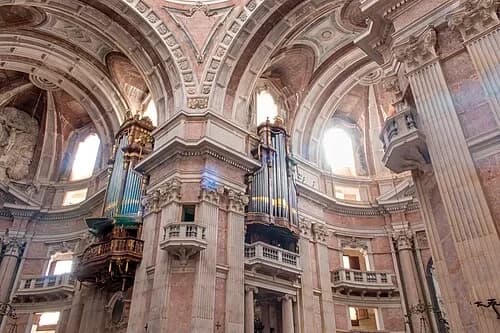
The Six-Organ Ensemble
Looking across the transept, the unique placement of the organs becomes clear. They are positioned to face one another, creating a primitive but highly effective form of "surround sound." During the 18th century, this acoustic arrangement would have provided a sensory experience unlike anything else in Europe. When all six organs were played together, the sound didn't just come from one direction; it enveloped the listeners, echoing off the marble walls and the high dome. This combination of religious devotion and high-tech engineering of the day was a hallmark of the Mafra court. It transformed the Basilica from a silent stone structure into a living, vibrating instrument. For the royals and monks gathered here, the music was intended to be a physical manifestation of divine power, a technological marvel that reinforced the grandeur of the monarchy through sheer acoustic force. The spatial relationship between the instruments ensured that no matter where you stood, you were at the center of a perfectly balanced musical universe. This innovative acoustic design anticipated modern sound engineering by over two centuries.
The Bell Towers and Historical Carillons
Explaining the 92 bells that form the largest historical carillon collection in the world.
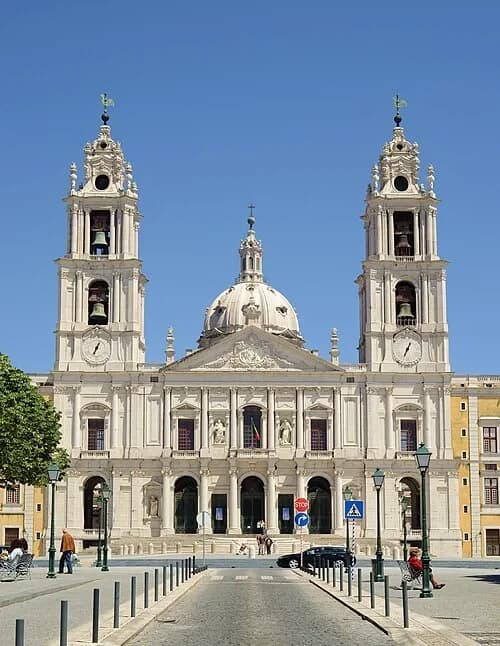
Symmetry and the Dome
From this vantage point, the perfect symmetry of the palace's exterior becomes strikingly apparent. Every window, column, and tower on one side is precisely mirrored on the other, creating a sense of absolute order and balance. At the center of this architectural harmony rises the great dome. This was the first dome of its kind ever constructed in Portugal, and its design was intentionally modeled after the iconic basilicas of Rome. King John V held a deep ambition to transform Mafra into a "Portuguese Vatican," a center of both royal and religious authority that could stand as a peer to the great Italian city. The dome serves as the ultimate vertical exclamation point for the entire complex, asserting its presence for miles across the surrounding landscape. By adopting the Roman style, the King was making a bold statement about his kingdom's cultural and spiritual lineage, ensuring that his legacy was literally capped with a symbol of eternal, global influence. The limestone construction catches the light throughout the day, shifting from bright white to warm gold as the sun sets.

The Great Carillons
Within these towers hangs the world's largest collection of historical carillons, consisting of a total of 92 bells. These massive bronze instruments were not made locally; they were cast in the renowned foundries of Antwerp and Liège before being transported to Portugal. Their music could be heard for many miles across the countryside, serving as the far-reaching voice of both the monarchy and the church. The bells were used to mark the hours, announce the arrival of royalty, and signal religious festivals, creating a soundscape that unified the local community with the life of the palace. The sheer weight and number of these bells required the towers to be reinforced with massive stone supports to handle the vibration and strain. Today, they remain a functioning link to the 18th century, capable of playing complex melodies that once entertained the King and his guests. The carillons represent the pinnacle of period metalworking and musical technology, a grand acoustic investment meant to broadcast the power and presence of Mafra across the horizon.
The Convent Infirmary and Pharmacy
Insights into 18th-century medical care for the friars, featuring the well-preserved pharmacy and hospital ward.
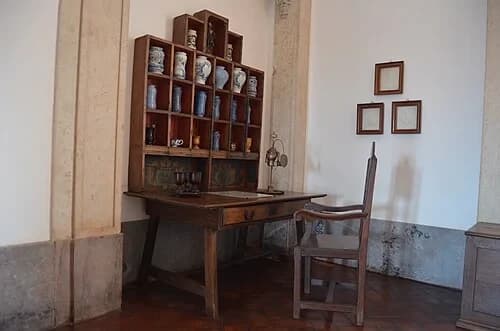
The Monk's Pharmacy
The monks' pharmacy offers a fascinating glimpse into the medical world of the 1700s. The walls are lined with original wooden shelving, designed to hold an extensive collection of ceramic jars known as albarellos. These jars were used to store the various herbs, roots, and potions that the monks prepared from the palace gardens. Far from being isolated, the Franciscan friars here provided essential medical care not just for themselves, but also for the thousands of workers who built the palace and the surrounding local community. The pharmacy was a center of scientific and botanical knowledge, where traditional remedies were carefully documented and dispensed. The warm wood of the cabinets and the colorful patterns on the ceramics create a space that feels both professional and welcoming. It reflects a time when religious orders were often the primary providers of healthcare, combining spiritual duty with the practical application of medicine to serve the physical needs of everyone living within the shadow of the great palace. Small tools for grinding and mixing are still preserved on the workstations, showing the hands-on nature of their work.
The Infirmary Ward
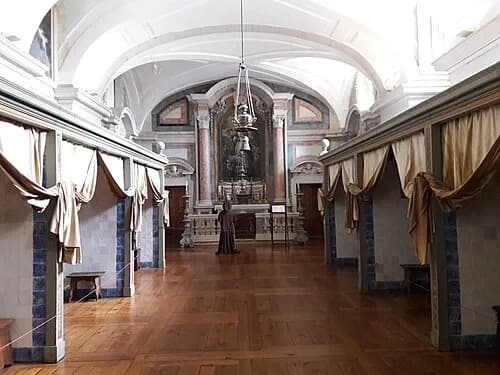
The infirmary ward is one of the most poignant and human spaces within the monastery. Along the walls, you will see rows of wooden beds, each equipped with heavy curtains. These curtains were a crucial feature, providing a measure of privacy and dignity for the sick friars who were recovering or nearing the end of their lives. At the very end of the long hall, a small altar is positioned so that it is visible from every bed. This ingenious layout allowed even those who were completely bedridden to see and hear the Mass being performed, ensuring they remained connected to their spiritual life despite their illness. The large windows and high ceilings were designed to provide the best possible light and air circulation, reflecting a surprisingly modern understanding of hospital hygiene for the time. This room served as a compassionate bridge between the physical world and the spiritual one, prioritizing the comfort and religious needs of the monks in their most vulnerable moments. The polished wooden floors still carry the quiet atmosphere of this dedicated care center.
The Royal Bedrooms and Daily Life
Exploring the living quarters of the monarchs, located at opposite ends of the long facade.
The King's Bedroom
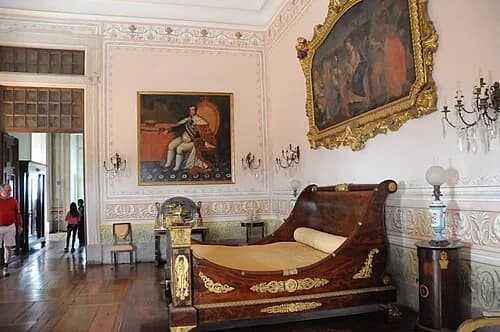
The King's bedroom showcases the refined "Empire" style of furniture that became popular during the later years of the Portuguese monarchy. One of the most prominent pieces is the mahogany sleigh bed, with its characteristic curved headboard and footboard. This room represents a more private and intimate side of royal life, away from the formal ceremonial halls. An interesting detail of the palace’s layout is that the King and Queen lived in completely separate wings at opposite ends of the massive facade—nearly 200 meters apart. This meant that any visit between the two required a long walk through the palace's many corridors. The decor here is less about public display and more about personal comfort, featuring fine woodwork and comfortable upholstery. It gives us a sense of the daily environment of the Braganza family during the 19th and early 20th centuries, before the monarchy was finally abolished. The room remains a quiet witness to the final generations of kings who called this immense limestone monument their home, surrounded by paintings of ancestors and royal landscapes.
The Music Room
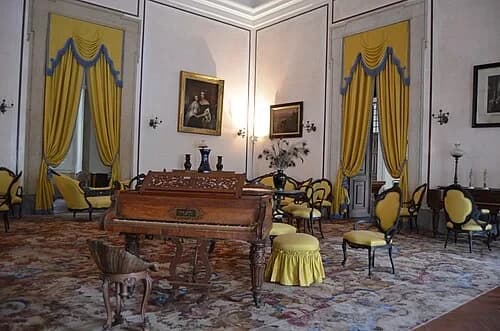
This room, with its bright yellow silk wall coverings and high ceilings, served as a primary hub for cultural leisure within the palace. The grand piano stands as a reminder that the Braganza family were not just patrons of the arts but active participants. Princesses and queens often practiced here, filling the hallways with music. The architecture itself was designed with sound in mind; the soaring ceilings and plasterwork provided the necessary resonance for chamber music to carry beautifully without modern amplification. Daily life here was far from the stiff formalities of the Throne Room. Instead, it was a space for relaxation and intellectual pursuit. These musical traditions continued right up until the sudden and dramatic departure of the monarchy in 1910. One can almost hear the faint echoes of Chopin or Liszt that once entertained the court during long winter evenings. The delicate patterns in the carpet and the way the gold-framed mirrors reflect the light create an atmosphere of refined intimacy. It was from this very wing that the family lived their final domestic moments before the 1910 revolution changed everything.
Want to hear the rest?
Download the Stanza app to unlock all 26 stops and full GPS-guided navigation.
Frequently Asked Questions
How long does the Palácio Nacional de Mafra audio tour take?
The Palácio Nacional de Mafra audio guide includes 26 narrated stops. Most visitors spend 45 minutes to 1.5 hours exploring the complete tour, though you can listen at your own pace and skip or revisit any stop.
Is the Palácio Nacional de Mafra audio guide available in my language?
Stanza supports 15 languages: English, Spanish, French, German, Italian, Portuguese, Russian, Japanese, Chinese, Korean, Arabic, Hindi, Polish, Dutch, Hebrew. Check the guide in the app to confirm the languages currently available for this tour.
Can I use the audio guide offline at Palácio Nacional de Mafra?
Yes! Download the complete Palácio Nacional de Mafra tour — including all audio, maps, and images — before your visit. The Stanza app works completely offline, so you don't need WiFi or mobile data at the venue.
How much does the Palácio Nacional de Mafra audio guide cost?
The Stanza app is free to download. Free and paid audio guides are available; current prices are shown in the app.
How do I use the Stanza audio guide at Palácio Nacional de Mafra?
Download the free Stanza app, search for "Palácio Nacional de Mafra", and download the tour. When you arrive at the venue, the app uses GPS to detect your location and automatically plays the relevant narration as you move between points of interest — completely hands-free.
What makes the Stanza audio guide different from other Palácio Nacional de Mafra tours?
Stanza offers GPS-triggered narration that plays automatically as you walk through Palácio Nacional de Mafra — no need to manually select stops. The tour is available in 15 languages, works fully offline, and includes 26 expertly narrated stops with images and historical context.
What other audio guides are available near Palácio Nacional de Mafra?
Stanza offers multiple audio guides in Mafra, Portugal and nearby areas. After downloading the app, browse the map to discover all available tours near Palácio Nacional de Mafra. Each guide can be downloaded for offline use.