Languages
15Castelo de Marvão Audio Guide
Castelo de Marvão is a landmark in Marvão, Portugal. Explore it with Stanza's GPS-triggered offline audio guide — available in 15 languages.
Quick Facts
30
Stops
15
Languages
100%
Offline
📍 Marvão, Portugal · 39.3964°N, -7.3797°E
About Castelo de Marvão
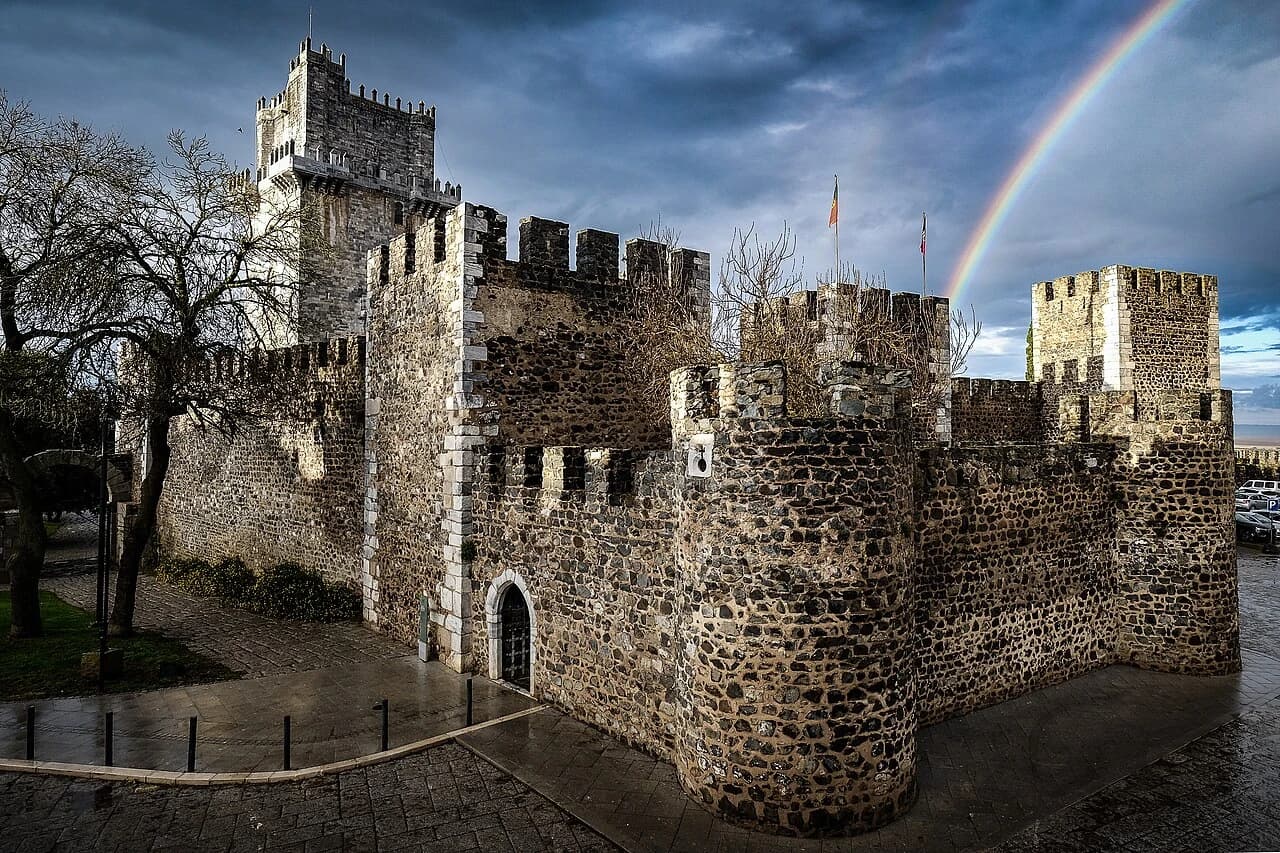
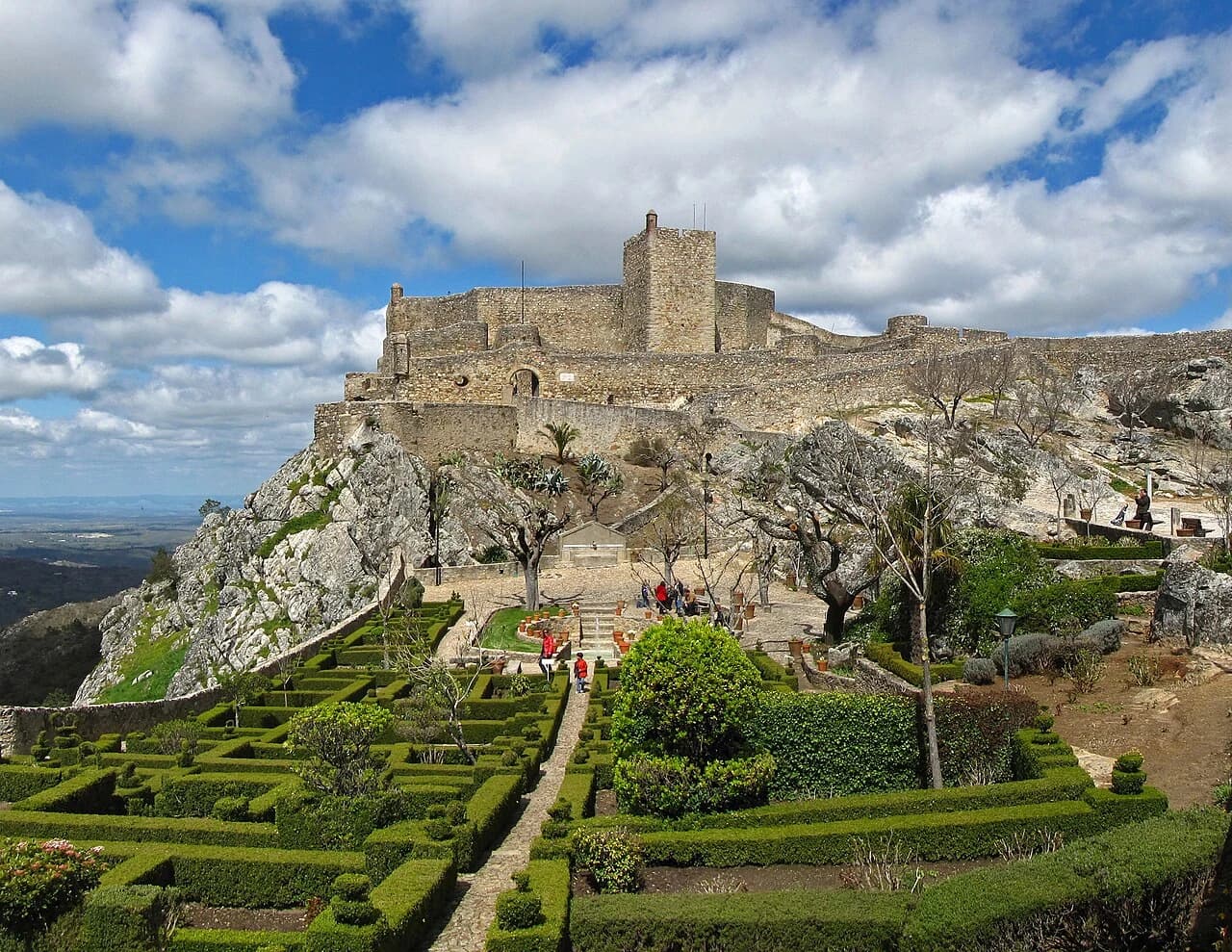
The Castle of Marvão is a well-preserved medieval fortification situated at the highest point of the Serra de São Mamede. It serves as a key example of Portuguese defensive architecture with panoramic views over the Alentejo region.
Castelo de Marvão is also known as Castelo de Marvão, Muralhas de Marvão, Castelo de Marvao.
This self-guided audio tour features 30 narrated stops organized across 5 sections, including The Village Gate and Arrival, Outer Barbican Defenses, The Battlements and Watchtowers, The Border Overlook (La Raia), The Medieval Village Walls. As a castle, Castelo de Marvão offers a unique cultural experience in the heart of Marvão, Portugal.
The Stanza audio guide is available in 15 languages and works entirely offline — download the complete tour including audio narration, maps, and images before your visit. As you walk through Castelo de Marvão, GPS-triggered narration plays automatically at each point of interest.
Last updated:
What you will hear
The Village Gate and Arrival
Establishing the approach to the castle through the medieval town and its main entrance. Includes the view of the nearby church through the gateway.
The Main Entrance
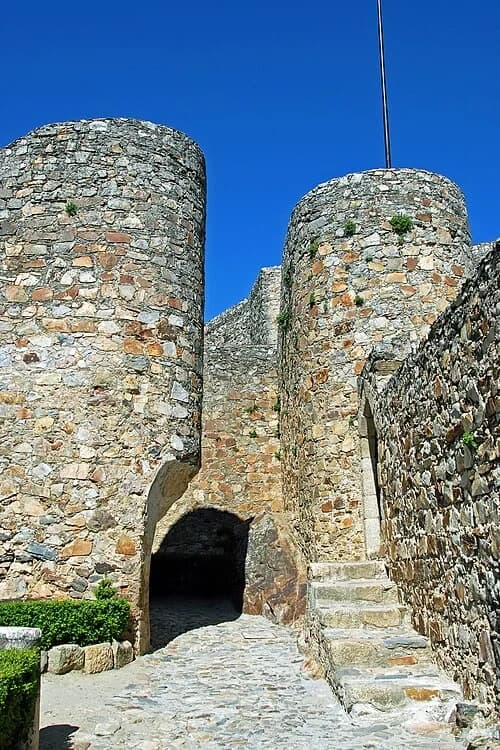
The journey into the castle begins with a deliberate climb through the narrow, winding streets of the village of Marvão. This winding approach served a military purpose: it forced any potential attacker into a restricted, uphill path where they were vulnerable to projectiles from above. At the end of this path, the massive outer walls of the fortress rise sharply. This is the external barbican, the first of three concentric lines of defense designed to protect the core of the castle. In medieval warfare, a barbican acted as a fortified gateway, a preliminary barrier meant to slow down and trap enemy forces before they could even reach the main gate. The masonry here is rugged and functional, built to withstand the elements and the impact of siege engines. By creating these layered perimeters, the architects ensured that even if one wall was breached, the inner sanctuary of the fortress remained secure. This primary entrance establishes the scale of the fortification, reminding every visitor that they are stepping into a space where every angle was calculated for safety and surveillance.
Outer Barbican Defenses
Focuses on the first line of defense, showing the massive stone walls built into the natural quartzite cliffs.
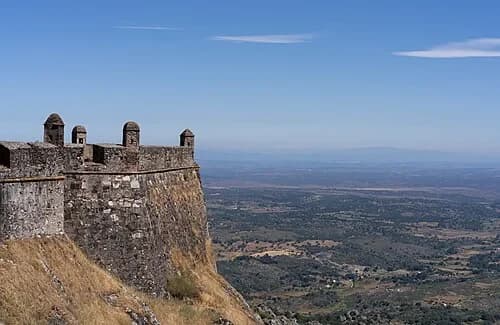
The High Ramparts
From the top of the high ramparts, the connection between human architecture and natural geology becomes strikingly clear. In many places, it is difficult to see exactly where the natural quartzite ridge ends and the hand-laid stone walls begin. The architects utilized the existing rock formations as a foundation, effectively extending the verticality of the mountain. Looking out across the vast landscape, the view stretches far toward the Spanish border. This panoramic vantage point explains why Marvão was so vital to the crown of Portugal. Below the ridge lies the valley of the Sever River, a natural corridor for trade and troop movements. By holding this high ground, the castle acted as a gatekeeper for the entire region. Any army attempting to cross the border or move through the valley would be exposed to the eyes of the sentries stationed right here. This was not just a home; it was a high-altitude observation post. The relentless winds and the immense drop-offs emphasize the isolated, commanding nature of this fortress, which dominated the borderlands for over seven hundred years.
The Battlements and Watchtowers
A walk along the ramparts, focusing on the bartizans (watchtowers) used by guards to monitor the borderlands.
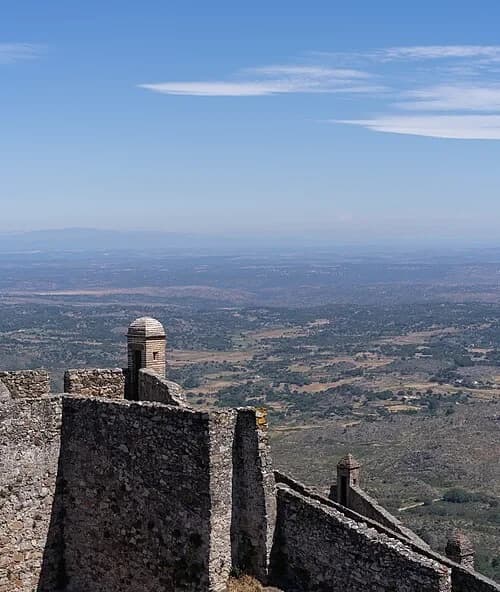
The Bartizans
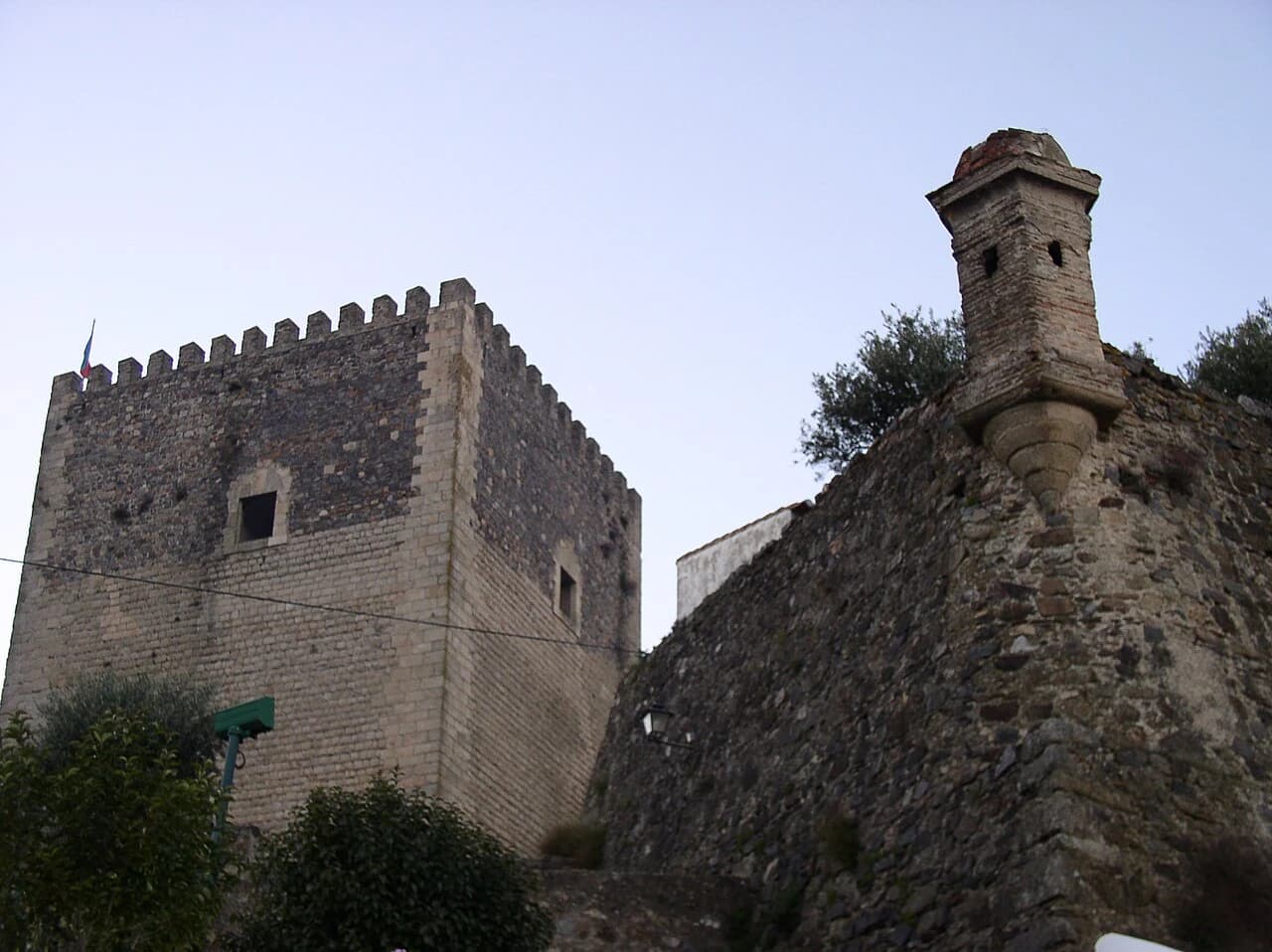
Notice the small, rounded turrets projecting from the corners of the walls. These are bartizans, or "guaritas" in Portuguese. Their purpose was to give a sentry a clear view of the area directly below the wall—a blind spot for anyone standing behind the main ramparts. From inside these cramped stone capsules, a guard could peer through narrow slits to ensure no one was attempting to scale the cliffs or hide in the rocky crevices. At the same time, the solid stone construction protected the watchman from incoming arrows or musket fire. Life for a sentry here involved long, lonely shifts, regardless of the heat or the biting mountain wind. These towers were essential for 360-degree security, allowing the garrison to monitor the entire perimeter without exposing themselves to the elements or the enemy. They represent a clever solution to the problem of defensive visibility, ensuring that even the steepest and most inaccessible parts of the quartzite crag were under constant human observation.
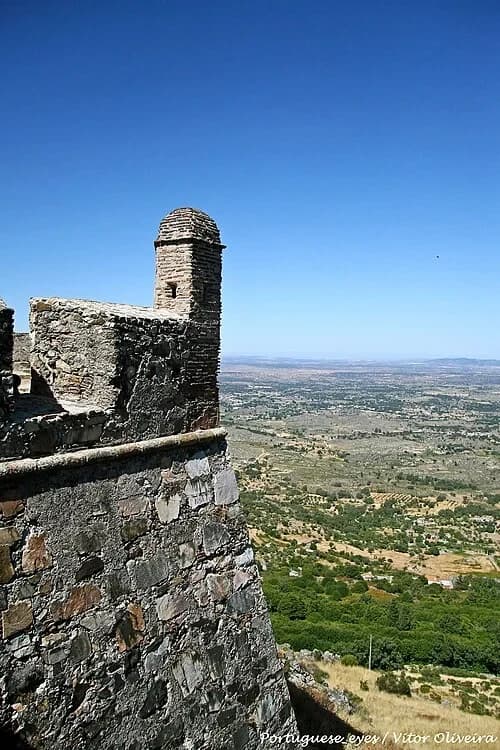
Edge of the World
Looking over the edge of the wall, the ground seems to disappear into a dizzying vertical drop. This extreme altitude is exactly why the castle was nicknamed the "Eagles' Nest." The builders didn't just construct walls; they extended the natural quartzite cliffs, creating a barrier that was as much a psychological deterrent as a physical one. From here, you can appreciate the immense effort required to transport stone and supplies to such a height. For medieval attackers, looking up at these walls would have been demoralizing. The steepness of the terrain made using traditional siege towers or battering rams impossible. Instead, an enemy's only hope was often to starve the garrison out—a difficult task given the massive cistern located within the grounds. The height also served as a communication tool; fire and smoke signals from this peak could be seen by other hilltop fortifications in the distance, creating an early warning network across the frontier. Today, this drop provides one of the most famous views in Portugal.
The Border Overlook (La Raia)
Highlights the strategic importance of Marvão as a sentinel overlooking the border with Spain.
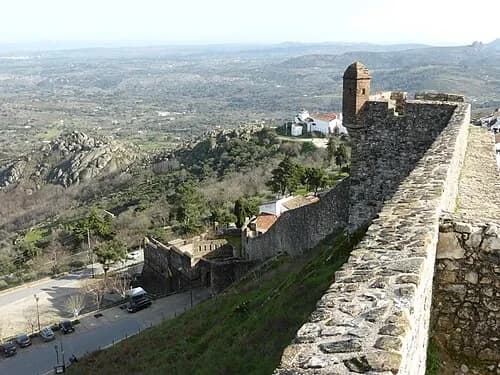
Watching the Border
Notice how the defensive walls snake along the uneven spine of the quartzite ridge. Instead of building in a straight line, the medieval engineers followed the natural topography, using the hardest rock as their foundation. This organic layout ensured that every protrusion of the cliff was utilized as a defensive advantage. From this height, the garrison controlled the entire valley below, which served as a natural corridor for trade and military movement. No merchant or army could pass through this region without being spotted and potentially intercepted by the forces stationed here. This absolute control over the terrain was the primary reason for Marvão's continued military relevance from the Islamic period through the 19th century. The rolling hills of the Alentejo spread out like a map at your feet, revealing the ancient paths that once connected the kingdoms of the peninsula. Even today, the wall feels like a living part of the mountain, a stone boundary that has dictated the flow of history in this border region for over seven hundred years.
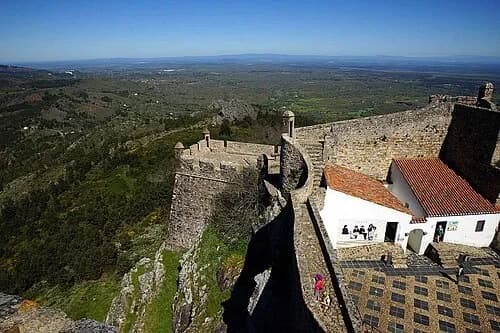
Castle and Village Integration
Look back toward the village to see how the white houses are tightly packed within the protective circle of the walls. This is not just a castle near a town; the entire historic village of Marvão is contained within the fortress's perimeter. This stone embrace meant that the lives of the civilians and the duties of the soldiers were completely intertwined. In times of war, the villagers were the primary labor force and support system for the garrison, while in times of peace, the castle served as the hub of local administration. The narrow streets and terracotta roofs you see below have changed very little since the medieval era, preserved by the very walls meant to defend them. This integration highlights the reality of life in a border zone, where security was the most valuable commodity. Every home was built with the knowledge that the wall was only a few steps away, and every citizen was a stakeholder in the castle's defense. The layout creates a sense of a community frozen in time.
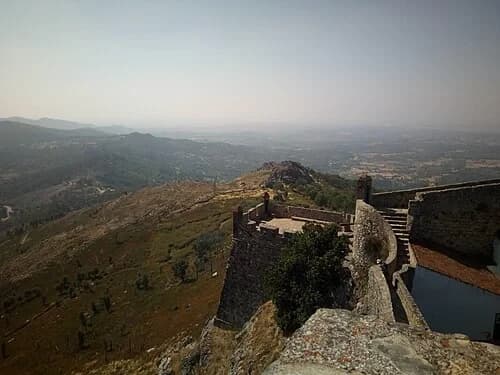
The West Wing Ramparts
Following the narrow stone walkways along the top of the wall, you reach the West Wing ramparts. The stairs here are steep and worn, carved to allow soldiers to move quickly between defensive positions during an alert. From this side of the fortress, the landscape of the Serra de São Mamede dominates the view. This mountain range, characterized by its jagged quartzite ridges, served as a natural extension of the castle's defenses. The ridge upon which Marvão sits is one of the few places in this rolling border region where the geology itself provides a significant obstacle to an invading force. As you walk, notice how the path narrows in places. This was a deliberate design choice to prevent large groups of attackers from overwhelming a position if the walls were ever breached. The rugged beauty of the surrounding peaks contrasts with the precise, organized stonework of the ramparts. This section of the wall emphasizes the castle's role as a mountain fortress, where every inch was adapted to the specific challenges of the terrain.
The Medieval Village Walls
Concluding the tour with a look at how the castle walls encompass the entire historic village, ending with a reflective view at sunset.
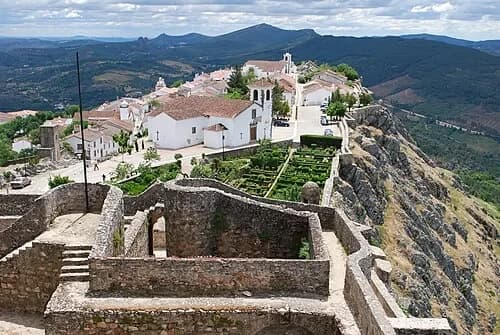
The Living Village
The view from the ramparts looks down onto a sea of terracotta tiles and whitewashed walls. These houses aren't just museum pieces; they are part of a living village that has thrived here since the Middle Ages. For centuries, the people of Marvão lived in a state of constant readiness, their daily routines often dictated by the needs of the garrison. The village economy was historically driven by the soldiers stationed here, from providing food and grain to maintaining equipment. This symbiotic relationship meant that when the castle was under threat, the entire village was at risk, leading to a fierce sense of local identity and resilience. The architecture reflects this history of close-knit survival, with homes built close together to save space within the precious protected area of the walls. Today, the quiet charm of the village belies its turbulent past as a front-line military outpost, but the connection between the domestic life below and the military architecture around it remains the defining characteristic of Marvão.
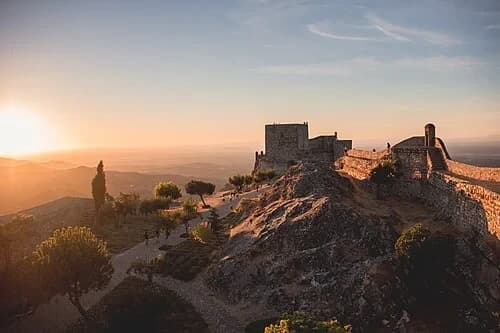
Sunset at the Eagles' Nest
The setting sun casts a golden glow over the quartzite ridges and ancient stone walls. This light highlights the textures of the rock and masonry, revealing the scars and patches from centuries of repair and reinforcement. Marvão’s legacy is one of survival and strategic brilliance. From its 13th-century expansion under King Dinis to its critical role in the Restoration Wars, the fortress has served as a sentinel for the Portuguese nation. Its nickname, the "Eagles' Nest," perfectly captures its relationship with the vast landscape that stretches toward the horizon. Today, it is recognized as one of Portugal’s most beloved national monuments, protected for its unique culture and military history. As you look out over the darkened valley, consider how these walls have watched the border for over seven hundred years, witnessing the transition from medieval knights to modern travelers. The silence of the mountain evening now replaces the sounds of drilling soldiers, but the spirit of this high-altitude stronghold remains as solid as the rock beneath your feet.
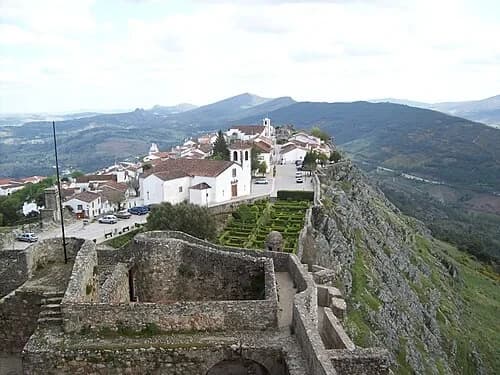
Village Perimeter View
Looking across the village perimeter, you can see the intricate network of stone paths, hidden gardens, and narrow streets that make up the heart of Marvão. This overview reveals just how remarkably preserved the entire complex is. While many medieval castles in Europe were eventually dismantled or surrounded by modern expansion, Marvão has remained physically isolated on its high crag, effectively freezing it in time. This perspective allows you to see the logic of the village layout—how the main thoroughfares lead toward the keep, while smaller alleys provide shortcuts between the various residential quarters. It is a rare example of an Iberian border town that has retained its original character as both a fortress and a home. The contrast between the dark, weathered stone of the walls and the bright white of the homes creates a striking visual pattern that has become synonymous with the Alentejo region. This view serves as a final reminder of the scale of the fortification, which protected a whole society behind its massive walls.
Want to hear the rest?
Download the Stanza app to unlock all 30 stops and full GPS-guided navigation.
Frequently Asked Questions
How long does the Castelo de Marvão audio tour take?
The Castelo de Marvão audio guide includes 30 narrated stops. Most visitors spend 45 minutes to 1.5 hours exploring the complete tour, though you can listen at your own pace and skip or revisit any stop.
Is the Castelo de Marvão audio guide available in my language?
Stanza supports 15 languages: English, Spanish, French, German, Italian, Portuguese, Russian, Japanese, Chinese, Korean, Arabic, Hindi, Polish, Dutch, Hebrew. Check the guide in the app to confirm the languages currently available for this tour.
Can I use the audio guide offline at Castelo de Marvão?
Yes! Download the complete Castelo de Marvão tour — including all audio, maps, and images — before your visit. The Stanza app works completely offline, so you don't need WiFi or mobile data at the venue.
How much does the Castelo de Marvão audio guide cost?
The Stanza app is free to download. Free and paid audio guides are available; current prices are shown in the app.
How do I use the Stanza audio guide at Castelo de Marvão?
Download the free Stanza app, search for "Castelo de Marvão", and download the tour. When you arrive at the venue, the app uses GPS to detect your location and automatically plays the relevant narration as you move between points of interest — completely hands-free.
What makes the Stanza audio guide different from other Castelo de Marvão tours?
Stanza offers GPS-triggered narration that plays automatically as you walk through Castelo de Marvão — no need to manually select stops. The tour is available in 15 languages, works fully offline, and includes 30 expertly narrated stops with images and historical context.
What other audio guides are available near Castelo de Marvão?
Stanza offers multiple audio guides in Marvão, Portugal and nearby areas. After downloading the app, browse the map to discover all available tours near Castelo de Marvão. Each guide can be downloaded for offline use.