Stanza · Audio guide
Sé do Porto Audio Guide
A place to remember. A story to take with you.
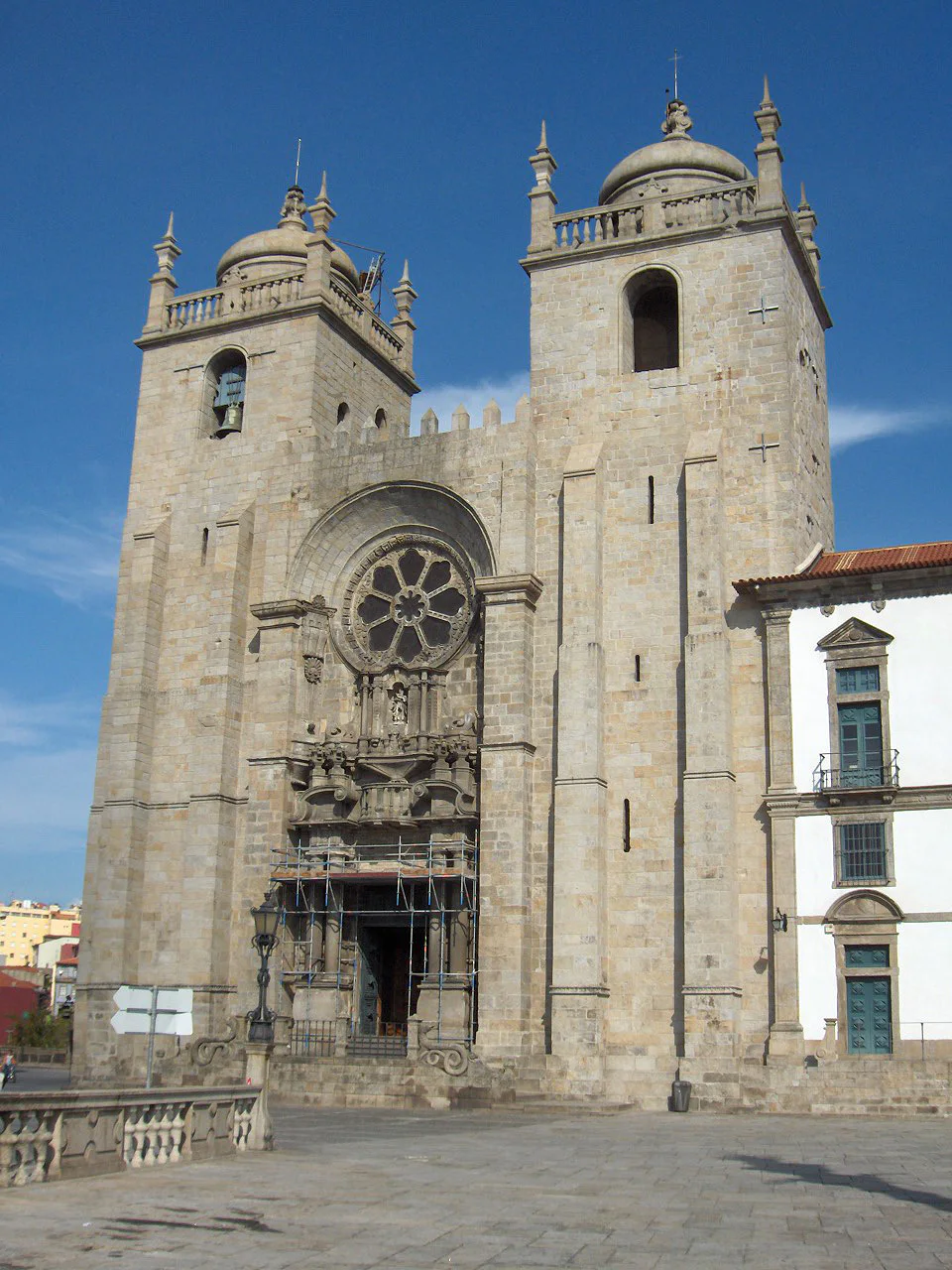
The Porto Cathedral is a Roman Catholic church located in the historical centre of Porto, Portugal. It is one of the city's oldest monuments and one of the most important local Romanesque monuments.
Download Stanza, then search for “Sé do Porto”.
About the tour
One guide. Your kind of visit.
The Porto Cathedral is a Roman Catholic church located in the historical centre of Porto, Portugal. It is one of the city's oldest monuments and one of the most important local Romanesque monuments.
Ready when you are.
- 01Get the free Stanza app.
iOS & Android
- 02Find your guide.
“Sé do Porto”
- 03Download before you go.
Works offline
Audio guide / 11 narrated stops
Inside the guide
Get to know a few of the stories before you go. Open a stop to read more.
01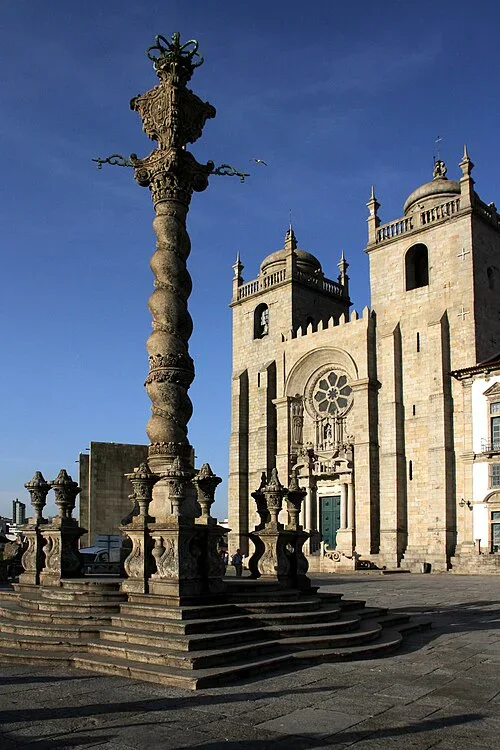 Cathedral Plaza and Fortified Façade
Terreiro da Sé and the Pillory
Welcome to the Sé do Porto, the cathedral of Porto and one of the oldest monuments in Portugal. On the terrace in front of it stands a stone pillory, its shaft carved into a tight spiral. Pillories like this marked a town's right to hold its own justice and its own markets. Behind it the cathedral rises like a fortress, with two heavy square towers over the entrance. This has been the seat of Porto's bishop for centuries, and it is still a living church today. It was classed as a National Monument in 1910, and it sits in the historic centre that UNESCO lists as world heritage. In 2022 the cathedral counted about half a million entries, which makes it the most visited monument in the north of the country.
Listen in the appPhoto: Gerd Eichmann · CC BY-SA 4.0
02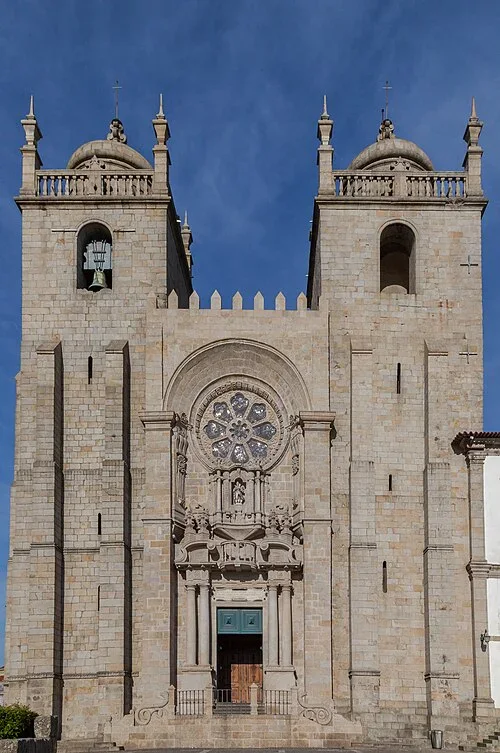 Cathedral Plaza and Fortified Façade
The Fortified Romanesque Façade
A church with battlements over its doorway is making a statement. The present cathedral was begun in the second half of the 12th century, on a spot where Henry of Burgundy and his wife had founded a chapel or hermitage around 1108. Times were unsettled, and a cathedral could be a stronghold as much as a house of worship. The two square towers, each braced by buttresses, the crenellated arch and the round Romanesque rose window all give the building the look of a fortified church. Centuries of change have left that general Romanesque character largely intact. The Baroque touched it too. Around 1772 a new main portal replaced the old Romanesque one, and the towers gained their Baroque balustrades and cupolas, the domed caps visible today.
Diego Delso · CC BY-SA 3.0
03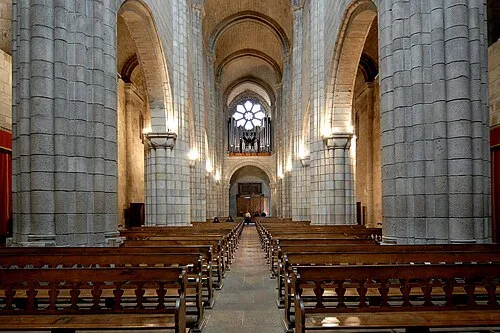 Romanesque Central Nave
The Romanesque Nave
Inside, the church is surprisingly narrow. The central nave is covered by a barrel vault, a continuous stone arch running the length of the ceiling, with two lower side aisles flanking it. All that stone roofing is heavy, so its weight is carried by flying buttresses, the outside arches that prop up the vault. This is one of the first buildings in Portugal to use that feature. The nave also held the great ceremonies of the city. In 1387 King John the First married Philippa of Lancaster, an English princess, here in the cathedral. The marriage sealed the alliance between Portugal and England, and the couple's descendants would rule in both kingdoms.
Listen in the appAntónio Amen · CC BY-SA 3.0
04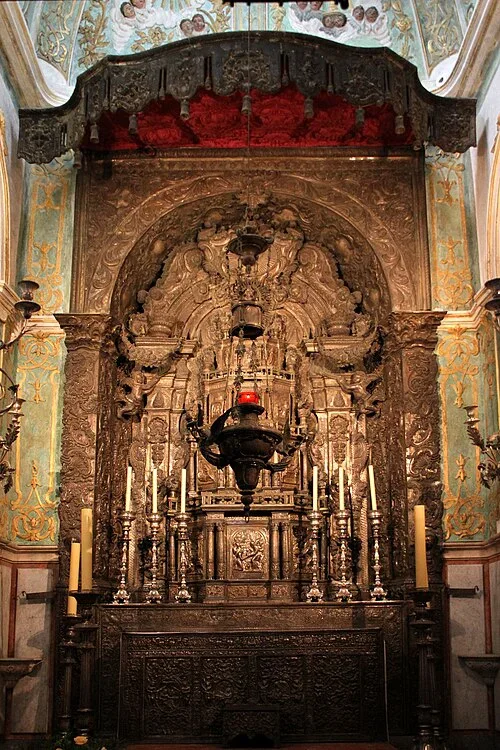 Chapel of the Blessed Sacrament
The Silver Altarpiece of the Blessed Sacrament
Left of the chancel hangs one of the cathedral's great treasures, an altarpiece made almost entirely of silver. Portuguese artists built it in the second half of the 17th century, and it fills its chapel with candlesticks, a tabernacle and a hanging sanctuary lamp. Its greatest escape came in 1807, when French invasion troops were approaching Porto. People of the cathedral hurriedly built a wall of plaster across the front of the altar, hiding the silver completely. The soldiers passed by without discovering it. When the danger passed, the wall came down and the altarpiece was still there, untouched.
Listen in the appPhoto: Gerd Eichmann · CC BY-SA 4.0
05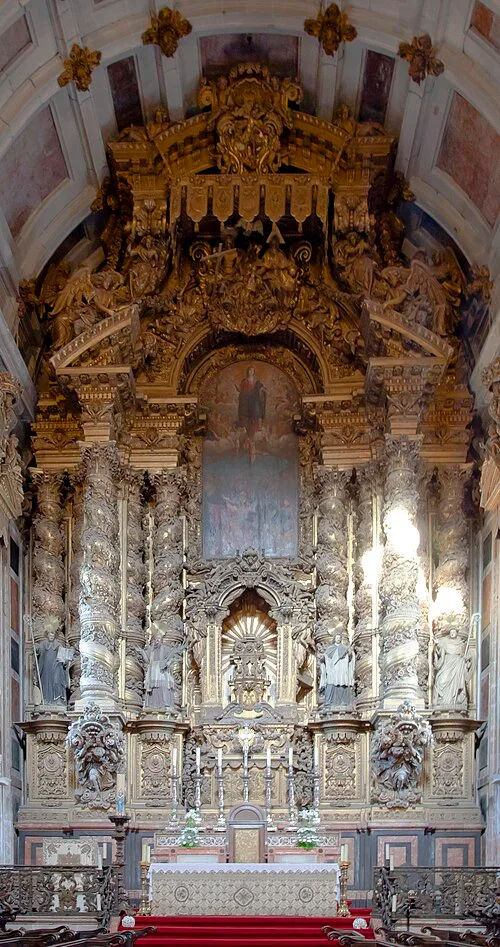 The High Altar and Chancel
The Baroque High Altar and Chancel
Only traces of the medieval east end of the church survive. In the 17th century the Romanesque apse, which once had an ambulatory for pilgrims to walk around, was torn down and replaced by a larger chancel in the Baroque style. What stands there now is one of the important works of Portuguese Baroque. The altarpiece was designed by Santos Pacheco and carved by Miguel Francisco da Silva between 1727 and 1729, a mountain of gilded woodwork around a painted panel. The wall paintings of the chancel are by Nicolau Nasoni, the Italian who left his mark all over this building. One tradition adds a curious detail to this altar. During the War of the Oranges, the story goes, a marble plaque with a magnetite backing was placed behind the altar for men who died when locals drove Spanish soldiers from the cathedral, and that magnetic stone is said to make nearby compass needles wander.
Listen in the appDiego Delso · CC BY-SA 3.0
06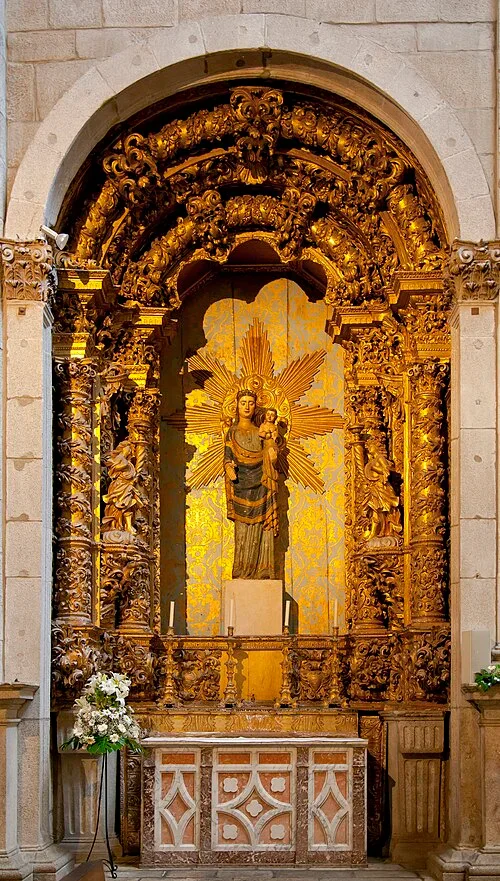 Altar of Our Lady of Vandoma
Our Lady of Vandoma
Here is the patroness of the city herself. The image of Nossa Senhora da Vandoma is medieval, a carved statue of the Virgin holding the Christ Child, with a carved halo of rays behind her. She stands within a retable of exuberant gilded carving, Baroque ornament wrapped around a far older figure. Fresh flowers at the altar show that devotion to her has never stopped. For the people of Porto she is not a museum piece but the city's own protector, honoured in her chapel on the left side of the chancel area.
Listen in the appDiego Delso · CC BY-SA 3.0
07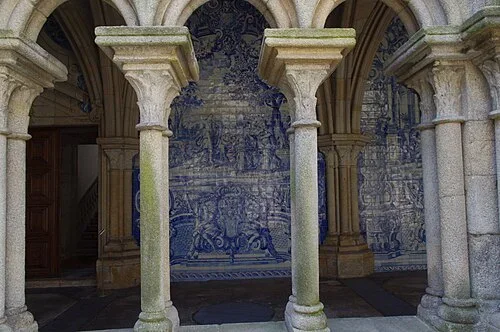 The Gothic Cloister and Azulejo Murals
The Gothic Cloister
The south transept leads into the cloister, the quiet square at the heart of the cathedral precinct. It was built in the Gothic style between the 14th and the 15th centuries, in the reign of King John the First, the same king whose wedding was celebrated in the nave. Granite columns carry pointed arches around the walkway, and the rhythm of those arches is pure medieval work. In one part of the cloister the remains of the early Romanesque ambulatory survive, the oldest fabric of the church on this spot. A few stone sarcophagi rest there, burial chests from the cathedral's first centuries.
Listen in the appKen & Nyetta · CC BY 2.0
08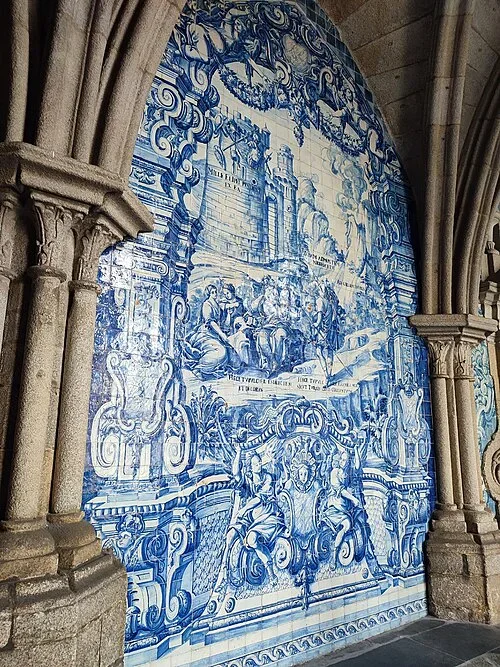 The Gothic Cloister and Azulejo Murals
Azulejo Panels of the Song of Songs
Against the Gothic stonework, the walls of the cloister burst into blue and white. Between 1729 and 1731 the tile painter Valentim de Almeida covered them with Baroque azulejos, the painted ceramic panels Portugal is famous for. The scenes come from the Song of Songs, the great love poem of the Bible, which readers of the time read as a dialogue between the soul and God. Each panel works like a picture book page, with figures, architecture and a landscape, and inscribed captions beneath the scenes to explain what is happening. The effect is a striking layering of eras, 18th-century Baroque storytelling pasted onto 14th-century Gothic arches.
Listen in the appPhoto: Benoît Bf · CC0
09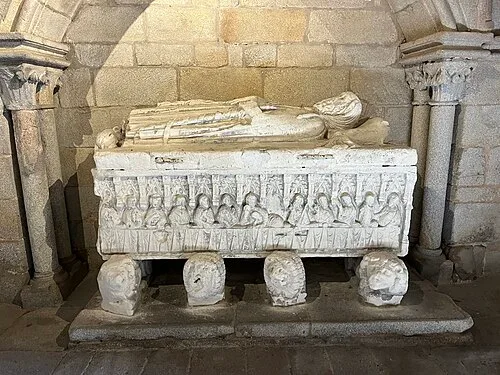 Chapel of Saint John the Evangelist
Tomb of João Gordo
A knight lies here in stone. Around the year 1333 a funerary chapel was added off the cloister for João Gordo, a Knight Hospitaller, one of the military orders of monks who fought for the Church. He served King Dinis the First, working closely with the crown, and his burial here shows how tightly the nobility of the Gothic age was bound to the cathedral. His tomb chest carries his recumbent figure on its lid, lying with hands folded as if in sleep. Along the sides run reliefs of the Apostles, carved in a row like witnesses to his burial. The chest rests on supports carved as heads, holding up the knight's memorial on their shoulders.
Listen in the appdlovins99 · CC0
10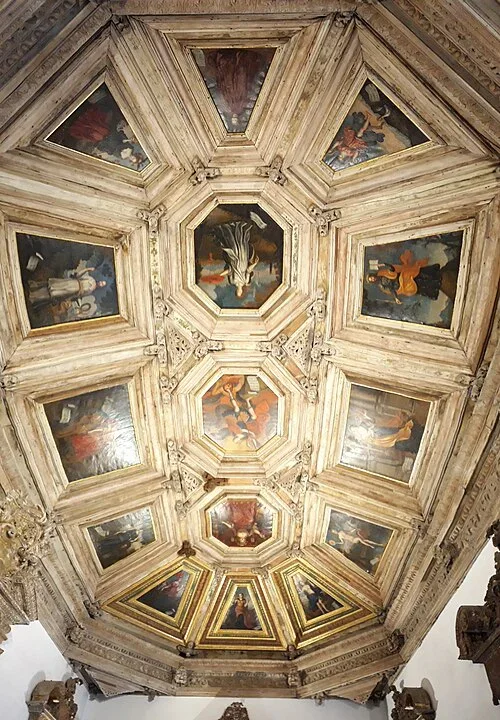 The Chapter House and Painted Ceilings
Chapter House Ceiling
An elegant 18th-century staircase by Nicolau Nasoni climbs to the upper level of the cloister and the Chapter House. A chapter house was the meeting room of the cathedral clergy, where the canons gathered daily to conduct business and hear a chapter of their rule read aloud. The room's great glory is overhead, a coffered ceiling of many-sided wooden panels. In 1737 the painter Pachini covered it with allegories of moral values, each compartment holding a painted scene framed in carved and gilded wood.
Listen in the appPhoto: Pacopac · CC BY-SA 4.0
- 11
Nasoni's Baroque Loggia
Nasoni's Baroque loggia of 1736, the last great layer on a cathedral still being written.
Sé do Porto
Frequently asked questions
How much does the guide cost?
Free app download. Listed guide price: $0.99. Guide price shown in the app. Audio guide only. Venue admission is separate.
Can I listen without internet?
Yes. Download the guide’s audio, images, and maps in the app before your visit. Your downloaded content is then available offline.
Can I listen in my language?
This audio guide is available in 15 languages, including English.
Do I need to follow a schedule?
No. This is a self-guided experience. Choose your stops, pause whenever you like, and return to a story at your own pace.
At your own pace
Explore Sé do Porto.
Download Stanza, then search for “Sé do Porto”.
Free app download · Guide price shown in the app
Keep exploring
Nearby audio guides
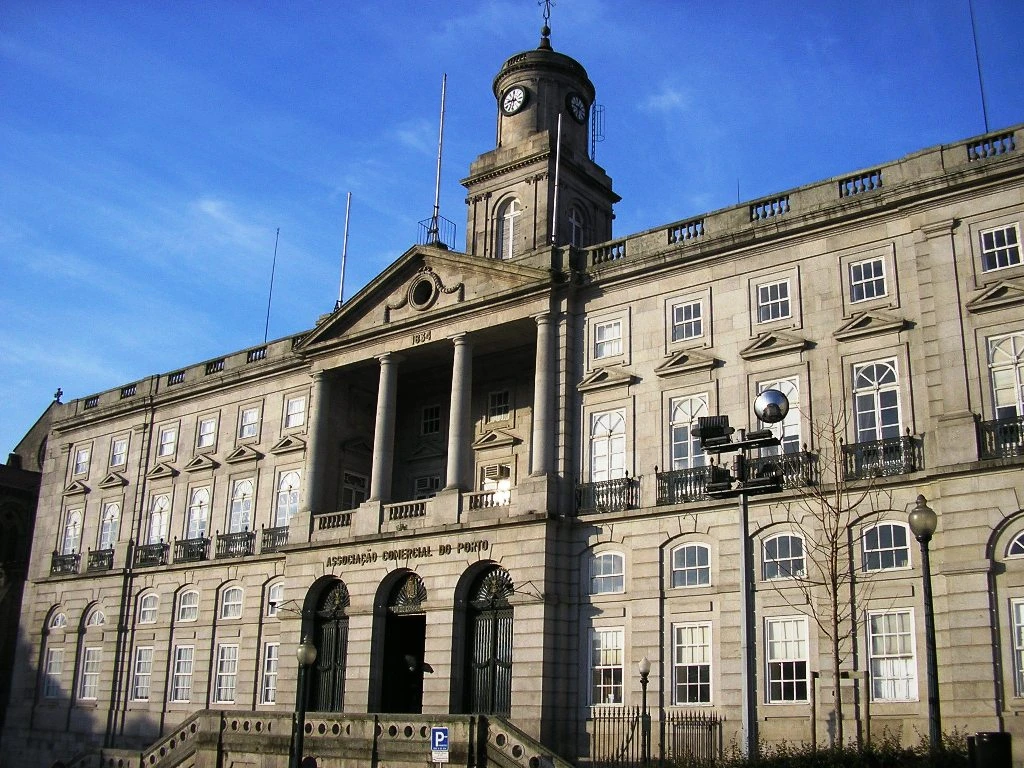
Porto · 1 km
Palácio da Bolsa
Content & sources
Photo: Manuel de Sousa · Public domain
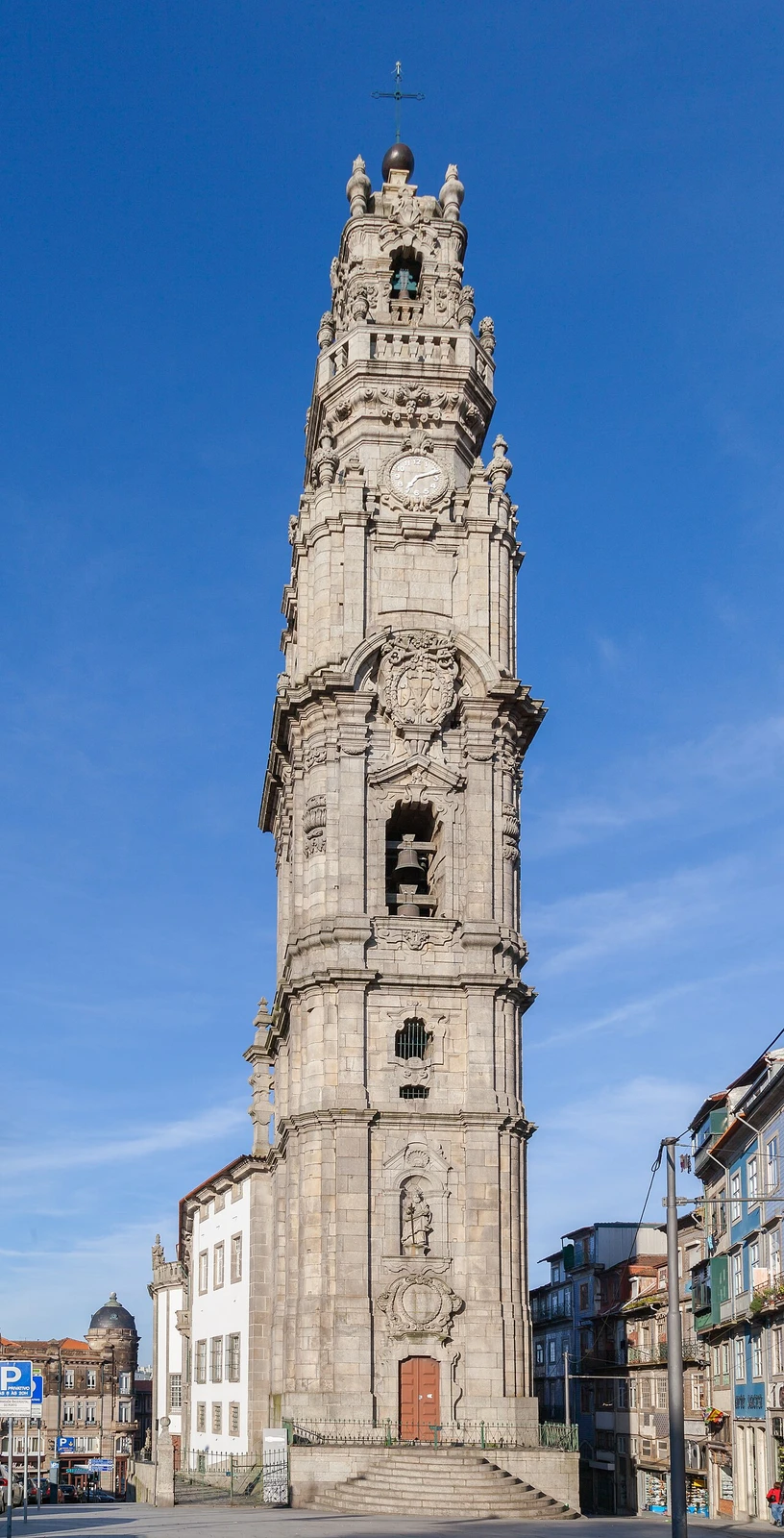
Porto · 1 km
Clérigos Tower
Content & sources
Diego Delso · CC BY-SA 3.0
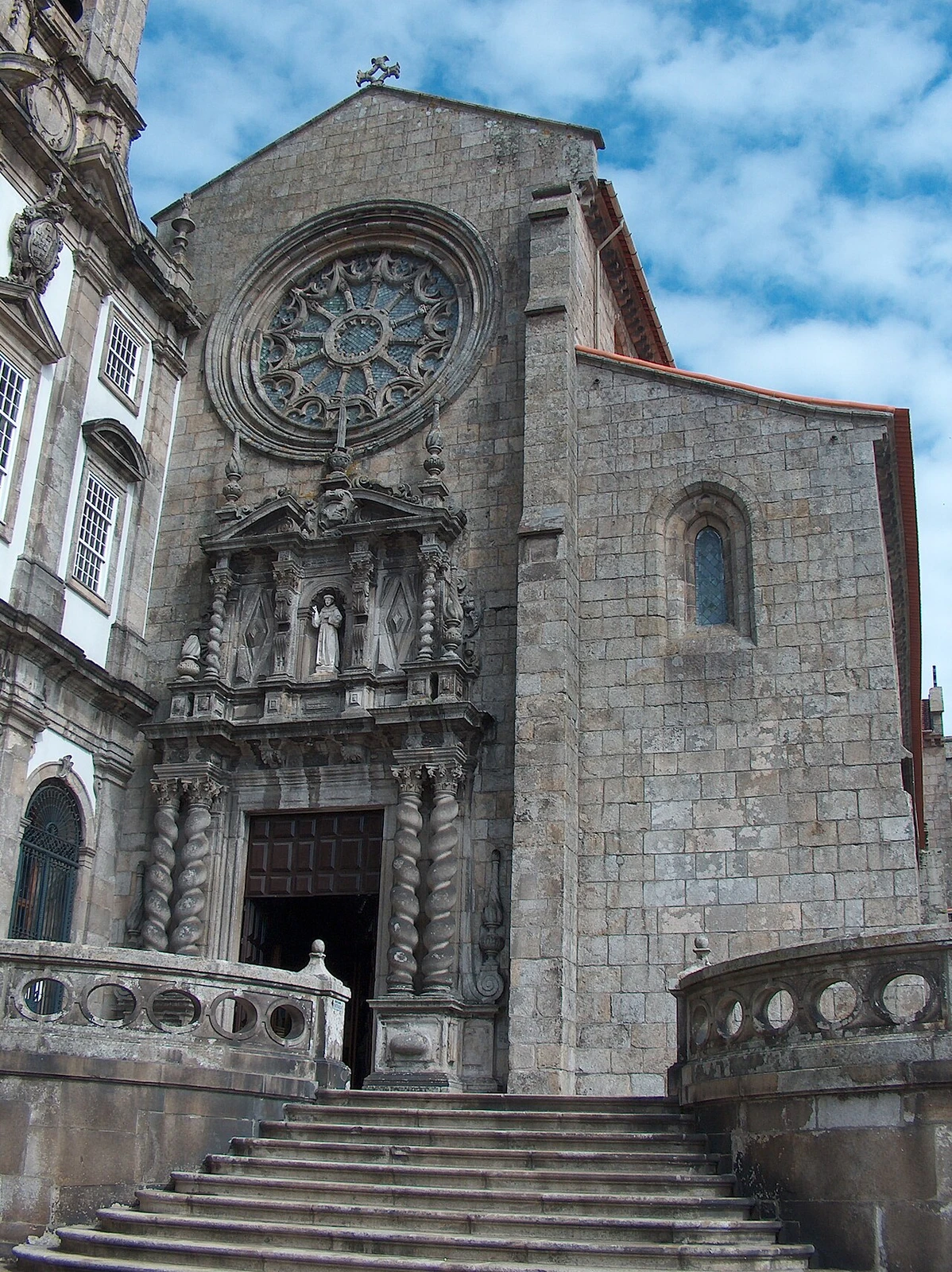
Porto · 1 km
Igreja de São Francisco
Content & sources
Photo: João Carvalho · CC BY-SA 3.0
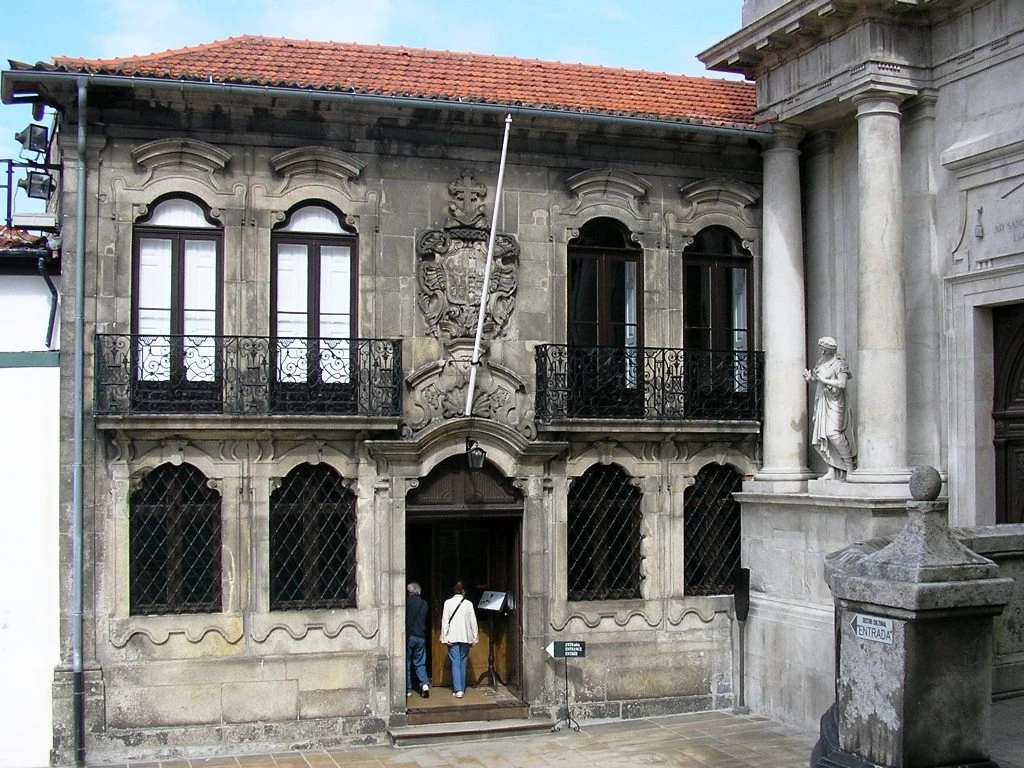
Porto · 1 km
Casa do Despacho da Venerável Ordem Terceira de São Francisco
Content & sources
Photo: Manuel de Sousa · CC BY-SA 3.0