Languages
15Miróbriga Audio Guide
Miróbriga is an archaeological site in Santiago do Cacém, Portugal. Explore it with Stanza's guided offline audio tour — narrated in 15 languages.
Quick Facts
18
Stops
15
Languages
100%
Offline
📍 Santiago do Cacém, Portugal · 38.0095°N, -8.6839°E
About Miróbriga
Miróbriga is a significant Roman archaeological site featuring well-preserved structures including a forum, bath complex, and an ancient hippodrome. It stands as a notable cultural heritage monument showcasing urban planning in the Roman province of Lusitania.
This self-guided audio tour features 18 narrated stops organized across 7 sections. As a archaeological site, Miróbriga offers a unique cultural experience in the heart of Santiago do Cacém, Portugal.
The Stanza audio guide is available in 15 languages and works entirely offline — download the complete tour including audio narration, maps, and images before your visit. As you walk through Miróbriga, GPS-triggered narration plays automatically at each point of interest.
Last updated:
What you will hear
Reception and Interpretation Center
Begin your journey at this modern center to understand the evolution of Miróbriga from an Iron Age settlement to a thriving Roman city.
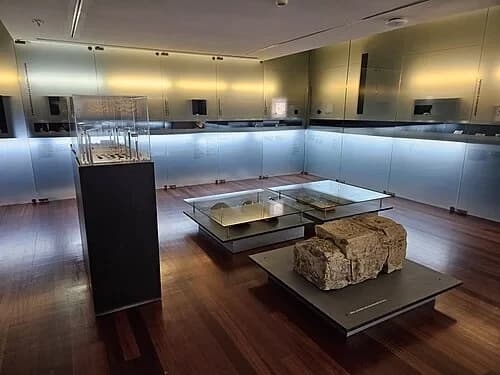
City Layout Model
The architectural models on display here help recreate the grand vision of Miróbriga at its height. You can see how the Forum and the Imperial Temple were designed to dominate the highest hill, creating a skyline that projected Roman power across the valley. To build on this scale, the Romans didn't settle for simple timber or mudbrick structures; they moved and shaped massive amounts of granite, a locally abundant but difficult stone. Nearby, a large carved stone block illustrates the skill of the ancient masons. Even after two millennia, the edges remain crisp, showing the level of precision required to create these monumental public spaces. These weren't just functional buildings; they were statements of intent meant to endure for generations. The sheer weight of the stone used in the foundations of the Forum alone is a testament to the engineering resources the Romans could mobilize in their provinces. By carving these grand structures into the rugged hills, they quite literally reshaped the landscape to fit their own cultural ideals. The models offer a birds-eye view of this transformation, showing how the civic center was organized.
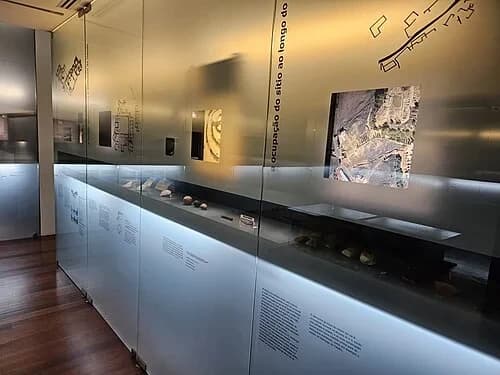
Roman Pottery and Jewelry Display
These glass cases contain a collection of small, personal items that offer a glimpse into the domestic side of ancient Miróbriga. Among the most notable fragments are pieces of 'terra sigillata.' This bright red, glossy tableware was the high-end china of the Roman world, manufactured in large workshops and shipped across the empire. Seeing it here proves that even in this rural corner of Lusitania, people had access to the latest fashions and goods from the heart of the Roman territories. You can also spot everyday essentials like clay oil lamps, which provided light after sunset, and delicate bronze hairpins used by women to create the elaborate hairstyles popular in the first and second centuries. These objects are more than just archaeological finds; they are evidence of a standardized lifestyle. Whether someone lived in the city of Rome or here on the Iberian Peninsula, they likely used similar lamps, ate off the same styles of plates, and followed the same grooming habits. This shared material culture helped bind diverse populations together into a single Roman identity that persisted for centuries.
The Lookout (Mirante)
Take a short walk to this elevated point for a sweeping view of the archaeological park, including the site of the unique 370-meter Roman Circus located nearby.
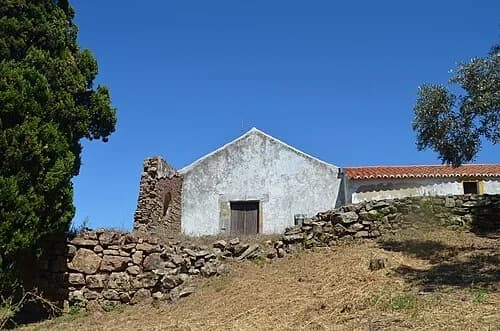
Chapel of Saint Blaise
The Ermida de São Brás, or Chapel of Saint Blaise, is a fascinating example of how history layers itself. Dating back to the 15th century, the chapel was built long after the Roman city had been abandoned. However, the builders didn't start from scratch. Notice the rubble walls nearby; these are original Roman foundations. After Miróbriga was deserted, it became a convenient quarry for local residents, who took pre-cut stones from temples and villas to build homes, fences, and this very chapel. Saint Blaise, to whom this site is dedicated, is the patron saint of throat ailments. For centuries, local pilgrims have made the trek up this hill to seek healing, following the exact same path that ancient Romans used to reach their own religious centers. This continuity of use highlights the enduring significance of this specific hilltop. While the gods being worshipped changed over the millennia, the hill itself remained a focal point for the community’s spiritual life. The simple masonry of the chapel contrasts with the more sophisticated Roman stonework, yet both styles share the same foundation of local granite.
Residential Quarter (Insulae)
Explore the foundations of Roman apartment blocks, known as insulae, where the city's inhabitants lived side-by-side.
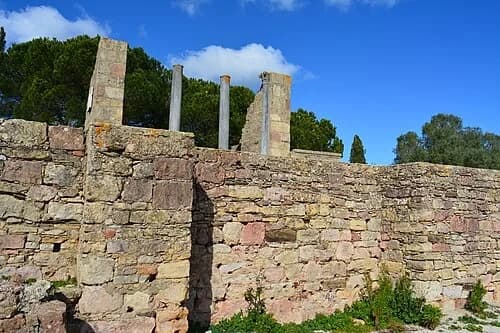
The Imperial Temple
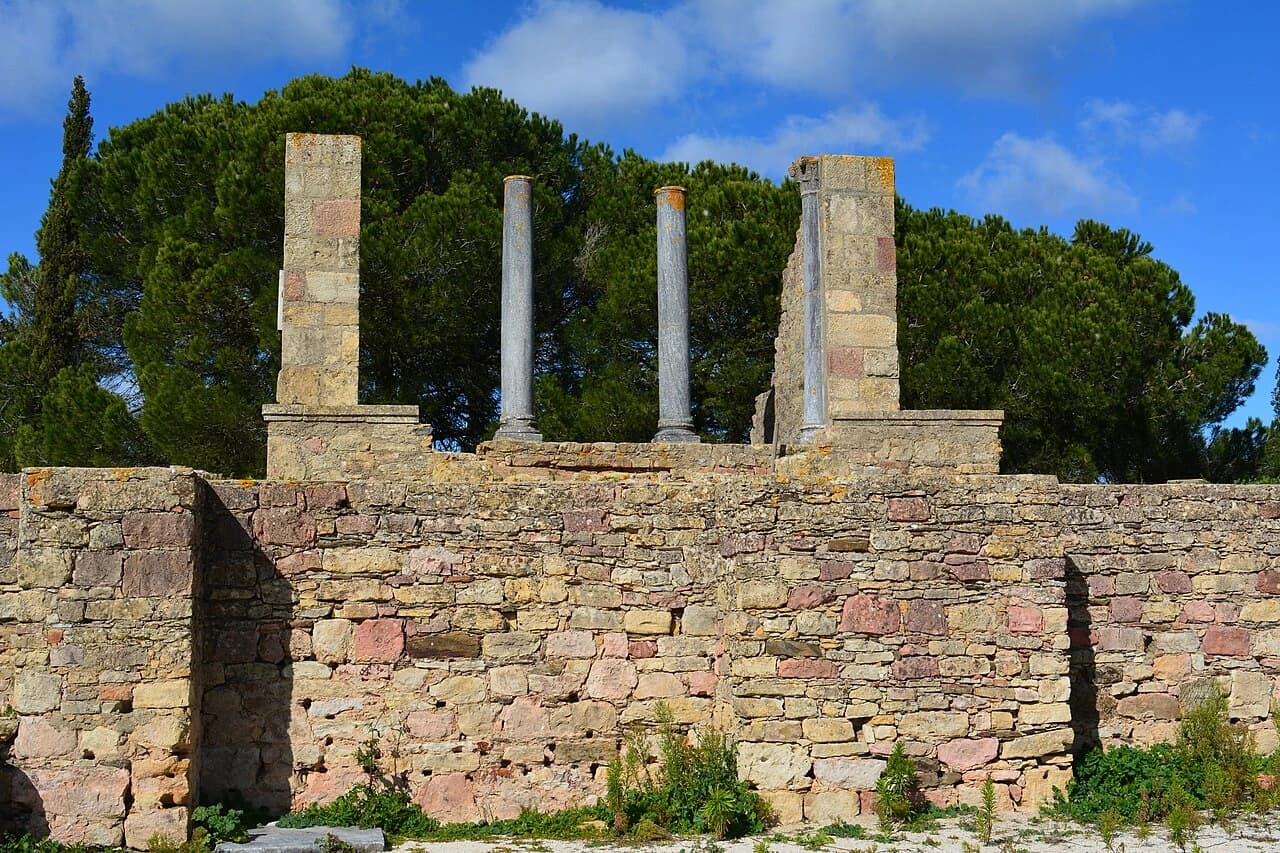
These three standing columns mark the remains of the Imperial Temple, the religious and political heart of the city. This temple was dedicated to the Imperial Cult, where the Roman Emperor was worshipped as a divine figure. This practice was more than just a religious observation; it was a fundamental test of political loyalty. By requiring residents to participate in ceremonies here, the Roman government ensured that the diverse peoples living across its vast territories felt like part of a single, unified system. Standing on the original front porch, these columns are all that remain of a structure that once would have been the most ornate in the city. The height of the temple platform meant that anyone in the marketplace below would have to look up toward the temple, a physical representation of the hierarchy that governed their lives. Even in a distant province like Lusitania, the presence of such a temple ensured that the influence of the capital was never far from people's minds. Today, the weathered granite cores give only a hint of the temple's former glory, but their survival over two thousand years speaks to the durability of Roman construction.
Chapel of Saint Blaise
A fascinating example of historical layering, this medieval chapel was built directly atop the ancient Roman ruins.
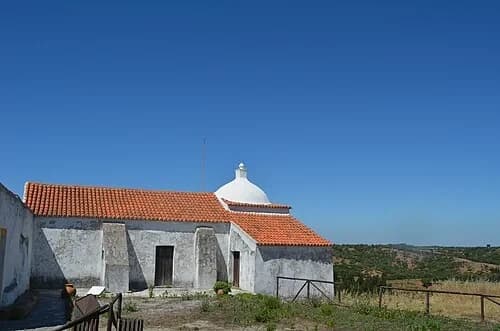
The Chapel Dome
The architecture of the chapel features a small white cupola, or dome, which is a characteristic element of the Alentejo region. This design wasn't just for aesthetics; it served a practical purpose. The raised dome allowed hot air to rise away from the worshipers below, helping to keep the interior cool during the blistering summer months. You will also notice the chapel has remarkably thick walls and very small windows. These features provided a natural form of air conditioning while also offering a level of defense against both the heat and potential intruders. Today, the chapel stands as a lonely survivor on a hill that was once densely packed with activity. During the Roman period, this entire slope would have been crowded with multi-story apartment houses, shops, and administrative buildings. All those domestic structures have since vanished, leaving only the foundations behind. The chapel now occupies a space that was once the bustling center of a city of thousands. Its simple, sturdy form has allowed it to endure long after the grander, more complex Roman residences crumbled into the hillside.
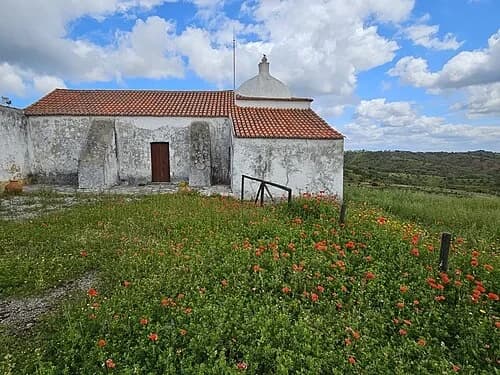
Chapel of Saint Blaise
Looking across the site, the simple, whitewashed walls of the chapel create a sharp contrast with the rugged, grey stone ruins that surround it. If you are visiting in the spring, the fields here are often vibrant with red poppies, adding a layer of color to the weathered landscape. This location was chosen for a specific reason: it is the highest point in the immediate area. From here, you can enjoy a 360-degree view of the surrounding countryside. For the Romans, this elevation was a tool for projecting power. By placing their most important temples on the summit, they ensured their authority was visible for miles in every direction. Centuries later, the medieval builders of the chapel saw the same height through a different lens. For them, being on the highest peak was about being symbolically closer to heaven, far removed from the mundane world below. The site has served both as a seat of earthly government and a place of spiritual retreat. Take a moment to scan the horizon; you can see why this strategic hilltop has been continuously occupied and valued for over two thousand years.
The Forum and Imperial Temple
Standing on the Castelo Velho hill, this was the religious and administrative heart of the city, featuring a temple dedicated to the Imperial cult.
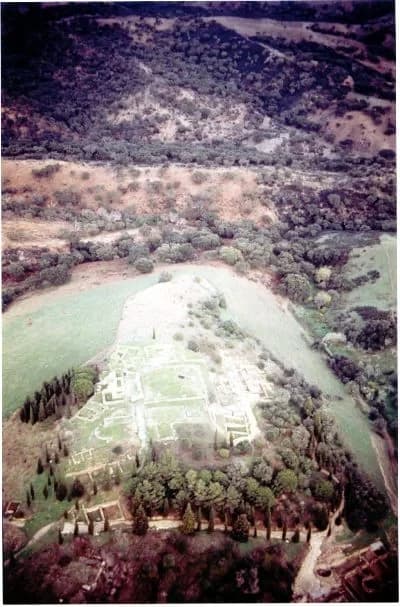
Roman Ruins of Miróbriga
From this perspective, the 'footprint' of the city's heart becomes clear. The large, rectangular open space you see was the Forum. In every Roman city, the Forum was the undisputed center of life. It was a multi-purpose space that served as a marketplace for local farmers, a courthouse for legal disputes, and a town square for political announcements. Surrounding this open area were the offices of city officials and the shops of local merchants. At the highest point of the hill, the Imperial Temple was positioned to look directly down on the Forum. This was a deliberate piece of urban planning. It served as a constant visual reminder of the Emperor’s authority over the daily activities of the citizens below. Whether someone was buying grain or attending a trial, the temple loomed over them, reinforcing the connection between the local community and the distant power of Rome. Today, while the wooden roofs and decorative finishes are gone, the layout remains exactly as it was two thousand years ago. You can still trace the boundaries of the public square and imagine the flow of people moving through this space.
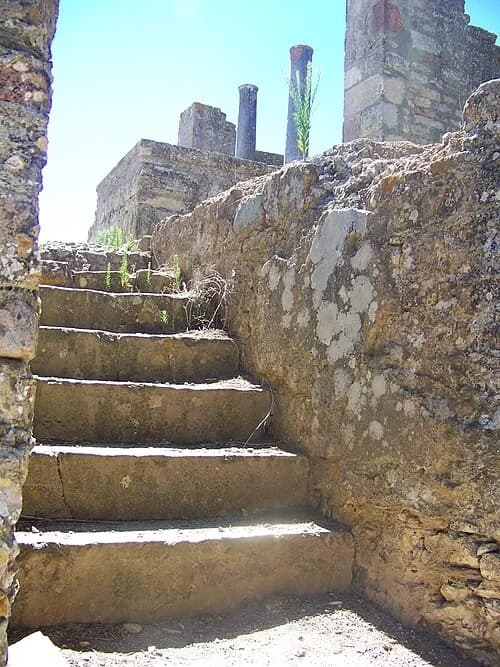
Processional Stairs
These weathered stone steps served as the main ceremonial approach to the temple. Imagine the scene during a public festival, as priests and local officials slowly ascended this staircase in a formal procession. The height of the temple was entirely intentional; the Romans typically built their temples on a raised platform known as a 'podium.' This architectural feature served to physically elevate the gods and their sanctuaries above the noise and bustle of the marketplace below. Notice how wide the individual steps are. They weren't designed for a quick, functional transit like a modern staircase. Instead, their broad proportions encouraged a slow, dignified pace, suitable for religious ceremonies where the entire community would gather to watch. Over the centuries, the feet of thousands of visitors have rounded the edges of the stone, leaving behind a smooth, worn surface that reflects the heavy traffic this site once experienced. At the top of these stairs, the worshipers would have reached the front porch before entering the inner sanctum of the temple. The transition from the open, public Forum to the elevated, sacred space above was a journey designed to inspire respect for the divine.
Commercial Zone and Roman Road
Walk along the original Roman pavement (calçada) and imagine the bustling tabernae (shops) that once lined this street.
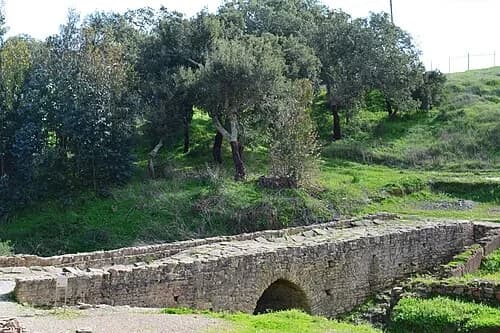
The Ancient Stone Bridge
Looking down into the valley, you can see a well-preserved single-arch stone bridge. This structure was a vital link in the regional road network, connecting the bustling center of Miróbriga to the surrounding farms and the distant coast. Roman bridges are world-famous for their durability, largely due to the use of the 'true arch.' Unlike earlier bridge designs that used simple flat beams, the arch shape naturally transfers the weight of the traffic and the structure itself outward and down into the ground. This makes the bridge incredibly stable, even during the heavy winter rains when the small stream below can turn into a rushing torrent. The stability provided by the arch meant that Roman roads could remain open year-round, facilitating the constant movement of goods, soldiers, and travelers that the empire depended on. This bridge has survived largely intact for nearly two thousand years, a testament to the engineering principles that the Romans perfected. It remains a functional piece of the landscape, showing how ancient infrastructure was built not just for the needs of the moment, but to last for centuries of continuous use.
Roman Bridge of Miróbriga
Conclude your tour at this well-preserved single-arch stone bridge, a testament to the enduring quality of Roman civil engineering.
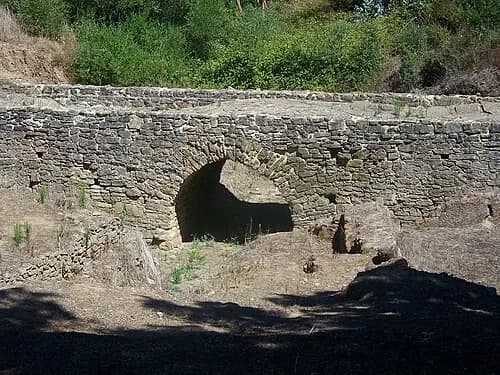
The Single Arch Bridge
The success of this architectural feat depends entirely on the central keystone—the wedge-shaped stone located at the highest point of the arch. This single piece of masonry is the structural lock that prevents the entire bridge from collapsing inward. During construction, Roman engineers first built a temporary wooden framework, known as centering, to hold the other stones in place. Only after the keystone was dropped into its final position was the wooden support removed. From that moment, the bridge became a self-supporting unit, with gravity pressing all the stones together into a rigid, stable curve. This engineering technique is why the bridge has survived 2,000 years of winter floods and seasonal changes without moving an inch. While the wooden frames rotted away millennia ago, the stone arch remains as a functional artifact of ancient craftsmanship. Look at the joints between the stones in the arch; they are so tightly fitted that even without modern adhesives, there is little room for water to penetrate and cause damage through freezing and thawing. The shadow cast by the arch reveals the thickness of the stones, which were carved to endure for ages.
Want to hear the rest?
Download the Stanza app to unlock all 18 stops and the complete guided audio tour.
Frequently Asked Questions
How long does the Miróbriga audio tour take?
The Miróbriga audio guide includes 18 narrated stops. Most visitors spend 45 minutes to 1.5 hours exploring the complete tour, though you can listen at your own pace and skip or revisit any stop.
Is the Miróbriga audio guide available in my language?
Stanza supports 15 languages: English, Spanish, French, German, Italian, Portuguese, Russian, Japanese, Chinese, Korean, Arabic, Hindi, Polish, Dutch, Hebrew. Check the guide in the app to confirm the languages currently available for this tour.
Can I use the audio guide offline at Miróbriga?
Yes! Download the complete Miróbriga tour — including all audio, maps, and images — before your visit. The Stanza app works completely offline, so you don't need WiFi or mobile data at the venue.
How much does the Miróbriga audio guide cost?
The Stanza app is free to download. Free and paid audio guides are available; current prices are shown in the app.
How do I use the Stanza audio guide at Miróbriga?
Download the free Stanza app, search for "Miróbriga", and download the tour. When you arrive at the venue, the app uses GPS to detect your location and automatically plays the relevant narration as you move between points of interest — completely hands-free.
What makes the Stanza audio guide different from other Miróbriga tours?
Stanza offers GPS-triggered narration that plays automatically as you walk through Miróbriga — no need to manually select stops. The tour is available in 15 languages, works fully offline, and includes 18 expertly narrated stops with images and historical context.
What other audio guides are available near Miróbriga?
Stanza offers multiple audio guides in Santiago do Cacém, Portugal and nearby areas. After downloading the app, browse the map to discover all available tours near Miróbriga. Each guide can be downloaded for offline use.