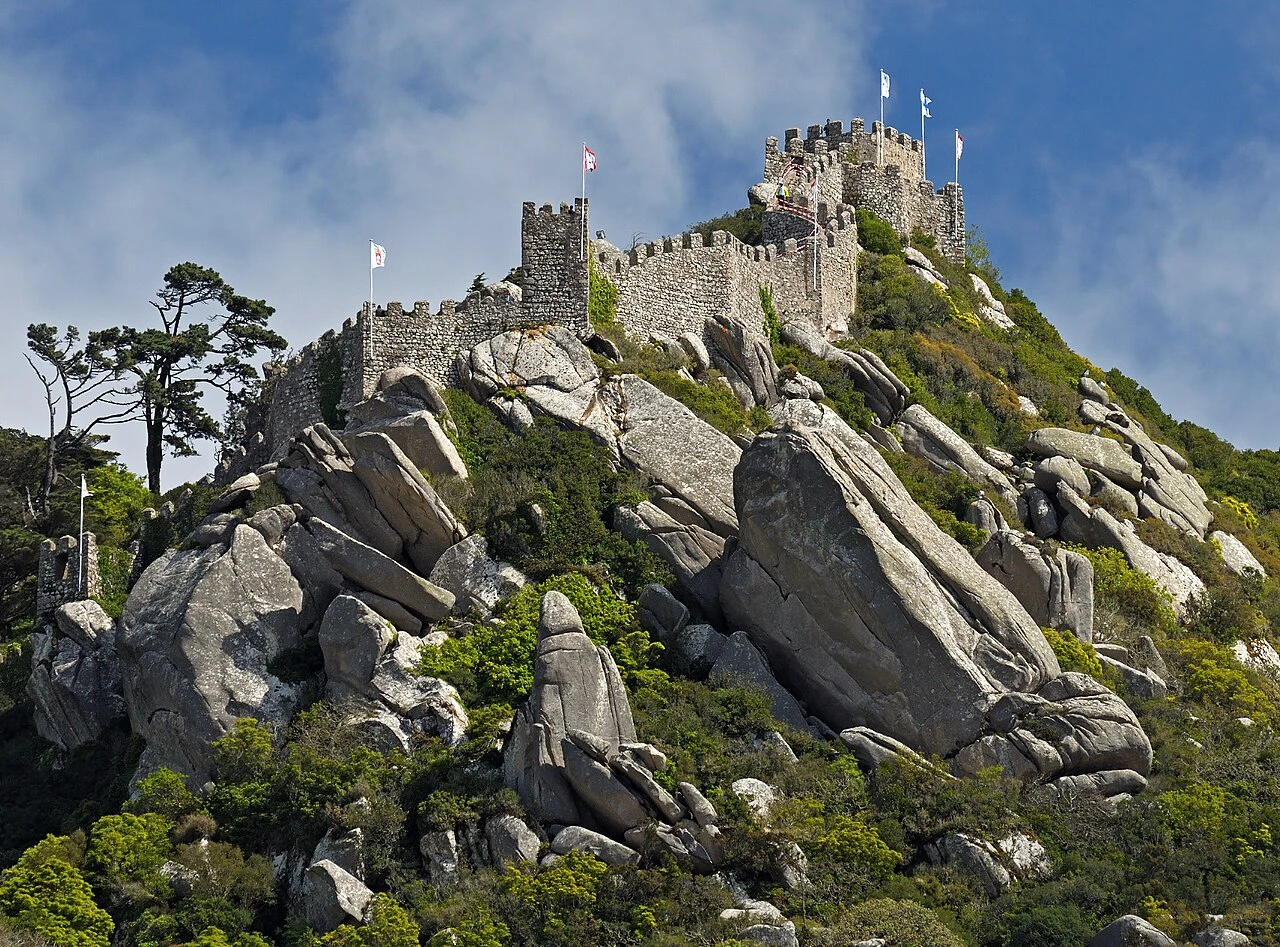
 Stanza / Audio guide
Content & sources
Stanza · Audio guide
Castelo dos MourosAudio guide
A place to remember. A story to take with you.
The Castle of the Moors is a hilltop medieval fortification built by the Moors in the 8th and 9th centuries. It is situated in the Sintra Mountains and serves as a prominent cultural heritage monument.
Download Stanza, then search for “Castelo dos Mouros”.
About the tour
One guide. Your kind of visit.
The Castle of the Moors is a hilltop medieval fortification built by the Moors in the 8th and 9th centuries. It is situated in the Sintra Mountains and serves as a prominent cultural heritage monument.
Ready when you are.
- 01Get the free Stanza app.
iOS & Android
- 02Find your guide.
“Castelo dos Mouros”
- 03Download before you go.
Works offline
Audio guide / 26 narrated stops
Inside the guide
Get to know a few of the stories before you go. Open a stop to read more.
01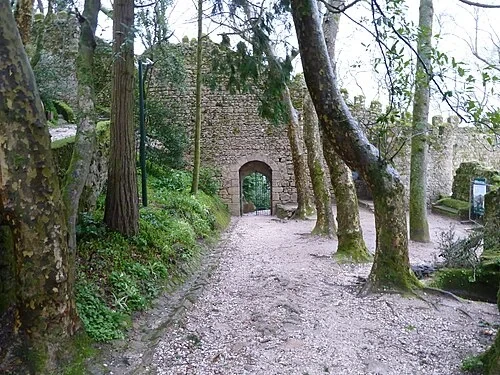 Arrival at the Main GateThe Main Entrance
Welcome to the Castelo dos Mouros. Its origins date back to the 8th century, a time when much of the Iberian Peninsula was under Muslim rule. This fortress was established as a crucial military outpost for the taifa of Badajoz, designed to monitor the territory and provide a defensive stronghold. Approaching the site, the first sight of the rugged stone walls emerging from the dense Sintra greenery provides a glimpse into its long history. Unlike many other European castles, this one does not sit on a flat plain but clings to the jagged mountain peaks. The builders utilized the natural defensive advantages of the terrain, weaving the masonry between massive granite outcrops. This strategic position allowed the Moorish garrison to observe the surrounding valleys and the sea, ensuring they could spot any approaching threats from miles away. The rough-hewn stones you see were hauled up these steep slopes over a thousand years ago. This marked the beginning of a military presence that defined the mountain peaks long before the Christian reconquest.
deror_avi · CC BY-SA 3.0
02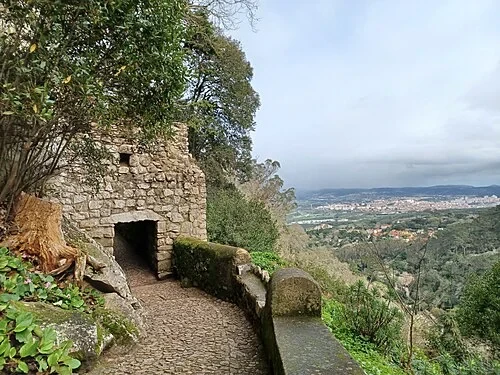 The Caminho de Santa MariaThe Romantic Path
Following the path toward the heart of the castle, you are walking through a landscape shaped by King Ferdinand II in the 19th century. During this era, the Romantic movement celebrated ruins and the reclaiming of architecture by nature. Ferdinand II, often called the Artist King, undertook a massive project to restore and preserve the site, which had fallen into deep disrepair after centuries of neglect and the 1755 earthquake. Instead of a purely military reconstruction, he envisioned the castle as a garden-like attraction that complemented his nearby Pena Palace. The winding path avoids disrupting the massive granite boulders scattered across the hillside, integrating the stone masonry directly into the geological formations. This intentional design creates a sense of discovery, where the human-made walls seem to flow naturally from the earth. The lush vegetation surrounding the trail was carefully curated to enhance this picturesque quality, turning a functional military site into a scenic retreat. Moss-covered rocks and narrow walkways characterize this section, highlighting the transition from a defensive stronghold to a place of artistic and historical appreciation.
Photo: Simon Burchell · CC BY-SA 4.0
03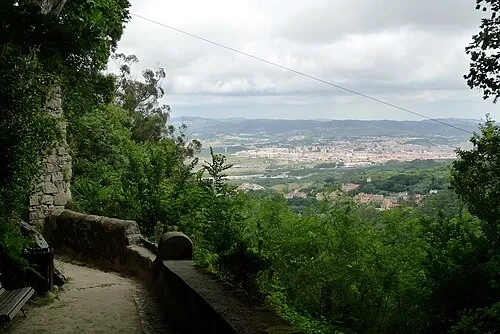 The Caminho de Santa MariaThe Strategic Overlook
Looking out from this vantage point, the strategic importance of the castle becomes immediately clear. In the Middle Ages, controlling this high ground meant controlling the surrounding region. The garrison here held a commanding view over the primary land routes that connected the inland city of Sintra to the coastal hubs of Cascais, the military defenses of Mafra, and the administrative center of Lisbon. On a clear day, the landscape unfolds all the way to the horizon of the Atlantic Ocean. This panoramic visibility was essential for early warning; a signal fire from these heights could alert other regional fortresses to approaching armadas or advancing armies long before they reached the mountain's base. The terrain below is a mix of dense forest, agricultural valleys, and small settlements, all of which were once under the watchful eyes of the soldiers stationed on these ramparts. Even after the castle lost its primary military function, this view remained a source of inspiration for royalty. The sheer drop-off of the cliffs emphasizes how difficult it would have been for any attacking force to mount a successful siege against such a well-positioned defense.
Listen in the appEwan Munro from London, UK · CC BY-SA 2.0
04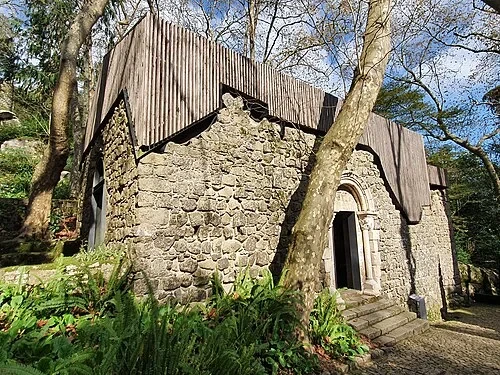 The Church of São Pedro de CanaferrimChurch of Saint Peter
This modest stone building is the Church of Saint Peter, a significant landmark in the Christian history of Sintra. Built in the 12th century following the conquest of the castle by King Afonso Henriques, it served as the very first parish church for the local population. Its architecture is quintessentially Romanesque, characterized by simple, thick walls and a sturdy construction meant to withstand the elements. The masonry consists of large, irregular stone blocks that give the structure a heavy, grounded feel, typical of the religious buildings of the era which often doubled as places of refuge. Originally, the church would have been open to the sky after falling into ruin, but a modern protective roof structure was added during recent conservation efforts to stabilize the interior. This addition ensures that the original layout—including the single nave and the rounded apse—is still clearly visible. While the exterior lacks the ornate decorations found in later Gothic buildings, its historical weight is significant. It marks the moment when the religious identity of the hilltop shifted, signaling a new chapter for the community living under the castle's protection.
Listen in the appPhoto: GualdimG · CC BY-SA 4.0
05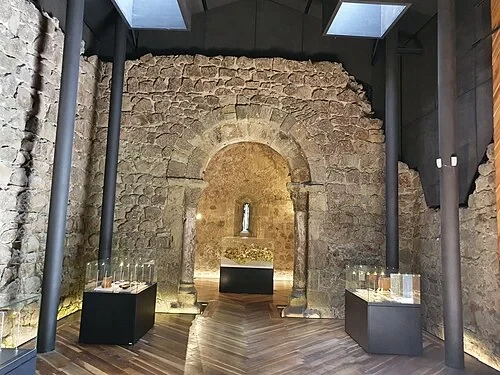 The Church of São Pedro de CanaferrimThe Interpretation Center
Inside the former Church of Saint Peter, the Interpretation Center offers a window into the lives of those who occupied this mountain over the last millennium. Archaeologists have painstakingly excavated the site, uncovering evidence of human activity that spans more than 1,200 years. The museum displays highlight a transition from an Islamic religious and military center to a Christian one. Inside the glass cases, you can see how this change is reflected in the objects of daily life. Pottery shards, jewelry, and metal tools tell stories of trade, cooking, and craftsmanship. Particularly interesting are the artifacts found in layers associated with the Muslim period, which contrast with the later Christian finds. These items provide tangible proof of the complex cultural layers that make up Sintra's heritage. The displays also explain how the church structure itself was modified over the centuries to accommodate changing needs. By examining these small, everyday items, history becomes more than just a list of kings; it becomes a personal story of the families and soldiers who once looked out from these walls. The quiet atmosphere of the museum allows for a close examination of the very foundations of the castle.
Listen in the appPhoto: GualdimG · CC BY-SA 4.0
06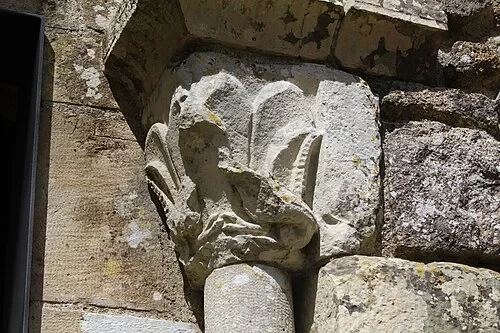 The Church of São Pedro de CanaferrimRomanesque Stone Carvings
Observe the decorative column capitals near the entrance of the church. Despite centuries of exposure to the Atlantic winds and mountain mist, the weathered carvings still reveal the skill of 12th-century stone masons. These capitals feature leaf patterns and animal motifs, which were hallmarks of the Romanesque style common throughout Europe during this period. The stylized foliage and the simplified forms of creatures are some of the earliest Christian artistic expressions found in this region. In an era when most of the population was illiterate, such stone carvings often carried symbolic meanings, though many of the specific messages have been lost to time. The texture of the stone lacks the fine detail of marble, reflecting the use of local materials that were available to the builders. These carvings provide a rare decorative touch to an otherwise functional and austere military and religious complex. They represent a blend of artistic tradition and local craftsmanship, showing how international styles were adapted to the environment of the Sintra peaks. The moss and lichen growing in the crevices add to the sense of age, reminding us that these stones have witnessed the rise and fall of several dynasties.
Listen in the appPhoto: Chabe01 · CC BY-SA 4.0
07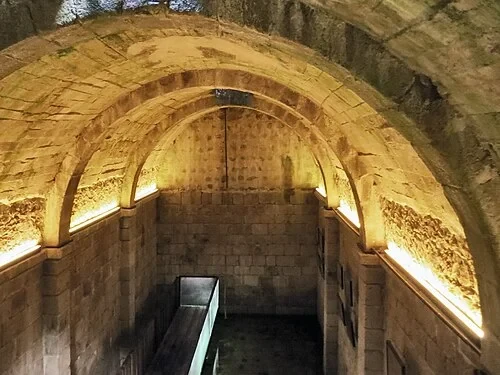 The Great CisternThe Great Cistern
Water was the most precious resource for any medieval castle, and the Great Cistern demonstrates the importance of medieval supply logistics. This engineering marvel measures approximately 18 meters in length, 6 meters in width, and 9 meters in height. It was designed to collect and store rainwater, ensuring that the soldiers stationed here could survive even the longest sieges when access to external springs might be cut off. In a mountain environment where natural water sources are scarce, a reservoir of this scale was the difference between holding a position and being forced to surrender. The sheer volume of the space is impressive when you consider that it was carved and built into the solid rock and earth of the hilltop. Its depth allowed for significant pressure, which helped in moving water to where it was needed. The construction demonstrates an advanced understanding of waterproofing and structural integrity, as the walls had to withstand the immense outward pressure of the stored water. This was not merely a convenience but a vital component of the castle's military readiness. Every drop of rain that fell on the rooftops was funneled into this dark, cool chamber.
Listen in the appGabriel de Andrade Fernandes from São Paulo, Brasil · CC BY-SA 2.0
08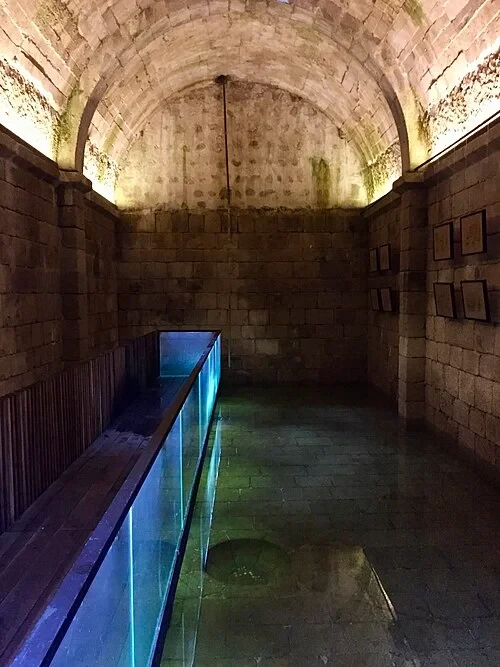 The Great CisternThe Water Supply System
Stepping into the area of the cistern, you can see the impressive vaulted ceiling that supports the structure. This stone arching was essential for distributing the weight of the courtyard above while providing a large, open space for water storage. The underground nature of the cistern, combined with its thick masonry, served a dual purpose: it prevented evaporation and kept the water at a consistently cool temperature, which helped inhibit the growth of bacteria. This ensured that the water supply remained clean and potable for months at a time. The quality of this construction was so high that the cistern remained functional long after the castle was abandoned as a military outpost. In fact, it continued to supply the town of Sintra with water well into the modern era, a remarkable example of medieval engineering outliving its original purpose. Look at the precision of the stone blocks forming the vault; they were joined with a lime-based mortar that hardened over time, creating a nearly impenetrable seal. The acoustic quality of the space hints at the silent, filled chamber it once was. This system highlights the ingenuity required to maintain a permanent human presence in such an isolated location.
Listen in the appSambasoccer27 · CC BY-SA 4.0
09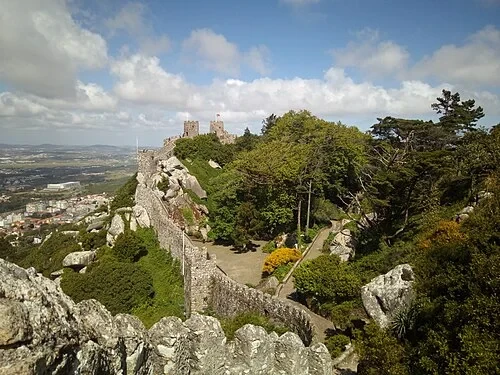 The Military Square (Praça de Armas)The Military Square
The wide, open area here is the Praça de Armas, or Military Square. This was the central hub of the fortress, the primary gathering place for the garrison and the staging ground for military exercises. The total area enclosed within the castle's defenses covers approximately 12,000 square meters, making it a substantial complex for its time. One of the most striking features of the Military Square is how the surrounding walls do not follow a rigid, geometric plan. Instead, they trace the organic and irregular contours of the mountain peaks, dipping and rising with the natural granite outcrops. This organic architecture made the walls much harder to breach, as it forced attackers to negotiate uneven terrain while remaining exposed to defenders above. Within this square, there would have been temporary shelters, stables, and areas for equipment maintenance. Today, it offers a sense of the scale of life here during the Middle Ages. The space is often filled with the sounds of modern visitors, but it was once a place of strict discipline and constant watchfulness. The large granite boulders that punctuate the square are reminders that the mountain itself is the foundation of the fortress.
Listen in the appHugo Ferreira · CC BY-SA 4.0
10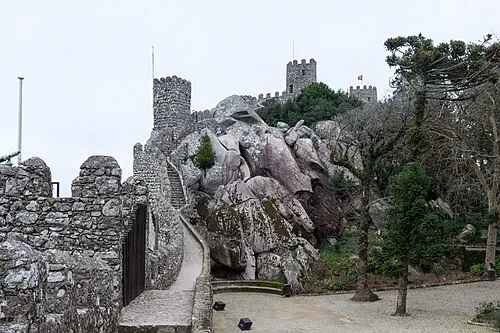 The Military Square (Praça de Armas)The Defensive Perimeter
The castle is protected by a formidable defensive perimeter that spans approximately 450 meters in total. This layout features a double line of walls in several vulnerable sections, providing an extra layer of security against potential invaders. If an enemy managed to breach the first line, they would find themselves trapped in the narrow space between the two walls, exposed to projectiles from the inner ramparts. Rectangular towers are positioned at intervals along the wall line. These towers were not just for observation; they allowed defenders to fire alongside the face of the walls, a tactic known as flanking fire. This prevented attackers from finding shelter at the base of the masonry. The construction uses local granite, with the stones fitted together in a way that emphasizes strength over ornamentation. You can see how the battlements have been restored over time, yet the original medieval logic remains clear. The heights of the walls vary according to the steepness of the terrain, with the builders adding height where the natural slope was less severe. This sophisticated defensive network made the Moorish castle one of the most difficult fortresses to conquer in the region.
Listen in the appJaan Toots · CC BY-SA 2.0
Castelo dos Mouros
Frequently asked questions
How much does the guide cost?
Free app download. Listed guide price: $3.99. Guide price shown in the app. Audio guide only. Venue admission is separate.
Can I listen without internet?
Yes. Download the guide’s audio, images, and maps in the app before your visit. Your downloaded content is then available offline.
Can I listen in my language?
Stanza supports 15 languages. Check the app for the languages available for this guide.
Do I need to follow a schedule?
No. This is a self-guided experience. Choose your stops, pause whenever you like, and return to a story at your own pace.
At your own pace
Explore Castelo dos Mouros.
Download Stanza, then search for “Castelo dos Mouros”.
Free app download · Guide price shown in the app
Keep exploring
Nearby audio guides
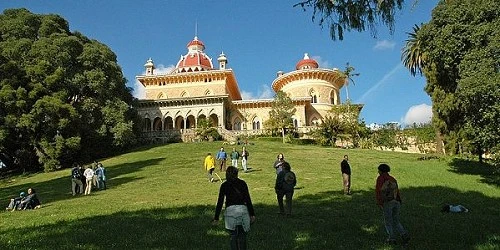
Sintra (Santa Maria e São Miguel, São Martinho e São Pedro de Penaferrim)
Palácio de Monserrate
Content & sources
Alagamares · CC BY-SA 3.0
Sintra (Santa Maria e São Miguel, São Martinho e São Pedro de Penaferrim)
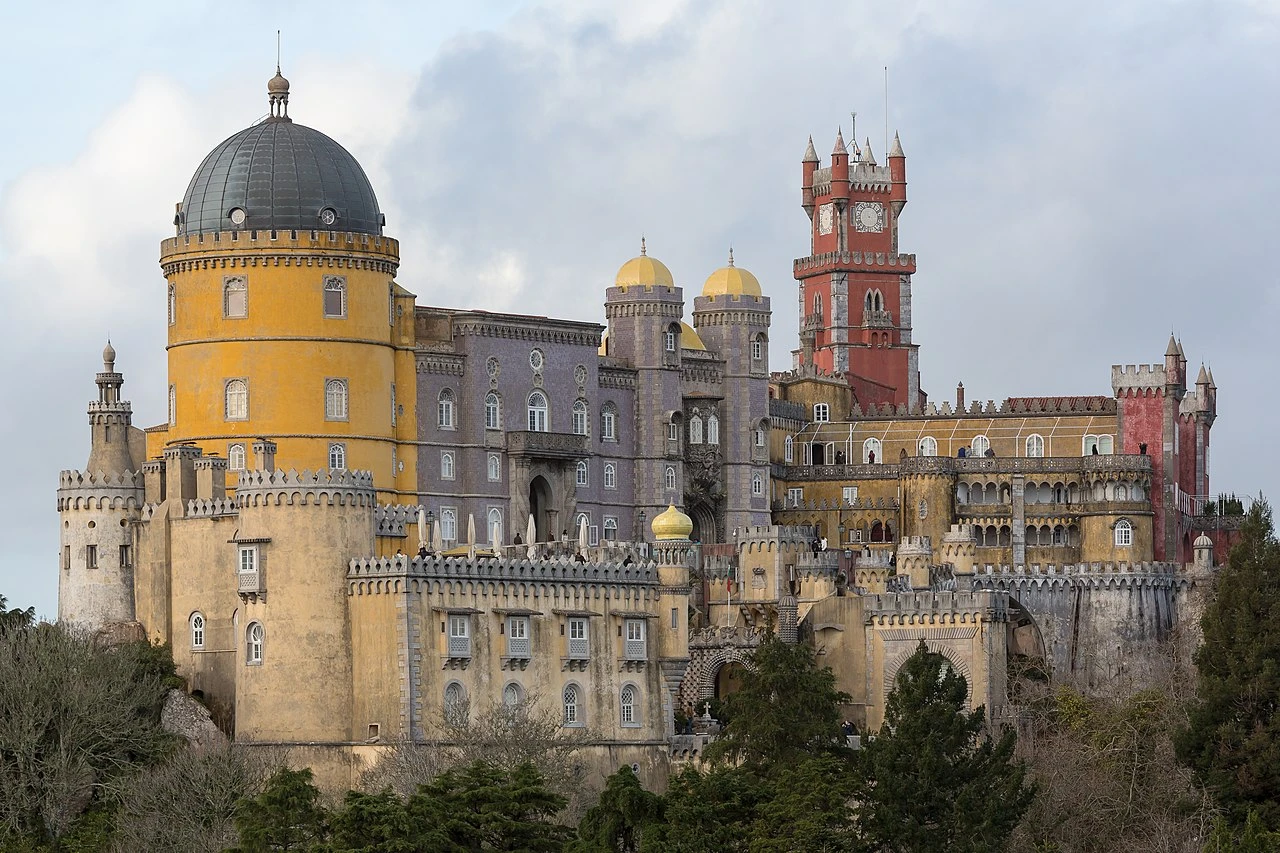
Palácio Nacional da Pena
Content & sources
CEphoto, Uwe Aranas · CC BY-SA 3.0
Sintra (Santa Maria e São Miguel, São Martinho e São Pedro de Penaferrim)
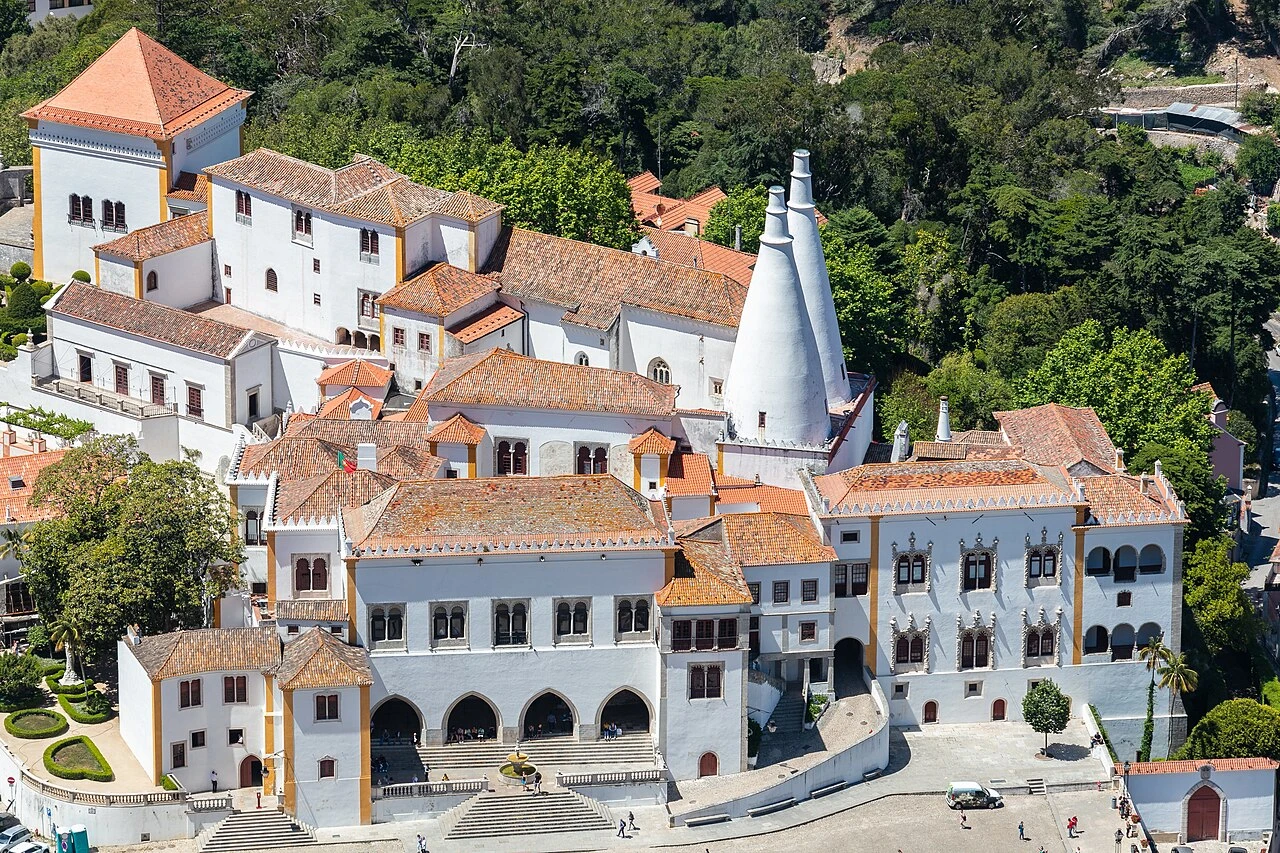
Palácio Nacional de Sintra
Content & sources
Diego Delso · CC BY-SA 4.0
Sintra (Santa Maria e São Miguel, São Martinho e São Pedro de Penaferrim)
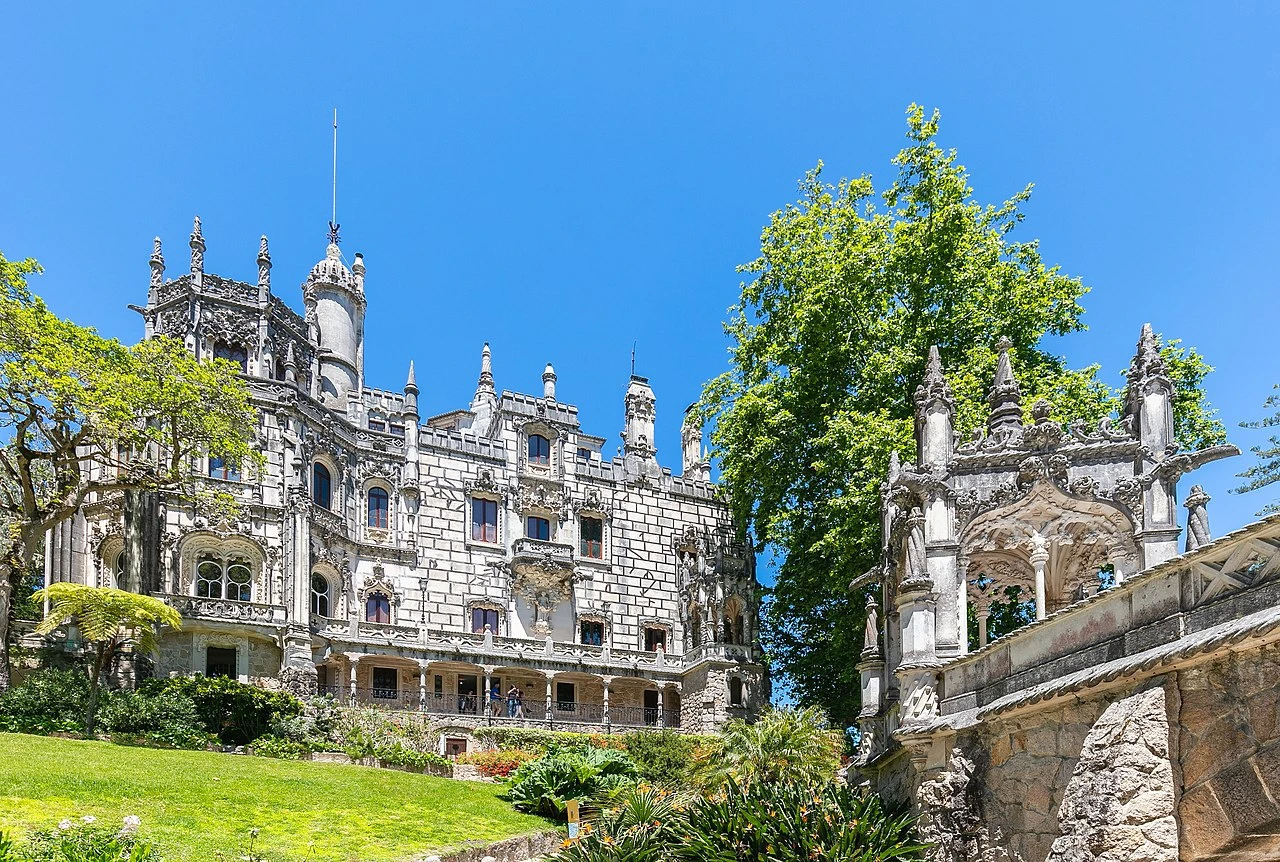
Quinta da Regaleira
Content & sources
Diego Delso · CC BY-SA 4.0