Languages
15Quinta da Regaleira Audio Guide
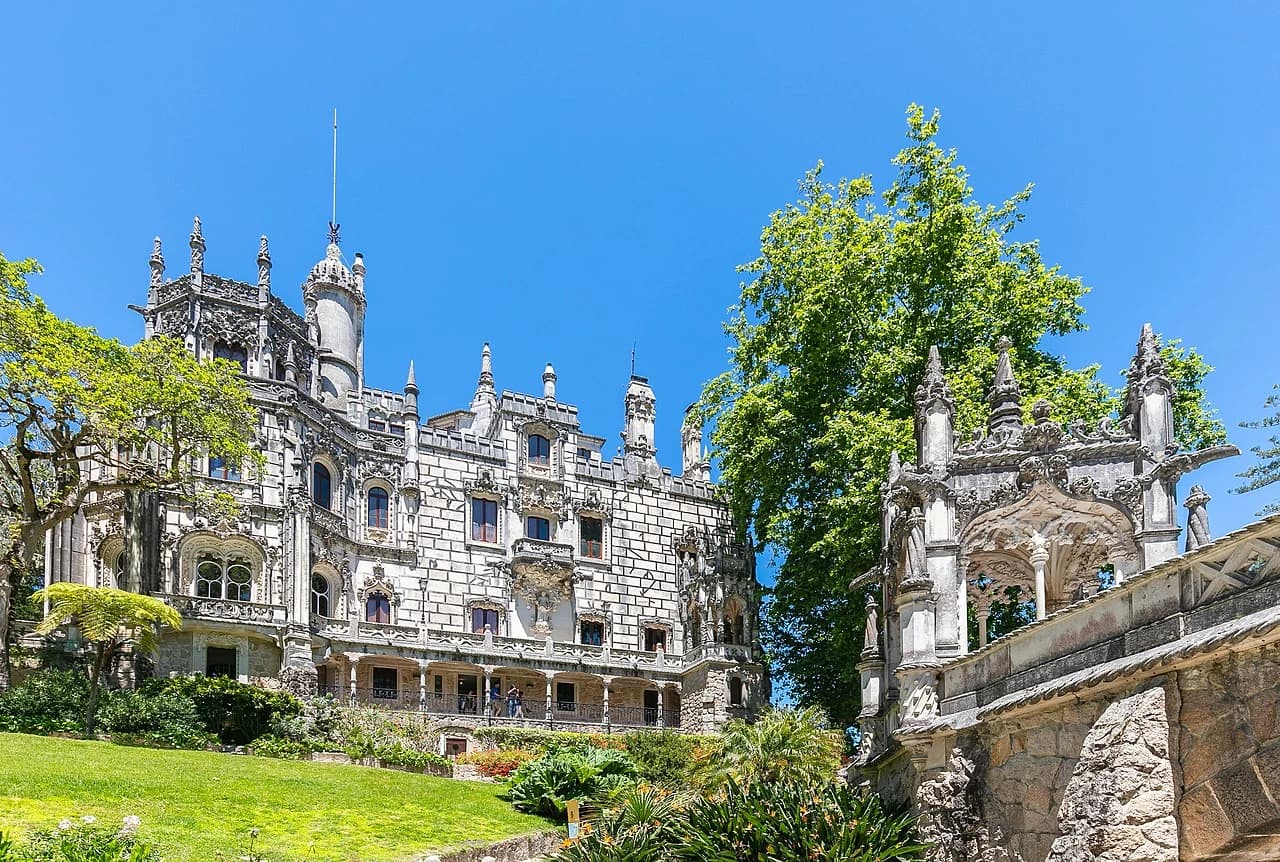
Quinta da Regaleira is a landmark in Sintra (Santa Maria e São Miguel, São Martinho e São Pedro de Penaferrim), Portugal. Explore it with Stanza's GPS-triggered offline audio guide — available in 15 languages.
Quick Facts
16
Stops
15
Languages
100%
Offline
📍 Sintra (Santa Maria e São Miguel, São Martinho e São Pedro de Penaferrim), Portugal · 38.7964°N, -9.3960°E
About Quinta da Regaleira
Quinta da Regaleira is a cultural heritage estate near Sintra, Portugal, featuring a romantic palace, chapel, and a luxurious park. It is celebrated for its mystical gardens, grottos, and rich symbolic architecture, making it a prominent tourist attraction.
Quinta da Regaleira is also known as The Palace of Monteiro the Millionaire, Palácio do monteiro dos milhões, Palacio da Regaleira, Palácio da Regaleira.
This self-guided audio tour features 16 narrated stops organized across 6 sections, including The Regaleira Palace Facade, The Hunting Room, The Chapel of the Holy Trinity, The Promenade of the Gods, The Portal of the Guardians, The Labyrinth and Waterfall Lake. As a palace, Quinta da Regaleira offers a unique cultural experience in the heart of Sintra (Santa Maria e São Miguel, São Martinho e São Pedro de Penaferrim), Portugal.
The Stanza audio guide is available in 15 languages and works entirely offline — download the complete tour including audio narration, maps, and images before your visit. As you walk through Quinta da Regaleira, GPS-triggered narration plays automatically at each point of interest.
Last updated:
What you will hear
The Regaleira Palace Facade
Exploring the exterior of the main residence, designed by Luigi Manini to resemble a stage set of Portuguese history.
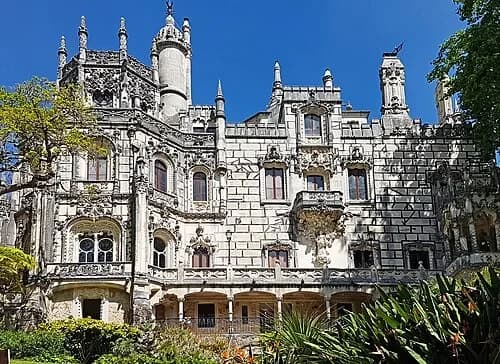
The Regaleira Palace
The Regaleira Palace is a striking example of the Neomanueline style, a 19th-century architectural movement that revived the flamboyant Gothic aesthetics popular during the reign of King Manuel I. This style is deeply tied to Portugal’s Golden Age, when explorers navigated uncharted seas. If you look closely at the limestone facade, you can see these maritime influences etched into the stone: intricate carvings of ropes, anchors, coral, and shells adorn the windows and balconies. The building consists of five distinct levels, including three upper floors, a ground floor, and a deep basement, all of which served as the grand focal point for Carvalho Monteiro’s vision. Unlike traditional palaces meant for pure residential comfort, this structure was designed to be a symbolic vessel. The limestone, sourced locally, has weathered over time, blending the building into the misty atmosphere of the Sintra hills. As the centerpiece of the four-hectare estate, the palace acts as an anchor for the surrounding gardens, housing rooms filled with symbolic art that reflect the owner’s obsession with occultism, alchemy, and the profound legacy of the Portuguese empire.
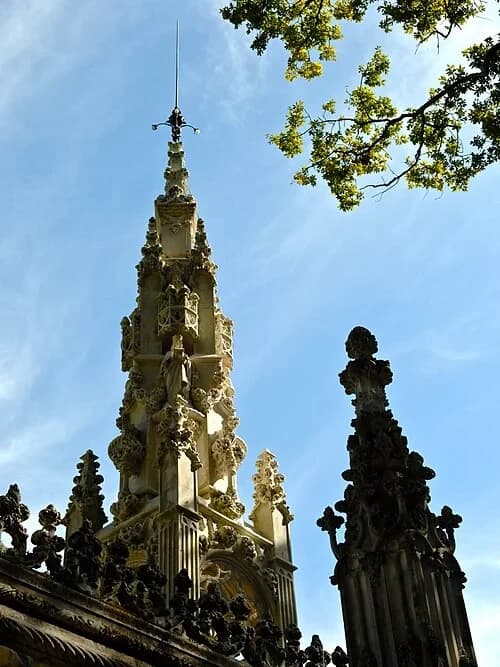
The Octagonal Tower
Construction of the palace, including this octagonal tower, was completed by 1910, just as the Portuguese monarchy was coming to an end. Looking up, you can see slender, ornate pinnacles and a sharp lightning rod that punctuates the skyline. The level of detail here is extraordinary, a result of intense manual craftsmanship by skilled stonemasons. Every curve and point in the limestone was carefully carved to evoke the grandeur of Portugal’s imperial past. However, these decorations are more than just aesthetic flourishes. Luigi Manini and Carvalho Monteiro integrated esoteric symbols within the geometric patterns of the stonework, hiding meanings in plain sight. These symbols often referenced Templar traditions or alchemical concepts, rewarding those who looked closely. The tower's height and verticality draw the eye upward, acting as a beacon within the complex landscape of the Quinta. The delicate, lace-like quality of the stone transitions from the solid base of the palace to the airy lightness of the pinnacles, creating a visual bridge between the earth and the heavens. It stands as a silent witness to the era of Romanticism, where every architectural detail was intended to provoke thought.
The Hunting Room
Entering the palace to see the most spectacular interior space, filled with hunting motifs and alchemical symbolism.
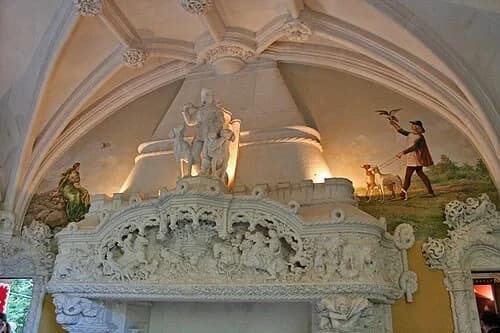
The Hunting Room
The Hunting Room served as the palace’s primary dining hall, a space designed for both nourishment and reflection. Its most prominent feature is the spectacular white fireplace, which is adorned with elaborate carvings. While the name of the room comes from the frescoes depicting scenes of the hunt, the space is also filled with alchemical and occult symbolism. Carvalho Monteiro was deeply fascinated by the hidden sciences, and he used the decor of his home to express these interests. Look for subtle details in the carvings that suggest transformation and spiritual questing. The vaulted ceiling adds a sense of medieval gravitas to the room, making it feel more like a chamber in a castle than a modern dining area. This room functions as a crucial point of transition; while the garden outside is wild and symbolic, the interior of the Hunting Room is refined and intellectual. The white stone of the fireplace contrasts with the rich colors of the paintings, focusing the eye on the central hearth. Here, the raw spirit of the forest, represented by the hunt, is brought indoors and tamed by the rituals of civilization.
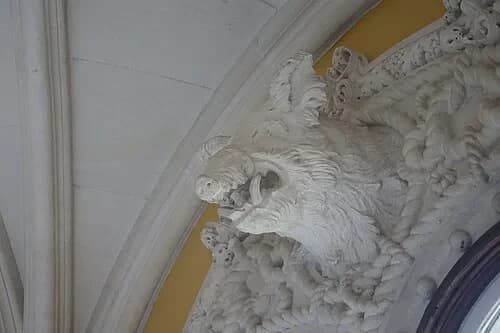
The Boar Ornament
Integrated into the limestone molding of the palace, this carving of a wild boar is a fine example of the attention to detail that Luigi Manini applied to every corner of the estate. In European folklore and heraldry, the boar has long been a powerful symbol of strength, courage, and the untamed wilderness. By placing this figure on the palace walls, Manini sought to bring the essence of the surrounding Sintra forest into the architecture itself. The carving is meticulously rendered, showing the textures of the animal’s coarse hair and the curve of its tusks. It serves as a reminder of the 'wild' side of the property, contrasting with the more refined Greco-Roman influences found elsewhere in the gardens. The limestone used for the carving is the same as the rest of the facade, making the boar appear as if it is emerging directly from the structure. This small ornament is a microcosm of the entire estate's design philosophy: a marriage between the natural world and the imaginative constructs of man. It highlights the role of the Sintra mountains as a source of inspiration, where the forest is not just a backdrop, but an active participant.
The Chapel of the Holy Trinity
A space dense with Templar and Masonic iconography, reflecting Monteiro's spiritual interests.
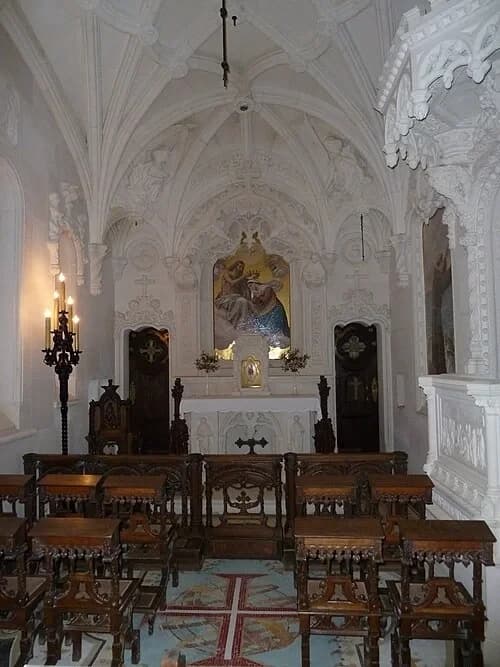
The Chapel Floor
Stepping inside the chapel, the atmosphere shifts to one of quiet intimacy and reflection. The floor is covered in a striking mosaic that prominently features the Cross of the Order of Christ. This symbol is a direct reference to the Knights Templar, who played a crucial role in Portuguese history and whose legacy Monteiro deeply admired. Looking around the small, ornate space, you may also find pentagrams and other esoteric icons woven into the frescoes and stone carvings. These symbols suggest that the chapel was used for more than just traditional prayer; it was a site for contemplating the interconnectedness of different spiritual traditions. The way light enters the chapel is carefully managed, filtering through stained glass and small openings to highlight specific features of the interior. The white stonework and vaulted ceiling create a sense of verticality, even in such a confined space. This floor mosaic serves as a spiritual anchor, connecting the visitor to the historical and mystical roots that Carvalho Monteiro sought to preserve. It is a place of deep stillness, where the complex iconography of the estate’s creator is most concentrated, inviting a pause.
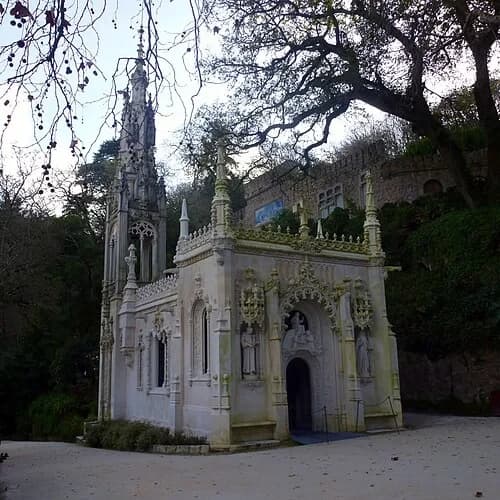
The Chapel of the Holy Trinity
The Chapel of the Holy Trinity stands as one of the most symbolically dense structures on the estate. Although it initially appears as a conventional Neomanueline Catholic chapel, its exterior is saturated with icons from the Knights Templar and Freemasonry. Flanking the entrance, you can see the statues of Saint Anthony and Saint Theresa, figures of deep religious significance in Portugal. Above them rises a dramatic spire that rivals the height of the palace towers, emphasizing the chapel's importance in the spiritual layout of the grounds. The limestone facade continues the maritime and organic themes seen on the palace, with carved vines and ropes entwined in the architecture. This structure was intended to serve as a private sanctuary for Carvalho Monteiro, a place where his public faith and private esoteric interests could coexist. The chapel's position in the garden is deliberate, acting as a gateway to the more mystical features that lie deeper in the woods. Its ornate design and sharp vertical lines draw the eye toward the sky, but the real secrets are found in the symbols carved around the doorway, which speak to those familiar with secret societies.
The Promenade of the Gods
A terrace lined with classical statues that serves as the transition from the physical world to the symbolic garden.
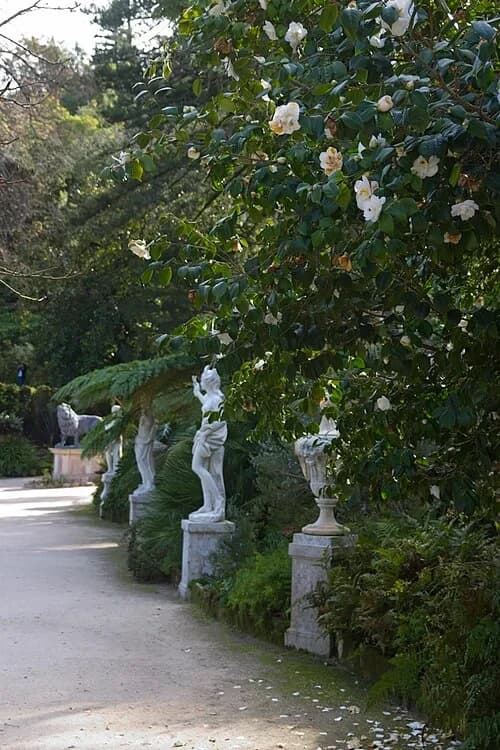
The Promenade of the Gods
The Promenade of the Gods is a wide, limestone terrace that marks a clear transition in the garden's layout. It is lined with nine statues of Greco-Roman deities, including Hermes, Apollo, Artemis, and Dionysus. These figures are arranged in a specific sequence from east to west, mirroring the path of the sun across the sky. In the symbolic narrative of Quinta da Regaleira, this area represents the 'physical world' or the classical foundation of human knowledge. Before the visitor can descend into the more mystical and underground parts of the estate, they must first pass through this realm of reason and classical beauty. The statues are set against the lush backdrop of the Sintra hills, creating a striking contrast between the stone figures and the deep greens of the forest. Hermes, the messenger god often associated with alchemy and hidden wisdom, occupies a significant position here, hinting at the deeper mysteries that lie ahead. The open, airy nature of the promenade allows for panoramic views, grounding the visitor in the tangible beauty of the landscape. It is a space of order and light, serving as the starting point for a journey that will soon lead into the shadows.
The Portal of the Guardians
A dramatic architectural structure that masks one of the entrances to the underground tunnel system.
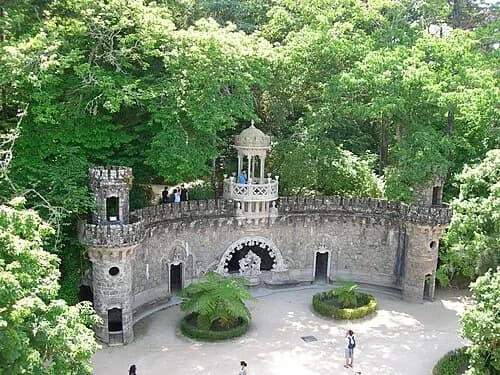
The Portal of the Guardians
The Portal of the Guardians is an imposing semi-circular structure that features two side towers and a central, open-air pavilion. While it appears to be a decorative ruin from a bygone era, it serves a very practical and symbolic purpose: it masks one of the main entrances to the estate's vast network of underground tunnels. The design is intentionally rugged, with rough-hewn stone and mossy accents that reinforce the idea of a journey through time and a descent into the 'underworld.' This portal acts as a theatrical transition point, moving the traveler from the bright, open terraces of the upper garden into the dark, damp passages below. The architecture here is less refined than the palace, reflecting a shift toward the primal and the mysterious. The central pavilion provides a moment of shelter before one commits to the subterranean path. By framing the entrance to the tunnels in this way, Manini created a sense of ritual and mystery, suggesting that what lies beneath is a world of secrets waiting to be uncovered. It is a physical manifestation of the boundary between the surface world and the hidden realms.
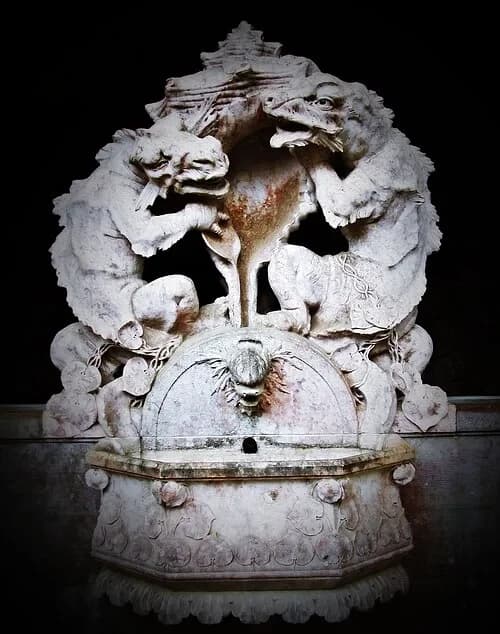
The Triton Fountain
Located at the center of the Portal of the Guardians, the Triton Fountain is a focal point of symbolic action. The sculpture features two tritons—mythical sea monsters—holding a large conch shell between them. Water flows from the shell into a basin, and in the context of the initiatory journey of the Quinta, this water represents a medium of purification. Before entering the dark tunnels that represent the earth's womb, the traveler would encounter this symbol of cleansing. The stone is heavily weathered and often damp, contributing to the mysterious and slightly eerie atmosphere of the portal. The tritons themselves link back to the maritime themes found on the palace facade, connecting the deep sea with the deep earth. The texture of the carving is rough and organic, looking more like something pulled from the ocean floor than a piece of classical sculpture. This fountain serves as a sensory reminder of the elements at play in Monteiro's vision—earth, water, and spirit. The sound of the falling water echoes within the stone semicircle, heightening the anticipation of the underground path that begins just a few steps away in the shadows.
The Labyrinth and Waterfall Lake
The final stage of the journey, where visitors navigate dark tunnels to emerge across water, symbolizing rebirth.
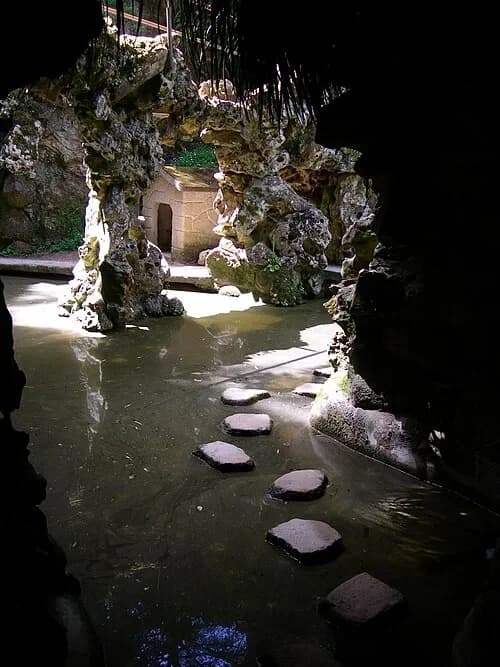
The Waterfall Lake
Emerging from the cool, damp darkness of the labyrinthine tunnels leads directly to the edge of this secluded lake. The transition is striking, as the silence of the underground passages is replaced by the gentle, constant sound of water falling over moss-covered rock formations. This area represents the culmination of the initiatory journey. Having descended the well and navigated the tunnels, crossing this water symbolizes a purification and rebirth into the world above. A series of uneven stone blocks forms a path across the surface of the dark water. Light reflects off the pond's surface, illuminating the way forward through the grotto. According to local tradition and the esoteric rules of the estate, this crossing is meant to be completed starting with the right foot first. These stones are purposefully spaced to require focus and balance, ensuring that the traveler is fully present in this moment of return. The surrounding cave features jagged stone pillars and mossy walls that frame the exit. Through the opening of the cavern, the sunlit garden and a small, square stone building are visible in the distance. Small plants grow directly out of the cracks in the wet rock, sustained by the constant moisture of the waterfall.
Want to hear the rest?
Download the Stanza app to unlock all 16 stops and full GPS-guided navigation.
Frequently Asked Questions
How long does the Quinta da Regaleira audio tour take?
The Quinta da Regaleira audio guide includes 16 narrated stops. Most visitors spend 45 minutes to 1.5 hours exploring the complete tour, though you can listen at your own pace and skip or revisit any stop.
Is the Quinta da Regaleira audio guide available in my language?
Stanza supports 15 languages: English, Spanish, French, German, Italian, Portuguese, Russian, Japanese, Chinese, Korean, Arabic, Hindi, Polish, Dutch, Hebrew. Check the guide in the app to confirm the languages currently available for this tour.
Can I use the audio guide offline at Quinta da Regaleira?
Yes! Download the complete Quinta da Regaleira tour — including all audio, maps, and images — before your visit. The Stanza app works completely offline, so you don't need WiFi or mobile data at the venue.
How much does the Quinta da Regaleira audio guide cost?
The Stanza app is free to download. The current listed price for the Quinta da Regaleira audio guide is $1.99; app-store region and currency may affect the final price.
How do I use the Stanza audio guide at Quinta da Regaleira?
Download the free Stanza app, search for "Quinta da Regaleira", and download the tour. When you arrive at the venue, the app uses GPS to detect your location and automatically plays the relevant narration as you move between points of interest — completely hands-free.
What makes the Stanza audio guide different from other Quinta da Regaleira tours?
Stanza offers GPS-triggered narration that plays automatically as you walk through Quinta da Regaleira — no need to manually select stops. The tour is available in 15 languages, works fully offline, and includes 16 expertly narrated stops with images and historical context.
What other audio guides are available near Quinta da Regaleira?
Stanza offers multiple audio guides in Sintra (Santa Maria e São Miguel, São Martinho e São Pedro de Penaferrim), Portugal and nearby areas. After downloading the app, browse the map to discover all available tours near Quinta da Regaleira. Each guide can be downloaded for offline use.
Nearby Audio Guides
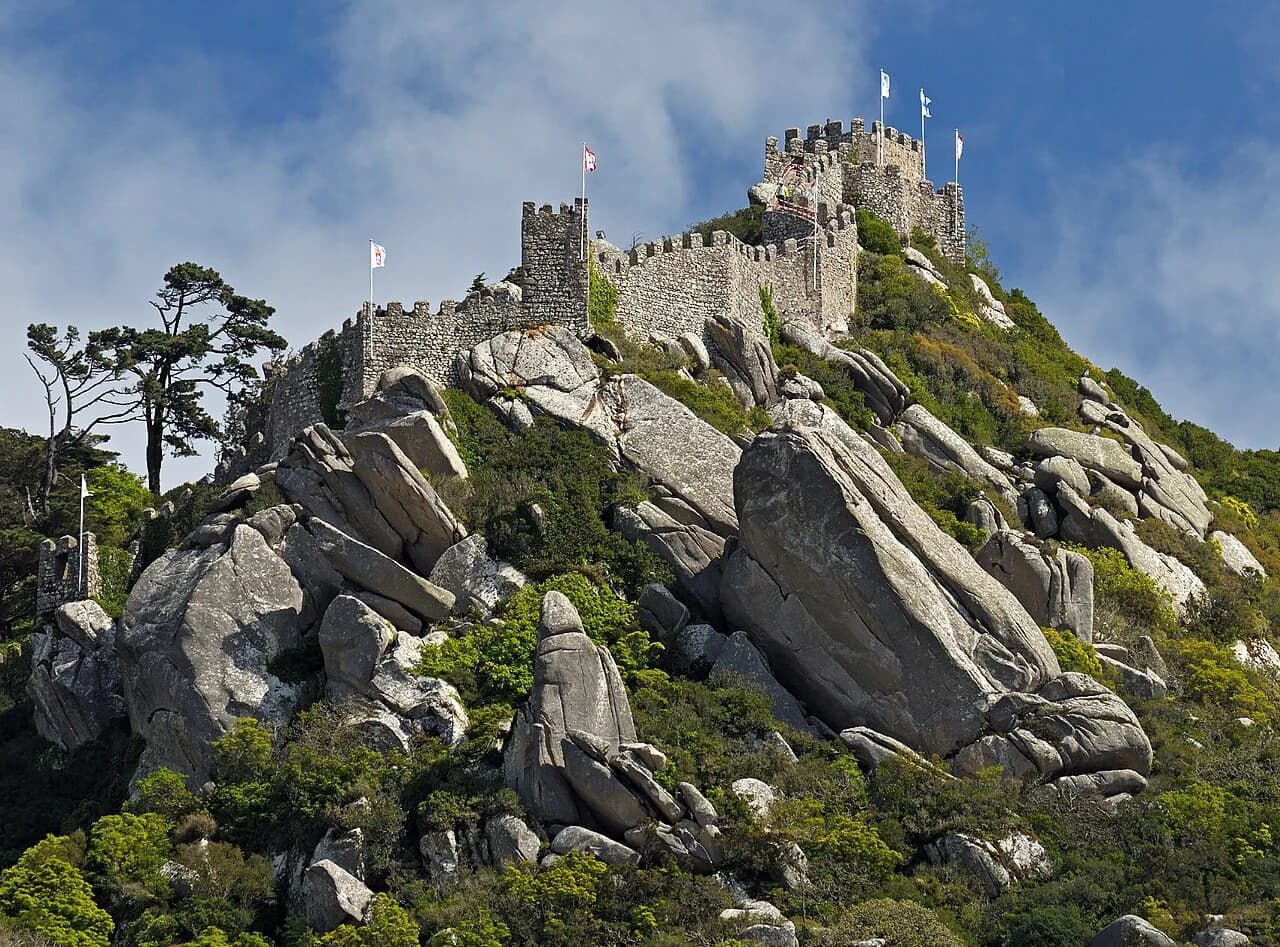
Castelo dos Mouros
Sintra (Santa Maria e São Miguel, São Martinho e São Pedro de Penaferrim), Portugal
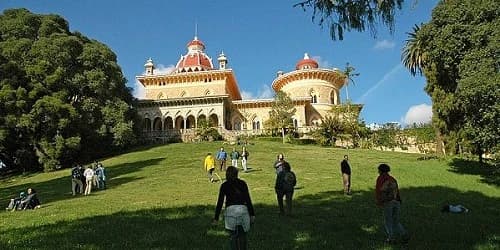
Palácio de Monserrate
Sintra (Santa Maria e São Miguel, São Martinho e São Pedro de Penaferrim), Portugal
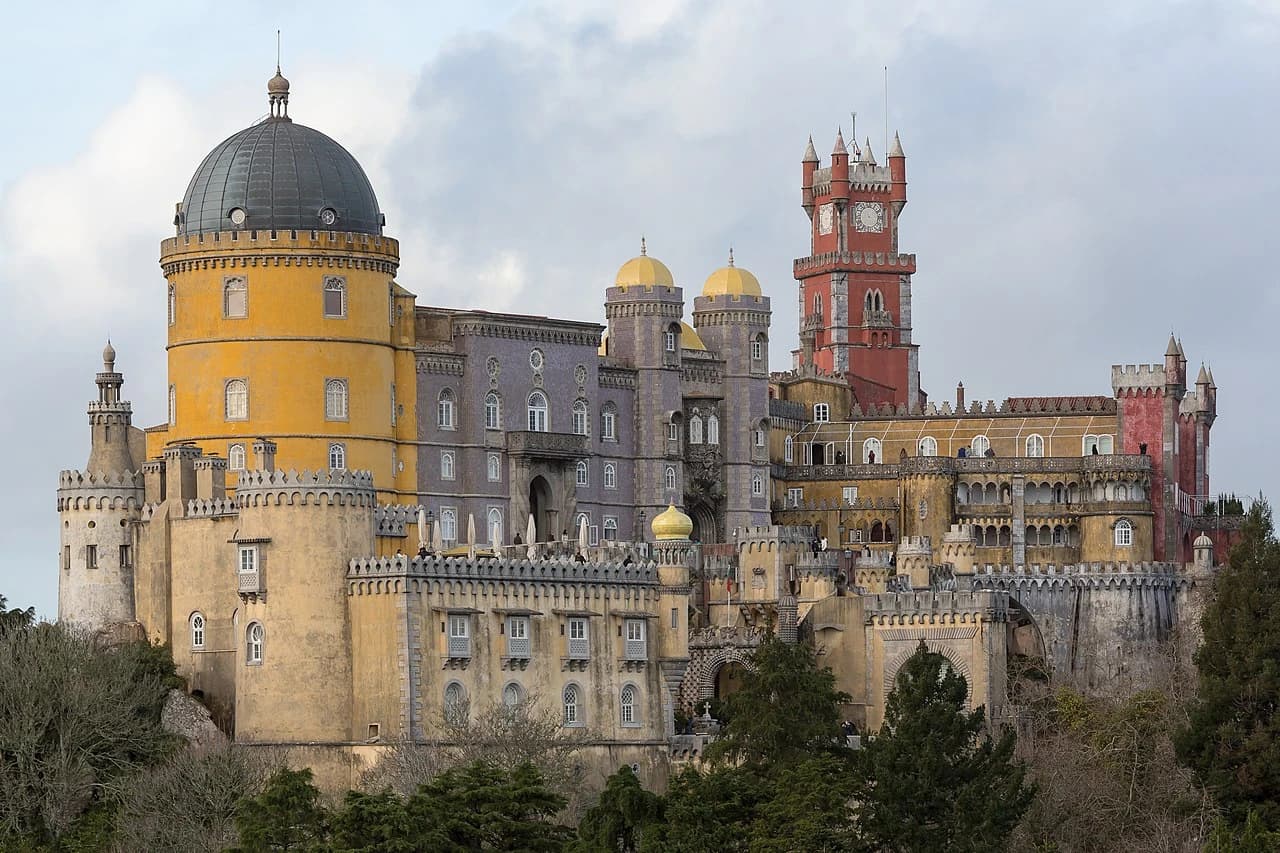
Palácio Nacional da Pena
Sintra (Santa Maria e São Miguel, São Martinho e São Pedro de Penaferrim), Portugal
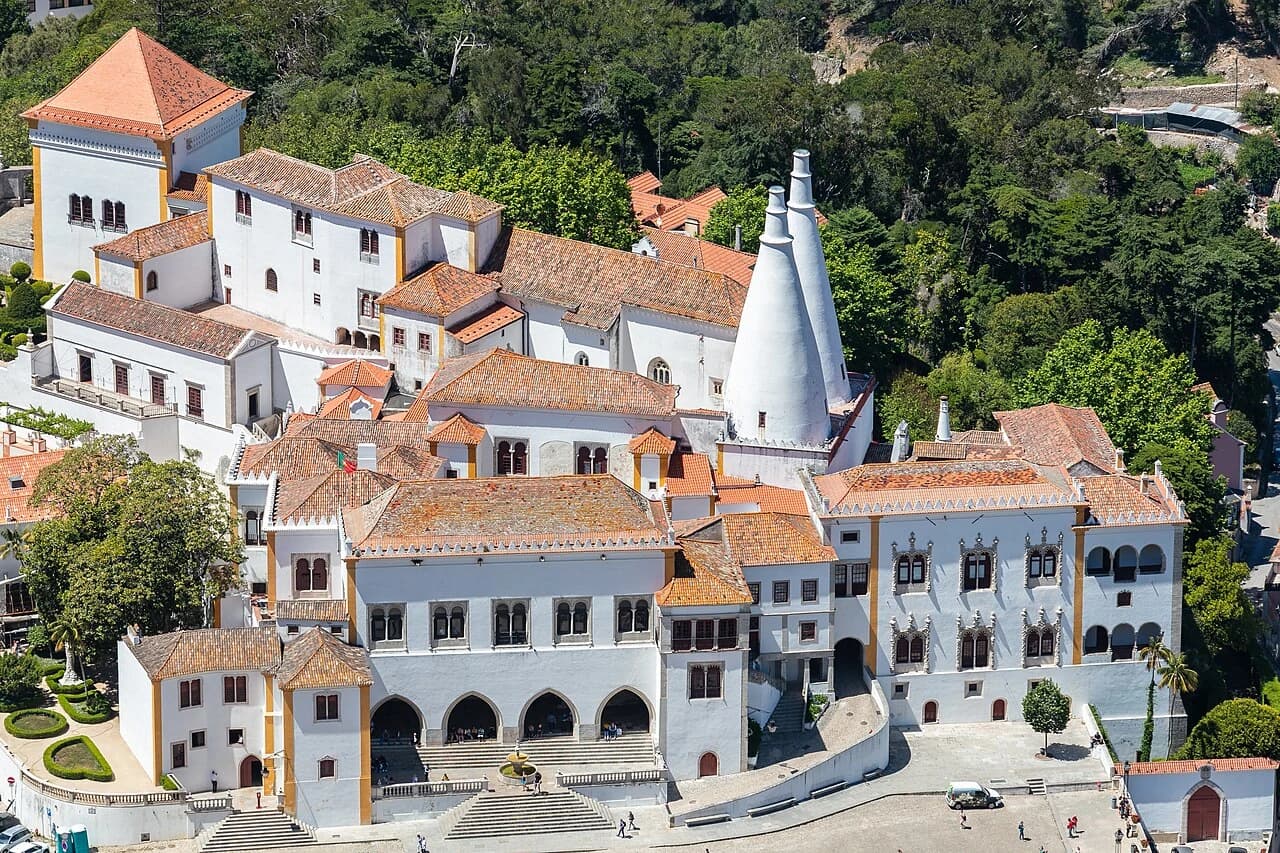
Palácio Nacional de Sintra
Sintra (Santa Maria e São Miguel, São Martinho e São Pedro de Penaferrim), Portugal
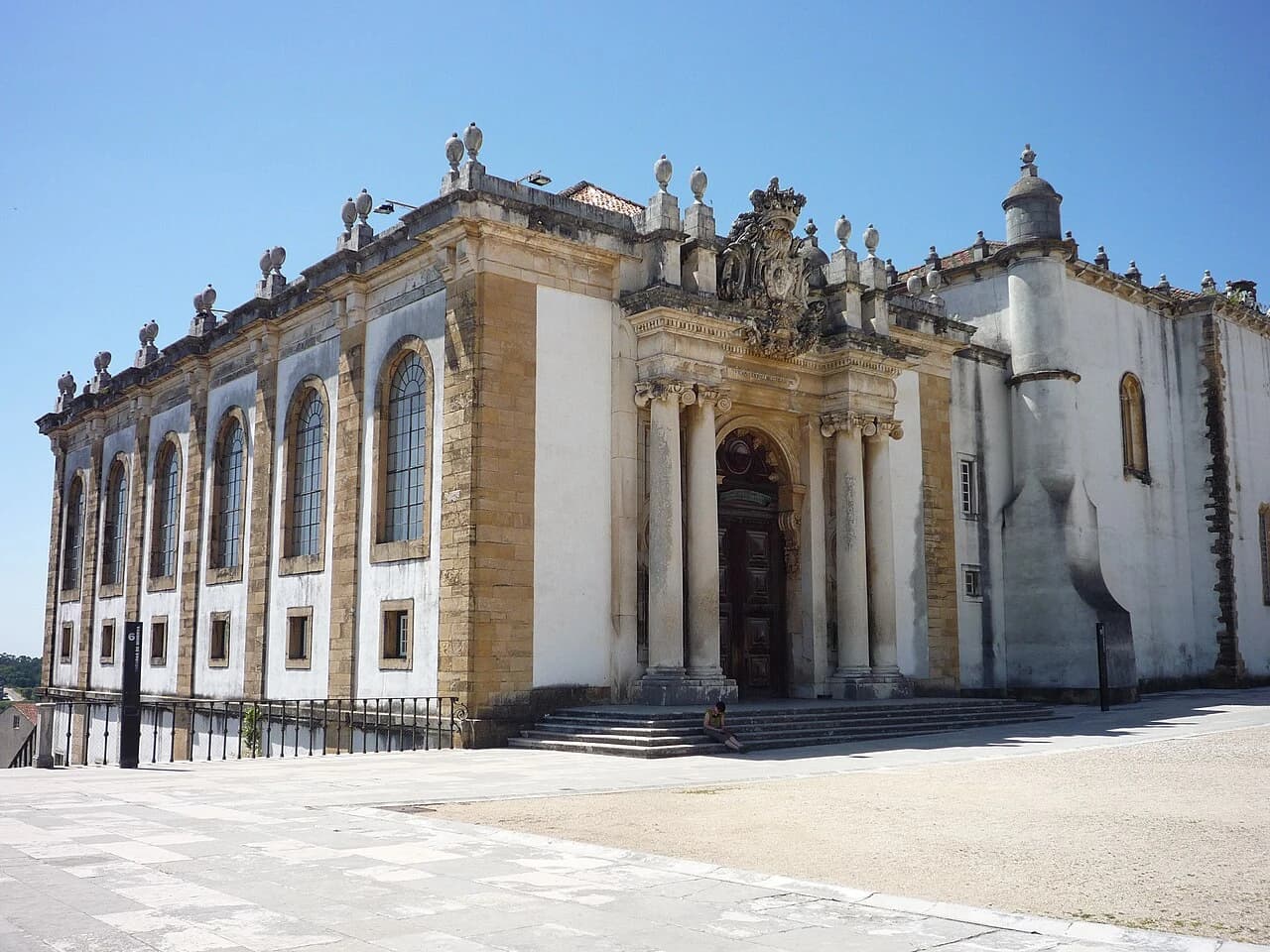
Biblioteca Joanina
Coimbra, Portugal
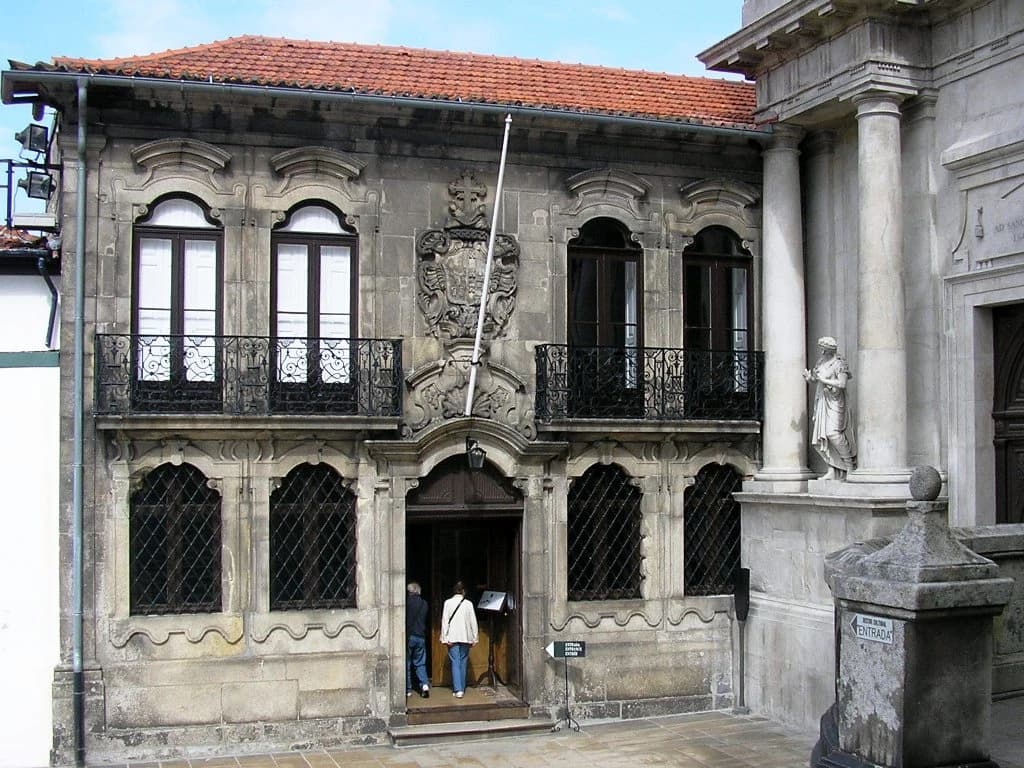
Casa do Despacho da Venerável Ordem Terceira de São Francisco
Porto, Portugal