Languages
15Convento de Cristo Audio Guide
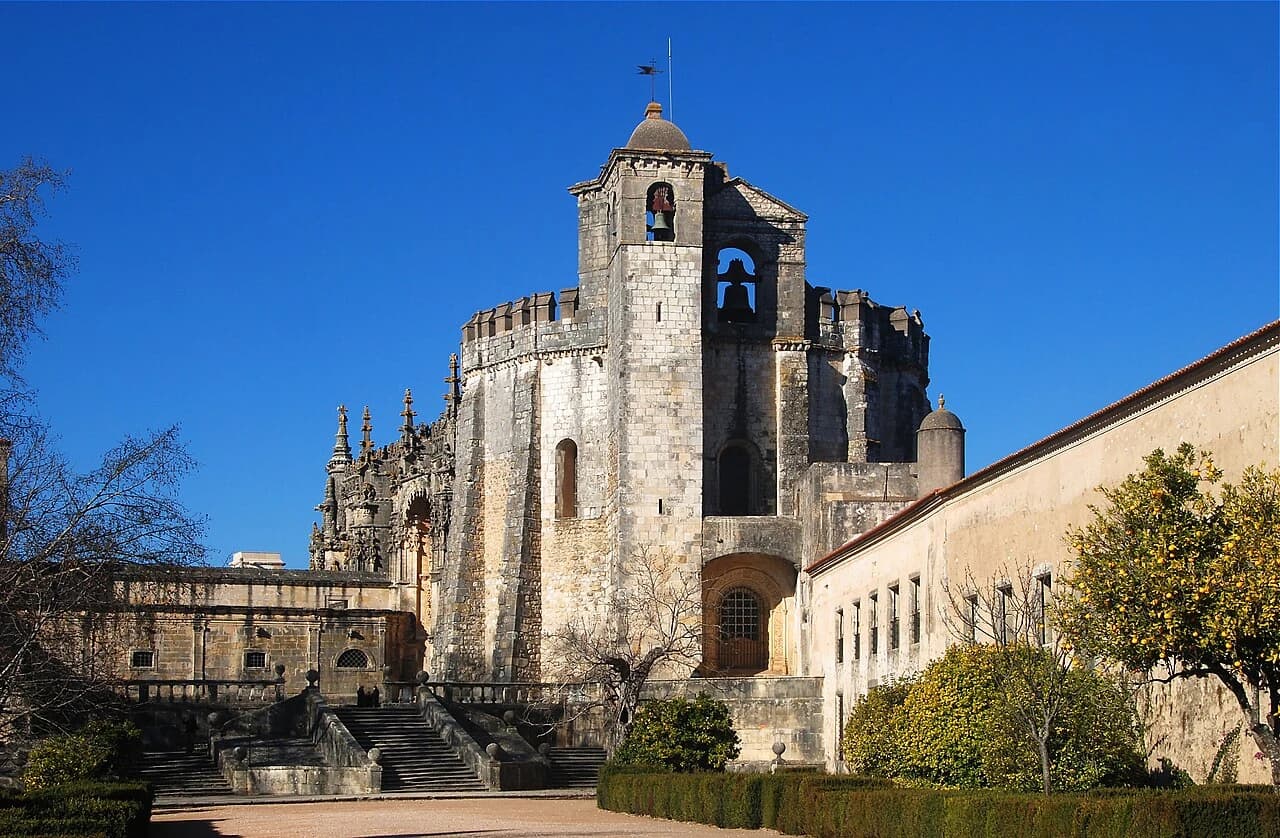
Convento de Cristo is a landmark in Tomar, Portugal. Explore it with Stanza's GPS-triggered offline audio guide — available in 15 languages.
Quick Facts
34
Stops
15
Languages
100%
Offline
📍 Tomar, Portugal · 39.6036°N, -8.4193°E
About Convento de Cristo
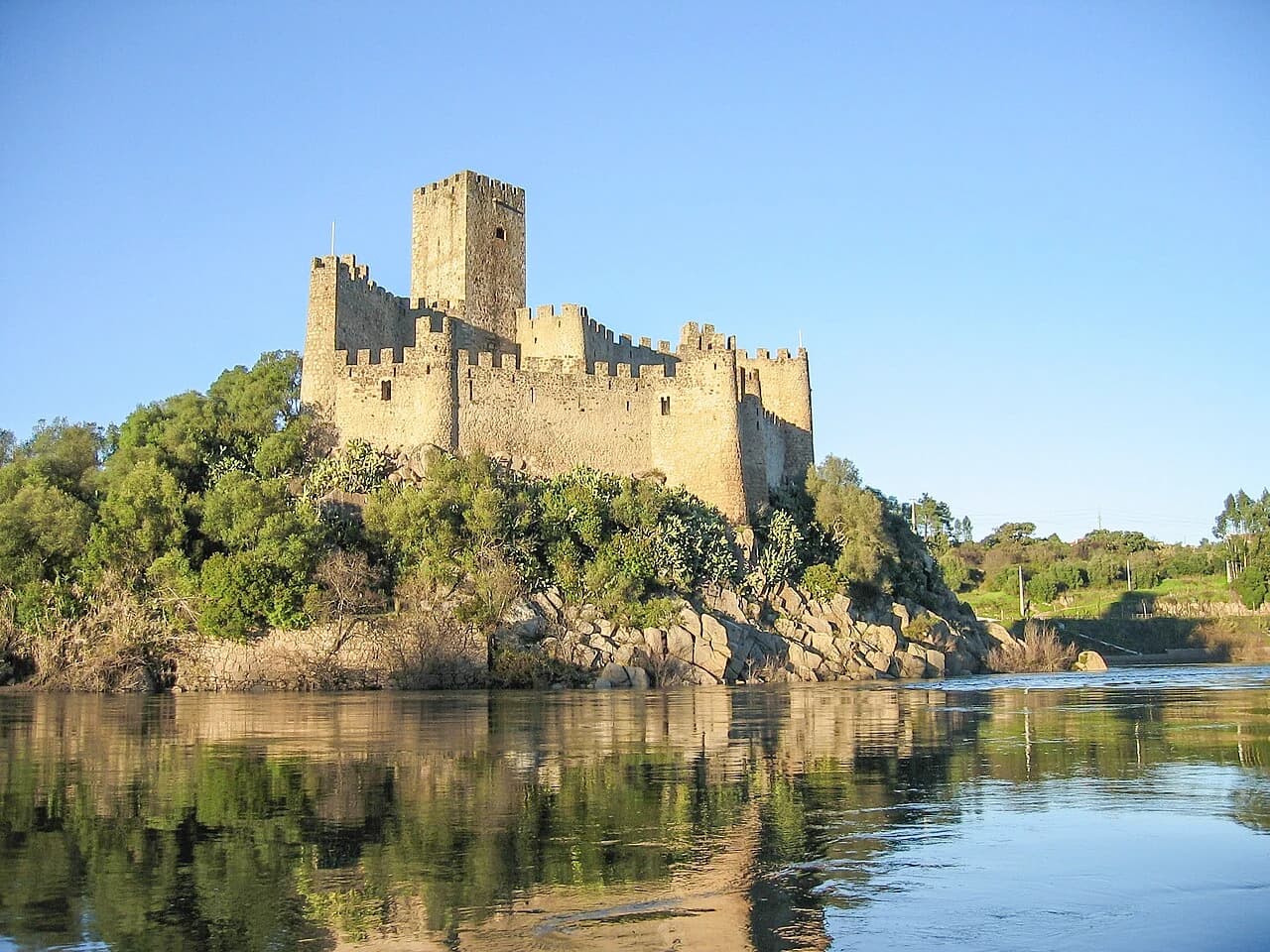
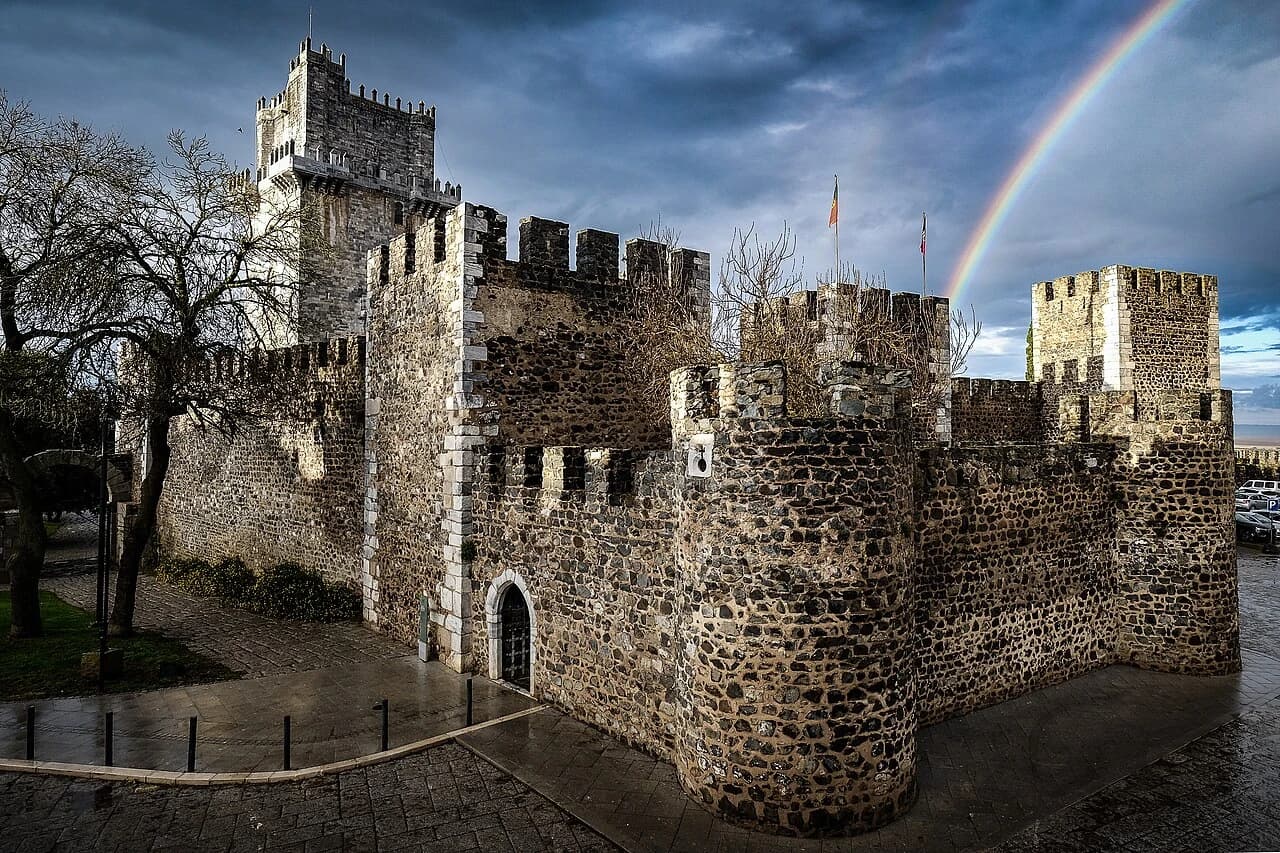
The Convent of Christ is a historic Roman Catholic convent and former Knights Templar stronghold founded in the 12th century. It is a UNESCO World Heritage site renowned for its blend of Romanesque, Gothic, Manueline, and Renaissance architecture.
Convento de Cristo is also known as Mosteiro de Cristo, Convento de Cristo, Convento de cristo em tomar, Convento de Cisto, and 3 other names in various languages.
This self-guided audio tour features 34 narrated stops organized across 8 sections. As a monastery, Convento de Cristo offers a unique cultural experience in the heart of Tomar, Portugal.
The Stanza audio guide is available in 15 languages and works entirely offline — download the complete tour including audio narration, maps, and images before your visit. As you walk through Convento de Cristo, GPS-triggered narration plays automatically at each point of interest.
Last updated:
What you will hear
The Templar Charola
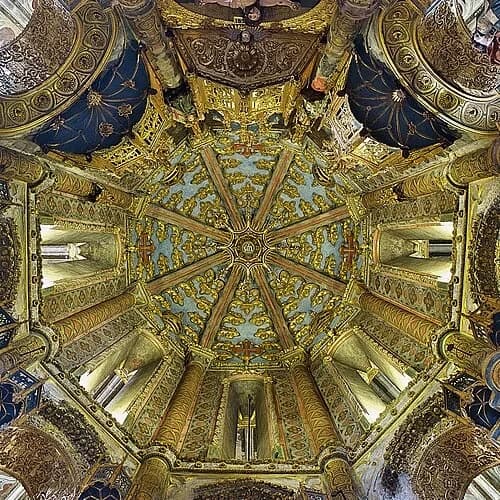
Step inside the heart of the complex, the round church modeled after the Holy Sepulchre. Use POI image and a wide interior view.
The Golden Vault
Cast your gaze directly upward at the ceiling of the Charola. The intricate vaulting is a masterpiece of late Gothic and early Renaissance engineering, but it is the surface decoration that truly commands attention. The ceiling is awash in gold leaf and vibrant pigments, a dramatic departure from the somber stone of the building's 12th-century foundations. This extravagant redecoration was commissioned by King Manuel I during the early 1500s, a period when the Order of Christ—the successors to the Templars in Portugal—was at its peak. This wealth was not accidental. As the governor of the Order of Christ, King Manuel directed the immense riches flowing into Portugal from the Age of Discovery toward religious monuments like this one. The gold you see reflected on these ribs and bosses serves as a visual testament to the maritime expeditions that the Order helped finance. Every gilded detail and colorful shield was intended to emphasize the divine favor bestowed upon the kingdom and the Order. The vaulting acts as a stone sky, bridging the gap between the earthly power of the Portuguese crown and the spiritual mission of the monks who lived and prayed beneath it.
Painting: Jesus and the Centurion
Individual stop for the verified painting within the Charola's ambulatory.
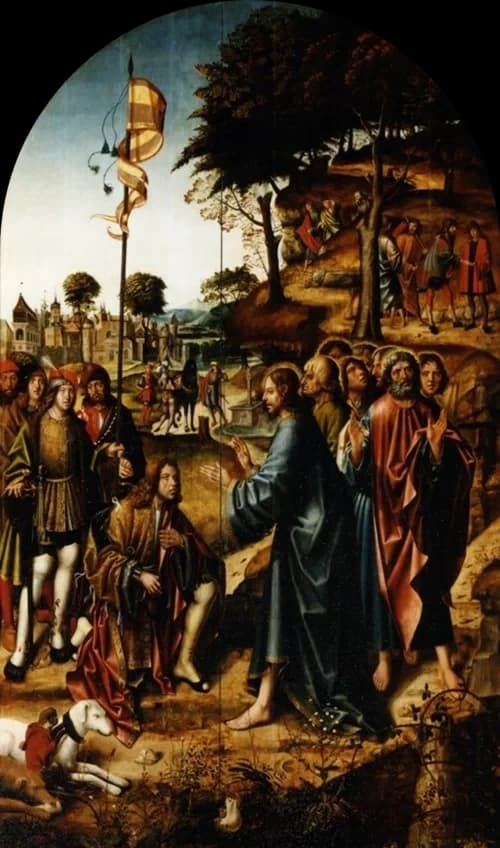
Jesus and the Centurion
Jorge Afonso · 1510
The story depicted here is that of the Roman centurion who approached Jesus, demonstrating profound faith by stating that Christ only needed to speak the word for his servant to be healed. A key element to observe is the deliberate contrast in attire between the figures. The centurion is not dressed in the historical gear of a 1st-century Roman soldier; instead, he wears the elaborate, polished steel armor of a high-ranking 16th-century military officer. His attendants are similarly dressed in the contemporary fashion of the Portuguese Renaissance. In contrast, Jesus and his disciples are shown in simple, timeless robes. This stylistic choice, common in the paintings commissioned by King Manuel I, serves a narrative purpose. It positions the disciples as eternal spiritual figures while the centurion represents the world of power, politics, and military duty. For the knights of the Order of Christ, who were themselves professional soldiers, this painting would have been deeply relatable. It showed that even a man of war, dressed in the armor they wore themselves, could possess the highest form of spiritual humility. The centurion’s kneeling posture before the simply dressed Christ reinforces the hierarchy of spiritual authority over temporal power.
Painting: Ascension of Christ
Individual stop for the verified painting within the Charola's ambulatory.
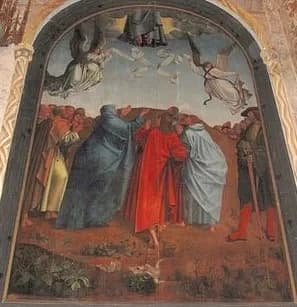
Ascension of Christ
Jorge Afonso · 1510
In this scene of the Ascension, the artist employs a curious and literal visual device: only the feet of Christ are visible at the very top of the panel as he disappears into the clouds. This 'vanishing' technique was a traditional way to represent the moment Christ left the earthly realm, leaving his disciples behind in a state of wonder and prayer. The group below is arranged in a tight, emotional circle, their upturned faces and gestures of prayer creating a powerful upward energy that echoes Christ’s ascent. It is important to remember that this painting did not hang in isolation. It was one of six panels that completely surrounded the high altar in the Charola. Together, they formed an immersive spiritual environment for the monks. As they stood in the central oratory for daily prayer, they were physically surrounded by these larger-than-life biblical narratives. The layout ensured that wherever a monk looked, he was confronted with the life, death, and triumphs of Christ. This cycle of paintings, with its vibrant colors and life-sized figures, transformed the cold stone ambulatory into a vibrant gallery of faith, designed to keep the monks' thoughts perpetually focused on the divine mysteries of their order.
The Manueline Nave
Observe the 16th-century expansion that transformed the Templar church. Focus on the complex rib vaulting.
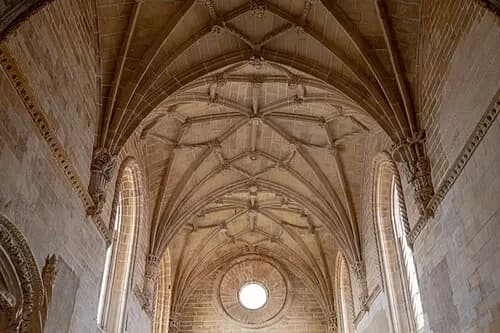
The Nave’s Stone Sky
Direct your gaze upward to the ceiling of the main nave. The rib vaulting here is a spectacular example of 16th-century engineering. When King Manuel I decided to expand the church, the architects faced a significant challenge: how to seamlessly connect the original circular Templar Charola to this new, rectangular nave. The result is the impressive space you see now, where the walls are joined by a complex web of stone ribs. These are known as 'tierceron' vaults, which feature secondary ribs that do not lead to the center but instead create the star-like geometric pattern above. Beyond their beauty, these vaults are functional, distributing the immense weight of the stone roof down through the pillars to the ground. This allowed for the inclusion of larger windows, filling the nave with light in contrast to the darker, more enclosed rotunda. The pattern created by the ribs was intended to evoke the heavens, a 'stone sky' that would inspire those praying below. The precision required to carve and fit these stones so perfectly, many meters above the floor, is a testament to the skill of the master masons who worked on this site. The ceiling stands as a permanent reminder of the ambitious spirit of the Age of Discovery, translated into stone and geometry.
The Chapter House Window
The signature element of the convent. Use detailed imagery to show the maritime motifs and the 'Old Man' figure at the base.
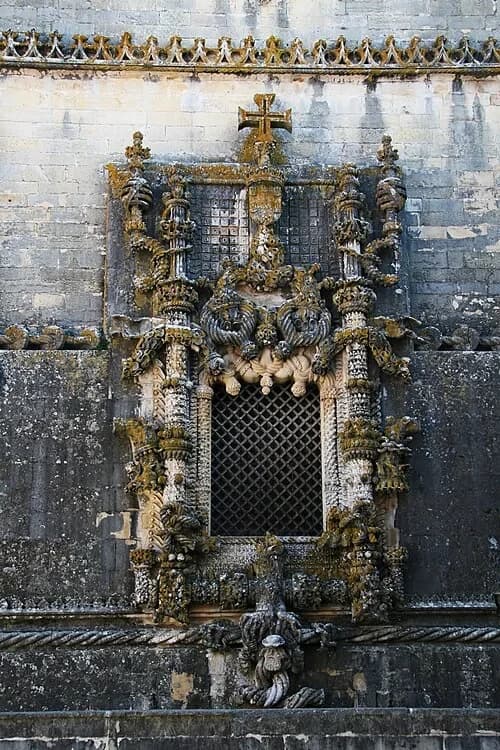
The Chapter House Window
The Chapter House Window is widely considered the ultimate expression of Manueline architecture. Every square inch of the stone is densely packed with symbolism related to the sea and the faith of the Order. Near the top, look for the Cross of Christ, the emblem that decorated the sails of Portuguese ships. Flanking the window are armillary spheres—navigational instruments used by explorers to calculate their position using the stars. You can also see the royal arms of King Manuel I, who oversaw this era of unprecedented wealth and discovery. The window effectively serves as a visual record of the 15th and 16th centuries, where maritime motifs like coral, seaweed, and hemp ropes are transformed into complex Gothic tracery. It was designed not just to illuminate a room, but to communicate the power, reach, and religious conviction of a nation that saw itself at the center of a new, global map.
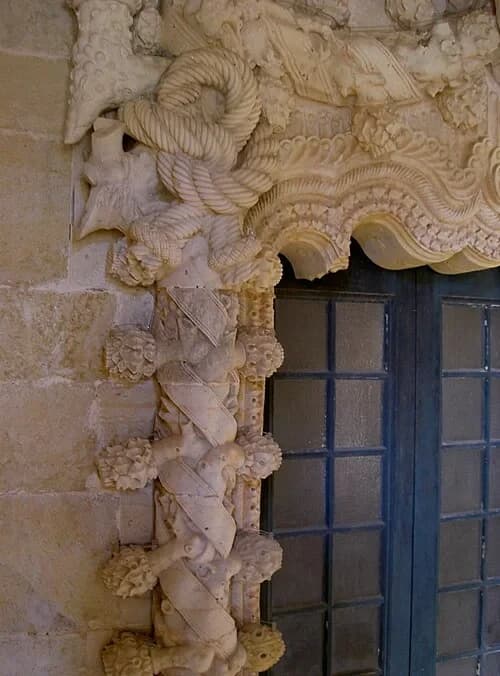
Maritime Knots and Ropes
The level of realism in these stone carvings is a hallmark of the Manueline style. Notice the detail of the 'ropes'—their texture and the way they are tied into complex maritime knots. You can even see the heavy buckles and the tension in the 'cordage' as if it were holding back the weight of a ship's sails. These aren't just decorative flourishes; they are symbols of Portugal's status as a global maritime power. During the 16th century, the Order of Christ played a pivotal role in financing and directing the maritime expeditions that charted new worlds. By immortalizing the tools of seafaring in the very fabric of the church, the builders created a permanent celebration of the Age of Discovery. Every coil and fray in the stone represents the connection between the spiritual mission of the Order and the physical reality of the vast oceans that their caravels crossed.
The Main Cloister (John III)
A masterpiece of Mannerist and Renaissance architecture. Use POI image and overview of the central fountain.
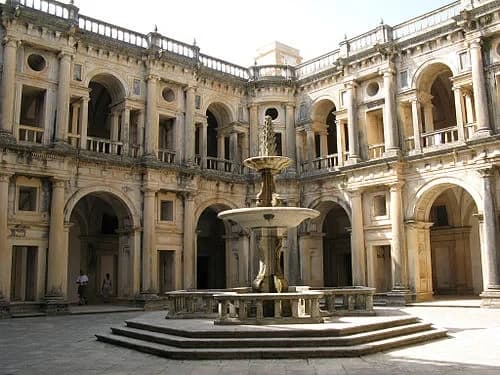
The Renaissance Cloister
The Claustro de D. João III, or the Great Cloister, represents a departure from the ornate Manueline style. Built in the mid-1500s, this space reflects the principles of Mannerism—a late Renaissance style defined by mathematical precision, harmony, and discipline. The two-story arcade is a rhythmic pattern of columns and rounded arches that creates a sense of calm and stability. This architectural shift mirrored a spiritual one: the Order of Christ was undergoing a period of strict reform, moving away from its military past toward a more meditative, monastic life. This cloister was also the setting for a pivotal moment in Portuguese history. In 1581, the Cortes of Tomar was held right here. It was during this assembly that Philip II of Spain was officially recognized as Philip I of Portugal, beginning a 60-year period of Iberian Union under the Spanish crown.
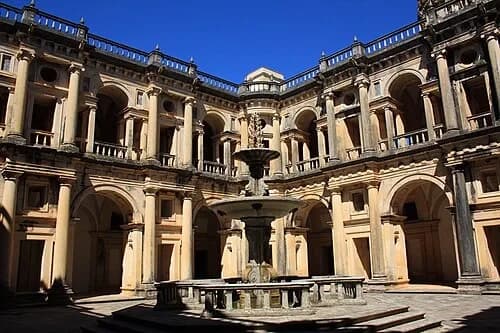
A Masterpiece of Symmetry
The Great Cloister is a study in architectural balance. Look at the central fountain, which serves as the focal point for the entire courtyard. Its water provided a soothing background sound for the monks who would walk these stone paths in prayer. The surrounding tiers of arches are perfectly aligned, creating deep shadows that change throughout the day. This environment was carefully designed to reflect the mid-16th-century monastic reforms, which emphasized orderly movement and silence. Unlike the earlier, more chaotic military layouts of the Templar era, this Renaissance design was intended to represent the perfection of God's creation through geometry. Each arch and column is a mirror of its neighbor, intended to focus the mind and eliminate distractions. As the monks transitioned between their cells, the refectory, and the church, this space served as a constant reminder of the discipline and symmetry required for a holy life.
The Refectory
The communal dining hall of the convent. Note the vaulted ceiling and the stone reader's pulpit.
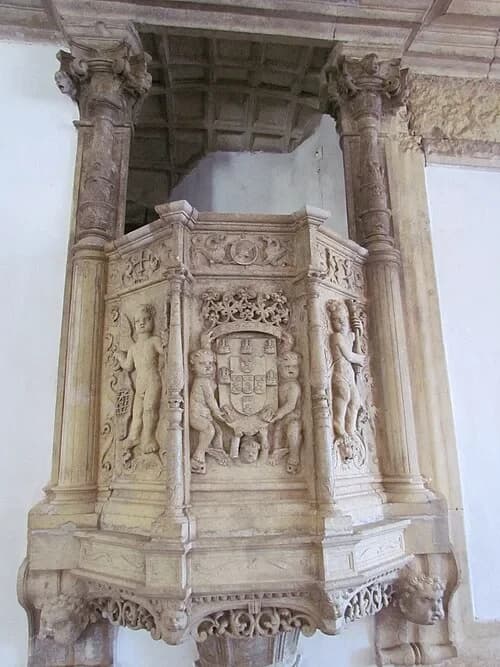
The Reader's Pulpit
Set into the wall of the refectory is this beautifully carved stone pulpit. Its function was central to the monastic routine. Each day, a monk would be appointed as the 'reader.' He would climb the small staircase hidden in the wall and stand here to read holy texts while his brothers ate their meals in silence below. Notice the intricate carvings on the pulpit's exterior, which feature religious figures and symbols of the Order. The placement of the pulpit was carefully chosen to ensure that the reader's voice would carry clearly through the large hall, reaching even the furthest tables. This practice of listening to sacred texts during meals was a way to prevent idle conversation and to turn a basic physical need into an act of worship. Even today, the presence of the pulpit serves as a reminder of the disciplined, structured life that was once the norm within these stone walls.
The Convent Kitchen
A rare glimpse into the practical infrastructure of the convent, featuring massive stone hearths.
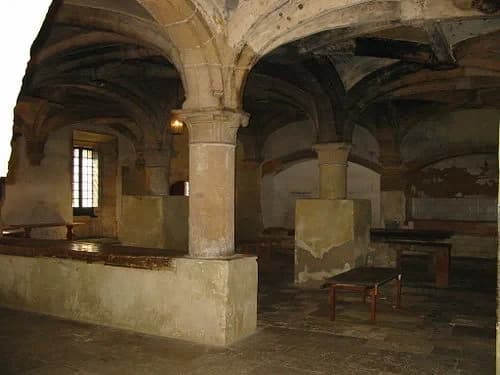
The Convent Kitchen
The kitchen offers a glimpse into the practical, everyday side of life at the Convento de Cristo. You can see massive stone hearths where fires would have burned constantly to cook large quantities of food. The scale of the chimneys above these hearths is impressive, designed to draw smoke away from the busy workspace. Water was a vital resource here, and it was piped directly into the stone basins through a sophisticated system connected to the aqueduct you can see outside. This provided a constant supply for cooking and cleaning, a luxury in the 16th and 17th centuries. The kitchen was managed by lay brothers and servants who worked to feed the large community of monks and guests. Despite its utilitarian purpose, the architecture here remains monumental, with thick stone walls and vaulted ceilings built to withstand the intense heat of the cooking fires and the passage of centuries.
Want to hear the rest?
Download the Stanza app to unlock all 34 stops and full GPS-guided navigation.
Frequently Asked Questions
How long does the Convento de Cristo audio tour take?
The Convento de Cristo audio guide includes 34 narrated stops. Most visitors spend 45 minutes to 1.5 hours exploring the complete tour, though you can listen at your own pace and skip or revisit any stop.
Is the Convento de Cristo audio guide available in my language?
Stanza supports 15 languages: English, Spanish, French, German, Italian, Portuguese, Russian, Japanese, Chinese, Korean, Arabic, Hindi, Polish, Dutch, Hebrew. Check the guide in the app to confirm the languages currently available for this tour.
Can I use the audio guide offline at Convento de Cristo?
Yes! Download the complete Convento de Cristo tour — including all audio, maps, and images — before your visit. The Stanza app works completely offline, so you don't need WiFi or mobile data at the venue.
How much does the Convento de Cristo audio guide cost?
The Stanza app is free to download. Free and paid audio guides are available; current prices are shown in the app.
How do I use the Stanza audio guide at Convento de Cristo?
Download the free Stanza app, search for "Convento de Cristo", and download the tour. When you arrive at the venue, the app uses GPS to detect your location and automatically plays the relevant narration as you move between points of interest — completely hands-free.
What makes the Stanza audio guide different from other Convento de Cristo tours?
Stanza offers GPS-triggered narration that plays automatically as you walk through Convento de Cristo — no need to manually select stops. The tour is available in 15 languages, works fully offline, and includes 34 expertly narrated stops with images and historical context.
What other audio guides are available near Convento de Cristo?
Stanza offers multiple audio guides in Tomar, Portugal and nearby areas. After downloading the app, browse the map to discover all available tours near Convento de Cristo. Each guide can be downloaded for offline use.