Languages
15Sé Catedral de Évora Audio Guide
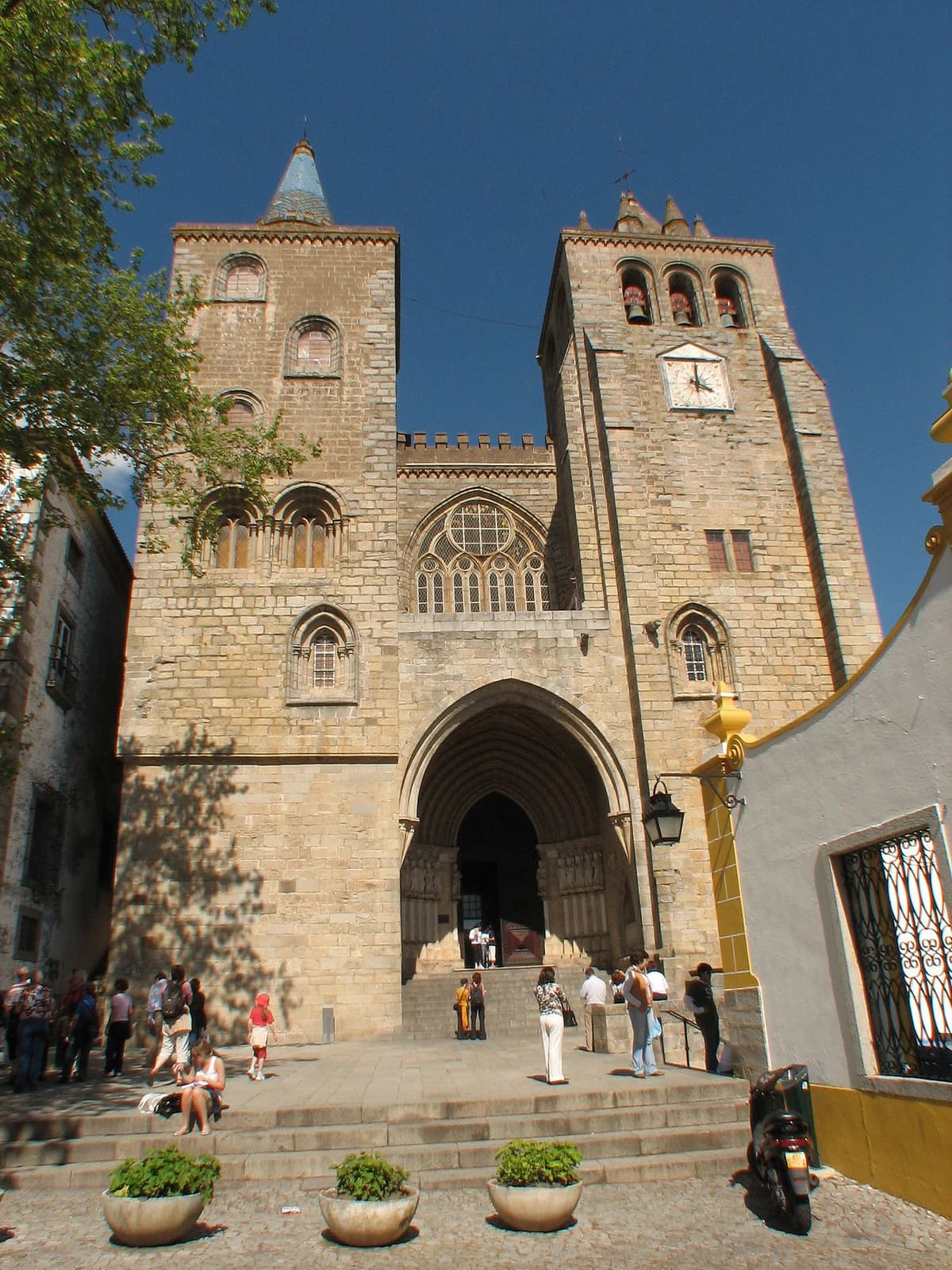
Sé Catedral de Évora is a landmark in Évora, Portugal. Explore it with Stanza's GPS-triggered offline audio guide — available in 15 languages.
Quick Facts
12
Stops
15
Languages
100%
Offline
📍 Évora, Portugal · 38.5717°N, -7.9067°E
About Sé Catedral de Évora
The Cathedral of Évora is a major Roman Catholic cathedral and the seat of the Archdiocese of Évora. It is a prominent example of Romanesque and Gothic architecture in Portugal.
Sé Catedral de Évora is also known as Cathedral of Evora, Sé de Évora, Catedral de Évora, Se Catedral de Evora, and 1 other names in various languages.
This self-guided audio tour features 12 narrated stops organized across 7 sections. As a cathedral, Sé Catedral de Évora offers a unique cultural experience in the heart of Évora, Portugal.
The Stanza audio guide is available in 15 languages and works entirely offline — download the complete tour including audio narration, maps, and images before your visit. As you walk through Sé Catedral de Évora, GPS-triggered narration plays automatically at each point of interest.
Last updated:
What you will hear
The Nave and Architectural Transition
Showcasing the massive granite structure and the transition from Romanesque to Gothic styles.
The Central Nave
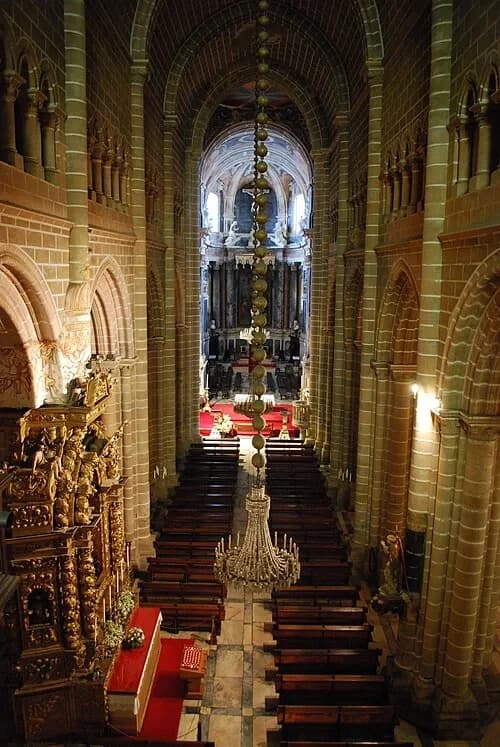
The central nave of the cathedral immediately draws the eye upward, showcasing a striking verticality that defines the interior. Here, you can clearly see the architectural evolution of the building. The lower sections feature rounded Romanesque arches, while the vaulting above transitions into pointed Gothic arches, which allowed builders to reach greater heights. This triple-aisled layout was largely modeled after the Lisbon Cathedral, creating a wide, processional space. The massive pillars supporting the roof are made of local granite, their scale reinforcing the fortress-like nature of the building. Beyond its architecture, this nave holds deep historical significance for Portuguese exploration. Tradition holds that in 1497, the flags for Vasco da Gama's historic expedition to India were blessed right here before the fleet set sail. The lighting inside is typically dim, filtered through high, narrow windows, which emphasizes the solemn atmosphere. The gray granite blocks are precisely cut, showing the skill of the medieval stonemasons who labored here for decades. As you look down the long central aisle, the repetitive rhythm of the arches leads the gaze toward the high altar, creating a sense of immense depth and permanence that has remained largely unchanged for centuries.
The Renaissance Organ and Upper Choir
Highlighting the oldest functioning organ in Portugal and the intricate Manueline wood carvings.
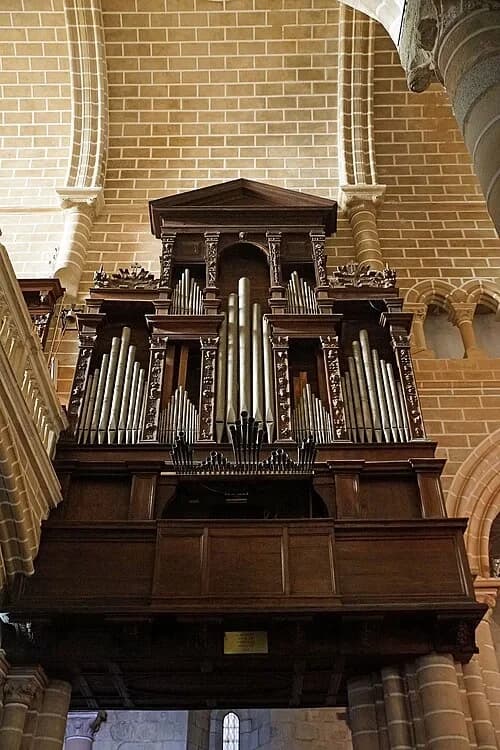
The Renaissance Organ
Perched within the nave is an extraordinary musical artifact dating back to 1544. This instrument is widely recognized as the oldest functioning organ in Portugal, serving as a vital link to the cathedral's long history as a center for musical excellence. The organ is housed in a dark, intricately carved wooden casing typical of the Renaissance style. If you look closely at the woodwork, you will see delicate decorative motifs and figures that frame the vertical metal pipes. These pipes, ranging in size from small whistles to large tubes, are still capable of producing the rich, complex tones required for liturgical music. During the 16th century, Évora was a major cultural hub, and the presence of such a sophisticated instrument reflects the city's wealth and prestige. The organ has been carefully maintained and restored over the centuries to keep it in playing condition, ensuring that the same sounds heard by Renaissance worshippers can still be experienced today. Its placement high above the floor allows the sound to resonate perfectly through the granite vaulting of the nave. The contrast between the dark, polished wood and the silver-toned pipes makes it a standout feature against the lighter stone walls of the interior.
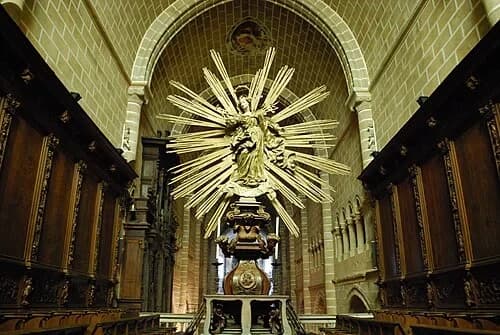
The Upper Choir
The upper choir is home to a magnificent set of 16th-century oak stalls, renowned for their incredible detail. Unlike many religious carvings that focus solely on biblical stories, these stalls feature scenes of secular rural life and hunting, providing a unique glimpse into the world of the Renaissance-era Alentejo. You can see depictions of local flora, fauna, and people engaged in everyday activities. This space also played a role in international history; in the late 16th century, the Tenshō Embassy, the very first Japanese delegation to reach Europe, visited this cathedral and was received here. In the center of the choir stands a gilded statue of the Virgin, which catches the light and serves as a focal point for the space. From this elevated position, you get a spectacular perspective looking down the entire length of the nave toward the main altar. The dark wood of the stalls has been polished by centuries of use, and the complexity of the carvings remains sharp. These seats were reserved for the high clergy, designed to be both functional for long services and a display of craftsmanship. The combination of historical international connections and local artistry makes this one of the most culturally layered sections of the entire cathedral complex.
The Baroque Main Chapel
Focusing on the 18th-century contrast created by King John V and architect Ludovice.
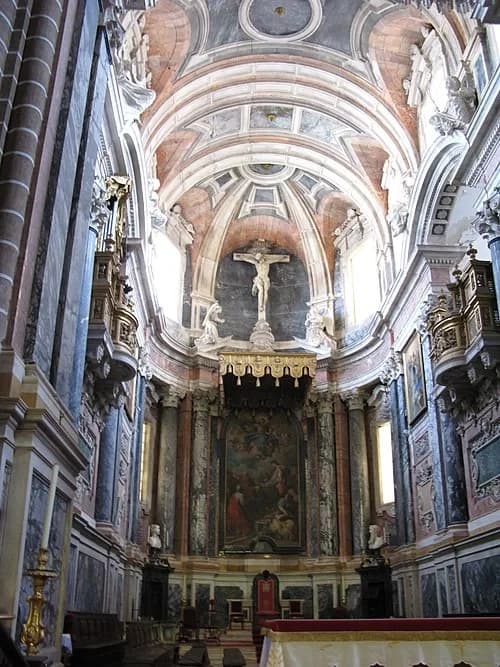
The Baroque Main Chapel
The main chapel represents a dramatic visual departure from the rest of the cathedral. While most of the building is characterized by austere medieval granite, this space was completely redesigned in the 18th century to reflect the height of Baroque opulence. King John V commissioned the famous architect Ludovice—the same man responsible for the palace-convent at Mafra—to create this lavish setting. The walls and floors are covered in a vibrant display of polychrome marble in shades of white, green, and red. This color palette creates a striking contrast with the gray stone seen elsewhere. At the center is a large painting flanked by massive marble columns, topped with a gilded altarpiece that seems to glow in the light. The level of detail here is extraordinary, from the intricate patterns in the marble inlay to the carved figures that decorate the cornices. This transformation was part of a larger movement to modernize Portugal’s great cathedrals during the wealth-rich years of the 18th century. The chapel feels much brighter and more theatrical than the nave, designed to draw the worshipper's attention toward the most sacred part of the building. The use of rare imported stones and extensive gold leaf serves as a clear display of royal patronage and ecclesiastical power.
The Altar of the Pregnant Virgin
Introducing the unique iconography of the Lady of Ó, a rare representation in religious art.
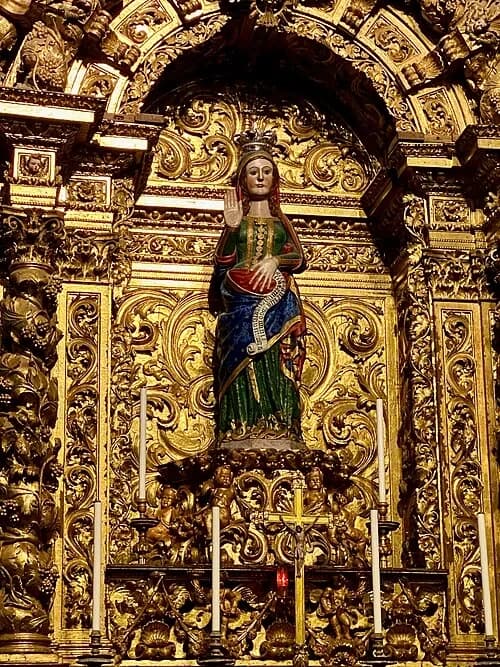
The Pregnant Virgin
Within one of the gilded chapels is a rare and remarkable piece of iconography known as the 'Lady of Ó' or the Pregnant Virgin. This style of representation became popular in the late medieval period but was later discouraged, making this a significant surviving example. The name 'Ó' refers to the seven O-Antiphons—prayers beginning with 'O'—that are traditionally sung during the final days of Advent leading up to Christmas. The statue is notable for its humanizing details; notice how the Virgin's hand rests gently on her stomach, a gesture that emphasizes the physical reality of her pregnancy. Her robes are painted in vibrant colors, which stand out sharply against the heavy gold leaf of the surrounding Baroque woodwork. This figure is part of a broader local tradition in Évora and the surrounding region, where the theme of expectations and the approaching birth was highly celebrated. The craftsmanship of the statue captures a serene and contemplative expression, contrasting with the more dramatic poses often seen in Baroque art. For centuries, this image has been a focus of special devotion for local expectant mothers. The combination of the rare subject matter and the intricate, colorful decoration makes it one of the most distinctive artistic treasures preserved within these walls.
The Gothic Cloisters
Exploring the 14th-century cloisters, their rose windows, and the funerary monuments within.
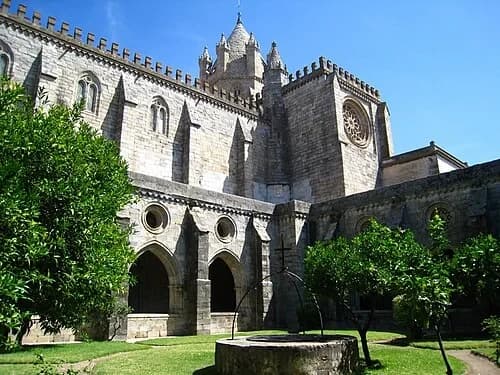
The Gothic Cloisters
Stepping into the 14th-century Gothic cloisters provides a refreshing shift from the dark, heavy atmosphere of the cathedral’s interior. This bright, open space was designed for meditation, prayer, and the daily exercise of the cathedral's clergy. The architecture here is elegantly proportioned, featuring pointed arches and delicate tracery. One of the most distinctive features is the presence of rose windows set into each corner of the cloister walk, which filter the sunlight into beautiful patterns on the stone floor. In the center of the grassy courtyard sits a functional stone well, a common feature in monastic and cathedral cloisters of this era. Beyond their role as a peaceful retreat, these cloisters also serve as a final resting place. You will find several important funerary monuments and tombs of bishops and local nobility built into the walls and floors. The transition from the massive granite walls of the nave to this airy, light-filled courtyard shows the refinement of Gothic design as it matured in Portugal. The stone here is weathered but well-preserved, and the rhythmic progression of the arches around the central garden provides a sense of order and calm. It remains one of the most tranquil spots in the entire city.
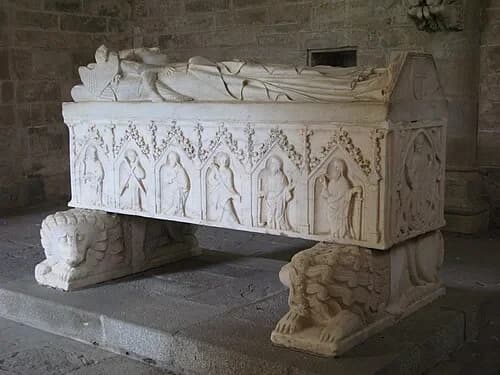
Tomb of Bishop Pedro
This funerary monument from the 14th century belongs to Bishop D. Pedro, one of the most influential figures in the cathedral's long history. Such elaborate tombs were reserved for those of high status and serve as a testament to the individual's power within the church. The sarcophagus itself is a masterwork of Gothic sculpture. Notice the base, where the heavy stone chest is supported by two carefully carved lions, a traditional symbol of strength, courage, and protection. Along the sides of the tomb, you can see a series of relief carvings. These depict various religious figures and saints, each standing under its own decorative Gothic arch. The Bishop himself is represented in a reclining pose on the lid, dressed in his ceremonial robes and mitre. The carving is detailed enough to show the textures of the fabric and the calm, stoic expression on his face. This monument is significant not only for its artistic merit but also for what it tells us about medieval burial customs in Portugal. Over the centuries, the stone has acquired a smooth, worn patina, but the figures remain clearly identifiable. It stands as a permanent record of the transition between life and memory in the medieval world, placed within the sacred ground of the cathedral.
The Cathedral Treasury
Viewing the priceless artifacts housed in the Sacred Art Museum, including the gem-encrusted reliquary.
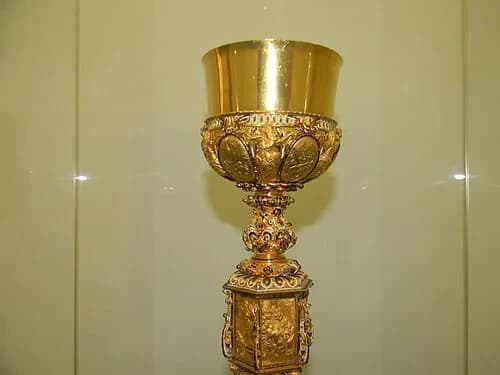
Sacred Art Treasury
The cathedral treasury houses an immense collection of wealth and artistry, reflecting centuries of donations and ecclesiastical pride. One of the highlights is this 16th-century chalice, which showcases incredible skill in enamelled gold work. If you examine the base and stem, you can see intricate scenes and decorative patterns achieved through high-temperature enamel techniques. However, the most famous piece in this treasury is a 17th-century reliquary of the True Cross. That particular object is encrusted with an astonishing 1,426 precious gems, including a vast array of diamonds, rubies, and emeralds. These items were used during the most important liturgical celebrations and serve as evidence of the cathedral's importance as a regional religious center. The craftsmanship visible in the chalice before you demonstrates the high level of detail that Renaissance artisans were able to achieve, from the delicate filigree to the polished surfaces of the gold. These objects were not just for display; they were functional items used in the Mass, though their material value also served to honor the divine. The treasury provides a fascinating look at the intersection of religious devotion and material wealth, where the finest materials available were used to create objects of lasting beauty and significance.
The Lantern Tower and Rooftop Views
The climax of the tour: the iconic lantern tower (Zimbório) and panoramic views of Évora.
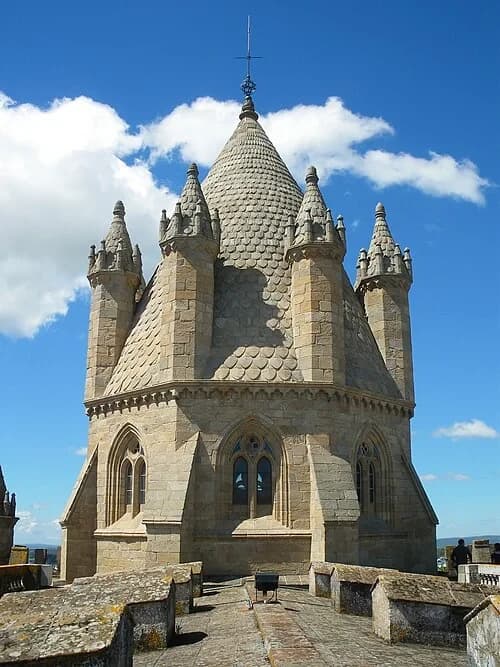
The Lantern Tower
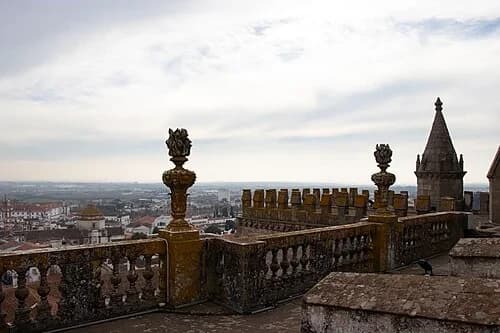
High above the crossing where the nave meets the transept sits the 'Zimbório,' or lantern tower. This structure is perhaps the most famous architectural feature of the cathedral and has become an iconic symbol of the city of Évora itself. Its silhouette is unique in Portugal, featuring a central conical tower covered in stone scales, which is surrounded by six smaller turrets. These turrets are essentially miniature versions of the main spire, creating a balanced and distinctive crown for the building. This design served both an aesthetic and a functional purpose, allowing light to flood down into the center of the cathedral below. Supporting such a heavy stone structure over the medieval crossing required significant engineering skill, as the weight had to be distributed through the massive pillars you saw in the nave. The exterior of the tower is decorated with small arches and carved details that mirror the Gothic style seen throughout the complex. From a distance, the Zimbório serves as a landmark that can be seen for miles across the Alentejo plains. Its weathered stone surface has stood for centuries against the elements, and it remains one of the most photographed and recognizable examples of medieval Portuguese architecture.
The Rooftop Terrace
Concluding the tour on the rooftop terrace offers a completely different perspective of the cathedral and the surrounding landscape. From here, you can see the vast Alentejo plains stretching toward the horizon and the charming, whitewashed city of Évora clustered below. The rooftop itself reinforces the 'fortress' theme we introduced at the start. Notice the battlements and crenellations along the roofline, which look more like a castle's defenses than a typical church. You can also get a close-up view of the decorative stone finials and the top of the lantern tower. The stone here is heavily weathered and worn from centuries of exposure to the wind and rain. As you walk along the terrace, take a moment to feel the rough, gray granite of the balustrades under your hands. The texture is coarse and cool, showing the natural grain of the stone that was quarried nearby hundreds of years ago. This vantage point allows you to appreciate the sheer scale of the construction and the way the cathedral dominates the highest point of the city. The mix of defensive battlements and religious spires creates a unique skyline that tells the story of Évora's complex history as a frontier city of faith and power.
Want to hear the rest?
Download the Stanza app to unlock all 12 stops and full GPS-guided navigation.
Frequently Asked Questions
How long does the Sé Catedral de Évora audio tour take?
The Sé Catedral de Évora audio guide includes 12 narrated stops. Most visitors spend 45 minutes to 1.5 hours exploring the complete tour, though you can listen at your own pace and skip or revisit any stop.
Is the Sé Catedral de Évora audio guide available in my language?
Stanza supports 15 languages: English, Spanish, French, German, Italian, Portuguese, Russian, Japanese, Chinese, Korean, Arabic, Hindi, Polish, Dutch, Hebrew. Check the guide in the app to confirm the languages currently available for this tour.
Can I use the audio guide offline at Sé Catedral de Évora?
Yes! Download the complete Sé Catedral de Évora tour — including all audio, maps, and images — before your visit. The Stanza app works completely offline, so you don't need WiFi or mobile data at the venue.
How much does the Sé Catedral de Évora audio guide cost?
The Stanza app is free to download. Free and paid audio guides are available; current prices are shown in the app.
How do I use the Stanza audio guide at Sé Catedral de Évora?
Download the free Stanza app, search for "Sé Catedral de Évora", and download the tour. When you arrive at the venue, the app uses GPS to detect your location and automatically plays the relevant narration as you move between points of interest — completely hands-free.
What makes the Stanza audio guide different from other Sé Catedral de Évora tours?
Stanza offers GPS-triggered narration that plays automatically as you walk through Sé Catedral de Évora — no need to manually select stops. The tour is available in 15 languages, works fully offline, and includes 12 expertly narrated stops with images and historical context.
What other audio guides are available near Sé Catedral de Évora?
Stanza offers multiple audio guides in Évora, Portugal and nearby areas. After downloading the app, browse the map to discover all available tours near Sé Catedral de Évora. Each guide can be downloaded for offline use.