Languages
15Templo Romano de Évora Audio Guide
Templo Romano de Évora is a landmark in Évora, Portugal. Explore it with Stanza's GPS-triggered offline audio guide — available in 15 languages.
Quick Facts
15
Stops
15
Languages
100%
Offline
📍 Évora, Portugal · 38.5726°N, -7.9073°E
About Templo Romano de Évora
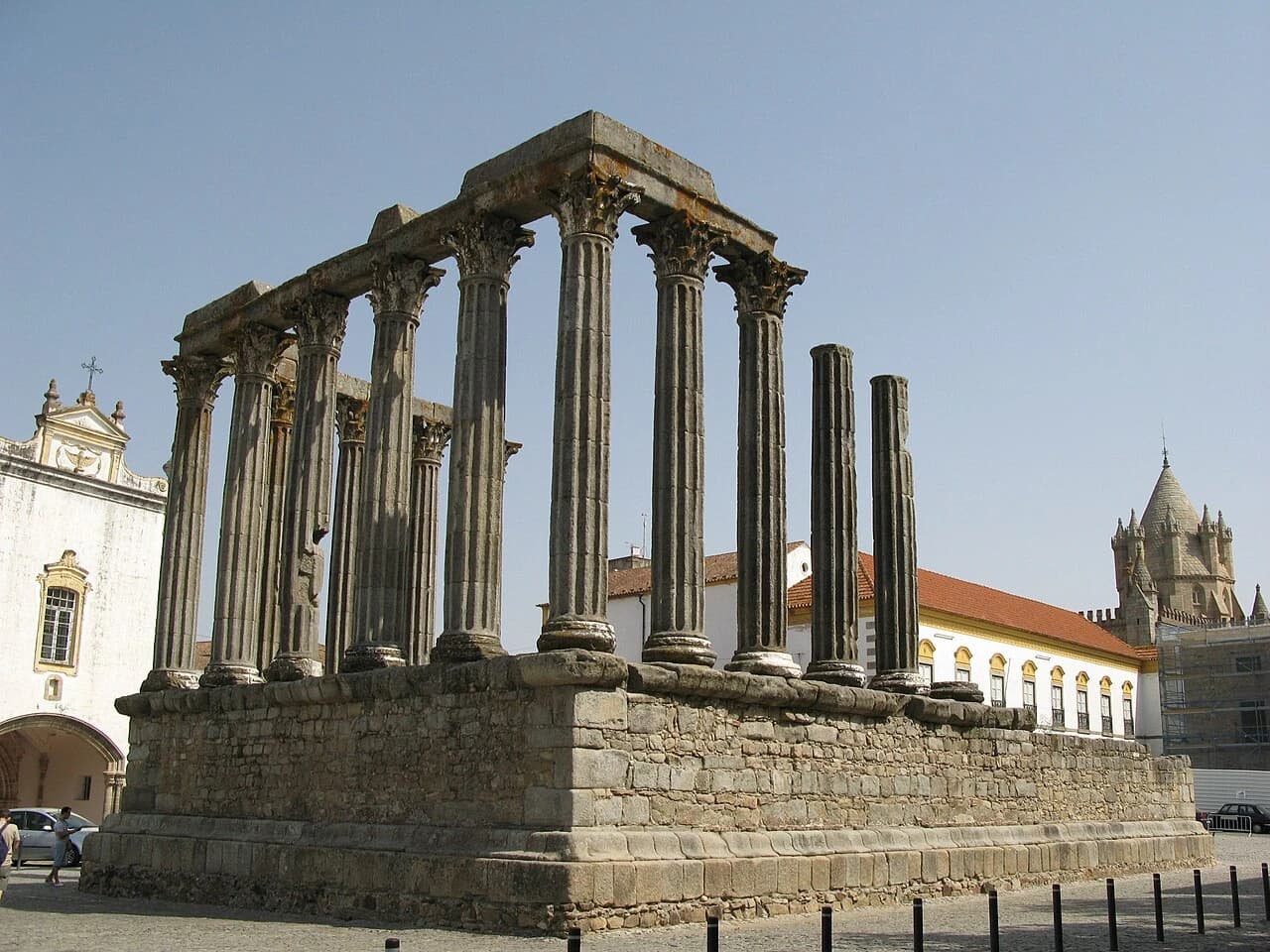
The Roman Temple of Évora is a well-preserved ancient Roman structure dating back to the 1st century AD. It stands as a prominent archaeological site in the historic center of the city.
Templo Romano de Évora is also known as Roman Temple of Evora, Templo Romano de Évora, Templo de Diana (Évora), Templo de Diana, and 2 other names in various languages.
This self-guided audio tour features 15 narrated stops organized across 5 sections, including The Square Approach: Legend and Myth, The Imperial Podium: A Monument to Augustus, The Northern Colonnade: Roman Engineering, The Corinthian Capitals: Masterpieces in Marble, The Heart of the Forum: Ancient and Modern Évora. As a ancient temple, Templo Romano de Évora offers a unique cultural experience in the heart of Évora, Portugal.
The Stanza audio guide is available in 15 languages and works entirely offline — download the complete tour including audio narration, maps, and images before your visit. As you walk through Templo Romano de Évora, GPS-triggered narration plays automatically at each point of interest.
Last updated:
What you will hear
The Square Approach: Legend and Myth
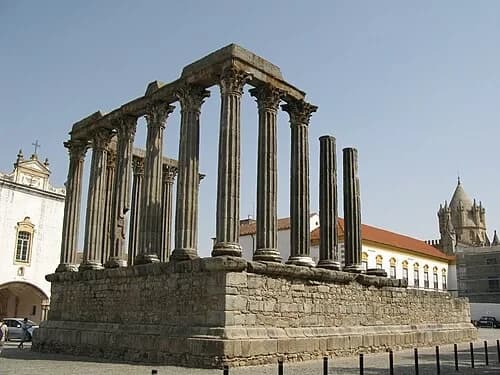
This stop introduces the temple within its modern setting, addressing the popular but incorrect myth that it was dedicated to Diana. I've selected a frontal view and a wide square shot to establish the scene.
A Masterpiece of Preservation
The Roman Temple of Évora is widely regarded as a masterpiece of ancient engineering and preservation. It is exceptional for being one of the best-preserved Roman religious buildings in all of Spain and Portugal. When you observe its proportions and design, you might notice a striking similarity to another famous Roman building: the Maison Carrée in Nîmes, France. This resemblance is not accidental. Both temples were built according to strict Roman architectural standards that were exported to all corners of the empire to showcase the reach and cultural sophistication of Rome. The consistency in design allowed the imperial authorities to maintain a recognizable aesthetic, ensuring that a citizen traveling from Gaul to Lusitania would find familiar symbols of power and divinity. The temple in Évora follows a hexastyle peripteral plan, meaning it originally featured six columns on its front facade and was surrounded by a colonnade. The fact that so much of this original layout is still visible provides a rare and direct window into the architectural ambitions of the early Roman Empire.
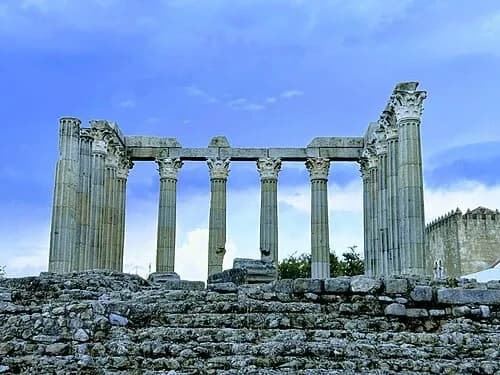
The Myth of Diana
Welcome to the Templo Romano de Évora, a site that has carried a misleading identity for several centuries. Most local residents and visitors still refer to this structure as the Temple of Diana, a name that took hold in the 17th century. This popular misnomer was the creation of a local priest who fabricated a legend connecting the site to the Roman goddess of the hunt. This story became so deeply rooted in the local culture that the name persists to this day, even though it has no historical basis. Extensive archaeological excavations and research have since corrected the record. Evidence confirmed that the temple was actually constructed in the 1st century AD and was dedicated to the imperial cult of Augustus. It served as a sacred site to honor the Roman Emperor, who was worshipped as a deity. While the myth of Diana adds a layer of romantic folklore to the city, the true history reflects the temple's role as a powerful symbol of Roman political and religious authority in the region.
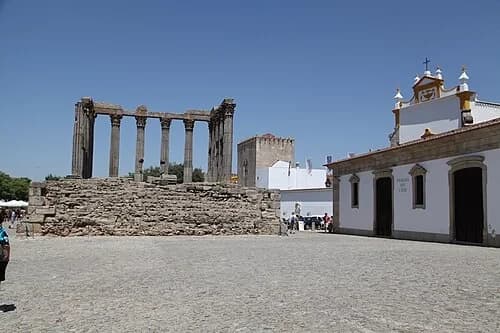
The Heart of Liberalitas Iulia
The open space around you, known as the Largo Conde de Vila Flor, served as the civic and religious center of Roman Évora. During the 1st century, the city was known by the prestigious name Liberalitas Iulia. The temple was the centerpiece of this urban landscape, surrounded by other essential public buildings that made up the forum. This area was the hub of social, political, and commercial life for the local Roman citizens. The significance of this site has been recognized by modern authorities as well. In 1910, the temple was officially classified as a National Monument, protecting it from further decay or alteration. Its global importance was cemented in 1986 when it was included in the UNESCO World Heritage status granted to the historic center of Évora. Standing here today, you are at the exact point where ancient Roman administration met the daily lives of the city's inhabitants. The transition from a Roman provincial center to a modern heritage site has allowed the structure to remain a focal point of the city for two millennia.
The Imperial Podium: A Monument to Augustus
Focusing on the granite base, this stop explains the temple's true purpose: the Imperial Cult. The images highlight the massive 3.5-meter-high podium typical of Roman religious architecture.
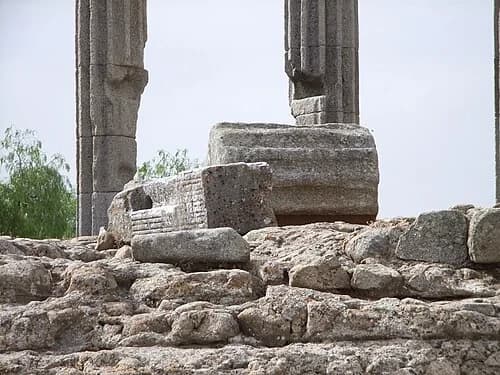
The Fallen Fragments
While fourteen impressive columns still stand tall, the temple is far from complete. Scattered across the elevated platform, or podium, are various stone fragments and column drums that have fallen over the centuries. These pieces are all that remain of the temple's more enclosed sections. In its original state, the temple featured a cella, which was an inner chamber that housed the cult statue of the emperor. The cella was enclosed by solid walls, none of which remain standing today. Additionally, the structure once supported a heavy roof, likely decorated with ornate clay tiles and architectural ornaments. Over the last two thousand years, much of this stonework was either lost to the elements or, more likely, repurposed by later generations as building material for new projects in the city. The fragments currently resting on the podium were collected and placed there by archaeologists to preserve what was left. These weathered stones serve as silent evidence of the building's long history of partial dismantling and the inevitable wear of time on such an ancient monument.
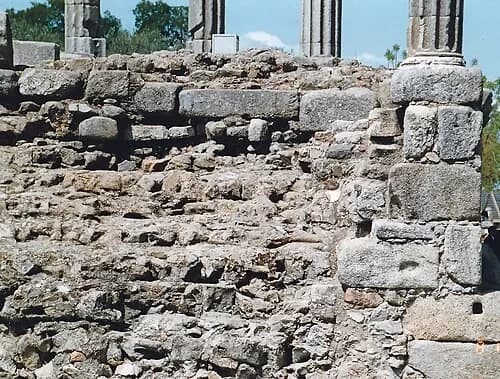
The Granite Podium
The foundation of the temple is a massive stone platform known as a podium. This base is roughly three and a half meters high and covers an area of approximately twenty-five meters by fifteen meters. To build such a permanent structure, the Roman engineers utilized local granite, a rugged and durable stone abundant in the region around Évora. The use of granite for the podium was a practical choice, as it provided a solid, heavy foundation capable of supporting the immense weight of the columns and the roof above. Unlike the more decorative marble used for the upper sections, the granite remains relatively unadorned, showcasing the raw strength of the material. This elevated design was a common feature in Roman temples, as it physically raised the sacred space above the level of the common forum, creating a clear separation between the mortal and the divine. The podium has survived remarkably well, showing only minor weathering despite its exposure to the elements for nearly two thousand years. It remains the anchor that ties the classical architecture to the very ground of the Alentejo region.
The Northern Colonnade: Roman Engineering
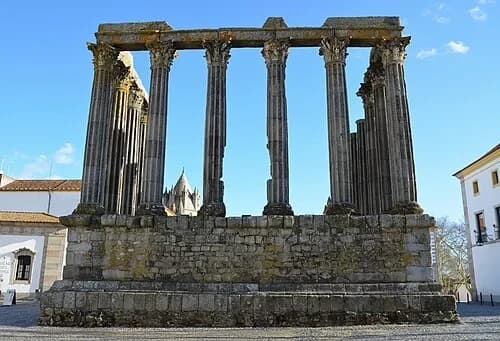
This area highlights the most complete part of the structure. The images focus on the rhythm of the fourteen remaining columns and the use of Estremoz marble.
The Northern Colonnade
The northern facade offers the best view of the temple's original architectural rhythm, as it still holds all six of its original columns. This side of the building provides a sense of the scale and grandeur that would have greeted Roman citizens visiting the forum. The construction of this temple and the vast forum complex that once surrounded it was a massive undertaking that spanned nearly two centuries. Work began in the 1st century AD and continued well into the 2nd century. This long period of development reflects the gradual growth and increasing wealth of the city under Roman rule. As you look at the northern colonnade, you are seeing the result of generations of skilled stonemasons working within the rigorous framework of Roman design. Each column is perfectly spaced to create a balanced, symmetrical appearance that was essential to the classical aesthetic. This particular section of the temple has benefited from being sheltered or integrated into later structures, which helped preserve the vertical alignment of these six massive granite shafts against the backdrop of the sky.
An Enduring Colonnade
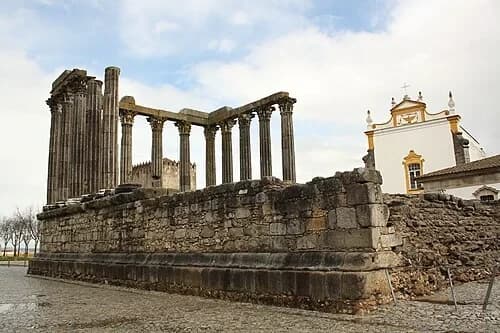
The fourteen columns still standing here represent a significant portion of the temple's original perimeter. Each of the fluted shafts reaches a height of 6.2 meters, creating a powerful vertical presence that dominates the square. These vertical grooves, known as fluting, were not just decorative. In Roman architecture, fluting was designed to play with light and shadow, giving the massive stone shafts a sense of lightness and elegance. The lines draw the eye of the viewer upward, emphasizing the temple's height and its connection to the heavens. Each shaft is composed of several cylindrical sections, or drums, stacked with incredible precision. Even without modern mortar, the weight of the stone and the accuracy of the carving have kept these columns standing through centuries of earthquakes and urban changes. The rhythm of these fourteen pillars provides the defining silhouette of Évora. They stand as remnants of a much larger architectural scheme that once included a full portico surrounding the central chamber, intended to create a sense of awe and reverence for anyone approaching the sacred imperial site.
The Corinthian Capitals: Masterpieces in Marble
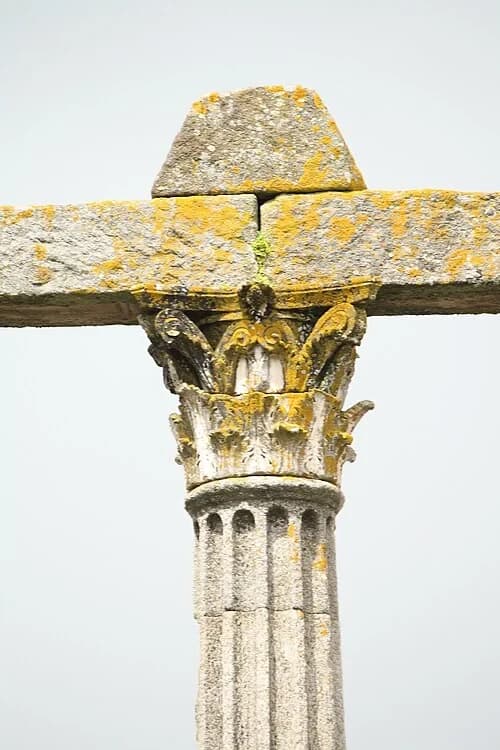
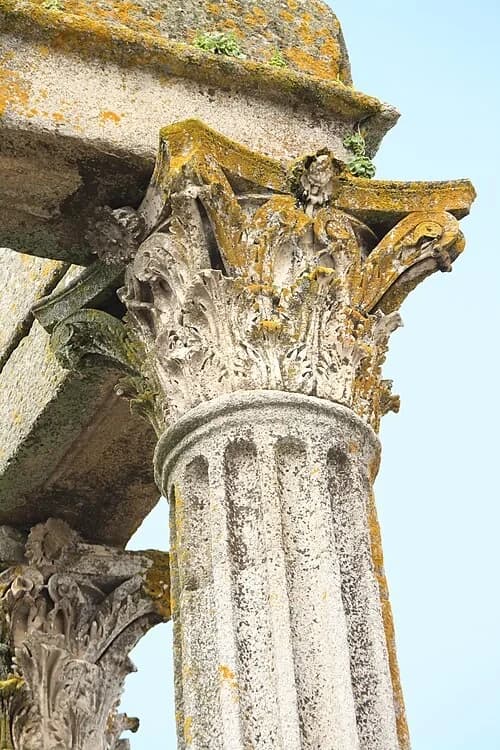
A 'Must-See' stop focusing on the artistic detail of the capitals. The imagery provides the necessary close-ups to appreciate the acanthus leaf carvings and Estremoz marble.
Ancient Game Boards
Amidst the grand architecture and religious symbolism of the temple, there is a small, human detail that is often overlooked by visitors. Archaeologists discovered an Alquerque game board carved directly into one of the stone surfaces of the temple. Alquerque is an ancient strategy game and is considered one of the direct ancestors of modern checkers. This simple grid of lines was likely scratched into the stone by Roman guards or residents who spent long hours in the forum. It serves as a poignant reminder that this site was not just a silent monument; it was a living, breathing part of the city. While priests performed rituals and officials managed the city's affairs nearby, others were simply killing time, perhaps betting on a game while waiting for their shift to end. This small carving provides a rare and intimate connection to the individuals who walked these same stones two thousand years ago. It transforms the temple from a purely formal religious site into a place where the ordinary, daily activities of Roman life played out in the shadow of imperial monuments.
Acanthus Leaves in Marble
Looking at the top of the columns, you can see the intricate Corinthian capitals that crown each shaft. These decorative elements are famous for their elaborate carvings of acanthus leaves and floral motifs. Unlike the rugged granite used for the column shafts, these capitals were crafted from high-quality white marble. This specific marble was sourced from the nearby quarries of Estremoz, located just a short distance from Évora. The use of marble allowed the Roman stonemasons to achieve a level of detail and refinement that granite simply would not permit. The acanthus leaf design is a hallmark of the Corinthian order, which was the most decorative of the three main classical orders of Greek and Roman architecture. The leaves appear to curl outward from the center of the capital, creating a organic, lifelike texture that contrasts with the geometric lines of the fluted columns. This marble work has survived surprisingly well, with the deep carvings still clearly visible even from the ground level. These capitals represent the peak of artistic craftsmanship available in the province of Lusitania during the early empire.
The Heart of the Forum: Ancient and Modern Évora
The final stop places the temple in its wider context as the center of the ancient forum. It also highlights the surrounding landmarks like the Cathedral and Jardim Diana.
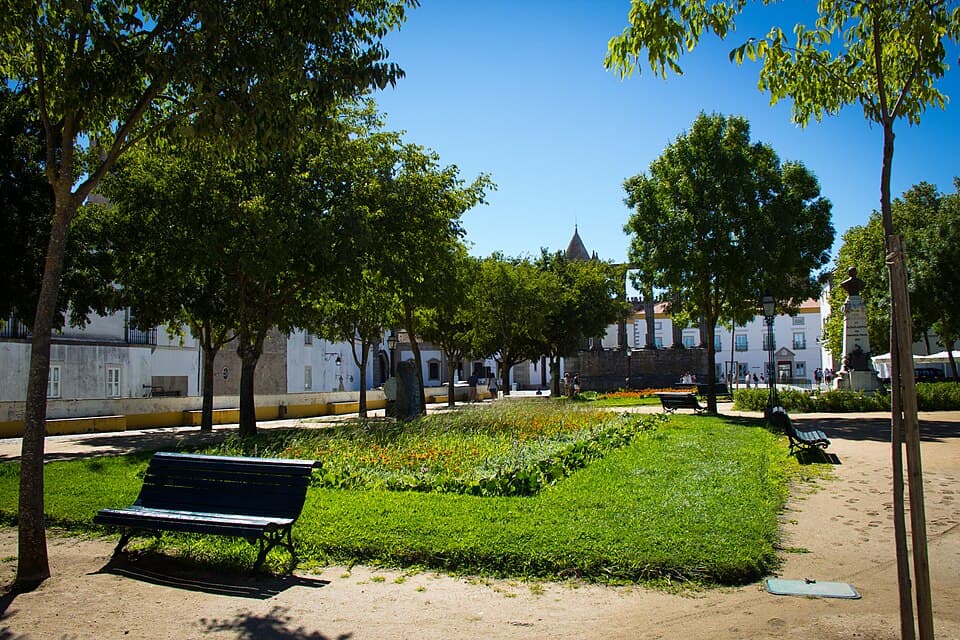
The Garden of Diana
This tour concludes in the surrounding Jardim de Diana, a beautiful public garden that offers some of the best views of the temple. The name of the garden itself is a lasting legacy of the 17th-century myth that identified the ruins as a temple to the goddess Diana. Even though we now know the temple was dedicated to the imperial cult of Augustus, the old name is so deeply ingrained in the city's identity that it was given to this park. The garden serves as a peaceful transition between the ancient monument and the modern city, providing a space for residents and visitors to relax in the shadow of two thousand years of history. The temple remains the symbolic heart of Évora, a constant presence that has survived through Roman rule, medieval fortification, and even centuries as a marketplace. It continues to bridge the gap between the city's ancient roots and its modern life as a vibrant cultural center. As you walk through the garden, the enduring columns stand as a reminder of the many layers of history that have shaped this square into what it is today.
Want to hear the rest?
Download the Stanza app to unlock all 15 stops and full GPS-guided navigation.
Frequently Asked Questions
How long does the Templo Romano de Évora audio tour take?
The Templo Romano de Évora audio guide includes 15 narrated stops. Most visitors spend 45 minutes to 1.5 hours exploring the complete tour, though you can listen at your own pace and skip or revisit any stop.
Is the Templo Romano de Évora audio guide available in my language?
Stanza supports 15 languages: English, Spanish, French, German, Italian, Portuguese, Russian, Japanese, Chinese, Korean, Arabic, Hindi, Polish, Dutch, Hebrew. Check the guide in the app to confirm the languages currently available for this tour.
Can I use the audio guide offline at Templo Romano de Évora?
Yes! Download the complete Templo Romano de Évora tour — including all audio, maps, and images — before your visit. The Stanza app works completely offline, so you don't need WiFi or mobile data at the venue.
How much does the Templo Romano de Évora audio guide cost?
The Stanza app is free to download. Free and paid audio guides are available; current prices are shown in the app.
How do I use the Stanza audio guide at Templo Romano de Évora?
Download the free Stanza app, search for "Templo Romano de Évora", and download the tour. When you arrive at the venue, the app uses GPS to detect your location and automatically plays the relevant narration as you move between points of interest — completely hands-free.
What makes the Stanza audio guide different from other Templo Romano de Évora tours?
Stanza offers GPS-triggered narration that plays automatically as you walk through Templo Romano de Évora — no need to manually select stops. The tour is available in 15 languages, works fully offline, and includes 15 expertly narrated stops with images and historical context.
What other audio guides are available near Templo Romano de Évora?
Stanza offers multiple audio guides in Évora, Portugal and nearby areas. After downloading the app, browse the map to discover all available tours near Templo Romano de Évora. Each guide can be downloaded for offline use.