Stanza · Audio guide
Horezu Monastery Audio Guide
A place to remember. A story to take with you.
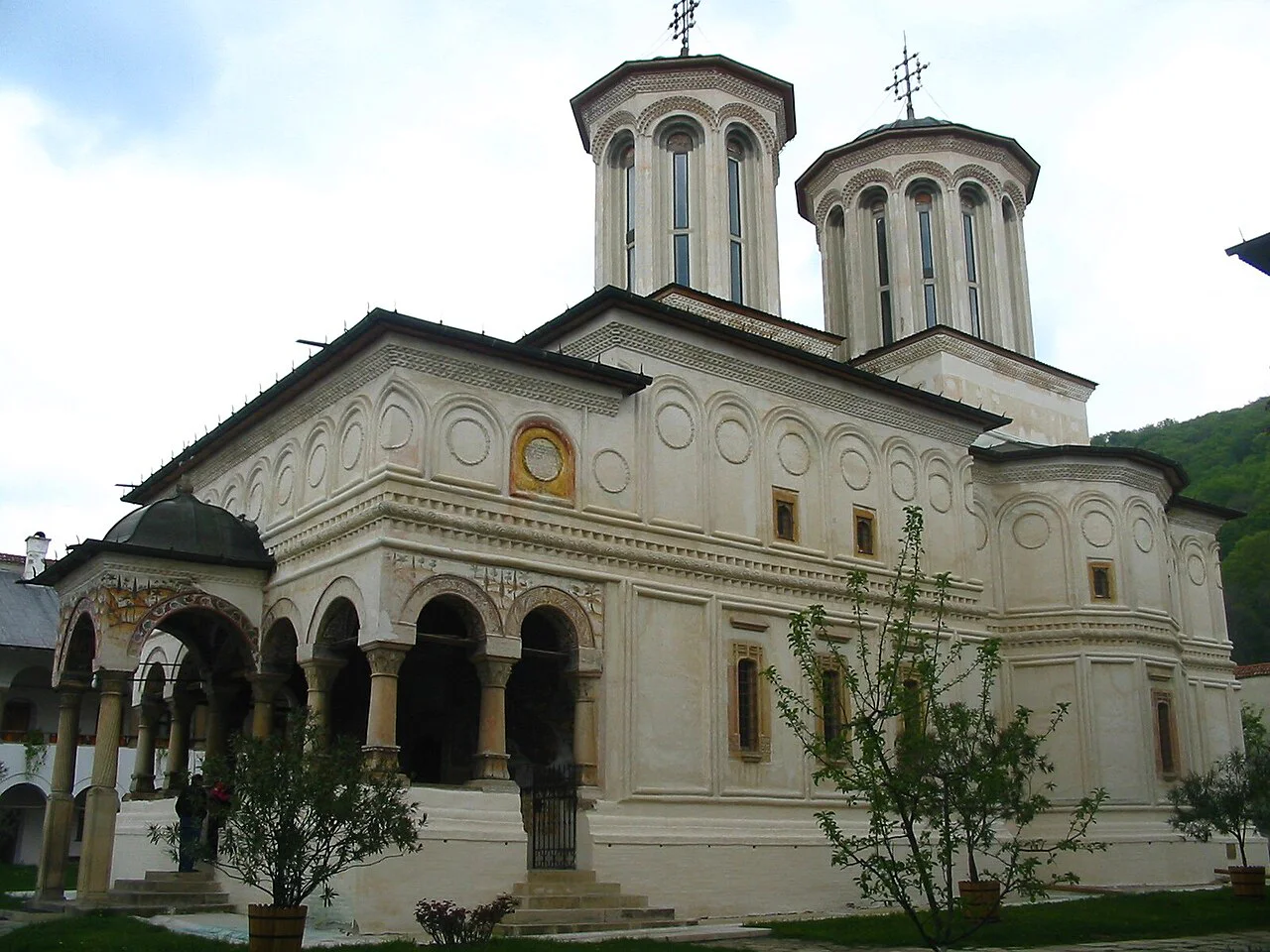
Horezu Monastery is a heritage site in Vâlcea County, Romania, founded in 1690 by Prince Constantin Brâncoveanu. It is considered a masterpiece of the Brâncovenesc style, noted for its architectural purity…
Download Stanza, then search for “Horezu Monastery”.
About the tour
One guide. Your kind of visit.
Horezu Monastery is a heritage site in Vâlcea County, Romania, founded in 1690 by Prince Constantin Brâncoveanu. It is considered a masterpiece of the Brâncovenesc style, noted for its architectural purity, balance, and rich decorative works.
Ready when you are.
- 01Get the free Stanza app.
iOS & Android
- 02Find your guide.
“Horezu Monastery”
- 03Download before you go.
Works offline
Audio guide / 11 narrated stops
Inside the guide
Get to know a few of the stories before you go. Open a stop to read more.
01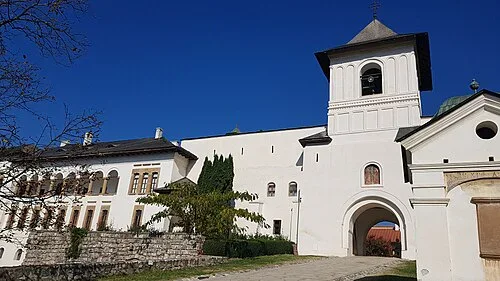 Fortified Gate and Bell Tower
Welcome to Horezu Monastery, in a quiet valley of Wallachia at the foot of the Căpățânii mountains. The tour runs from this gate, through the courtyard, and into the church at its heart. The tall tower carries the monastery's bell, and the gateway beneath it was built to be defended, because a house of prayer needed walls too. The story begins with Prince Constantin Brâncoveanu, who laid the foundation here in 1690, the second year of his reign. He wrote it down himself, in a note kept in the monastery library: 'in the second year of our reign we laid the foundation and began to build the monastery.' Brâncoveanu lived in an age when great powers fought over this land, and he chose to raise his country's culture above the struggle. Even the name is old. Tradition ties Horezu, or Hurezi, to the huhurez, the tawny owl, whose cry was said to be the only thing troubling the solitude of this valley.
Photo: Leontin l · CC BY-SA 4.0
02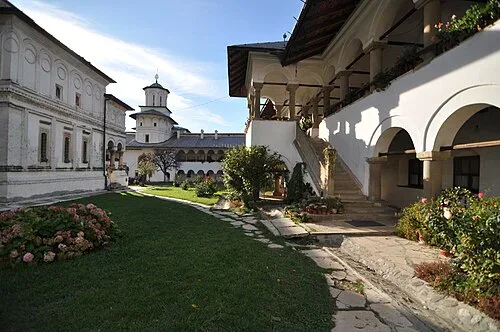 Central Courtyard and Princely Cloisters
The courtyard gives the measure of the whole foundation. A monumental wall encloses the main church and two storeys of arcaded ranges where the community lived its days. The church was finished in 1693, and the whole ensemble was completed in the autumn of 1697, in the shape seen here. Three builders are known by name. Manea was chief of the masons, a title the old chronicle gives as vătaf al zidarilor. Istrate was the carpenter, and Vucașin Caragea worked the stone. This is no museum piece. Horezu is an active Eastern Orthodox nunnery, and the ranges around the courtyard still house its sisters. The world took notice late but firmly. UNESCO inscribed the monastery in 1993. Its entry on the World Heritage List carries the number 597.
fusion-of-horizons · CC BY 2.0
03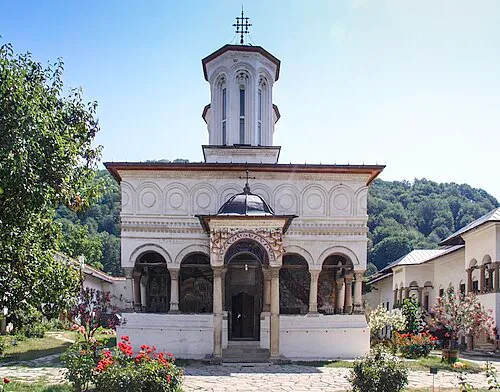 The Western Porch (Pridvor)
Main Church of the Holy Emperors Constantine and Helen
The main church is the purest expression of the Brâncovenesc style, named for the ruler who built it. Many call it the only truly original Romanian architectural style. The church stands on a trilobed plan and was raised between 1690 and 1693. It takes the episcopal church of Curtea de Argeș as its model, drawing that design into slimmer, more slender forms and adding an open porch that became the signature of the style. Over the entrance, a sculpted marble doorframe carries the pisanie, the founder's inscription. It bears the coat of arms of Wallachia and that of the Cantacuzino family. And it bears Brâncoveanu's own creed: 'I will not enter the dwelling of my house... until I find a place for the Lord.' The church was consecrated on the eighth of September, 1693.
Listen in the appAlexandru Baboș · CC BY-SA 3.0 ro
04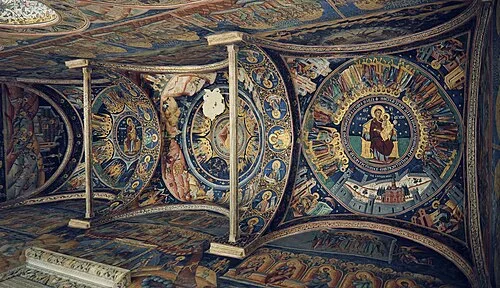 The Western Porch (Pridvor)
The Western Porch: Columns and Vaulted Frescoes
The open porch, the pridvor, is the piece this monastery is celebrated for. Ten stone columns carry its arcades, each carved with a wealth of ornament in the late Renaissance manner. The historian Nicolae Iorga praised it exactly for this: 'a beautiful porch on columns worked with a great wealth of ornaments... flowers of stone around the great door and all the windows.' Above the columns, the vaults were finished by June of 1692. Only then could the painting begin. The mural work ran from 1692 to 1694, led by the Greek masters Constantinos and Ioan alongside Romanian painters of the same generation. The painted vaults overhead are their work, a ceiling of circles and saints set against deep blues and golds.
Listen in the appPhoto: Fusionofhorizons · CC BY-SA 3.0 ro
05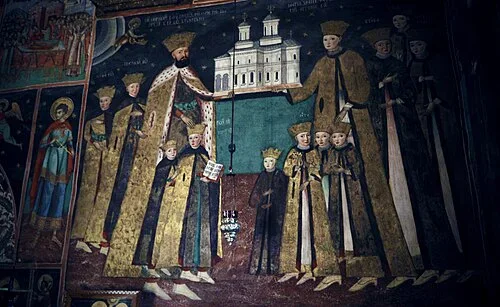 The Narthex and Royal Votive Murals
The Votive Portrait of the Brâncoveanu Family
In the narthex, the walls carry something unusual even for its time: a painted gallery of a whole dynasty. The cycle begins with Datco of Brâncoveni, a boyar of the early sixteenth century, and runs through Basarab the Third, called the Old, and the Cantacuzino kin. It culminates in the votive panel, where Prince Constantin Brâncoveanu and his family appear in the dress of their day, holding up a model of this church. A votive image is a declaration. It marks the founders' claim on the church they raised and asks the faithful to remember them in prayer, generation after generation. Few ruling families put their whole line on a church wall like this. The painting of the entire mural ensemble was completed on the thirtieth of September, 1694.
Listen in the appPhoto: Fusionofhorizons · CC BY-SA 3.0
06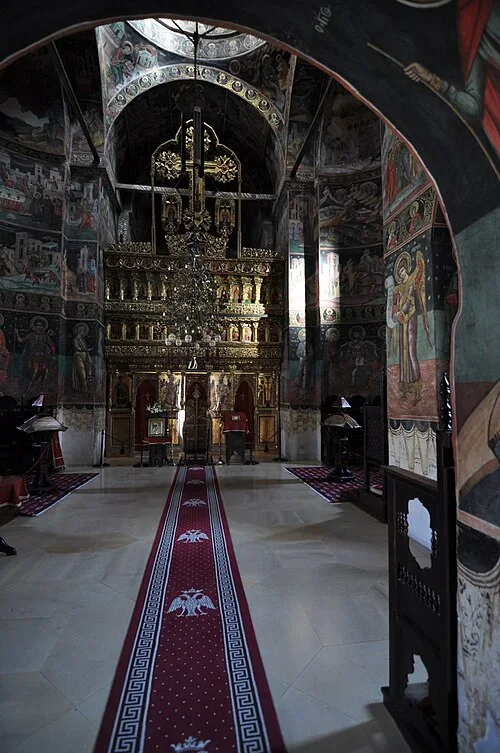 Church Nave, Princely Tomb, and Golden Iconostasis
The Nave and the Founder's Empty Tomb
Down the nave, past the painted walls and toward the altar, this space was meant to complete a plan. Brâncoveanu intended Horezu as the burial church of his dynasty. A carved marble sarcophagus was prepared for him here. It stands empty. He is remembered as domnul martir, the martyred prince, and he reigned from 1688 to 1714. In 1714 he died for his faith, refusing to renounce it. So the grave he built for himself, in the church he raised for his family, received no body. The church he consecrated kept his work, his portraits, and his name, but not his remains.
Listen in the appfusion-of-horizons · CC BY 2.0
07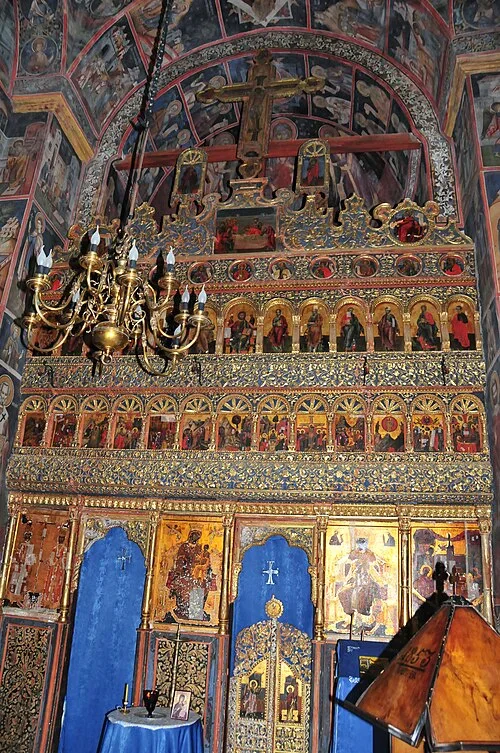 Church Nave, Princely Tomb, and Golden Iconostasis
The Gilded Lime-Wood Iconostasis
Between the nave and the altar rises the iconostasis, the screen of icons that stands in every Orthodox church. Few are like this one. It is carved from lime wood and gilded, tier upon tier of icons climbing toward the crucifixion at the top, with silver candelabra before it. The donation is recorded: this monumental screen, with the silver candleholders, was given by Doamna Maria, the prince's wife. Her gift changes how the founding reads. Horezu was not one ruler's project but a princely couple's undertaking, and the princess endowed the church with its most precious fitting.
Listen in the appPhoto: ChristianMancas · CC BY-SA 3.0 ro
08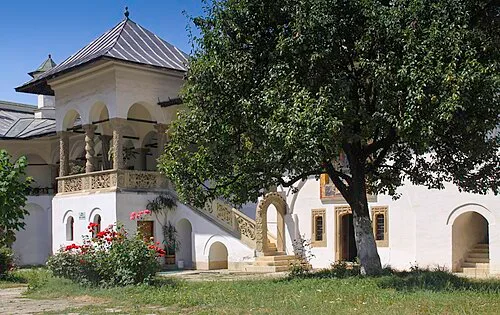 Dionisie's Gazebo and Southern Cloisters
Dionisie's Gazebo (Foișorul lui Dionisie)
After the founder's death, the monastery kept building. Between 1725 and 1753, Abbot Dionisie Bălăcescu, a lover of art, raised this pavilion, the foișor that carries his name. It is counted a masterwork of the Brâncovenesc style, proof the style lived on after the prince who gave it his name. By then Horezu had also become a house of learning. Around 1700 the archimandrite Ioan of Câmpulung came here to copy the beloved tale 'Varlaam și Ioasaf'. Around 1754 another learned monk arrived, Rafail, who transcribed the story of Halima in 1783. And a scholar called Dionisie Eclesiarhul put into circulation a three-volume Romanian edition of the 'One Thousand and One Nights'. Through a turbulent century, the cloisters kept copying, translating and writing.
Listen in the appAlexandru Baboș · CC BY-SA 3.0 ro
09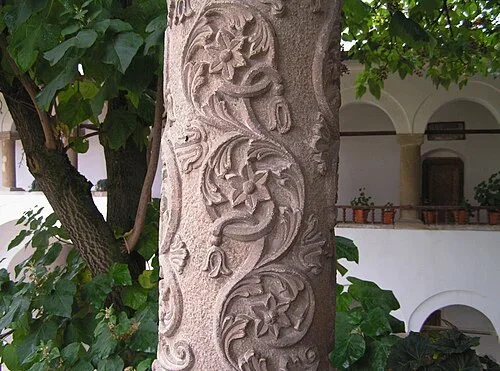 Dionisie's Gazebo and Southern Cloisters
Carved Column of the Foișor
Here the ornament of the style can be seen at the reach of a hand. Vines swirl up the shaft of the stone, spreading into blossoms and tulip-like flowers, each leaf cut in deep relief. This floral carving, with a warmth that recalls Ottoman ornament absorbed into a Wallachian Christian idiom, is what the name Brâncovenesc stands for as much as any floor plan. Stone work of this kind was the pride of the builders, the mark of their craft. The mason Vucașin Caragea, who worked the church's stone, would have known every line of it.
Listen in the appVictor MODORAN · CC BY-SA 3.0 ro
10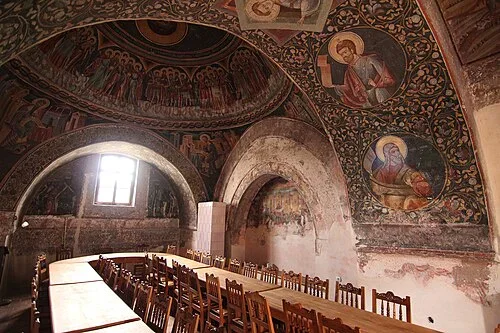 The Monastic Refectory (Trapeza)
The Refectory (Trapeza)
Every monastery needs a room where the community eats together, and this is Horezu's: the trapeza, the dining hall. The stone vaults overhead are painted with medallions of holy figures, so the brothers and sisters took their meals under watching saints. Long tables and benches fill the room, still arranged as a common hall. In Orthodox monasteries the shared meal belongs to the daily rule as much as prayer does, one more rhythm binding the community together. The room sits along the western side of the enclosure, with the chapel above it.
Listen in the appPhoto: Nicubunu · CC BY-SA 3.0 ro
- 11
The Infirmary Church (Bolnița) Founded by Princess Maria
Princess Maria's own church beyond the walls, and the family vision that made Horezu whole.
Horezu Monastery
Frequently asked questions
How much does the guide cost?
Free app download. Listed guide price: $0.99. Guide price shown in the app. Audio guide only. Venue admission is separate.
Can I listen without internet?
Yes. Download the guide’s audio, images, and maps in the app before your visit. Your downloaded content is then available offline.
Can I listen in my language?
This audio guide is available in 15 languages, including English.
Do I need to follow a schedule?
No. This is a self-guided experience. Choose your stops, pause whenever you like, and return to a story at your own pace.
At your own pace
Explore Horezu Monastery.
Download Stanza, then search for “Horezu Monastery”.
Free app download · Guide price shown in the app
Keep exploring
Nearby audio guides
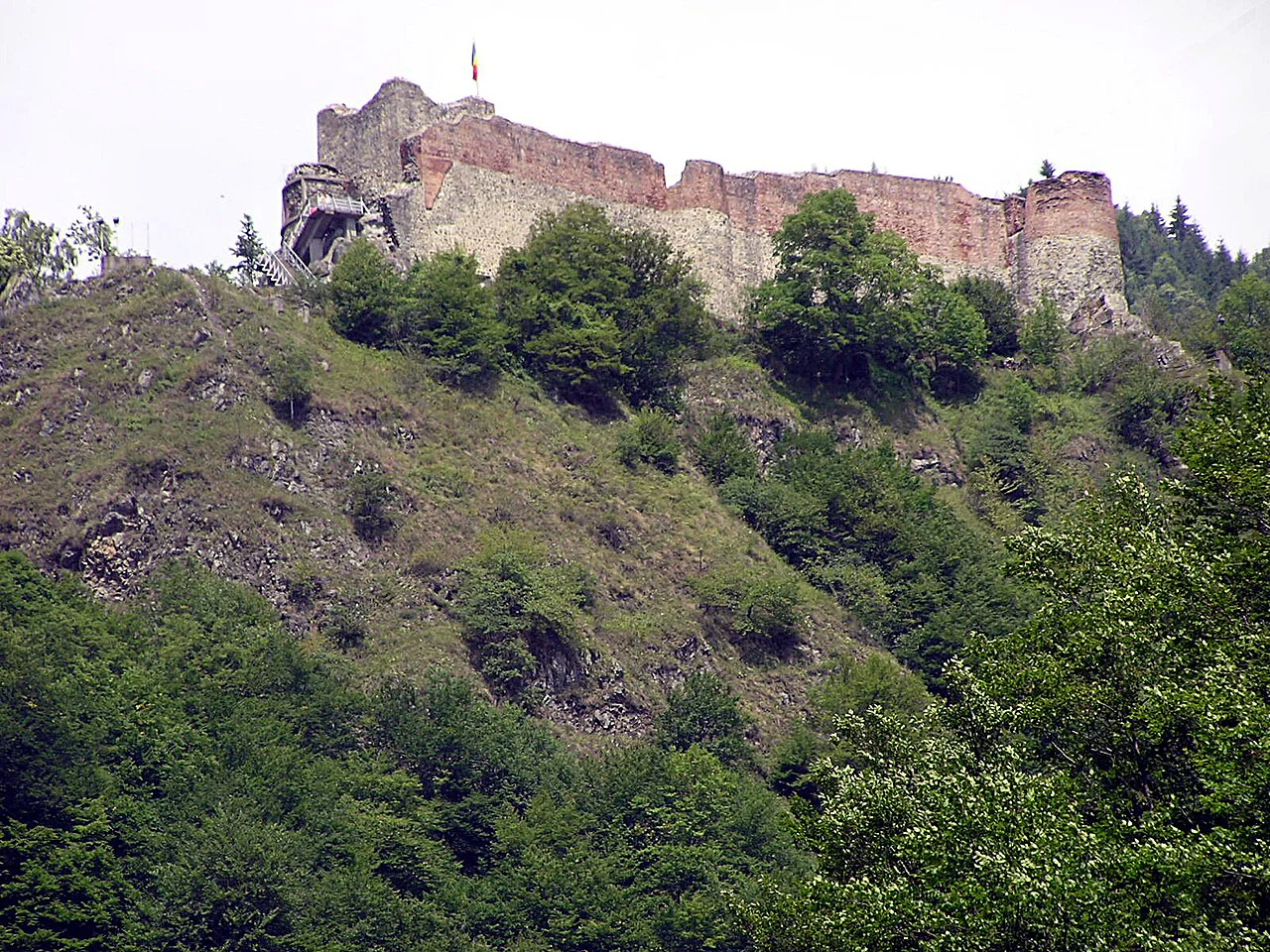
Căpățânenii Ungureni · 53 km
Poenari Castle
Content & sources
L.Kenzel · CC BY-SA 3.0
Orăștioara de Sus · 74 km
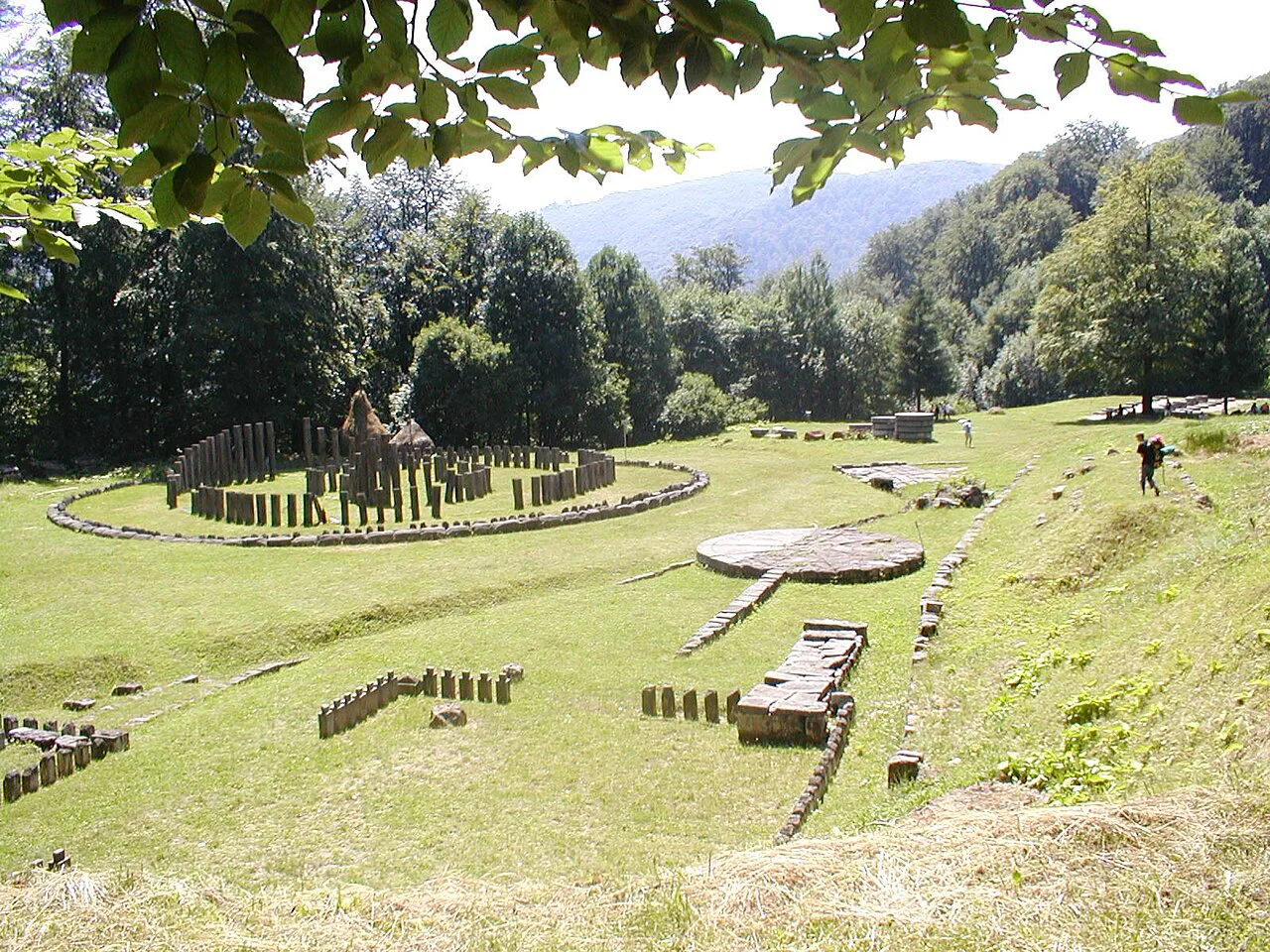
Sarmizegetusa Regia
Content & sources
Photo: FDominec · CC BY-SA 3.0
Hunedoara · 109 km
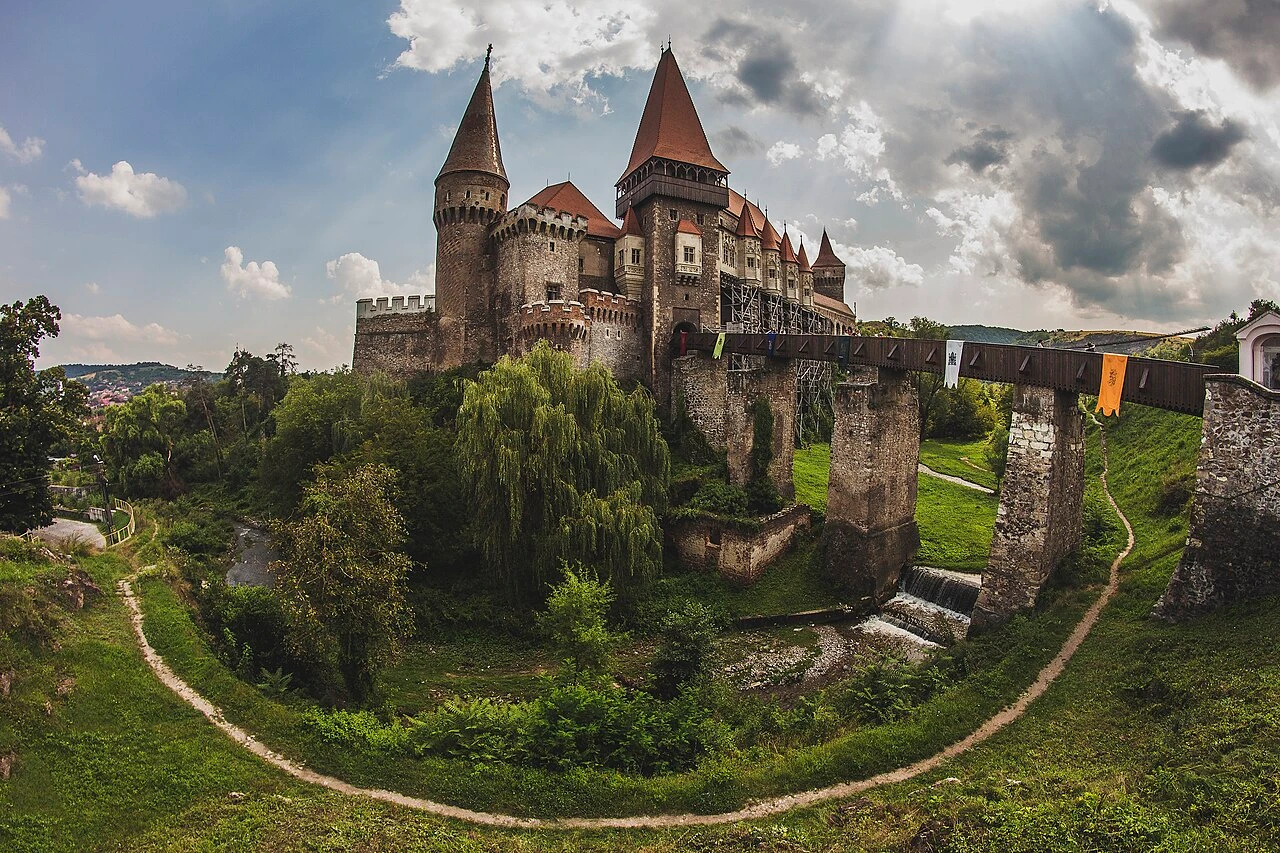
Corvin Castle
Content & sources
Carcea Daniel · CC BY-SA 3.0 ro
Bran · 113 km
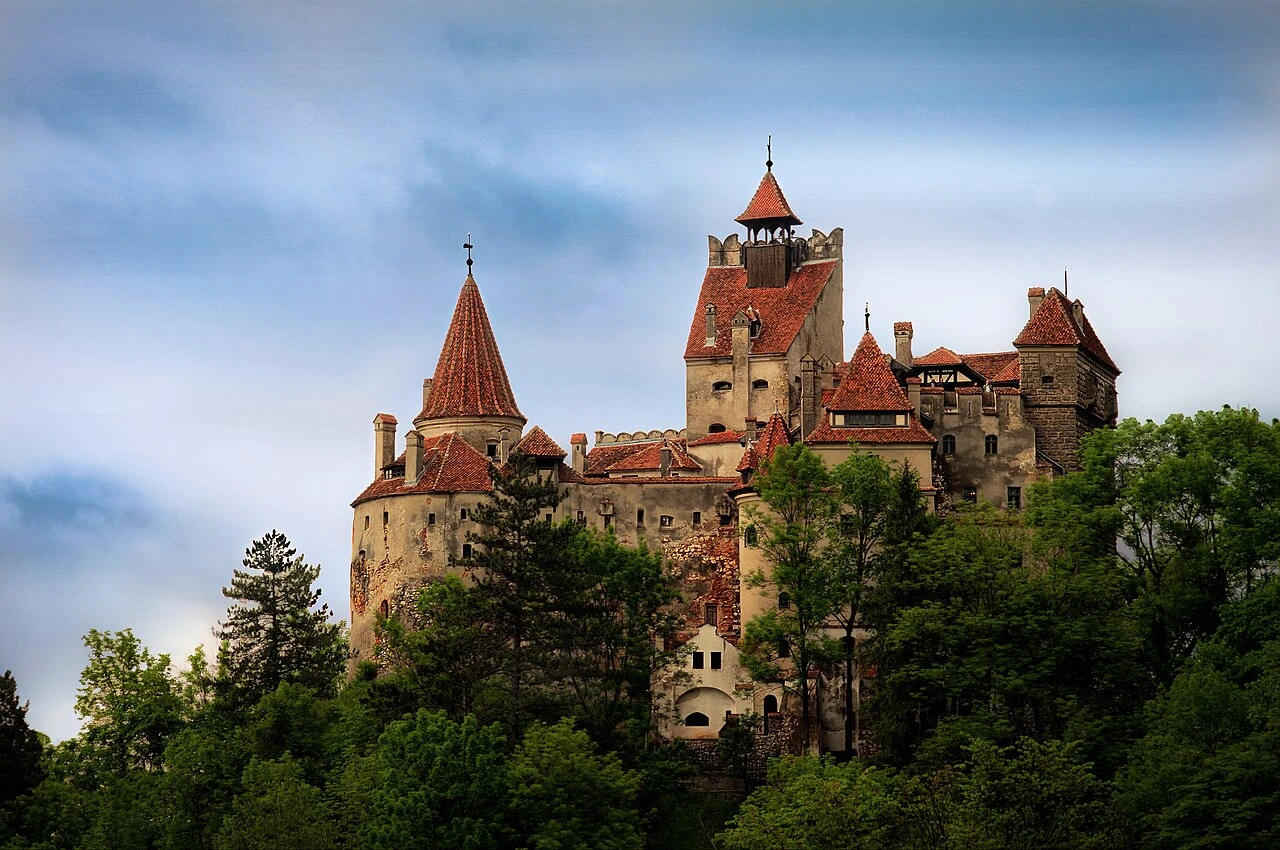
Bran Castle
Content & sources
Dobre Cezar · CC BY-SA 3.0 ro