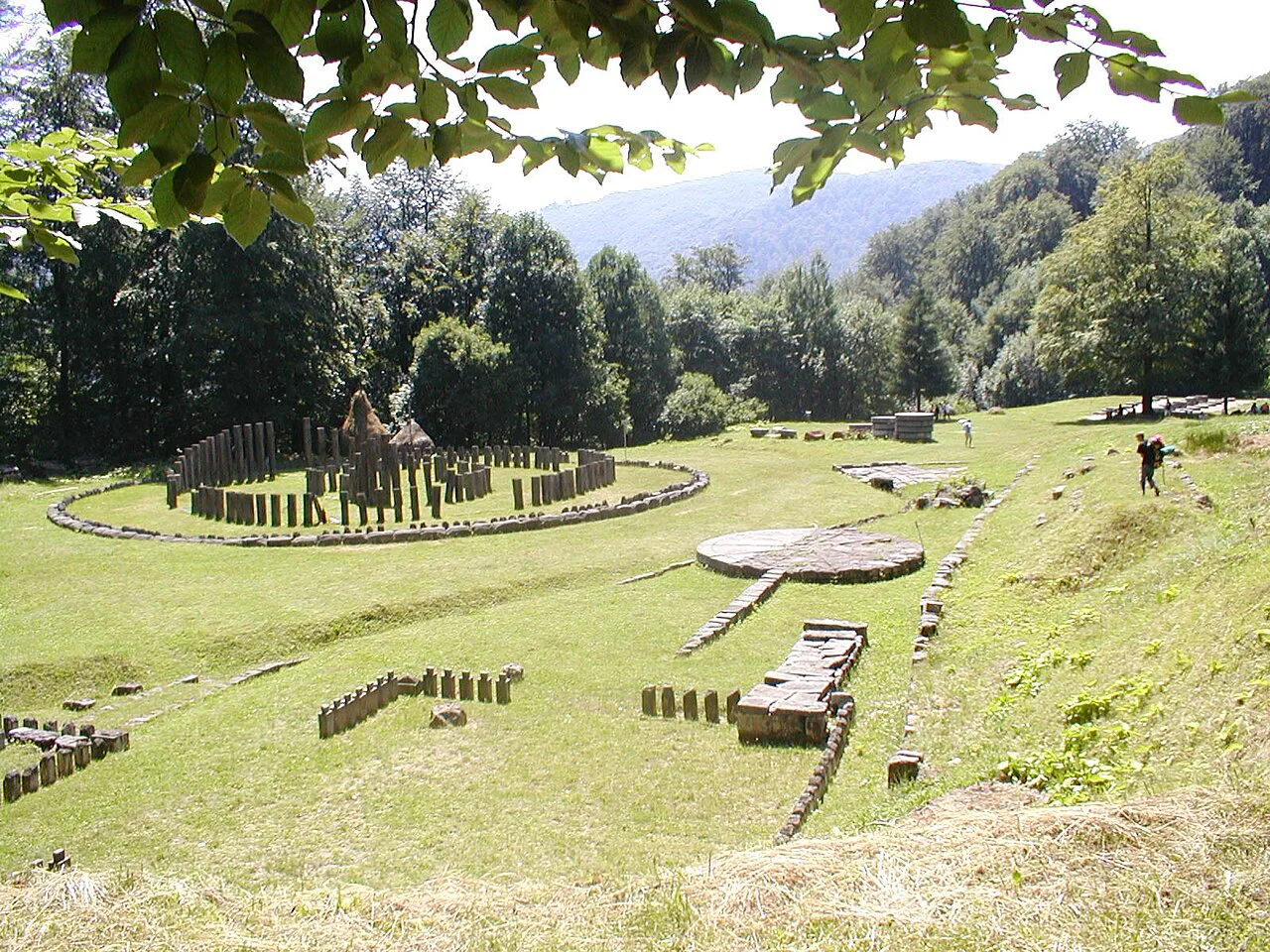
Stanza · Audio guide
Sarmizegetusa Regia Audio Guide
A place to remember. A story to take with you.
Sarmizegetusa Regia was the capital and the most important military, religious and political centre of the Dacians. The fortress was the core of a strategic and defensive system in the Orăștie Mountains.
Download Stanza, then search for “Sarmizegetusa Regia”.
About the tour
One guide. Your kind of visit.
Sarmizegetusa Regia was the capital and the most important military, religious and political centre of the Dacians. The fortress was the core of a strategic and defensive system in the Orăștie Mountains.
Ready when you are.
- 01Get the free Stanza app.
iOS & Android
- 02Find your guide.
“Sarmizegetusa Regia”
- 03Download before you go.
Works offline
Audio guide / 14 narrated stops
Inside the guide
Get to know a few of the stories before you go. Open a stop to read more.
01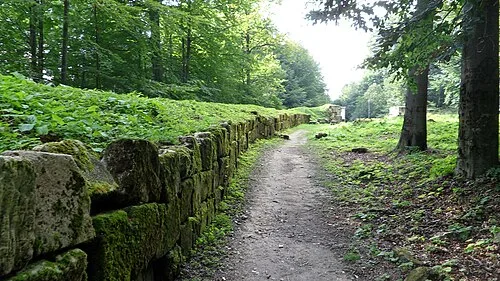 Forested Approach and the Murus Dacicus Fortress Walls
Arrival at the Dacian Capital: the Forest Wall
Welcome to Sarmizegetusa Regia, the capital of the Dacian kingdom. Long before Rome reached this far north, this mountain held the most important military, religious and political centre of the Dacian people. The site sits high in the Orăștie Mountains of Romania, near the village of Grădiștea de Munte, on a peak more than a thousand metres up. The mossy wall running beside the forest path is a first taste of the Dacians' stonework. A kingdom kept its capital here for roughly a century and a half, until the second century AD. Even the name is a puzzle. Nobody knows how it sounded in the Dacian language, or what it meant. Scholars have offered competing readings. One makes it the high citadel, a fortress of palisades on a rock. Another reads it as the house of the Getic nation. A third, bolder one takes the Latin words for Sarmatians and Getae. Each remains a hypothesis. The mountain keeps its original name to itself.
Photo: Cosmin Stefanescu · CC BY-SA 3.0 ro
02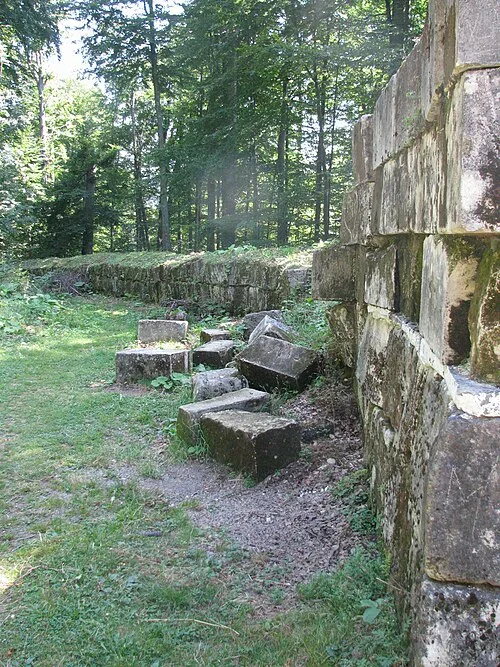 Forested Approach and the Murus Dacicus Fortress Walls
The West Gate and the Murus Dacicus Wall
The Dacians had their own way of building a fortress wall, and this gate shows it off. The technique is called murus dacicus, the Dacian wall. Massive shaped stone blocks were laid in two faces, locked together with internal timber beams. The method drew on Hellenistic building knowledge, and it produced walls that could shrug off earthquakes and battering. When finished, the citadel wall stood about four to five metres high and three metres thick. It enclosed roughly three hectares, following the edge of the height. That is why the citadel has an odd shape: a hexagon with unequal sides. The whole fortress rose on five artificial terraces. And this citadel was never alone. Six Dacian fortresses together guarded the Orăștie Mountains, Sarmizegetusa at their heart. All six are now UNESCO World Heritage, listed in 1999. The fallen blocks scattered at the foot of the wall hint at what came later.
Photo: Codrinb · CC BY-SA 3.0 ro
03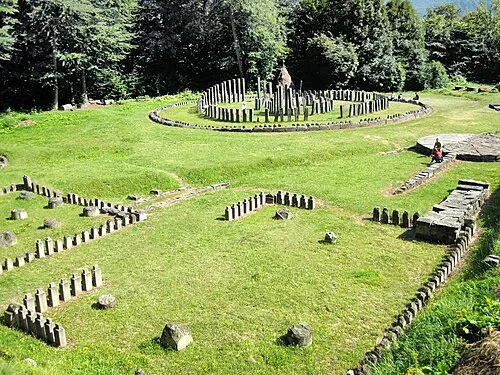 Citadel Terraces and the Fall of King Decebalus
The Citadel Terraces and the Fall of 106 AD
This wide view over the sanctuary terraces is a good place to tell how the Dacian capital ended. The end came in two wars with the Roman Empire under Emperor Trajan. At the close of the first war, in 102 AD, the walls were partly torn down. The Romans then rebuilt them as fortifications of their own. Those Roman works were destroyed, quite possibly by the Dacians themselves. After the successful siege of 105 to 106, they were rebuilt once more. The conquerors stationed a garrison here and set about demolishing the citadel. The king who lost it all was Decebalus, who ruled from 87 until 106. Under him the capital reached its zenith. When defeat came, he fled into the mountains and chose death over capture. The fighting itself cannot be pinned to any single spot on this terrace, but the demolition left its mark everywhere.
Listen in the appUser:Oroles · Public domain
04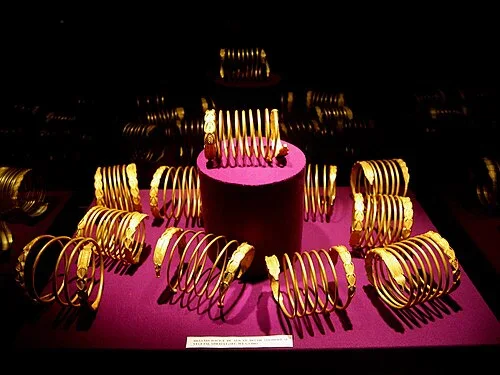 Citadel Terraces and the Fall of King Decebalus
Dacian Gold and the Legend of the Hidden Treasure
Gold drew conquerors to this mountain, and gold still surrounds it. These spiral bracelets belong to the gold treasure of Sarmizegetusa Regia and are now displayed in the National Museum of Romanian History in Bucharest. The Dacian kingdom was rich in precious metal, and its coins carried a name of their own. Gold coins found here and nearby are inscribed KOSON. Who Koson was, the coins do not say. Around the mountain grew a long local legend: that the royal treasuries were hidden away before the Romans arrived. Generations of treasure hunters have taken the story seriously. Some searched the slopes; a few dug where they should not have. What is certain is the craftsmanship, dense spirals of gold worked into bracelets of real weight.
Listen in the appOwn work · GFDL
05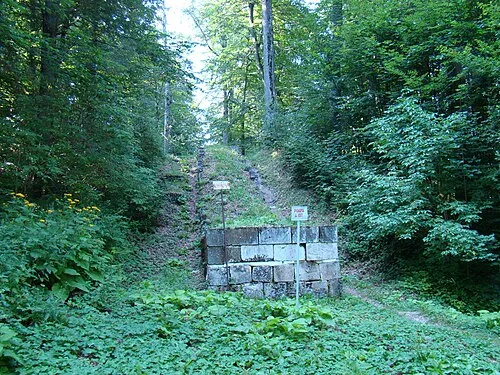 Eastern Gate and the Paved Limestone Road
The Eastern Gate
Not every gate of this fortress looked toward danger. The eastern gate faced the sacred zone, about a hundred metres away, on the same cardinal point. From it, a paved road ran straight down to the sanctuary terrace. That alignment was deliberate. The builders tied the military citadel and the religious precinct into one planned whole. Power and worship sat side by side on the mountain, joined by a road of stone.
Listen in the appPhoto: ViperDex · CC BY-SA 3.0 ro
06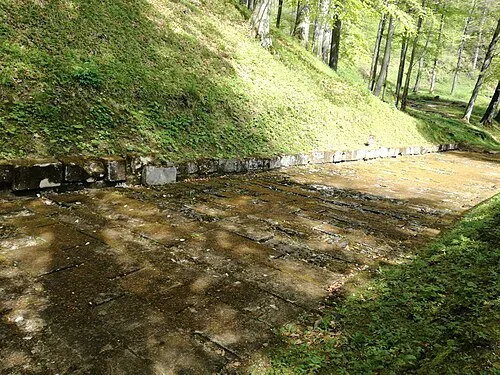 Eastern Gate and the Paved Limestone Road
Walking the Paved Dacian Road
Under the beech trees lies one of the capital's finest pieces of engineering: a paved road. Large limestone flagstones form its surface, laid to carry traffic between the citadel gate and the sacred terrace. This was the ceremonial spine of the capital. Anyone travelling from the fortress to the sanctuaries walked it, just as visitors trace the same line today. Two thousand years of footsteps have worn the route but never erased it.
Listen in the appPhoto: Eliza Palos · CC BY-SA 4.0
07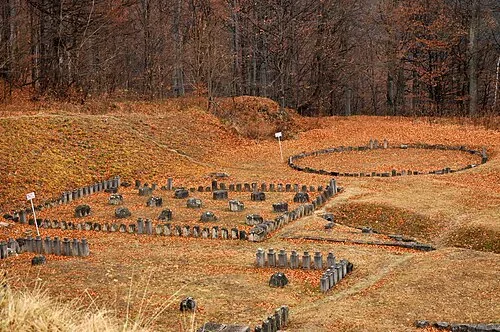 The Upper Sacred Terrace and Rectangular Temples
The Sacred Terrace: Rectangular Sanctuaries and the Small Circle
This terrace was the spiritual heart of the Dacian capital. Here stood the rectangular sanctuaries, temples of varied shapes and sizes, beside a small circular one. Exactly how many temples there were, nobody can say. The Romans destroyed them during the hostilities, and the ruins allow two readings. There may have been seven, or eight. One may have been a single large sanctuary, or two smaller ones built very close together. Only two circular sanctuaries stood here, and one of them is the great circle still visible today. The god worshipped here was Zalmoxis. Archaeological findings suggest that he and his chief priest held an important place in Dacian society at the capital's height.
Listen in the appPhoto: România de vis · CC BY-SA 3.0 ro
08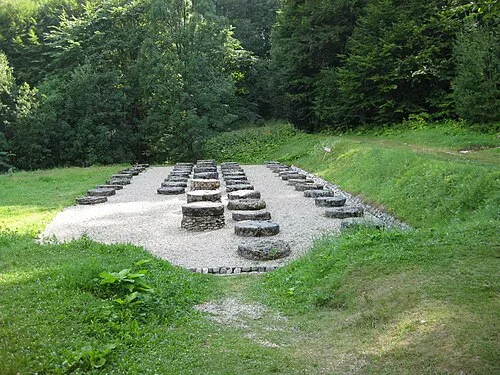 The Upper Sacred Terrace and Rectangular Temples
The Great Limestone Sanctuary
The great limestone sanctuary survives as a grid of stone plinths set in a gravel bed. Each base once carried a column of a monumental rectangular temple. Read the rows carefully and the building's whole footprint comes back: walls, entrances, the rhythm of the colonnade. That is how archaeologists reconstruct a temple whose superstructure has vanished. The precision of the layout says something broader about the Dacians. Their religion and architecture absorbed technical and scientific knowledge from the Greeks and the Romans, and put it to work on their own sacred ground.
Listen in the appOroles (talk) · Public domain
09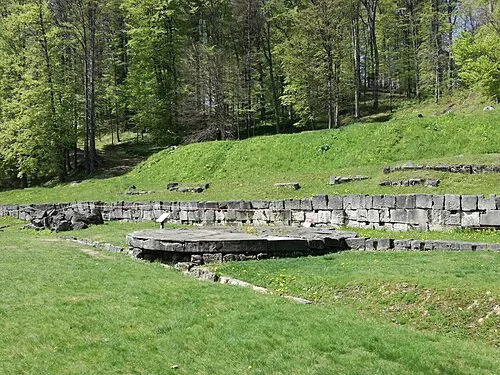 The Andesite Sun (Solar Disk Altar)
The Andesite Sun
A circular platform of andesite lies against the terrace wall, and it has earned a name: the Andesite Sun. It seems to have been used as a sundial. That reading comes with a caveat, and it is worth keeping. Dacian culture was shaped by contact with Hellenistic Greece. The sundial, if it was one, may reflect what the Dacians learned from Hellenistic geometry and astronomy. However it worked, the idea of tracking the sun from a mountain terrace in the Carpathians is striking on its own.
Listen in the appPhoto: Eliza Palos · CC BY-SA 4.0
10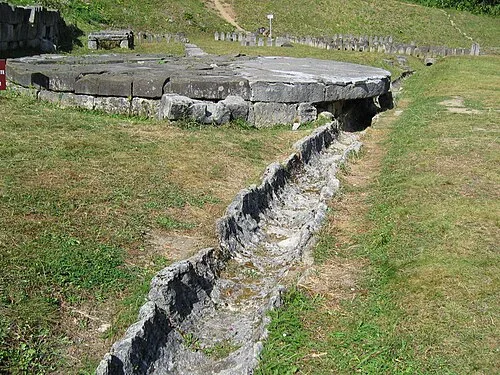 The Andesite Sun (Solar Disk Altar)
Rays of Stone: Building the Solar Disc
Look closely at the disc and the craftsmanship appears. The paving forms a sun whose rays are composed of segments of circles, cut in andesite and fitted together like a geometric diagram in stone. Beside it runs a channel built of shaped stone, draining the sacred terrace toward the sanctuaries. What the water was for, whether simple drainage or something more, the ruins do not settle. In the background the rectangular sanctuaries line up on the same terrace, so the disc sat among the temples, part of one designed ensemble.
Listen in the appPhoto: Codrinb · CC BY-SA 3.0 ro
- 11
The Great Circular Sanctuary
Timber posts in the shape of a D, and the inevitable comparison with Stonehenge.
- 12
The Dacian Calendar
The circle that scholars have studied as a Dacian calendar.
- 13
Water on the Mountain: the Dacian Channel
Ceramic pipes, carved channels, and the townsfolk who lived below the citadel.
- 14
Iron and Skill: What the Mountain Left Behind
The smiths' tongs, the rake, and the 400 objects that prove Dacian skill.
Sarmizegetusa Regia
Frequently asked questions
How much does the guide cost?
Free app download. Listed guide price: $0.99. Guide price shown in the app. Audio guide only. Venue admission is separate.
Can I listen without internet?
Yes. Download the guide’s audio, images, and maps in the app before your visit. Your downloaded content is then available offline.
Can I listen in my language?
This audio guide is available in 15 languages, including English.
Do I need to follow a schedule?
No. This is a self-guided experience. Choose your stops, pause whenever you like, and return to a story at your own pace.
At your own pace
Explore Sarmizegetusa Regia.
Download Stanza, then search for “Sarmizegetusa Regia”.
Free app download · Guide price shown in the app
Keep exploring
Nearby audio guides
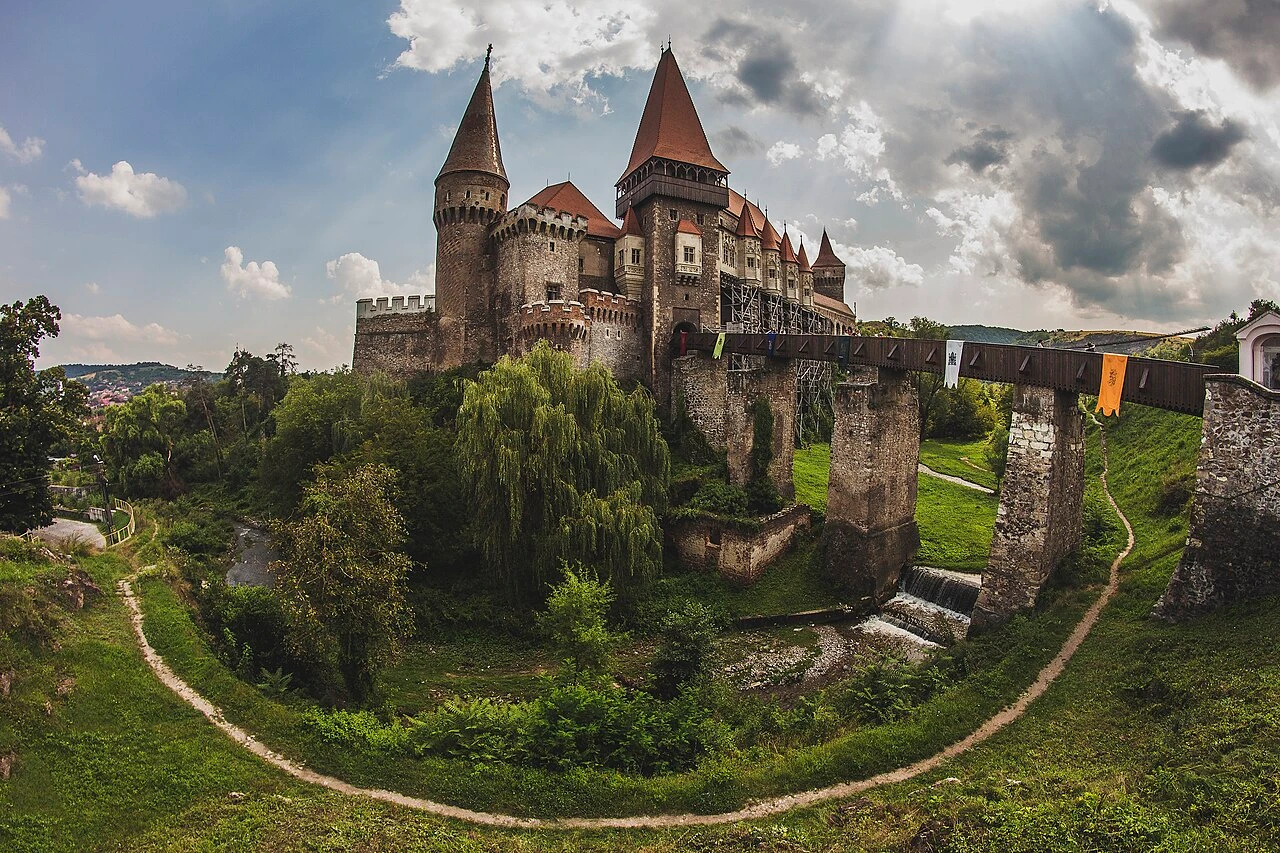
Hunedoara · 36 km
Corvin Castle
Content & sources
Carcea Daniel · CC BY-SA 3.0 ro
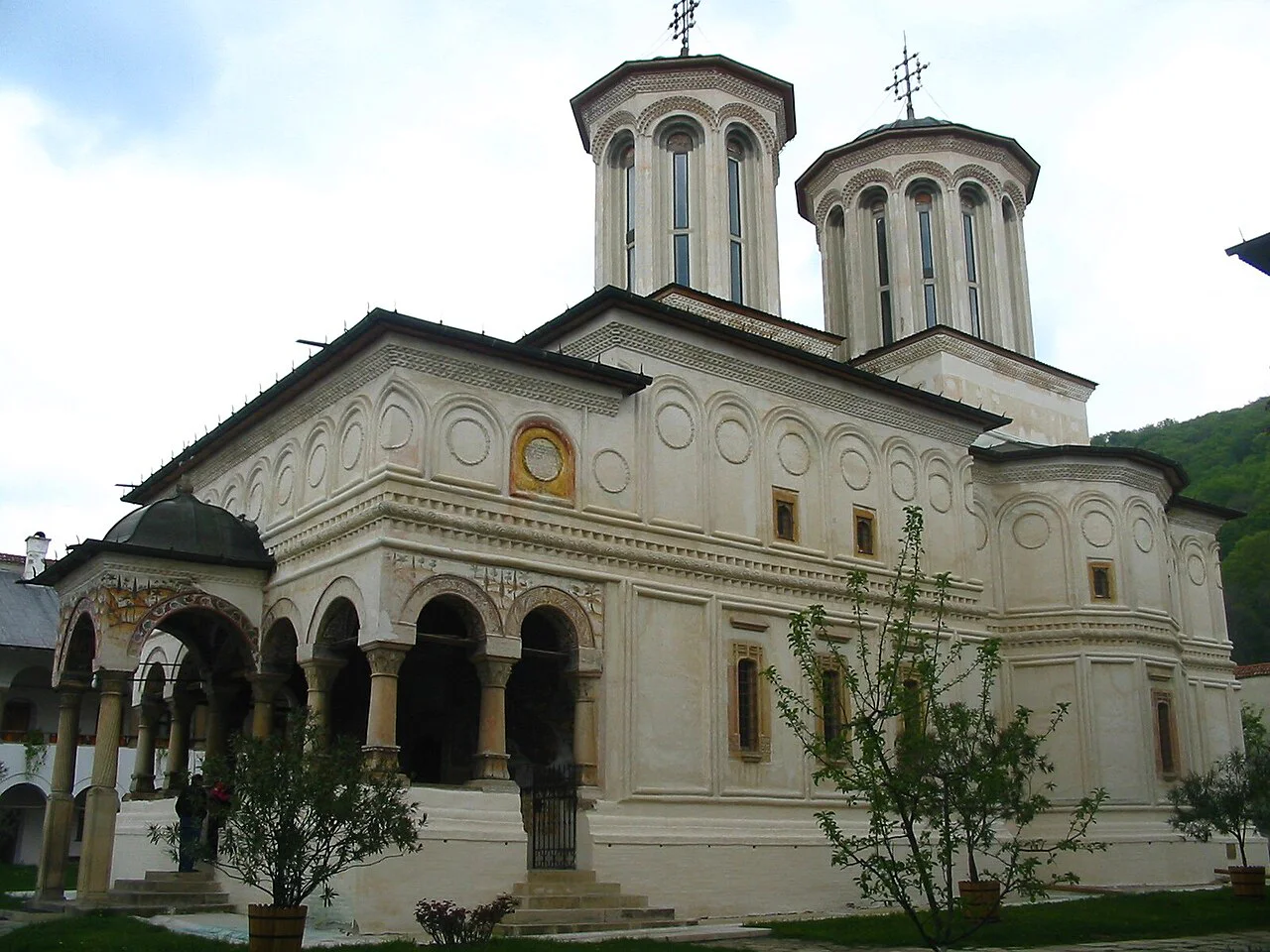
Horezu · 74 km
Horezu Monastery
Content & sources
Cristian Chirita · CC BY-SA 3.0
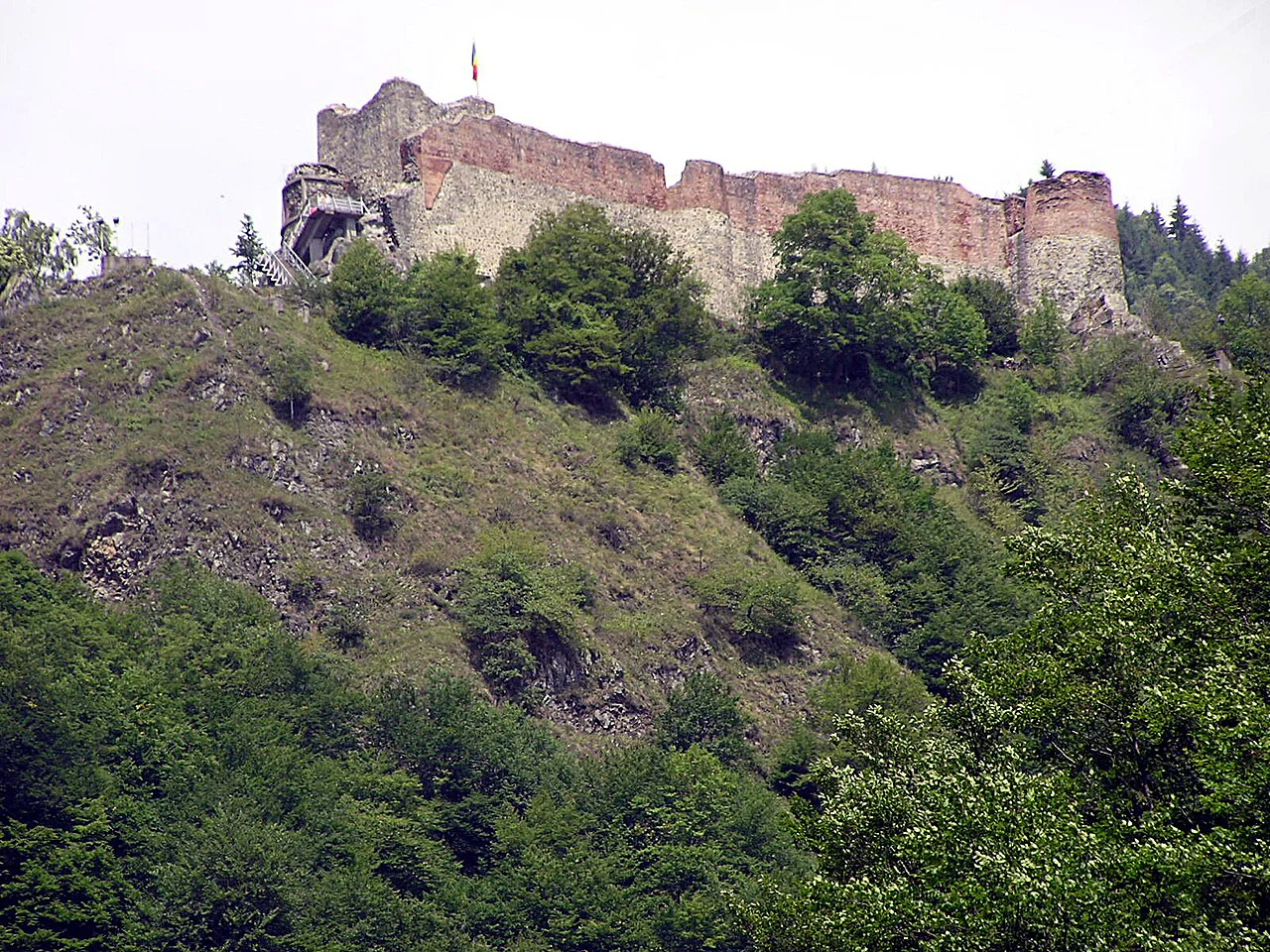
Căpățânenii Ungureni · 108 km
Poenari Castle
Content & sources
L.Kenzel · CC BY-SA 3.0
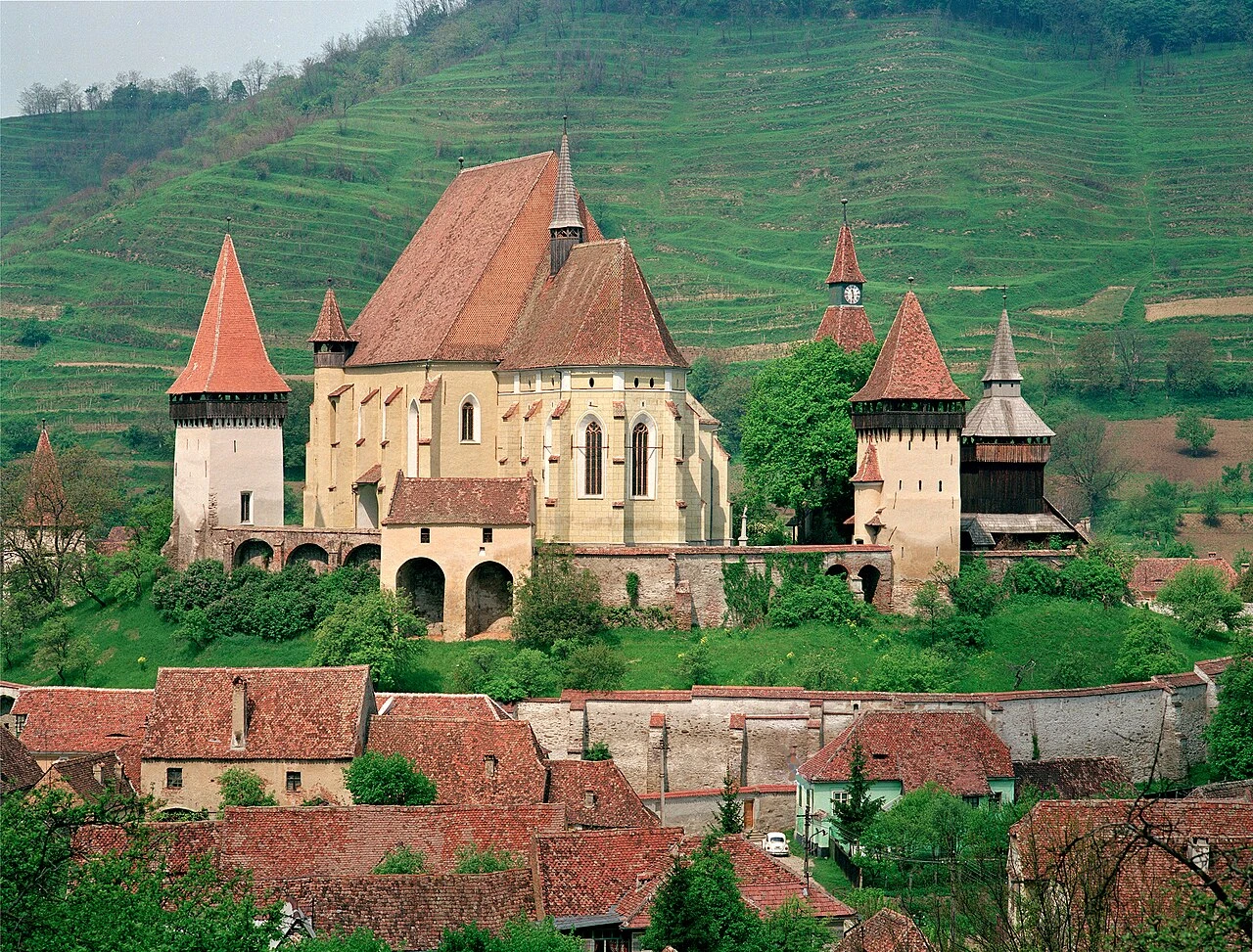
Biertan · 110 km
Biertan fortified church
Content & sources
Otto Schemmel · Public domain