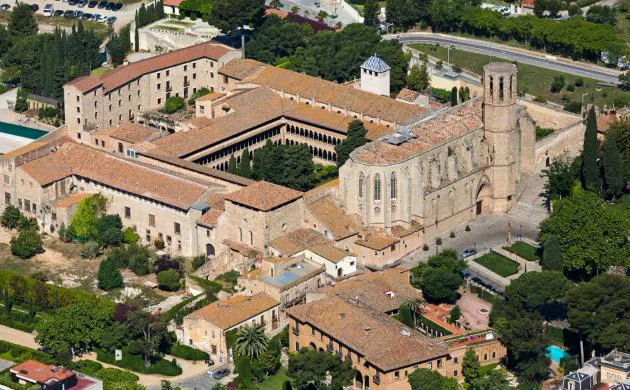
Stanza · Audio guide
Monasterio de Santa María Audio Guide
A place to remember. A story to take with you.
The Monastery of Pedralbes is a Gothic convent located in Barcelona, Spain. It currently functions as a museum that houses permanent exhibitions on its art and legacy.
Download Stanza, then search for “Monasterio de Santa María”.
About the tour
One guide. Your kind of visit.
The Monastery of Pedralbes is a Gothic convent located in Barcelona, Spain. It currently functions as a museum that houses permanent exhibitions on its art and legacy.
Ready when you are.
- 01Get the free Stanza app.
iOS & Android
- 02Find your guide.
“Monasterio de Santa María”
- 03Download before you go.
Works offline
Audio guide / 13 narrated stops
Inside the guide
Get to know a few of the stories before you go. Open a stop to read more.
01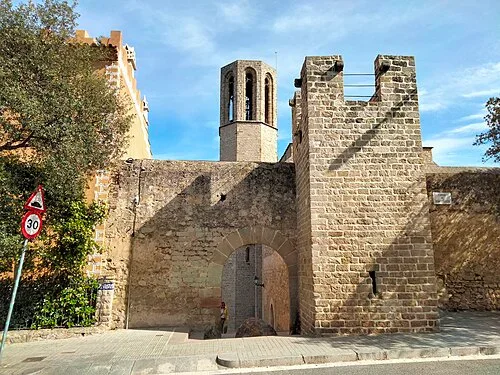 The Fortified Enclosure and Church Portal
The North Wall, Gate and Watchtower
Welcome to Pedralbes, one of Barcelona's great Gothic monasteries. In thirteen twenty-six, King James II of Aragon founded it for his wife, Queen Elisenda de Montcada. The community he settled here were Poor Clares, nuns who followed the rule of Saint Clare, and most of them came from noble families. The name is older than the monastery. When a site for the convent was being sought, this spot was known as Petras Albas, Latin for white stones, after the pale rock of the hills. In Catalan that became pedres albes, and Pedralbes it has stayed ever since. The wall, the gateway and the squat watchtower at this entrance are what remain of a defensive enclosure that once ringed the whole community. From here, the tour moves inward: into the church, the great cloister, the queen's tomb and the rooms where the nuns lived.
Photo: Enric · CC BY-SA 4.0
02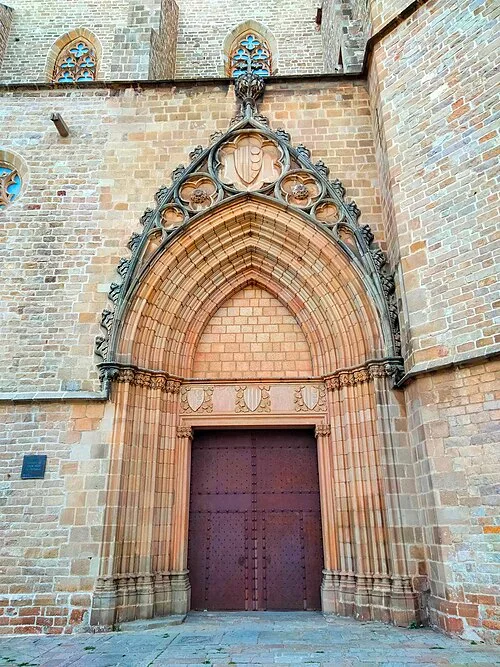 The Fortified Enclosure and Church Portal
The Gothic Portal of the Church
A deep pointed arch, carved tier upon tier, marks the entrance to the monastery church. Slender mouldings run up the arch like folded ribbons, thickened with leaves, flowers and crockets, and heraldic shields are set into the ornament at its crown. For a house of cloistered women, the doorway is remarkably grand. It was the one face the church turned towards the city, the threshold between Barcelona and the enclosed world beyond. Everything past it belonged to the community; everything before it belonged to everyone.
Photo: Enric · CC BY-SA 4.0
03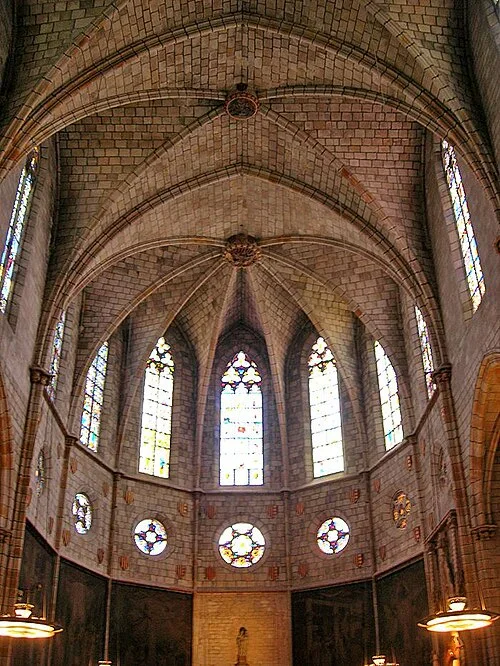 The Church and Queen Elisenda's Regal Tomb
The Single-Nave Church
Inside, the church is one broad room: a single nave spanned by ribbed vaults and closing in a polygonal apse. It was ready with remarkable speed. A solemn mass inaugurated the church on the third of May, thirteen twenty-seven, about a year after the community was founded. The high choir, where the nuns sang the services, makes clever use of the land. The site slopes, and instead of resting on low vaults as such choirs usually do, most of the choir floor sits directly on the hillside ground. At the altar hangs a Gothic retable, a large painted altarpiece, by Jaume Huguet. On the outside façade, a large rose window lights the nave from above the door.
Listen in the appAndreas Faeessler · CC BY-SA 3.0
04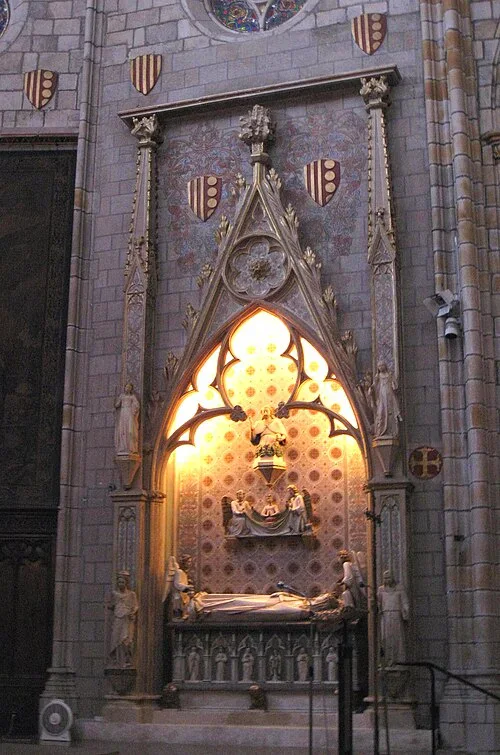 The Church and Queen Elisenda's Regal Tomb
Queen Elisenda's Tomb: The Royal Side
Set into the wall that separates the church from the cloister lies the monastery's most original monument: the alabaster tomb of Queen Elisenda. It was designed to be read from both sides. From the church, the queen lies dressed as a sovereign, crowned, beneath a tall Gothic canopy hung with pinnacles and shields. Angels and mourners attend the effigy, and warm light falls on it from the chapel beside it. One tomb, two faces, one for each of the worlds she belonged to. The other face looks the opposite way, into the cloister, and it shows a very different woman.
Listen in the appPhoto: Enfo · CC BY-SA 3.0
05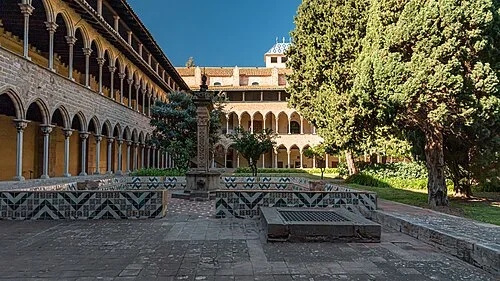 The Grand Gothic Cloister
The Three-Story Cloister
Every part of this monastery is arranged around one courtyard. The cloister rises three floors and measures about forty metres on a side, a square of arches stacked three deep. Wide arches rest on numerous slender columns, and the capitals carry the emblems of the kings of Aragon and of the House of Montcada, Elisenda's own family, carved in stone. At the centre lies a garden of orange trees and palms. For the Poor Clares this was the heart of contemplative life. Cloistered nuns lived enclosed, rarely passing these arches outwards, so the courtyard was where their world opened to sky and green. Here the community of noblewomen walked, prayed and worked, generation after generation, under the same triple arcades.
Listen in the appJorge Franganillo · CC BY 2.0
06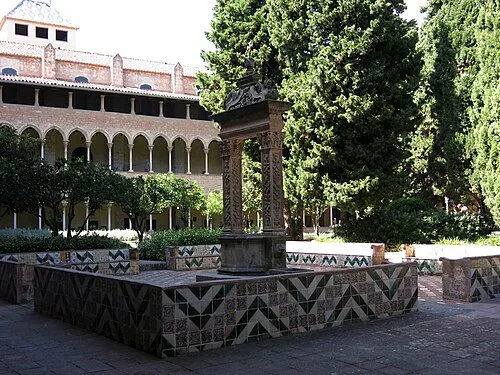 The Grand Gothic Cloister
The Cloister Well
At the middle of the garden stands a well beneath a small carved canopy. An enclosed community had to find its water within its own walls, and this was where it was drawn, at the very centre of the enclosure. The canopy above it is a piece of architecture in miniature, pinnacled and crowned, as carefully made as the arcades around it. Around the well, the nuns kept their garden green and quiet, a fraction of shade and fruit in the middle of the cloister square.
Listen in the appPhoto: Enric · CC BY-SA 4.0
07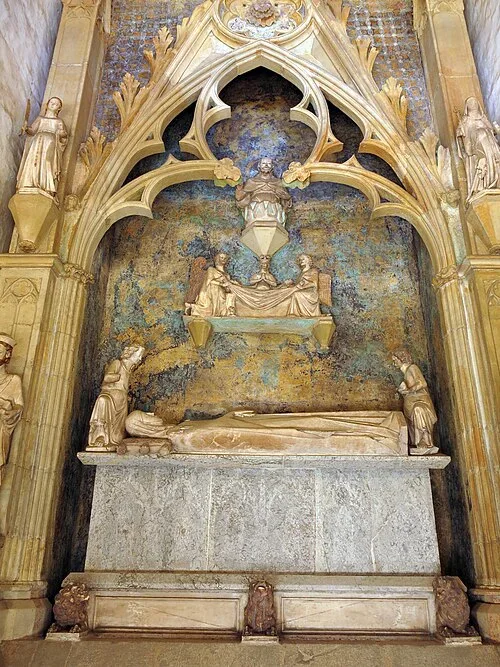 The Grand Gothic Cloister
Queen Elisenda's Tomb: The Widow's Side
Seen from the cloister, the same alabaster tomb shows a different Elisenda. Here she is represented as a widow, because although she founded this convent she never took the nun's habit. After King James died in thirteen twenty-seven, she moved into a palace she had built against the monastery and lived there for decades, close to the community but outside it. She had guarded the nuns well: one of her privileges placed the monastery under the direct protection of Barcelona's city council, the Consell de Cent, which pledged to defend it in case of danger. In her will she ordered the palace pulled down once she was gone, so the nuns' enclosure would be left undisturbed. Its remains came to light in the nineteen-seventies, found by Maria Assumpta Escudero i Ribot, who later directed the museum here. The crowned queen on the church side and this widow are one woman, seen from her two lives.
Listen in the appPhoto: Enric · CC BY-SA 4.0
08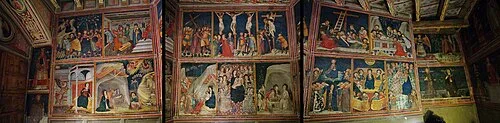 The Chapel of Saint Michael
 Frescoes
A small chapel dedicated to Saint Michael sits within the monastery, and it is covered, wall to wall, with frescoes. Ferrer Bassa painted them in thirteen forty-six. The walls carry scenes from the Passion of Christ and the life of the Virgin, told in crowded, colourful panels stacked one above another, with figures in deep reds and blues. For a chapel of this size, the ambition is extraordinary: an entire room given over to painting, every surface at work. After a careful restoration, the chapel was reopened in twenty eighteen, and the scenes read clearly again.
Listen in the appFerrer Bassa · Public domain
09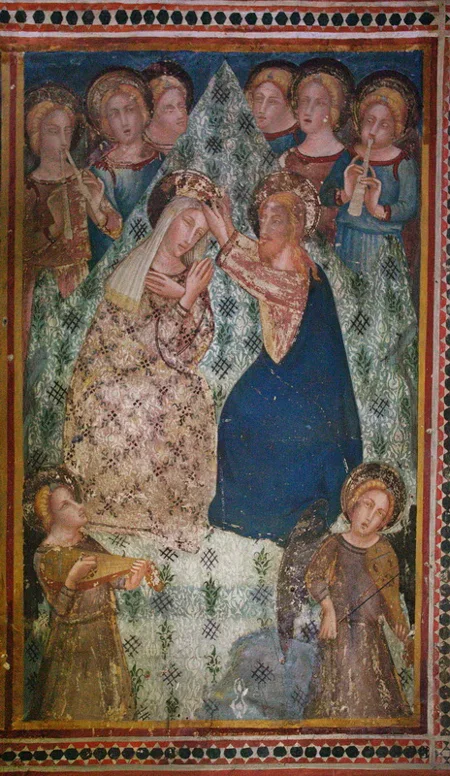 The Chapel of Saint Michael
The Coronation of the Virgin
What makes these murals important is where their style came from. Ferrer Bassa painted under the influence of Giotto, the Italian painter whose way of telling sacred stories changed European art. In the Coronation of the Virgin, Christ seats his mother and places the crown on her head, ringed by angels, some of them playing pipes and stringed instruments. The blues are deep and rich, the figures calm and human, the space ordered like a stage. This is the manner of the Italian Trecento, and here it is, almost intact, on the walls of a convent in Catalonia. Paintings in this new Italian style were still a rarity in Iberia when Bassa took up his brushes.
Listen in the appFerrer Bassa · Public domain
10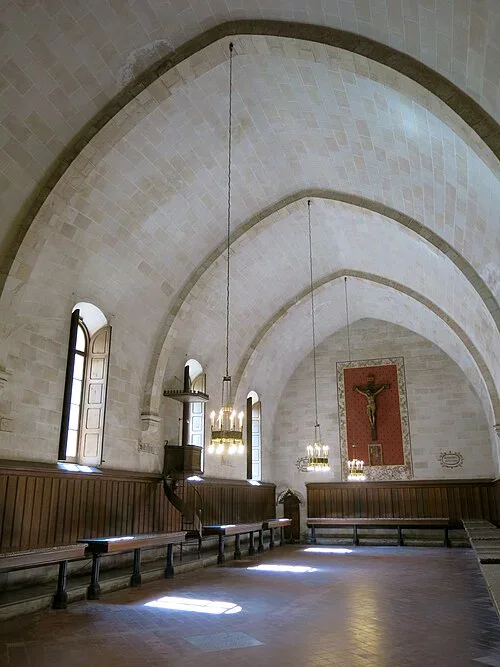 Monastic Life: Refectory and Kitchen
The Refectory
The daily rhythm of the convent had its rooms on the ground floor, and this long vaulted hall was the refectory, where the nuns ate together. Meals in monasteries were generally taken in silence, and a pulpit like the one built against the wall here served for reading aloud while the community ate, a custom shared by religious houses far beyond this one. Benches line the walls, lamps hang from the vaults on long cords, and a crucifix hangs at the far end above the reader's place. The room is big enough for the whole community to sit down at once.
Listen in the appPhoto: Enric · CC BY-SA 4.0
- 11
The Kitchen of Saint Anthony
The domed kitchen hood and tiled stove behind the silent meal.
- 12
The Dormitory and the Monastery's Treasures
The nuns' great dormitory, with its pointed arches and timber ceiling, later home to masterpieces of the Thyssen collection.
- 13
The Upper Cloister Gallery
From the top gallery, the whole foundation at a glance — and the small community that still lives beside it.
Monasterio de Santa María
Frequently asked questions
How much does the guide cost?
Free app download. Listed guide price: $0.99. Guide price shown in the app. Audio guide only. Venue admission is separate.
Can I listen without internet?
Yes. Download the guide’s audio, images, and maps in the app before your visit. Your downloaded content is then available offline.
Can I listen in my language?
This audio guide is available in 15 languages, including English.
Do I need to follow a schedule?
No. This is a self-guided experience. Choose your stops, pause whenever you like, and return to a story at your own pace.
At your own pace
Explore Monasterio de Santa María.
Download Stanza, then search for “Monasterio de Santa María”.
Free app download · Guide price shown in the app
Keep exploring
Nearby audio guides
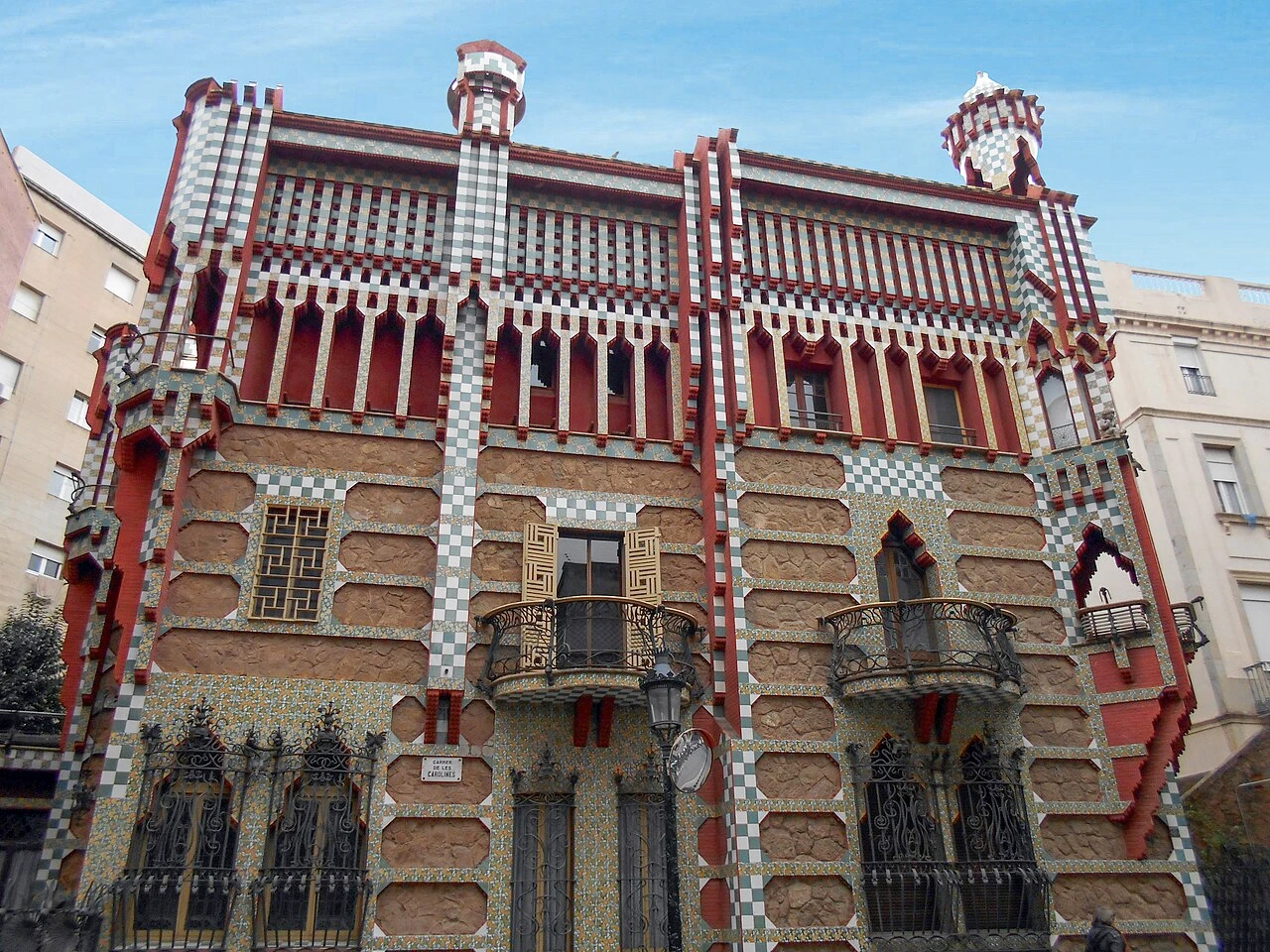
Barcelona · 3 km
Casa Vicens
Content & sources
Canaan · CC BY-SA 4.0
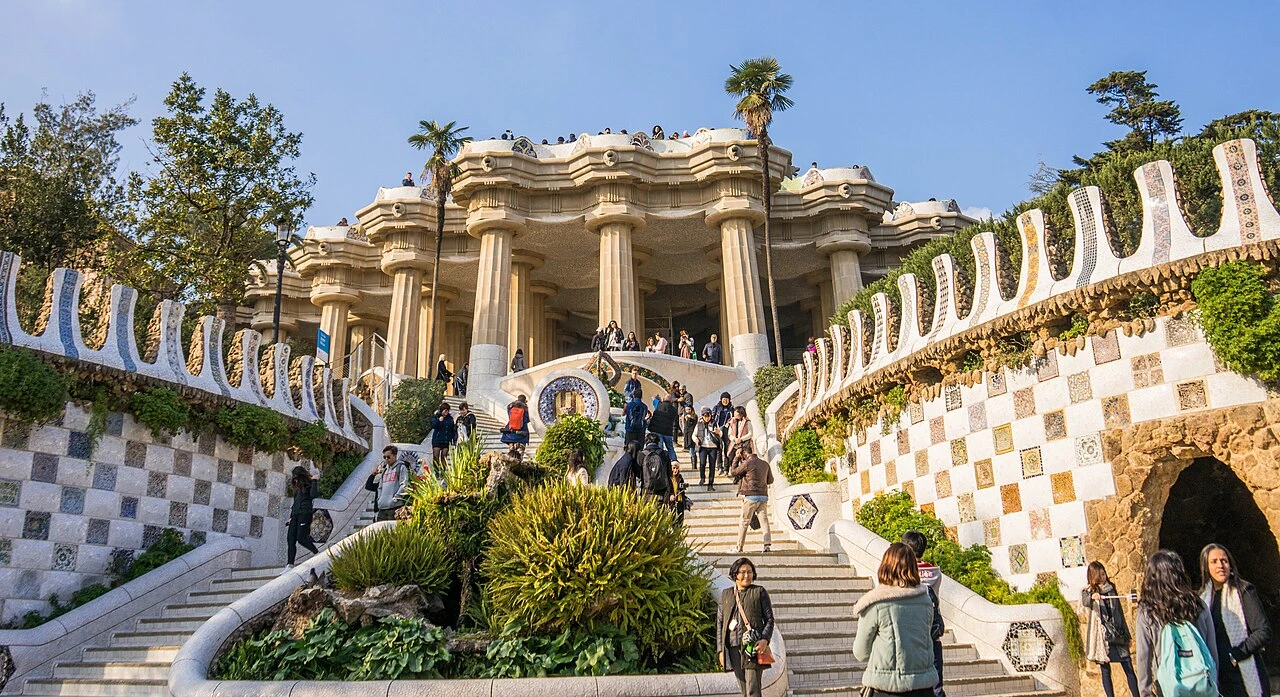
Barcelona · 4 km
Park Güell
Content & sources
Unknown author · CC0
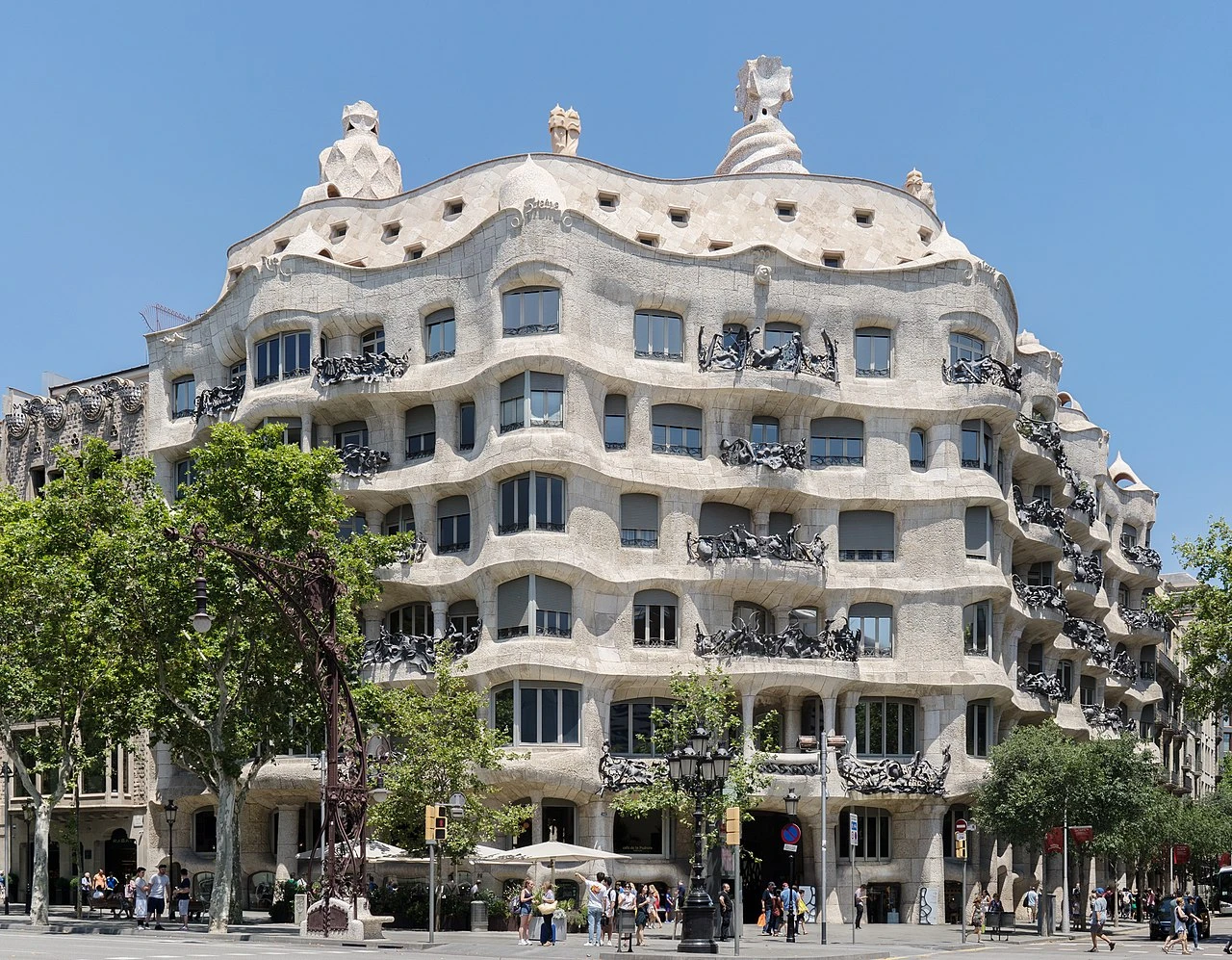
Barcelona · 4 km
Casa Milà
Content & sources
Thomas Ledl · CC BY-SA 4.0
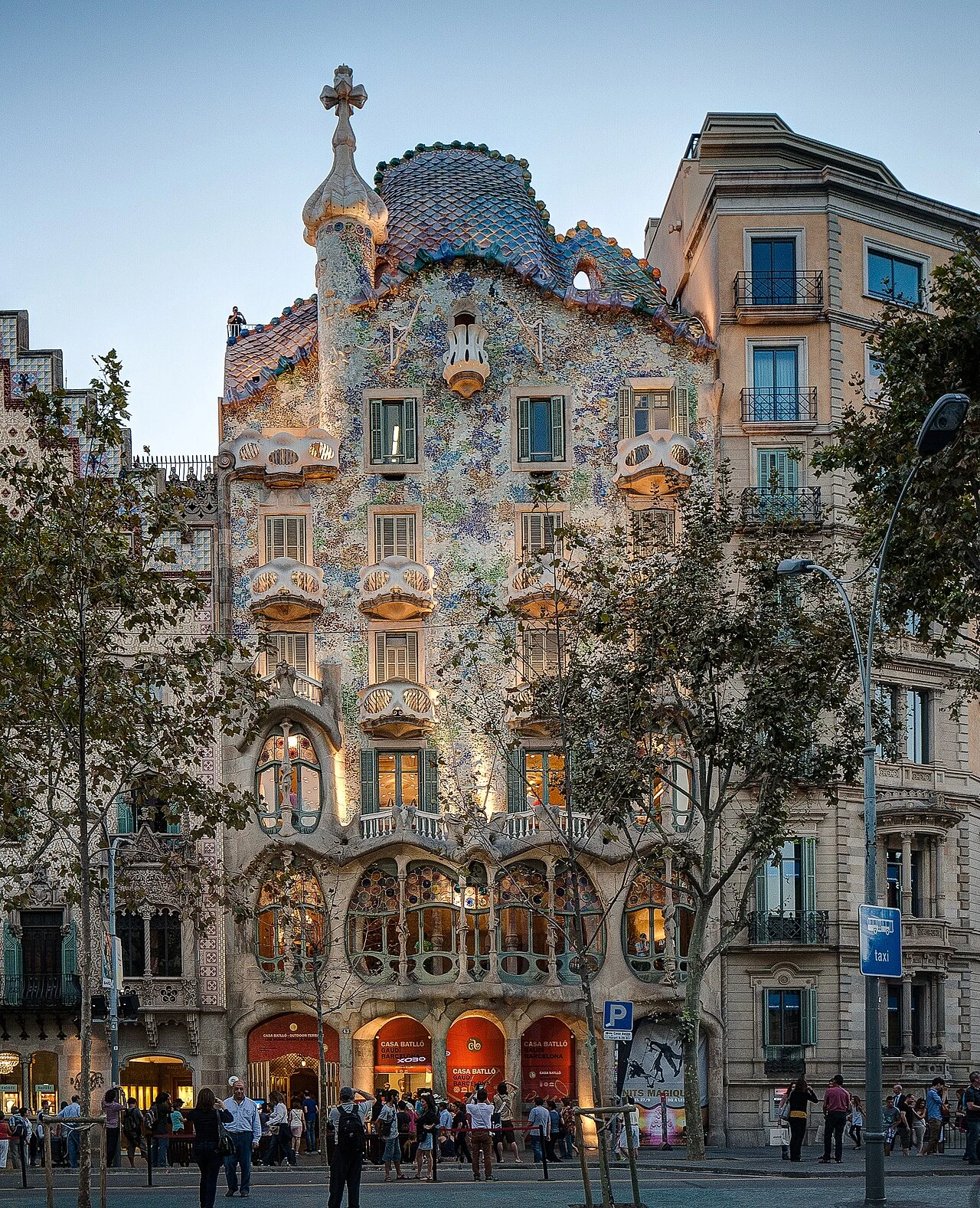
Barcelona · 4 km
Casa Batlló
Content & sources
ChristianSchd · CC BY-SA 3.0
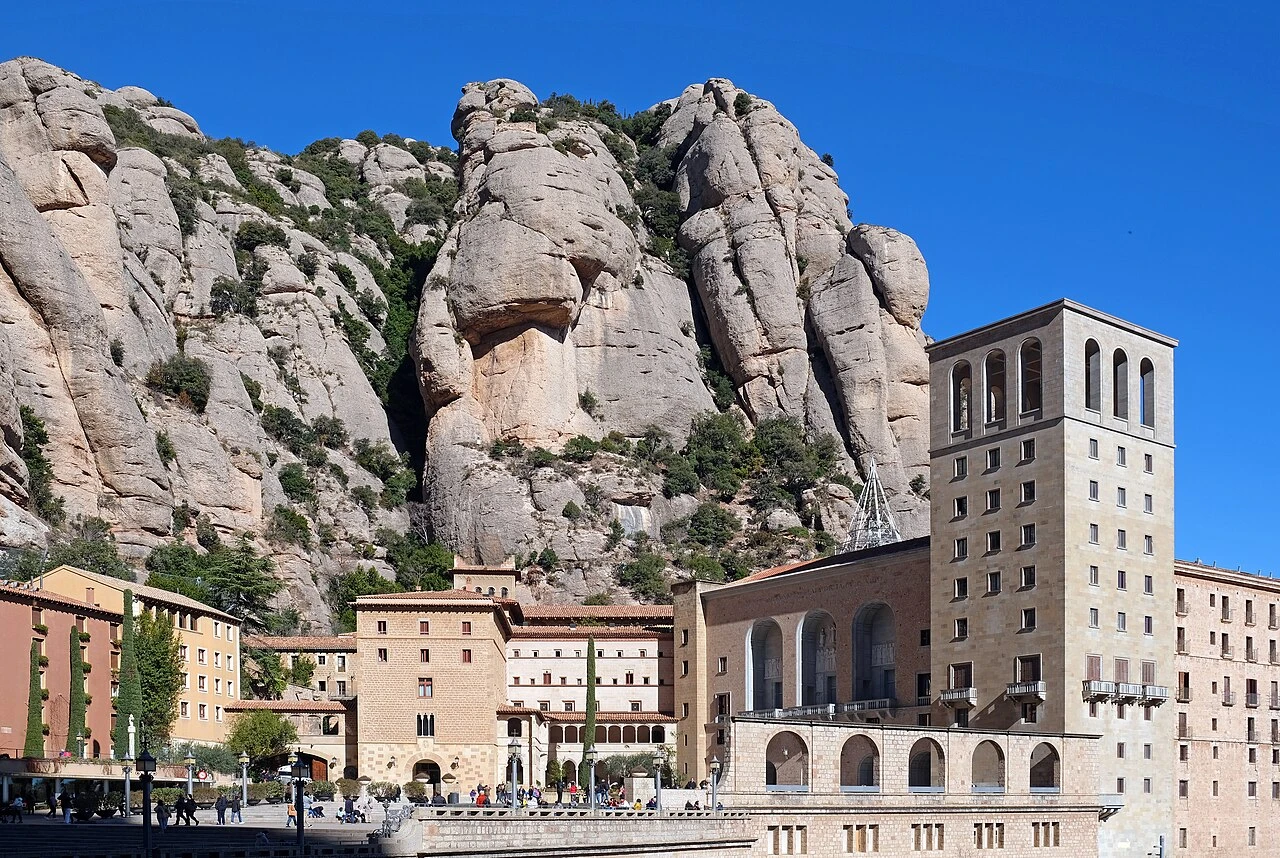
Monistrol de Montserrat · 32 km
Santa Maria de Montserrat
Content & sources
Photo: Kallerna · CC BY-SA 4.0