Stanza · Audio guide
Santa Maria de MontserratAudio guide
A place to remember. A story to take with you.
Santa Maria de Montserrat is a Benedictine abbey nestled in the Montserrat mountain range in Catalonia, Spain. It is a significant spiritual site and a popular pilgrimage destination.
Download Stanza, then search for “Santa Maria de Montserrat”.
About the tour
One guide. Your kind of visit.
Santa Maria de Montserrat is a Benedictine abbey nestled in the Montserrat mountain range in Catalonia, Spain. It is a significant spiritual site and a popular pilgrimage destination.
Ready when you are.
- 01Get the free Stanza app.
iOS & Android
- 02Find your guide.
“Santa Maria de Montserrat”
- 03Download before you go.
Works offline
Audio guide / 19 narrated stops
Inside the guide
Get to know a few of the stories before you go. Open a stop to read more.
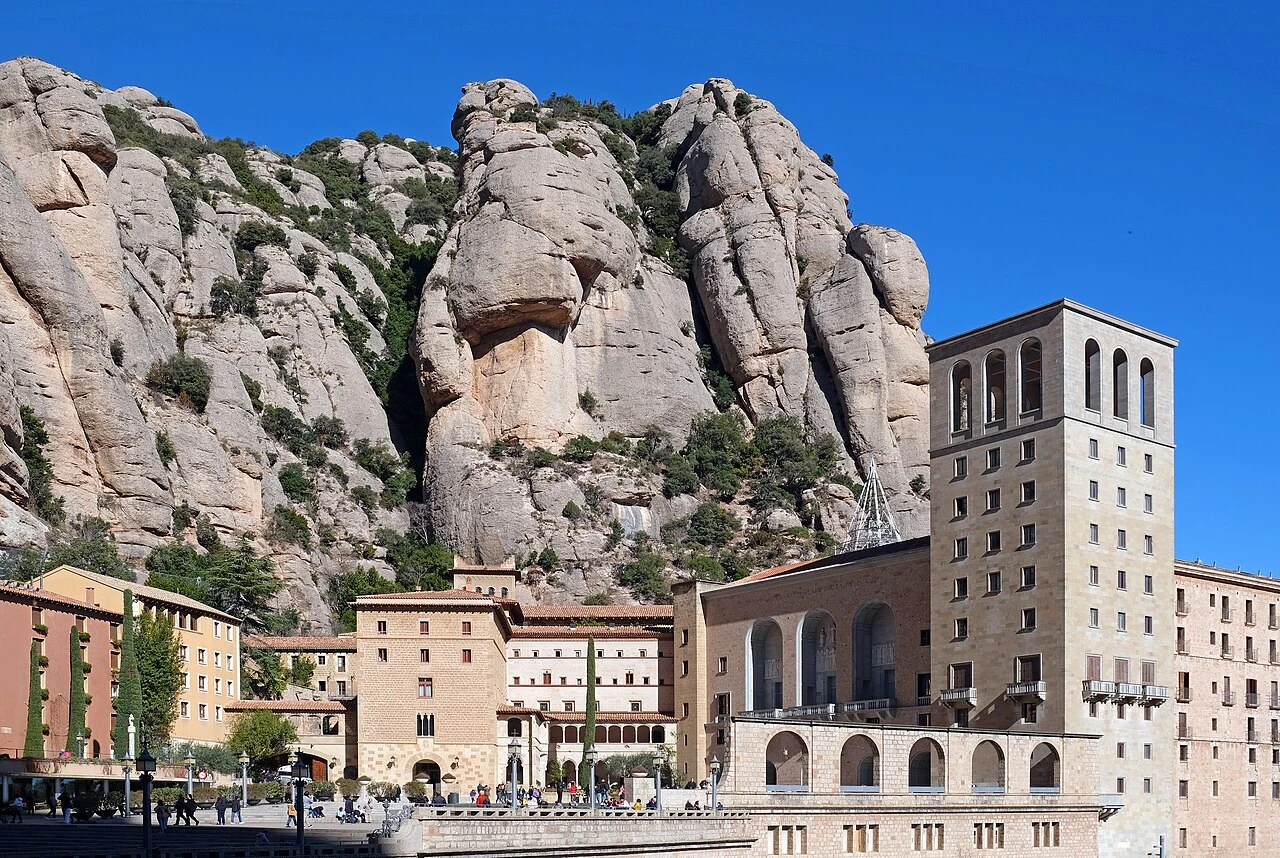
01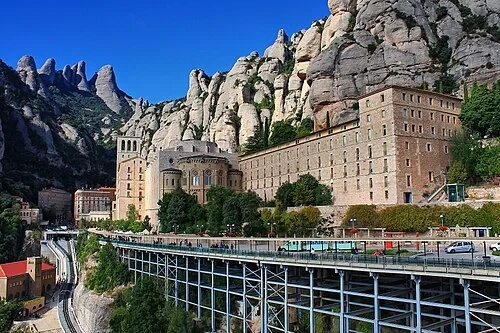 Arrival at the Serrated MountainThe Serrated Mountain
Welcome to the breathtaking landscape of Montserrat, a name that literally translates from Catalan as 'serrated mountain.' Looking at the horizon, the reason for this name is immediately clear; the peaks rise in strange, rounded fingers that look as though they were cut by a giant saw. This unique conglomerate rock formation was created over millions of years by the erosion of ancient river deposits, resulting in the fortress-like terrain that surrounds you. Sitting at an elevation of approximately 720 meters, this isolated location has provided an ideal retreat for those seeking solitude. Since the ninth century, hermits have sought refuge in the caves tucked into these cliffs, and by 1025, a formal monastery was established. The natural architecture of the mountain provides a sense of enclosure and protection, making it easy to understand why generations of monks and pilgrims have been drawn to this high-altitude sanctuary. Today, the monastery remains integrated into the rock, with the buildings seemingly clinging to the side of the vertical cliffs that define the serrated skyline.
Photo: Ludwig Bickel · CC BY-SA 4.0
02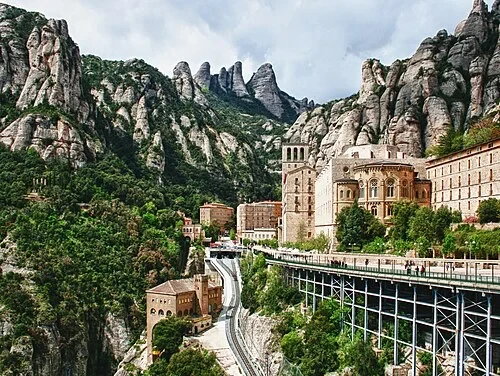 Arrival at the Serrated MountainArrival and Rebirth
The path leading into the monastery complex highlights the site's long history of resilience. While Abbot Oliba founded the original monastery in 1025, very little of that medieval structure remains today. In 1811, during the Peninsular War, Napoleon’s troops invaded and almost entirely destroyed the buildings, leaving the site in ruins. What you see now is the result of an extensive reconstruction effort that took place throughout the 19th and 20th centuries. This rebirth transformed Montserrat into a powerful emblem of Catalan identity and cultural endurance. Part of this modern accessibility is the Cremallera, or rack railway, whose tracks wind up the steep slopes. This specialized train system has been ferrying visitors since the late 1800s, though it was completely modernized in 2003. The architecture of the entrance reflects this blend of historical memory and modern necessity, welcoming thousands of daily visitors to a site that was once nearly lost to history. The stone walls here serve as a reminder that the monastery's spirit remained intact even when its physical foundations were razed.
Bert Kaufmann from Roermond, Netherlands · CC BY-SA 2.0
03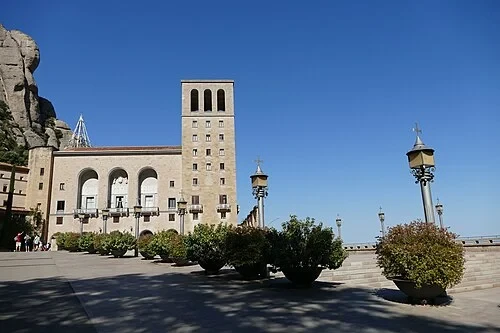 Plaza de Santa Maria and the Modernist FacadePlaza of Saint Mary
The Plaza of Saint Mary is the primary gathering space where the various wings of the monastery converge. Its current appearance is largely the work of Josep Puig i Cadafalch, a prominent figure in the Catalan Modernisme movement who designed the surrounding structures and the open layout of the square. Beyond its role as a spiritual hub, the plaza has a significant place in modern political history. In December 1970, approximately 300 intellectuals, artists, and academics held a famous sit-in within the monastery walls to protest the Burgos trials during the Franco regime. Because of the monastery’s religious status, it offered a rare, albeit temporary, sanctuary where political dissent could be voiced under the protection of the Church. This event cemented Montserrat’s reputation not just as a religious site, but as a bastion of Catalan civil liberties. The wide, stone-paved expanse is designed to manage the flow of pilgrims toward the basilica, while the surrounding arched buildings house the administrative and living quarters for the monastic community. It remains the most active public space on the mountain, serving as the bridge between the secular world and the sacred interior.
Listen in the appPhoto: Kritzolina · CC BY-SA 4.0
04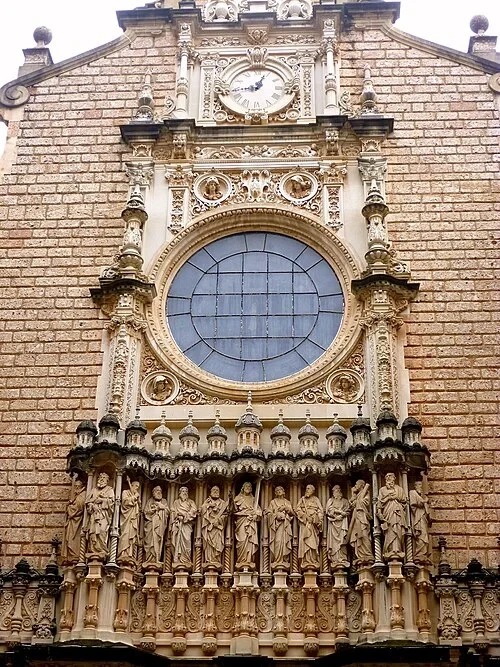 Plaza de Santa Maria and the Modernist FacadeThe Basilica Facade
The facade of the Basilica of Montserrat is a fine example of the Plateresque revival style, characterized by highly detailed stone carvings that mimic the work of silversmiths. Though the current exterior was completed in the mid-20th century, it was designed to harmonize with the older elements of the church. Above the central doorway, you can see a row of sculptures representing the twelve apostles, each rendered with distinct features and traditional symbols. Centered above them is a large rose window that allows light to penetrate the nave. The original basilica on this site was consecrated in 1592, but like much of the complex, it suffered significant damage during the Napoleonic wars. During the subsequent rebuilding, architects chose to retain the spiritual gravity of the Renaissance original while adding modern sculptural elements. The facade acts as a ceremonial gateway, transitioning visitors from the open sunlight of the plaza into the hushed, ceremonial atmosphere of the church. The warm-toned stone is sourced locally, ensuring that the man-made structure feels like a natural extension of the gray and tan cliffs that tower directly behind the building.
Listen in the appPhoto: Zarateman · CC0
05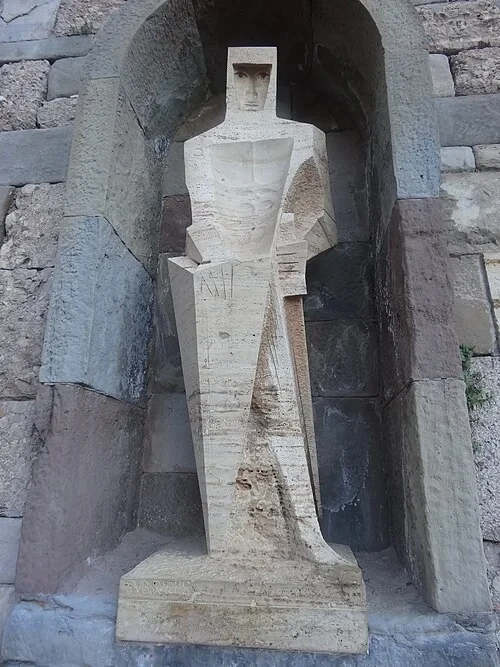 Plaza de Santa Maria and the Modernist FacadeSaint George Sculpture
The figure of Saint George, the patron saint of Catalonia, is captured here in a striking modernist style by the sculptor Josep Maria Subirachs. Unlike traditional statues, the face of the saint is carved in 'negative' or concave relief. This means the features are hollowed out rather than projecting outward. As you move from one side of the sculpture to the other, an optical illusion occurs: the eyes and face appear to pivot and follow your movement. Subirachs, who is also known for his controversial work on the Passion Facade of the Sagrada Família in Barcelona, used this technique to create a sense of constant vigilance and presence. The saint is depicted as a knight, holding a shield marked with the Cross of Saint George, which is also a central element of the flag of Barcelona. The angular, geometric lines of the body are characteristic of the artist's late 20th-century style, moving away from classical realism to a more expressive, architectural form. The sculpture serves as a point of reflection for local visitors, for whom Saint George represents both religious devotion and national pride. The rough texture of the stone base contrasts with the smooth, precisely carved lines of the figure's armor.
Listen in the appPhoto: Jordiferrer · CC BY-SA 4.0
06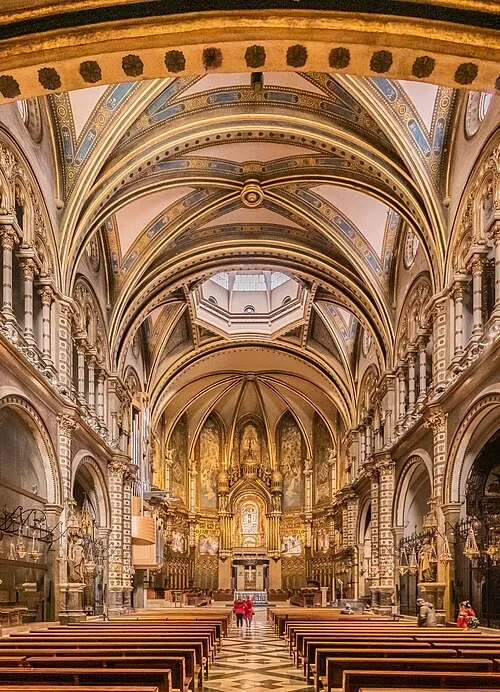 The Basilica Nave and the Great OrganThe Basilica Nave
Entering the basilica, the atmosphere shifts dramatically from the bright exterior to a dim, golden-hued interior. The central nave is notably tall and narrow, stretching to a height of exactly 33.33 meters. This verticality is intentional, designed to create a sense of upward spiritual reaching for the thousands of pilgrims who gather here. The nave is approximately 68 meters long and 21 meters wide, a layout that allows for large congregations while maintaining an intimate, reverent feel. Dark wood and gold leaf are the dominant materials, catching the light from the hanging lamps and creating a warm glow. Along the sides, several small chapels are dedicated to different saints and stages of the Virgin’s life, each decorated with intricate mosaics and paintings. The transition from the mountain air into this space is a sensory experience defined by the scent of beeswax and the muffled echoes of visitors. The architecture follows a transitional style between Gothic and Renaissance, though much of the decoration is the result of late 19th-century restoration. The ceiling vaults are supported by massive pillars, each topped with ornamental capitals that lead the eye toward the high altar at the far end.
Listen in the appKrzysztof Golik · CC BY-SA 4.0
07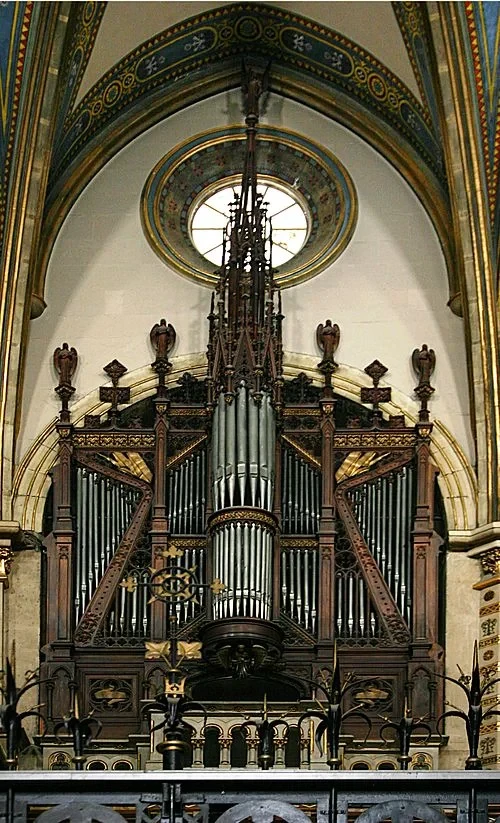 The Basilica Nave and the Great OrganThe Great Organ
The Great Organ of the Montserrat Basilica is a world-class instrument that was inaugurated in 2010 to replace a much older, worn-out predecessor. Designed by the organ builder Albert Blancafort, the instrument is massive in scale, containing exactly 4,230 pipes and 63 registers distributed across four keyboards and a pedalboard. Its placement high within the church allows the sound to distribute evenly throughout the narrow, vertical nave, utilizing the natural acoustics of the stone walls. Beyond its role in daily liturgical services, the organ is the centerpiece of the International Montserrat Organ Festival, drawing renowned musicians from across the globe. The façade of the organ is modern, with sleek pipes arranged in a way that complements the traditional gold and stone surroundings without overpowering them. It provides a powerful musical backdrop for the monks' daily prayers and the famous choir performances. The complexity of the mechanism inside is a feat of engineering, ensuring that every note can be heard clearly, from the deepest bass tones to the highest, most delicate trills. It stands as a contemporary contribution to the monastery’s long-standing musical tradition, which dates back centuries.
Listen in the appJosé Luiz · CC BY-SA 3.0
08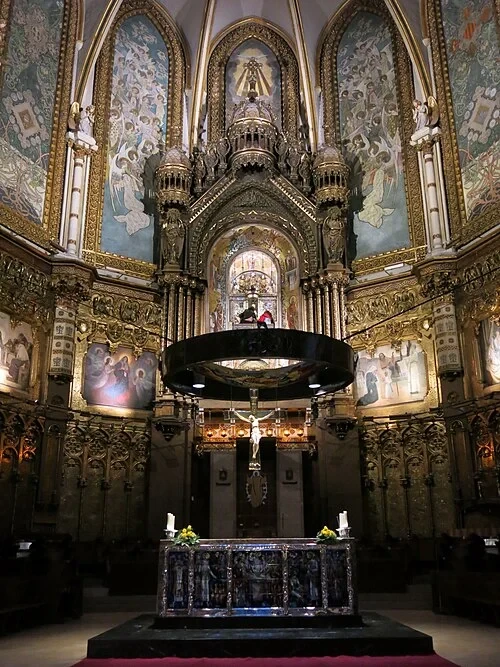 The Main Altar and the Boys' ChoirThe Main Altar
The main altar area is the spiritual focal point of the basilica and the stage for the Escolanía, Montserrat’s famous boys' choir. This musical institution is one of the oldest in Europe, with documented performances dating back to the 13th century. Every day at midday, the choir performs the Salve Regina, a traditional hymn that draws hundreds of visitors into the pews. The altar itself is ornately decorated, serving as a visual frame that highlights the choir during their performances and directs attention toward the sanctuary above. Large silver lamps hang from the ceiling, and the walls are covered in detailed carvings and liturgical symbols. The space is designed to bridge the gap between the congregation in the nave and the sacred throne of the Virgin located behind and above the altar. During services, the interplay of the boys' voices with the deep tones of the organ fills the high-vaulted ceiling. The altar's intricate metalwork and stone carvings were meticulously restored to replace the treasures lost during historical conflicts, ensuring the sanctuary remained a place of high artistic and religious significance for the Benedictine community.
Listen in the appPhoto: Enric · CC BY-SA 3.0
09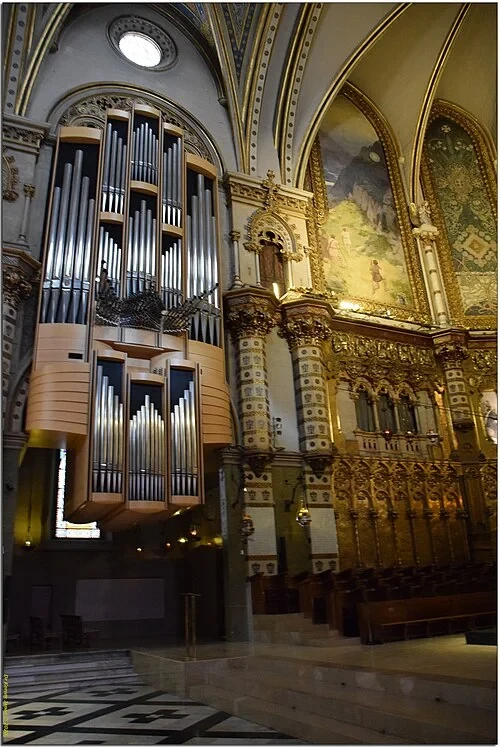 The Main Altar and the Boys' ChoirMurals of the Sanctuary
Flanking the high altar are large-scale murals that exemplify the 'total work of art' aesthetic prevalent during the late 19th-century restoration of the church. After the devastation caused by the Napoleonic invasion, the monastery sought to redefine its interior with a cohesive decorative program. These murals are rich with gold leaf, vibrant blues, and deep reds, depicting various scenes from the life of the Virgin and the history of the monastery. The style is heavily influenced by the pre-Raphaelite and Romantic movements, focusing on clear outlines and symbolic imagery rather than strict realism. By covering almost every available surface with liturgical symbolism, the artists intended to create an environment that felt completely removed from the outside world. This decorative style helped to re-establish Montserrat’s splendor at a time when the community was still recovering from historical trauma. The use of gold leaf is particularly effective in the dim light of the nave, as it catches the flickering glow of votive candles and lamps, creating a sense of shimmering movement across the walls. These paintings serve not only as decoration but as a visual narrative for pilgrims who have traveled to honor the Black Madonna.
Listen in the appJános Korom Dr. >17 Million views from Wien, Austria · CC BY-SA 2.0
10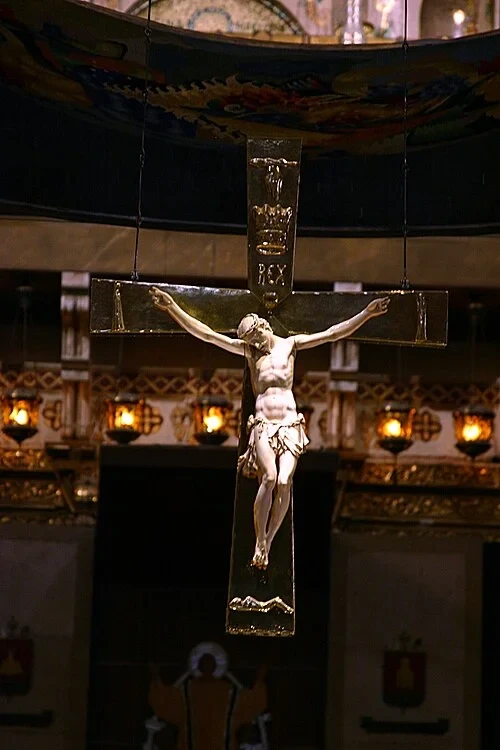 The Main Altar and the Boys' ChoirCrucifix of Montserrat
The crucifix hanging above the main altar is positioned to create a dramatic visual connection within the sanctuary. It is suspended by almost invisible wires, making the figure appear to float in the space between the earthly congregation and the divine figures depicted in the heights of the church. The figure of Christ is rendered with delicate craftsmanship, showing a high level of detail in the anatomy and expression. Interestingly, the crucifix is placed directly beneath the chamber that holds the statue of the Virgin Mary, known as the Camarín. This alignment is deliberate, serving as a symbolic link between the Mother and the Son in Catholic theology. The material of the cross is dark, contrasting with the lighter, more detailed figure of Christ, which ensures it remains visible even from the back of the long nave. It is a central element of the liturgical landscape, drawing the gaze upward during mass and prayer. The position of the crucifix marks the transition between the public worship area of the nave and the more private, highly decorated sanctuary where the daily life of the monks is centered around the altar.
Listen in the appJosé Luiz · CC BY-SA 3.0
Santa Maria de Montserrat
Frequently asked questions
How much does the guide cost?
Free app download. Listed guide price: $1.99. Guide price shown in the app. Audio guide only. Venue admission is separate.
Can I listen without internet?
Yes. Download the guide’s audio, images, and maps in the app before your visit. Your downloaded content is then available offline.
Can I listen in my language?
Stanza supports 15 languages. Check the app for the languages available for this guide.
Do I need to follow a schedule?
No. This is a self-guided experience. Choose your stops, pause whenever you like, and return to a story at your own pace.
At your own pace
Explore Santa Maria de Montserrat.
Download Stanza, then search for “Santa Maria de Montserrat”.
Free app download · Guide price shown in the app
Keep exploring
Nearby audio guides
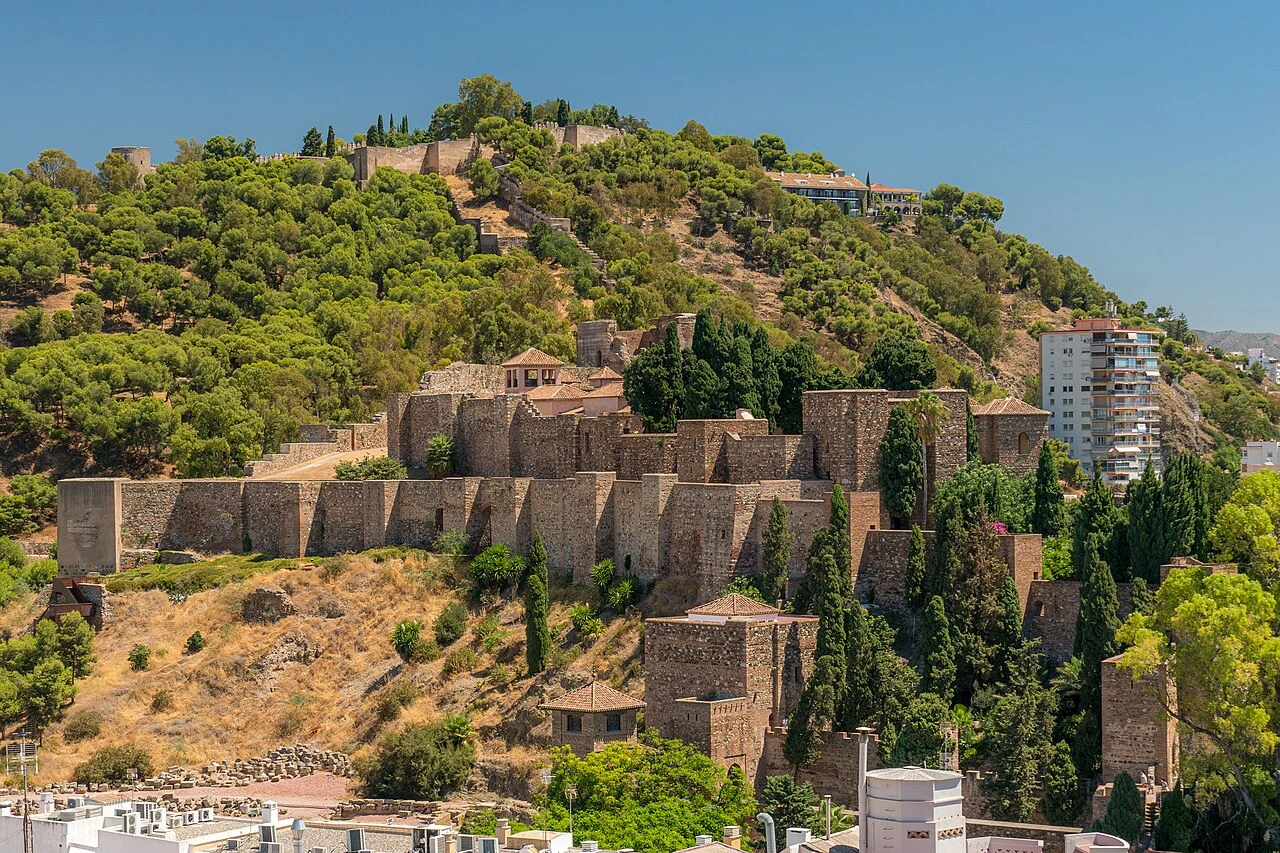
Málaga
Alcazaba de Málaga
Content & sources
Photo: Fernando · CC BY-SA 4.0
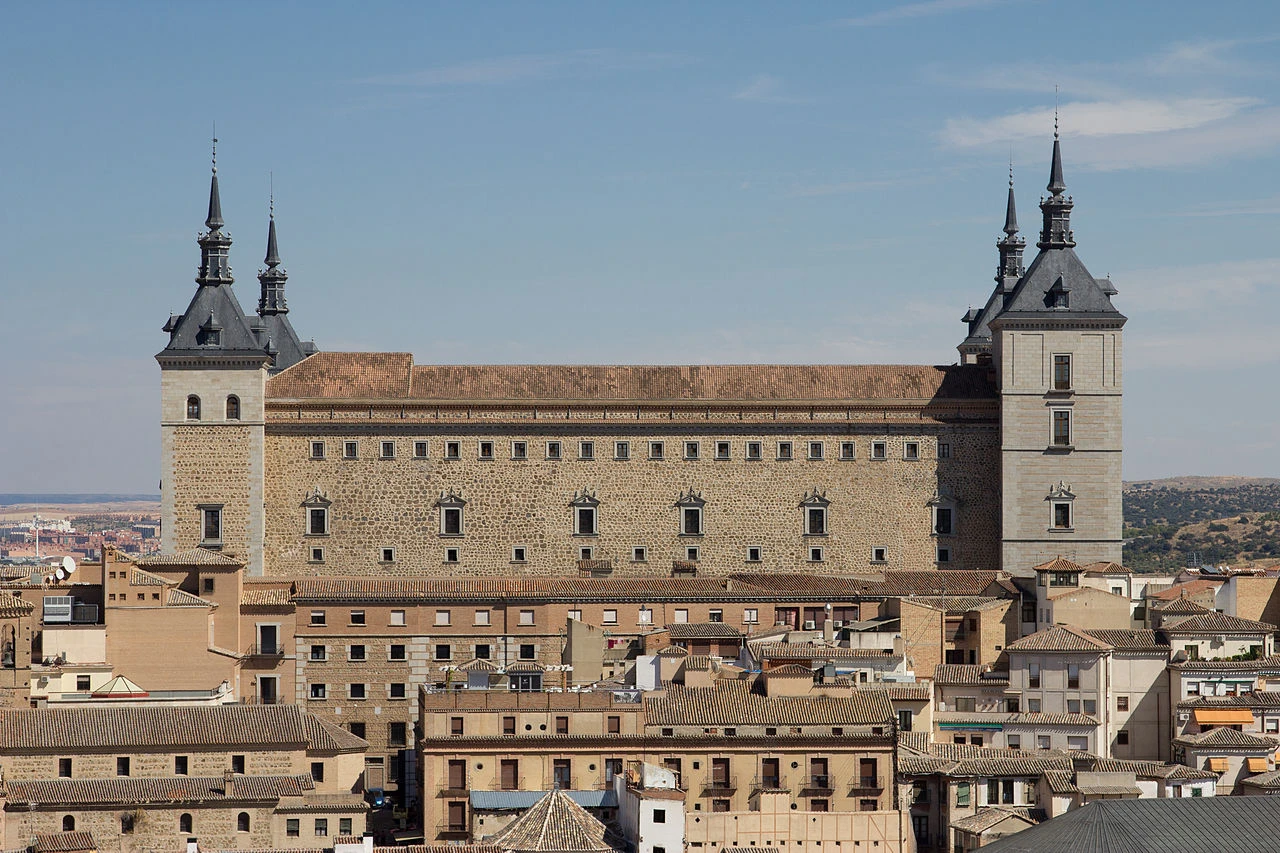
Toledo
Alcázar de Toledo
Content & sources
Carlos Delgado · CC BY-SA 3.0 es
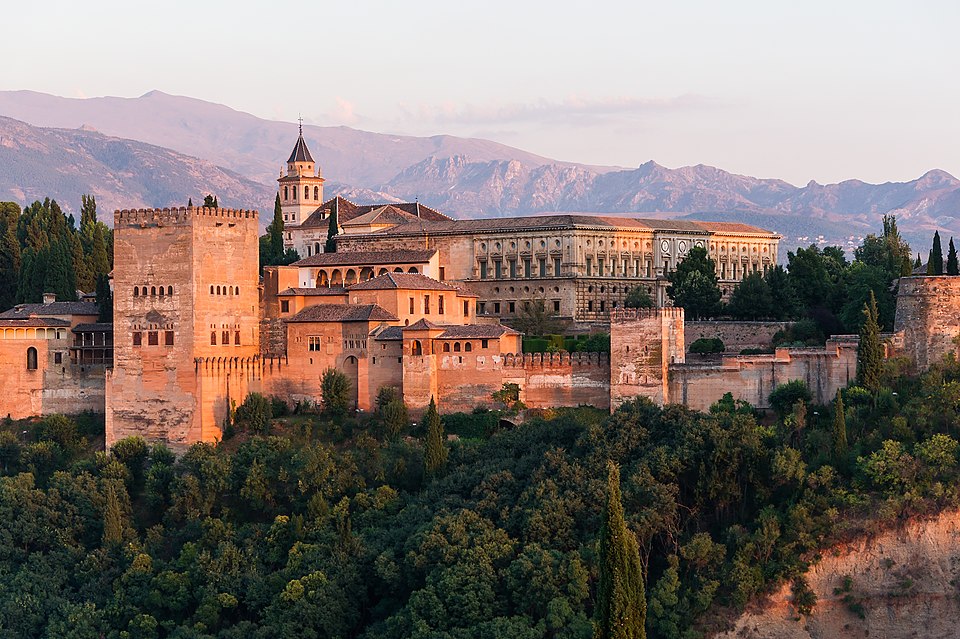
Alhambra
Content & sources
Photo: Jebulon · CC0
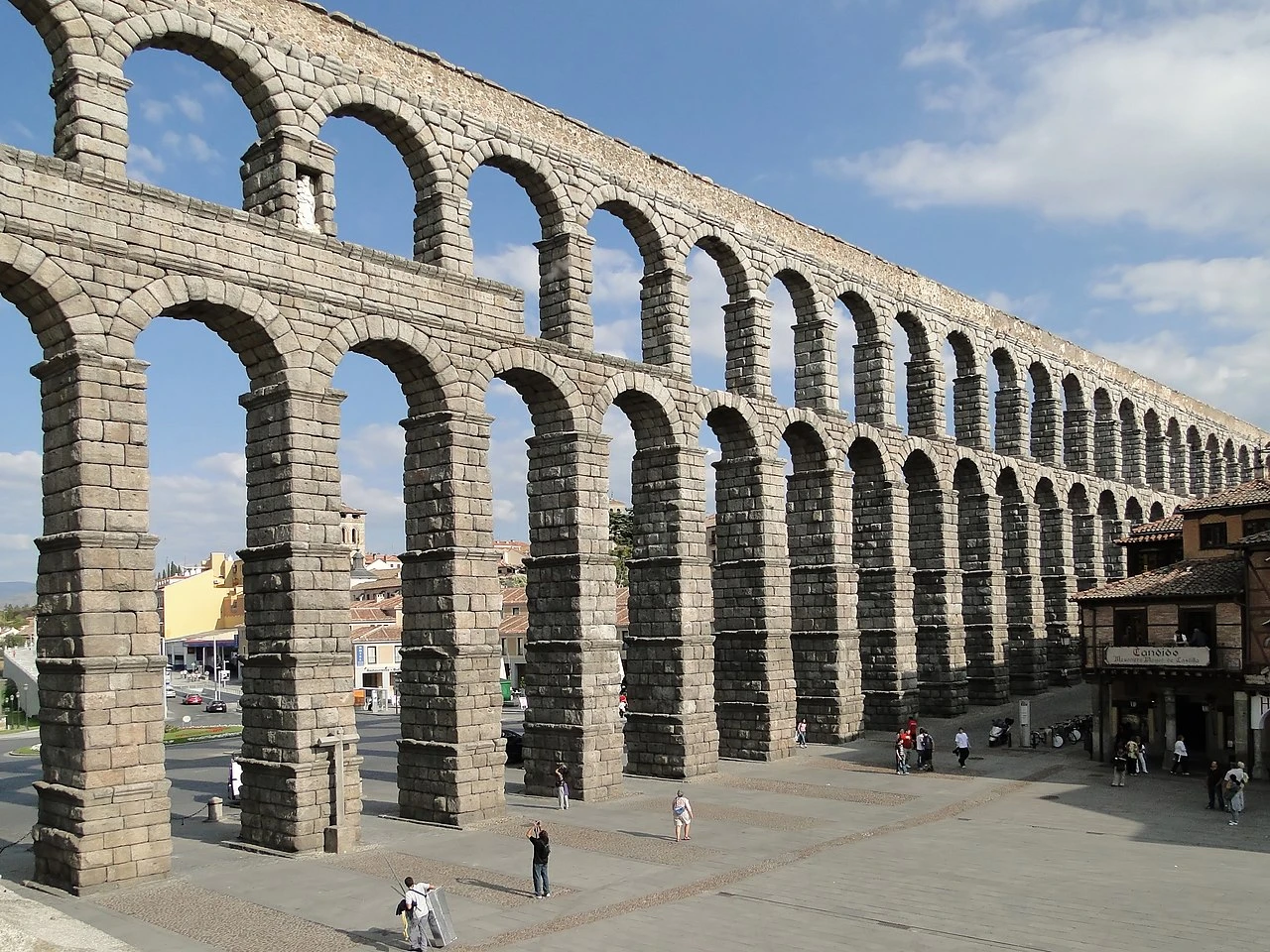
Segovia
Aqueduct of Segovia
Content & sources
Bernard Gagnon · CC BY-SA 3.0