Stanza · Audio guide
Pirámides de Güímar Audio Guide
A place to remember. A story to take with you.
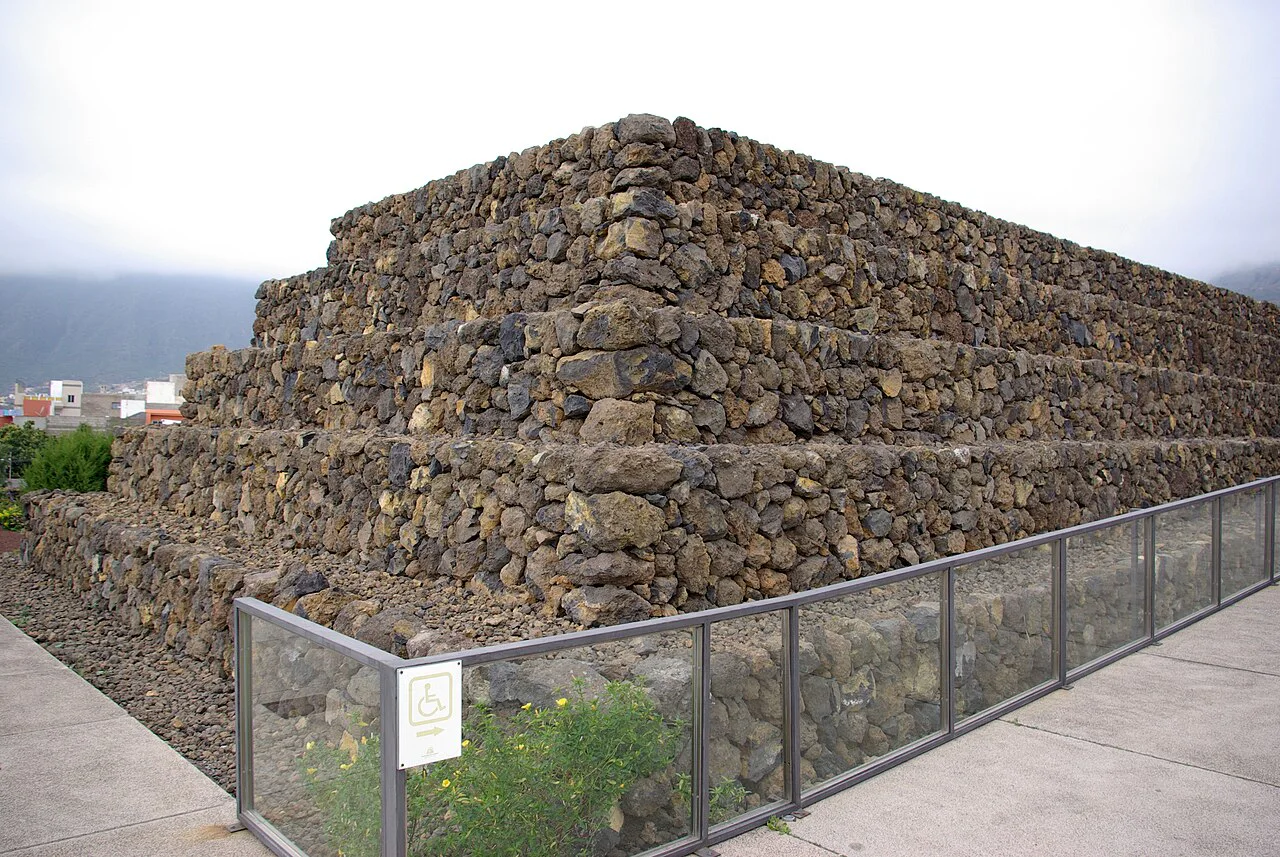
The Pyramids of Güímar are six rectangular, terraced structures built from lava stone without mortar. They date to the 19th century and were constructed during the exploitation of cochineal.
Download Stanza, then search for “Pirámides de Güímar”.
About the tour
One guide. Your kind of visit.
The Pyramids of Güímar are six rectangular, terraced structures built from lava stone without mortar. They date to the 19th century and were constructed during the exploitation of cochineal.
Ready when you are.
- 01Get the free Stanza app.
iOS & Android
- 02Find your guide.
“Pirámides de Güímar”
- 03Download before you go.
Works offline
Audio guide / 8 narrated stops
Inside the guide
Get to know a few of the stories before you go. Open a stop to read more.
01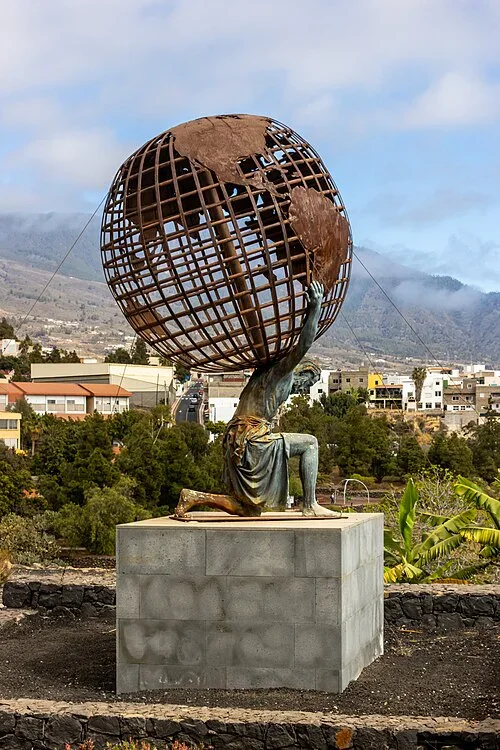 Entrance Courtyard & Information Center
Atlas, Güímar
Welcome to the Pyramids of Güímar, on the eastern coast of Tenerife. At the entrance kneels a bronze Atlas, holding up an open lattice globe of the world. The figure suits the place, because this park was built around a global idea. In the 1990s the Norwegian explorer Thor Heyerdahl turned six stepped stone structures here into an ethnographic park, convinced they were true pyramids. The story of this place has two strands. One follows what the structures most likely were, according to documents and excavations. The other follows the theories people have woven around them, which the park keeps deliberately on show. Both belong to this ground.
Photograph by Mike Peel (www.mikepeel.net). · CC BY-SA 4.0
02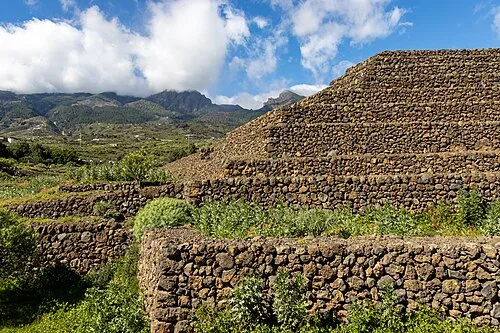 Main Pyramid Complex
The Majanos: Farmers' Pyramids
Ask in Güímar what the pyramids are, and many will answer with one word: majanos, stone piles. In the nineteenth century farmers on Tenerife cleared rocky volcanic fields to plant prickly pear cacti. The cacti fed cochineal, a small scale insect that yields a brilliant red dye. Before synthetic dyes existed, that trade was highly profitable, so land once dismissed as worthless was prepared for cultivation. The stones pulled from the soil were stacked into terraced shapes like these. Elders of the Güímar valley still remembered the clearing work within living memory. The written trail matches it. A deed of 1854 recording the sale of this land makes no mention of pyramids. They appear for the first time in a partition document of 1881.
Photograph by Mike Peel (www.mikepeel.net). · CC BY-SA 4.0
03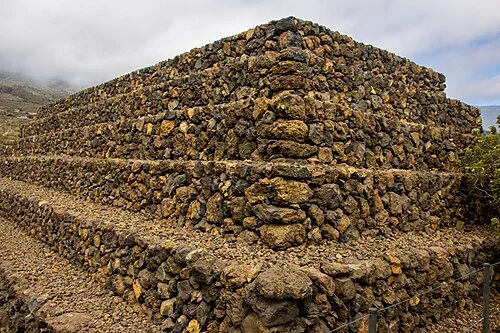 Main Pyramid Complex
Volcanic Stone and the Sun
Whatever the pyramids were for, they are carefully built. The lava stone is laid dry, without mortar, in rectangular terraces, and the tallest rise about twelve metres. Nine such pyramids once stood in Güímar. Only six survive. In 1991 three researchers of the Canary Institute of Astrophysics studied the main complex and found it aligned with the sun. The long limiting wall points to the sunset of the summer solstice. Stairs on the western side face the rising sun at the winter solstice. From the platform of the largest pyramid on the summer solstice comes the strangest sight, a double sunset. The sun slips behind the rim of the Pedro Gil caldera, reappears for a moment, then sets again behind a neighbouring peak. An alignment alone, though, cannot say why the builders aimed it so.
Listen in the appPhotograph by Mike Peel (www.mikepeel.net). · CC BY-SA 4.0
04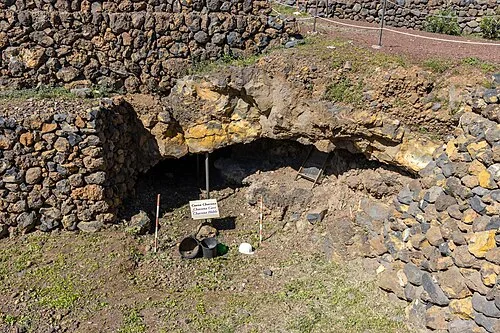 Chacona Cave (Guanche Cave)
The Guanche Cave
Beneath the edge of one of the pyramids, archaeologists came upon a natural lava cave. It had been walled up, and it held objects left by the Guanches, the island's pre-Hispanic people. The finds date between the years 600 and 1000. Here is the point that settles the argument for most archaeologists. The pyramids were built on top of the cave's deposits, so the ancient objects can only date the cave, never the stones above it. The date of the pyramids comes from the excavations in the structures themselves, which point to the nineteenth century. Still, the Guanche connection held a pull of its own. Thor Heyerdahl kept his belief in a link between the pyramids and the Guanches until his death, and the park keeps that association alive.
Listen in the appPhotograph by Mike Peel (www.mikepeel.net). · CC BY-SA 4.0
05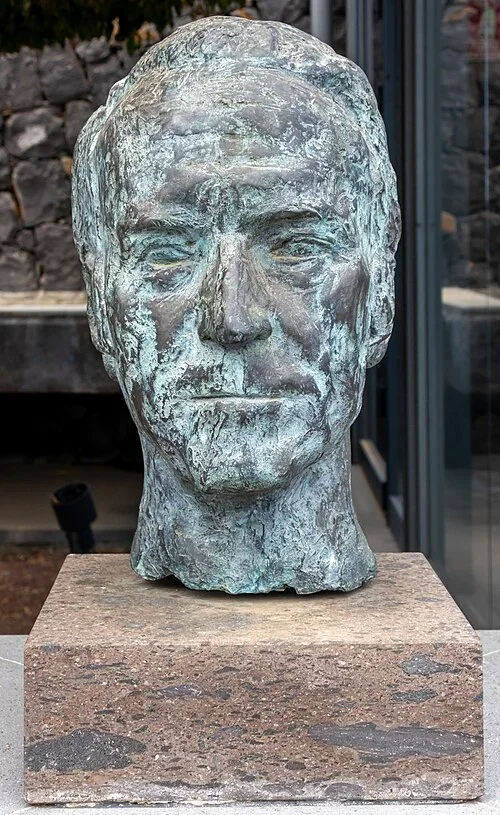 Casa Chacona Museum & Heyerdahl Research
Head of Thor Heyerdahl, Güímar
Heyerdahl came late to the pyramids. In 1990 he read an article by Francisco Padrón in the Tenerife newspaper Diario de Avisos, describing real pyramids on the Canaries. The claim hooked him, and he moved to Tenerife. He had long argued for contact across the Atlantic between ancient Egypt and Central America, and the Güímar structures looked to him like a stopping point on such voyages. The idea set off a running controversy among historians, archaeologists, astronomers and enthusiasts. With his agreement, the University of La Laguna began excavating the site in 1991. The digs went on until 1998. His friend Fred Olsen, whose shipping company is the largest in the Canary Islands, helped finance the project. In 1998 the grounds opened to the public as an ethnographic park covering sixty-five thousand square metres.
Listen in the appPhotograph by Mike Peel (www.mikepeel.net). · CC BY-SA 4.0
06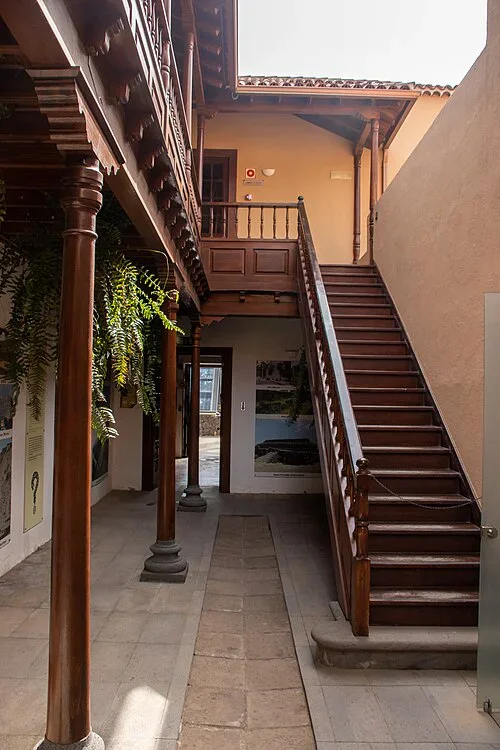 Casa Chacona Museum & Heyerdahl Research
Casa Chacona Museum Courtyard
The museum lives in a traditional Canarian house, around a courtyard of dark wooden pillars, hanging ferns and a wide timber staircase. Inside, the park stages its own debate between myth and research. In 2005 two of the astronomers who measured the alignments, Antonio Aparicio and César Esteban, published a book called The Pyramids of Güímar: Myth and Reality. They suggested the solstice orientations could carry Masonic symbolism. Solstices matter deeply in Freemasonry, and the owner of this land when the pyramids were built, Antonio Díaz Flores, was a Freemason. On their reading the alignment was an aesthetic flourish, laid over the agricultural purpose, not a replacement for it. The displays make their own choices too. The objects from the Guanche cave appear as heavily enlarged photographs. The finds that point to the nineteenth century get only a brief mention on a board, with no illustration at all.
Listen in the appPhotograph by Mike Peel (www.mikepeel.net). · CC BY-SA 4.0
07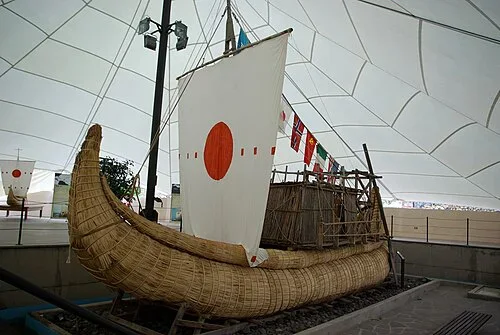 Ra II Navigation Pavilion
Ra II, the Reed Boat
Under a white tent canopy lies a full-size replica of the Ra II, a boat built of papyrus reed. In 1970 Heyerdahl sailed the original from Morocco to Barbados. The point of the voyage was the boat itself. It showed that reed vessels of ancient design could cross the Atlantic, and that is what lent his Güímar theory its plausibility for those who believed it. If reed boats could make the crossing, the argument ran, the Canary Islands sat naturally on a route between the Mediterranean and America. The fastest passage does run through the islands, and Columbus followed it centuries later.
Listen in the appPhoto: Berthold Werner · Public domain
08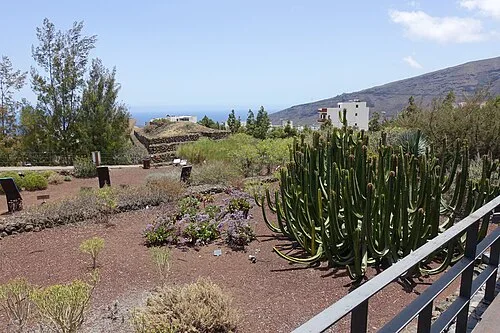 Botanical & Poison Gardens
Gardens of the Park
The pyramids share their grounds with a garden of Canary plants. Spurges rise here in fat green columns, the kind of succulent that thrives on this volcanic coast with almost no rain. Plants like these covered the island long before any terraces were built here. They give the stone structures their setting of dry slopes, dark rock and water-hoarding green. The park keeps both sides of the place alive, the farmers' stone piles and the legend grown around them.
Listen in the appFrank Lehmann · CC BY-SA 4.0
Pirámides de Güímar
Frequently asked questions
How much does the guide cost?
Free app download. Listed guide price: $0.99. Guide price shown in the app. Audio guide only. Venue admission is separate.
Can I listen without internet?
Yes. Download the guide’s audio, images, and maps in the app before your visit. Your downloaded content is then available offline.
Can I listen in my language?
This audio guide is available in 15 languages, including English.
Do I need to follow a schedule?
No. This is a self-guided experience. Choose your stops, pause whenever you like, and return to a story at your own pace.
At your own pace
Explore Pirámides de Güímar.
Download Stanza, then search for “Pirámides de Güímar”.
Free app download · Guide price shown in the app
Keep exploring
Audio guides — Spain
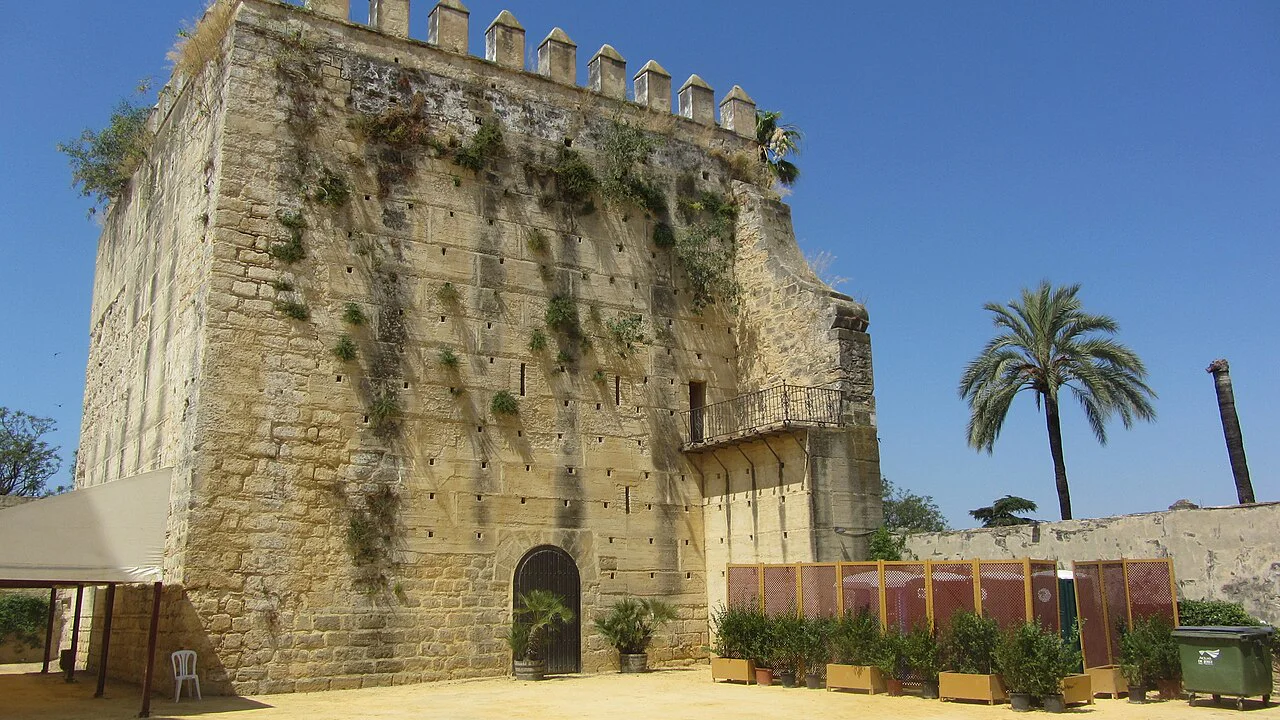
Jerez de la Frontera
Alcázar de Jerez de la Frontera
Content & sources
Photo: Giel358 · CC BY-SA 4.0
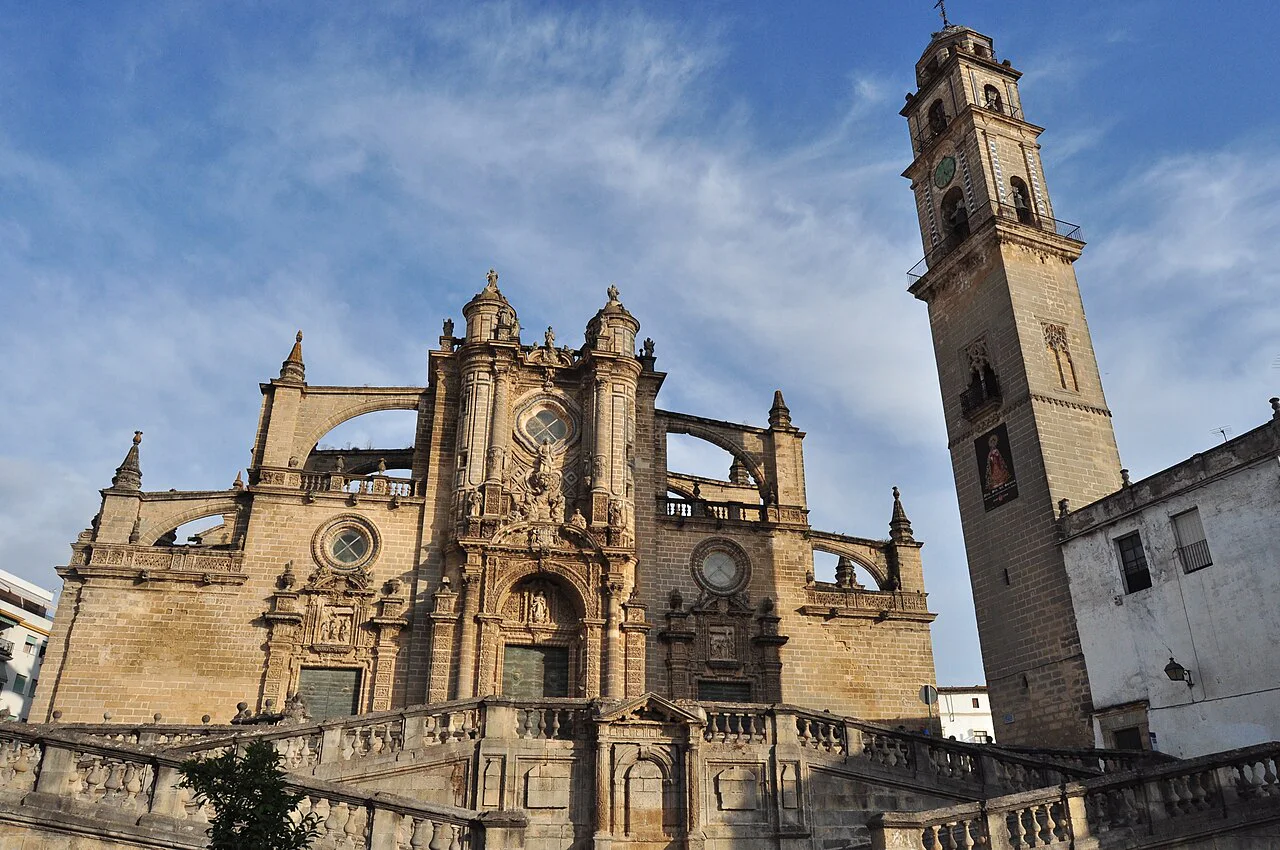
Jerez de la Frontera
Catedral de Jerez de la Frontera
Content & sources
Luis Rogelio HM · CC BY-SA 2.0
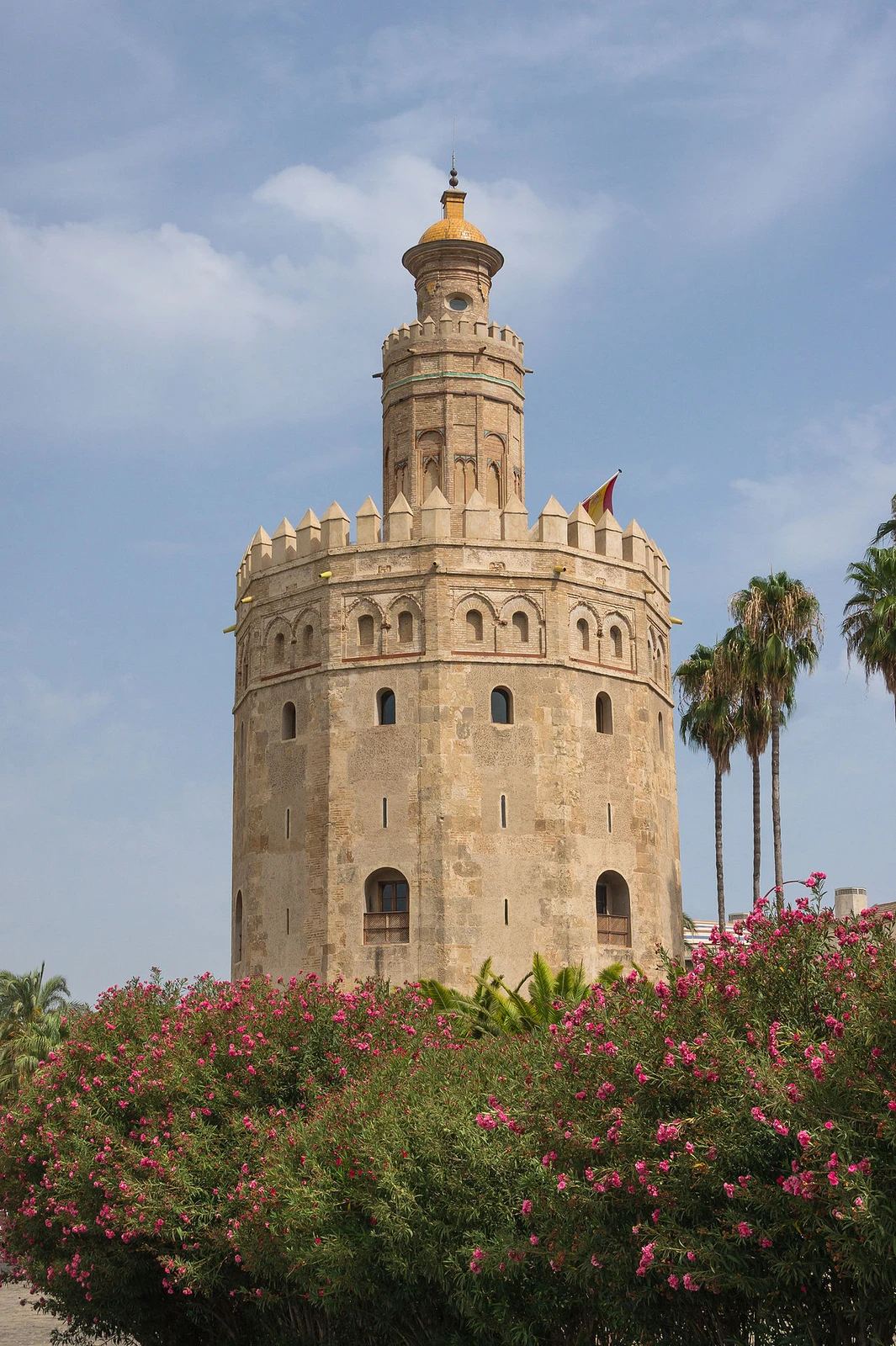
Seville
Torre del Oro
Content & sources
Photo: Jebulon · CC0
Seville
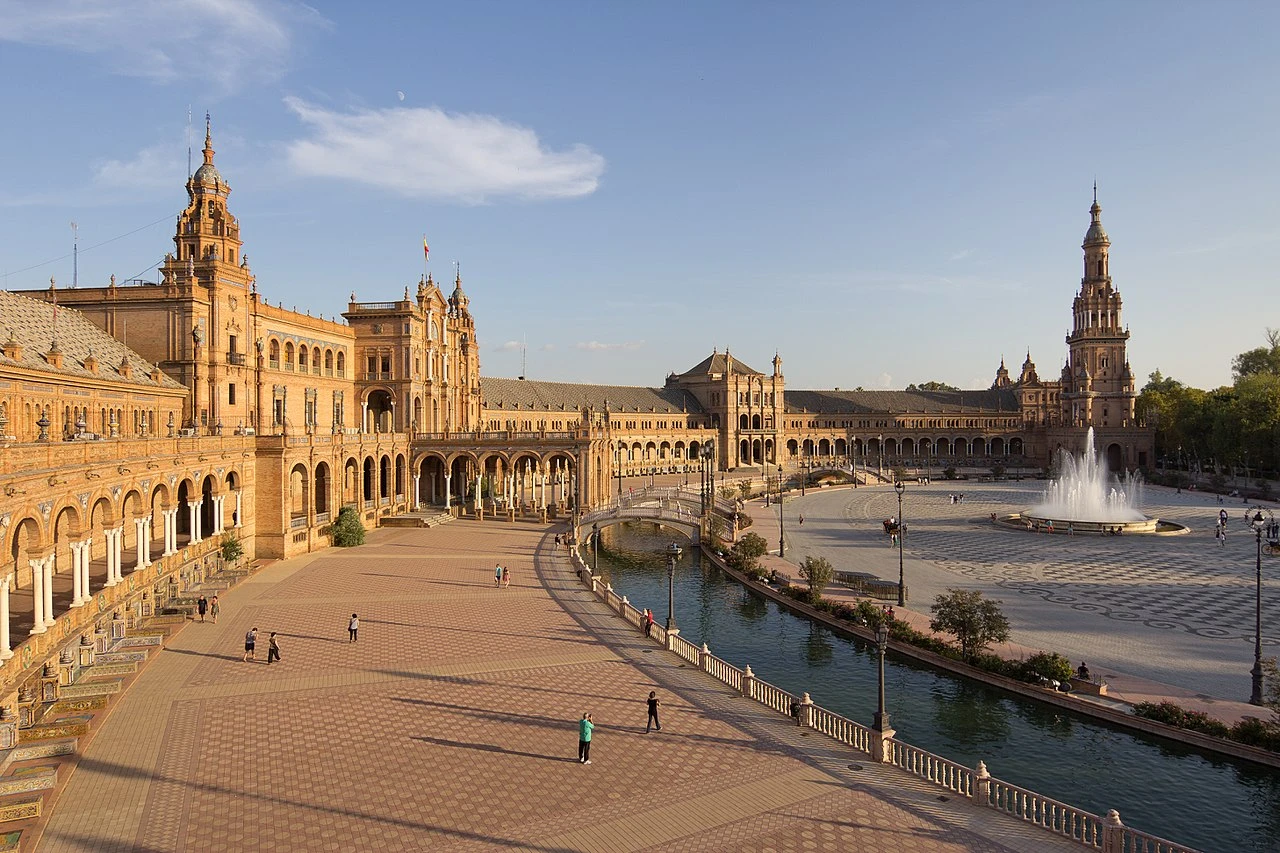
Plaza de España
Content & sources
Carlos Delgado · CC BY-SA 4.0