Stanza · Audio guide
Plaza de EspañaAudio guide
A place to remember. A story to take with you.
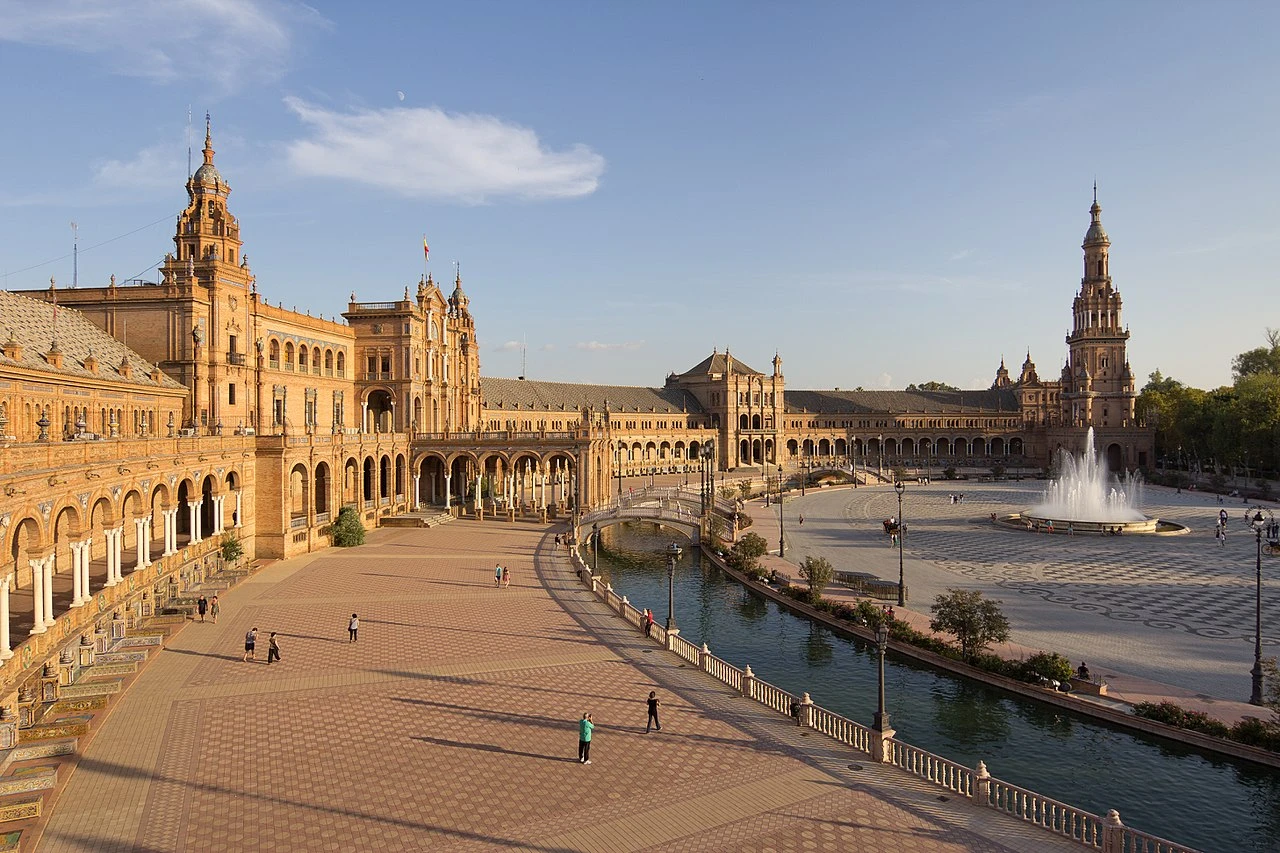
Plaza de España is a monumental semi-circular plaza located in Seville, Spain. It was built for the 1929 Ibero-American Exposition and features a large fountain, canals, and ornate buildings that blend…
Download Stanza, then search for “Plaza de España”.
About the tour
One guide. Your kind of visit.
Plaza de España is a monumental semi-circular plaza located in Seville, Spain. It was built for the 1929 Ibero-American Exposition and features a large fountain, canals, and ornate buildings that blend Renaissance Revival and Moorish Revival styles.
Ready when you are.
- 01Get the free Stanza app.
iOS & Android
- 02Find your guide.
“Plaza de España”
- 03Download before you go.
Works offline
Audio guide / 18 narrated stops
Inside the guide
Get to know a few of the stories before you go. Open a stop to read more.
01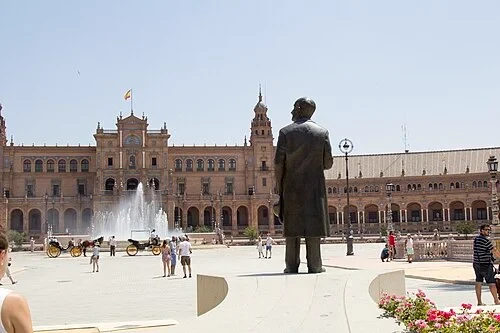 Arrival at the Architect’s CircleStatue of Aníbal González
Welcome to the Plaza de España. Standing at the main entrance, you’re greeted by a figure looking out over the grand expanse of his life's work. This is Aníbal González, the architect who served as the primary director of the project from its inception in 1914. This massive complex was designed as the centerpiece for the 1929 Ibero-American Exposition, an event meant to showcase Spain’s industrial and cultural prowess. Notice the man's posture: he stands with a quiet dignity, perhaps reflecting on the fifteen years of intense labor and creative genius poured into every brick and tile you see. However, the weight of such an ambitious project took its toll. Under immense pressure and facing declining health, González resigned in 1926, just three years before the Exposition opened. Though he did not see the project through to its final completion, his signature style—a blend of regional traditions and modern scale—defines every corner of this plaza. As we move forward, try to imagine the sheer scale of the task he undertook, transforming a section of Maria Luisa Park into this iconic landmark that remains one of the most visited sites in Seville.
Luca Nebuloni · CC BY 2.0
02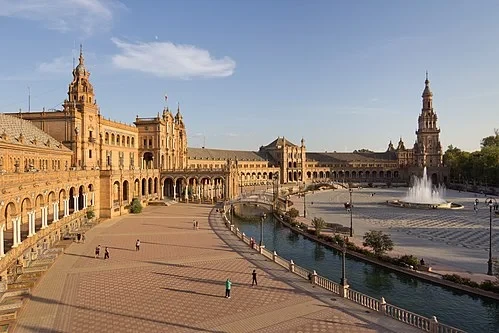 The Semicircular EmbraceThe Semicircular Plaza
Stepping further into the plaza, the sheer scale of the 50,000-square-meter complex becomes apparent. The design is deeply symbolic; the massive semicircular building acts as a pair of open arms, representing an embrace between Spain and her former colonies in the New World. This theme of connection is reinforced by the plaza's orientation. The open end of the semicircle faces toward the Guadalquivir River, which was the historic departure point for ships setting sail across the Atlantic centuries ago. Architecturally, what you see is a stunning example of Spanish Regionalism. This style doesn't stick to just one era but instead masterfully fuses elements of Renaissance, Baroque, and Moorish—or Mudéjar—design. Look at the balance of the red brickwork, the white accents, and the vibrant ceramics. It was meant to feel both grand and quintessentially Spanish. By creating this hybrid look, the architects sought to celebrate the diverse cultural threads that make up the nation's identity while providing a spectacular venue for international visitors to explore. Standing in the center, the symmetry of the design creates a powerful sense of order and grandeur that was meant to impress the world.
Carlos Delgado · CC BY-SA 4.0
03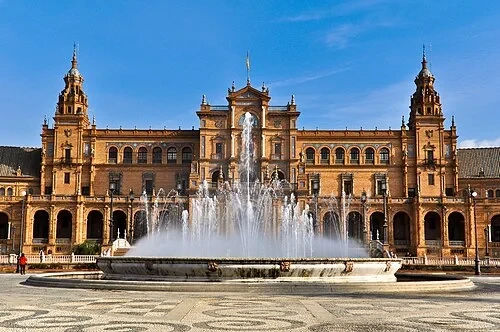 The Heart of the Plaza: Fountain and CanalVicente Traver Fountain
At the very center of the plaza's wide embrace sits a large fountain, providing a much-needed cooling effect in the famously high temperatures of Seville. This feature was designed by Vicente Traver, the architect who took the reigns of the project after Aníbal González resigned in 1926. The fountain’s installation was actually quite controversial at the time. Many critics argued that placing such a large structure in the center of the square would obstruct the grand, sweeping views of the main building's facade. However, practicality eventually won over purely aesthetic concerns. The mist from the central jet and the sound of falling water offer a sensory relief that visitors have cherished for nearly a century. If you watch the water patterns, notice how the central plume draws your eye upward, perfectly aligning with the symmetry of the surrounding architecture. It transforms the flat expanse of the plaza into a dynamic space, grounding the wide-angle views with a clear, refreshing center point. In the summer months, you will see crowds congregating here, drawn by the cooling microclimate that this central jet provides to the open square.
Listen in the appPhoto: Donatas Dabravolskas · CC BY-SA 4.0
04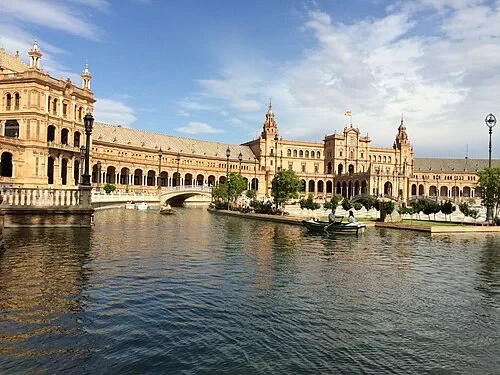 The Heart of the Plaza: Fountain and CanalThe Semicircular Canal
Running parallel to the grand curve of the building is a 500-meter-long canal, which has led many to affectionately call this place the 'Venice of Seville.' As you watch the small rowing boats glide across the water, you can appreciate the sensory layers added to the experience—the gentle splashing of oars and the cooling breeze coming off the surface. The water acts like a giant mirror, reflecting the intricate brickwork and colorful tiles of the main structure, doubling the visual impact of the architecture. Maintaining this feature is no small feat. In 2010, a major restoration project was undertaken to preserve the canal’s beauty. This involved draining the water to thoroughly clean the canal bed and meticulously replacing thousands of ceramic pieces along the edges that had been damaged by time and weather. Today, the canal remains one of the most popular features of the plaza, inviting people to slow down and enjoy a different perspective of the surrounding towers and bridges from the water's level. The rowboats offer a chance to engage with the site’s scale in a way that walking simply cannot match, providing a leisurely rhythm to your visit.
Listen in the appPhoto: Kerberosmansour · CC0
05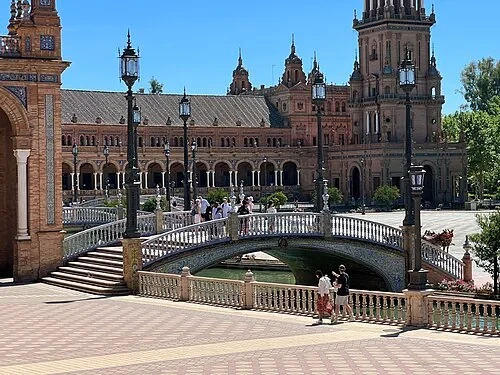 Bridges of the Ancient KingdomsBridge of Castile
Spanning the canal are four distinct bridges, each serving as a symbolic link to Spain’s history. They represent the four ancient kingdoms that eventually unified to form the modern Spanish nation: Castile, Aragon, León, and Navarre. The one we are looking at now is dedicated to Castile. While the bridges are functional, their primary purpose here is artistic. Notice the vibrant blue and white ceramic balustrades that line the sides. These intricate tiles, known as 'azulejos,' are a hallmark of Seville’s local craftsmanship. For centuries, the Triana district of Seville has been famous for its ceramic workshops, and the Plaza de España served as a grand stage to display that local talent to the world. By using these colorful, glazed ceramics to decorate a simple bridge, the architects elevated a piece of infrastructure into a work of art. The contrast between the bright blue tiles and the warm red brick of the building creates a striking visual rhythm that defines the entire complex. These bridges are not just crossings; they are carefully crafted details that bring the vibrant cultural history of the city to the forefront of the design.
Listen in the appPhoto: Chabe01 · CC BY-SA 4.0
06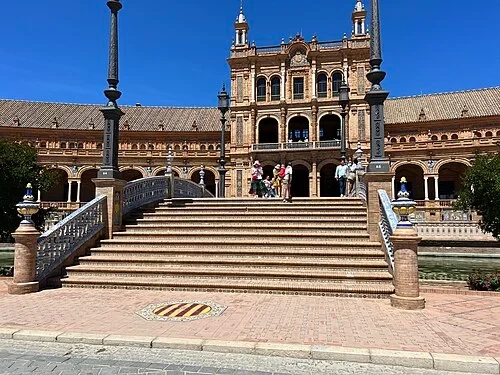 Bridges of the Ancient KingdomsBridge of Aragon
Following the curve of the canal, we find the Bridge of Aragon. While it shares the beautiful ceramic decoration of its neighbor, it emphasizes the theme of national unity through specific symbolic details. If you look at the ground as you approach or cross, you will see heraldic shields integrated into the pavement. These represent the historical identity of the kingdom of Aragon, further reinforcing the idea that this plaza is a celebration of all of Spain. The intricate tile work extends down the stairs, where geometric patterns and floral motifs create a rich texture. Beyond their historical symbolism, these bridges are a favorite for visitors because they offer elevated vantage points. From here, you get the best angle to photograph the canal’s reflection and the way the two massive towers at either end of the plaza frame the central palace. The bridges break up the long horizontal lines of the architecture, adding vertical interest and creating a series of beautiful framed views as you wander through the space. They serve as physical symbols of the bridges between Spain's diverse regional histories, unified here in one grand architectural vision.
Listen in the appPhoto: Chabe01 · CC BY-SA 4.0
07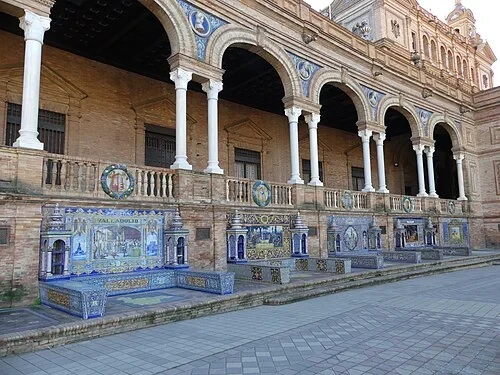 A Journey Through Spain’s ProvincesThe Provincial Alcoves
Lined up along the entire base of the semicircular building are forty-eight distinct alcoves, each one a dedicated monument to a different Spanish province. They are arranged alphabetically, allowing visitors from across the country to easily find their home region. Each alcove is a miniature museum made of light and color. There are three main components to every stop. First, look at the central mural, which depicts a significant historical event associated with that specific province. Below that, on the ground, you'll find a detailed map showing the geography of the area. Finally, notice the stone shelves flanking the central scene. These were originally intended to serve as small outdoor libraries, stocked with local literature for visitors to read while resting. While the books are no longer kept there, the alcoves remain an incredibly popular meeting spot. They turn the massive scale of the plaza into a series of intimate, personal spaces where history is told through the vibrant medium of ceramic tile. For many Spanish tourists, finding their home province's bench and taking a photo is an essential part of the visit, celebrating their local roots within the national context.
Listen in the appPhoto: Roweromaniak · CC BY-SA 3.0
08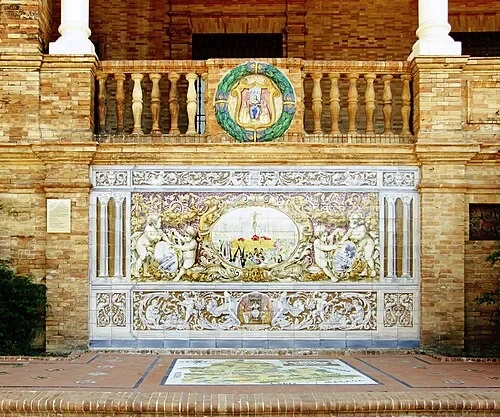 A Journey Through Spain’s ProvincesTiled History Murals
The history of Spain is literally baked into the walls of this plaza through the extensive use of 'azulejo' tiles. These murals were designed to be visual history lessons for the millions of international and domestic visitors who descended on Seville for the 1929 Ibero-American Exposition. The level of detail achieved on such a difficult medium is truly remarkable. If you look closely at the individual scenes, you can see expressive faces, complex clothing textures, and sprawling landscapes. Each of these scenes was hand-painted onto separate ceramic squares. These squares were then fired in a kiln and assembled like a massive, fragile puzzle to create the finished images. This technique ensured that the colors would remain vibrant even after a century of exposure to the intense Andalusian sun. These tiles aren't just decoration; they are a testament to the skill of the artisans from the nearby Triana neighborhood, who used traditional methods to create scenes that celebrated the triumphs and defining moments of the Spanish nation. As you walk past, you are browsing through a ceramic encyclopedia of the country’s most important stories, rendered in a style that is uniquely Sevillian.
Listen in the appPhoto: Roweromaniak · CC BY-SA 3.0
09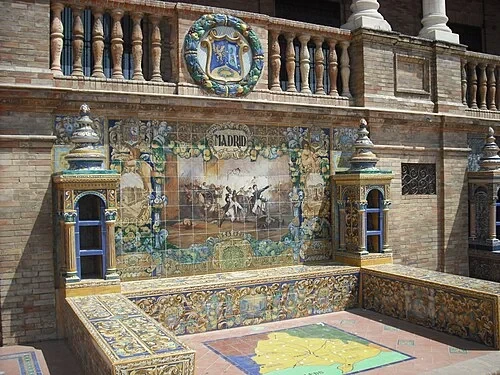 A Journey Through Spain’s ProvincesThe Madrid Alcove
As we move along the alphabetical row of provinces, the Madrid alcove stands out for its dramatic subject matter. The central mural depicts the 'Dos de Mayo'—the Second of May—uprising of 1808. This was a pivotal moment in Spanish history when the citizens of Madrid rose up against the occupying troops of Napoleon Bonaparte. By including such a powerful scene of resistance and national identity, the designers used this bench to connect the capital city’s history with the wider story of Spain told throughout the plaza. It’s a perfect example of how these alcoves served to foster a sense of shared national pride. You might notice that while every other province has its own bench here, the host city of Seville is represented differently. Because Seville is the setting for the entire plaza, its story is told through separate, even larger murals located elsewhere in the complex. The Madrid bench, with its scenes of heroism, remains a key stop for those looking to understand the historical narrative woven into the architecture. It invites the visitor to reflect on the events that defined the modern Spanish state, all while resting on a work of local ceramic art.
Listen in the appPhoto: Xurxo15 · CC BY-SA 3.0 es
10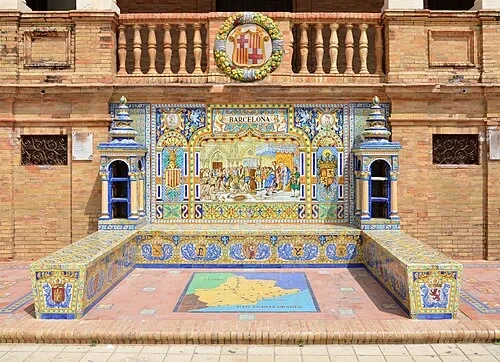 A Journey Through Spain’s ProvincesThe Barcelona Alcove
Turning our attention to the Barcelona alcove, we see a scene depicting one of the most famous encounters in world history. The central mural shows Christopher Columbus appearing before King Ferdinand and Queen Isabella after his first voyage to the Americas. This event took place in Barcelona, and its inclusion here highlights the city's historical importance as a gateway for global exploration. Around the central image, notice the beautifully crafted ceramic jars and pillars that frame the scene. These decorative elements add a three-dimensional quality to the alcove, making it feel like a grand portal into the past. For tourists visiting from Catalonia, this is almost always the most important stop in the plaza. It’s a place to take a photo with a piece of home, surrounded by the grand regionalist architecture of Seville. These benches act as a bridge between the local identity of each province and the unified vision of Spain that the 1929 Exposition sought to project to the world. The vibrancy of the colors and the detail of the assembly make this alcove a standout example of the artistry found throughout the complex.
Listen in the appPhoto: Gzzz · CC BY-SA 4.0
Plaza de España
Frequently asked questions
How much does the guide cost?
Free app download. Listed guide price: $0.99. Guide price shown in the app. Audio guide only. Venue admission is separate.
Can I listen without internet?
Yes. Download the guide’s audio, images, and maps in the app before your visit. Your downloaded content is then available offline.
Can I listen in my language?
Stanza supports 15 languages. Check the app for the languages available for this guide.
Do I need to follow a schedule?
No. This is a self-guided experience. Choose your stops, pause whenever you like, and return to a story at your own pace.
At your own pace
Explore Plaza de España.
Download Stanza, then search for “Plaza de España”.
Free app download · Guide price shown in the app
Keep exploring
Nearby audio guides
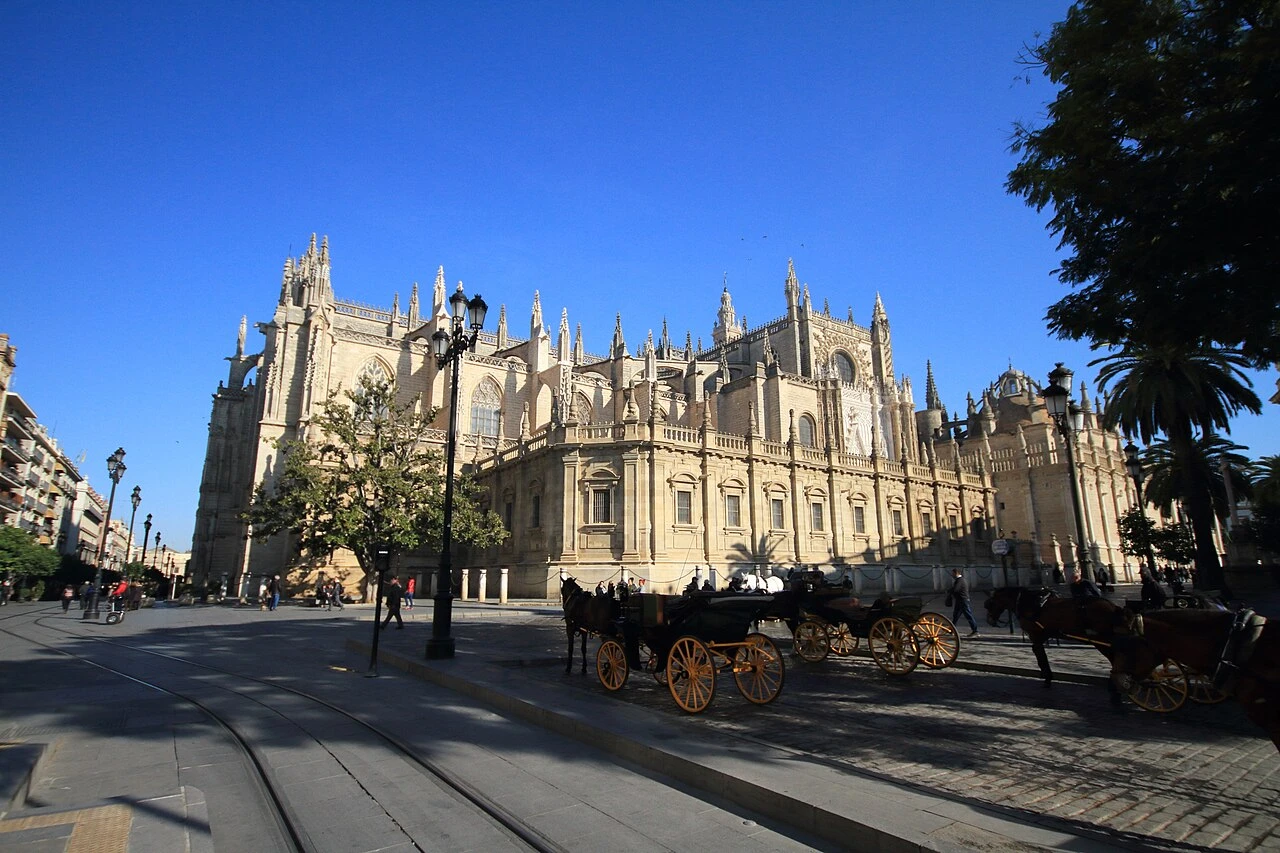
Seville
Catedral de Sevilla
Content & sources
Photo: PEPE GADEIRAS · CC BY-SA 4.0
Seville
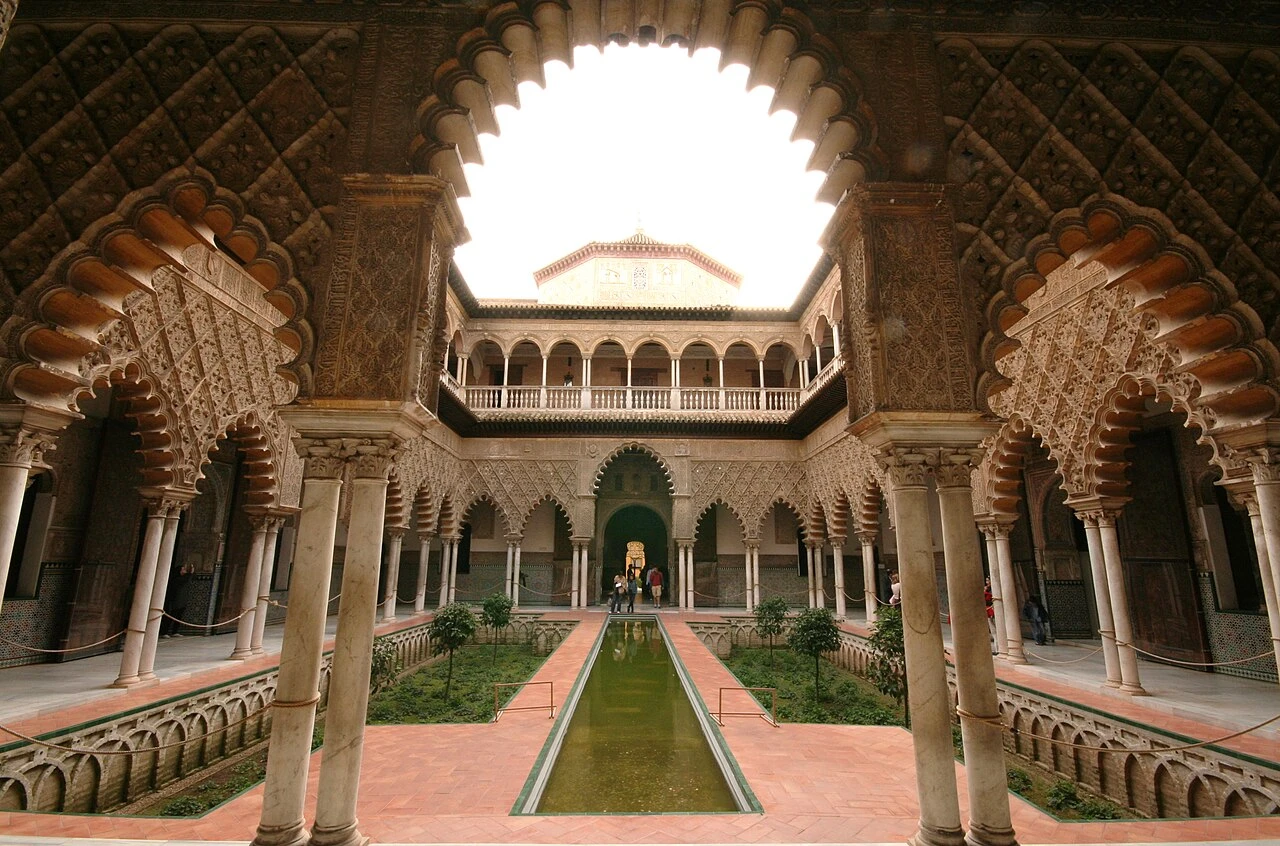
Reales Alcázares de Sevilla
Content & sources
Cat from Sevilla, Spain · CC BY 2.0
Seville
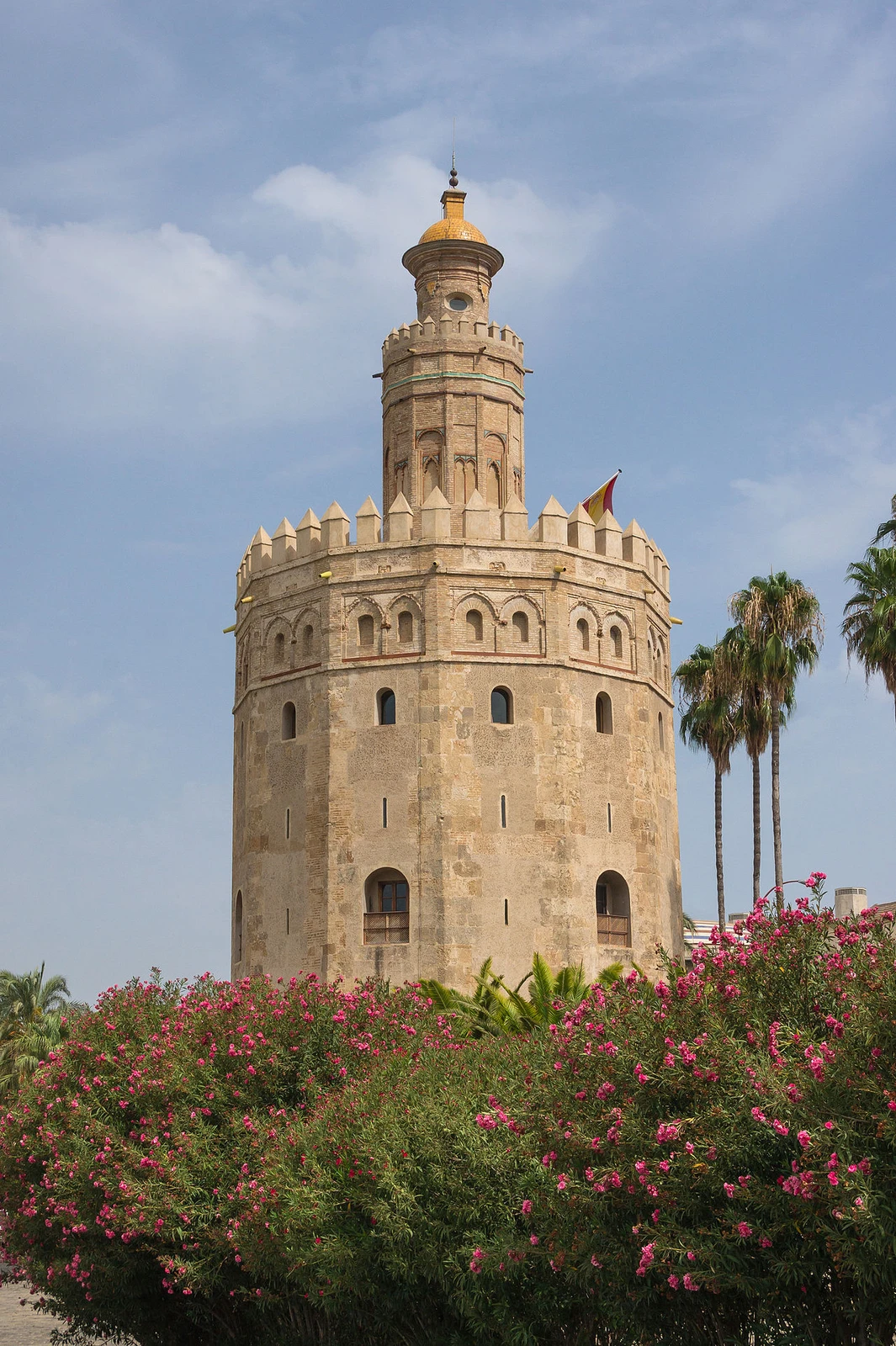
Torre del Oro
Content & sources
Photo: Jebulon · CC0
Málaga
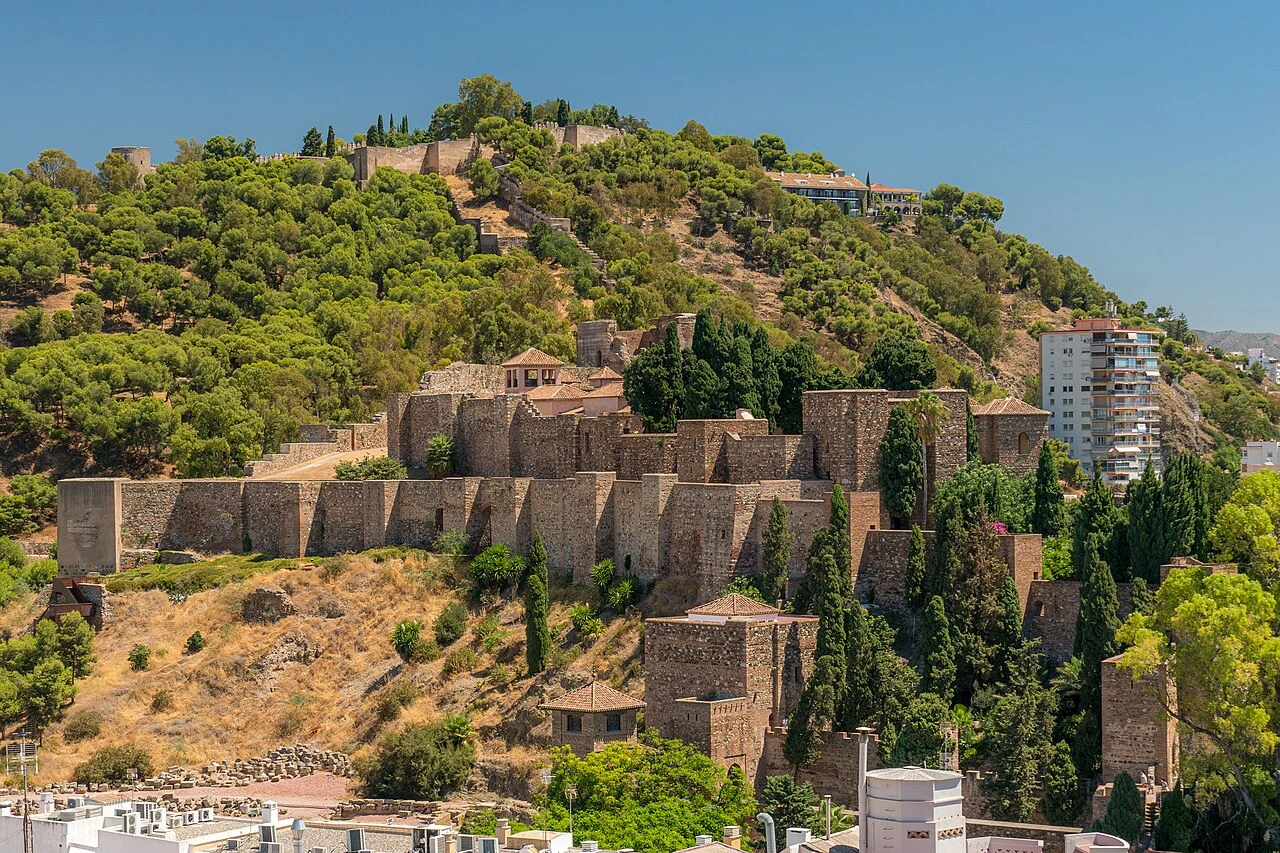
Alcazaba de Málaga
Content & sources
Photo: Fernando · CC BY-SA 4.0