Stanza · Audio guide
Catedral de SevillaAudio guide
A place to remember. A story to take with you.
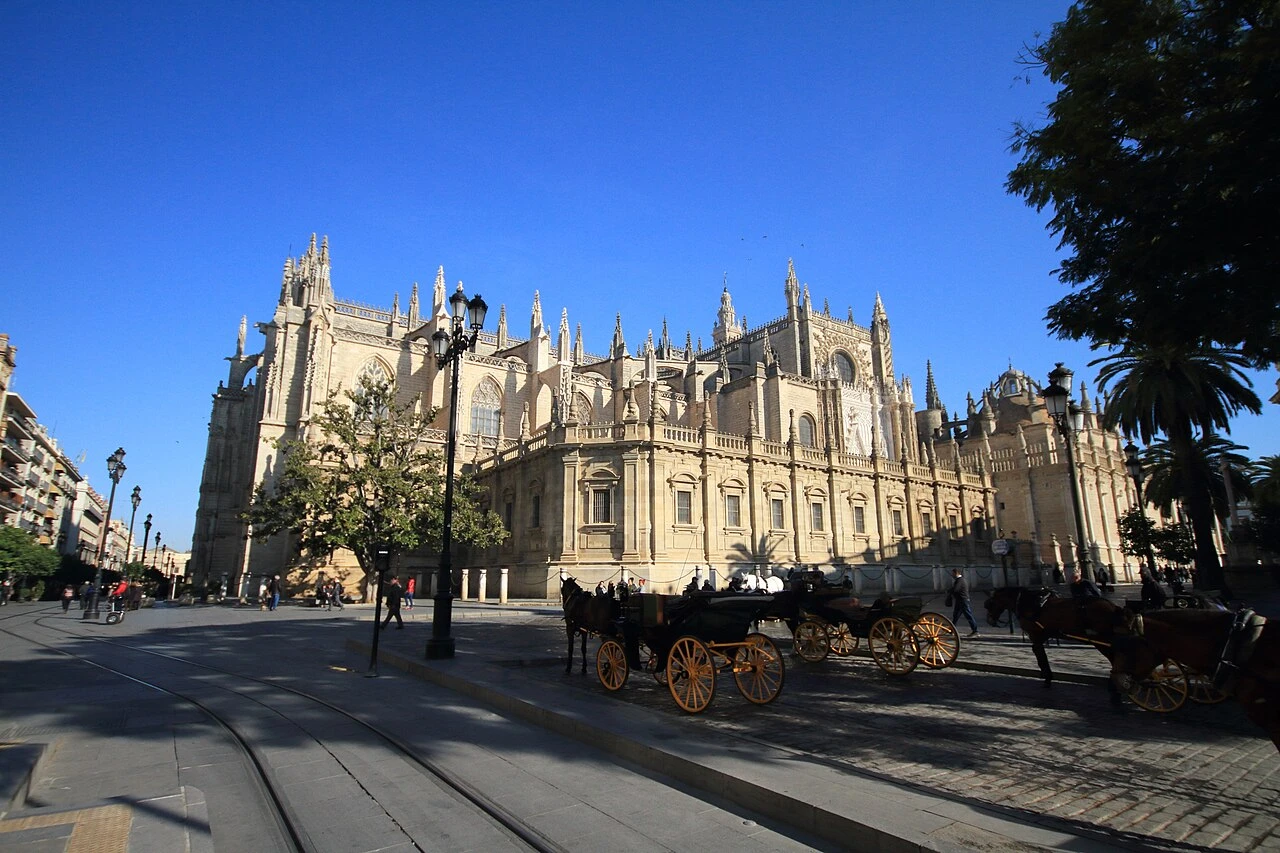
The Seville Cathedral is a Catholic cathedral located in Seville, Spain. It was built on the site of a former mosque and is a UNESCO World Heritage site.
Download Stanza, then search for “Catedral de Sevilla”.
About the tour
One guide. Your kind of visit.
The Seville Cathedral is a Catholic cathedral located in Seville, Spain. It was built on the site of a former mosque and is a UNESCO World Heritage site.
Ready when you are.
- 01Get the free Stanza app.
iOS & Android
- 02Find your guide.
“Catedral de Sevilla”
- 03Download before you go.
Works offline
Audio guide / 25 narrated stops
Inside the guide
Get to know a few of the stories before you go. Open a stop to read more.
01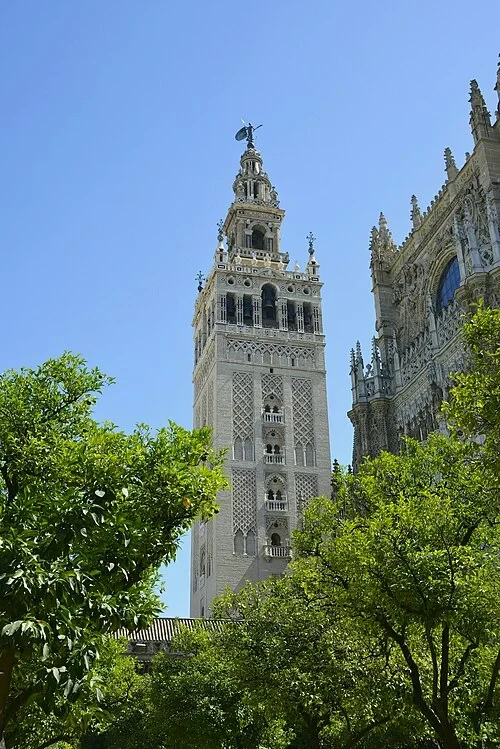 The Giralda and Plaza Virgen de los ReyesThe Giralda Tower
Welcome to the Seville Cathedral, beginning here at its most famous feature. This structure is a composite of two distinct architectural eras. The lower two-thirds of the tower date back to the 12th century, when it was built as the minaret for the Great Mosque of Seville. As you look toward the top, notice the transition to the 16th-century Renaissance bell chamber. This unique fusion of Moorish brickwork and Christian belfry design is why the tower remains the iconic symbol of Seville today. Originally, the tower was topped with four large copper spheres that were said to be visible from miles away, but these were replaced during the Renaissance additions. The building stands as a physical timeline of the city’s history, moving from its Islamic origins to its central role in Spanish Christendom. Its massive height dominated the medieval skyline, and it served as the model for several other minarets across the Almohad Empire, including the Koutoubia in Marrakech. The transition from earthy, textured brickwork to more ornate, light-colored stone reflects the layering of different religious and political eras that have shaped the building over eight centuries.
Photo: Alberto-g-rovi · CC BY 4.0
02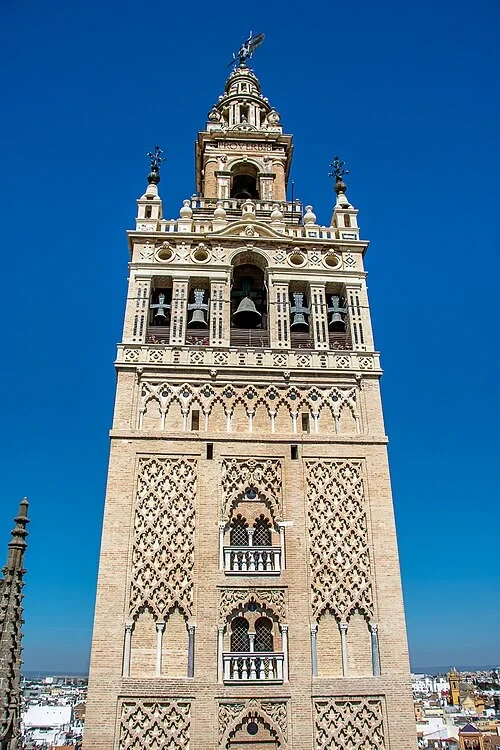 The Giralda and Plaza Virgen de los ReyesAlmohad Brickwork Patterns
These overlapping arches form a signature decorative element of Almohad architecture, creating a sense of depth and movement on the flat surface of the tower. This geometric precision was highly valued in Islamic design, where representational art was generally avoided in favor of complex mathematical patterns. Between these patterned panels, you can see narrow horseshoe and poly-lobed windows. These were not merely for decoration; they were strategically placed to allow light into the interior ramp system used by the call to prayer. The windows are often framed by delicate arches that showcase the advanced masonry skills of the 12th-century builders who used locally fired clay bricks. As the sun moves across the sky, notice how the shadows shift within the recessed brickwork, emphasizing the three-dimensional texture of the facade. This specific style of 'sebka' decoration became a hallmark of the region’s architecture, influencing building styles across Andalusia for generations. The bricks were laid with such precision that the patterns remain crisp and clearly defined nearly eight hundred years after they were first set by Moorish craftsmen.
Photo: Anual · CC BY-SA 4.0
03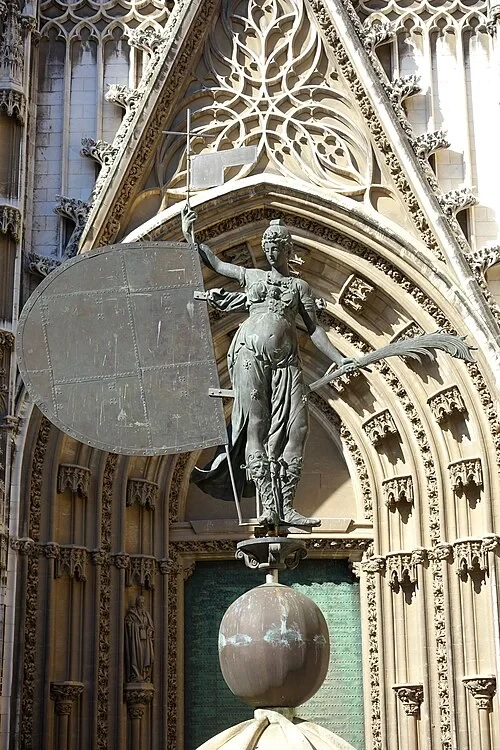 The Giraldillo (The South Portal)The Faith Statue
Seeing this figure at ground level provides a rare opportunity to appreciate its massive scale, which is often lost when viewed from over a hundred feet below. The statue represents 'The Triumph of Christian Faith.' In its right hand, it holds a palm branch, a traditional symbol of victory and martyrdom. The left hand holds a large shield, which functions as a wind vane, allowing the entire structure to rotate with the breeze. The original figure was cast in the 1560s and has withstood centuries of weather at its high perch. The name 'Giralda' actually comes from the Spanish word 'girar,' meaning to turn, referring directly to the rotating movement of this very weather vane. Eventually, the entire tower took on the name of the statue. By examining this replica, you can see the intricate details of the heavy drapery and the steady expression on the figure’s face. The transition of the tower from a minaret to a belfry was capped off by this figure, serving as a permanent marker of the city’s religious shift following the 13th-century conquest.
Listen in the appPhoto: Daderot · CC0
04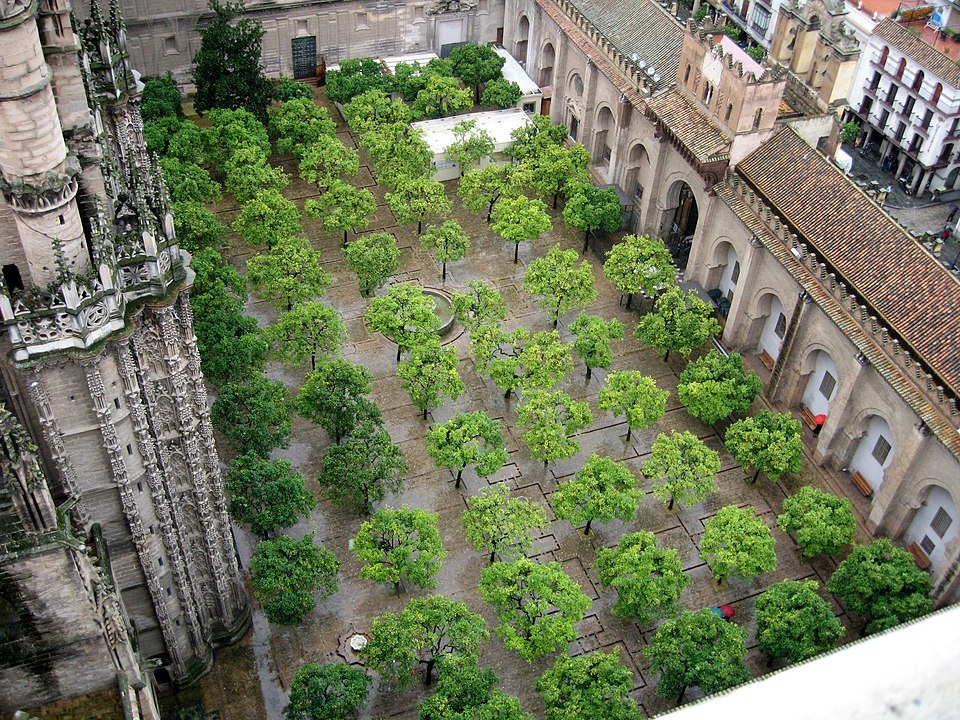 Patio de los Naranjos (Orange Tree Courtyard)Orange Tree Courtyard
Spanning roughly 23,500 square meters, this area served as the original ablutions courtyard, where worshippers would perform ritual washing before entering the mosque for prayer. Today, it remains a peaceful retreat defined by a precise grid of orange trees that provide deep shade and a famous fragrance during the spring bloom. At the center of the courtyard, you will find a stone fountain. The basin of this fountain is actually older than the mosque itself, dating back to the Visigothic era, showing how builders often repurposed materials from earlier civilizations. Following the city's change in rule, the space transitioned from an Islamic ritual site to a Christian cloister used for administrative and ecclesiastical purposes. The layout, however, remains largely unchanged from its Moorish origins, with visible irrigation channels running between the trees to manage the water supply. This courtyard acts as one of the few places where you can still feel the original scale and atmosphere of the Great Mosque, providing a quiet transition between the busy streets of Seville and the monumental interior of the cathedral.
Listen in the appPhoto: Bryan · CC BY 2.0
05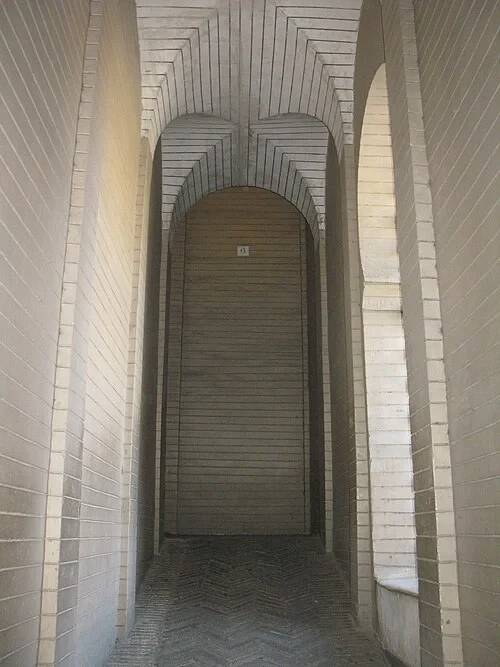 Inside the Giralda: The RampsThe Ascent Ramps
This unique engineering choice served a very specific historical purpose. The design allowed the Sultan, or the muezzin responsible for the call to prayer, to ride a horse directly to the top of the tower five times a day. Climbing these ramps today, you can imagine the sound of hooves echoing against the thick brick walls. The passages are surprisingly spacious, covered by varied vaulted ceilings that change as you ascend, reflecting different architectural phases of construction. To help keep track of your progress, numbered markers are placed at each turn, leading you toward the bell chamber at the summit. These ramps were built between a massive central masonry core and the outer shell of the tower, providing incredible structural stability that has allowed the Giralda to survive multiple major earthquakes over the centuries. This incline makes the ascent significantly more accessible than the cramped, winding steps found in Gothic cathedrals elsewhere in Europe. The ramps lead past several small chambers, once used for storage or by the tower's guardians, before finally opening out into the belfry.
Listen in the appPhoto: R Prazeres · CC BY-SA 4.0
06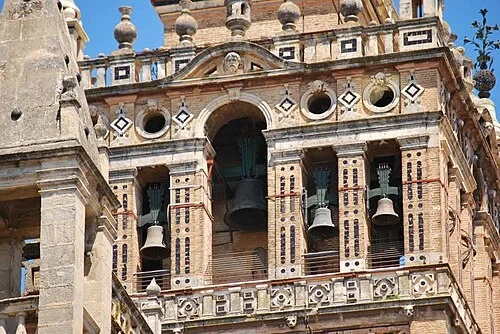 The Bell Chamber and Panoramic ViewsBells of the Cathedral of Saint Mary of the See of Seville
Each of these bells is unique, possessing its own history and a specific traditional name. Among them are 'Santa Maria,' the largest of the group, and another affectionately known by locals as 'La Gorda,' or 'The Fat One.' The chamber itself is a masterpiece of the Renaissance style, specifically the Plateresque tradition, characterized by extremely detailed stone carvings that mimic the fine work of silversmiths. Notice the decorative motifs around the arched openings and the elegant stone balustrades that encircle the viewing area. These bells have played a central role in the city's life for hundreds of years, signaling everything from religious festivals to warnings of danger. The mechanical systems used to swing the bells are visible, showcasing a blend of traditional craftsmanship and functional engineering. The height of this chamber provides a dramatic backdrop for these heavy instruments, which are suspended from massive timber beams. The sound produced here is a fundamental part of Seville's acoustic landscape, connecting the modern city to its liturgical past through rhythms that have changed very little since the 1500s.
Listen in the appDiego Tirira from Quito, Ecuador · CC BY-SA 2.0
07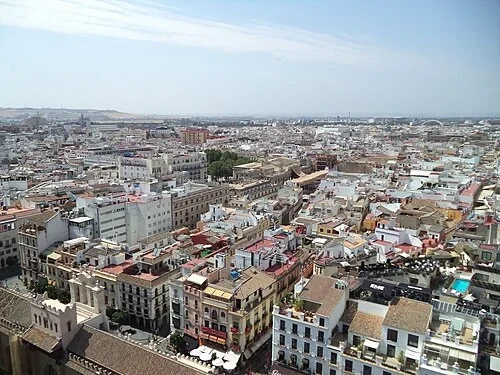 The Bell Chamber and Panoramic ViewsThe City Panorama
Looking out over the railings, you can see the intricate patchwork of tiled roofs that make up the historic Santa Cruz quarter, the city’s ancient Jewish neighborhood. To the west, the Guadalquivir River glimmers as it winds its way toward the Atlantic, while nearby, the lush gardens and fortifications of the Royal Alcázar are clearly visible from above. At this height, the sensory experience changes; the bustling noise of the streets below fades, replaced by the steady rush of the wind at the summit. You can clearly see how the cathedral dominates the urban landscape, its massive Gothic buttresses appearing like a stone forest from this angle. On a clear day, the view extends far beyond the city limits to the surrounding rolling plains of Andalusia. This height allows you to appreciate the sheer scale of the cathedral’s footprint in relation to the narrow, winding streets of the medieval city center. It is a moment to observe the intersection of centuries of urban development from one of the world's most famous historic viewpoints.
Listen in the appPhoto: CarlosVdeHabsburgo · CC BY-SA 3.0
08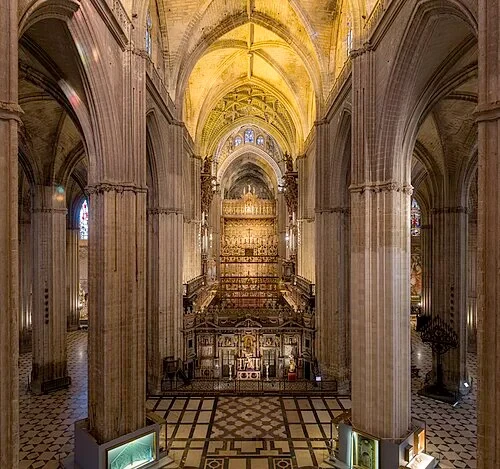 The Main Nave: Gothic GrandeurThe Gothic Nave
When construction began in 1401, the cathedral chapter famously declared their intention to build a church so grand that future generations would think the builders were mad for even attempting it. The central nave rises to a staggering height of 42 meters, supported by massive clustered columns that seem to branch out like trees to meet the complex rib vaulting of the ceiling. These columns are not solid blocks but are composed of multiple smaller stone shafts bundled together, which draw the eye upward and emphasize the verticality of the space. The sheer volume of the interior was meant to reflect the immense power and wealth of Seville during the Age of Discovery. As you walk through, notice how the light filters through distant stained-glass windows, casting soft colors across the vast stone floor. The proportions here are so massive that the building could comfortably contain many of the world's other famous cathedrals within its walls. This architectural transition from the solid, earth-bound weight of the Giralda tower to this soaring, light-filled Gothic cavern marks the cathedral's evolution into a flagship of European Christendom.
Listen in the appPhoto: Fernando · CC BY-SA 4.0
09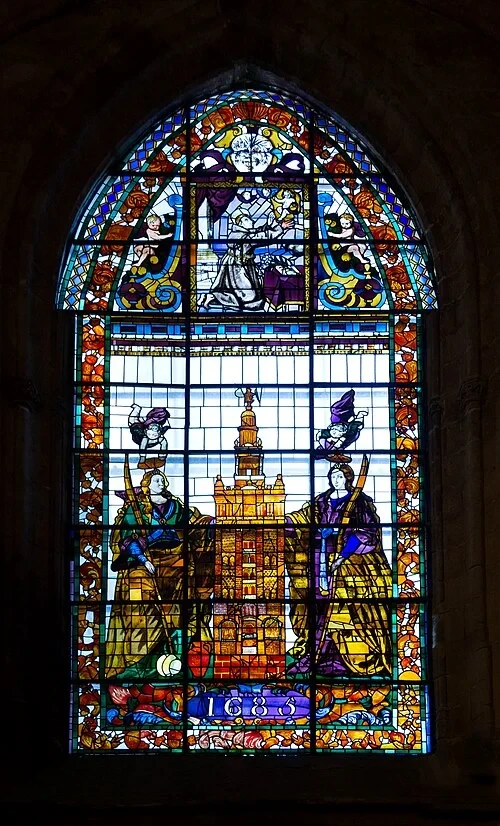 The Stained Glass CollectionGuardians of the Tower
According to local legend, these two sisters were potters who protected the Giralda from collapsing during a massive earthquake by holding it steady with their hands. This image became a popular motif in Sevillian art, symbolizing the city's resilience against natural disasters. In this specific depiction, you can see the tower as it looked after the 16th-century Renaissance additions were completed, held between the two standing figures. The window captures the silhouette of the belfry and the Giraldillo weather vane with remarkable detail for the 17th century. The saints themselves are shown with ceramic vessels at their feet, a direct nod to their trade as potters. By placing them in the windows of the cathedral, the artists reinforced the idea that the building was under constant divine protection. The vibrant colors of the glass bring the story to life, especially when the afternoon sun shines through, illuminating the very tower they are said to have saved. This window serves as both a religious icon and a historical record of how the city viewed its architectural identity and its spiritual protectors.
Listen in the appPhoto: Jebulon · CC0
10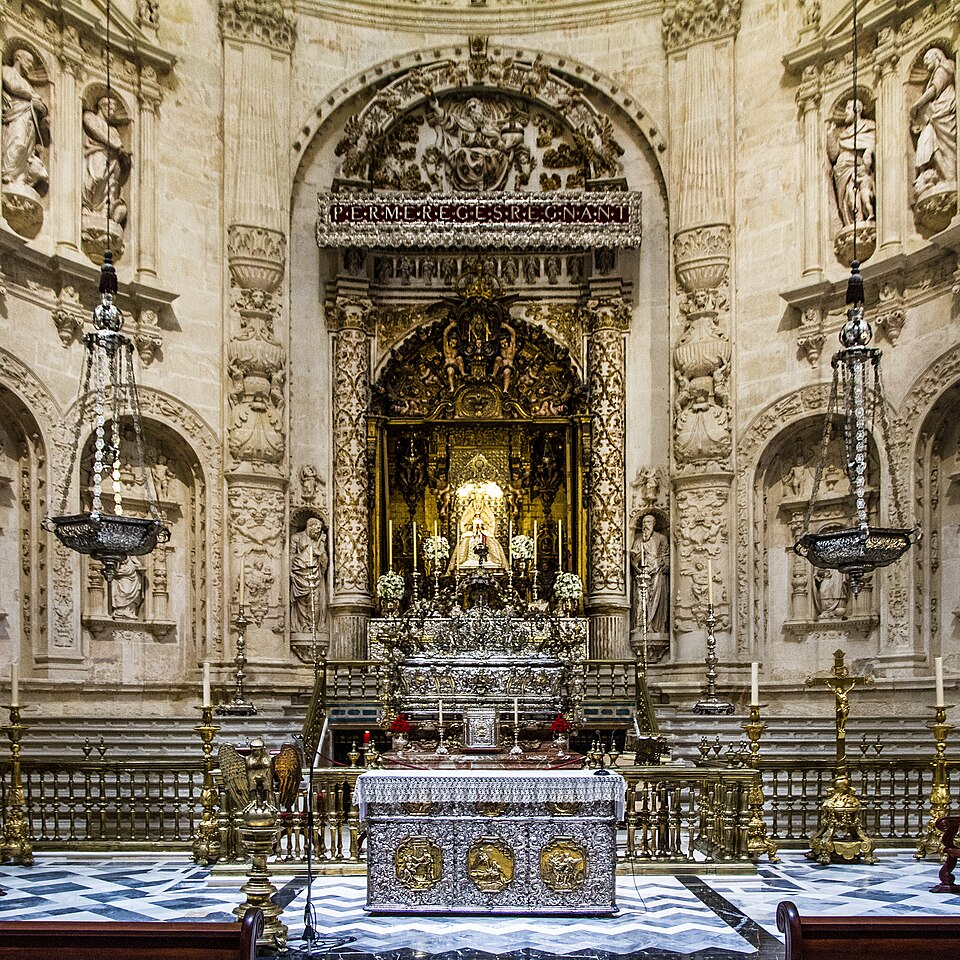 The Royal Chapel (Capilla Real)The Royal Chapel
This space is defined by its soaring dome and walls covered in intricate stone carvings that reflect the transition toward the Renaissance style in Spain. Unlike much of the surrounding Gothic cathedral, the Royal Chapel was designed to function as a royal pantheon, a final resting place for monarchs who played pivotal roles in the history of Seville and the nation. Among those interred here is King Alfonso X, known as 'the Wise,' whose 13th-century reign was marked by a great flourishing of science, law, and literature. The atmosphere in the chapel is more focused than the vast nave, centered on the high altar and the tombs that line the walls. The detailed stonework features heraldic symbols and religious figures, all meant to glorify the historic connection between the church and the crown. As you look up, the light from the dome illuminates the complex geometry of the ceiling, highlighting the immense craftsmanship required to create such a grand mausoleum. It remains one of the most significant sites in the building for those interested in the dynastic history and royal legacy of the region.
Listen in the appperspepic · CC BY-SA 2.0
Catedral de Sevilla
Frequently asked questions
How much does the guide cost?
Free app download. Listed guide price: $1.99. Guide price shown in the app. Audio guide only. Venue admission is separate.
Can I listen without internet?
Yes. Download the guide’s audio, images, and maps in the app before your visit. Your downloaded content is then available offline.
Can I listen in my language?
Stanza supports 15 languages. Check the app for the languages available for this guide.
Do I need to follow a schedule?
No. This is a self-guided experience. Choose your stops, pause whenever you like, and return to a story at your own pace.
At your own pace
Explore Catedral de Sevilla.
Download Stanza, then search for “Catedral de Sevilla”.
Free app download · Guide price shown in the app
Keep exploring
Nearby audio guides
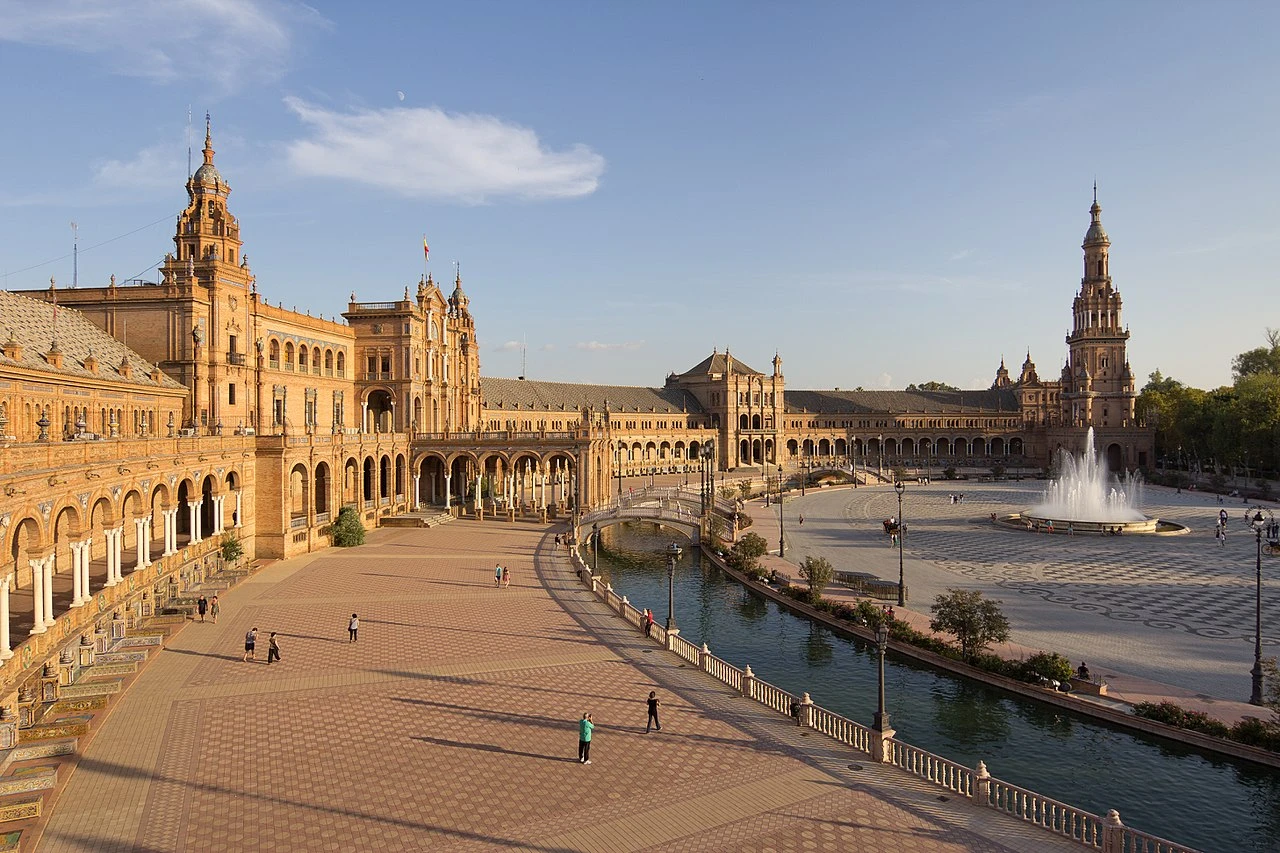
Seville
Plaza de España
Content & sources
Carlos Delgado · CC BY-SA 4.0
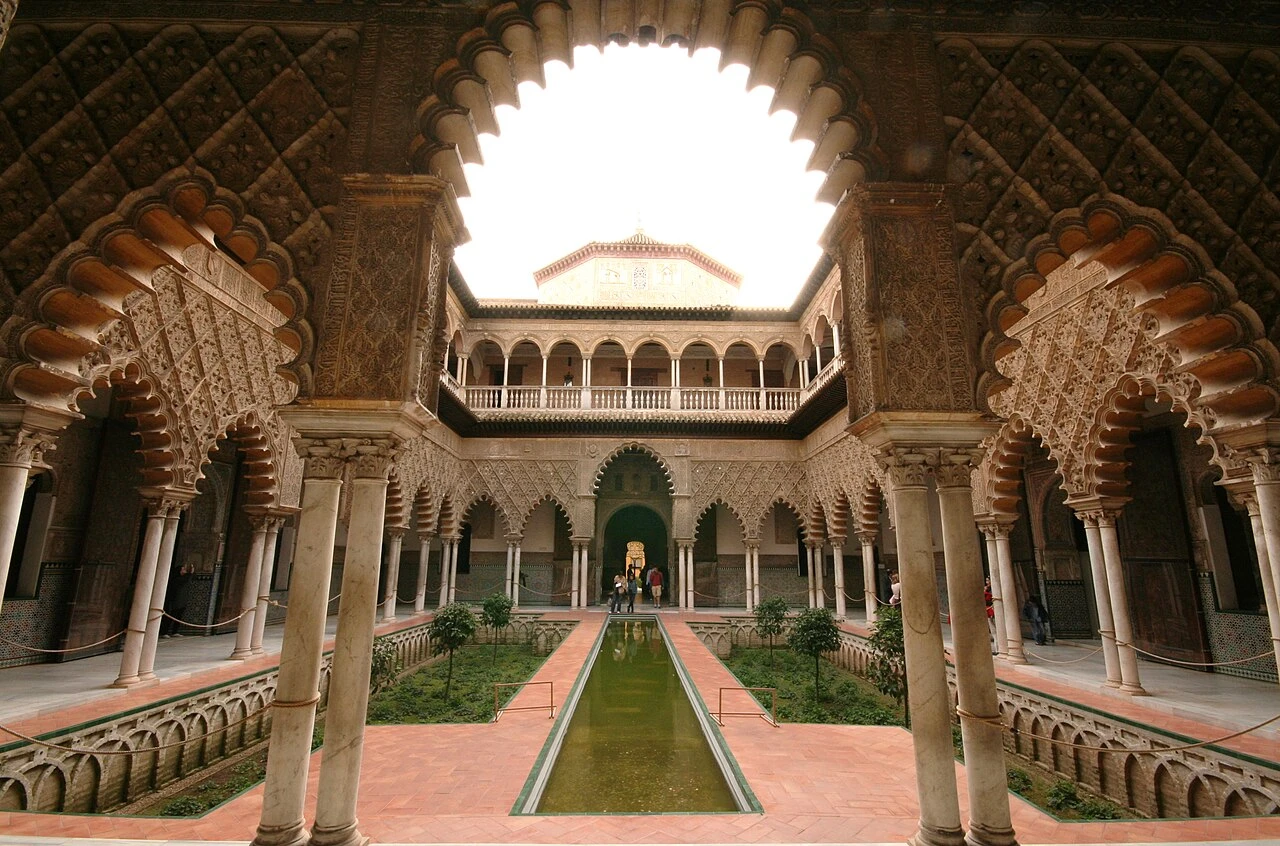
Seville
Reales Alcázares de Sevilla
Content & sources
Cat from Sevilla, Spain · CC BY 2.0
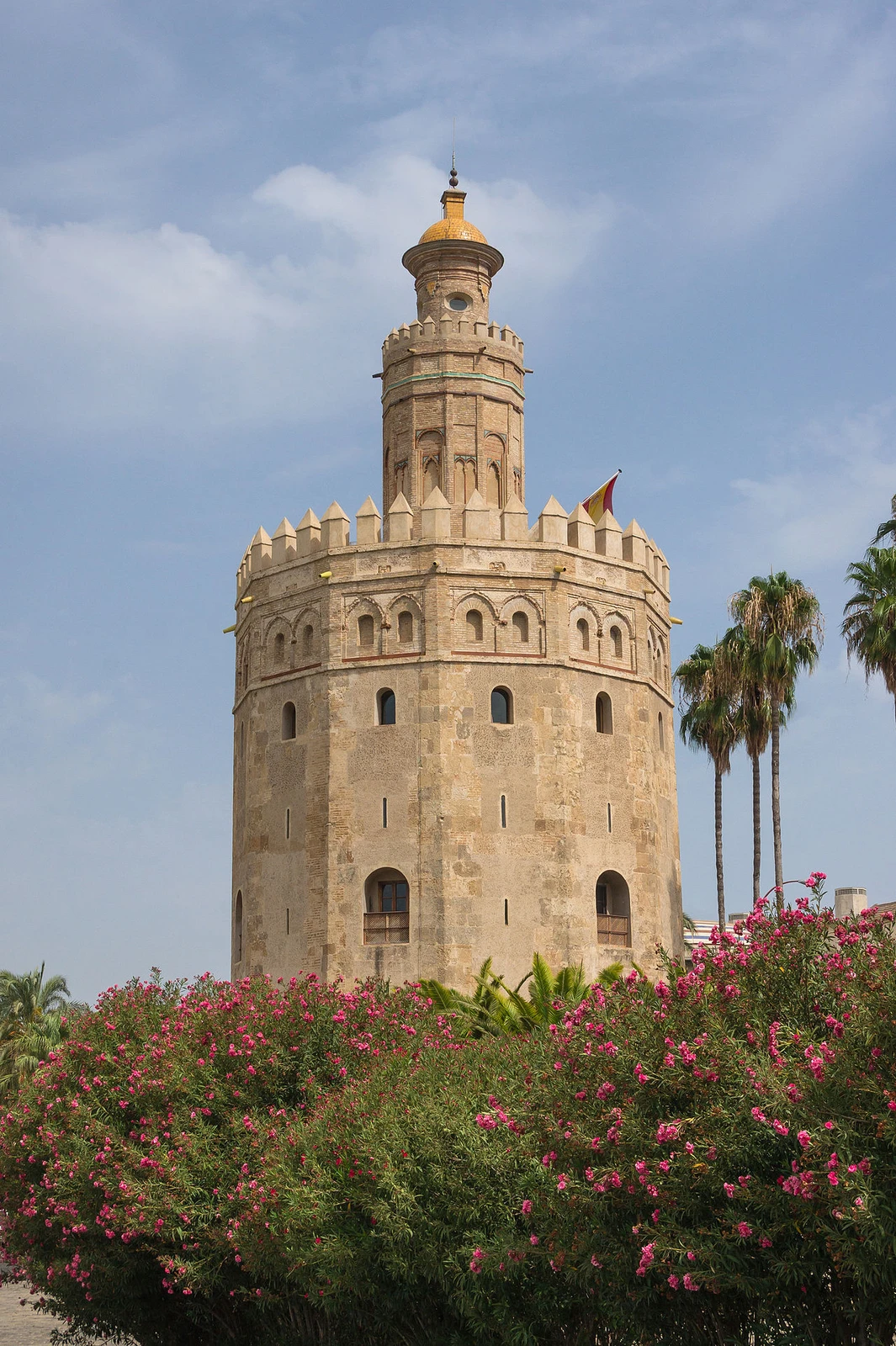
Seville
Torre del Oro
Content & sources
Photo: Jebulon · CC0
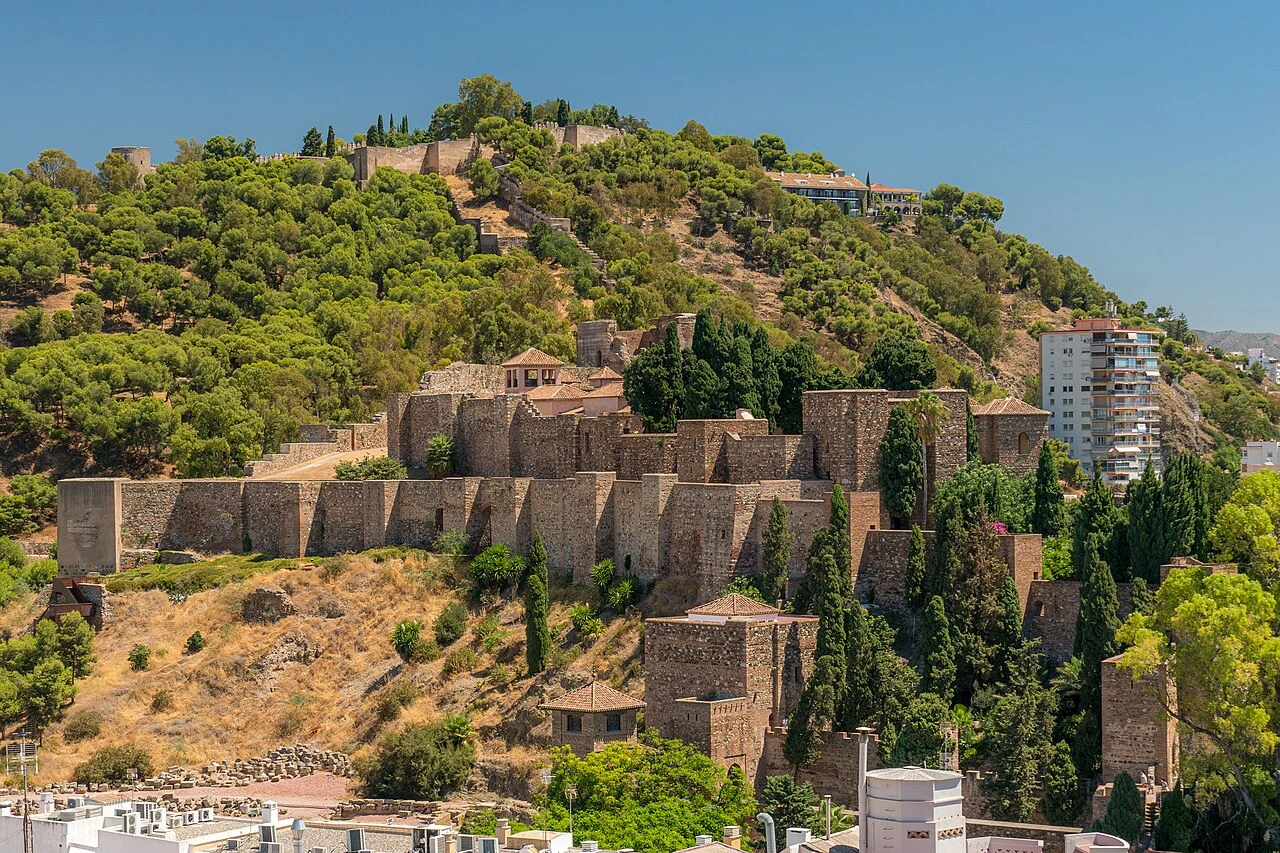
Málaga
Alcazaba de Málaga
Content & sources
Photo: Fernando · CC BY-SA 4.0