Stanza · Audio guide
Real Monasterio de Santa María de Guadalupe Audio Guide
A place to remember. A story to take with you.
The Royal Monastery of Saint Mary of Guadalupe is a 14th-century Roman Catholic monastic establishment located in Extremadura, Spain. It was one of the most important monasteries in the country for over four…
Download Stanza, then search for “Real Monasterio de Santa María de Guadalupe”.
About the tour
One guide. Your kind of visit.
The Royal Monastery of Saint Mary of Guadalupe is a 14th-century Roman Catholic monastic establishment located in Extremadura, Spain. It was one of the most important monasteries in the country for over four centuries and was declared a UNESCO World Heritage Site in 1993.
Ready when you are.
- 01Get the free Stanza app.
iOS & Android
- 02Find your guide.
“Real Monasterio de Santa María de Guadalupe”
- 03Download before you go.
Works offline
Audio guide / 15 narrated stops
Inside the guide
Get to know a few of the stories before you go. Open a stop to read more.
01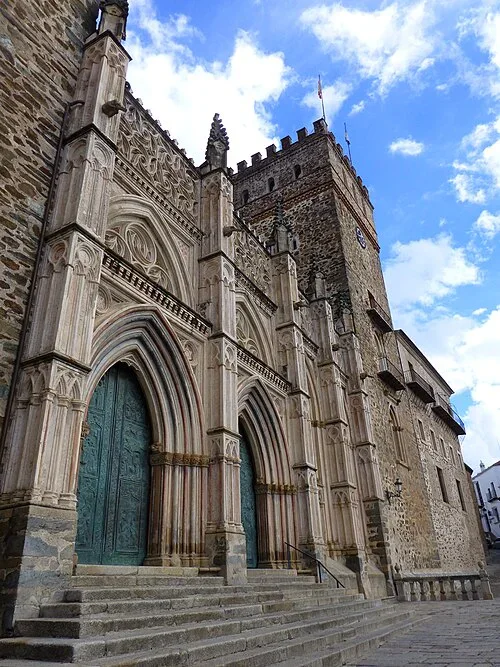 Plaza Mayor and the Fortified Gothic Façade
The Fortified Gothic Façade
Welcome to the Royal Monastery of Saint Mary of Guadalupe, a fortified sanctuary in the hills of Extremadura. The story begins, so the tradition goes, with a statue of the Virgin found by a shepherd beside the Guadalupe river in the late twelve hundreds. A chapel went up on the spot, and pilgrims began to arrive. In 1340 King Alfonso the Eleventh of Castile prayed to the Virgin before the Battle of Río Salado, fighting a Muslim coalition from Morocco. When he won, he credited her intercession, declared Guadalupe a royal sanctuary and paid for a vast rebuilding. The church that grew from that programme still dominates the town. Its façade is late Gothic with Mudéjar work, the craft of Muslim-trained artisans from Toledo. Solid medieval towers with battlements flank it, and a great stairway climbs to the bronze doors of the entrance. UNESCO added the whole monastery to its World Heritage list in 1993. Beyond those doors lie cloisters, paintings and a dark wooden statue that changed the history of two continents.
Photo: Cosasdevolar · CC BY-SA 3.0 es
02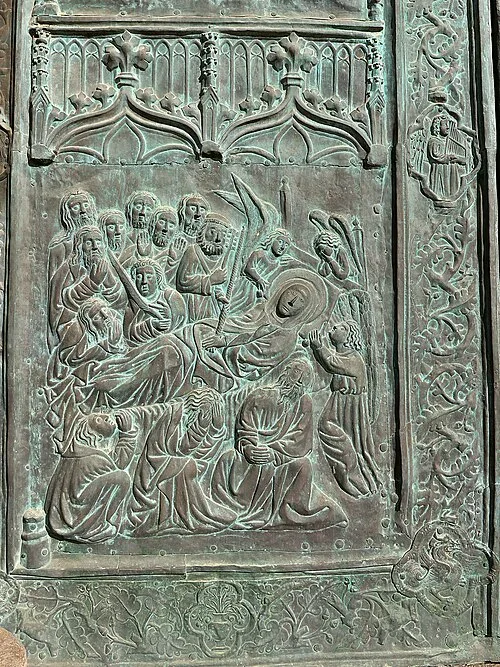 Plaza Mayor and the Fortified Gothic Façade
The Bronze Doors of Paolo de Colonia
The great doors of the church are bronze, and they are among the oldest preserved bronze doors in all of Spain. A master called Paolo de Colonia made them at the end of the thirteen hundreds, for a shrine dedicated to the Virgin, and he filled them with her story. Each panel reproduces a scene from the lives of Jesus and Mary, hammered in relief. One shows the Dormition, the falling asleep of the Virgin, with the apostles gathered around her bed and angels above. A carved Gothic canopy frames the scene like a small stone temple. Centuries of hands and weather have turned the bronze a deep green, and that patina is part of the beauty now. Every pilgrim who entered the church over six hundred years passed through these same plates of metal, pushing them open with a shoulder on the way to the Virgin.
José Luis Filpo Cabana · CC BY-SA 4.0
03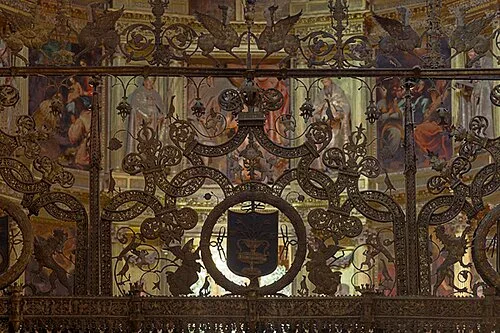 The Basilica Nave and Royal Presbytery
The Monumental Iron Grille
Stretching across the three naves of the basilica is a wall of wrought iron, taller than a man and crowned with heraldic crests. Two Dominican friars made it, Francisco de Salamanca and Juan de Ávila, and they hammered away at it from 1510 to 1514. Four years of forge work, with gilded details catching the candlelight. The screen has five sections, the central one wider and richer than the rest, opening onto the nave through two doors. It did a practical job. The monks sang their prayers in the choir and the presbytery behind it, while ordinary pilgrims worshipped out here in the nave, at a respectful distance from the high altar. Heaven stayed close, but the altar kept its mystery. The grille was restored in 1997 and still divides the church exactly as the friar-smiths intended.
Listen in the appPhoto: PMRMaeyaert · CC BY-SA 4.0
04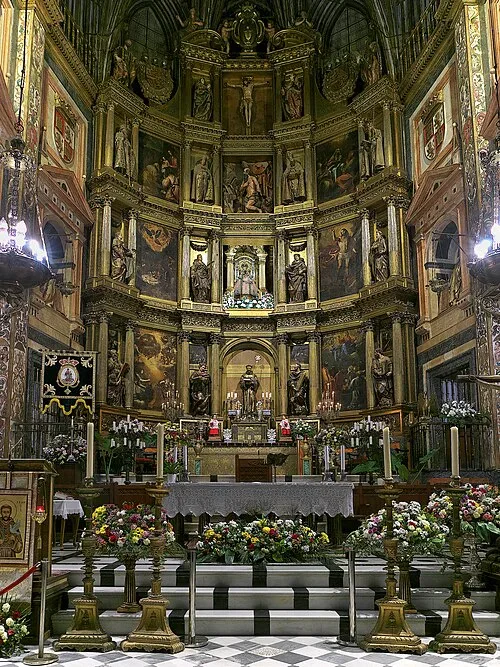 The Basilica Nave and Royal Presbytery
The Royal High Altarpiece
Behind the grille rises the great altarpiece, gilded and towering through three storeys to a crucifix beneath a broken Baroque pediment. Juan Gómez de Mora drew up the first design at the start of the sixteen hundreds, and Giraldo de Merlo carved most of it, mixing Renaissance weight with early Baroque flourish. Seventeen reliefs run along the base, and Saint Jerome presides over the centre, in honour of the order of friars who lived here. Around him sit the shields of the Habsburgs, the dynasty that then ruled Spain. Kings prayed at this altar and were buried near it. Henry the Fourth of Castile was entombed at Guadalupe in 1474, beside his mother, a sign of how high this remote monastery stood in the realm. One treasure hides in plain sight. The tabernacle holding the consecrated hosts is a Renaissance cabinet of cedar and steel, made in Rome in 1561 and given by Philip the Second himself. Everyone calls it the Escritorio de Felipe II.
Listen in the appPhoto: Jl FilpoC · CC BY-SA 4.0
05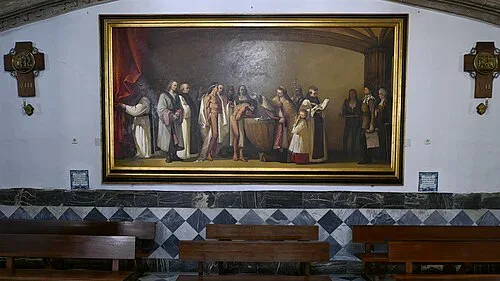 The Basilica Nave and Royal Presbytery
The Baptism of Cristóbal and Pedro
This quiet canvas of a baptism carries one of the monastery's proudest stories. The Catholic Monarchs received Christopher Columbus here in 1486 and again in 1489, and in 1492, after the conquest of Granada, they came to Guadalupe to rest. In June of that year they signed the letters that ordered the ports of Palos and Moguer to hand Columbus his ships. He sailed, and nearly sank on the way home. His ship's log held a written vow, and in 1493 he returned here in fulfilment of it, to give thanks to the Virgin for the discovery of the Indies. Three years later, on the twenty-ninth of July 1496, indigenous people brought from the Caribbean as servants were baptised at the church font. The painting, by Juan Manuel Núñez Báñez, commemorates baptisms like that one rather than recording the day itself. From this shrine the devotion to Our Lady of Guadalupe crossed the Atlantic, and a Caribbean island still carries the name.
Listen in the appPhoto: Jl FilpoC · CC BY-SA 4.0
06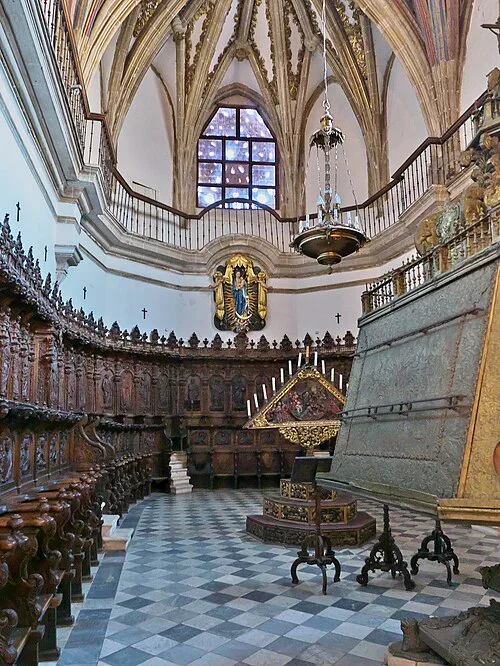 The Basilica Choir Gallery
The Choir Gallery
High above the west end of the church sits the monks' choir, built in the thirteen hundreds and given its Baroque finish later. Here the community of Saint Jerome gathered through each day to sing the Divine Office, the round of prayer that measured monastic life from before dawn until night. The stalls are walnut, the work in large part of Alejandro Carnicero, with seats on two levels: forty-five below for the fathers, forty-nine above. Reliefs of saints line the backs of the lower seats, full figures on the upper ones. Over the prior's chair stands the Virgen del Coro, a Gothic-Flemish carving of the fifteenth century, holding the Child with the moon at her feet. On the vaults above, Juan de Flandes painted angels playing their instruments in fresco, as if the painted heavens were singing along with the monks below.
Listen in the appPhoto: Jl FilpoC · CC BY-SA 4.0
07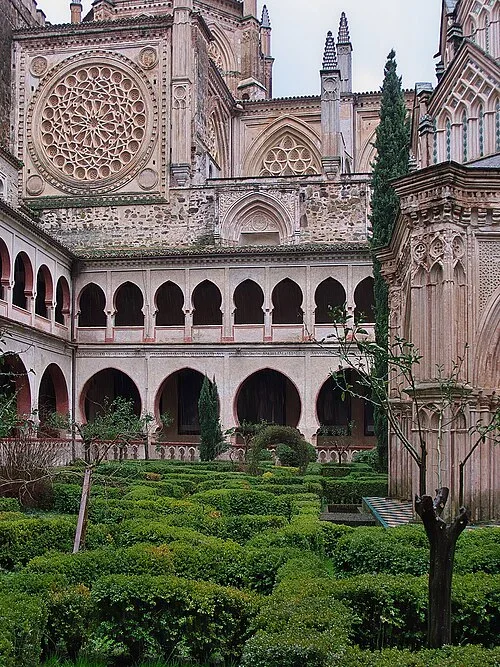 The Mudéjar Cloister and Ornamental Pavilion
The Mudéjar Cloister
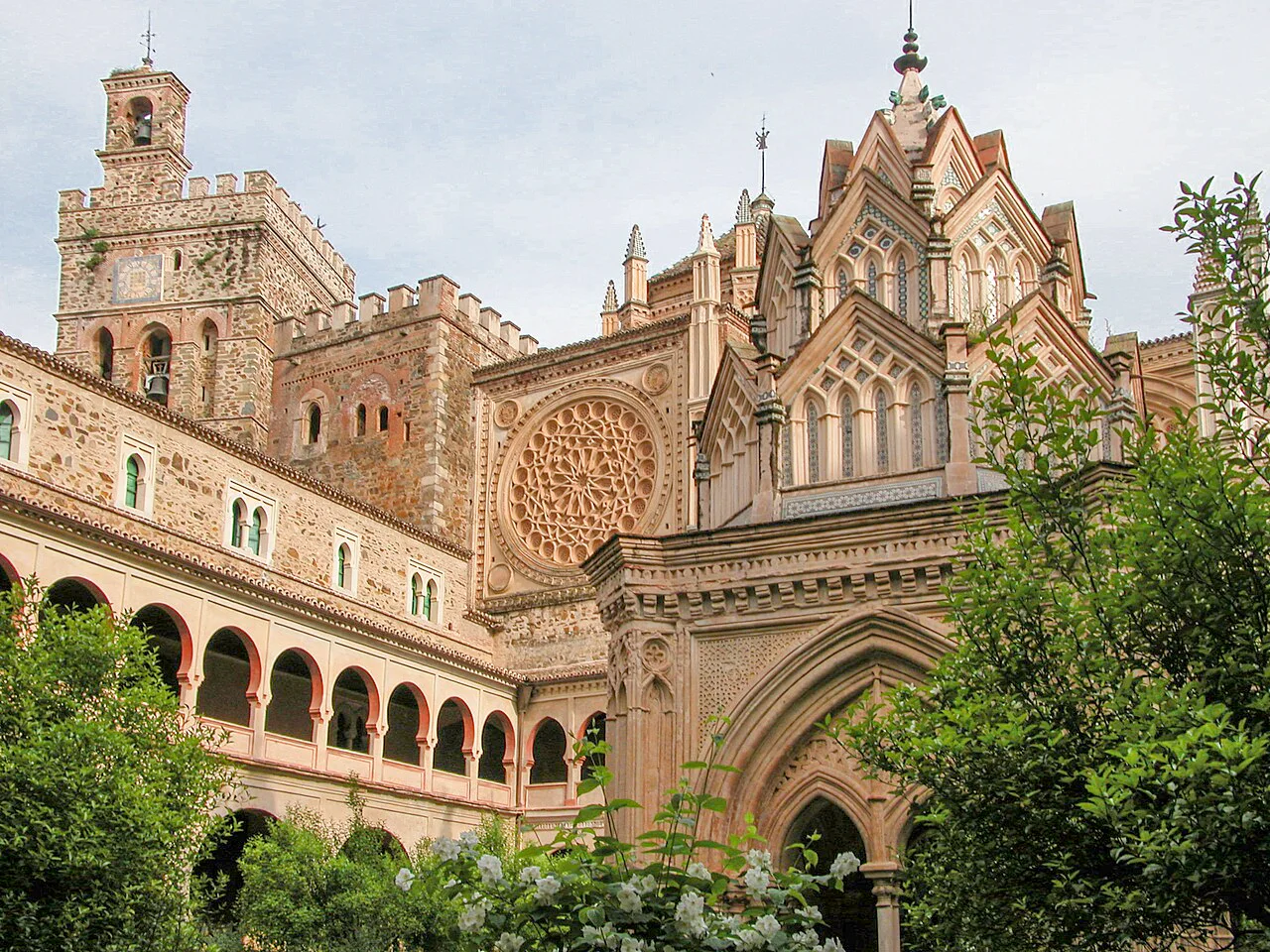
The heart of the monastery is this cloister, built between 1389 and 1405 in the Mudéjar style, where Gothic structure meets the craft of Islamic tradition. It covers about sixteen hundred and eighty square metres around a formal garden, on two storeys. Below, pointed arches of Islamic pattern rest on low walls built of little linked arcades. Above, horseshoe arches lean on pillars behind a running parapet. In that year of 1389 the Hieronymite monks took over Guadalupe and made it their principal house, and they never let go. They governed the town as absolute lords for four hundred and forty-six years, weathering protests and lawsuits from villagers who never won a council of their own. Under them the monastery grew into a complex of some twenty-two thousand square metres. The great rose window of the church rises above the cloister arcades here, one building campaign answering another across the courtyard.
Listen in the appUnknown author · Public domain
08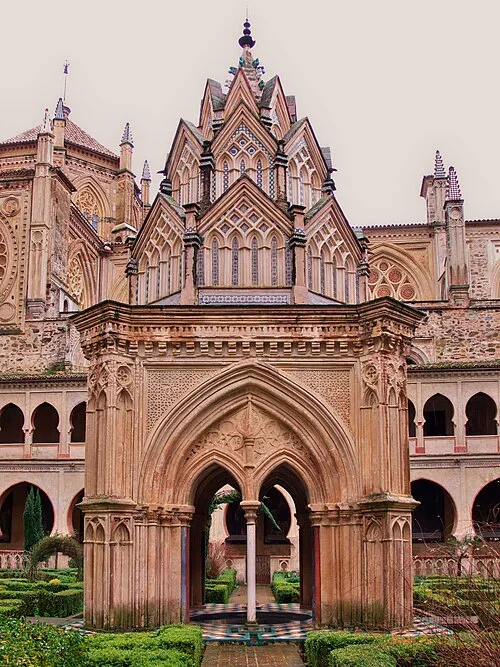 The Mudéjar Cloister and Ornamental Pavilion
The Mudéjar Templete of 1405
In the middle of the garden stands the cloister's most characteristic piece, a small freestanding pavilion built in 1405. It is square at the base, with four Gothic arches on each face, and each of those arches splits into two lower pointed ones. Above, three octagonal storeys rise, their pointed pediments shrinking as they climb, until a pyramid closes the top. The ornament is pure Mudéjar, and it glitters with pieces of glazed ceramic in which green dominates. In one small building the whole identity of Guadalupe comes together: the Gothic forms of Christian Europe and the craft of the Islamic tradition that had ruled this peninsula for centuries, fused into a single delicate structure no bigger than a chapel.
Listen in the appJosé Luis Filpo Cabana · CC BY-SA 4.0
09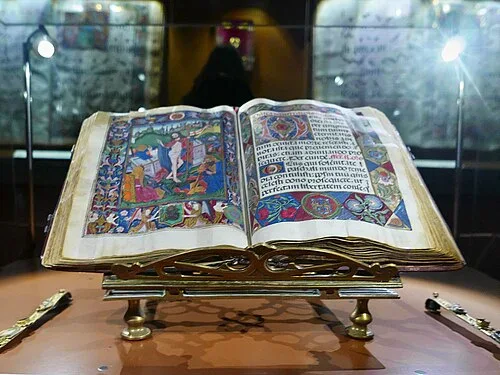 Chapterhouse Collections and Illuminated Codices
The Prior's Book of Hours
Open on a lectern in the book museum lies a Book of Hours made for one of the priors, its vellum pages bright with gold. It has two hundred folios and measures just twenty-six by eighteen centimetres, painted at the start of the fifteen hundreds by artists mostly in the Flemish manner, with touches of the Italian Renaissance. It is one small piece of an astonishing collection. The monastery preserves a hundred and seven illuminated codices, made in its own workshops of parchment, writing, illumination and binding, active from the fourteenth century to the nineteenth. The giants of the collection are the cantorales, eighty-six of them, the great choral books. Some are so large and heavy that small wheels were fixed beneath them, so they could be rolled to the reading stand. That stand is up in the choir gallery, where the whole community read the same page at once, every voice on the same note.
Listen in the appPhoto: Jl FilpoC · CC BY-SA 4.0
10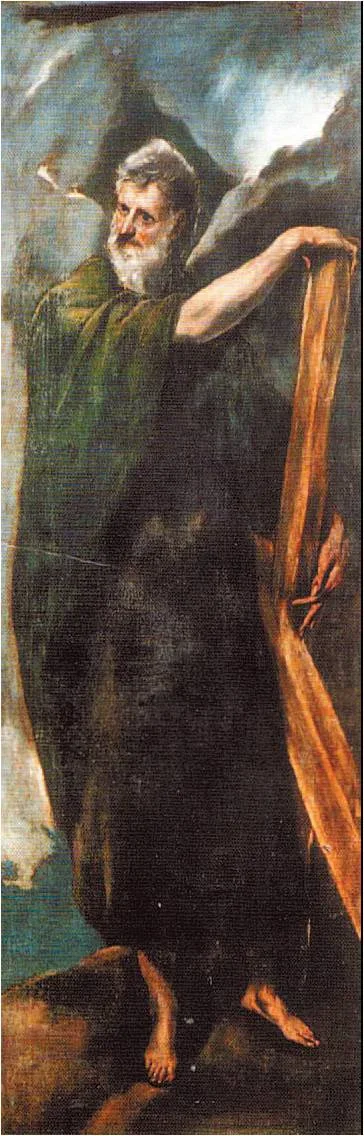 Chapterhouse Collections and Illuminated Codices
El Greco's Apostle Andrew
Among the paintings of the museum hangs a tall, narrow canvas of Saint Andrew by El Greco, painted in 1591. The saint stands nearly full length against a stormy sky, an old man with a grey beard, gripping the great X-shaped cross on which tradition says he was crucified. The body is stretched and elongated in that unmistakable El Greco manner, the drapery swirling in green and dark brown. It was not painted for Guadalupe. It belonged to the parish church of Talavera la Vieja, a village that now lies under the waters of the Valdecañas reservoir. The same museum holds works by Goya, carvings by Egas Cueman, and an ivory Christ that some scholars have attributed to Michelangelo himself, though that attribution remains disputed. El Greco's Coronation of the Virgin, also painted in 1591, came from the same drowned church and hangs here too.
Listen in the appEl Greco · Public domain
- 11
The Baroque Sacristy Vault
The gilded sacristy vault, Torrigiano's terracotta Saint Jerome, and a lantern taken from the Turkish fleet at Lepanto.
- 12
Zurbarán's Mass of Father Cabañuelas
Zurbarán's canvases of the monastery's own monks, still hanging on the walls they were painted for.
- 13
The Throne of the Virgin
The octagonal Baroque chamber built in 1696 to house the Virgin, lined with nine canvases by Luca Giordano.
- 14
Our Lady of Guadalupe
The small dark statue behind it all: a shepherd's legend, a patroness of Extremadura, and a name carried to the Americas.
- 15
The Gothic Cloister and Hospedería
The cloister of the apothecary, where Guadalupe's hospitals trained surgeons, and the monastery's story to the present day.
Real Monasterio de Santa María de Guadalupe
Frequently asked questions
How much does the guide cost?
Free app download. Listed guide price: $1.99. Guide price shown in the app. Audio guide only. Venue admission is separate.
Can I listen without internet?
Yes. Download the guide’s audio, images, and maps in the app before your visit. Your downloaded content is then available offline.
Can I listen in my language?
This audio guide is available in 15 languages, including English.
Do I need to follow a schedule?
No. This is a self-guided experience. Choose your stops, pause whenever you like, and return to a story at your own pace.
At your own pace
Explore Real Monasterio de Santa María de Guadalupe.
Download Stanza, then search for “Real Monasterio de Santa María de Guadalupe”.
Free app download · Guide price shown in the app
Keep exploring
Nearby audio guides
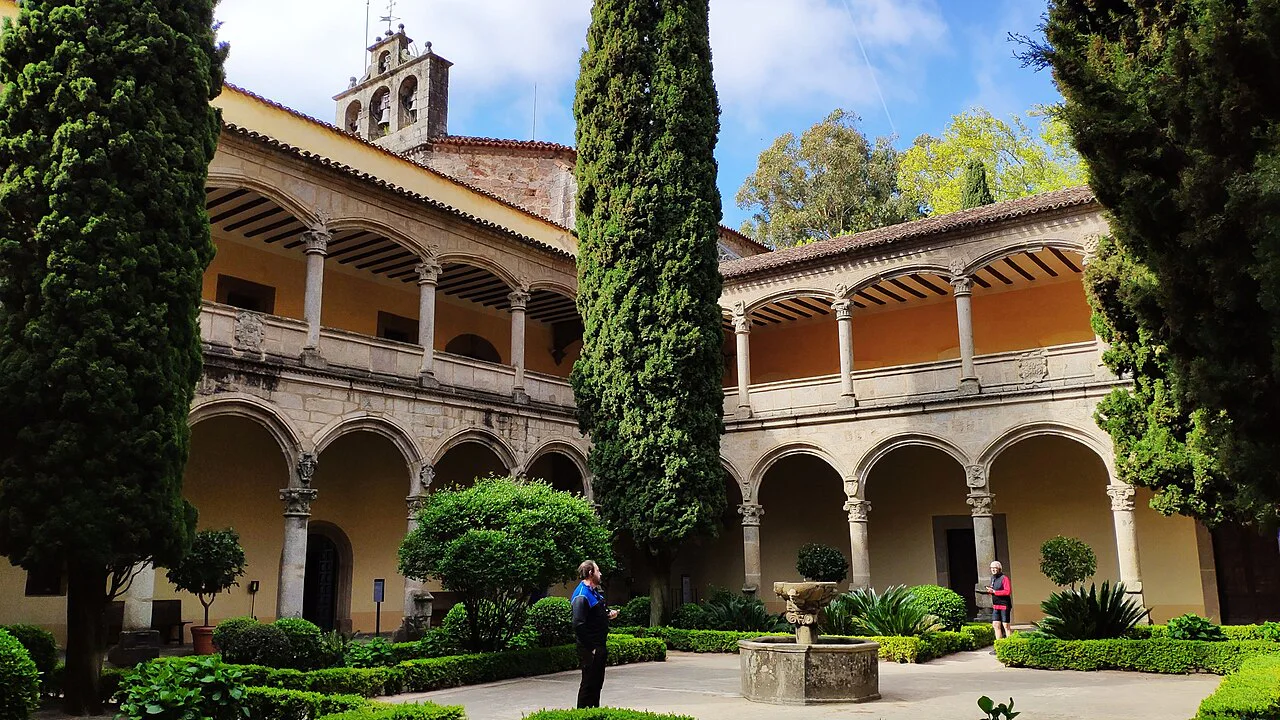
Cuacos de Yuste · 82 km
Monasterio de Yuste
Content & sources
Photo: Alonso de Mendoza · CC BY-SA 4.0
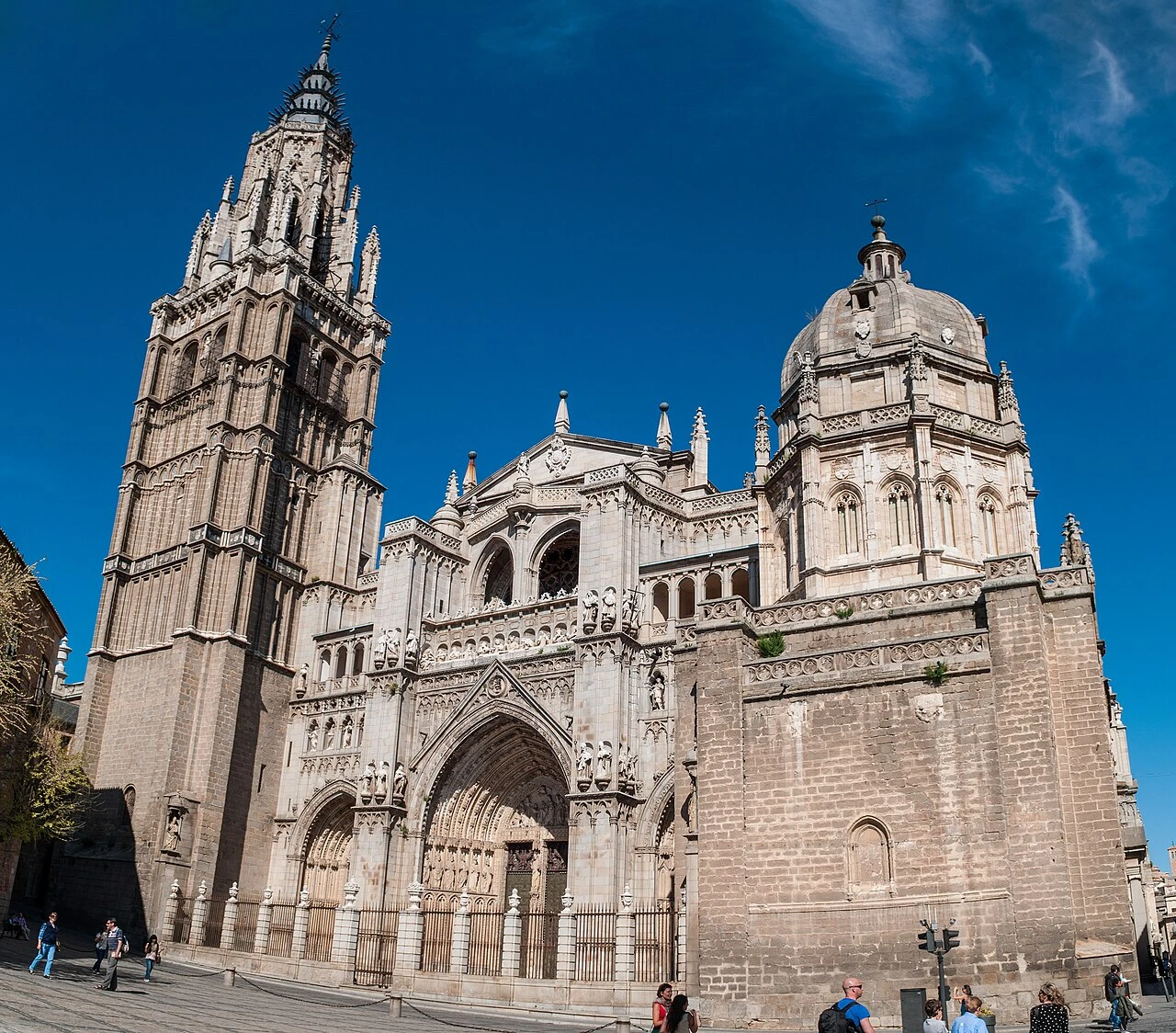
Toledo · 120 km
Toledo Cathedral
Content & sources
Michal Osmenda from Brussels, Belgium · CC BY 2.0
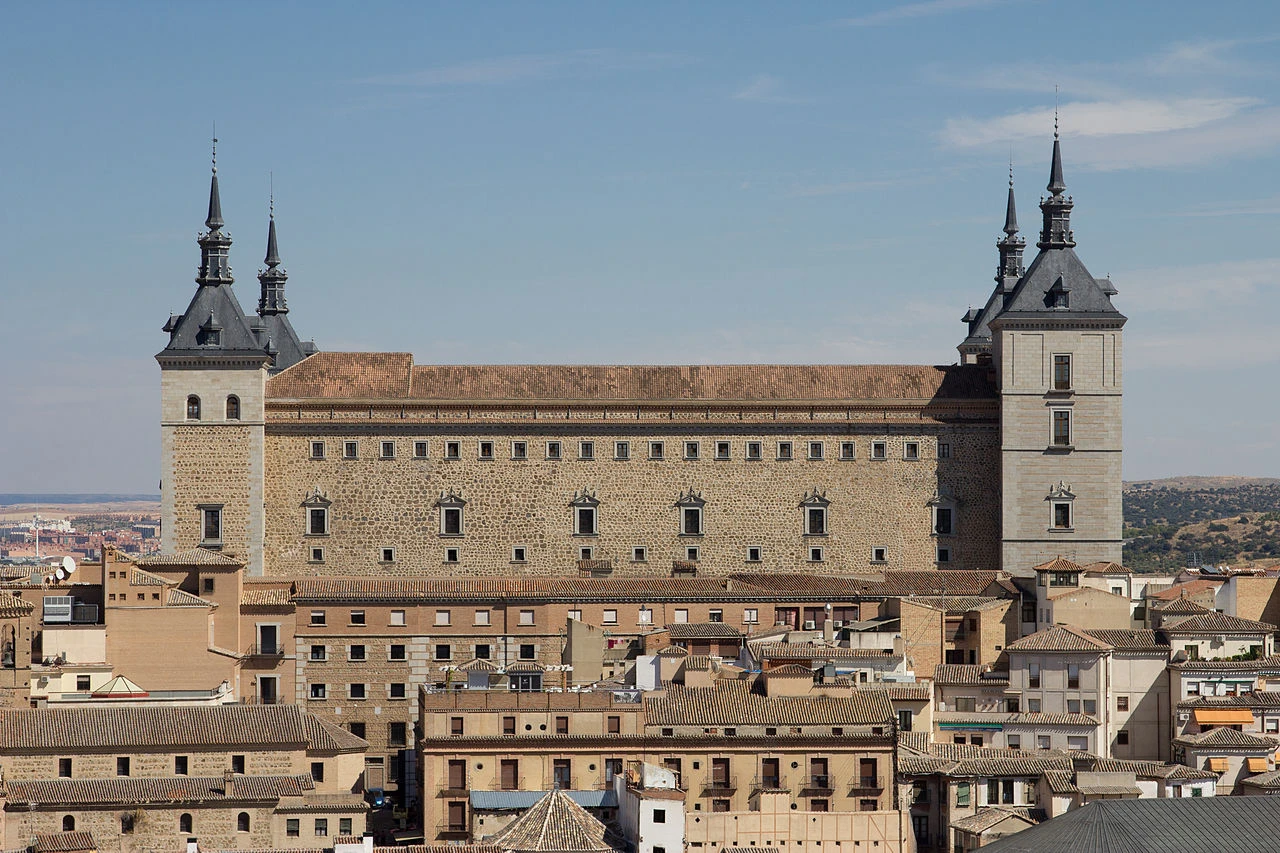
Toledo · 121 km
Alcázar of Toledo
Content & sources
Carlos Delgado · CC BY-SA 3.0 es
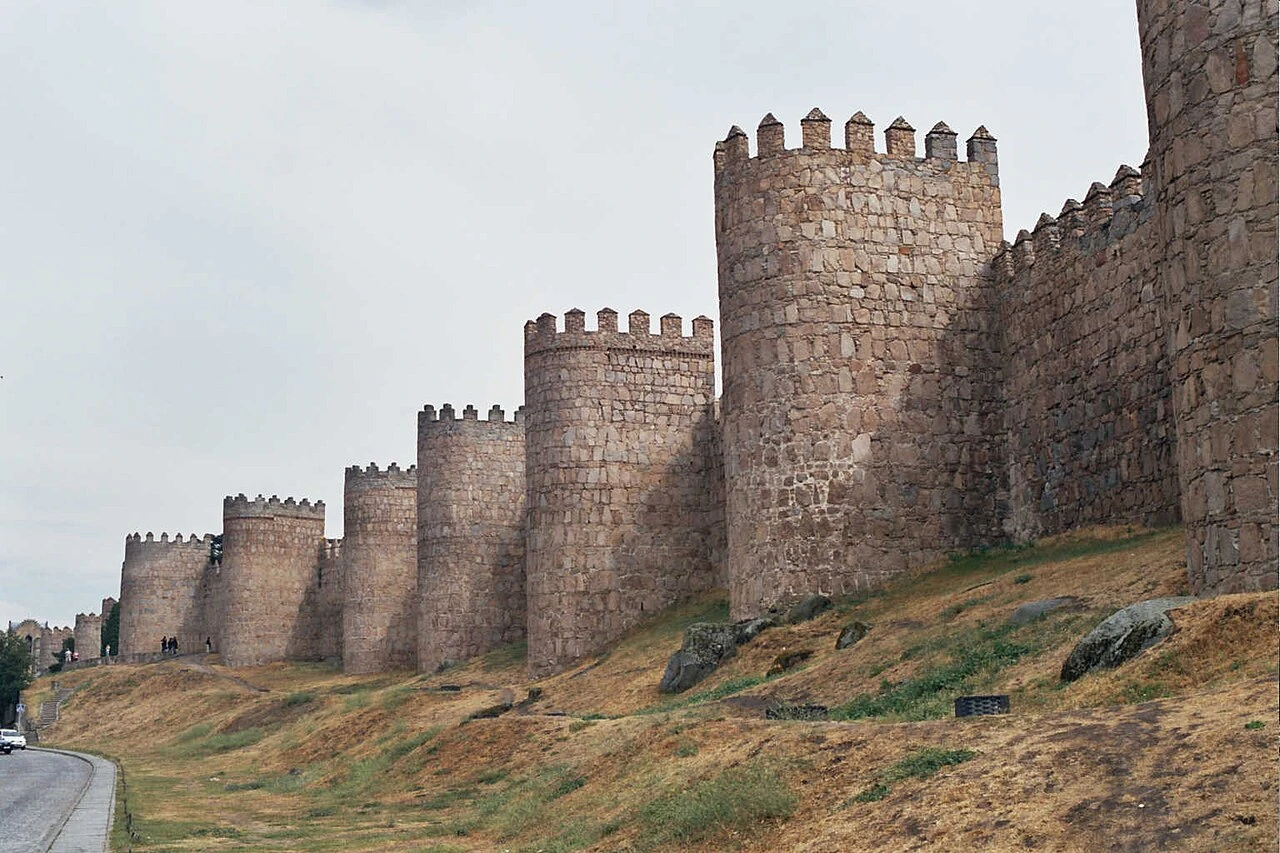
Ávila · 144 km
Muralla de Ávila
Content & sources
Photo: Pelayo2 · CC BY-SA 3.0