Stanza · Audio guide
Muralla de Ávila Audio Guide
A place to remember. A story to take with you.
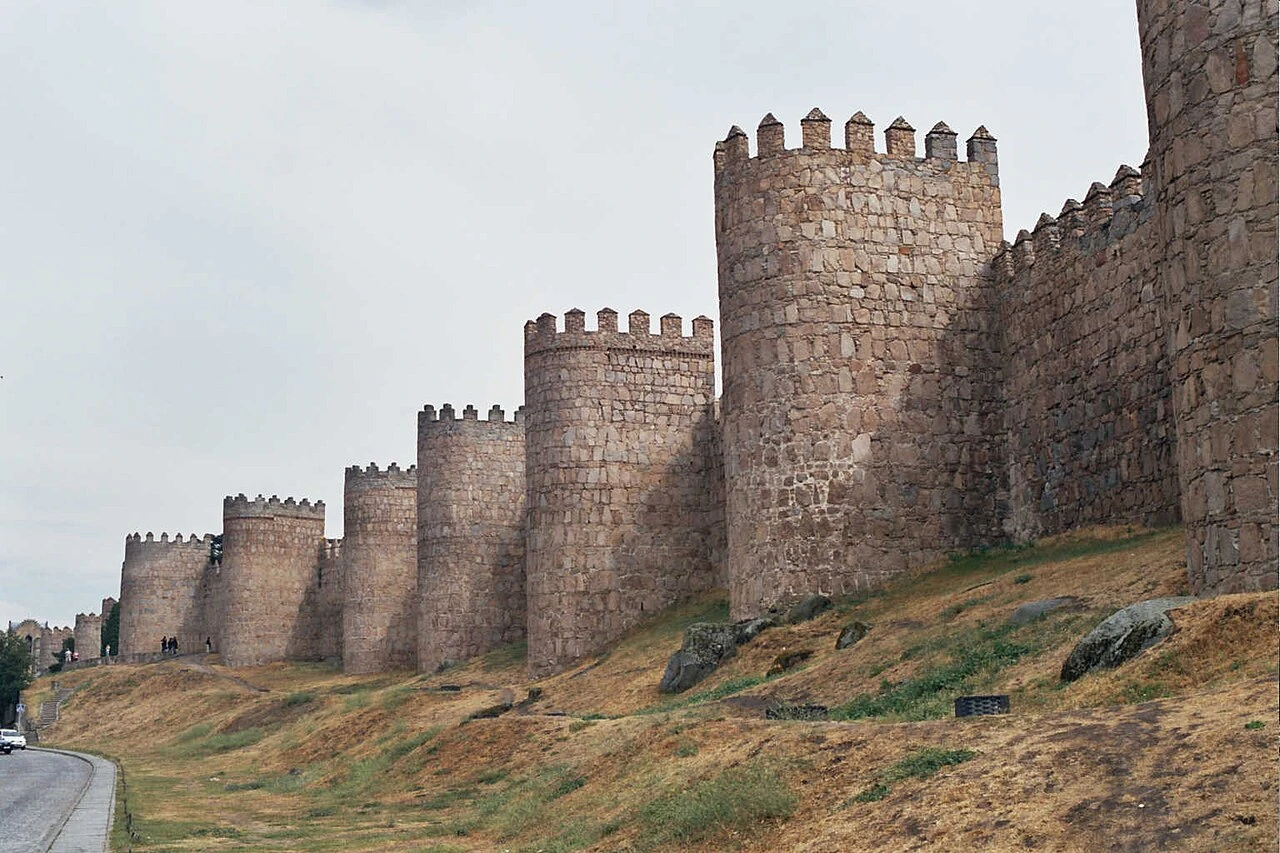
The Walls of Ávila are a Romanesque defensive structure fully encircling the old town of Ávila. They are recognized as one of the best-preserved medieval fortified enclosures in Europe.
Download Stanza, then search for “Muralla de Ávila”.
About the tour
One guide. Your kind of visit.
The Walls of Ávila are a Romanesque defensive structure fully encircling the old town of Ávila. They are recognized as one of the best-preserved medieval fortified enclosures in Europe.
Ready when you are.
- 01Get the free Stanza app.
iOS & Android
- 02Find your guide.
“Muralla de Ávila”
- 03Download before you go.
Works offline
Audio guide / 12 narrated stops
Inside the guide
Get to know a few of the stories before you go. Open a stop to read more.
01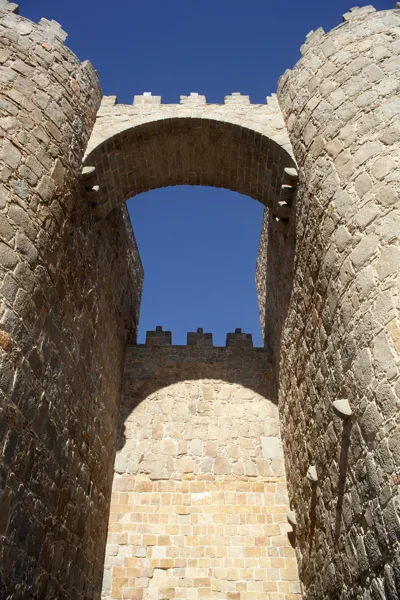 Puerta del Alcázar and the Royal Gateways
Puerta del Alcázar: The Gate of the Fortress
Welcome to the walls of Ávila, a complete ring of Romanesque military stonework around the city's old town. The gate rising ahead, with its two great towers joined by an arch overhead, is the Puerta del Alcázar, the Gate of the Fortress. It is the most solemn entrance in the whole circuit. The story begins with King Alfonso the Sixth of León, who handed a hard job to Count Raymond of Burgundy, the husband of his daughter Urraca. The count was to repopulate lands belonging to nobody, and to fortify Ávila, Segovia and Salamanca for the Christian frontier. Two masters named Casandro Romano and Florín de Pituenga directed the building. Traditional history says the work took nine years, from 1090 to 1099. The standing walls, though, look mostly like the second half of the twelfth century, judging by their form and the surviving papers. Some researchers go further, and argue the whole layout follows an earlier Roman military camp. Either way, what grew up here was a city wrapped in stone, and this gate was its ceremonial face.
www.pmrmaeyaert.com · CC BY-SA 3.0
02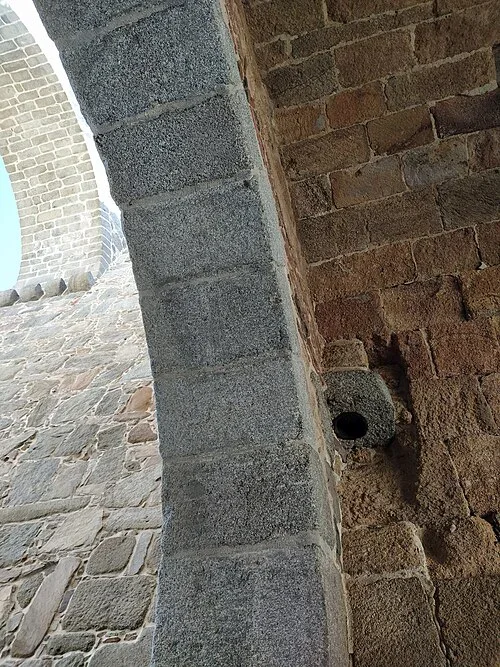 Puerta del Alcázar and the Royal Gateways
Under the Flying Bridge of the Alcázar
Under the arch that links the two towers runs a flying walkway, a bit of adarve hung in the air over the gate itself. The stone brackets jutting from the wall explain how it was built. The smaller ones probably carried the curved wooden frame that supported the arch while the masonry set. Lower down, larger brackets may have held a wooden hoarding, or the works of a drawbridge. A moat and an outer fortified gate, a barbacana, once stood before this entrance. Both have vanished, but they existed to grind down any attack aimed at the weakest point of any wall, the main door. This square outside the gate also hosted the strangest ceremony in the city's story. In 1465 a league of rebel nobles staged the Farce of Ávila, the figurative dethroning of King Enrique the Fourth of Castilla, played out in public before the walls.
Photo: Javiermes · CC BY-SA 4.0
03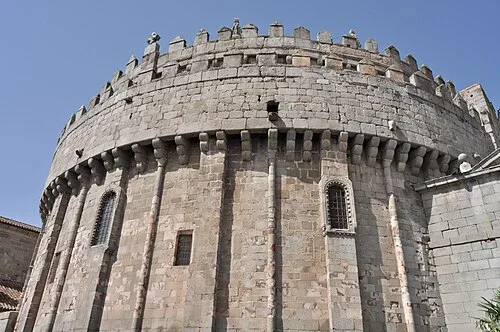 The Fortified Cathedral Apse (El Cimorro)
El Cimorro: The Cathedral That Is a Fortress
This great curved bastion is the east end of the cathedral, and in Ávila it has its own name, the cimorro. The cathedral went up between 1160 and 1180, at the same time as the walls around it. Its apse was set straight into the circuit, one element more of the defense, and it is considered the strongest point of the entire enclosure. Church and fortress became a single thing. Late in the fourteenth century, masons clad the outside in new stone, hiding the smaller half-domes behind it and sharpening its military look. The fighting top still shows how it worked. A continuous gallery on projecting brackets runs above the round wall, crowned by great merlons, and two more crenellated barriers rise above that. An old story ties this spot to a royal child. Tradition says the boy who would be Alfonso the Seventh was once shown from these walls to his suspicious stepfather, Alfonso the Battler, and that the king then put sixty noble hostages to death.
Listen in the appLuis Rogelio HM · CC BY-SA 2.0
04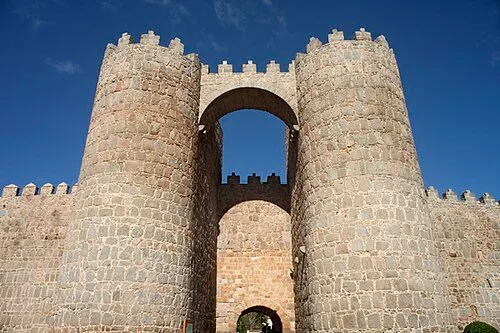 Puerta de San Vicente and Recycled Ancient Spolia
Puerta de San Vicente: The Best-Defended Face
The two greatest gates of Ávila stand on the same, eastern side of the circuit, and there is a plain reason why. This is flat, open ground, the easiest place to bring an attack, so it earned the heaviest defenses. The Puerta de San Vicente is one of the two. Its twin semicircular towers rise about twenty meters, joined by an arch above the doorway, so that defenders could concentrate crossfire on anyone below. A city wall stood here from the Roman conquest onward, but the present circuit dates to the second half of the twelfth century. The Roman enclosure was probably smaller: León, then the more important city, had Roman walls only some seventeen hundred meters around, well short of the medieval circuit here. The researcher Rodríguez Almeida argued that two original sectors of that Roman wall still survive, embedded in the medieval fabric at the Arco de San Vicente. If he is right, the twelfth-century builders did not start from nothing here. They built around what Rome had left.
Listen in the appPhoto: PMRMaeyaert · CC BY-SA 4.0
05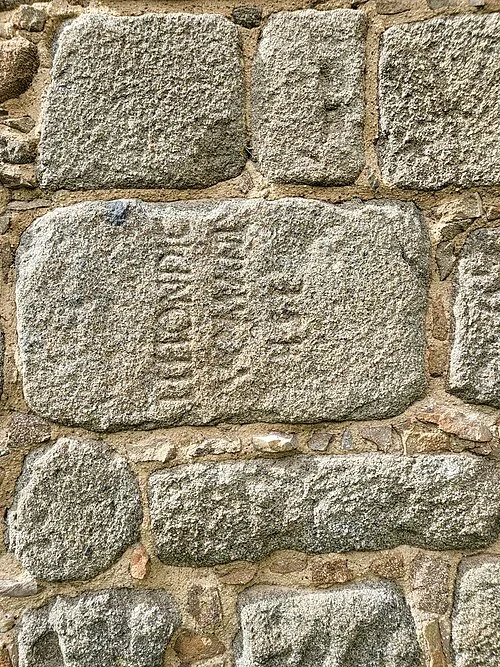 Puerta de San Vicente and Recycled Ancient Spolia
A Roman Tombstone in the Wall
The wall itself is a quarry of earlier generations. When the medieval builders raised these ramparts, they reused material from the Roman necropolis, from civil buildings, and from the old Roman and Visigothic walls. That is why the granite shifts between grey and black, depending on where each block came from, with brick, mortar and lime worked into the mix. The carved letters on one block give the game away. It is a Roman funerary stele, a tombstone, mortared straight into the medieval masonry like any other block. Graves became ramparts. One Roman funerary stone, set about five meters up on the base of a tower of the circuit, is counted among the very first stones of the city. The wall is not only a defense. It is a record of everything Ávila was before.
Listen in the appPhoto: Xemenendura · CC BY-SA 4.0
06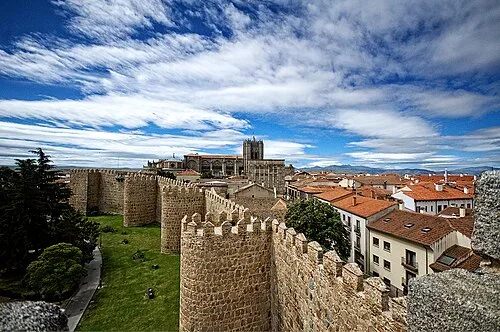 The High Ramparts Walk (The Adarve)
On the Adarve: Between City and Countryside
About fourteen hundred meters of the wall-top walk, the adarve, are open to visitors, and the view from it explains the whole city. Inward lie the monuments of the old town. Outward stretch the sierra de Ávila, the sierra de la Paramera, La Serrota and the valley of Amblés. But the wall did more than guard a view. It drew the line between what people called the civilized space and the wild one. The civilized space was the walled town. The wild one was the open country, where the peasants lived on the flat land below. They belonged to the lowest estate, and the cost of keeping the city fell on them. The peasantry bore some eighty percent of the cost of urban infrastructure, the walls included. The upkeep of the muros had a name of its own, el reparo de los muros, the repair of the walls.
Listen in the appPhoto: Nicolas G. Mertens · CC BY-SA 4.0
07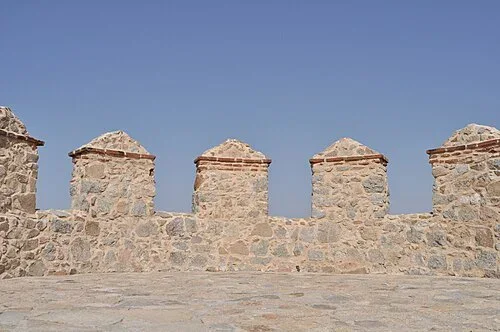 The High Ramparts Walk (The Adarve)
Crenellations and the 14th-Century Upgrades
The toothed parapet along the crest is not all original. In the fourteenth century the city overhauled its defenses, and the battlements record that campaign. The gates were repaired. The wall curtains were raised in places to the height of the towers, reaching about fifteen meters, so no attacker could use a low stretch to get in. The military character stayed defensive throughout, even after the strengthening. On the San Segundo side a second, lower barrier was built to act as a barbacana, an outer obstacle, and it was fitted with loopholes for firearms, the new technology of the day. The crest carries on the order of two and a half thousand individual merlons, the stone teeth like the ones in view. Each one is a product of that later push to keep the wall current.
Listen in the appLuis Rogelio HM · CC BY-SA 2.0
08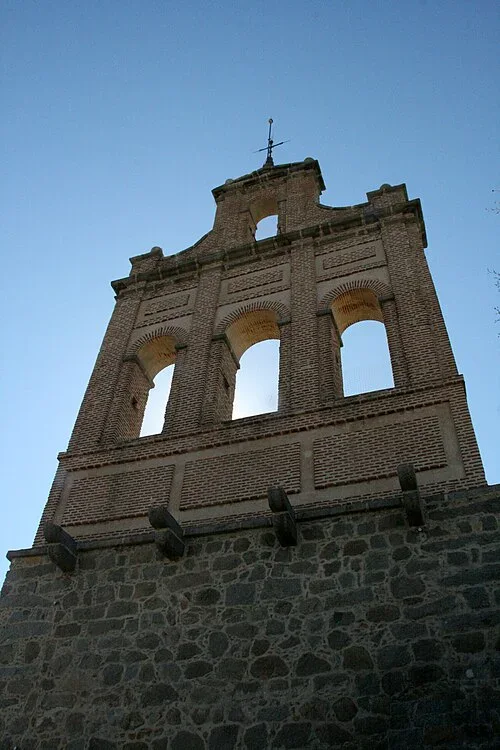 Northern Ramparts and Puerta del Carmen
Puerta del Carmen: A Wall That Kept Changing
The brick superstructure rising from the granite here is proof that later generations never stopped building onto the medieval fabric. The walls went through routine upkeep for centuries, paid for by the old repair tax. King Philip the Second ordered restoration works in 1596. The great modern campaign came in 1907, under the architect Repullés, and it changed the look of several points of the monument. This gate was one of them. Repullés gave the Puerta del Carmen its merlons, imitating the Puerta de San Vicente, though only scattered references suggest the gate ever carried them before. Rescue took even longer. Houses clung to the wall for generations, and it was not until 1982 that the circuit finally stood free of attached buildings. This arch is also one of the four points where visitors can still climb up to the adarve.
Listen in the appPhoto: Discasto · CC BY-SA 4.0
09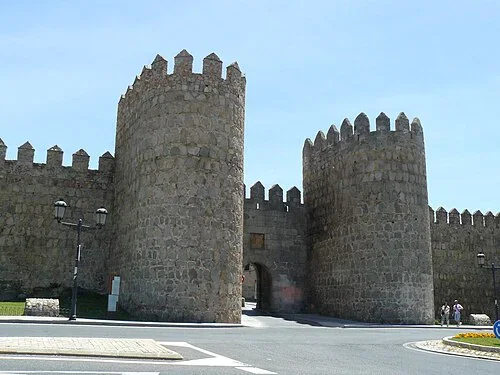 Puerta del Puente and the River Adaja
Puerta del Puente: The River Gate
A wall is only as useful as its doors, and Ávila's circuit was pierced by nine of them, the gates people still call arches. Each one throttled the movement between the walled town and the roads beyond, so every approach was funneled through stone. The line itself is a piece of engineering. The builders followed the natural slopes of the ground, and they built no taluses and no buttresses anywhere. The land did that work for them. This western gate, the Puerta del Puente, faces the river and the old bridge that gives it its name. It was restored twice, in the fifteenth century and again in the seventeenth, each time to keep the river approach under control. Every gate in the circuit had its own job, and its own history of rebuilding.
Listen in the appPhoto: Rowanwindwhistler · CC BY-SA 3.0
10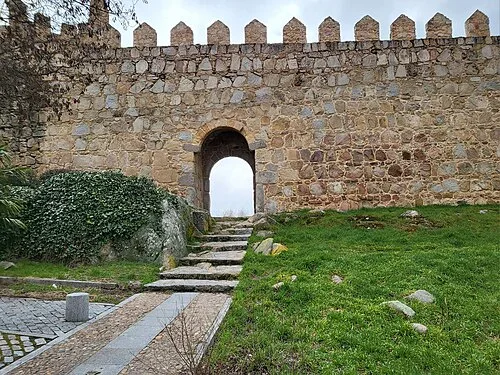 Puerta de la Malaventura and the Southern Rocks
Puerta de la Malaventura: The Small Door's Story
This modest opening on the southern side is the Puerta de la Malaventura, one of the smaller gates. Besides the nine public gates, the circuit had smaller, private openings called posterns, and the city's history with them is a story of closing doors. There were three. One stood in the zone of the Alcázar, now gone. Another served the palace of the Abrantes, and a third the palace of Navamorcuende, today the bishop's palace. All three were later sealed. There was also a little access called the Bishop's postern, which linked the cathedral directly to the quarter where the clergy lived. It was closed in 1518. The pattern repeats because a small door was both a convenience and a weakness. It saved its owner a long walk to the nearest gate, and it offered any attacker the same shortcut. So the city kept walling them up, one after another.
Listen in the appPhoto: Xemenendura · CC BY-SA 4.0
- 11
Puerta del Rastro and the Defiant Window
A queen walls up a noble's door, and his heir answers with a window carved in stone.
- 12
The Complete Enclosure
The whole ring at last: its full measure, its survival, and the two dates that made it world heritage.
Muralla de Ávila
Frequently asked questions
How much does the guide cost?
Free app download. Listed guide price: $0.99. Guide price shown in the app. Audio guide only. Venue admission is separate.
Can I listen without internet?
Yes. Download the guide’s audio, images, and maps in the app before your visit. Your downloaded content is then available offline.
Can I listen in my language?
This audio guide is available in 15 languages, including English.
Do I need to follow a schedule?
No. This is a self-guided experience. Choose your stops, pause whenever you like, and return to a story at your own pace.
At your own pace
Explore Muralla de Ávila.
Download Stanza, then search for “Muralla de Ávila”.
Free app download · Guide price shown in the app
Keep exploring
Nearby audio guides
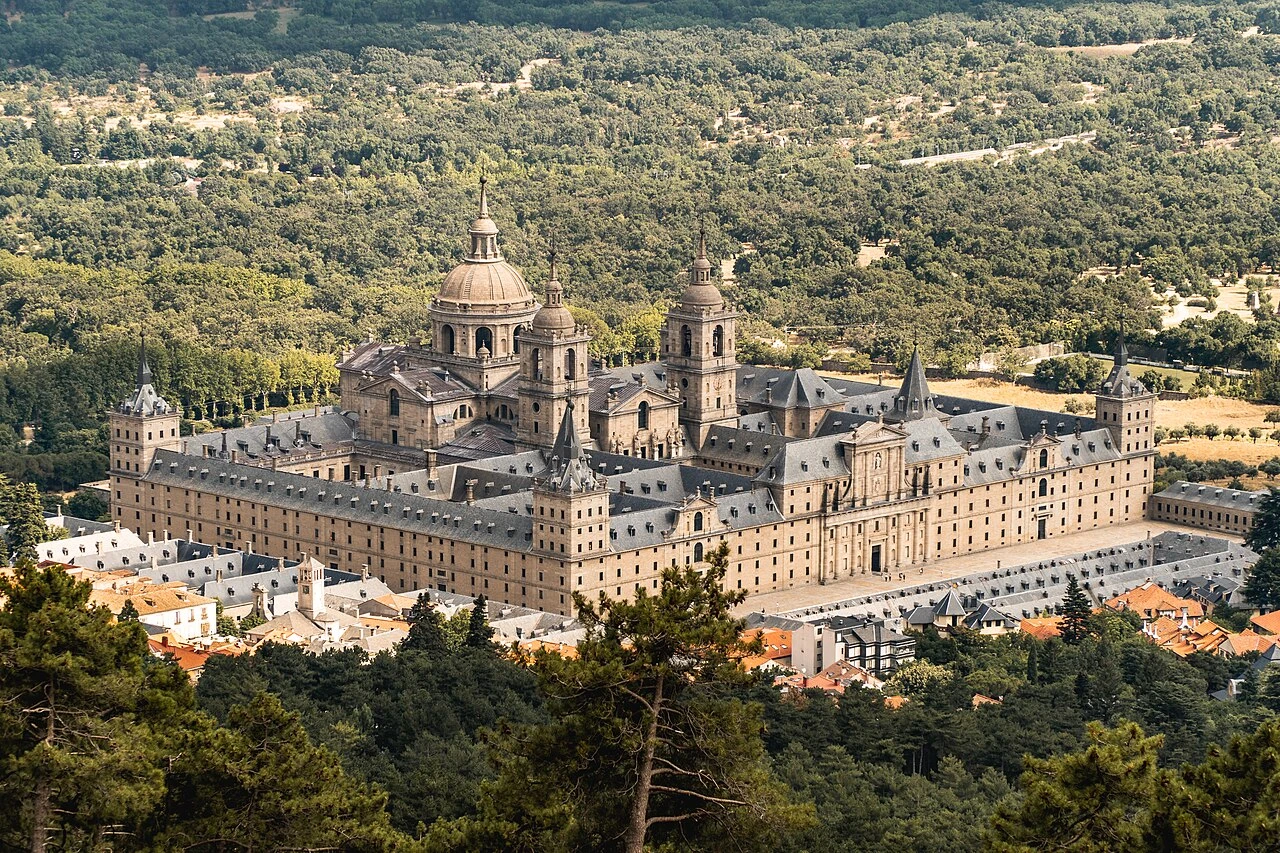
San Lorenzo de El Escorial · 48 km
El Escorial Monastery
Content & sources
Photo: Zvonimir Stamenov · CC BY-SA 4.0
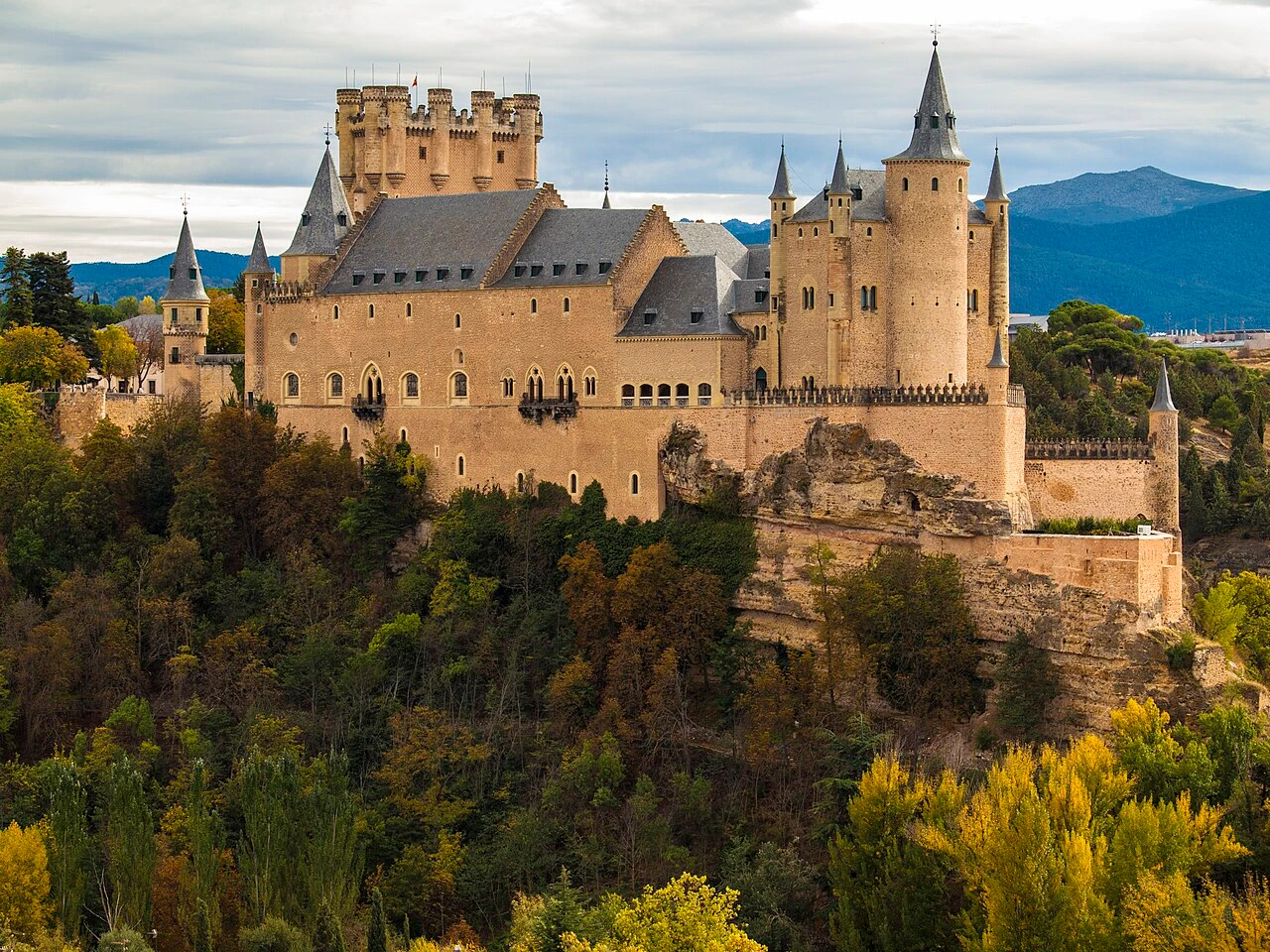
Segovia · 58 km
Royal Alcázar of Segovia
Content & sources
Ángel Sanz de Andrés · CC BY-SA 4.0
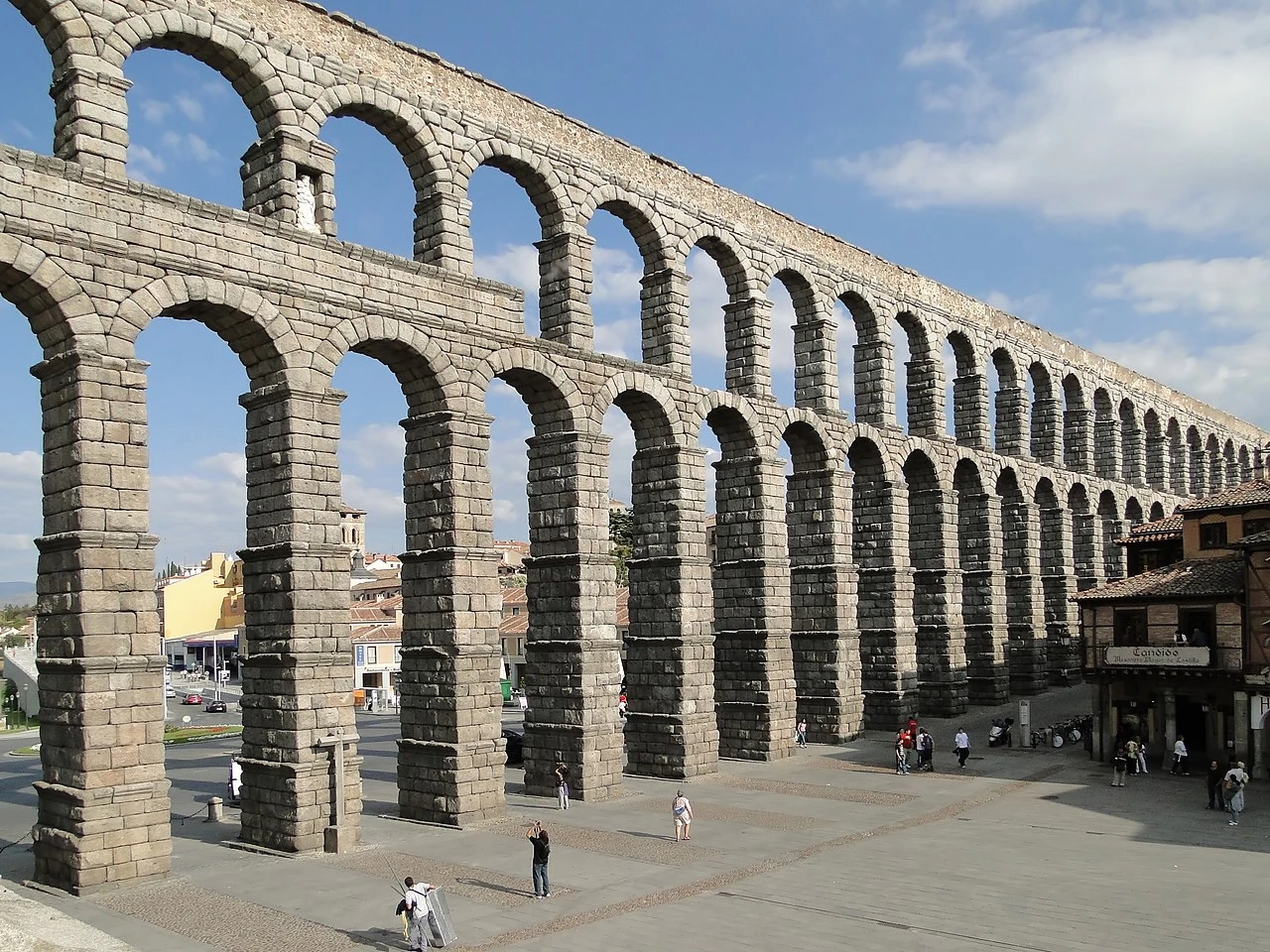
Segovia · 59 km
Aqueduct of Segovia
Content & sources
Bernard Gagnon · CC BY-SA 3.0
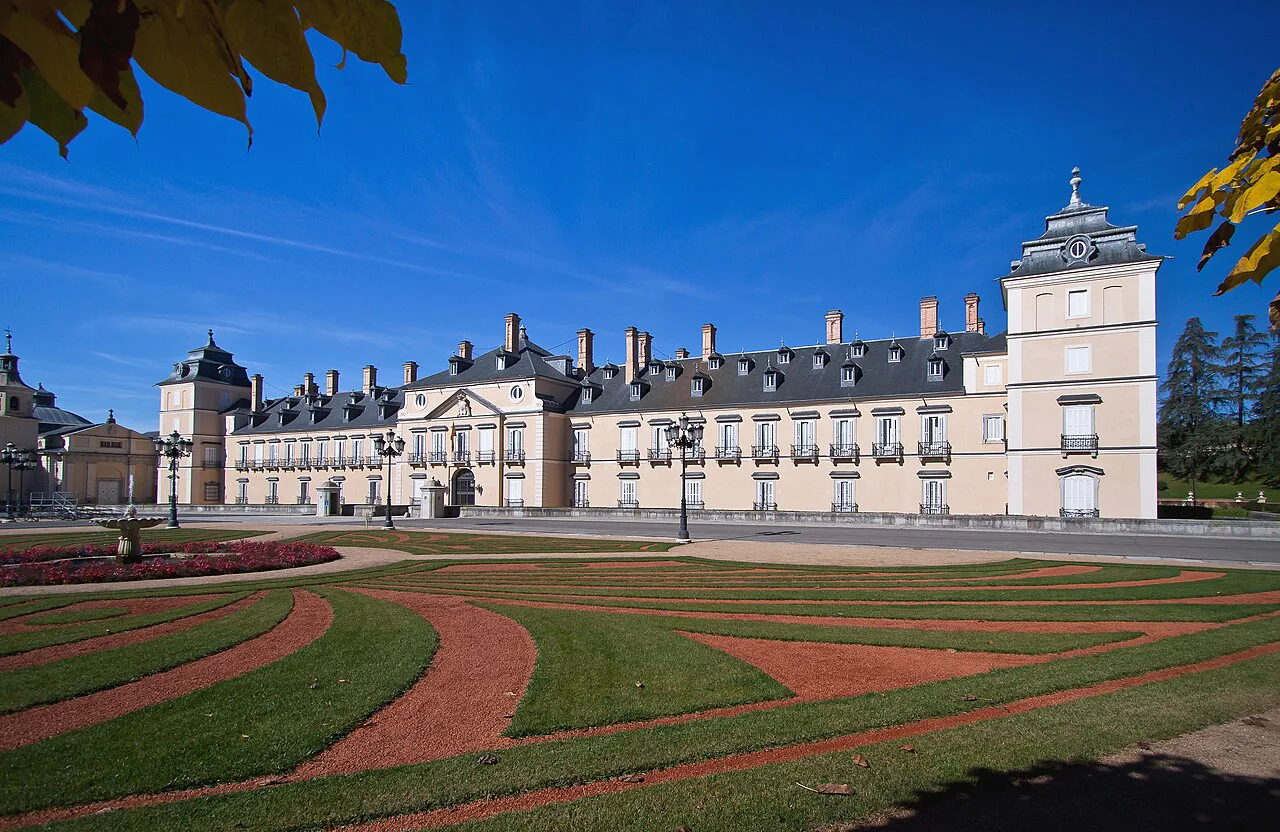
Madrid · 80 km
Palacio Real de El Pardo
Content & sources
Photo: Choniron · CC BY-SA 3.0 es