Stanza · Audio guide
Royal Alcázar of SegoviaAudio guide
A place to remember. A story to take with you.
The Royal Alcázar of Segovia is a medieval castle located in the city of Segovia, Spain. It served historically as a royal palace, fortress, state prison, and military academy, and is now a museum and a…
Download Stanza, then search for “Royal Alcázar of Segovia”.
About the tour
One guide. Your kind of visit.
The Royal Alcázar of Segovia is a medieval castle located in the city of Segovia, Spain. It served historically as a royal palace, fortress, state prison, and military academy, and is now a museum and a UNESCO World Heritage Site.
Ready when you are.
- 01Get the free Stanza app.
iOS & Android
- 02Find your guide.
“Royal Alcázar of Segovia”
- 03Download before you go.
Works offline
Audio guide / 14 narrated stops
Inside the guide
Get to know a few of the stories before you go. Open a stop to read more.
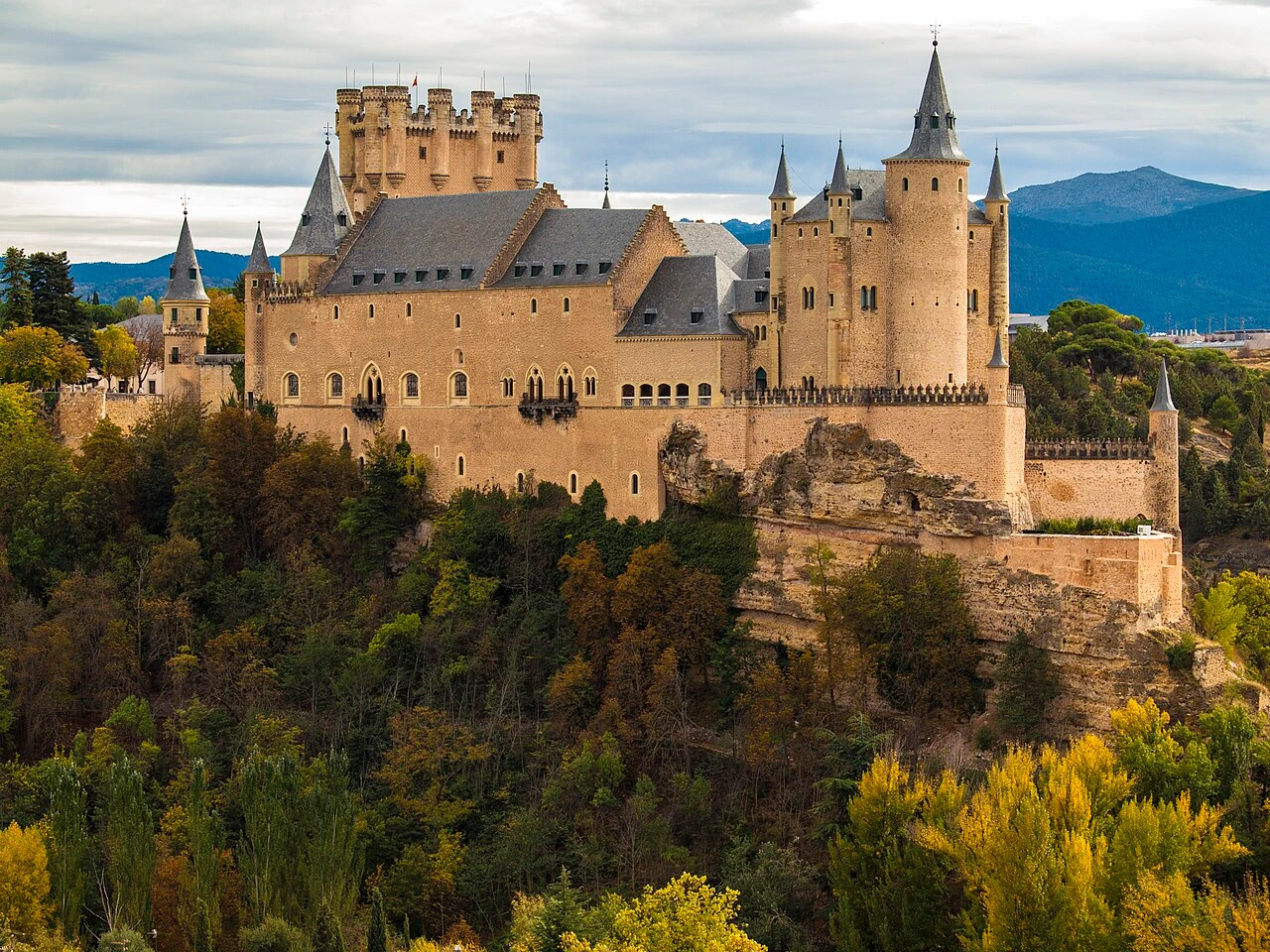
01 The Prow of Castile and the MoatThe Prow of Castile
Welcome to the Royal Alcázar of Segovia. As you approach this remarkable site, you immediately notice its distinctive shape, perched atop a rocky crag where two rivers meet. This silhouette is famously known as the 'Proa de Castilla,' or the Prow of Castile, because the fortress juts out like the bow of a massive stone ship navigating the Spanish landscape. This fairy-tale profile is so striking that it served as the primary inspiration for Walt Disney’s iconic castle in the 1937 classic, 'Snow White and the Seven Dwarfs.' While the earliest written records of a castle on this site date back to 1120, the history of the location stretches much further into the past. Archaeological evidence suggests the fortress sits on the foundations of a Roman castrum, or military camp, proving that this strategic viewpoint has been prized for defense for nearly two thousand years. Today, the castle combines these ancient military roots with later palatial grandeur, creating one of the most recognizable historic profiles in all of Europe. Look for the pointed turrets and slate roofs that define its storybook appearance.
Luis Antonio Fernández Corral from Madrid, España · CC BY 2.0
02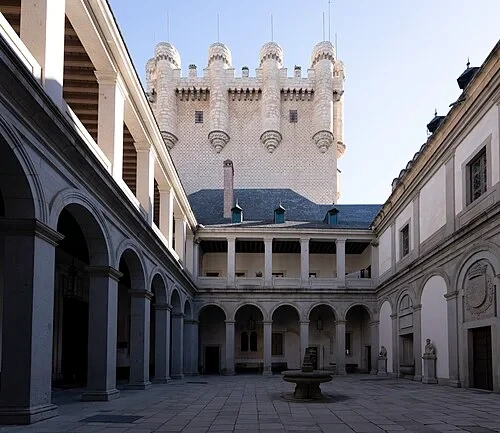 The Weapons Courtyard (Patio de Armas)The Weapons Courtyard
The Patio de Armas, or Weapons Courtyard, serves as the central hub of the Alcázar. It was extensively redesigned in the late 16th century during the reign of Philip II. The architecture follows the Herrerian style, named after Juan de Herrera, the renowned architect who also designed the monastery of El Escorial. You can identify this style by its striking austerity, geometric precision, and lack of ornate decoration, which gives the space a sense of solid, unshakeable authority. This courtyard functioned as the primary gathering place for the castle's garrison and the royal household. To reach this inner sanctuary, visitors originally had to cross a formidable defensive moat. Outside the walls, this dry ditch plunges 26 meters deep directly into the solid rock. This man-made chasm was a critical defensive feature, protecting the castle's only land-facing side from potential siege engines or infantry assaults. The sheer verticality of the stone walls rising from the moat emphasized the fortress's reputation as an impregnable stronghold. Today, the courtyard's quiet, paved expanse provides a moment of calm before you enter the rich, ornamental world of the interior royal apartments.
Photo: Ministrillo · CC BY-SA 4.0
03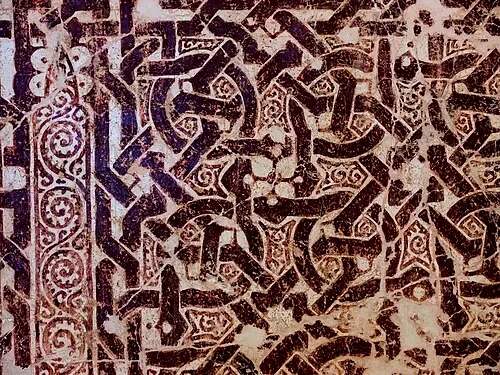 The Hall of the Old PalaceGeometric Plasterwork
The walls of the Alcázar are decorated with an extraordinary form of geometric plasterwork known as 'lacería.' This style is a hallmark of Mudéjar art, a unique architectural and decorative movement that emerged in medieval Spain. Mudéjar art represents a cultural fusion, where Christian patrons employed skilled Islamic craftsmen to decorate their palaces and churches. The resulting style combined traditional European structures with the complex mathematical and floral motifs of the Islamic world. These patterns are created using repetitive grids and interlacing lines, often based on star shapes and polygons. These decorative elements have been part of the Alcázar’s aesthetic since at least the 12th century, though they have been restored and expanded over the generations. The precision of the lines reveals the deep knowledge of geometry possessed by the artisans of the time. This specific technique involved applying a thick layer of plaster and then carving or stamping the patterns while the material was still soft. This created a sense of texture and depth that changes as the sunlight moves across the walls throughout the day. It is a visual reminder of the diverse cultural history that shaped the kingdom of Castile.
Listen in the appPhoto: Ministrillo · CC BY-SA 4.0
04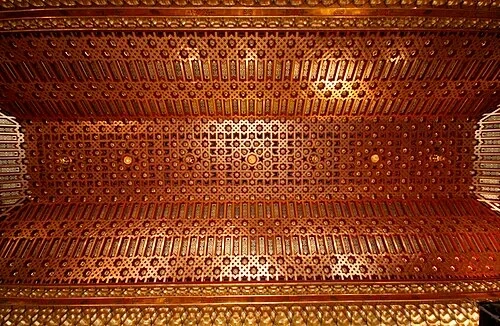 The Hall of the GalleyThe Ship Hull Ceiling
The Hall of the Galley takes its name from its extraordinary 'artesonado' ceiling. Commissioned by Catherine of Lancaster in 1412, this woodwork is shaped like the inverted hull of a galley ship, with its long, curved lines drawing the eye upward. This design is not only visually impressive but was a feat of medieval engineering. The ceiling is composed of thousands of interlocking wooden pieces, meticulously joined together to be both structural and decorative. Remarkably, the primary patterns were achieved without the use of metal nails; instead, the artisans used complex joinery to hold the massive structure in place. The intricate carvings and gilded details across the surface reflect the wealth and influence of the Castilian court during the 15th century. This room served as a reception space, and the ceiling was intended to leave visitors in awe of the crown's resources. The ship-like design also serves as a symbolic nod to the maritime power and exploration that would later define Spain's global reach. As you stand in the center of the hall, the warm tones of the aged wood and the rhythmic patterns of the carving create a sheltered, protective atmosphere, much like being inside a great vessel.
Listen in the appJosé Luiz · CC BY-SA 3.0
05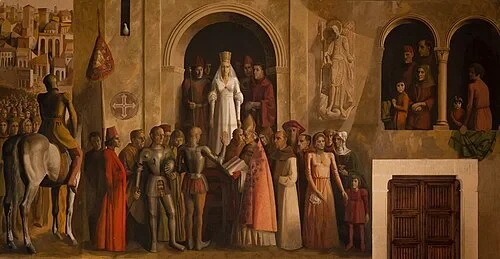 The Hall of the GalleyProclamation of Isabella Mural
The large-scale mural before you commemorates one of the most significant events to take place within these very walls: the proclamation of Isabella I as Queen of Castile. On December 13, 1474, following the death of her half-brother King Henry IV, Isabella asserted her right to the throne. The ceremony took place right here in Segovia, where Isabella made a public procession to the main square to be recognized as monarch. This mural captures the gravity of that moment, showing Isabella surrounded by the clergy, nobility, and military leaders who supported her claim. Her accession was not without conflict, leading to a war of succession, but her eventual victory paved the way for her marriage to Ferdinand of Aragon. Together, as the Catholic Monarchs, they would oversee the final stages of the Reconquista and the beginning of Spain's expansion into the Americas. This specific moment in 1474 is often cited by historians as the starting point for the unification of modern Spain. The artwork uses rich colors and detailed costumes to bring the 15th-century court to life, illustrating the blend of religious and secular power that defined the era. It serves as a permanent record of the Alcázar's role as a stage for royal power.
Listen in the appPhoto: Ministrillo · CC BY-SA 4.0
06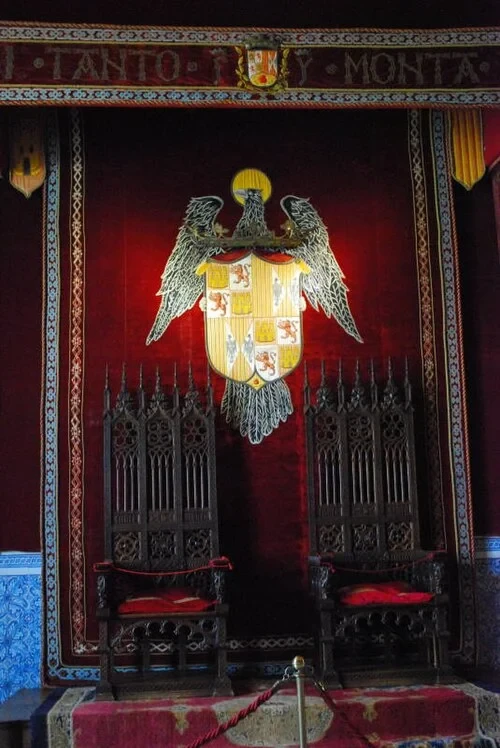 The Throne Room and the Concord of SegoviaThe Royal Dais
The Throne Room is dominated by the royal dais, a raised platform where the monarchs sat during official ceremonies. Above the two thrones, you can see the heraldic crest of Isabella and Ferdinand, featuring symbols of the various kingdoms they united. Notice the motto embroidered on the red velvet: 'Tanto Monta.' This famous phrase originated during their reign and signified that the two monarchs ruled with equal authority—'Tanto monta, monta tanto, Isabel como Fernando,' meaning 'As much as one is worth, so is the other.' This was a revolutionary concept for the time, establishing a dual monarchy where Isabella held power in Castile and Ferdinand in Aragon. This room was the political nerve center of the palace. It was here that the monarchs received foreign ambassadors, granted audiences to high-ranking nobility, and made critical state decisions. The surrounding decor, from the rich textiles to the ornate ceiling, was designed to emphasize the majesty and permanence of their rule. Every element of the room communicated a message of unity and strength to those who entered. Standing at the center of the hall, you can appreciate the calculated layout intended to make anyone approaching the thrones feel the full weight of the monarchs' presence and political reach.
Listen in the appDiego Tirira from Quito, Ecuador · CC BY-SA 2.0
07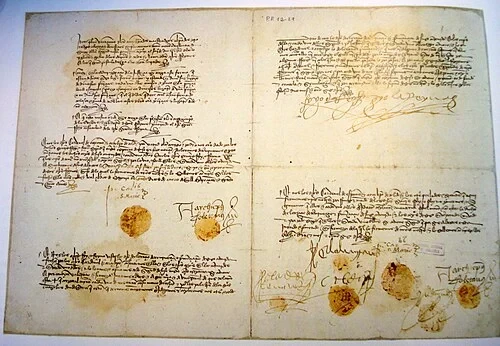 The Throne Room and the Concord of SegoviaConcord of Segovia
The document you see here is the Concord of Segovia, a critical legal treaty signed in 1475. It was drafted shortly after Isabella I was proclaimed Queen to resolve growing tensions regarding the role of her husband, Ferdinand of Aragon. While Ferdinand was a powerful king in his own right, there was significant debate over whether he would have actual governing authority in Castile or merely serve as a prince consort. The Concord established a groundbreaking power-sharing agreement, legally decreeing that both Isabella and Ferdinand would reign together as equals. It specified that their names would appear on all coins and documents, and that the royal seals would feature both of their coats of arms. This document essentially created a unified administration for the separate kingdoms of Castile and Aragon. The various wax seals attached to the bottom of the parchment represent the final, binding agreement between the two crowns and the high-ranking witnesses who guaranteed the treaty. By clearly defining their shared jurisdiction, the Concord of Segovia prevented civil unrest and allowed the couple to focus on their joint political goals. It is one of the most important constitutional documents in Spanish history, marking the formal administrative beginning of what would become a global empire.
Listen in the appIsabel de Castilla y Fernando de Aragón · Public domain
08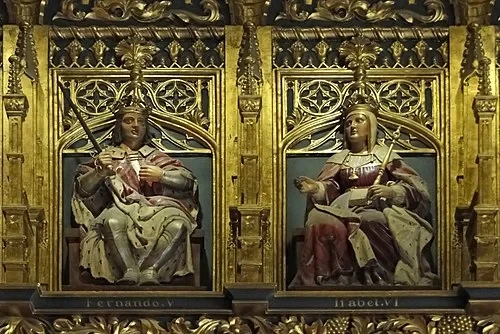 The Hall of the MonarchsStatues of the Monarchs
Within the royal frieze of the Hall of the Kings, you will find these detailed statues of Ferdinand V and Isabella I. These figures are part of a much larger genealogical project intended to visually demonstrate the long and unbroken lineage of the Spanish monarchy. Each monarch is depicted with specific traditional symbols that represent their roles and responsibilities. Ferdinand is shown holding a sword, which symbolizes his military leadership and the role of the crown as the ultimate defender of the realm. Isabella is depicted with a scepter, representing her judicial and administrative authority, as well as the grace and wisdom of the ruler. Together, these two symbols—the sword and the scepter—encompass the dual nature of sovereign power: the ability to wage war and the duty to maintain peace and justice through law. The statues are set into ornate, gilded niches, reflecting the Gothic style of the period. While these figures represent historical individuals, they are also idealized symbols of the office of the monarch. By placing them within a long line of their predecessors, the designers of this room emphasized that Ferdinand and Isabella were not just individual rulers, but the latest links in a chain of authority that stretched back centuries into the medieval past.
Listen in the appBernard Gagnon · CC BY-SA 3.0
09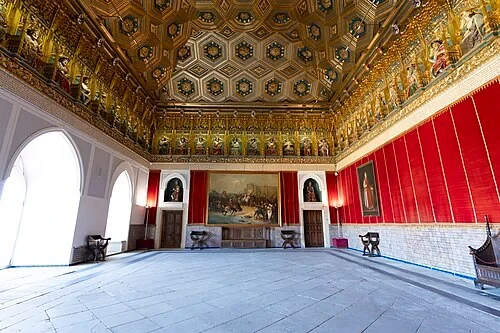 The Hall of the MonarchsHall of the Kings
The Hall of the Kings is perhaps the most majestic room in the Alcázar. Its most striking feature is the frieze running high along the walls, which contains 52 seated statues representing the kings of Asturias, León, and Castile. This impressive assembly was originally created in the 13th century but suffered a devastating loss in 1862 when a catastrophic fire swept through the castle. The statues you see today were painstakingly reconstructed after the fire, based on detailed historical descriptions and sketches of the originals to ensure they remained faithful to the medieval vision. Above the statues, the ceiling is a masterpiece of gilded hexagonal coffering. The geometric patterns and the use of gold leaf create a dazzling effect that makes the entire room feel as if it is glowing. This hall was designed to serve as a space of immense prestige, reinforcing the history and legitimacy of the Spanish crown for every guest who walked across its stone floor. The sheer scale of the room and the silent gaze of fifty-two monarchs create a powerful sense of historical depth. It was a space where the past was always present, reminding the living rulers of their duty to the ancestors who had built the kingdom before them.
Listen in the appPhoto: Ministrillo · CC BY-SA 4.0
10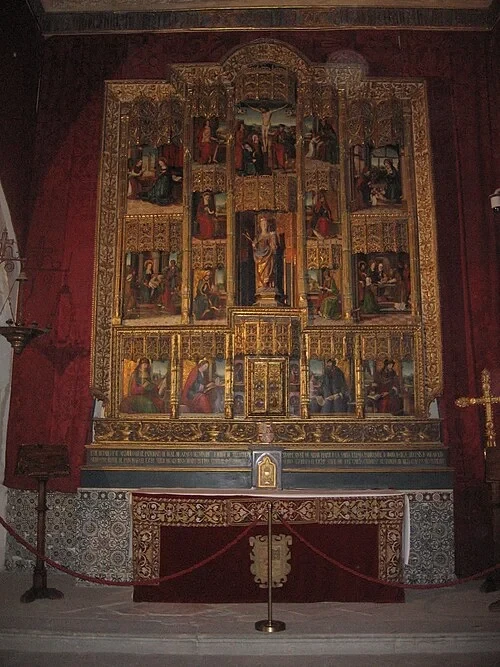 The Royal ChapelThe Chapel Altarpiece
The Royal Chapel has been the setting for many of the most private and significant moments in the lives of the Spanish monarchs. One of the most famous events to take place here was the 1570 wedding of King Philip II to his fourth wife, Anna of Austria. This chapel reflects the transition of the Alcázar from a rugged defensive fortress into a refined and comfortable royal palace. The focus of the room is the 'retablo,' or altarpiece, which dates from the 16th century. This ornate structure is divided into multiple panels, each featuring detailed paintings of religious scenes and figures that were meant to guide the devotions of the royal family. The use of gold leaf and intricate carvings is typical of the period, designed to create a space of quiet splendor that honored both God and the crown. Notice how the chapel's architecture feels more intimate than the grand reception halls you have visited so far. This was a space for prayer, reflection, and the sacraments that bound the royal family to the church. The presence of such a sophisticated chapel within the walls of the fortress highlights how the monarchs balanced their roles as military commanders and religious leaders, making the Alcázar a complete center for both their public and private lives.
Listen in the appGellerj · CC BY-SA 3.0
Royal Alcázar of Segovia
Frequently asked questions
How much does the guide cost?
Free app download. Listed guide price: $0.99. Guide price shown in the app. Audio guide only. Venue admission is separate.
Can I listen without internet?
Yes. Download the guide’s audio, images, and maps in the app before your visit. Your downloaded content is then available offline.
Can I listen in my language?
Stanza supports 15 languages. Check the app for the languages available for this guide.
Do I need to follow a schedule?
No. This is a self-guided experience. Choose your stops, pause whenever you like, and return to a story at your own pace.
At your own pace
Explore Royal Alcázar of Segovia.
Download Stanza, then search for “Royal Alcázar of Segovia”.
Free app download · Guide price shown in the app
Keep exploring
Nearby audio guides
Segovia
Aqueduct of Segovia
Content & sources
Bernard Gagnon · CC BY-SA 3.0
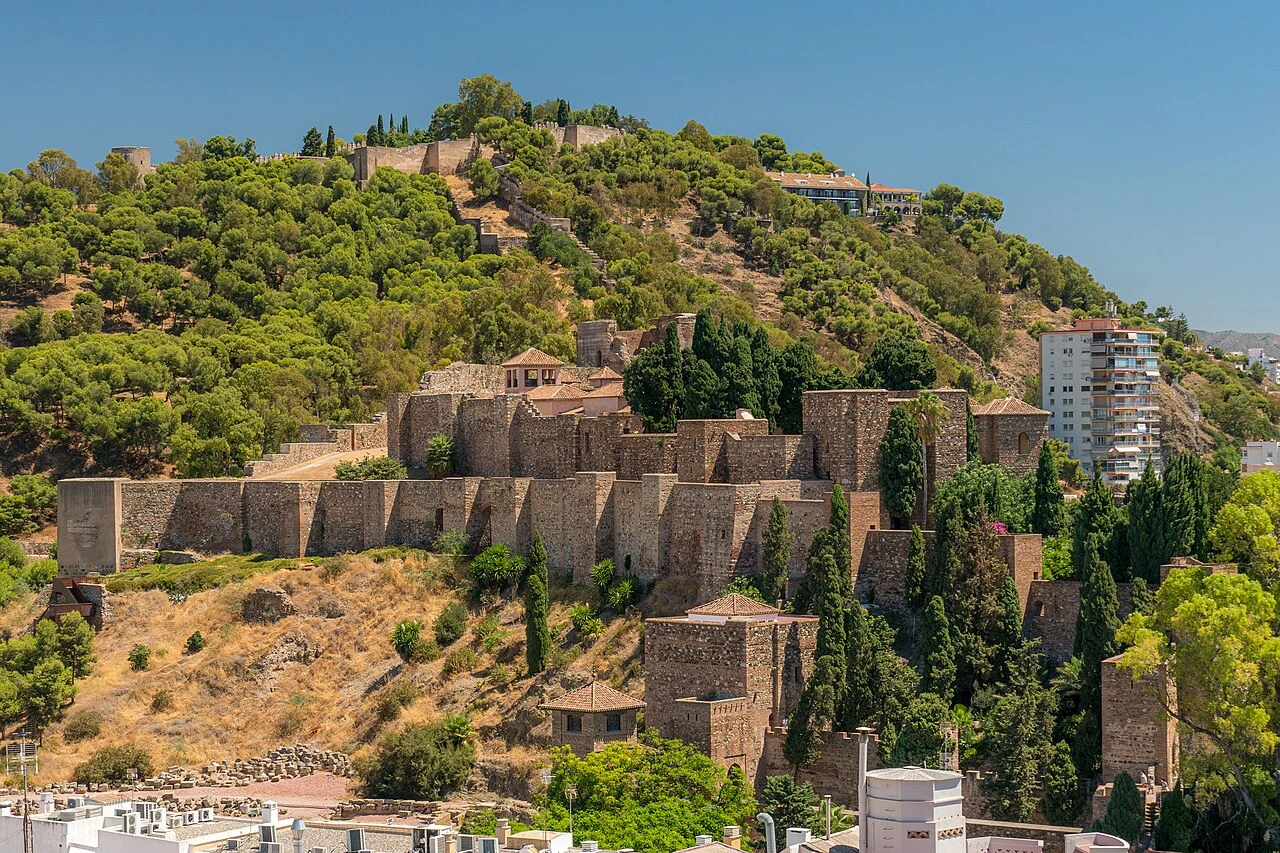
Málaga
Alcazaba de Málaga
Content & sources
Photo: Fernando · CC BY-SA 4.0
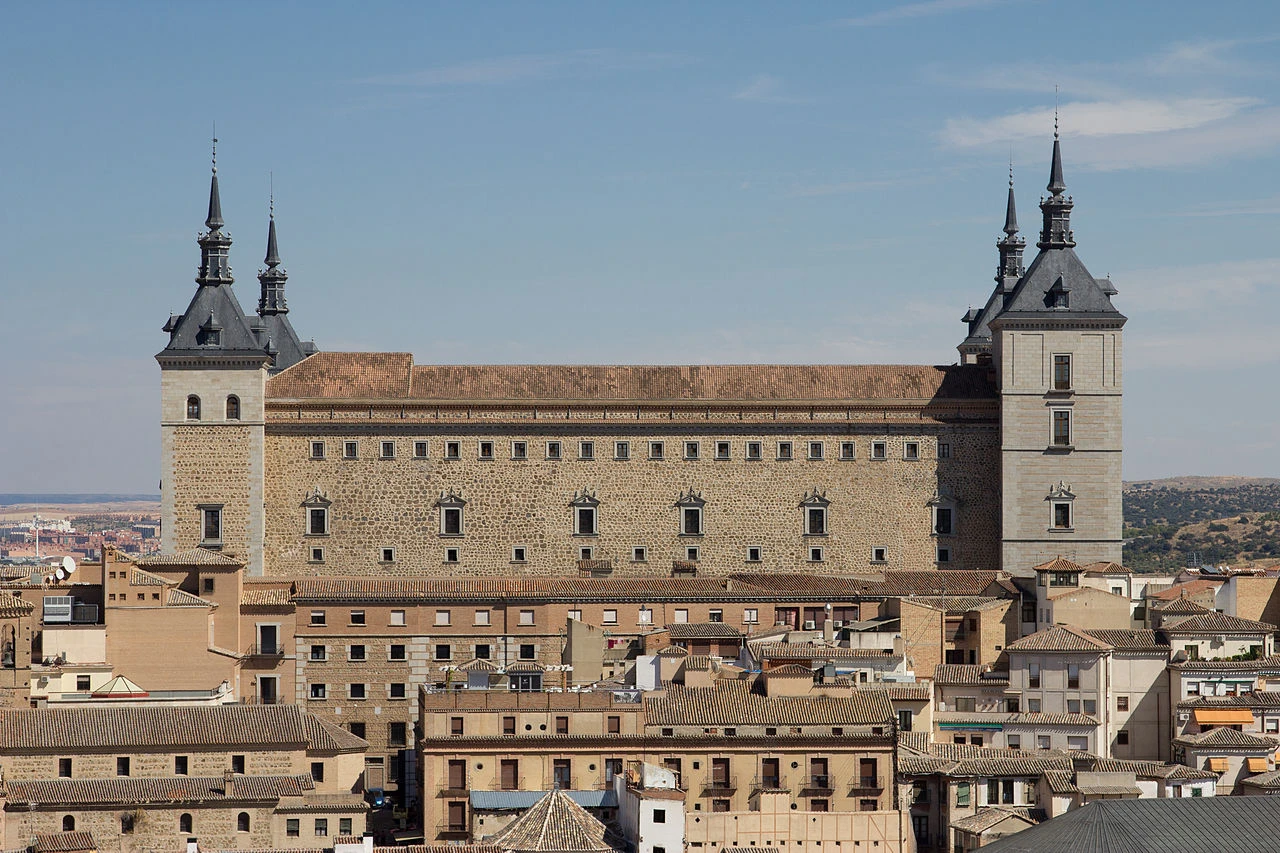
Toledo
Alcázar de Toledo
Content & sources
Carlos Delgado · CC BY-SA 3.0 es
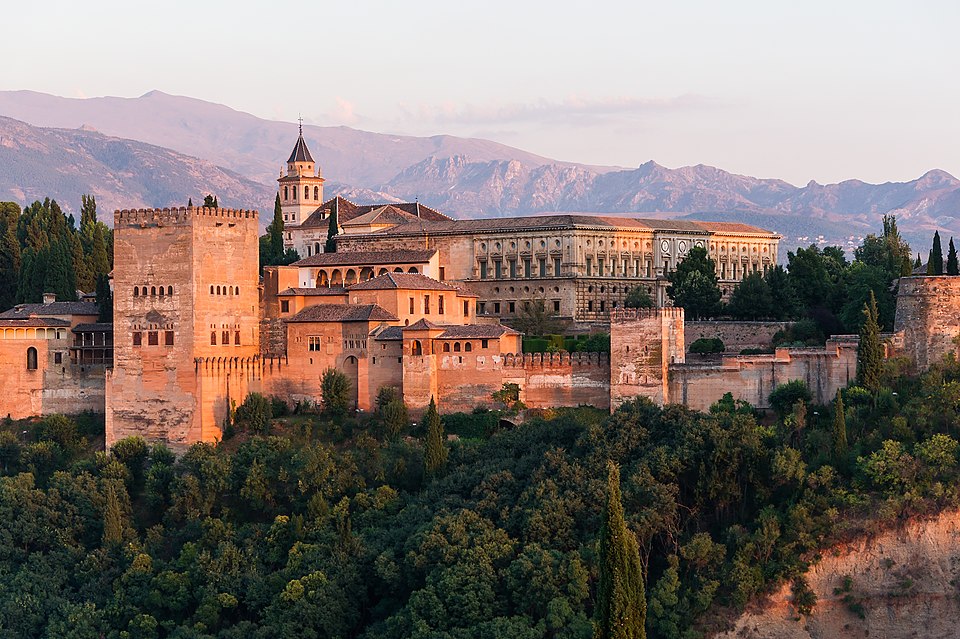
Alhambra
Content & sources
Photo: Jebulon · CC0