Stanza · Audio guide
Läckö Castle Audio Guide
A place to remember. A story to take with you.
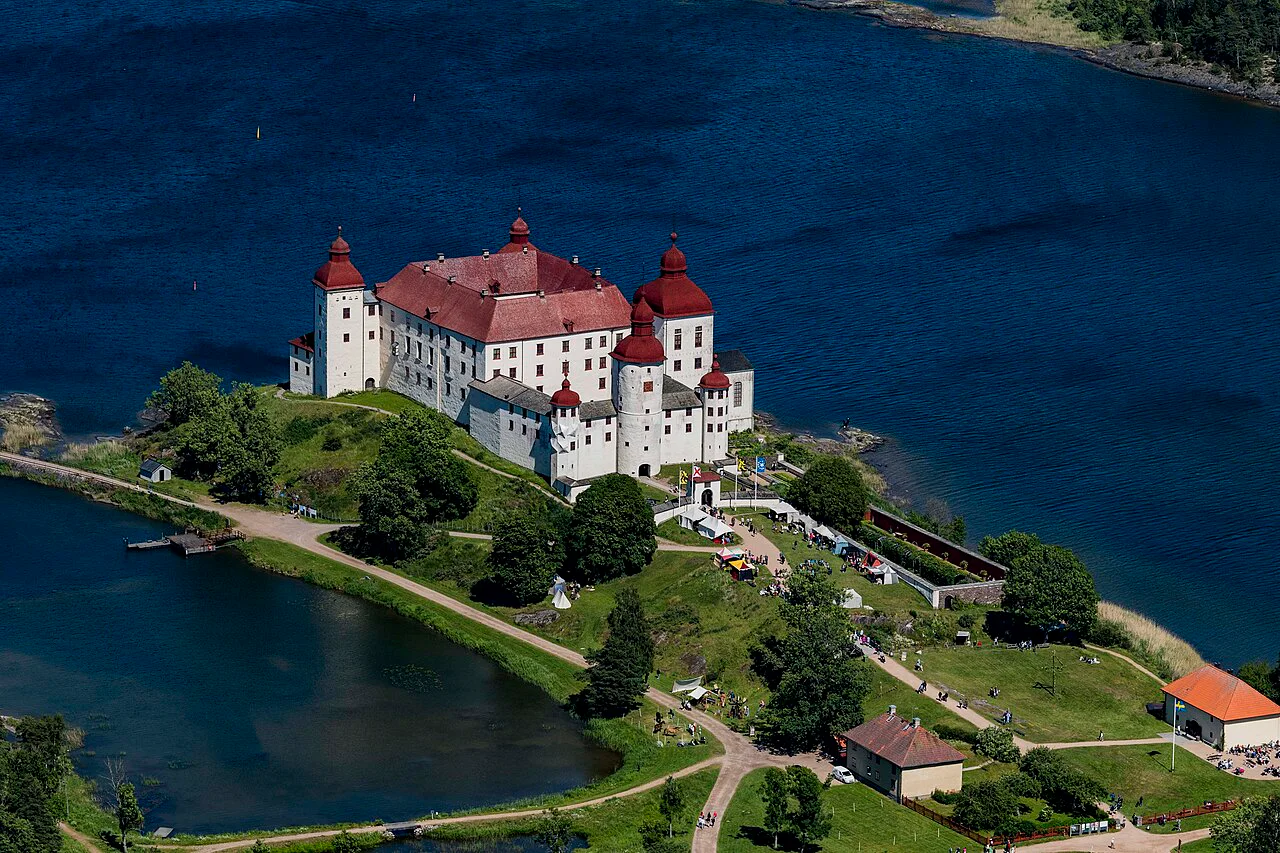
Läckö Castle is a medieval castle in Sweden. It is located on Kållandsö island on Lake Vänern, 25 kilometers north of Lidköping.
Download Stanza, then search for “Läckö Castle”.
About the tour
One guide. Your kind of visit.
Läckö Castle is a medieval castle in Sweden. It is located on Kållandsö island on Lake Vänern, 25 kilometers north of Lidköping.
Ready when you are.
- 01Get the free Stanza app.
iOS & Android
- 02Find your guide.
“Läckö Castle”
- 03Download before you go.
Works offline
Audio guide / 13 narrated stops
Inside the guide
Get to know a few of the stories before you go. Open a stop to read more.
01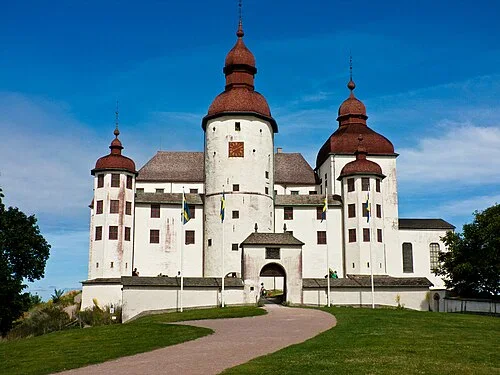 Outer Ward and South Gate Tower
Läckö Castle from the Outer Ward
Welcome to Läckö Castle, a white palace with red-crowned towers rising from a rocky headland in Lake Vänern. It stands on Kållandsö island, north of Lidköping in Västergötland. The story begins in 1298, when Bishop Brynolf Algotsson of Skara laid out a fortified house here. The first castle was modest, two or three buildings gathered inside a wall. After a fire in the 1470s, Bishop Brynolf Gerlachsson expanded it into a stronger stronghold. What grew from that kernel is a palace of roughly 248 rooms on four floors. A medieval core still sits under the Baroque shell you see from outside. Across seven centuries it has been a bishop's fortress, a crown castle and a nobleman's residence. Each of those owners left a layer you can still walk through.
Photo: Lizelight · CC BY-SA 3.0
02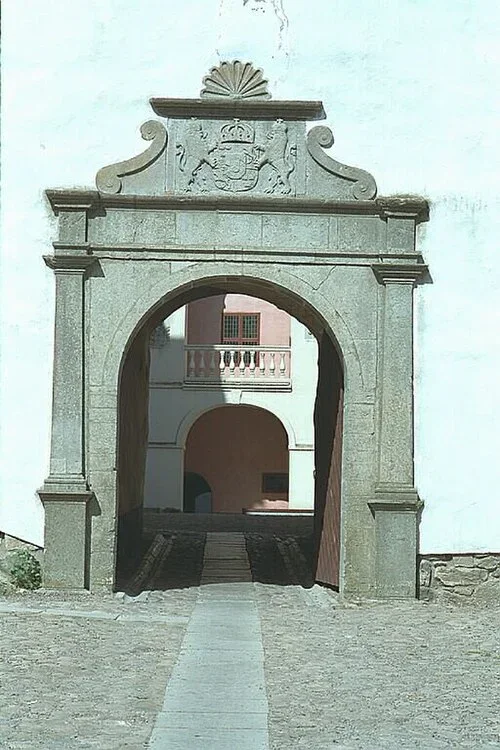 Outer Ward and South Gate Tower
The Courtyard Portal
Carved lions flank a crowned coat of arms above this heavy stone portal, the gateway into the main courtyard. It marks a turning point in the castle's story. In 1527, at the Diet of Västerås, the Reformation reached Sweden's castles as well as its churches. Läckö was counted one of the finest fortresses in the country, and in 1528 it was drawn to the crown and handed over to King Gustav Vasa. Nearly a century later, in 1615, the castle was granted as a county to Field Marshal Jacob Pontusson De la Gardie. The portal to this courtyard was added during his years as owner. He also filled the third floor with frescos of figures and winding plants. The gate itself kept older defences: above the ground floor of the tower runs a Gothic rib vault, pierced with openings for showering stones on anyone who forced the door.
Bengt A. Lundberg · CC BY 2.5
03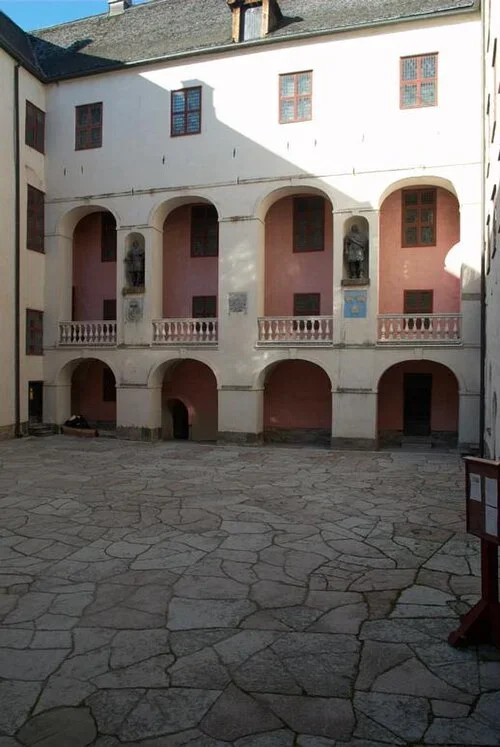 Main Courtyard and Arcaded Loggias
The Inner Courtyard and Arcades
Pink-walled arcades and little stone balconies ring this courtyard, added under Magnus Gabriel De la Gardie. But this space has a life of its own, and a very audible one. Every summer since 1997, the Läckö Castle Opera stages a full production here. The performances run for about three weeks, beginning in the middle of July. The walls rise close around the audience, so the singers need no amplification to fill the yard. A courtyard built for a seventeenth-century count now serves a summer audience under the evening sky.
Listen in the appBengt A. Lundberg · CC BY 2.5
04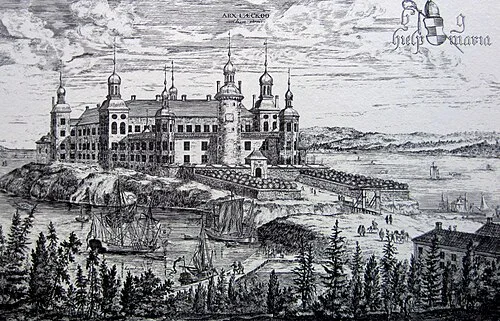 Main Courtyard and Arcaded Loggias
Läckö in Suecia Antiqua et Hodierna
This engraving by Willem Swidde, made around 1689, shows Läckö as its most ambitious owner finished it. It was printed for Suecia antiqua et hodierna, a grand published survey of the kingdom's most notable places. The man behind the transformation was Count Magnus Gabriel De la Gardie. From 1654 he launched major construction at the castle. The central building gained a fourth storey, and the outer ward rose before the gates. In the courtyard he added the arcades, and he built the castle church with its imposing tower. That church was the work of the master builder Frans Stiemer. Swidde's view shows the completed palace on its rock, with ships on the lake and pines in the foreground. Prints like this were meant to flatter, so it shows the silhouette rather than every stone of the real castle.
Listen in the appErik Dahlberg · Public domain
05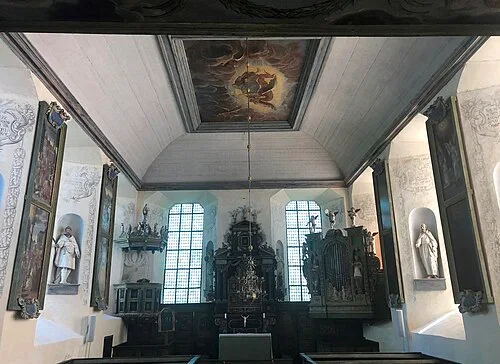 Castle Church (Slottskyrkan)
The Castle Church
Whitewashed vaults, a painted ceiling panel and a carved altarpiece make this little church one of the most complete seventeenth-century interiors in Sweden. When the castle fell on hard times after the Reduction, most of the decoration elsewhere perished. The church came through those years better than any other room. In the early twentieth century, conservation work began under Ärland Noreen. The church was restored extensively, and some of its furnishings were brought back to the castle. Around the altar stand dark carved galleries and paintings of saints, set against the pale vaults above.
Listen in the appPhoto: Bjoertvedt · CC BY-SA 4.0
06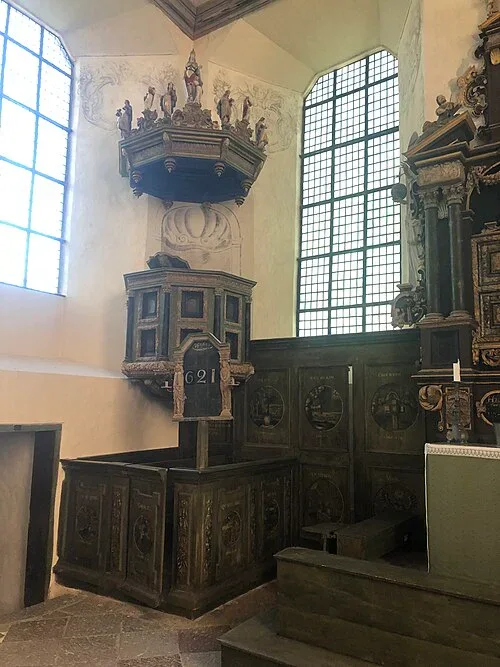 Castle Church (Slottskyrkan)
The Pulpit of 1621
The carved date 1621 is set plainly on this wooden pulpit, older than the church around it. Its canopy carries a ring of small carved figures, and the panels below are framed in heavy Baroque woodwork. Beside it stand the enclosed pews of the old congregation, with a hymn board hanging at hand. The walls around are washed with paint and simple ornament. Whoever carved this work left no name here, only the year, which still speaks for itself.
Listen in the appBjoertvedt · CC BY-SA 4.0
07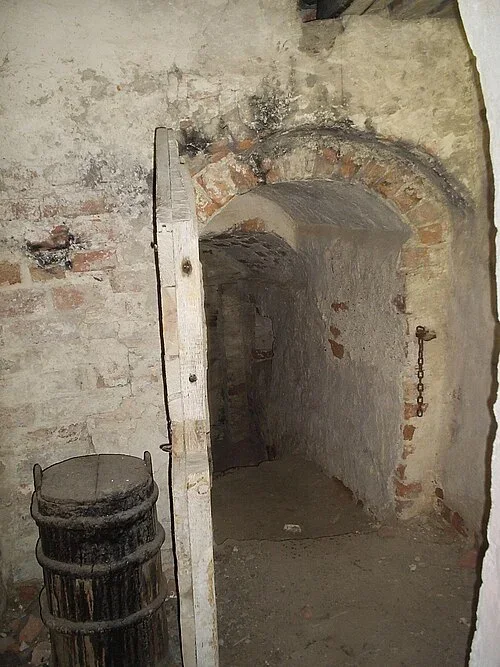 Medieval Basements and Fläskgraven
The Medieval Vaults and Fläskgraven
Down in these brick and stone vaults, the castle's medieval engineering is close at hand. Within the old outer ward lies a shaft cut into the bedrock, twenty-seven metres deep. It is called Fläskgraven, the pork pit. In 1554 the writer Olaus Magnus gave an account of how it was made: burning pork was piled against the rock until the heat cracked it, and the broken stone was dug out into a shaft. That is his written story, and it has travelled with the pit ever since. What is plainly there is a passage at the foot of the castle rock, at water level, leading from the lakeside into the well. It was probably built as a secret way in and out of the castle. Whether the pork-fire method truly happened, the shaft keeps to itself.
Listen in the appHarri Blomberg · CC BY-SA 3.0
08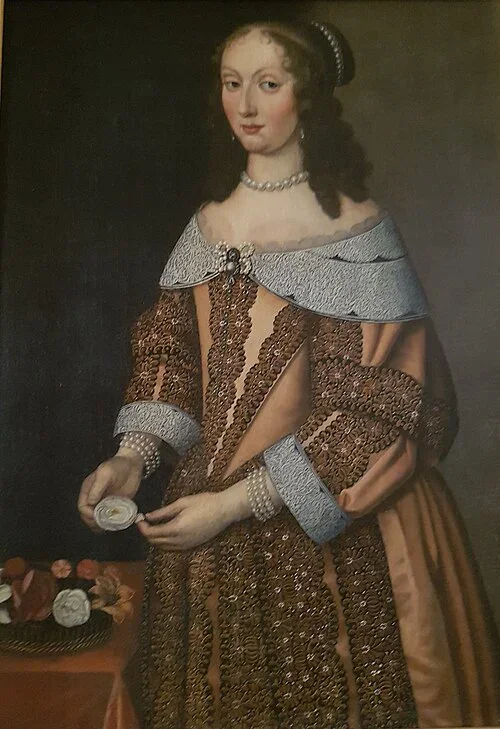 Third Floor State Apartments and Portrait Gallery
Portrait of Maria Eufrosyne
A young woman in a brown embroidered gown holds a rose, pearls at her throat and on both wrists. She is Maria Eufrosyne of Palatinate-Zweibrücken, countess of Läckö and wife of Magnus Gabriel De la Gardie. The portrait is attributed to David Beck, a painter who served the Swedish court. In the 1650s and 1670s the third floor of the castle was her household's living quarters. A wide lace collar spreads over her shoulders, and a great brooch holds it fast. Roses rest on the table beside her. This was the face of the house in its grandest years, a noble home where the countess held her own court.
Listen in the appBjoertvedt · CC BY-SA 4.0
09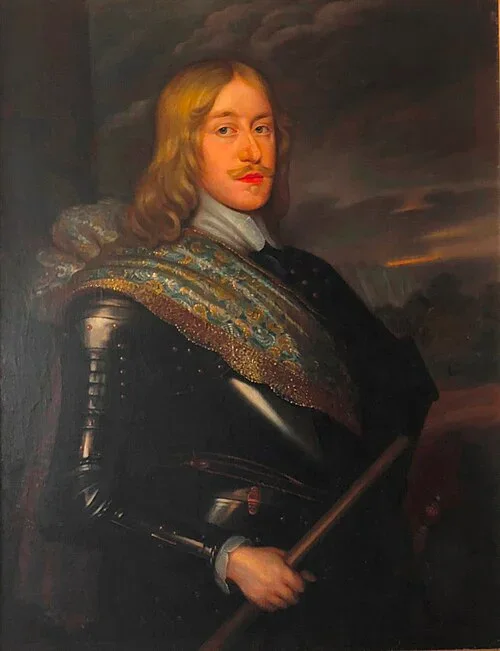 Third Floor State Apartments and Portrait Gallery
Magnus Gabriel De la Gardie
Blond hair, a moustache, and a commander's baton in one hand: this is Magnus Gabriel De la Gardie at the height of his power. He owned Läckö in the middle of the seventeenth century, and it was he who gave the castle the shape it still has. Then the tide turned against Sweden's nobility. In 1681, King Charles XI carried through the Great Reduction, reclaiming aristocratic estates for the crown. Läckö was drawn back from the De la Gardie family that year. The count who had furnished it with paintings, tapestries and silver saw his great house pass to the king.
Listen in the appBjoertvedt · CC BY-SA 4.0
10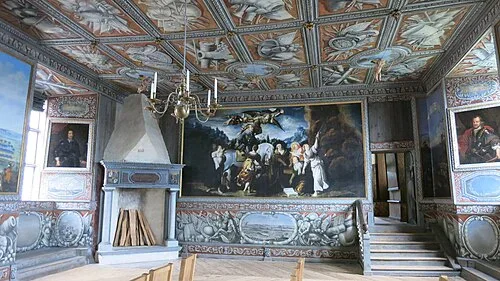 Fourth Floor Grand Banqueting Rooms
The Knights' Hall
A painted ceiling, stucco work and a monumental fireplace fill the Knights' Hall, the grandest room in the castle. Here the nobility of the Age of Greatness entertained royal guests, in a hall hung with paintings and furnished for ceremony. Much of that splendour is gone. The hall's battle paintings were transferred to Karlberg Palace, the military academy in Stockholm. In 1830 the most valuable portraits were moved to Gripsholm Castle, and more furnishings were sold at auction the same year. What fills the room now is a survivor, not the full ensemble the De la Gardie guests once saw. Even so, the ceiling panels and the great fireplace keep the shape of those banquets.
Listen in the appPhoto: Farbror Fjodor · CC BY-SA 4.0
- 11
The Painted Ceiling Room
A ceiling of eagles and crowned shields, and the craftsmen who decorated the castle's state rooms.
- 12
The Treasury
Seventeenth-century silver in the Skattkammaren, the tableware of aristocratic display.
- 13
Lilla Slottsträdgården
The walled kitchen garden under the towers, and the castle's long afterlife in other hands.
Läckö Castle
Frequently asked questions
How much does the guide cost?
Free app download. Listed guide price: $0.99. Guide price shown in the app. Audio guide only. Venue admission is separate.
Can I listen without internet?
Yes. Download the guide’s audio, images, and maps in the app before your visit. Your downloaded content is then available offline.
Can I listen in my language?
This audio guide is available in 15 languages, including English.
Do I need to follow a schedule?
No. This is a self-guided experience. Choose your stops, pause whenever you like, and return to a story at your own pace.
At your own pace
Explore Läckö Castle.
Download Stanza, then search for “Läckö Castle”.
Free app download · Guide price shown in the app
Keep exploring
Audio guides — Sweden
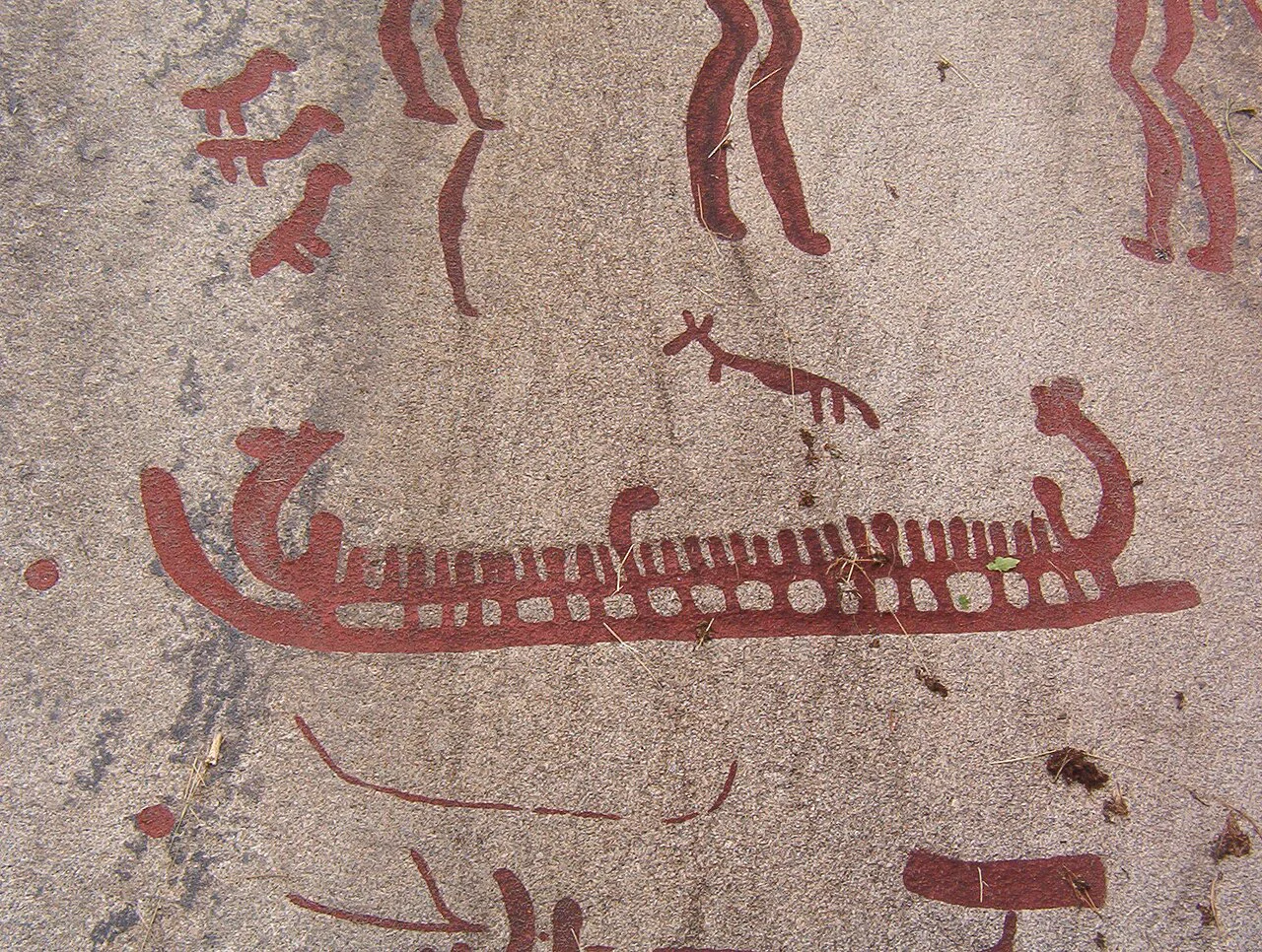
Tanumshede · 109 km
Rock Carvings in Tanum
Content & sources
Photo: Fred J · Public domain
Mariefred
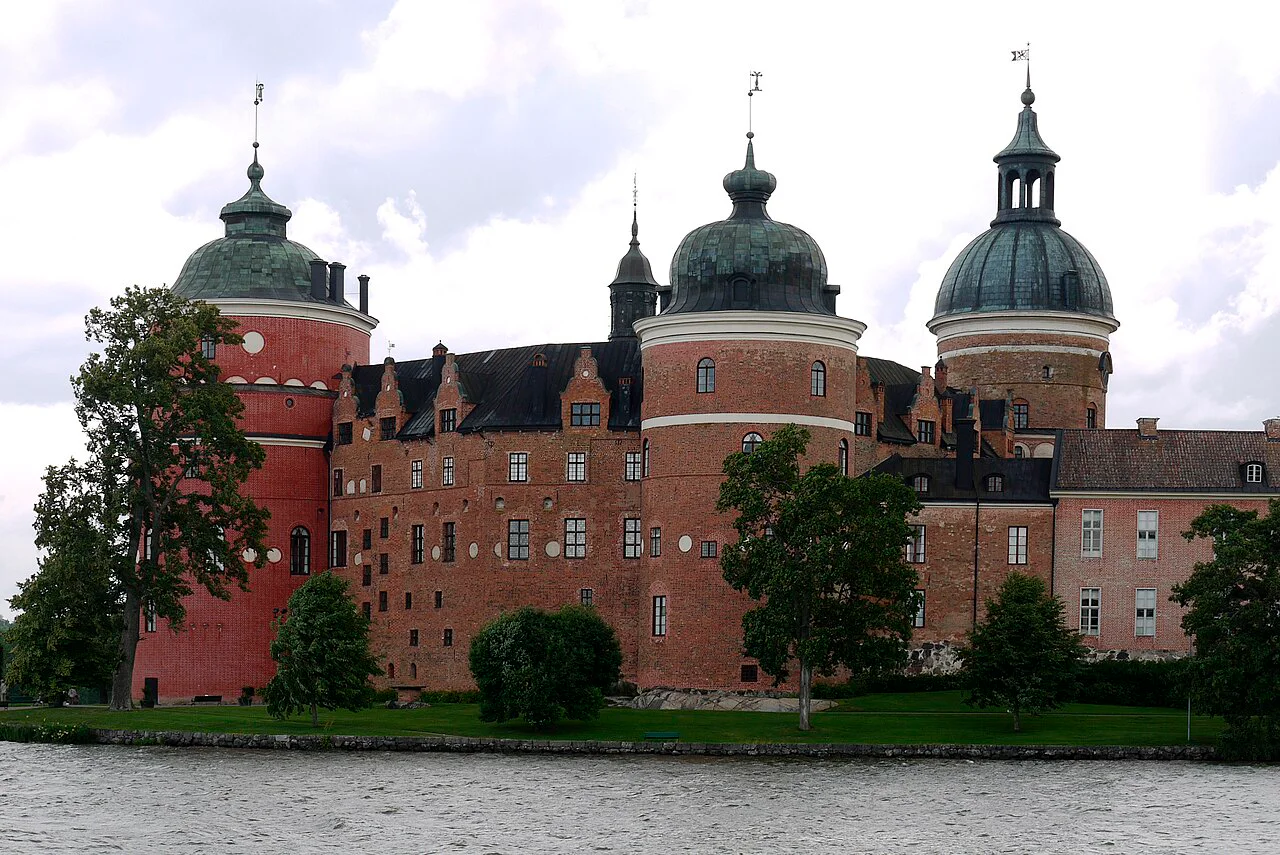
Gripsholm Castle
Content & sources
Xauxa Håkan Svensson · CC BY-SA 3.0
Ekerö kommun
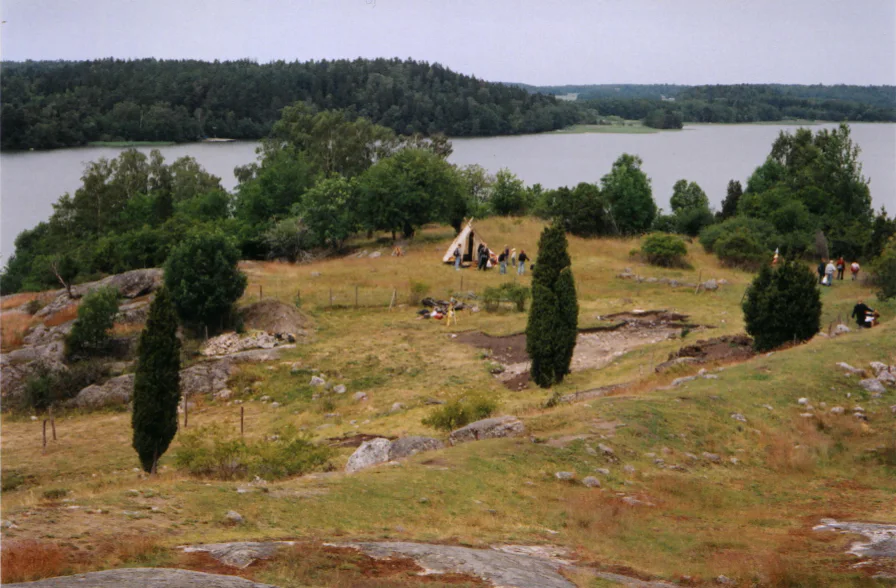
Birka
Content & sources
Alex Peterson · CC BY-SA 3.0
Uppsala
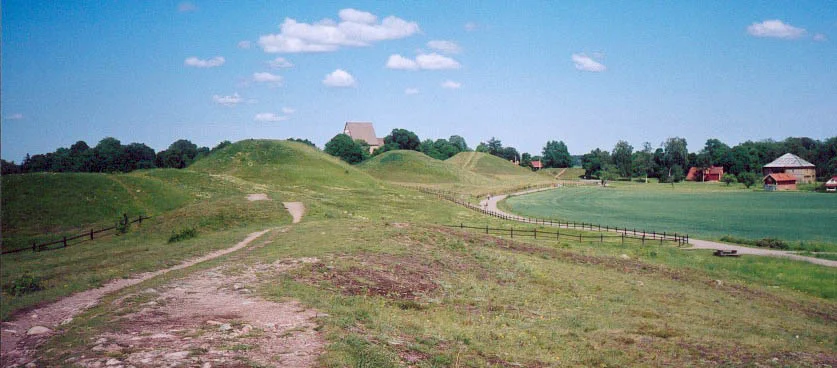
Gamla Uppsala
Content & sources
OlofE · CC BY-SA 3.0