Stanza · Audio guide
Aventicum Audio Guide
A place to remember. A story to take with you.
Aventicum was the largest town and capital of Roman Switzerland. Its remains are located beside the modern town of Avenches.
Download Stanza, then search for “Aventicum”.
About the tour
One guide. Your kind of visit.
Aventicum was the largest town and capital of Roman Switzerland. Its remains are located beside the modern town of Avenches.
Ready when you are.
- 01Get the free Stanza app.
iOS & Android
- 02Find your guide.
“Aventicum”
- 03Download before you go.
Works offline
Audio guide / 16 narrated stops
Inside the guide
Get to know a few of the stories before you go. Open a stop to read more.
01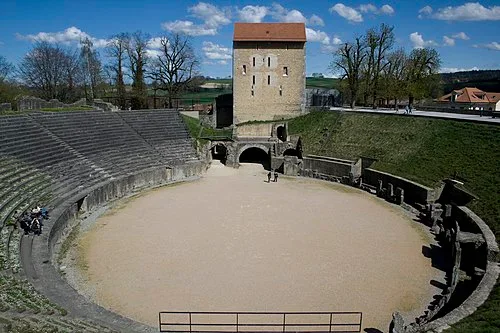 The Roman Amphitheatre and Gladiator Arena
The Amphitheatre Arena of Aventicum
Welcome to Aventicum, the largest Roman town on Swiss soil and the capital of the Helvetii. The wide sandy ring is the arena floor, reached through a monumental entrance on the east side. The amphitheatre rose in two stages, first built around 130 AD on a terraced hillside. It was enlarged about 165 AD, and in its final form it held roughly 16,000 spectators. The city's survival nearly ended long before that. In 69 AD, after the emperor Nero died, Rome slid into civil war. The Helvetii backed the emperor Galba, and not knowing he was dead, they refused to serve his rival Vitellius. A legion stationed nearby stole the pay of a Helvetian garrison, and the Helvetians detained Roman messengers in return. A general named Aulus Caecina Alienus marched in to punish them. His soldiers crushed the Helvetian forces, killing and enslaving thousands, and Aventicum surrendered after a short siege. Vitellius came close to ordering the city destroyed. Then one man stepped forward: Claudius Cossus, a Helvetian envoy sent to Vitellius. Tacitus, the historian who recorded the war, called him a man of well-known eloquence. The plea worked, and the city was spared.
Ludovic Péron · CC BY-SA 3.0
02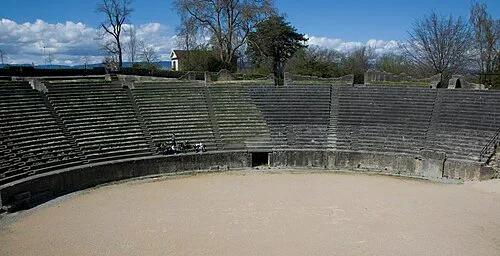 The Roman Amphitheatre and Gladiator Arena
Seating Banks: Who Watched the Games
The tiers of seats rise in a long curve above the arena, and on game days they held the people of the capital, arranged by rank. The best places, low and close to the sand, went to the leading citizens. The higher banks belonged to everyone else, so the seating itself displayed the social order of the town. What the crowds watched was the standard fare of the Roman Empire: gladiators fighting gladiators, animals fighting animals, and staged hunts with wild beasts. The games were more than entertainment. An amphitheatre served political, social and religious purposes, and it was a central feature of most Roman towns. As the capital city, Aventicum had a particularly large one. The first version had twenty-four rows of seats rising up the hillside, most of them built of wood. The later stone expansion brought thirty-one rows. At first the stairs, the wall around the arena floor, the upper walls and the entrances were of stone. The seats themselves were timber.
Ludovic Péron · CC BY-SA 3.0
03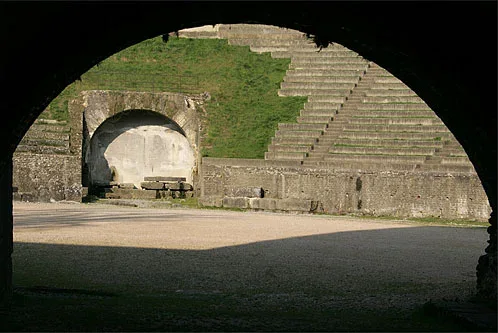 The Roman Amphitheatre and Gladiator Arena
Through the Arches: Stone Reclaimed
From the shadow of an entrance passage, the whole bowl of the amphitheatre opens up. These vaulted entrances were engineered to move crowds quickly and in order. The east main portal was a showpiece in its own right, built of massive stone cubes when the building was enlarged. The outer walls reached eighteen metres high, and alcoves were added along the expanded walls. Then, in the fourth century, the games fell silent and the structure was abandoned. Much of it was taken apart, and its stones went off as building material for projects around the region. What looks like simple decay was, for centuries, a working quarry. The same stone that shaped these arches later surfaced in walls and houses elsewhere.
Listen in the appRoland Zumbühl (Picswiss), Arlesheim (Commons:Picswiss project) · CC BY-SA 3.0
04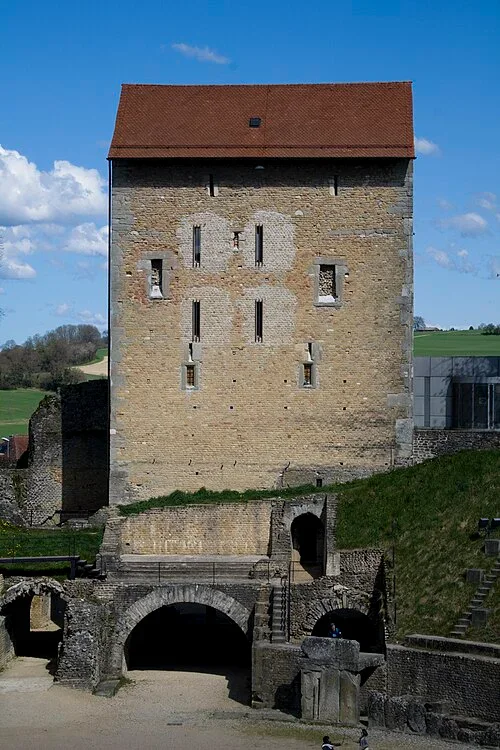 The Bishop's Tower
 over the Roman Gate
A tall, plain tower with a red tiled roof rises over the Roman arches. In the eleventh century, the Bishop of Lausanne had a fortified tower house built directly on top of the amphitheatre's east entrance. The builders did not lay a fresh foundation. They started from about the twentieth row of Roman benches and stacked their tower above the ancient vaults. The result is two eras fused in one structure: Roman entrance architecture below, medieval stronghold above. The bishop's men treated the old stonework as ready-made walls, and the great portal that once funnelled spectators now served a lordly residence. The ruined arena had become a power base.
Listen in the appLudovic Péron · CC BY-SA 3.0
05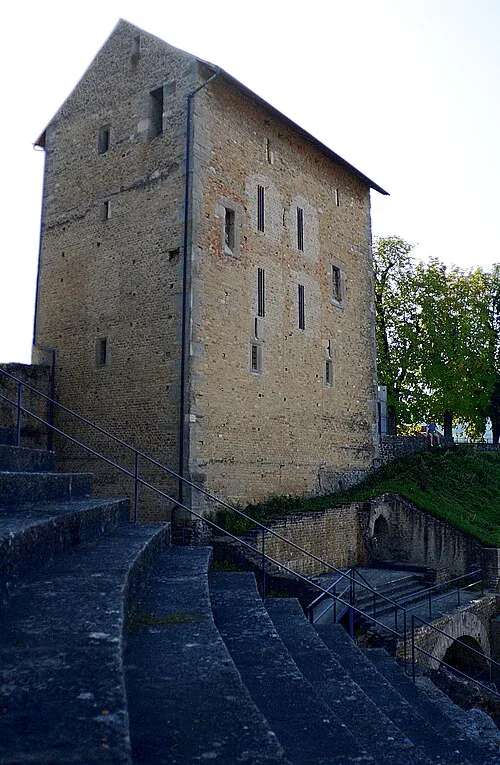 The Bishop's Tower
From Ruin to Museum: Rediscovering Aventicum
The old bishop's tower now holds the Roman Museum, and its collection took centuries to assemble. During the Middle Ages, Aventicum's importance faded from memory, and its leftover stones went into churches and houses in the area. In the sixteenth century, finds of Latin inscriptions drew attention back to the past. In 1710, Marquard Wild was the first to argue that this had been the capital of the Helvetii, rather than some other town as people then believed. The first targeted excavations came decades later, led by the Marquess of Northampton in the seventeen-eighties. His discoveries drew treasure seekers to the site, and in response a museum opened in 1824. It later moved into the tower and became the Roman Museum. In 1885, the association Pro Aventico was founded to discover and preserve the ruins. From the late nineteen-sixties, its rescue archaeology ran under Professor Hans Bögli.
Listen in the appPeter Stampfli · CC BY-SA 4.0
06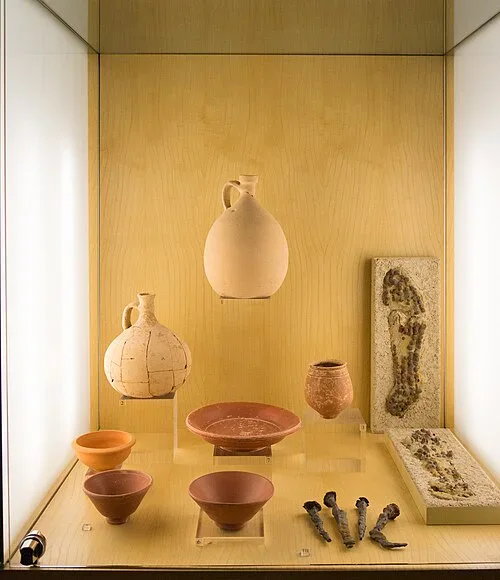 The Roman Museum (Musée Romain)
Belongings of Aventicum's People
Behind the grand monuments stood the ordinary people of Aventicum, and some of what they left is strikingly humble. This case holds funerary goods: jugs, cups, a shallow dish and a set of small iron fittings. Such objects were placed in graves with the dead, a widespread custom of the Roman era. The vessels could hold food, drink or offerings, and the little metal pieces probably came from the grave fittings themselves. They are everyday household things, chosen by a family to accompany their dead. In their quiet way, they say as much about the capital as any temple or tower.
Listen in the appFanny Schertzer · CC BY-SA 3.0
07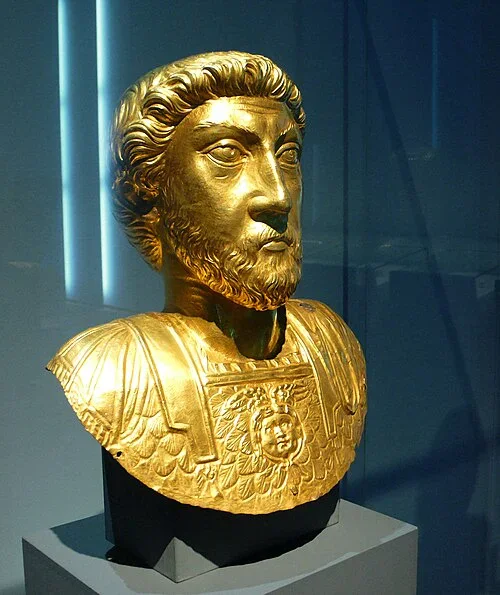 The Roman Museum (Musée Romain)
The Golden Bust of Marcus Aurelius
A face of beaten gold looks out from a display case: an emperor with curling hair and a full beard. In 1939, archaeologists clearing a drainage channel at the foot of the Cigognier temple found this bust hidden in the dark. It is worked from solid gold, stands about thirty-three and a half centimetres tall, and weighs nearly sixteen hundred grams. The portrait is identified as Marcus Aurelius, the philosopher-emperor of the second century. It ended up concealed in the drain, most likely late in the third century, when temple priests hid the imperial image ahead of Alemannic raiders. Its presence fits a bigger picture. At the Cigognier temple, the Roman Empire, embodied in the divine emperor, was worshipped by the citizens of the Helvetian state. A golden bust of the emperor found on the site is strong support for the idea that this was the chief temple of the imperial cult.
Listen in the appPhoto: Rosemania · CC BY 2.0
08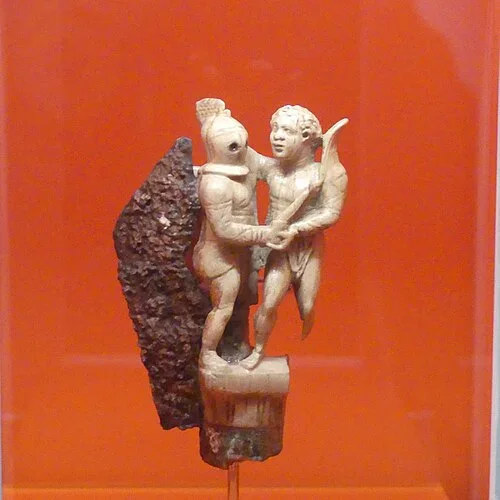 The Roman Museum (Musée Romain)
An Ivory Knife with Gladiators
A small folding knife in the museum carries the arena in miniature. Its handle is carved from ivory in the shape of two gladiators, one wearing a crested helmet, the other lunging with his weapon raised. The iron blade has rusted almost entirely away. Knives like this were ordinary household tools, yet someone chose to give this one the faces of arena fighters. Gladiator imagery clearly belonged to everyday life, right down to the knife in someone's pocket.
Listen in the appPhoto: Museo-unine · CC BY-SA 4.0
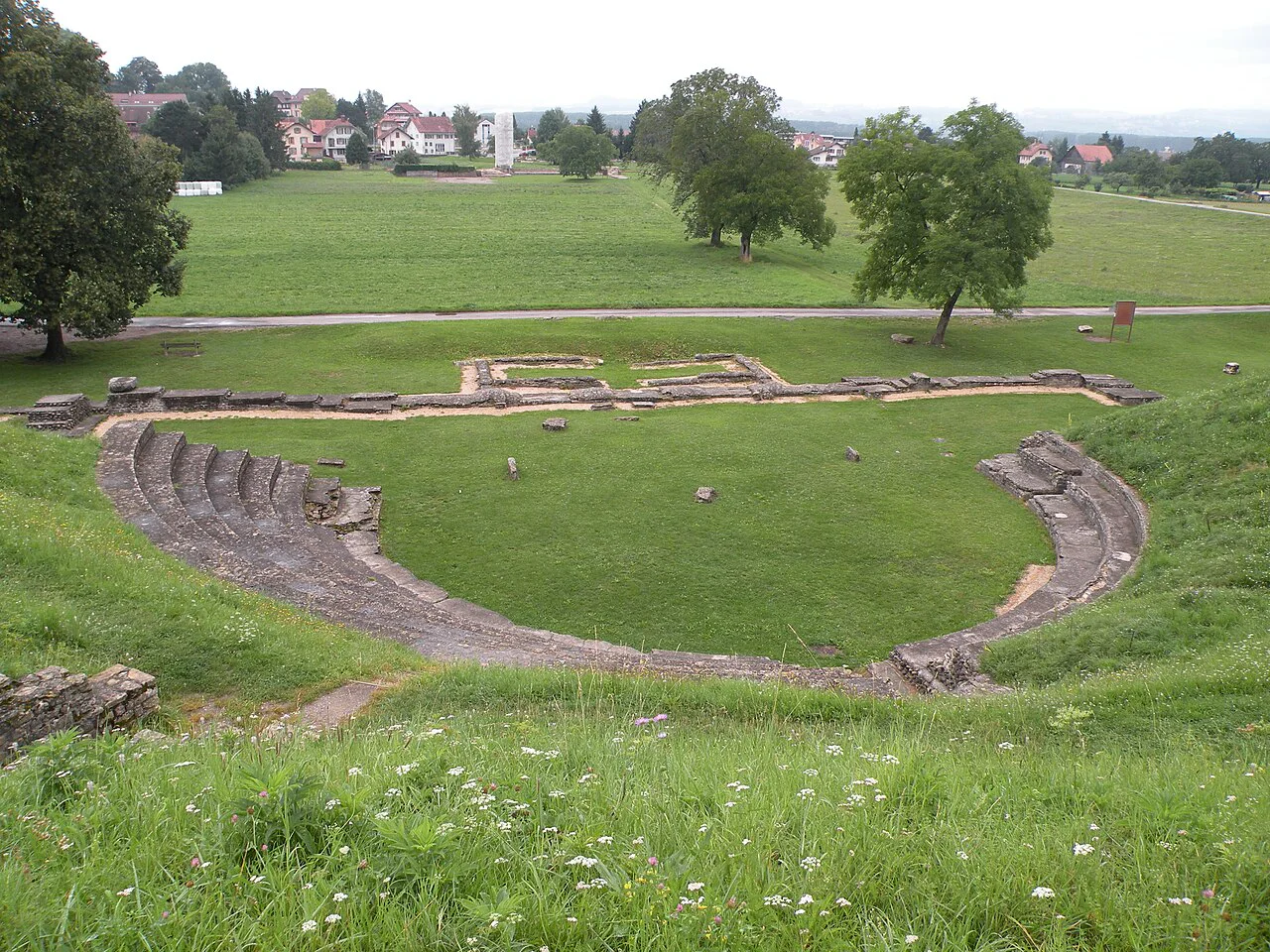
09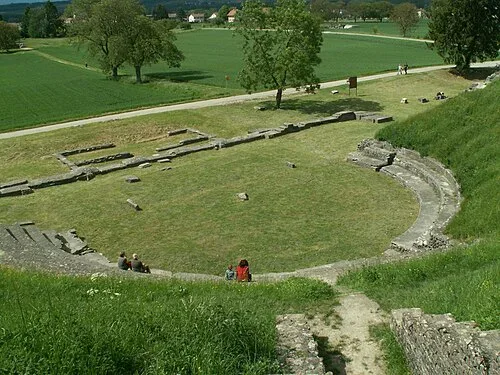 The Roman Theatre
: A Second Stage for the City
Aventicum built two great venues for its crowds, and this was the gentler one. The theatre went up in the early second century, on ground that had held only scattered houses before. Its plan follows the classical Roman model, with a few Gallo-Roman quirks. Both the orchestra and the banks of seats curve in a nearly perfect horseshoe. The stage itself was a simple wooden platform. Behind it rose a tall background wall, pierced by three doors that led to a small stage building. The whole structure stretched about a hundred and six metres across. Estimates of its capacity run from eight to twelve thousand spectators. More than fifty rows of benches rose above the orchestra. Eleven covered entrances, the vomitoria, funnelled the crowds in, and each had two arched passageways. At the foot of the seating waited a narrow box, barely wider than a doorway, reserved for the nobility. Comedies and tragedies filled the stage here. But a small cult niche at the bottom of the seats, with the stage doubling as an altar, hints that the theatre also hosted plays as acts of dedication.
Listen in the appChlempi at de.wikipedia · CC BY-SA 2.0 de
10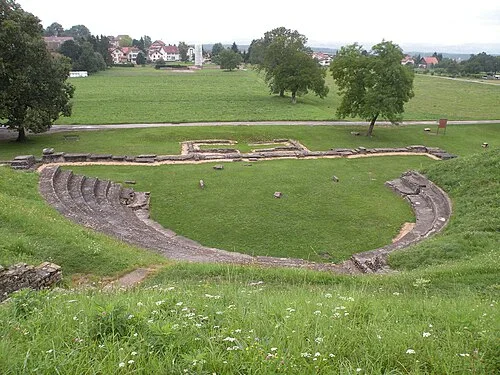 The Roman Theatre
The Stage Wall's Open Secret
The tall wall behind the stage held a deliberate secret. Its builders left an opening in the scaenae frons, as that background wall is called. Through the gap, the audience could see the Cigognier Temple. Every performance was framed by a view of the sacred building. The design fits the rest of the theatre's ritual side. Some archaeologists read all this as evidence that performances here honoured the emperor himself, as acts of worship. That reading rests on the architecture and the niche, not on any surviving account, so it remains a careful maybe. The intention behind the gap is clearer. Whoever sat high on the hillside looked straight past the actors to the sanctuary.
Listen in the appPhoto: Pymouss · CC BY-SA 3.0
- 11
The Cigognier Sanctuary: Seat of the Imperial Cult
The vast sanctuary where the empire, embodied in the divine emperor, was worshipped.
- 12
The Stork Column
How a stork's nest gave the sanctuary its name, and why Turner came to draw it.
- 13
The Forum Baths of En Perruet
Public baths east of the Forum, paid for by a wealthy Helvetian family.
- 14
Under the Floor: The Hypocaust
The stacks of tiles under the bathhouse floor that kept the rooms warm.
- 15
The Tornallaz Tower and the City Wall
A city wall too long to defend, built to show off - and the emperor who grew up here.
- 16
The East Gate: How a Capital Ends
Raiders, a bishop's chronicle, and a capital that became a quarry for the region's churches.
Aventicum
Frequently asked questions
How much does the guide cost?
Free app download. Listed guide price: $0.99. Guide price shown in the app. Audio guide only. Venue admission is separate.
Can I listen without internet?
Yes. Download the guide’s audio, images, and maps in the app before your visit. Your downloaded content is then available offline.
Can I listen in my language?
This audio guide is available in 15 languages, including English.
Do I need to follow a schedule?
No. This is a self-guided experience. Choose your stops, pause whenever you like, and return to a story at your own pace.
At your own pace
Explore Aventicum.
Download Stanza, then search for “Aventicum”.
Free app download · Guide price shown in the app
Keep exploring
Nearby audio guides
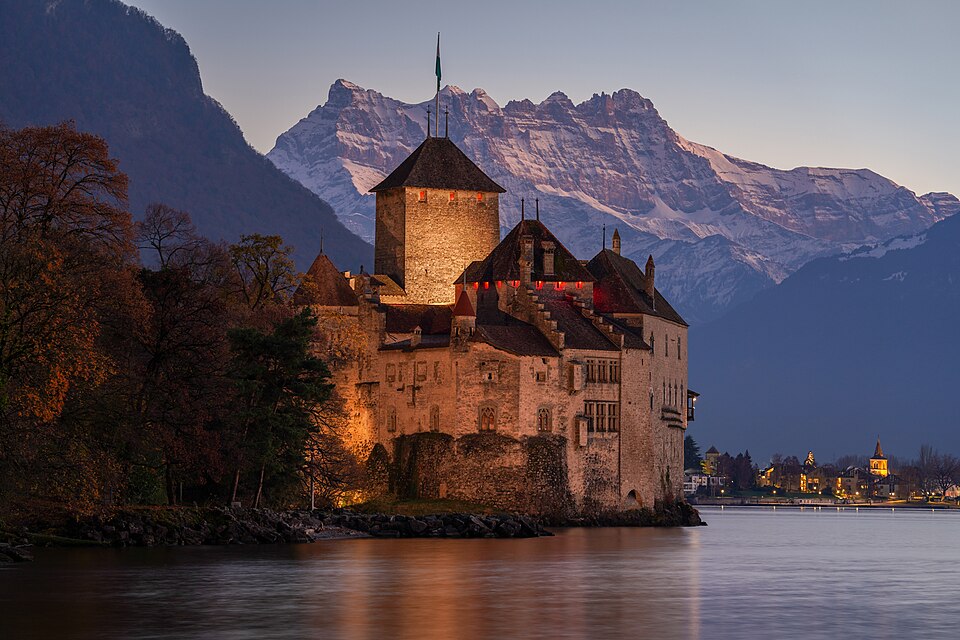
Veytaux · 53 km
Chillon Castle
Content & sources
Photo: Giles Laurent · CC BY-SA 4.0
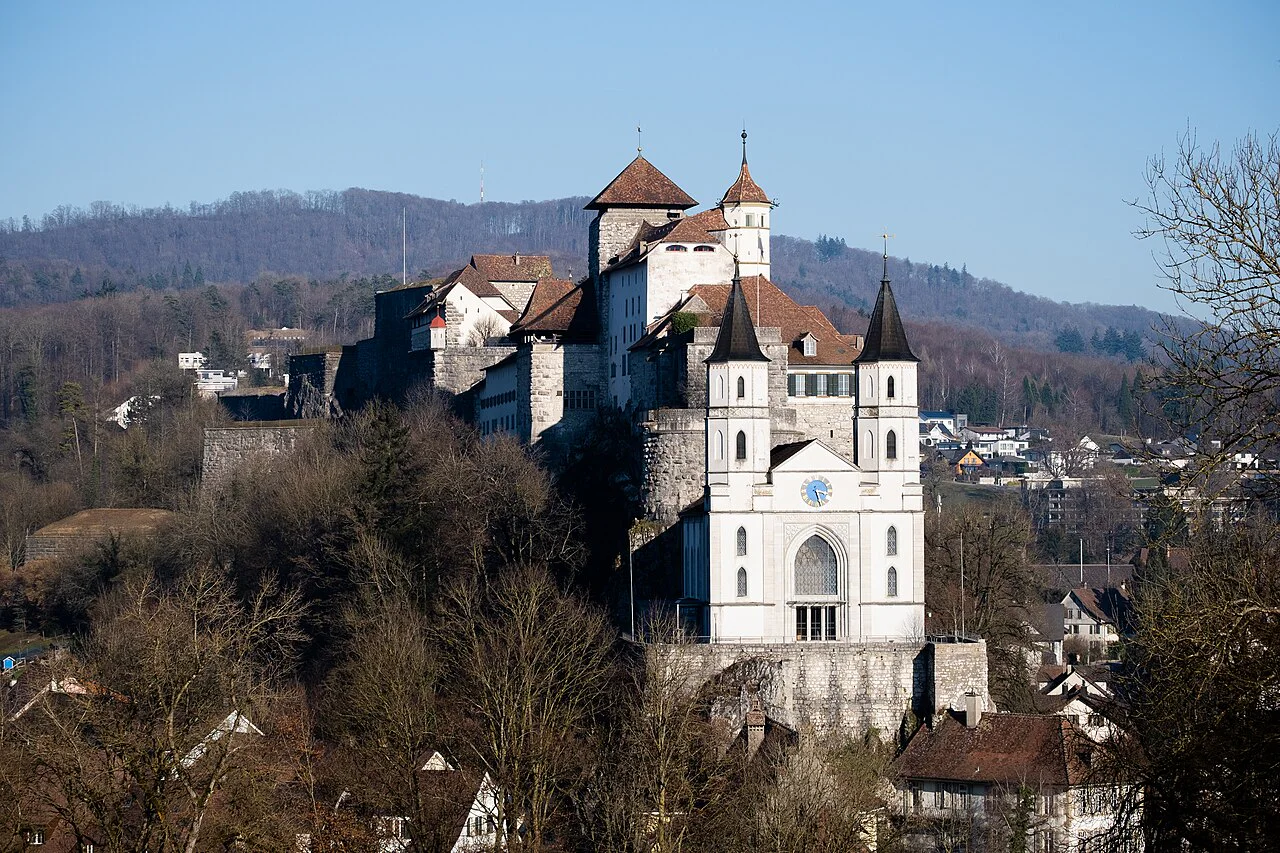
Aarburg · 81 km
Festung Aarburg
Content & sources
Christian David · CC BY-SA 4.0
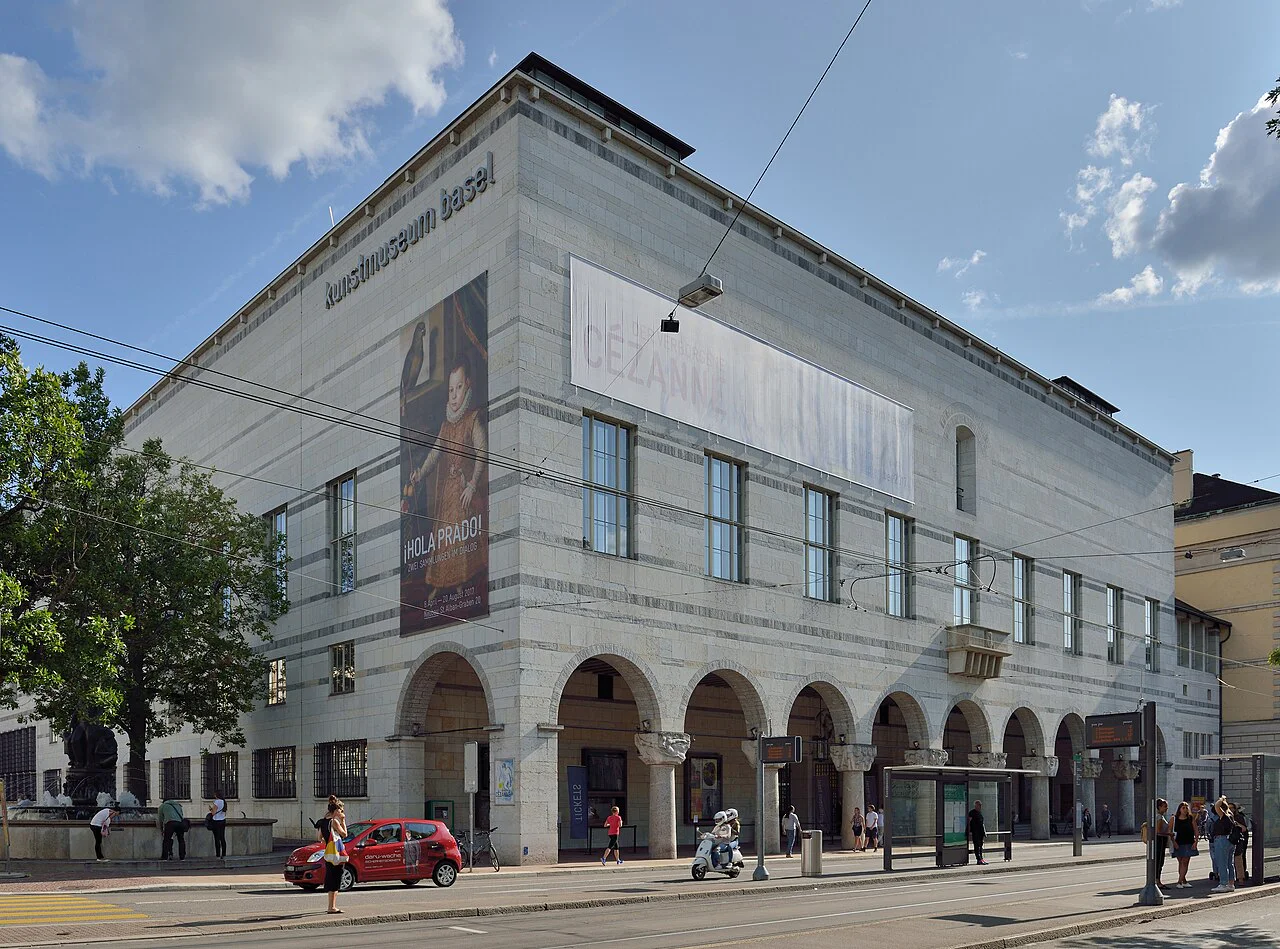
Basel · 86 km
Kunstmuseum Basel
Content & sources
Wladyslaw Sojka · FAL
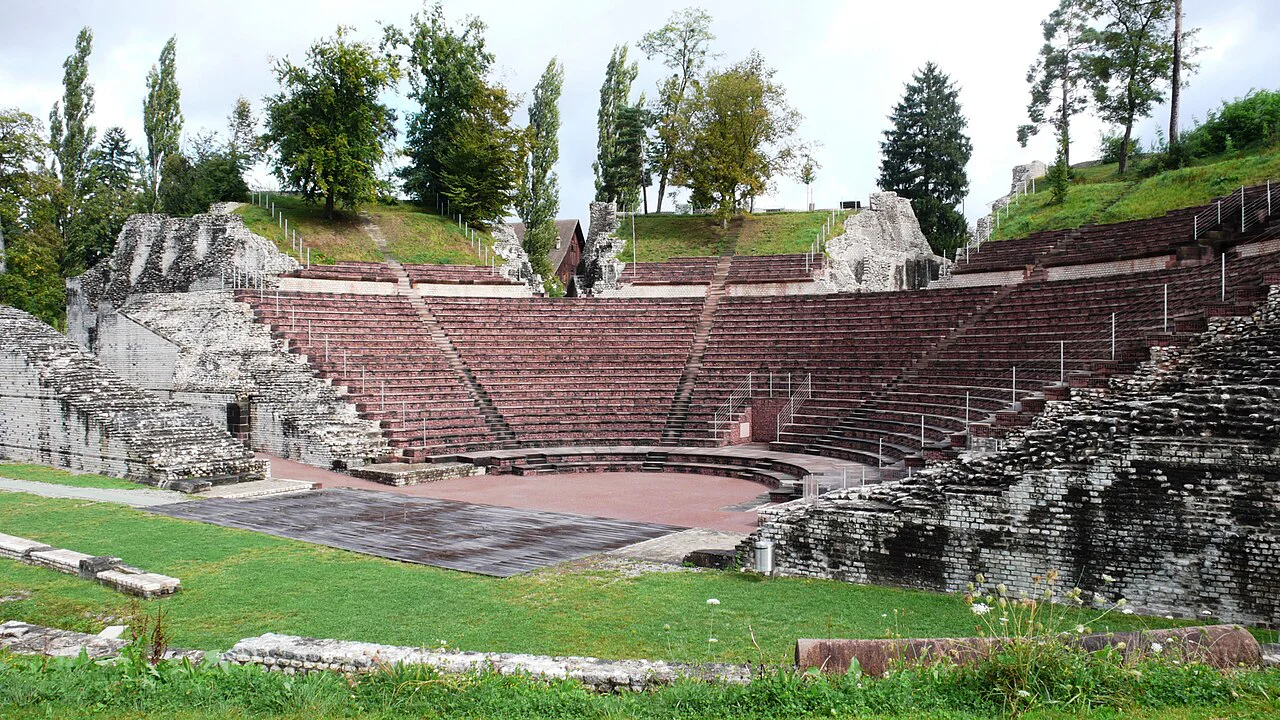
Augst · 89 km
Augusta Raurica
Content & sources
Guido Radig · CC BY-SA 3.0