Stanza · Audio guide
National Palace Museum Audio Guide
A place to remember. A story to take with you.
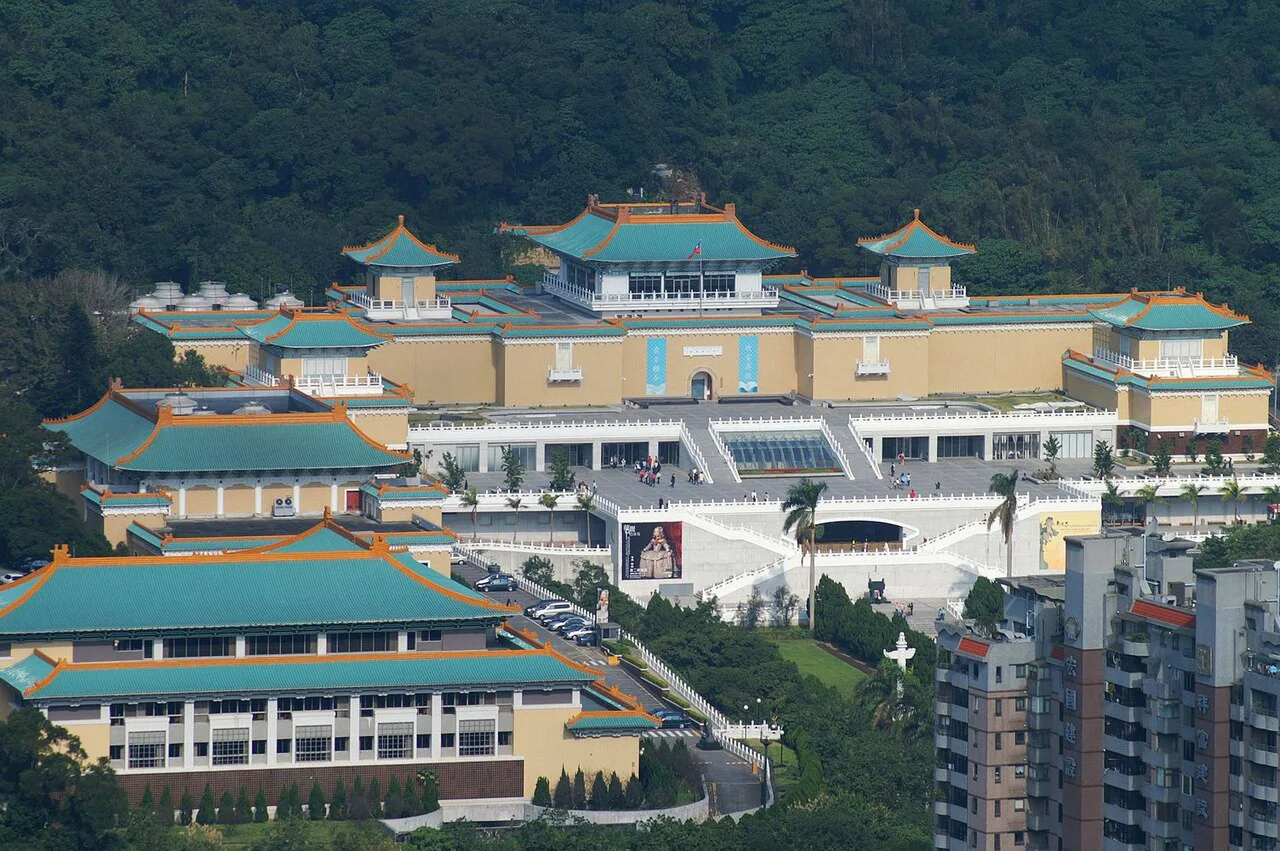
The National Palace Museum is a national museum headquartered in Taipei, Taiwan. It houses a collection of ancient Chinese imperial artifacts and artworks.
Download Stanza, then search for “National Palace Museum”.
About the tour
One guide. Your kind of visit.
The National Palace Museum is a national museum headquartered in Taipei, Taiwan. It houses a collection of ancient Chinese imperial artifacts and artworks.
The National Palace Museum guide tells the stories of 103 artworks, including Treaty of Nanjing (Painted by Captain John Platt, Bengal Volunteers. Engraved by John Burnet.), Jadeite Cabbage (Unknown Artist), Dwelling in the Fuchun Mountains (Huang Gongwang), One Hundred Horses (Giuseppe Castiglione), Meat-shaped Stone (Unknown Artist), Afghan Four Steeds (Giuseppe Castiglione), Mao Gong ding (Unknown Artist), and Autumn colors on the Qiao and Hua mountains (Zhao Mengfu). Every artwork is free to hear in the Stanza app until 1 January.
Ready when you are.
- 01Get the free Stanza app.
iOS & Android
- 02Find your guide.
“National Palace Museum”
- 03Download before you go.
Works offline
Audio guide / 103 artworks
Inside the guide
Get to know a few of the stories before you go. Open a stop to read more.
01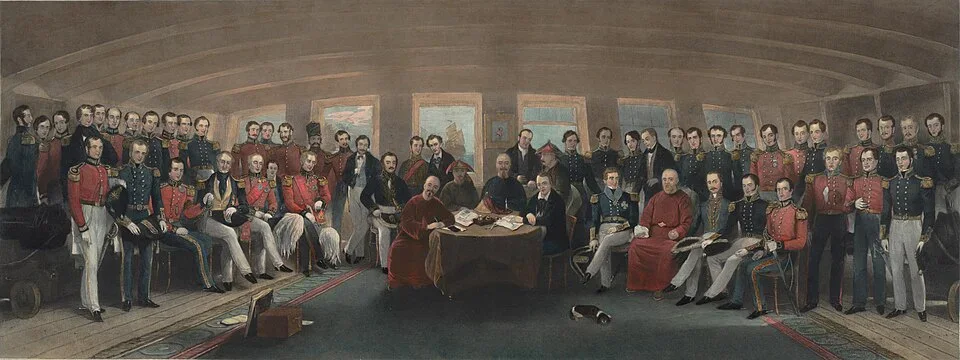
Treaty of Nanjing
Two texts are stitched into this single volume, one in English and one in Chinese. They are the same treaty in two languages. They were meant to say the same thing, but they do not quite agree. China had just lost the First Opium War. British warships were anchored at Nanjing, and officials from both sides negotiated aboard one of them. The Qing had almost no diplomats who could read English, so the translating fell to British officials. John Robert Morrison, the interpreter who sealed the treaty for the British, was among them. The Chinese wording shifted in places. The English text promised British merchants and their families the right to live in the cities and towns of the five open ports. The Chinese version let only the consuls live inside the cities. Merchants and families were kept to the ports. Qing officials held to the Chinese words and kept the British out of Guangzhou city. That argument became one of the causes of the Second Opium War. Another clause handed Hong Kong to Britain forever. The Chinese text used its own phrase for that promise, chang yuan. What those words actually meant is still an open question.
Listen in the appPainted by Captain John Platt, Bengal Volunteers. Engraved by John Burnet. · Public domain
02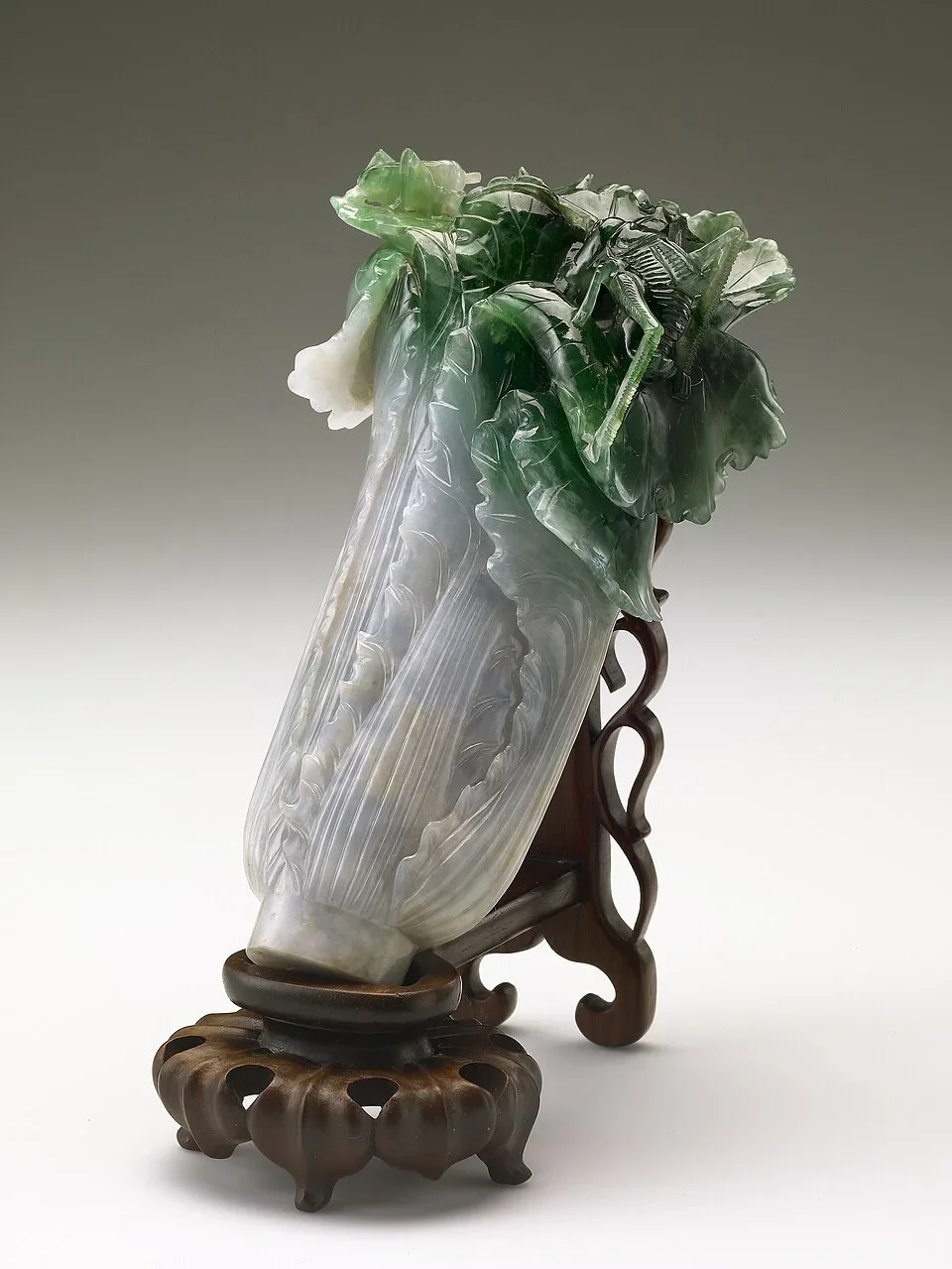
Jadeite Cabbage
Nobody knows who carved this cabbage. The stone is a single piece of jadeite, half white and half green. The green became the leaves and the white the stalk. No paint was added. Those colors were already in the stone. It was flawed, with cracks and discolored blotches, and those became the veins running through the leaves and stalks. Two small insects hide among the leaves, a locust and a katydid. The cabbage first appears in 1889, in the Yonghe Palace in the Forbidden City. That was the home of Consort Jin, wife of the Guangxu Emperor. She probably received it as part of her dowry when she married that year.
Listen in the appPhoto: Cold Season · OGDL-Taiwan-1.0
03
Dwelling in the Fuchun Mountains
The landscape looks as if it arranged itself. Hills, trees, and empty spaces all seem to have fallen into place without effort. Huang Gongwang worked over it again and again. He laid in the big shapes with light, wet strokes, then added the details in darker, dry ink. He painted over strokes he had already put down, which was unusual in his time. He set groups of trees onto ink that had already dried. None of that shows. The buildings and trees are kept very simple, the figures have no faces, and much of the calm comes from the empty spaces. He moved to the Fuchun Mountains for his last years. He worked on this landscape between 1347 and 1350, then gave the scroll to his disciple Zheng Wuyong. Three centuries later an owner had it burned so he could take it with him when he died. His nephew pulled it from the fire, already aflame and torn in two. The two halves stayed apart for more than three hundred and fifty years, until 2011, when they were shown together again in Taipei.
Listen in the appHuang Gongwang · Public domain
04
One Hundred Horses
Giuseppe Castiglione came from Italy to paint at the Chinese imperial court. Horses were a favourite subject there, and the court wanted a hundred of them. He wanted them to look real, in a way that was new to the court. It shows in the land around them, drawn the way he had learned in Europe. Trees and plants shrink into the distance. Light and dark tones build the depth of the scene. The horses themselves are handled differently. Their bodies are made of lines and areas of colour, with no heavy shadows. He chose that on purpose. Holding back on the horses is how the two traditions sit together. In an earlier sketch he had drawn two naked figures. The naked body had no place in Chinese painting. In the finished scroll he kept only one, in the background, the less noticeable of the two. There are lingzhi mushrooms at the roots of the trees in the foreground. In Chinese painting they were sacred.
Listen in the appGiuseppe Castiglione · Public domain
05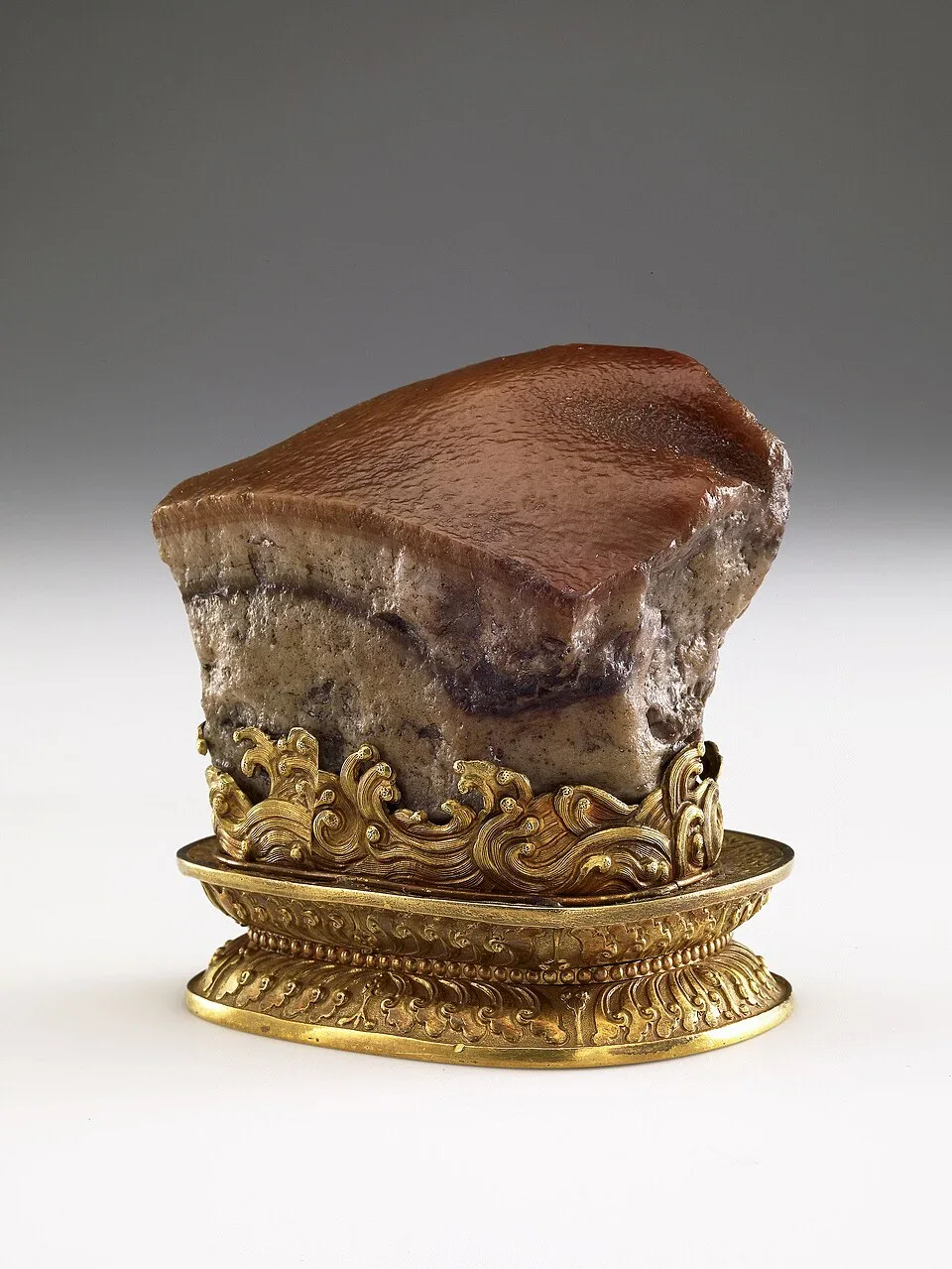
Meat-shaped Stone
Close up, the rind is covered with tiny drilled holes. They are there to look like the pores in pig skin. That same face is stained reddish brown, the colour soy sauce leaves when it soaks in, and the other sides are darker. Someone took real trouble over a piece of stone, to make it look like cooked pork. The stone is banded jasper, its layers settled naturally over many years into different shades. It was carved in the Qing dynasty to resemble Dongpo pork, a Chinese way of cooking pork belly. For a long time it stood in Yangxin Hall in the Forbidden City. That was where emperors worked and slept, from Yongzheng onward. In 1924 the Xuantong emperor was driven out of the palace. The following year, a committee checking what was left came on this stone. It looked so much like real pork that they wrote it into the catalogue as a pork fossil. When the government moved to Taiwan, the stone came to the National Palace Museum in Taipei. It is one of the museum's Three Treasures, and the public has chosen it as the most important object in the whole collection. No one knows who carved it.
Listen in the appPhoto: Cold Season · OGDL-Taiwan-1.0
06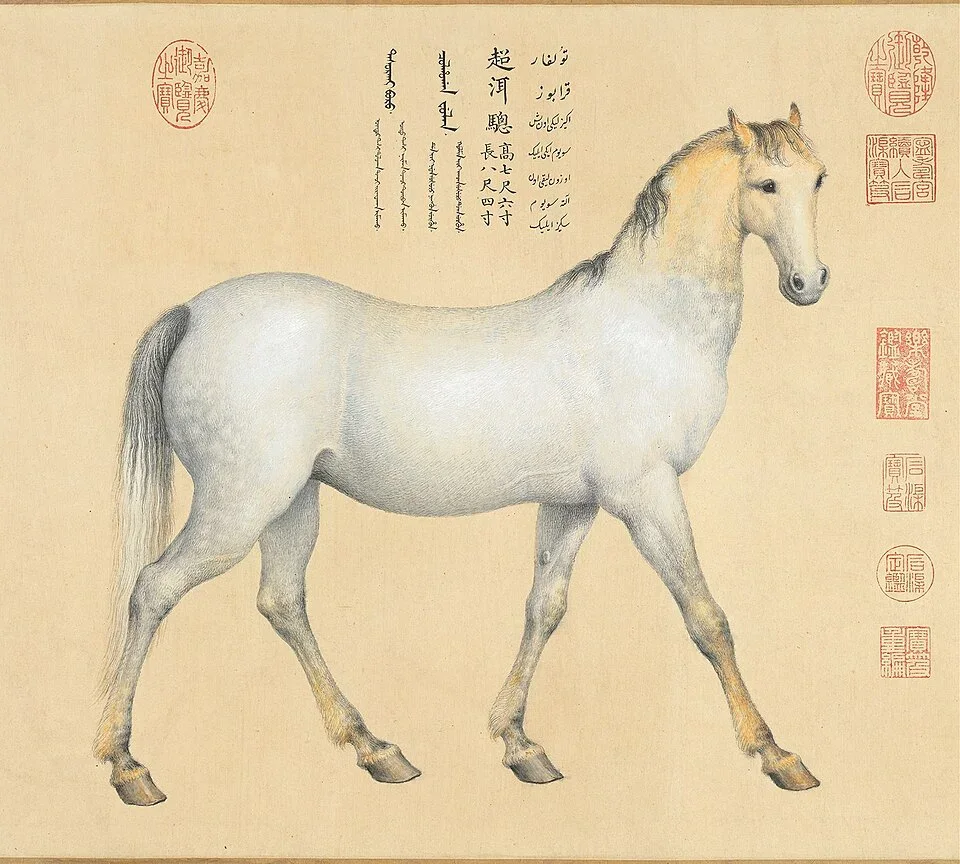
Afghan Four Steeds
The first horse has just moved off to the right, gray, its limbs lifted as if mid-step. Another turns away at an angle, showing a burnt chestnut back. A third comes the other way, its coat yellow, perhaps palomino, and a fourth faces you from the front. Every mane is a color different from the body. The hair and lower legs look dyed with henna, a custom of Afghanistan, India and Persia. Each horse is recorded in four languages, Uyghur, Chinese, Manchurian and Mongolian, with its name, its height and its length. Read one beside another, they seem to say the same thing. These four were a gift. In 1763 the emir of Afghanistan sent them to the Qianlong Emperor, with an envoy carrying a certificate in gold leaf. But the envoys refused to kneel. Relations were uneasy, and war was threatened as Qing China pushed into Central Asia. The emperor wrote a song about the horses anyway, and asked Giuseppe Castiglione, then seventy-four, to paint them. It was one of his last works, and his last known portrait of horses.
Listen in the appGiuseppe Castiglione · Public domain
07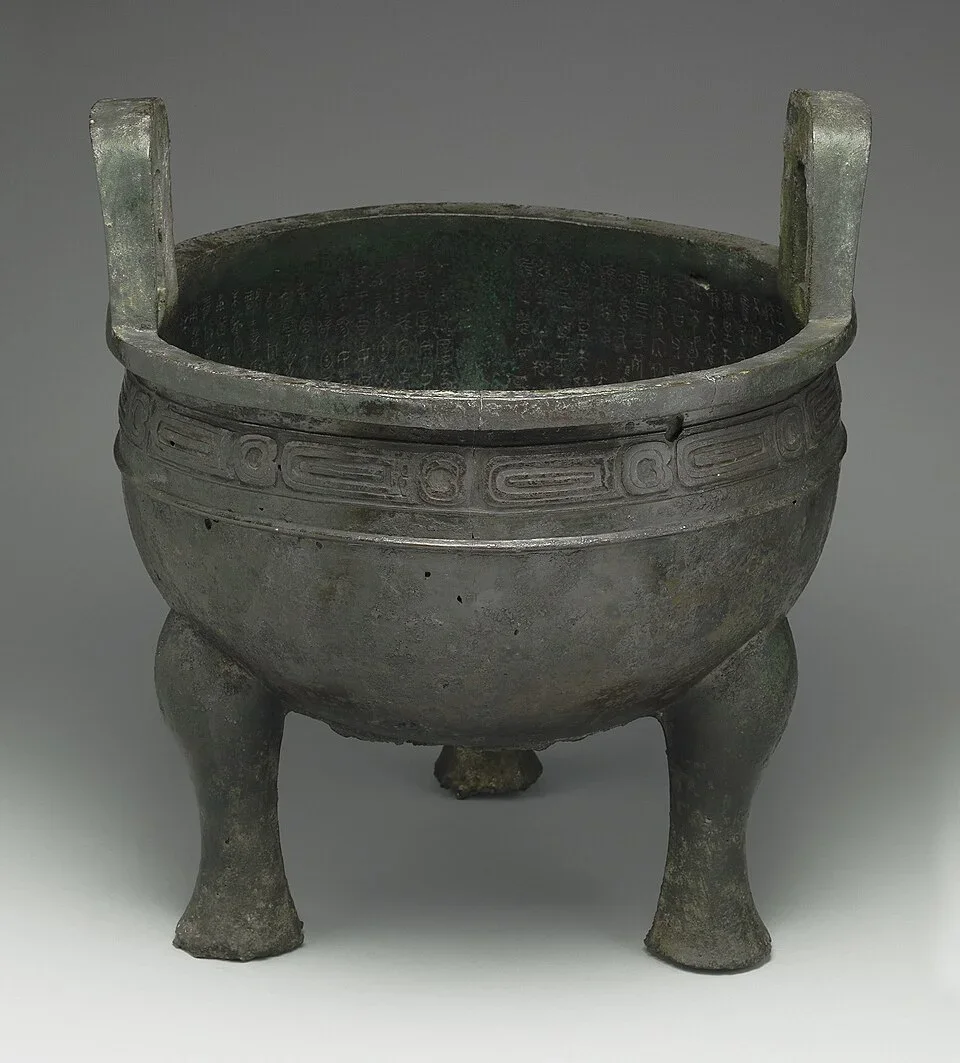
Mao Gong ding
Two large ears sit on the rim, and a band of ring patterns runs around the edge. Three feet shaped like animal hooves carry a round belly. The whole inside is covered with writing. It holds five hundred characters in thirty-two lines, more than on any other ancient Chinese bronze. The writing is the record of a real appointment. King Xuan of Zhou wanted to revive his rule. He gave his uncle, the Duke of Mao, charge of the kingdom's affairs, great and small. Most of the space belongs to the king's own words. No order is to go out unless the Duke has approved it. He is to protect the weak, keep away from drink, and speak up rather than stay silent. The king then lists his gifts, wine, a jade cup, a carriage and horses. At the end the Duke gives thanks. He had the vessel made so his children and grandchildren would keep it always. We do not know who made it. It was dug from a field in Shaanxi in 1843. When war came with Japan, the owner handed the soldiers a copy to save his nephew, and kept the real one hidden.
Listen in the appanonymous · CC BY 4.0
08
Autumn colors on the Qiao and Hua mountains
He knew how to make a scene look deep, and here he chose not to. Zhao Mengfu set aside the perspective he had mastered and painted in a deliberately old style, the way painters of the tenth century did. The scene is simple and quiet. Two hills stand apart across the scroll. The round one, shaped like a loaf, sits on the left. The sharp, triangular one is on the right. Trees grow in front of them and between them, their trunks twisted, some stripped bare, others holding their autumn color. This was a gift for a friend. He had served as deputy governor near Jinan, where these hills stand. After he resigned and went home, he painted the landscape for Zhou Mi. Zhou Mi's family came from Shandong, but he had never managed to visit. So the painter brought the place to him. Above the hills, five blocks of writing sit in the open sky. One is Zhao's own, a note to Zhou Mi with his signature. The other four were added much later, by the emperor Qianlong. The friend's name stays there, over a place he never saw.
Listen in the appZhao Mengfu · Public domain
09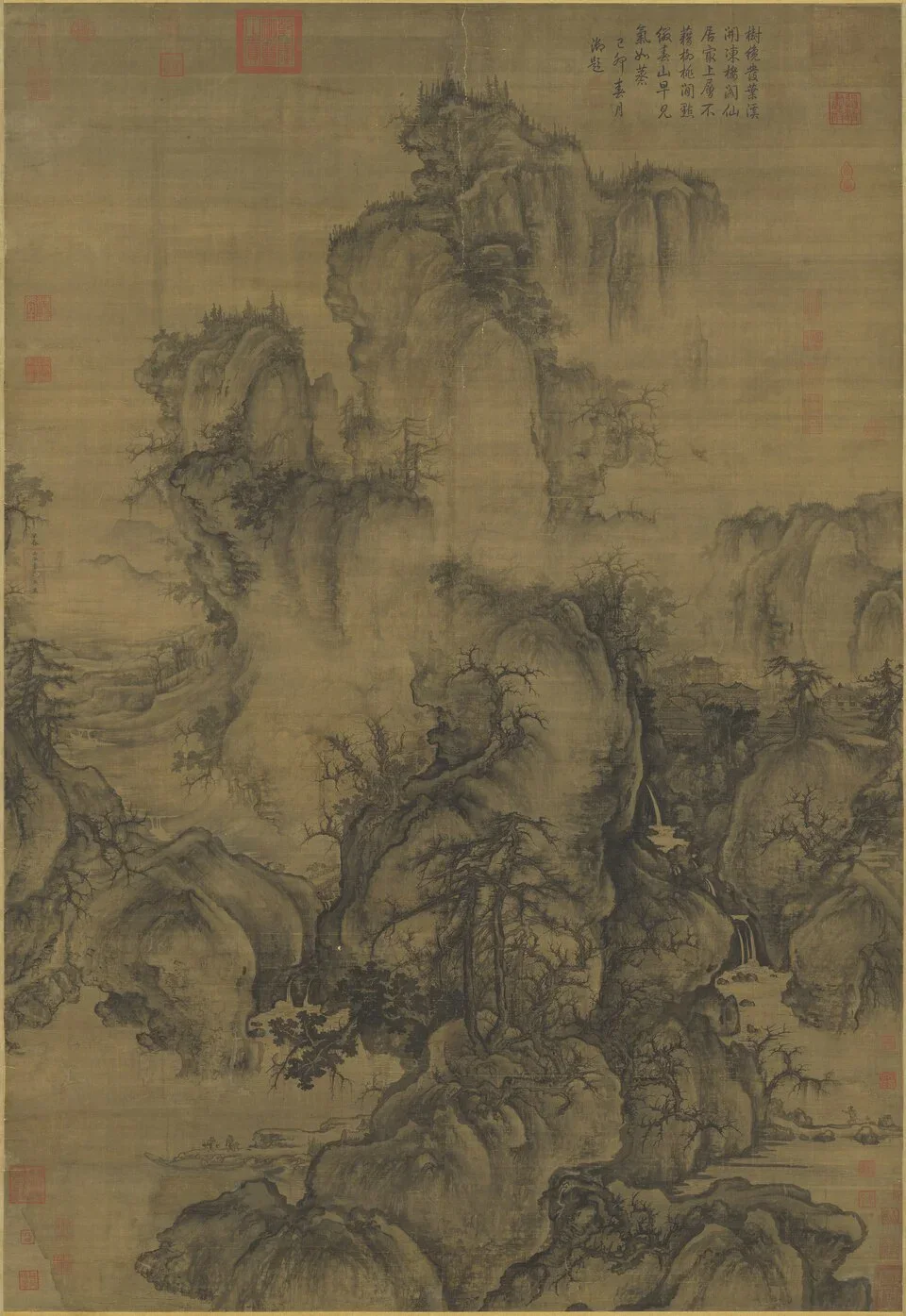
Early Spring
Where are you standing in this landscape? There is no one answer. Down here the riverbank is close and full of detail, with fishermen unloading fish from a boat. The stream climbs, and the peaks soften into mist, their tops barely drawn. Deep on the right, temples sit beside waterfalls. You cannot take all of this in from one place, and you were never meant to. Guo Xi gave this way of seeing a name. He called it the angle of totality. A painting, he thought, is not a window, so there was no reason to view a landscape from one spot. Instead he set the main peaks and pines along one long curving line. Streams and deep views spill out to either side. A wide plain on the left sets off the height of the mountains. Your eye keeps moving. The pale mist that hides the mountaintops is made from thin washes of ink, laid one over another.
Listen in the appGuo Xi · Public domain
10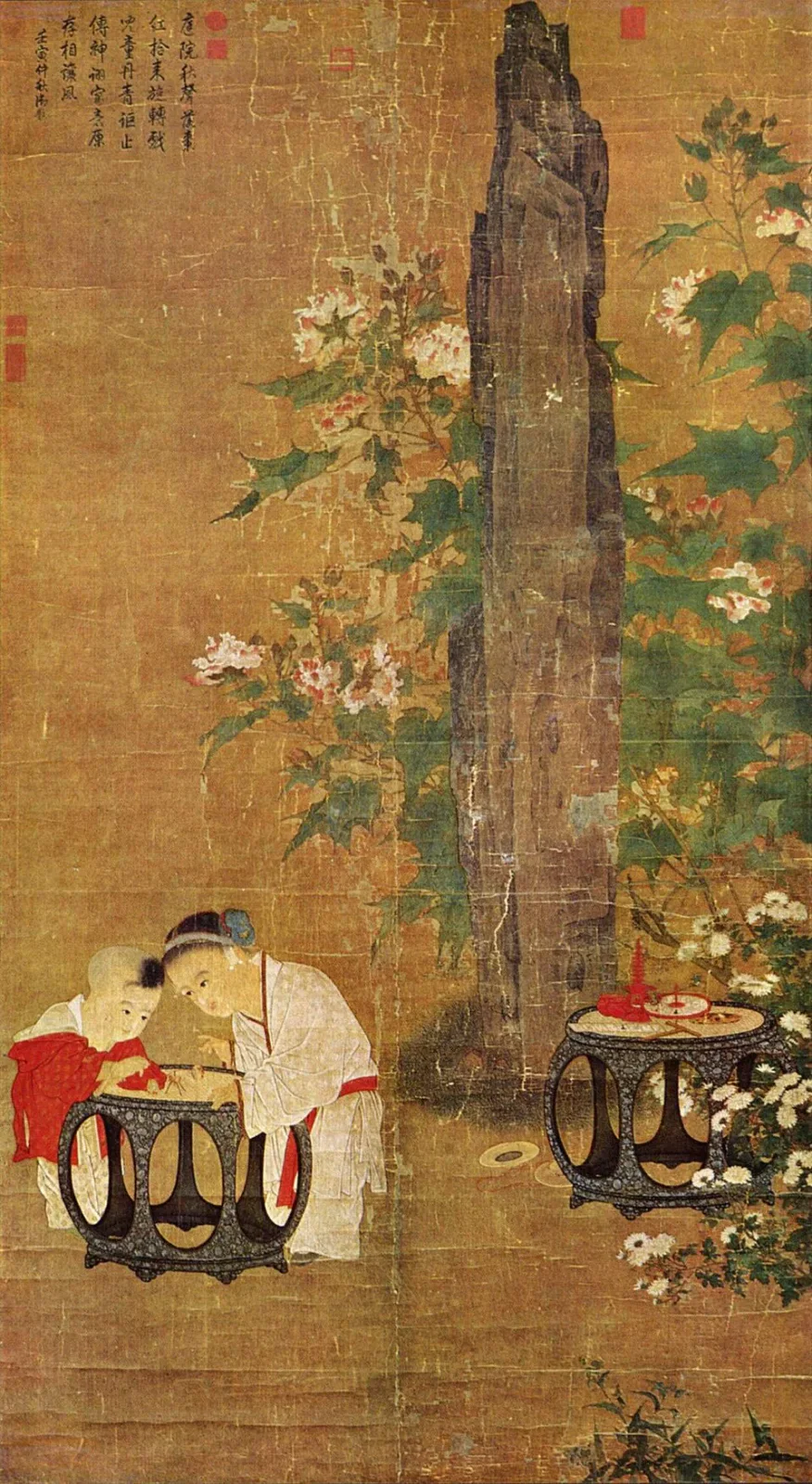
Children Playing in an Autumn Garden
Down on the ground beside the stool lies a pair of cymbals, one face up and one face down. The children who own them are absorbed in something else. On a round stool before them they spin dried jujube fruits, over and over. They are a sister and her younger brother. Her hair is tied in knots with ribbons, jade pins and pearls. His head is shaved except for one tuft at the front, and he wears a red shirt patterned with gold. Their clothes and ornaments suggest a wealthy home. Nearby on a second stool sit a spinning top and a little pagoda holding a tiny Buddha. Behind them a tall garden rock rises, with chrysanthemums and hibiscus blooming around it. It is autumn, in a palace garden. But there is no adult anywhere in the picture. This is one of the earliest Chinese works we still have in which children hold the picture entirely to themselves. People other than wealthy men were beginning to take the center of a painting, shown as full individuals. There is no artist's signature or seal, so the name usually attached to it is Su Hanchen, who was best known for painting children. One small flower low in the painting, similar to a dayflower, still has not been identified.
Listen in the appSu Hanchen · Public domain
- 11
Early Snow on the River
Zhao Gan · c. 960–975
- 12
Seated Sakyamuni Buddha
Unknown Artist · 477
- 13
Carved olive-pit of miniature boat decorated with the Ode to the Red Cliff on the bottom
Chen Zuzhang · 1737
- 14
A Palace Concert
Anonymous · 9th century
- 15
Former Ode on the Red Cliff
Su Shi · 1082
- 16
Herd of Deer in an Autumnal Grove
Unknown Artist · 10th century
- 17
Walking on a Mountain Path in Spring
Ma Yuan · 1190
- 18
Huai Su's Autobiography
Huaisu · 777
- 19
Comments on the Biography of Ni Kuan
Chu Suiliang
- 20
Travelers Among Mountains and Streams
Fan Kuan · c. 1000–1020
- 21
Pure and Remote View of Streams and Mountains
Xia Gui
- 22
The Cold Food Observance Festival
Su Shi · 1082
- 23
Man Herding Horses
Han Gan · 750
- 24
Cup decorated with grape vine and bitter melon in doucai painted enamels
Unknown Artist · 1465
- 25
Ayusi Sweeping Bandits with a Lance
Giuseppe Castiglione · 1755
- 26
Washer with celadon glaze and fenghua mark, Ru ware
国立故宫博物院 · 960
- 27
Wind in Pines Among a Myriad Valleys
Li Tang · 1124
- 28
Homeward Oxherds in Wind and Rain
Li Di · 1162–1224
- 29
Ten Steeds
Giuseppe Castiglione · 1743–1748
- 30
Horses in the Pasture by Giuseppe Castiglione
Giuseppe Castiglione · 1715
- 31
Eight Horses
Giuseppe Castiglione · 1723–1735
- 32
Planter with opaque purple glaze
Unknown Artist · 1500
- 33
Ewer with incised decoration of plantain, bamboo and garden stone in green glaze
Unknown Artist · 1368
- 34
Autumn Boating on a Maple River
Sheng Mao · 14th century
- 35
Long-haired Dog Beneath Blossoms
Giuseppe Castiglione · c. 1727
- 36
Draft of a Requiem to My Nephew
Yan Zhenqing · 758
- 37
Narcissus Basin with Light Bluish-green Glaze
國立故宮博物院 · 1100
- 38
Ode on Pied Wagtails
Emperor Xuanzong of Tang · 719
- 39
Colophon to Wu Yuanzhi’s “The Red Cliff”
武元直
- 40
Tibetan Dragon Sutra
Unknown Artist · 1667–1669
- 41
Chimonanthus and Birds
Emperor Huizong of Song
- 42
Immortal in Splashed Ink
Liang Kai · 1250
- 43
Pan Water Vessel of San
Unknown Artist · -900
- 44
Bowl with incised three-fish decoration in green glaze
Unknown Artist · 960
- 45
Revolving vase with swimming fish in cobalt blue glaze (Revolving vase decorated with swimming goldfish and gold tracing on cobalt blue glaze)
Unknown Artist · 1753
- 46
Black-glazed bowl with painted "partridge's speckling" splashes
Unknown Artist · 1200
- 47
Spoon with lotus decoration and Sanskrit script in underglaze blue
Unknown Artist · 1403
- 48
Cong-shaped vase with light green glaze, Guan ware
Unknown Artist · 12th century
- 49
Stem bowl with incised dragons playing with pearls decoration in red glaze
Unknown Artist · 1403
- 50
Dish with purple spots on sky blue glaze, Jun ware
Unknown Artist · 1200
- 51
Zong-shaped vase with cobalt blue glaze
Unknown Artist · c. 1875–1908
- 52
Pillow in the shape of a recumbent child in white glaze
Unknown Artist · 1111
- 53
Zhong chime bell of Zhe Jian
國立故宮博物院
- 54
Three Calligraphy Models
Wang Xizhi
- 55
Timely Clearing after Snowfall
After Wang Xizhi
- 56
Calligraphy on Szechwan Silk
Mi Fu · 1088
- 57
One Hundred Children in the Long Spring
Su Hanchen · c. 1130–1160
- 58
Refined clay inkstone encased in a bronze bell
國立故宮博物院 · 1644
- 59
Melon shaped jar
Unknown Artist · 11th century
- 60
Vase with "One hundred deer" motif in wucai painted enamels
Unknown Artist · 1573
- 61
Figure of a Lokapala in sancai glaze
Unknown Artist · 7th century
- 62
Stupa Railing with Tree Goddesses, Kusana Empire, 2-3th century
Unknown Artist · 200
- 63
Emperor Ming-huang's Flight to Szechuan
Li Zhaodao · 1150
- 64
Bowl with impressed paired phoenixes decoration in bluish-white glaze, Jingdezhen ware
Unknown Artist · 1300
- 65
Sancai tri-color glazed pottery figure of an official
Unknown Artist · 618
- 66
Buildings on a Mountainside
Xiao Zhao
- 67
Myriad Miles of the Yangtze River
Xia Gui
- 68
Walking with a Staff Under Pines
Xu Daoning
- 69
Painting of Mountain Villa
Li Gonglin
- 70
The Three Taoist Officials Making an Inspection Tour
Ma Lin
- 71
Old Tree and Flowing Stream
Ma Hezhi · 12th century
- 72
Xuanhe Bogutulu
Unknown Artist · 1107
- 73
Zhong chime bell of Zong Zhou (bell of Hu)
Unknown Artist
- 74
Inkstone inscribed with "Yu dai sheng"
Unknown Artist · 960
- 75
Jin Ou Everlasting Cup
Unknown Artist · 1736
- 76
Bowl with peacock decoration in falangcai painted enamels
Unknown Artist · 1723
- 77
Bright Yellow Cauldron with Animal-Mask Decorations
Unknown Artist · 1600
- 78
Gui vessel with light bluish-green glaze, Guan ware
Unknown Artist · 1127
- 79
Plate with Herzeele family coat of arms in gold tracing and fencai painted enamels
Unknown Artist · 1740
- 80
Pottery jar with green glaze
Unknown Artist · 25
- 81
Plate with paired dragons in green and brown glaze on a yellow ground
Unknown Artist · 1662
- 82
Flower-shaped brush washer with light bluish-green glaze, Guan ware
Unknown Artist · 1127
- 83
Plate with polychrome decoration of flowers and fruits
Unknown Artist · 1662–1722
- 84
Gallbladder-shaped vase with green glaze
Unknown Artist · 1086–1106
- 85
Lotus-shaped warming bowl in light bluish-green glaze
Unknown Artist · c. 1075–1127
- 86
Square zun wine vessel with inscription "Yachou zhehou"
Unknown Artist · -1200
- 87
Yongzheng Geng Zhi Tu
Unknown Artist
- 88
Jar with handles and strips pattern in ash glaze
Unknown Artist · -474
- 89
Leather-pouch-shaped ewer in white glaze
Unknown Artist · 900
- 90
Tongzhi bowl
Unknown Artist · 1862
- 91
Octagonal vase with green glaze
Unknown Artist · c. 1736–1795
- 92
Gallbladder-shaped vase decorated with peony on a blue ground in painted enamels
Unknown Artist · 1662
- 93
Hu jar dedicated to Zeng Ji
Unknown Artist · 344 BC
- 94
Duan inkstone with grooves decoration
國立故宮博物院 · 1779
- 95
Duan inkstone with protruding textures symbolizing "Sanzhu"
國立故宮博物院 · 960
- 96
Bowl with veiled dragons decoration in red glaze
Unknown Artist · 1368
- 97
"Seventh Month" and "The Capital"
Unknown Artist
- 98
Yüan-huan
Unknown Artist
- 99
Elegant Gathering of the Western Garden
Unknown Artist · 1700
- 100
Writing brushes of “Tianzi wannian (eternal reign)” with bamboo handles
Unknown Artist · 1644
- 101
Inkstone featuring the twenty-eight constellations
Unknown Artist · 960
- 102
Owl-shaped Jar with Gray Glaze
Unknown Artist
- 103
Seated Portrait of Ningzong's Empress
Unknown Artist
National Palace Museum
Frequently asked questions
How much does the guide cost?
Free app download. Free until 1 January. Listed guide price: $2.99. Audio guide only. Venue admission is separate.
Can I listen without internet?
Yes. Download the guide’s audio, images, and maps in the app before your visit. Your downloaded content is then available offline.
Can I listen in my language?
In English for now. More languages soon.
Do I need to follow a schedule?
No. This is a self-guided experience. Choose your stops, pause whenever you like, and return to a story at your own pace.
Which artworks are in the National Palace Museum audio guide?
103 artworks, including Treaty of Nanjing (Painted by Captain John Platt, Bengal Volunteers. Engraved by John Burnet.), Jadeite Cabbage (Unknown Artist), Dwelling in the Fuchun Mountains (Huang Gongwang), One Hundred Horses (Giuseppe Castiglione), Meat-shaped Stone (Unknown Artist), Afghan Four Steeds (Giuseppe Castiglione), Mao Gong ding (Unknown Artist), and Autumn colors on the Qiao and Hua mountains (Zhao Mengfu). The full list is on this page.
Is this the museum’s official audio guide?
No. Stanza is an independent audio guide app and is not affiliated with National Palace Museum. Museum admission is separate.
At your own pace
Explore National Palace Museum.
Download Stanza, then search for “National Palace Museum”.
Free app download · Guide price shown in the app
Keep exploring
Nearby audio guides
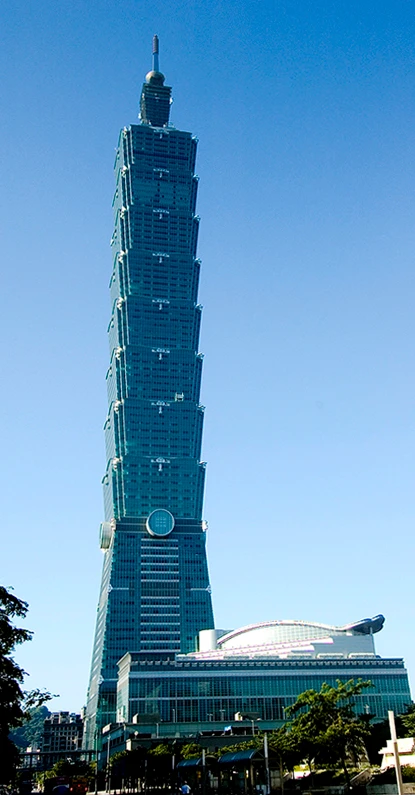
Taipei · 8 km
Taipei 101
Content & sources
Alton.arts at English Wikipedia · CC BY 2.5
Art museums
More art museum audio guides
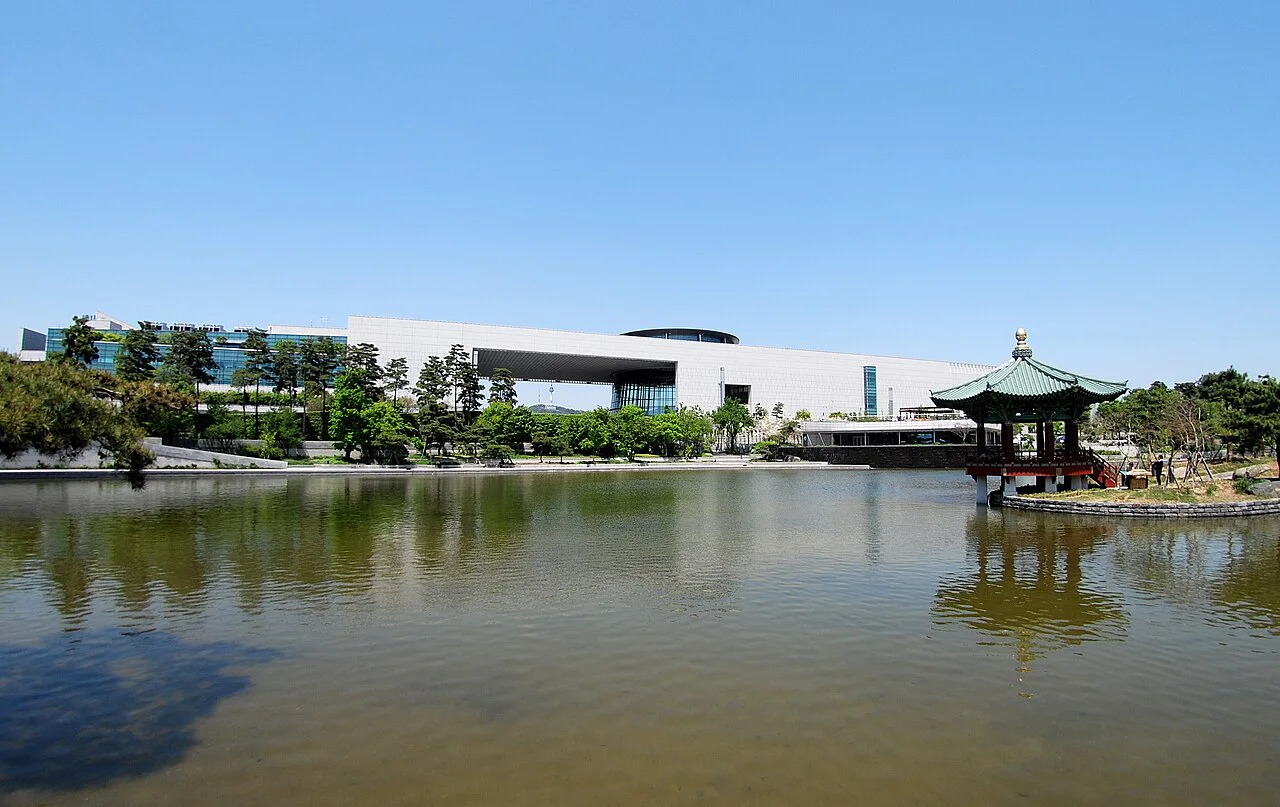
Seoul · 40 artworks
National Museum of Korea
Content & sources
Photo: Jinah78 · CC BY-SA 3.0
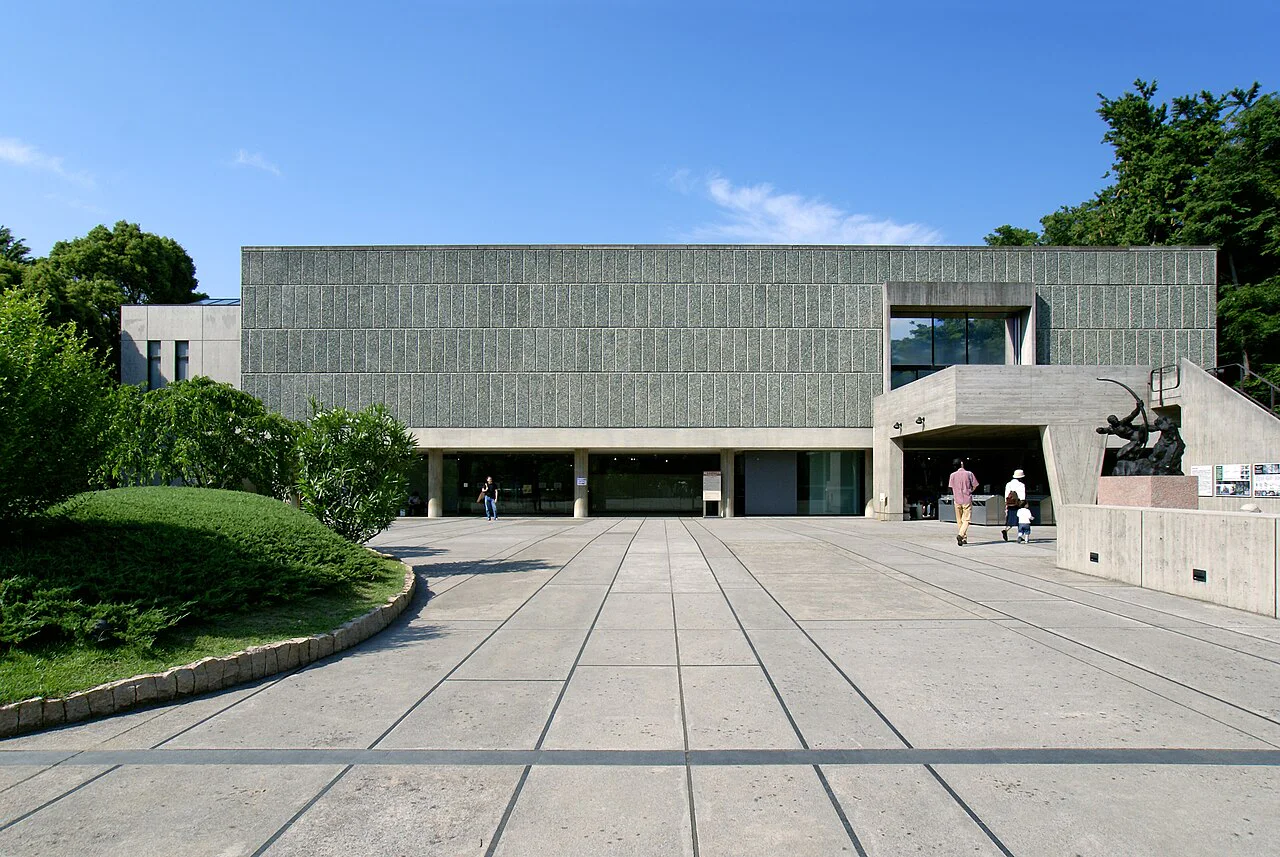
Tokyo · 52 artworks
国立西洋美術館
Content & sources
Photo: 663highland · CC BY-SA 4.0
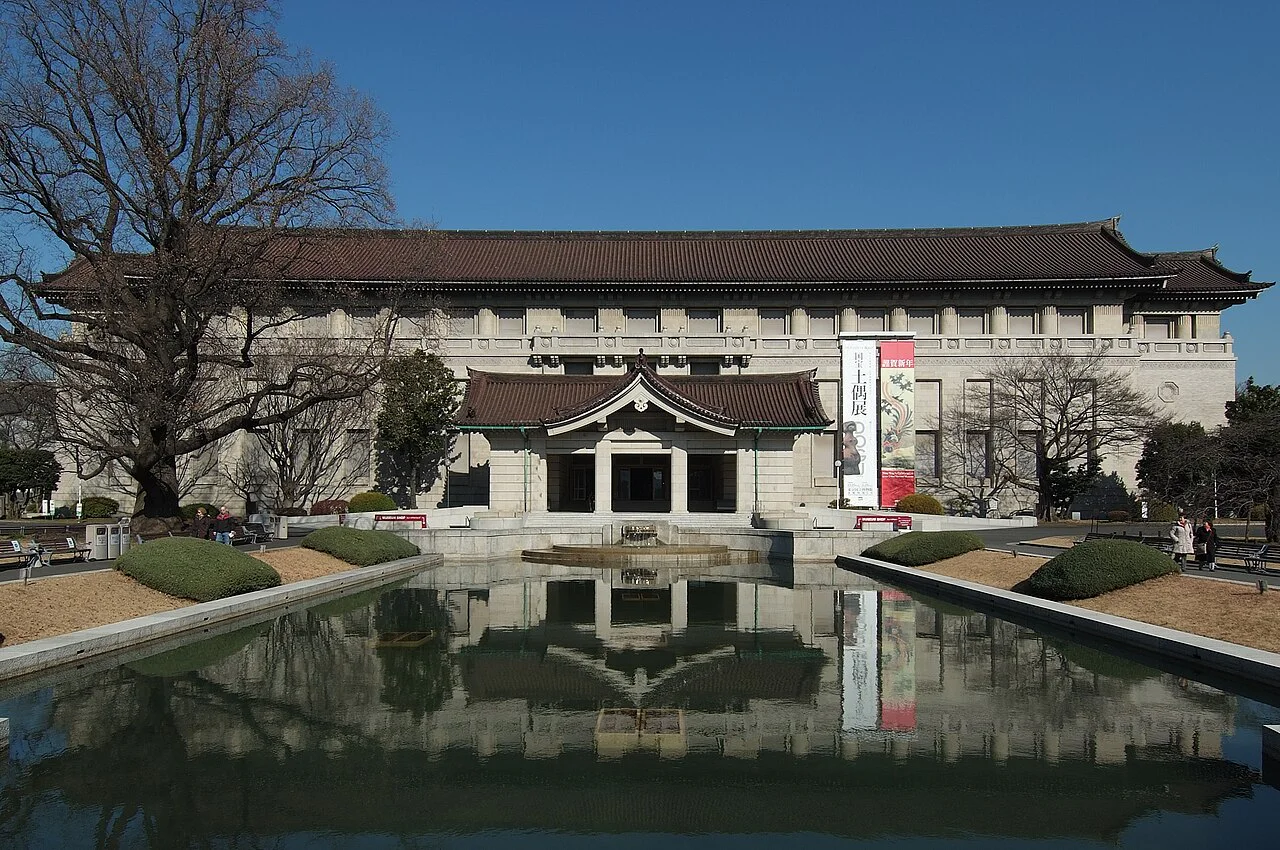
Tokyo · 91 artworks
東京国立博物館
Content & sources
Photo: Wiiii · CC BY-SA 3.0
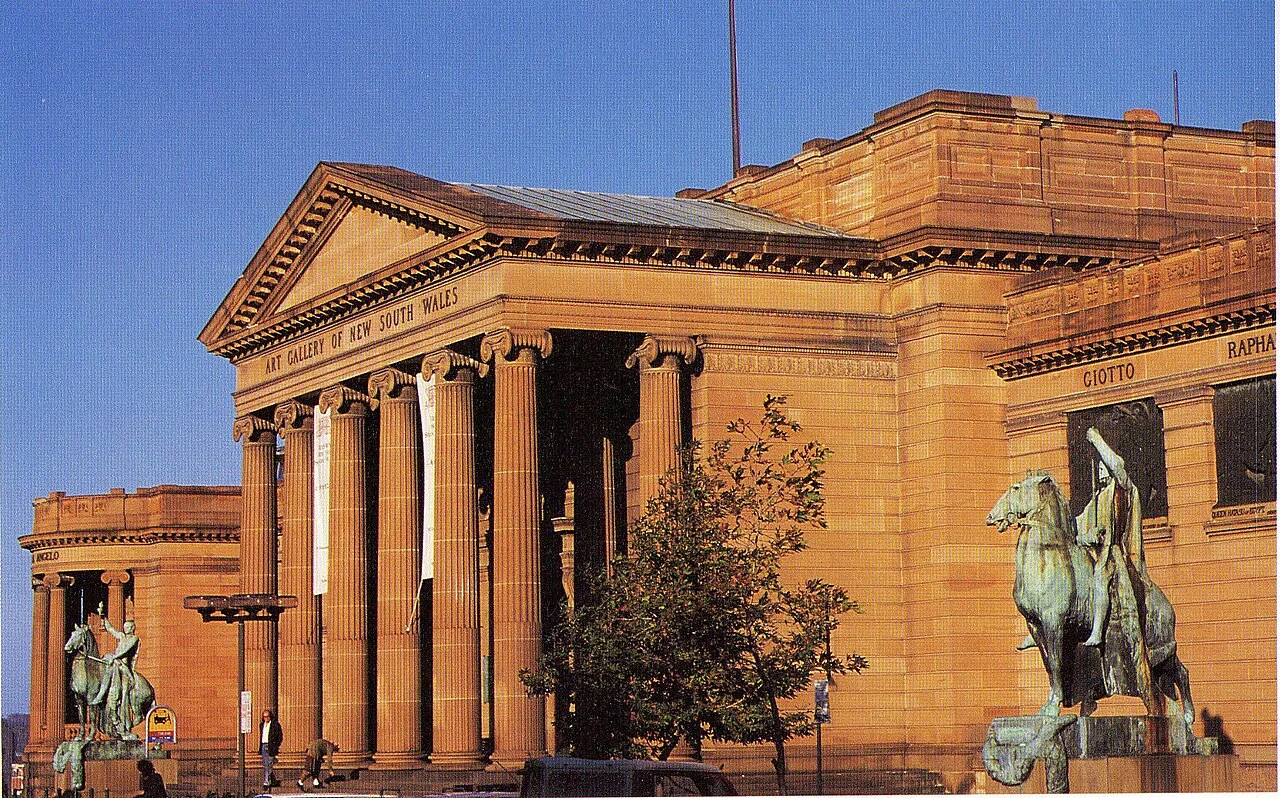
Sydney · 29 artworks
Art Gallery of New South Wales
Content & sources
Siegfried Nugent (talk) · CC BY-SA 3.0
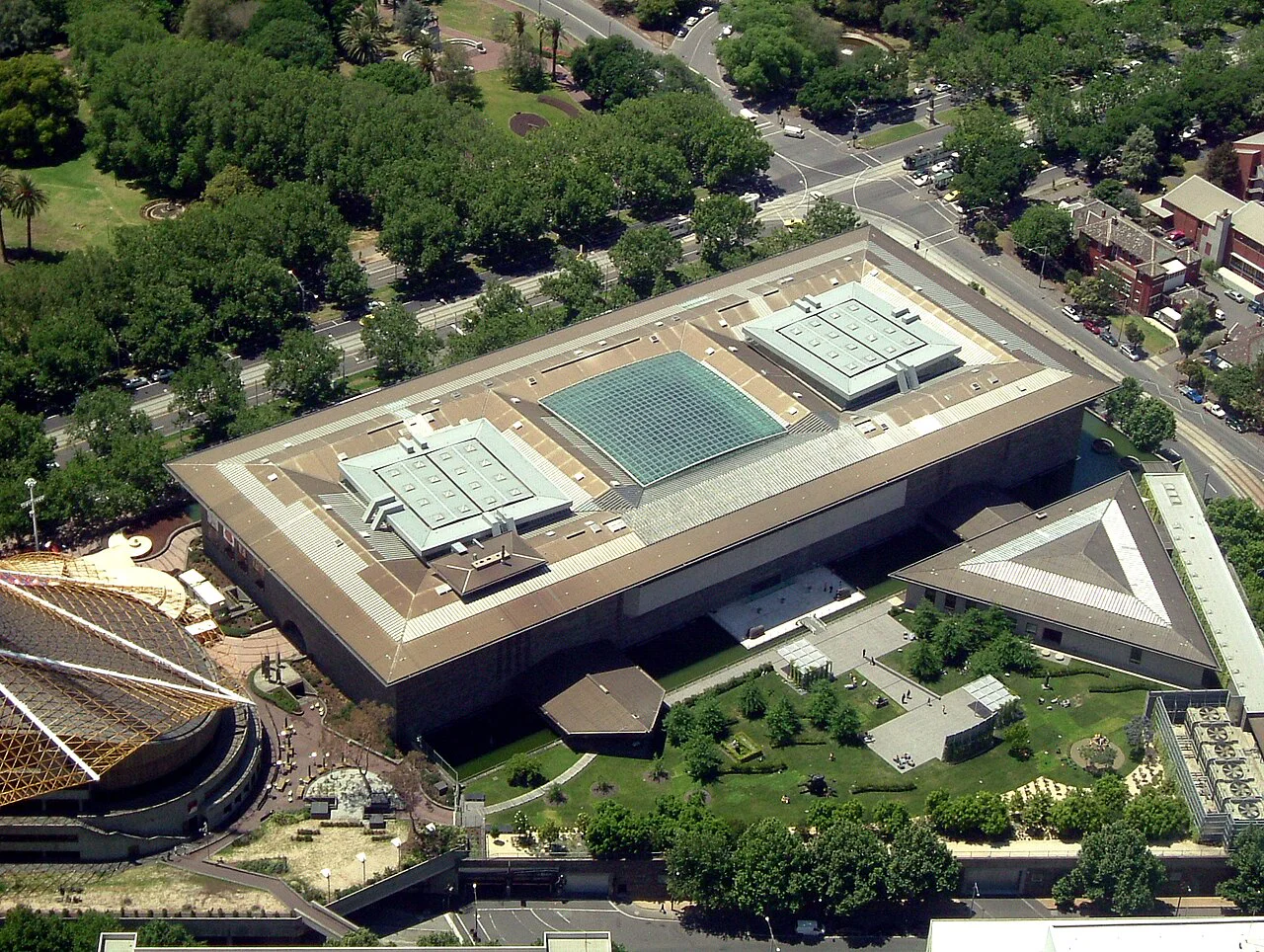
Melbourne · 56 artworks
National Gallery of Victoria
Content & sources
Lakeyboy at English Wikipedia · Public domain
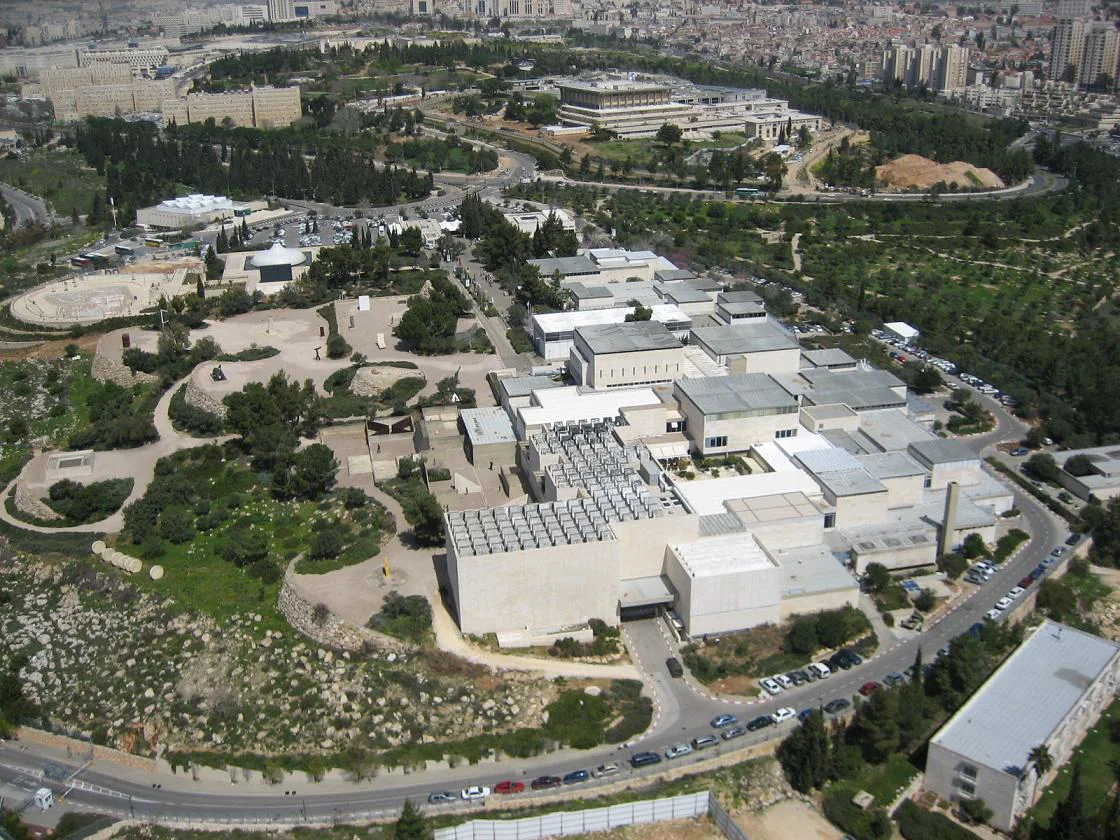
Jerusalem · 93 artworks
Israel Museum
Content & sources
Original uploader was אסף.צ at he.wikipedia · CC BY-SA 3.0