 Stanza / Audio guide
Content & sources
Stanza · Audio guide
Israel Museum Audio Guide
A place to remember. A story to take with you.
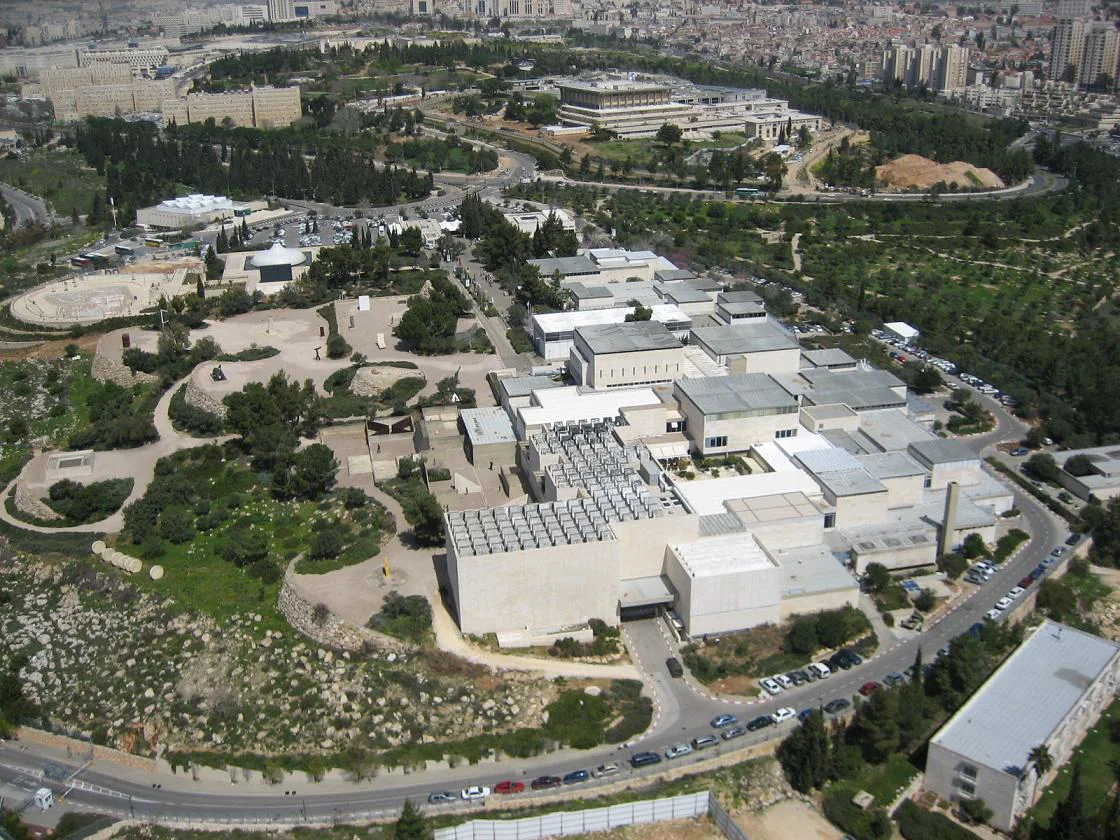
The Israel Museum is an art and archaeology museum located in Jerusalem. Established in 1965, it serves as Israel's largest and foremost cultural institution.
Download Stanza, then search for “Israel Museum”.
About the tour
One guide. Your kind of visit.
The Israel Museum is an art and archaeology museum located in Jerusalem. Established in 1965, it serves as Israel's largest and foremost cultural institution.
The Israel Museum guide tells the stories of 93 artworks, including Melencolia I (Albrecht Durer), Aleppo Codex (Shlomo ben Buya'a), Venus of Berekhat Ram (Unknown Artist), Knight, Death, and the Devil (Albrecht Durer), St. Jerome in His Study (Albrecht Durer), Unique Forms of Continuity in Space (Umberto Boccioni), Bicycle Wheel (Marcel Duchamp), and Tel Dan Stele (Unknown Artist). Every artwork is free to hear in the Stanza app until 1 January.
Ready when you are.
- 01Get the free Stanza app.
iOS & Android
- 02Find your guide.
“Israel Museum”
- 03Download before you go.
Works offline
Audio guide / 93 artworks
Inside the guide
Get to know a few of the stories before you go. Open a stop to read more.
01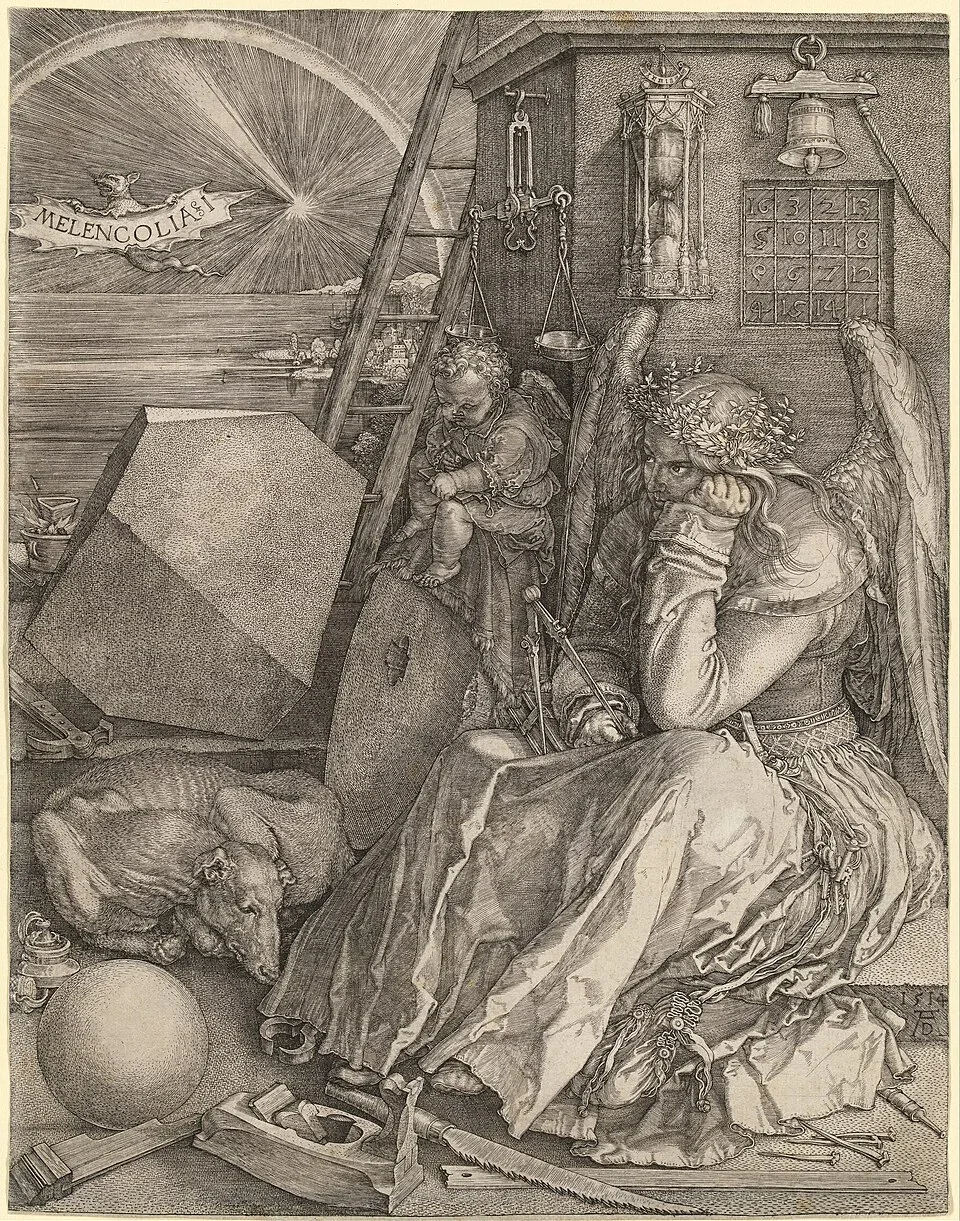
Melencolia I
No one knows for certain what this print means. It has been argued over for centuries, and no single reading has ever won out. The details only deepen it. A woman with wings sits at the center, her head on her closed fist, a compass held loosely, a closed book on her lap. She gazes into the distance and pays no attention to the tools scattered around her. A saw, a plane, a hammer and nails lie unused. In those days, a brooding mind belonged to creative people. But the same gloom could take away the will to make anything. So the sadness that marks a creative mind is what holds her still. Almost everything around her is about measuring and building. A perfect sphere lies before a thin, sleeping dog. A stone with many sides blocks the view into the distance. On the wall hangs a square of sixteen numbers, and every row, column and diagonal adds to thirty four. The two middle squares along the bottom give the date. A ladder leans against a windowless building, and neither end is visible. The only active figure is a small child scribbling on a tablet. Dürer engraved this in 1514, the year his mother died, after losing several friends.
Listen in the appAlbrecht Dürer · Public domain
02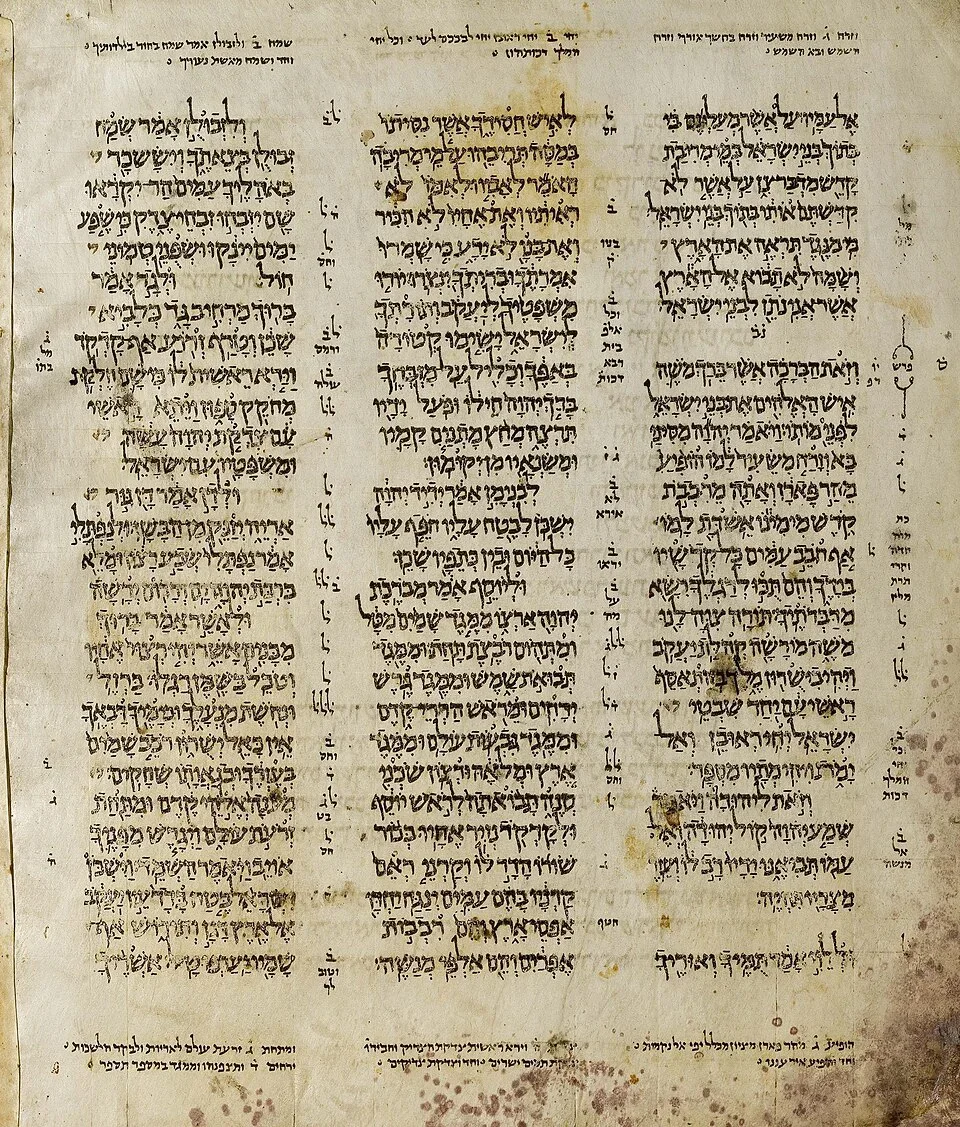
Aleppo Codex
The letters are not the whole of the writing. Around them are small signs, put there to settle how each word should be read. A scribe wrote the letters in Tiberias around 920. Around 930 Aaron ben Asher checked the text, added the vowel signs and accents, and wrote the notes around them. That care made this the book Maimonides described as trusted by every Jewish scholar. The rules he drew from it became binding across the Jewish world. That is why it was kept so close. For centuries it lay in a chest, later an iron safe, in a chapel below the synagogue of Aleppo. People took that chapel for the Cave of Elijah. Those in trouble prayed before it, and oaths were sworn on it. The community believed its very presence kept the city safe. Its first page carried a blessing and a curse. Blessed was whoever preserved it. Cursed was whoever stole it, sold it or pawned it, for it could never be sold or bought. Outsiders were kept away. A man preparing a printed edition in the 1920s could not even get a photograph. The synagogue burned in 1947. In 1958 the codex reached Jerusalem, smuggled out by Murad Faham, a Syrian Jew, and handed to the president, Yitzhak Ben Zvi. Where the missing pages went is still not known.
Listen in the appShlomo ben Buya'a · Public domain
03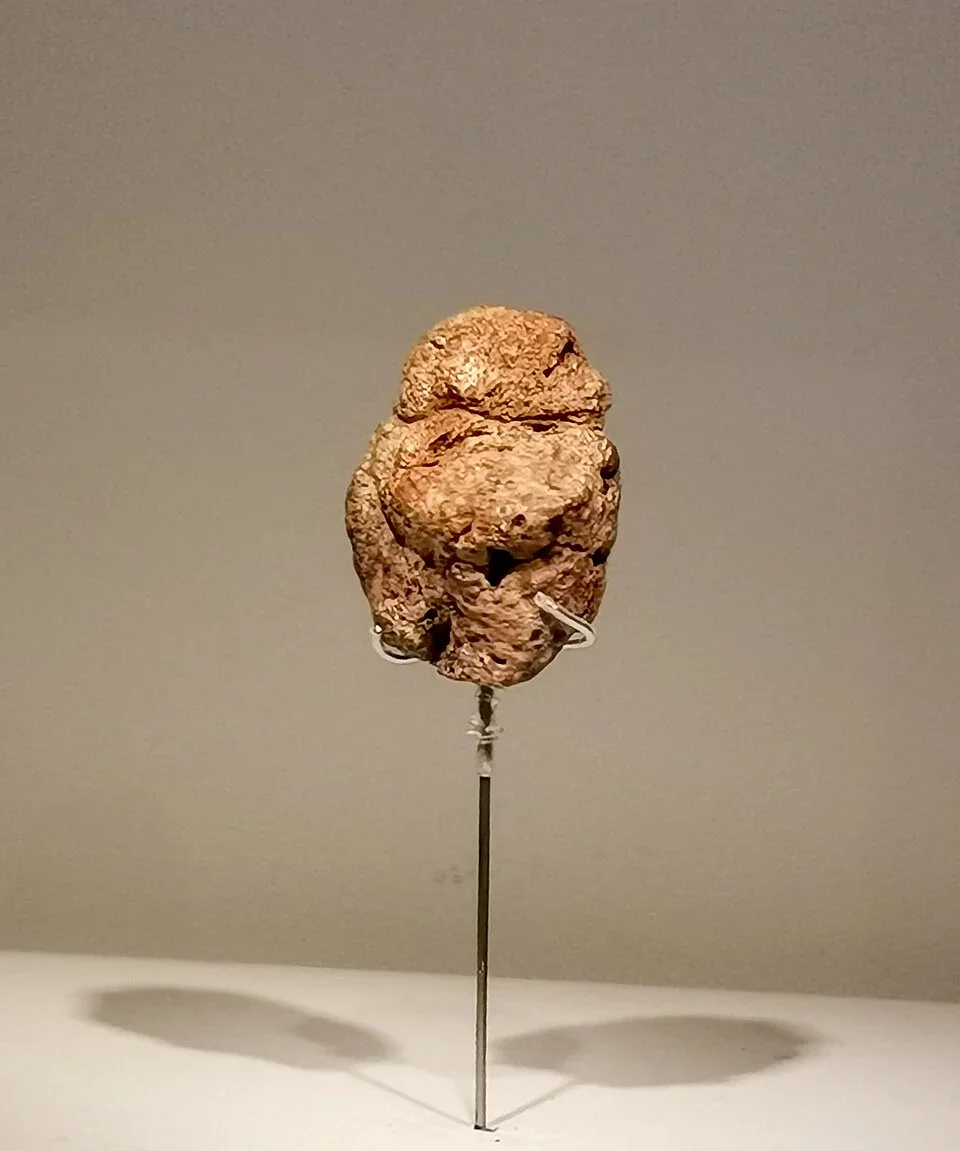
Venus of Berekhat Ram
Someone seems to have cut a line around the narrow end of this small pebble, then two more down its sides. Naama Goren-Inbar found it at Berekhat Ram, on the Golan Heights, in 1981. She read those lines as a woman, the first a neck and the others arms, and thought they had been deepened on purpose. If she was right, this would be the oldest art we know that was made to show something. It is between two hundred and fifty thousand and two hundred and eighty thousand years old. Francesco d'Errico and April Nowell studied it later. They agreed the cuts were deliberate, but would not call the shape a woman. Other explanations followed. João Zilhão thought the pebble was used to get ochre, and the grooves were a byproduct of that. Thomas Wynn imagined someone passing time with a stone tool and a pebble. Angela Close turned it from side to side and saw no woman at all. From one angle, she said, it looked like a penguin. No one can say who cut those lines, or what the cutting was for.
Listen in the appThomas cahana · CC BY-SA 4.0
04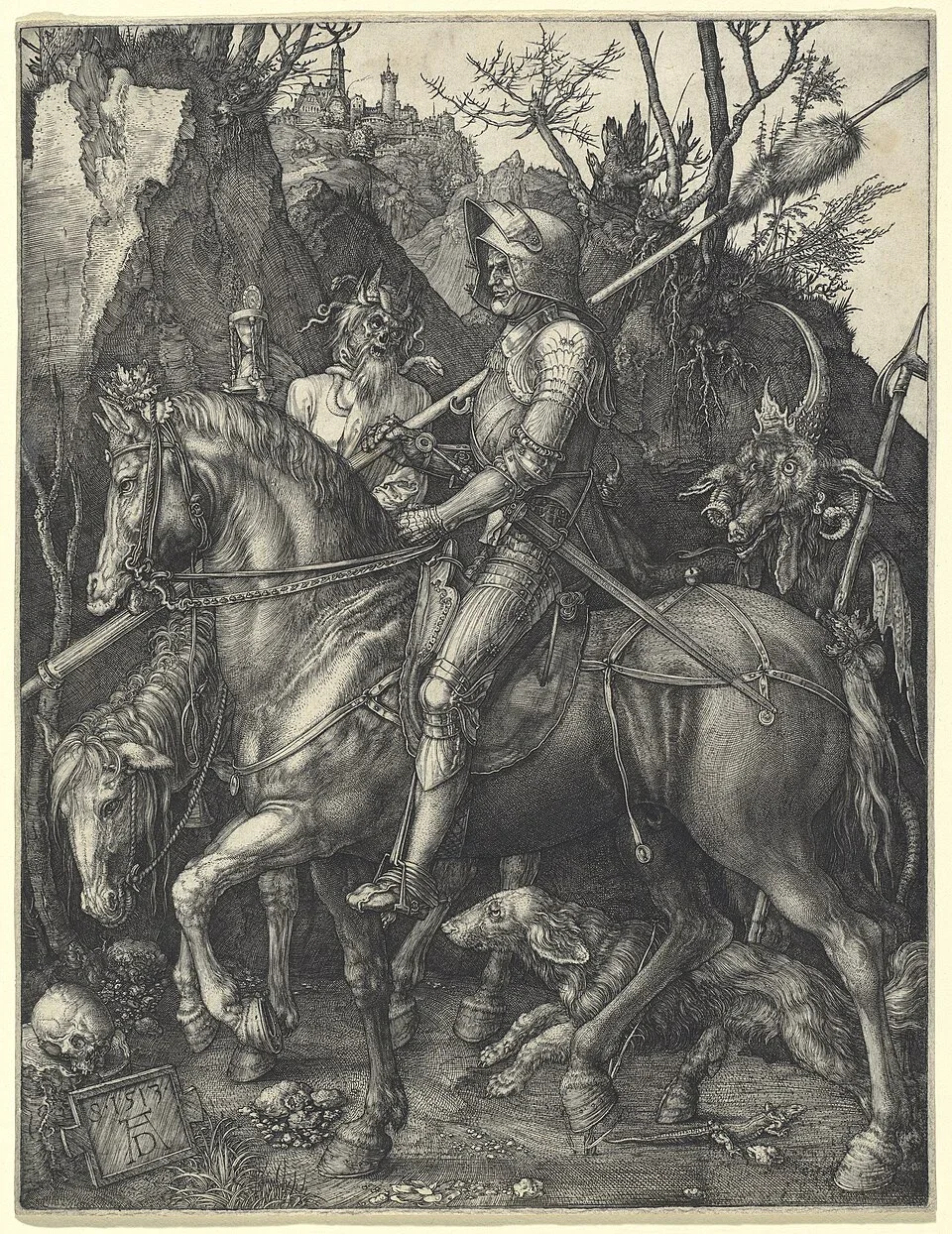
Knight, Death, and the Devil
An armored knight rides through a wild, narrow gorge. A horned, goatlike devil skulks among the tree roots, and Death rides a pale horse in the left background. But this rider is on a road, and it leads somewhere. High on a hill stands a castle, and the castle stands for God, with the way up running through treacherous peaks. The knight keeps his eyes fixed straight ahead and never lets the demons break his gaze. He is riding through the valley of the shadow of death, and he fears no evil. Dürer set a dog running between the two horses to stand for faithfulness, and the armor stands for the resilience of that faith. Right in the horse's path lies a skull, for others who were not so resolute. In Death's hand is an hourglass, and its sands are exactly half full, which may mark a turning point in the rider's life choices.
Listen in the appAlbrecht Dürer · CC0
05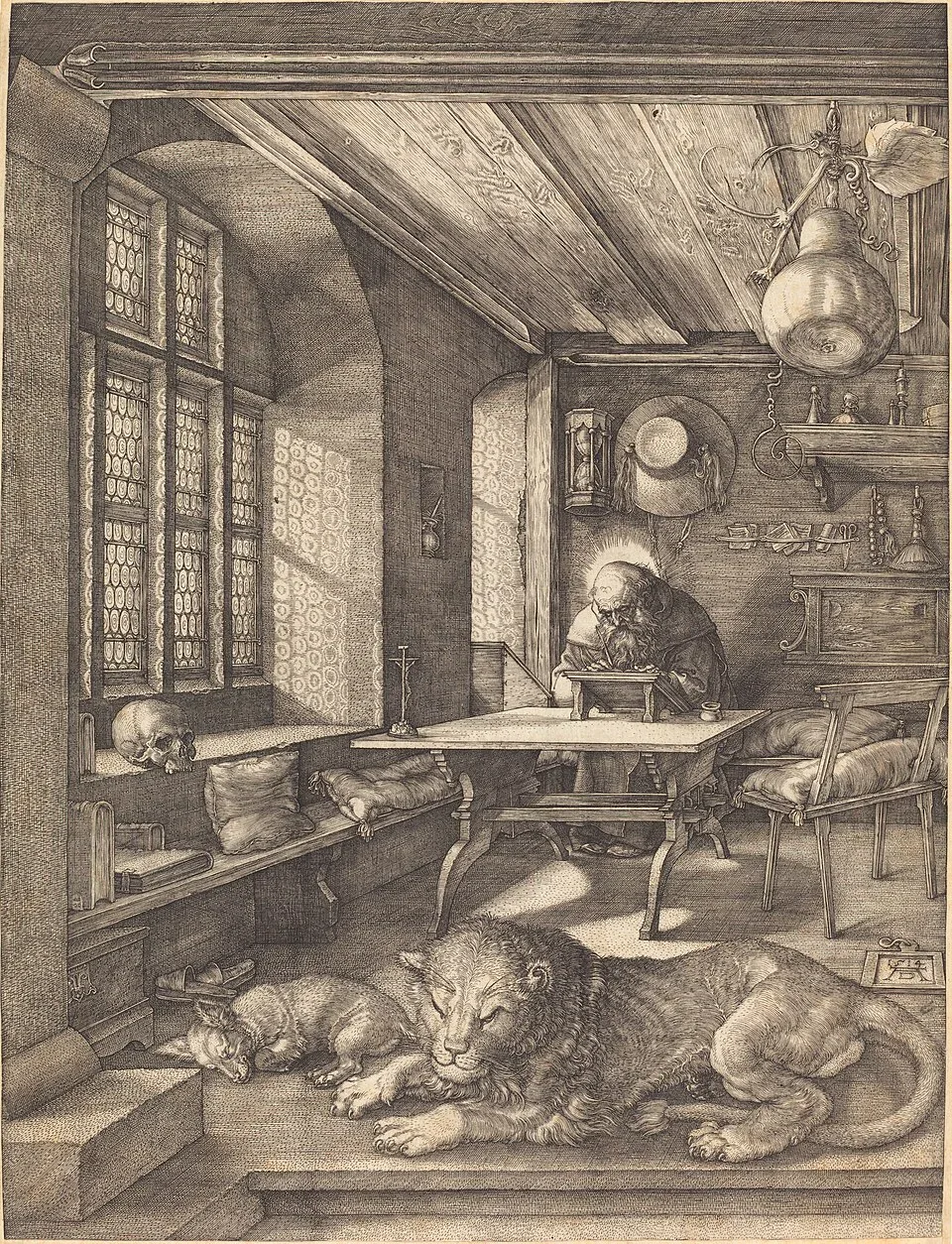
St. Jerome in His Study
A dried gourd hangs from the ceiling of this quiet room. Jerome sits at his desk, deep in work. A skull on the window ledge and an hourglass above him both speak of time running out. You can read those. The gourd will not explain itself. It is an argument about the name of a plant in the Book of Jonah, which Jerome was translating into Latin. The common Latin word was cucurbita, a gourd, and Augustine read it that way. Jerome chose the Greek hedera, meaning ivy, and wrote Augustine a letter to defend it. Dürer put the gourd in to remember that quarrel, and Jerome's courage in it. Augustine's reading had won by Dürer's time. He made seven engravings of Jerome in all, because he admired him.
Listen in the appAlbrecht Dürer · CC0
06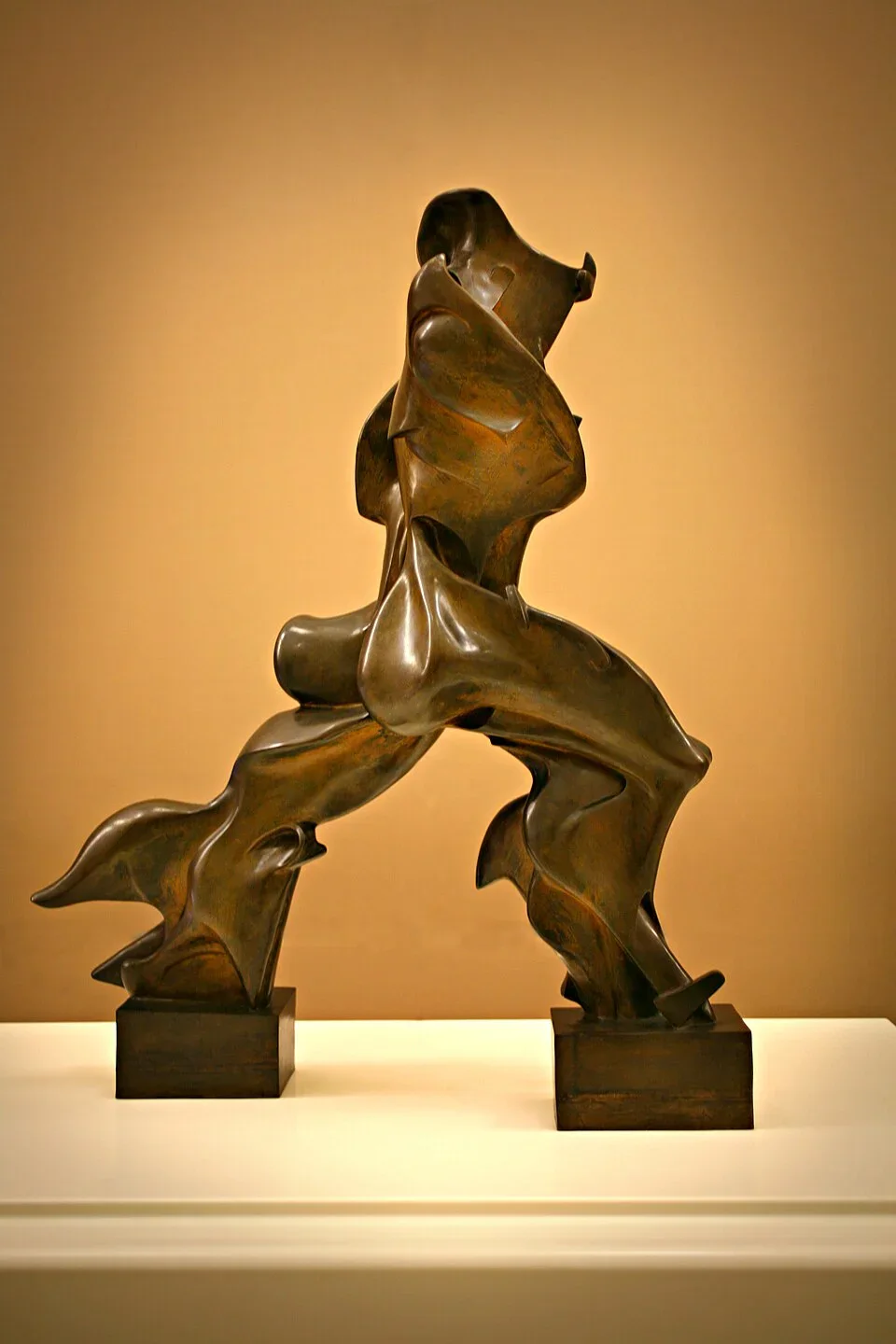
Unique Forms of Continuity in Space
A step has just begun. One leg is about to leave the ground, the whole body caught in one fluid sweep. It has no arms. Two blocks beneath the feet hold it to the floor. Umberto Boccioni wanted the movement itself, not a body frozen in a pose. He had taken up sculpture only a year before, and he was gripped by it. He thought sculpture had become a dead art and believed he could bring it back to life. The spark came from watching a football player move onto a pass played with just the right weight. He wanted the whole unbroken flow of that moment, not a row of separate snapshots. This was one of four works showing walking figures pressing into the space around them. In this one he let the human likeness go furthest. Where the face should be, blades shaped like crosses have taken its place. What they were meant to mean is not known.
Listen in the appPhoto: Paolobon140 · CC BY-SA 4.0
07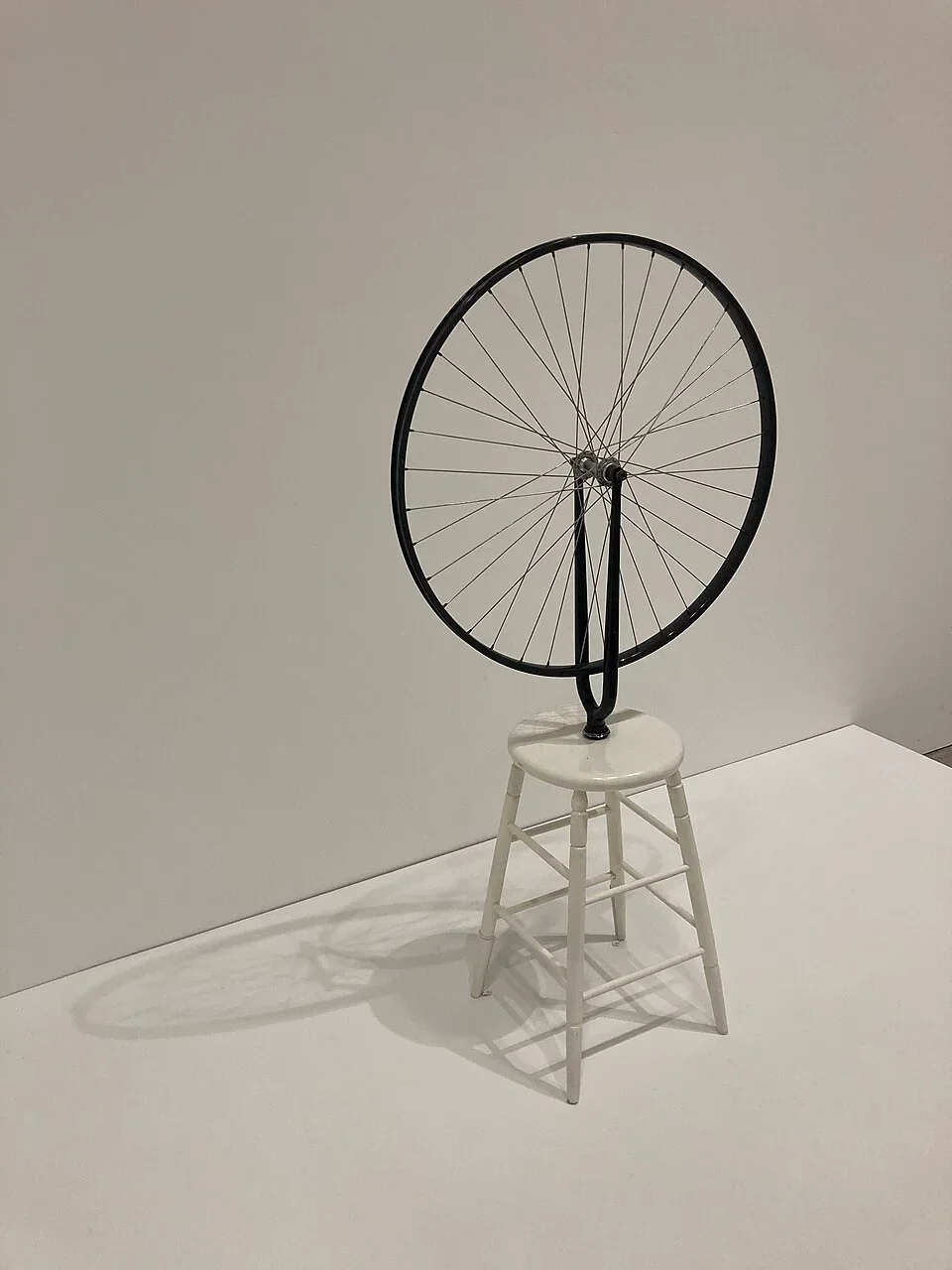
Bicycle Wheel
This wheel can spin, but it will never carry you anywhere. It is a real bicycle wheel, mounted upside down on a wooden stool, with its everyday purpose taken away. Marcel Duchamp put it there in 1913, and he was not trying to make art. He called it a distraction, a gadget to keep in his studio. The idea of taking an ordinary object and calling it art only came to him later, in 1915. For him, the decision of the mind was enough, without any skill of the hand. Even in 1913 he was writing about making things that were not works of art. The first wheel disappeared, probably thrown out as junk. He made another and signed it, and the copies that followed were marked as true copies. He linked this wheel to an earlier painting of his, of a figure coming down a staircase, saying both were about movement. Here the movement is real. The wheel actually turns. And the wheel throws a shadow. He photographed the shadows of these objects and painted this one into a picture in 1918.
Listen in the appPhoto: Toohool · Public domain
08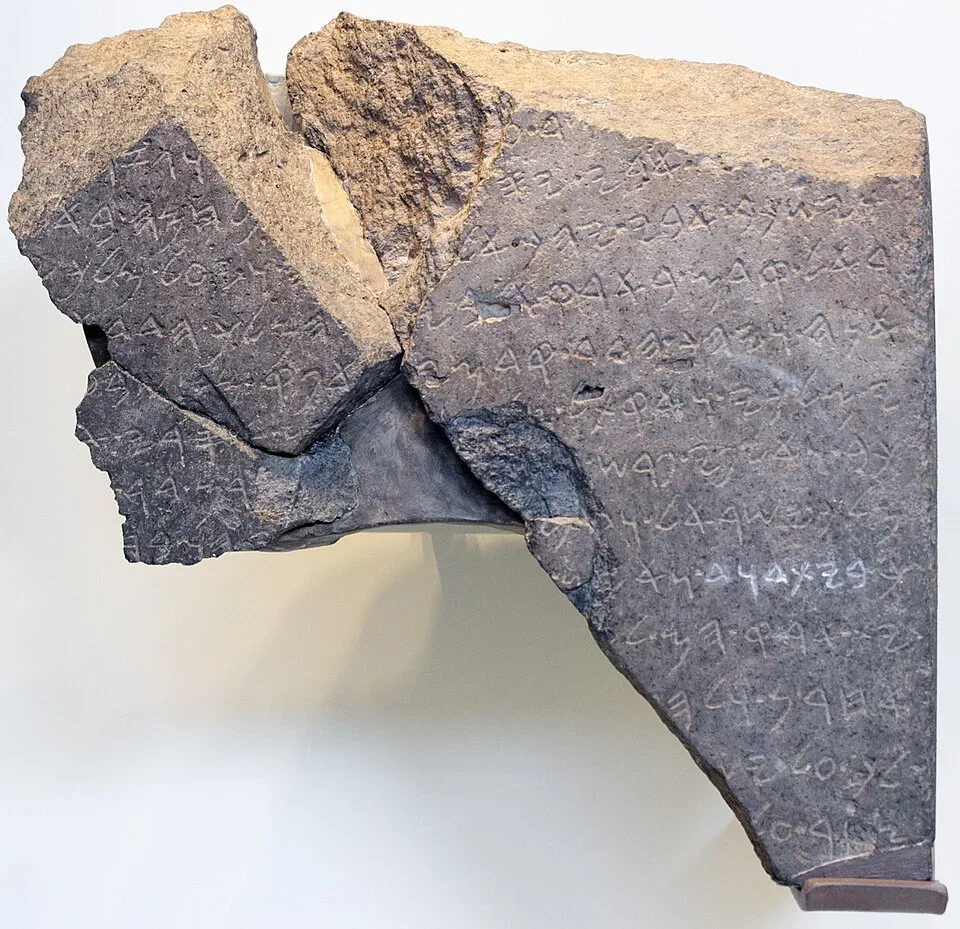
Tel Dan Stele
A king had this carved to celebrate a victory. It is a triumphal inscription, and you can hear his boasting in the words that survive. He speaks in the first person. He tells how the god Hadad made him king and went ahead of him into battle. And he says he killed the king of Israel and his ally, and ruined their towns and laid waste to their land. The king never puts his name on the stone. Most likely he was Hazael of Damascus, a powerful ruler in the region. Later the monument was broken up, and its pieces were built into a wall at Tel Dan, where they stayed until modern times. Gila Cook found the first fragment in that wall in 1993. Two more came to light in 1994. One phrase in the broken text reads House of David. It is the earliest accepted reference, outside the Hebrew Bible, to David as the founder of a Judahite kingdom.
Listen in the appOren Rozen · CC BY-SA 4.0
09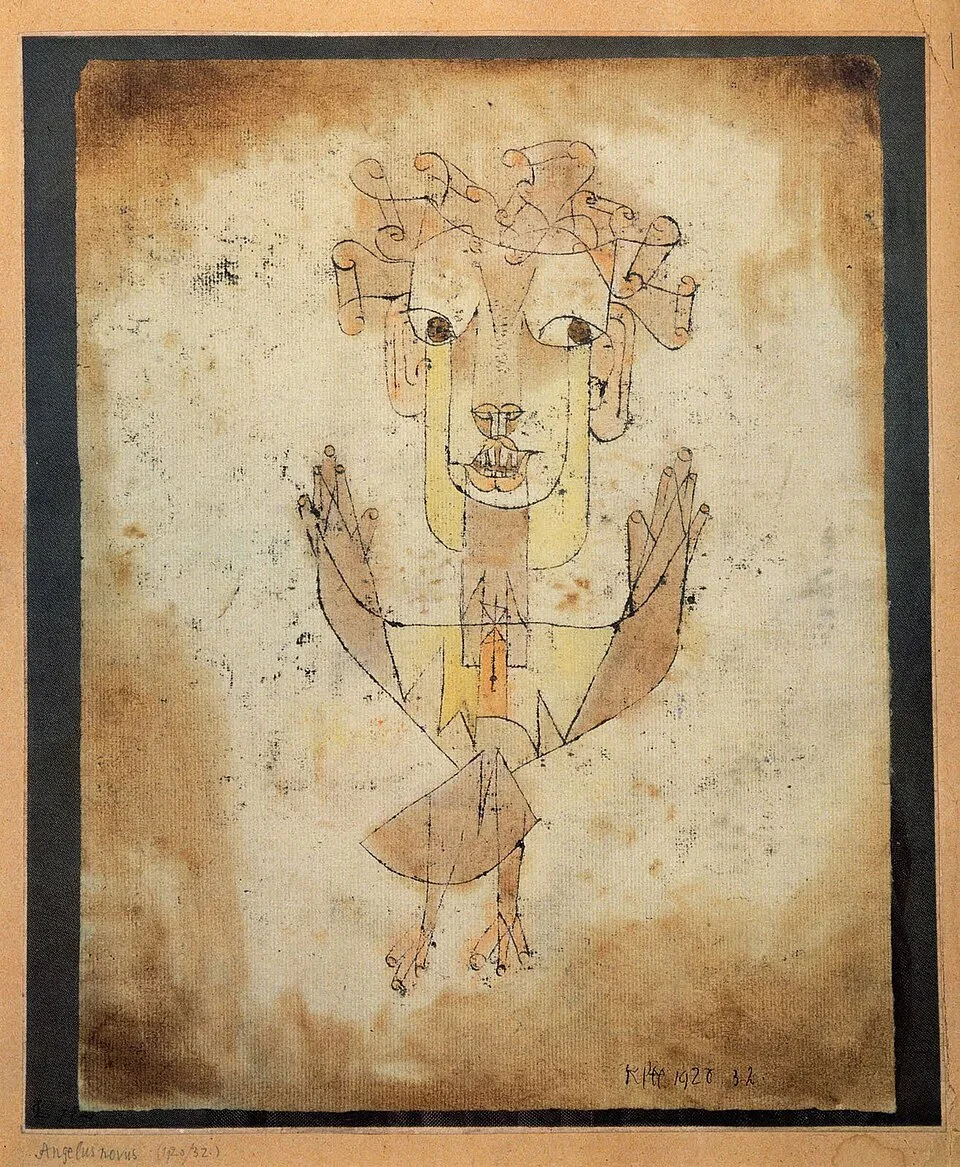
Angelus Novus
What is this angel looking at, and why does it seem about to leave? Its eyes stare, its mouth is open, its wings are spread, as if about to move away from something it cannot stop watching. Paul Klee made this image in 1920, and a year later Walter Benjamin bought it. He came to see in it the angel of history. Where we see a chain of events, this angel sees one catastrophe, wreckage piling up at its feet. It would like to wake the dead and mend what has been smashed. But a storm blows from Paradise and catches in its wings with such violence that it can no longer close them. It drives the angel into a future it faces away from, while the debris rises before it. Benjamin called that storm progress. When he fled Germany in 1933, he took the print to Paris. Before he tried to flee France, he gave it with other papers to Georges Bataille, who hid it at the library where he worked. Benjamin took his own life in Spain in September 1940, the night before he was to be sent back to France. After the war it went to Theodor Adorno, who sent it on to Benjamin's lifelong friend Gershom Scholem, as Benjamin had asked.
Listen in the appPaul Klee · Public domain
10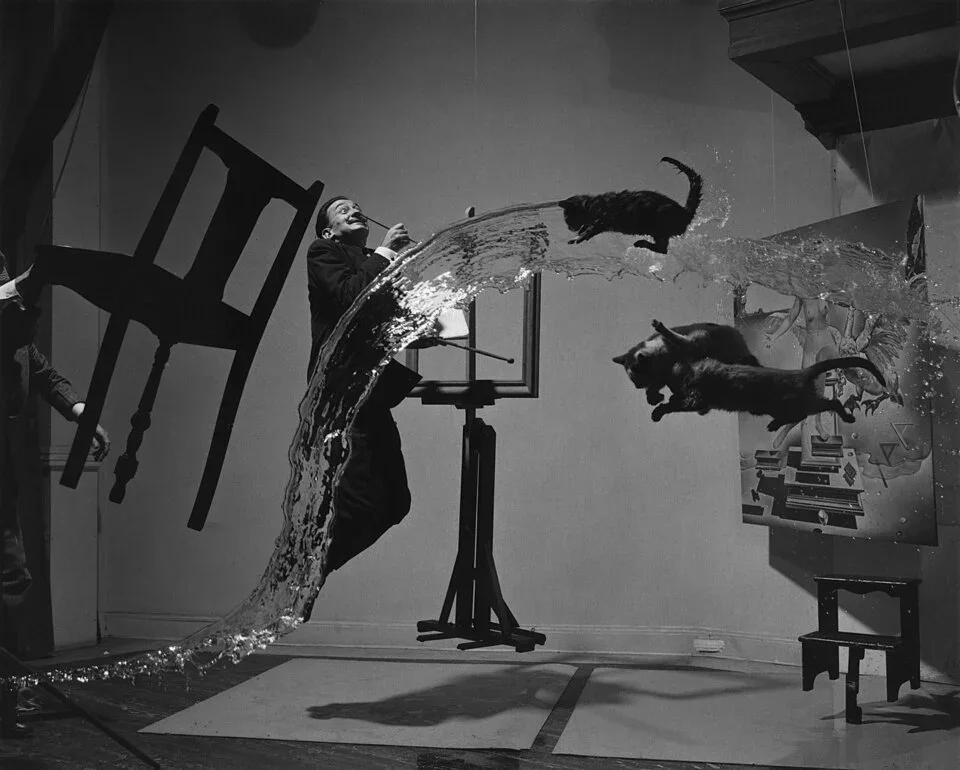
Dalí Atomicus
Dalí jumps into the air, and three cats fly past him. A bucket of water follows them through the air. A chair hangs on the left. A painting and a step stool hang on the right. Behind him, an easel holds a picture that echoes the flying cats. None of it is weightless on its own. An assistant held up the chair. Wires held the painting and the easel, and a prop held the step stool. The cats and the water were real, thrown by other assistants. Philippe Halsman counted to four. On three they threw the cats and water. On four, Dalí jumped. One take failed because Dalí jumped too late. Another, because the chair covered his face. A third, because someone walked into the frame by mistake. Halsman made at least twenty-six takes over five or six hours. Between takes, assistants dried the cats while he developed the film in the darkroom. The idea came from Leda Atomica, which Dalí had worked on since 1945. It played with the suspension of protons and electrons held apart inside an atom. Dalí first suggested blowing up a live duck with dynamite. Halsman was less keen, so they chose furniture, water, cats and Dalí himself. When they shot it, the easel behind him held only an empty frame. Afterward, Dalí painted that picture in, right on the print.
Listen in the appPhilippe Halsman · Public domain
- 11
Genesis Apocryphon
Geza Vermes
- 12
Adam and Eve
Albrecht Durer · 1504
- 13
The Death of Adonis
Peter Paul Rubens · c. 1614
- 14
The Four Witches
Albrecht Durer · 1497
- 15
Holyland Model of Jerusalem
Unknown Artist · 1962–1966
- 16
War of the Sons of Light Against the Sons of Darkness
Unknown Artist
- 17
Pilate Stone
Reinhard Dietrich · 1st century AD
- 18
Ekron inscription
Unknown Artist
- 19
The Sea Monster
Albrecht Durer · c. 1498–1500
- 20
Olivetti Valentine
Ettore Sottsass · 1968–1969
- 21
Pierre de Wiessant
Auguste Rodin · 1884–1886
- 22
Anthropoid sarcophagi of Deir al-Balah
Unknown Artist · -1250
- 23
Birds' Head Haggadah
Unknown Artist · c. 1300
- 24
Empire of the Sultans: Ottoman Art of the Khalili Collection
Unknown Artist · 1995–2004
- 25
Trumpeting Place inscription
Unknown Artist
- 26
Saint Peter in prison
Rembrandt · 1631
- 27
Mosaic of Rehob
דניאל ונטורה · 600
- 28
Untitled (The Last Supper)
阿迪‧内斯,以色列,生於1996年 · 1999
- 29
Upa Upa (The Fire Dance)
Paul Gauguin · 1891
- 30
Nimrod
Yitzhak Danziger · 1938–1939
- 31
Profile
Pablo Picasso · 1967
- 32
Morning View of L'Estaque Against the Sunlight
Paul Cézanne · 1882–1883
- 33
Country House by a River
Paul Cézanne · c. 1890
- 34
The Tree by the Bend
Paul Cézanne · 1876–1882
- 35
Still Life
Paul Gauguin · 1899
- 36
Landscape with Dog
Paul Gauguin · 1903
- 37
Portrait of Mme. Paulin
Pierre-Auguste Renoir · 1885–1890
- 38
Gibigiana lamp
Achille Castiglioni · 1980
- 39
Yavne-Yam ostracon
Unknown Artist · 7th century BC
- 40
Grillo telephone
Società Italiana Telecomunicazioni Siemens S.p.A. (SIT Siemens) (produttore), Sapper Richard (designer), Zanuso Marco (designer) · 1965–1967
- 41
The Cliff of Aval, Etrétat
Claude Monet · 1885–1886
- 42
The Young Ladies of Giverny, Sun Effect
Claude Monet · 1894
- 43
River Bend (Coin de Riviere)
Paul Cézanne · 1860s
- 44
Rocks, L'Estaque
Paul Cézanne · c. 1865
- 45
Village in Martinique (Femmes et Chevre dans le village)
Paul Gauguin · 1887
- 46
Studio Interior with The Steeplechase
Edgar Degas · 1880–1881
- 47
Outskirts of Maintenon
Pierre-Auguste Renoir · 1888
- 48
Roses in a Vase
Pierre-Auguste Renoir · c. 1880
- 49
Nemesis
Albrecht Durer · 1501–1503
- 50
Heliodorus Stele
Unknown Artist · 178 BC
- 51
The Dream of the Doctor
Albrecht Durer · c. 1498
- 52
Portrait of Maria
Émile Bernard · 1892
- 53
Cifra 3
Unknown Artist · 1965
- 54
Untitled (Ruth and Naomi, Gleaners)
עדי נס, ישראלי, נולד ב-1966 · 2006
- 55
Venus Rising from the Sea
Gustave Moreau · 1863–1866
- 56
Attic amphora with Theseus - Israel Museum
Polygnotos · c. 439 BC
- 57
Apple Core
Claes Oldenburg, Coosje van Bruggen · 1992
- 58
Portrait of Aharon Meskin
Zeev Ben-Zvi · 1935
- 59
An Allegorical Wedding- Sketch for a carpet dedicated to Mr. and Mrs. David Wolffsohn Triptych (from...
Ephraim Moses Lilien · 1906
- 60
The Conjurer
After Hieronymus Bosch · 15th century
- 61
Sunset at Éragny
Camille Pissarro · 1890
- 62
Peasant Woman Resting at the Foot of a Tree, Effect of Sunshine, Éragny
Camille Pissarro · 1899
- 63
Portrait of a Family in a Landscape
Aelbert Cuyp, Jacob Gerritsz. Cuyp · 1641
- 64
Marriage Portrait of Charlotte de Rothschild
Moritz Daniel Oppenheim · 1836
- 65
Une clairière en Provence (Étude)
Henri-Edmond Cross · c. 1906
- 66
Painting
Joseph Zaritsky · 1964
- 67
Balaam and his Ass
Pieter Lastman · 1622
- 68
The story of the Book of Esther
Yosef Zvi Geiger · 1893
- 69
Suspense
Menashe Kadishman · 1966
- 70
The Tugboat, Canal in Samois
Paul Signac · 1901
- 71
Our Tree of Life
Jacques Lipchitz · 1973
- 72
Banks of the Loing, Autumn Effect
Alfred Sisley · 1881
- 73
Summer Sunlight (Isles of Shoals)
Childe Hassam · 1892
- 74
The Red Carpet
Lesser Ury · 1890–1899
- 75
River Scene
Armand Guillaumin · c. 1890
- 76
Girl Holding Lemons
William-Adolphe Bouguereau · 1899
- 77
Bountiful Harvest
Camille Pissarro · 1893
- 78
The Children's Supper
Paul Sérusier · 1907
- 79
The Painter and the Model
Joseph Zaritsky · 1949
- 80
Chana Orloff Pipe Smoker
Chana Orloff · 1924
- 81
Troom troom
Marcel Duchamp · 1914
- 82
Portrait of Celso Lagar
Amedeo Modigliani · 1915
- 83
The Wandering Jew
Samuel Hirszenberg · 1899
- 84
Woman Combing Her Hair
Alexander Archipenko · 1914–1915
- 85
Yahuda Haggadah
Unknown Artist · 1450
- 86
Joseph
阿迪‧内斯,以色列,生於1996年
- 87
Januarius Zick – Saul and the Witch of Endor
Januarius Zick · c. 1752–1753
- 88
Turning the World Upside Down
Anish Kapoor · 2010
- 89
Hadrianus, bronze from Tel Shalem
Unknown Artist
- 90
Via Dolorosa
Motti Mizrachi · 1973
- 91
Rothschild Miscellany
Unknown Artist · c. 1479
- 92
Monumental Hebrew inscription from Jerusalem
Unknown Artist
- 93
Vessel in the shape of a woman carrying a churn - Chalcolithic Age
Unknown Artist · -4000
Israel Museum
Frequently asked questions
How much does the guide cost?
Free app download. Free until 1 January. Listed guide price: $2.99. Audio guide only. Venue admission is separate.
Can I listen without internet?
Yes. Download the guide’s audio, images, and maps in the app before your visit. Your downloaded content is then available offline.
Can I listen in my language?
In English for now. More languages soon.
Do I need to follow a schedule?
No. This is a self-guided experience. Choose your stops, pause whenever you like, and return to a story at your own pace.
Which artworks are in the Israel Museum audio guide?
93 artworks, including Melencolia I (Albrecht Durer), Aleppo Codex (Shlomo ben Buya'a), Venus of Berekhat Ram (Unknown Artist), Knight, Death, and the Devil (Albrecht Durer), St. Jerome in His Study (Albrecht Durer), Unique Forms of Continuity in Space (Umberto Boccioni), Bicycle Wheel (Marcel Duchamp), and Tel Dan Stele (Unknown Artist). The full list is on this page.
Is this the museum’s official audio guide?
No. Stanza is an independent audio guide app and is not affiliated with Israel Museum. Museum admission is separate.
At your own pace
Explore Israel Museum.
Download Stanza, then search for “Israel Museum”.
Free app download · Guide price shown in the app
Keep exploring
Nearby audio guides
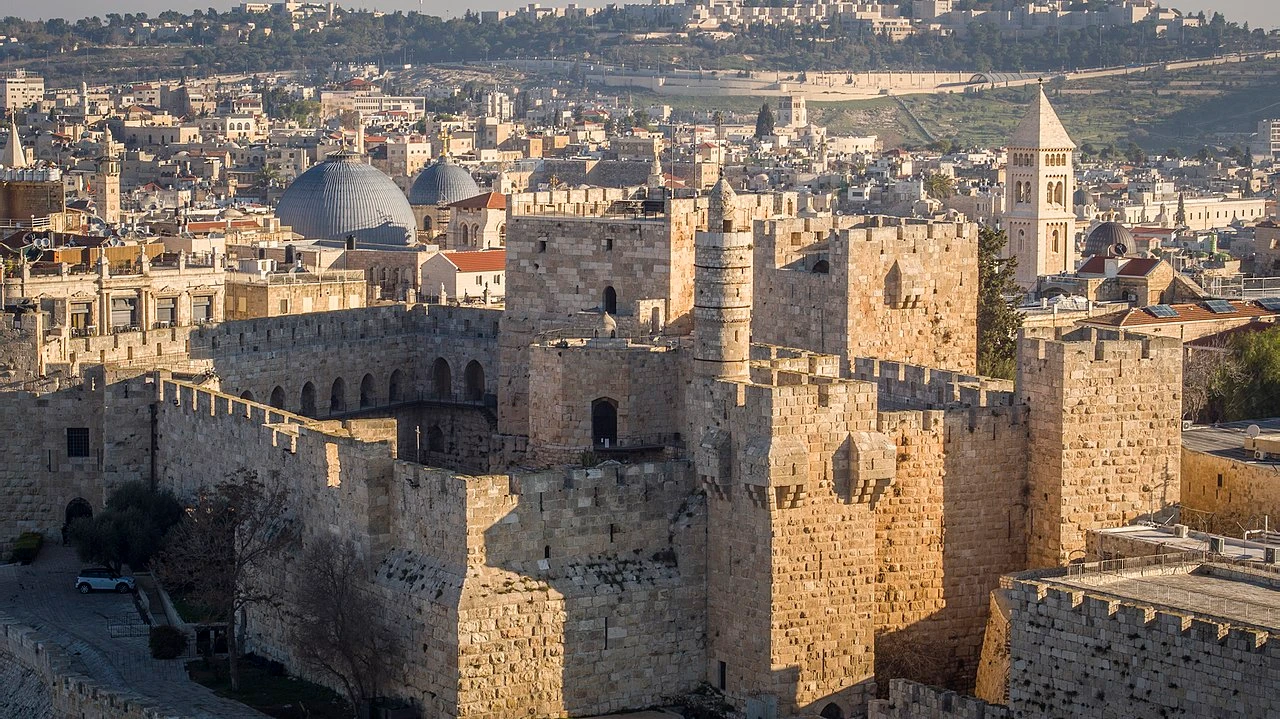
Jerusalem · 2 km
Tower of David
Content & sources
Photo: אורי אלוני · CC BY-SA 4.0
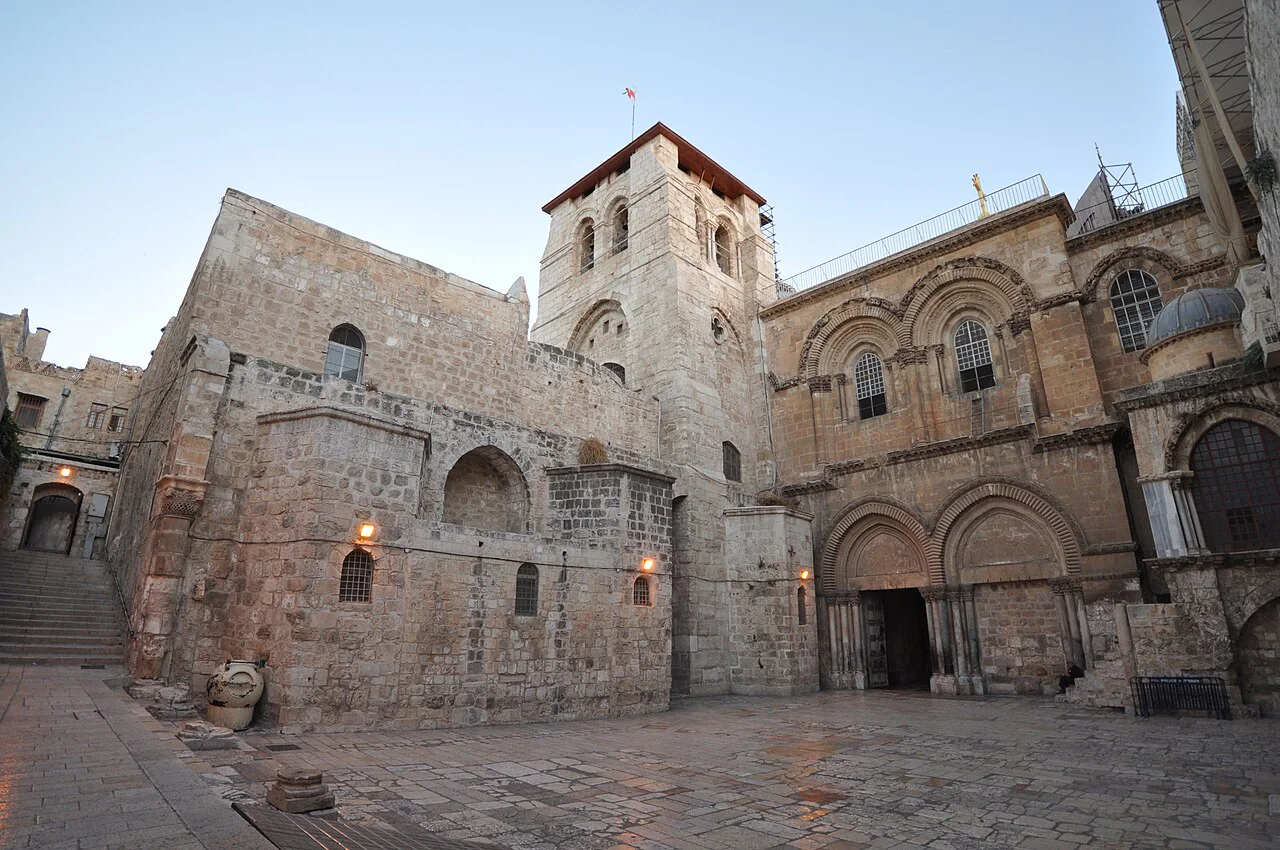
Jerusalem · 3 km
Church of the Holy Sepulchre
Content & sources
https://www.flickr.com/photos/jlascar/ · CC BY 2.0
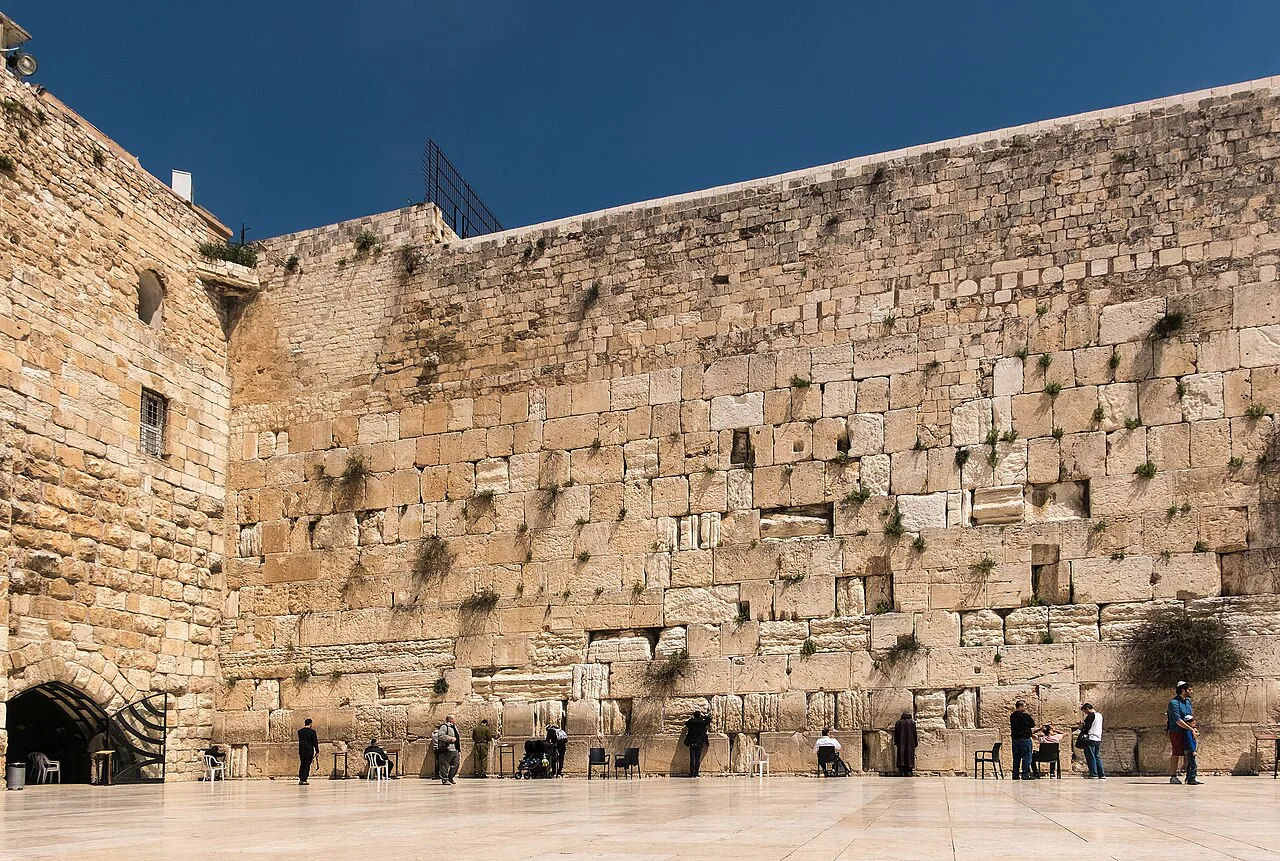
Jerusalem · 3 km
Western Wall
Content & sources
Photo: Ralf Roletschek · GFDL 1.2
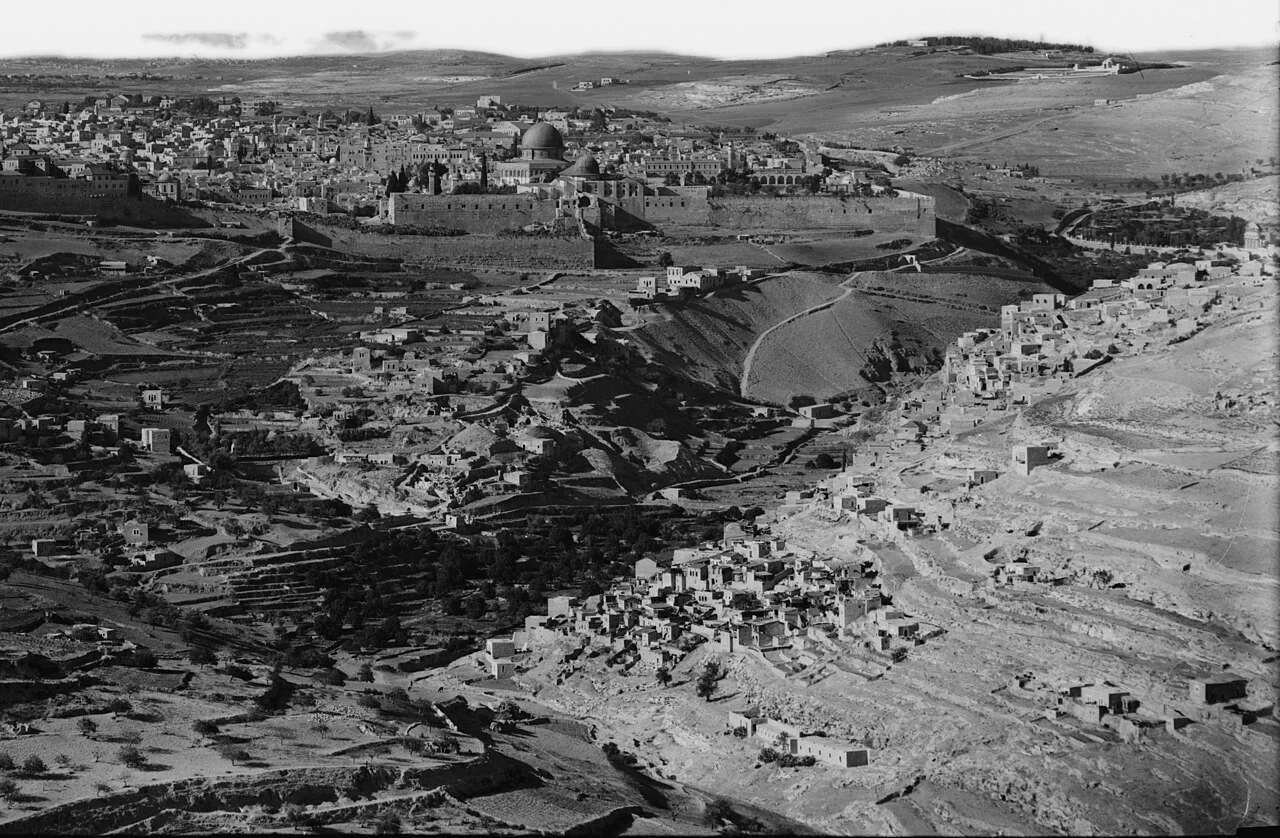
Jerusalem · 3 km
City of David
Content & sources
Matson Collection · Public domain
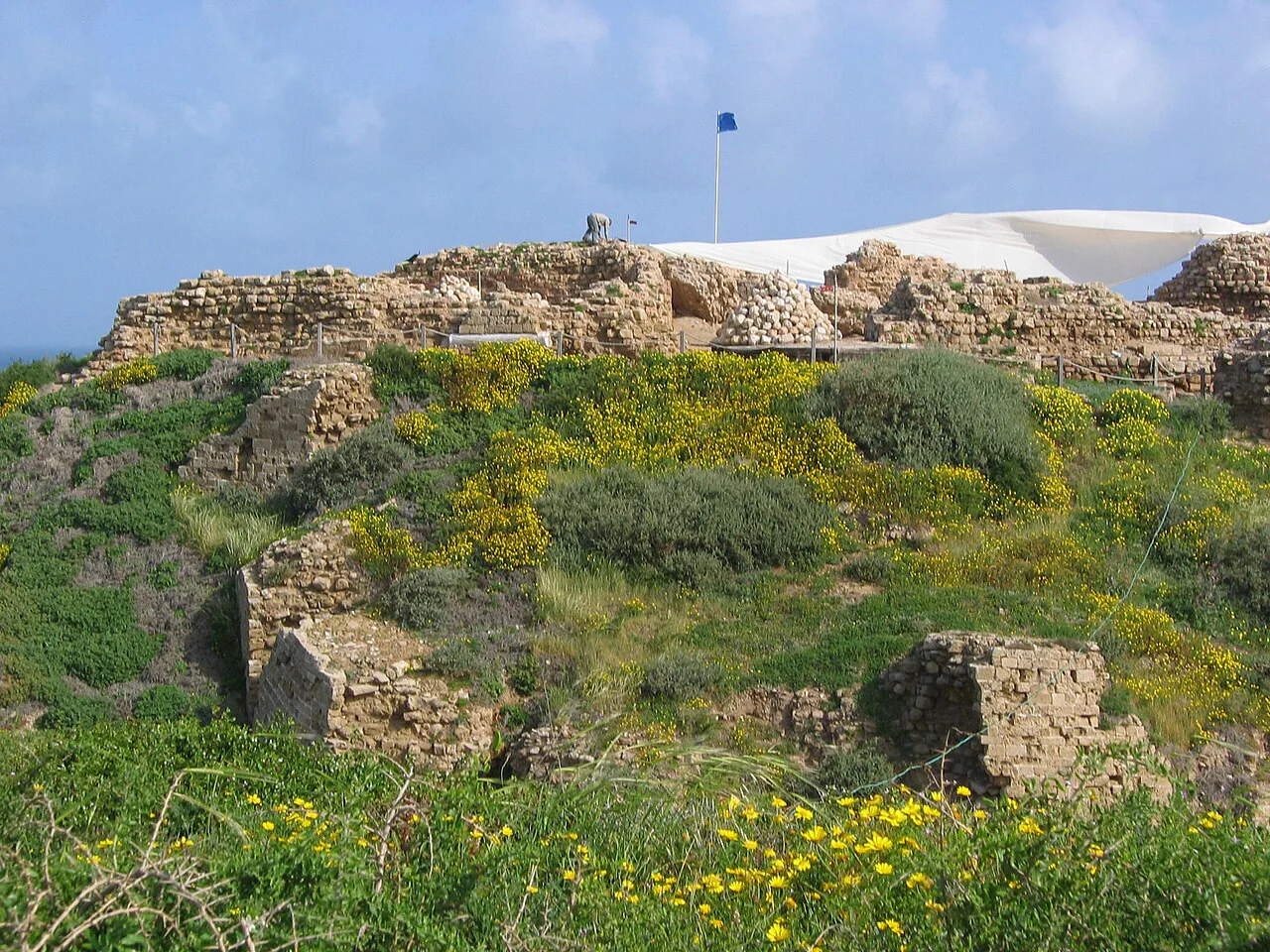
Herzliya · 60 km
Apollonia–Arsuf
Content & sources
Gilgamesh · CC BY-SA 3.0
Art museums
More art museum audio guides

Athens · 25 artworks
Εθνική Πινακοθήκη-Μουσείο Αλεξάνδρου Σούτζου
Content & sources
Photo: Leeturtle · CC BY-SA 4.0
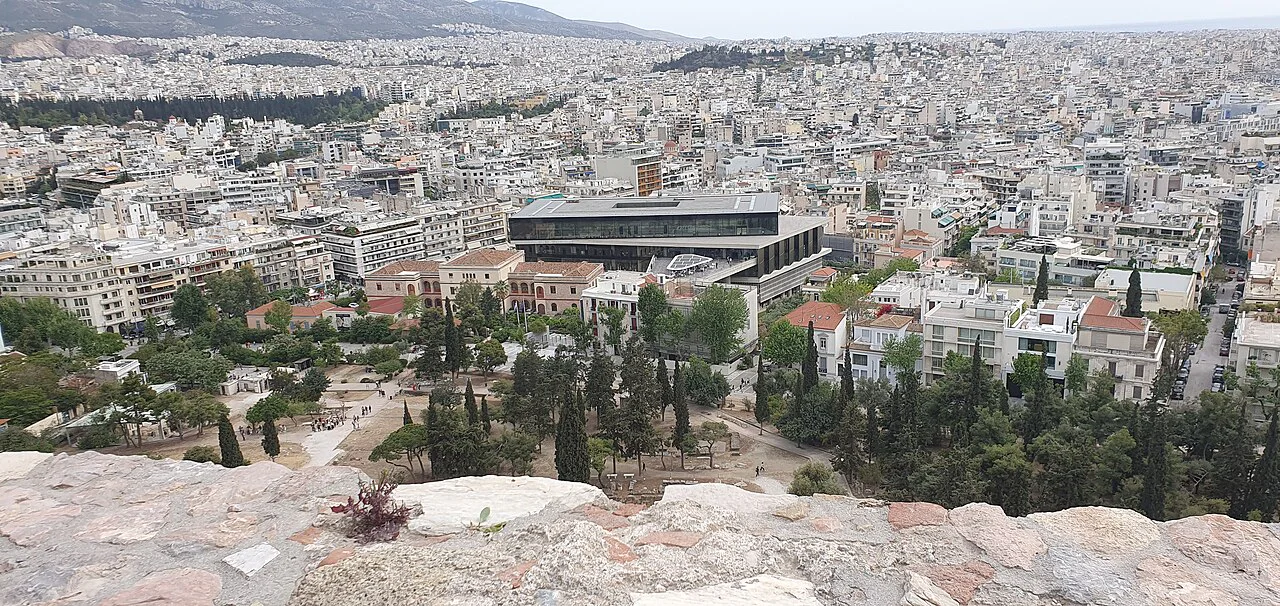
Athens · 35 artworks
Μουσείο Ακρόπολης
Content & sources
Photo: Yair-haklai · CC BY-SA 4.0
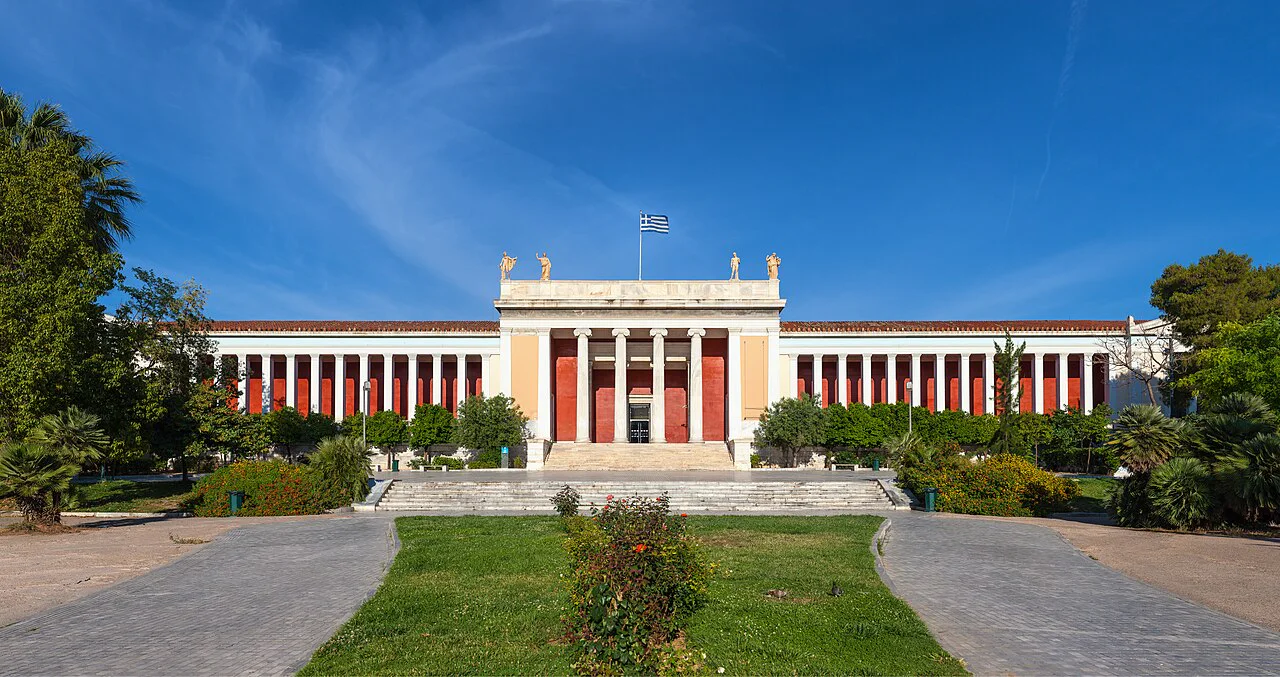
Athens · 91 artworks
Εθνικό Αρχαιολογικό Μουσείο
Content & sources
Thomas Wolf, www.foto-tw.de · CC BY-SA 3.0 de
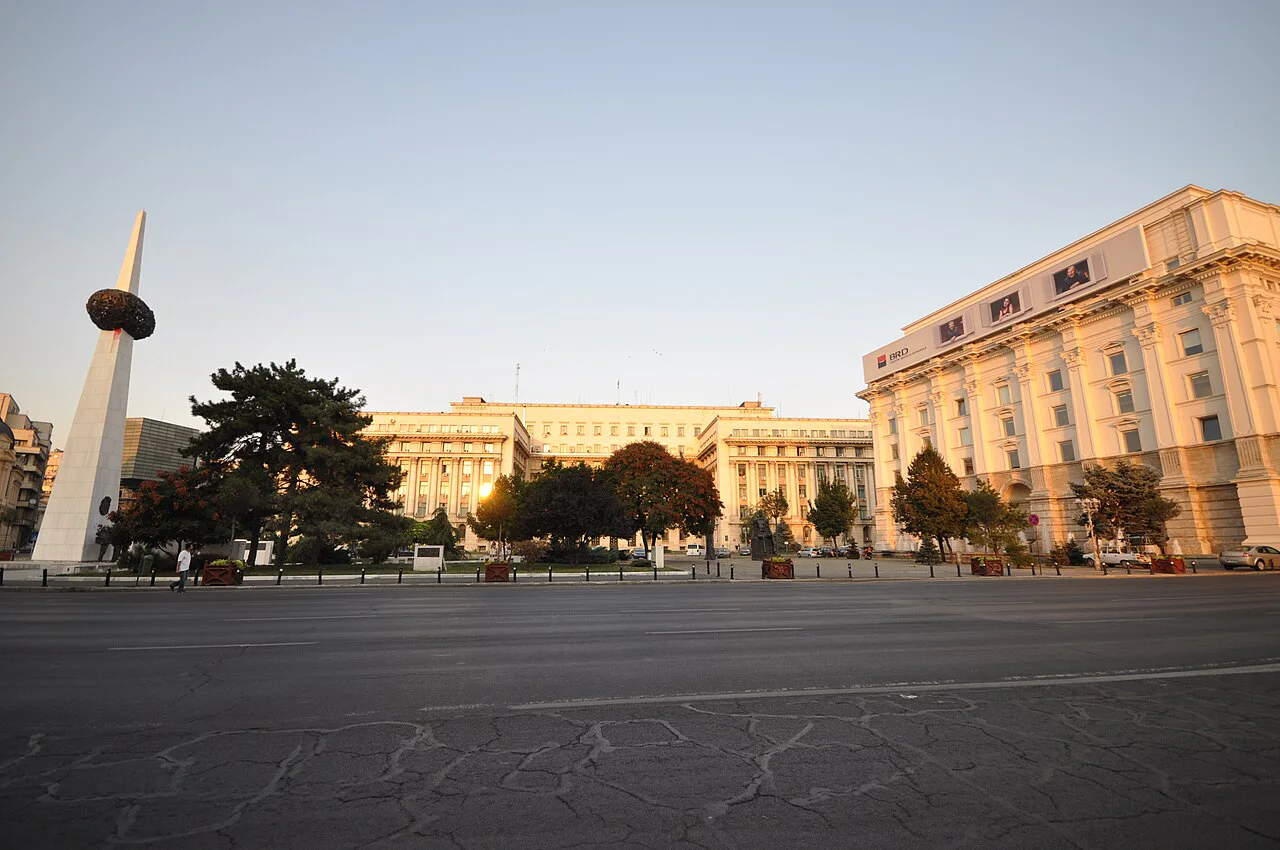
Bucharest · 28 artworks
National Museum of Art of Romania
Content & sources
Jorge Láscar from Australia · CC BY 2.0
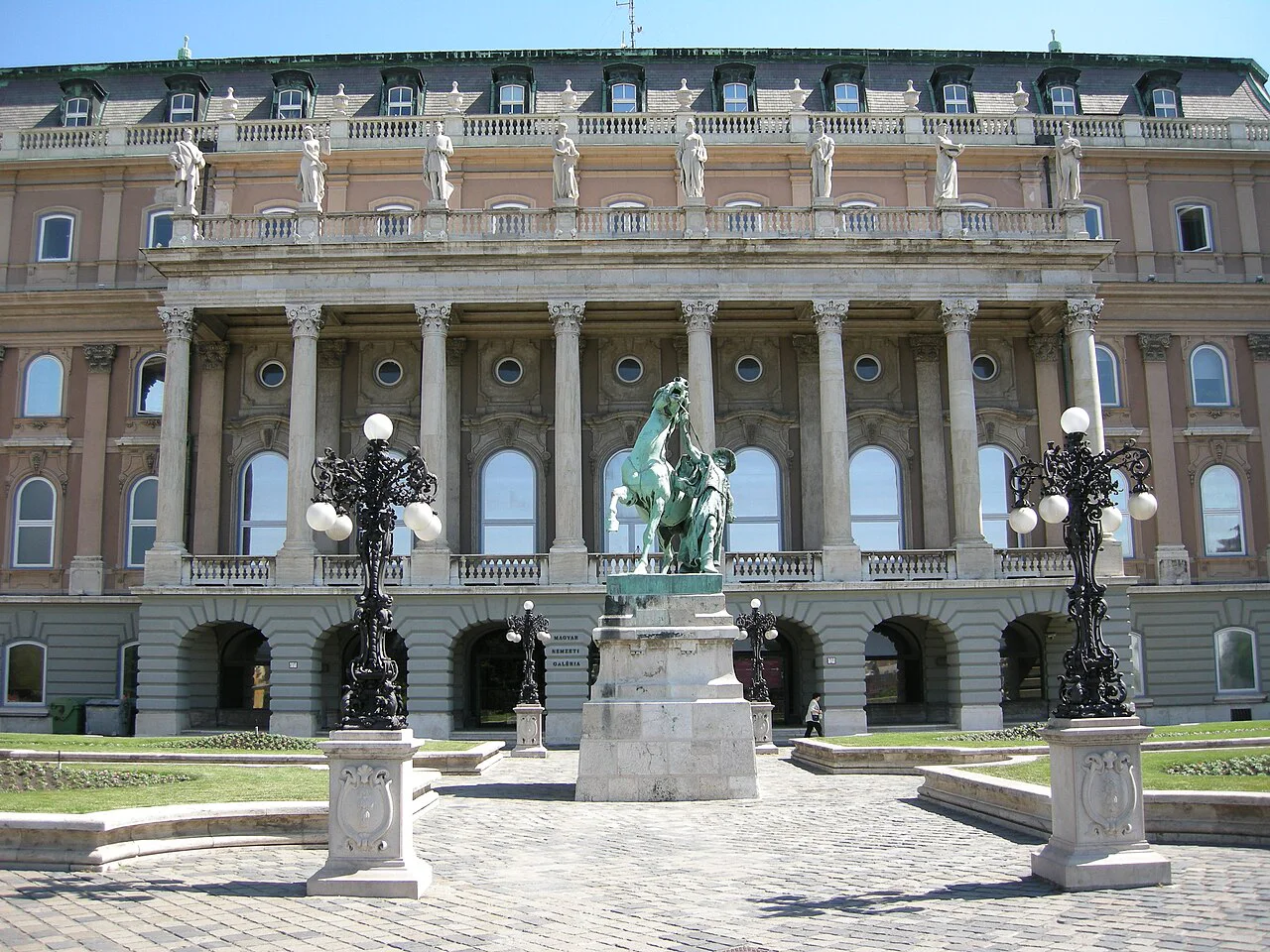
Budapest · 29 artworks
Hungarian National Gallery
Content & sources
Yoav Dothan · Public domain
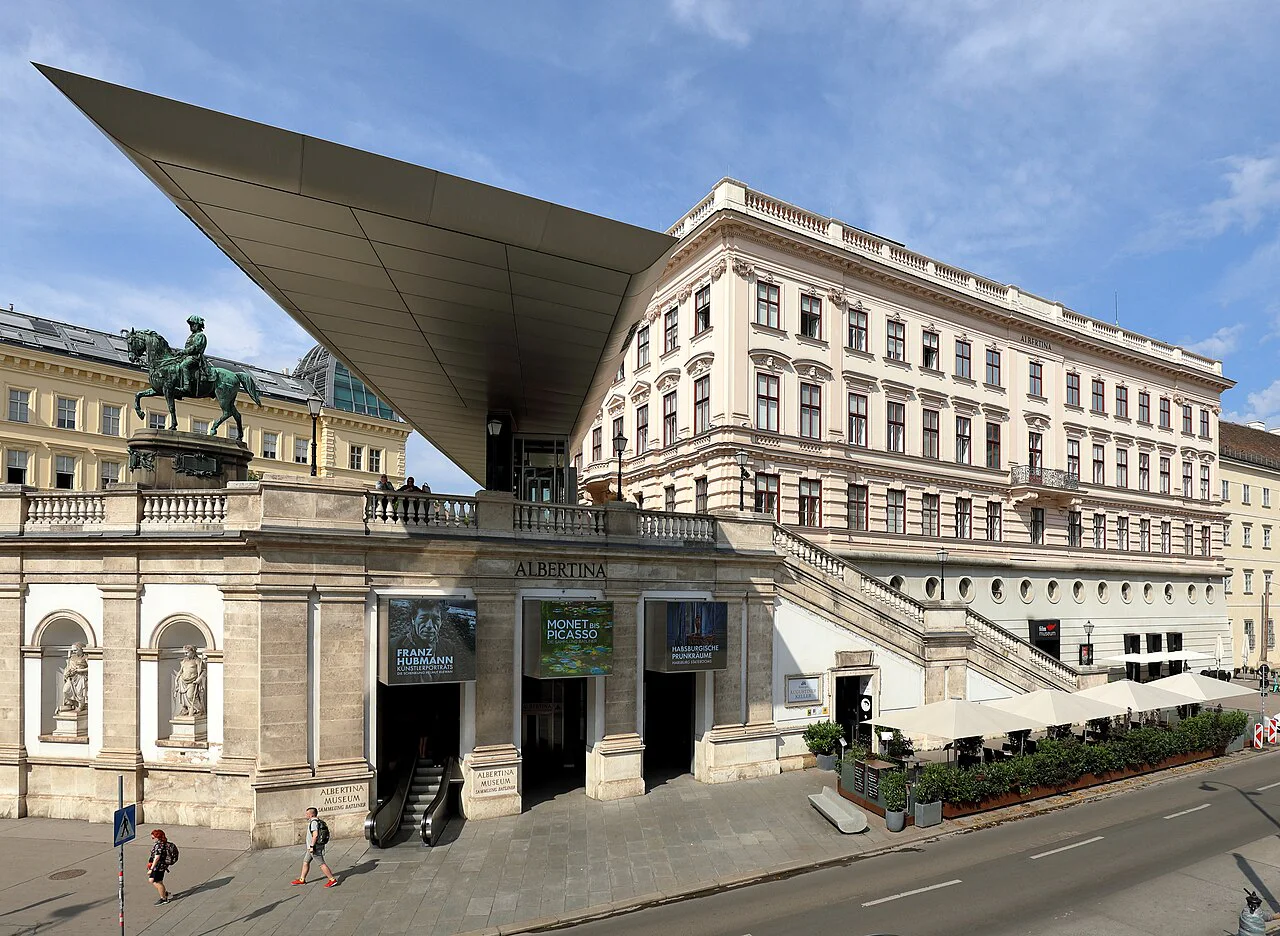
Vienna · 46 artworks
Albertina
Content & sources
C.Stadler/Bwag · CC BY-SA 4.0