Stanza · Audio guide
Albertina Audio Guide
A place to remember. A story to take with you.
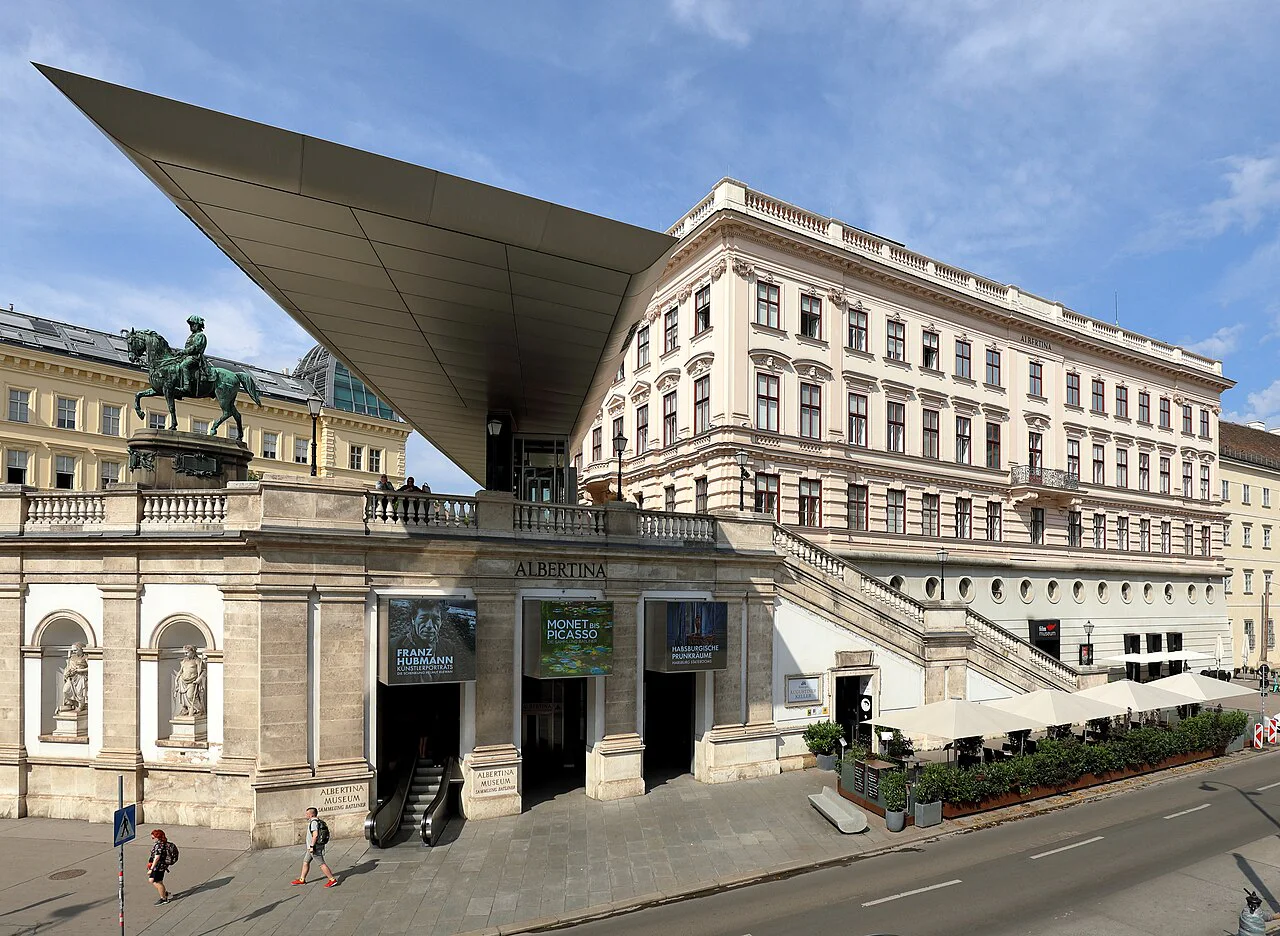
The Albertina is a museum located in Vienna, Austria. It houses one of the largest and most important print rooms in the world, featuring approximately 65,000 drawings and 1 million old master prints.
Download Stanza, then search for “Albertina”.
About the tour
One guide. Your kind of visit.
The Albertina is a museum located in Vienna, Austria. It houses one of the largest and most important print rooms in the world, featuring approximately 65,000 drawings and 1 million old master prints.
The Albertina guide tells the stories of 46 artworks, including Knight, Death, and the Devil (Albrecht Durer), Young Hare (Albrecht Durer), Great Piece of Turf (Albrecht Durer), Self-portrait at Thirteen (Albrecht Durer), Praying Hands (Albrecht Durer), Big Fish Eat Little Fish (Pieter Bruegel the Elder), Madonna of the Animals (Albrecht Durer), and Wing of a European Roller (Albrecht Durer). Every artwork is free to hear in the Stanza app until 1 January.
Ready when you are.
- 01Get the free Stanza app.
iOS & Android
- 02Find your guide.
“Albertina”
- 03Download before you go.
Works offline
Audio guide / 46 artworks
Inside the guide
Get to know a few of the stories before you go. Open a stop to read more.
01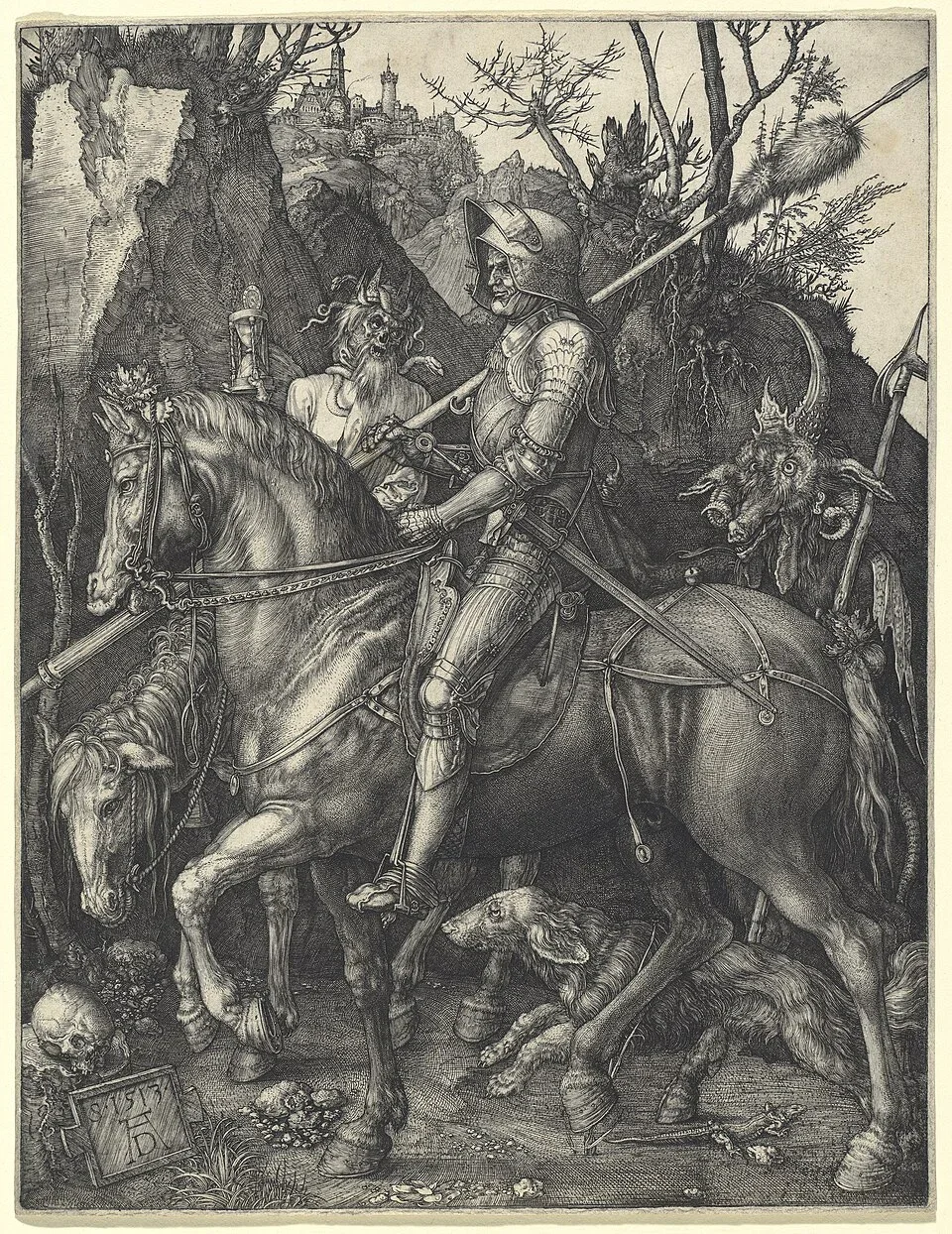
Knight, Death, and the Devil
At the bottom of the print, close to the small tablet where Dürer signed his name, a skull lies in the rider's path. It is a plain reminder of death, set right where the horse must go. The knight rides on with his faithful dog running between the horses. Death is in front of him on a pale horse, a rotting figure. Behind him is a horned devil. He keeps his eyes ahead. The city on the hill stands for heaven, the end of a faithful road. The view is from below, and the roots show under the horse. The rider already looks almost buried alive, closer to death than his face shows. His road is both a way to ruin and a way to heaven. In Death's hand, the hourglass is exactly half full, perhaps a turning point in the rider's choices.
Listen in the appAlbrecht Dürer · CC0
02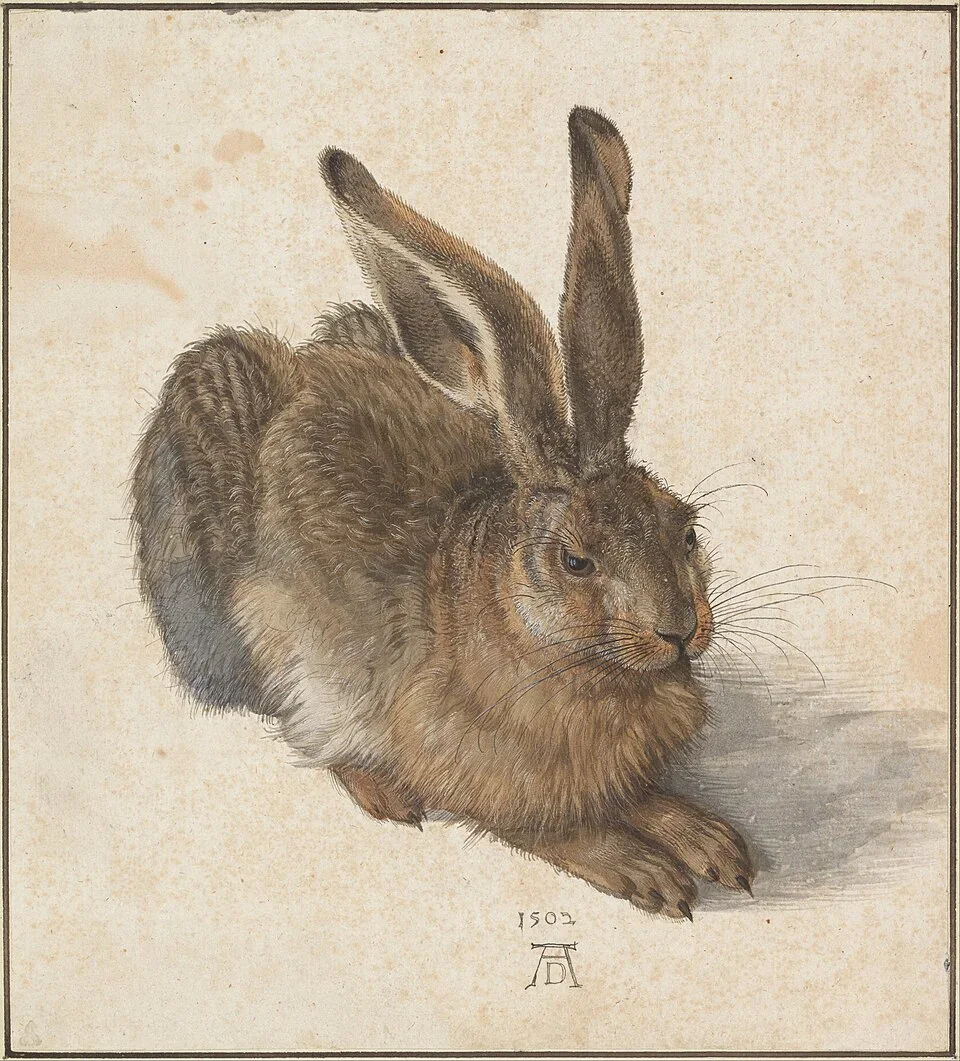
Young Hare
Albrecht Dürer wanted this hare to seem alive on the paper. Not just any hare, but this one animal, with a look of its own. He was studying nature then, trying to paint animals more faithfully than he had before. The hare crouches low, ears up, ready to spring and run. The fur is built from tiny strokes, some long, some short, some thick, some fine, each following the way the hair lies. That was the hard part, for the fur ran in different directions and the animal was patched with light and dark. In the shining eye a window frame is reflected, its bars crossing. He put his monogram and the year where you cannot miss them, to show he meant this as a finished picture, not a sketch. It worked. The watercolour became famous, reproduced on a huge scale in the twentieth century, and painters of his own day copied it at least twelve times. What is still not known is whether the hare was alive when he painted it.
Listen in the appAlbrecht Dürer · Public domain
03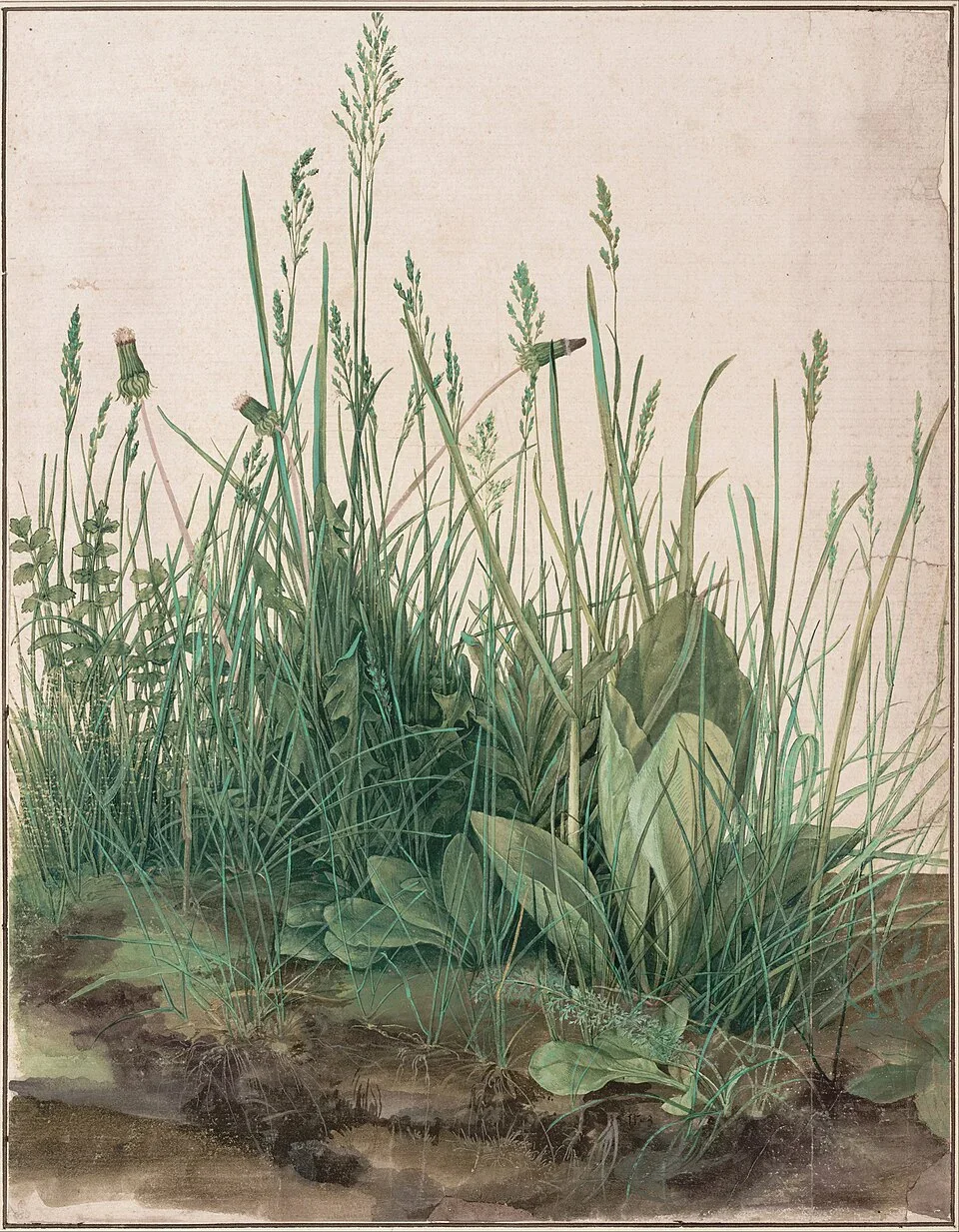
Great Piece of Turf
Nobody knows for certain why this was made. What you see looks like a piece of meadow cut out at random, a chaotic mix of grasses and small plants. But the view is so low down that it cannot have been painted lying in the grass. Dürer probably worked in the studio, and may have drawn the grasses separately. Roots and stems show through the watercolor, though in nature they lie hidden underground. Every plant runs from its root right up to its tip. The bright leaves on the right draw your eye across the middle toward a dense dark patch on the left. The center is not in the middle. Hidden meanings probably were not the point. He was likely more interested in the healing powers of the plants' sap. Tucked into the earth at the lower right, barely legible, is the year, 1503.
Listen in the appAlbrecht Dürer · Public domain
04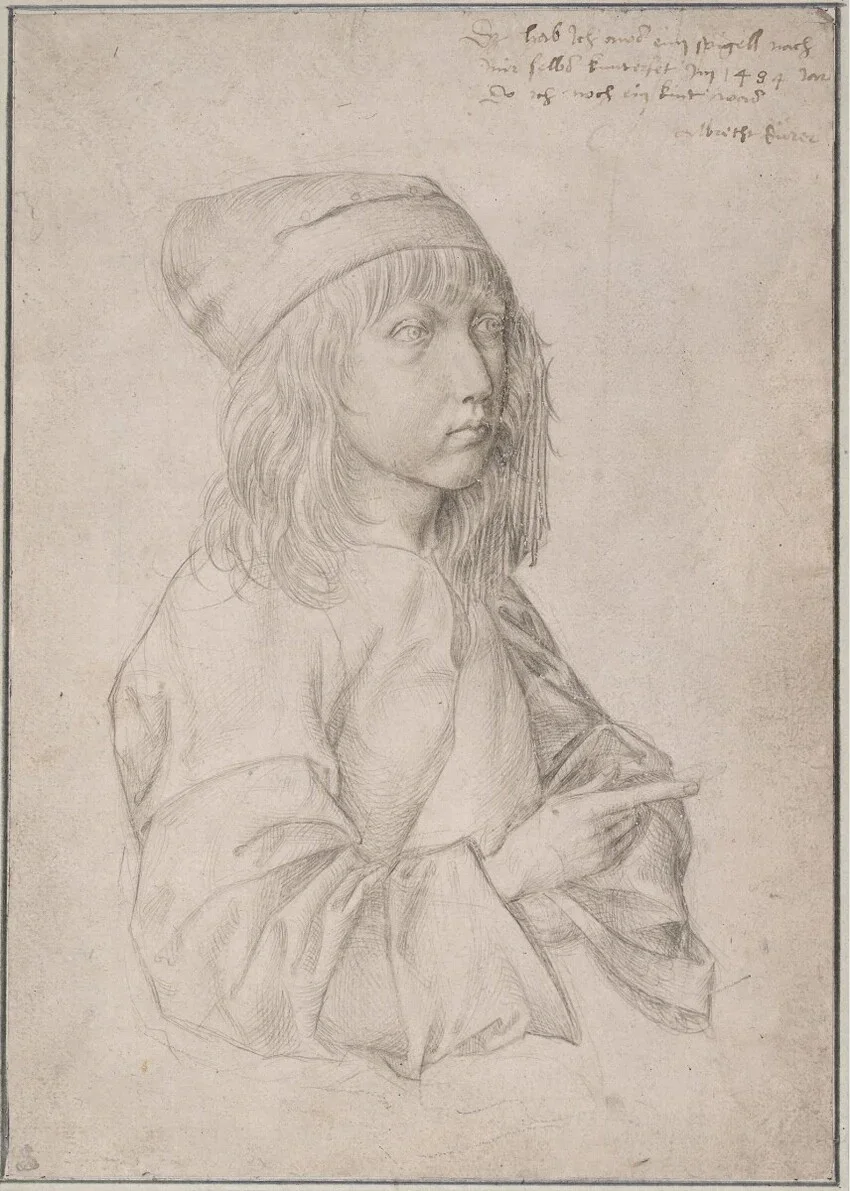
Self-portrait at Thirteen
A boy points past the edge of the drawing with one long finger. His left hand has disappeared under his sleeve. He has just drawn himself in silverpoint, and none of those lines can be rubbed out. The boy is Albrecht Dürer, working in 1484, when he was twelve or thirteen. He has two years left in his father's apprenticeship, then he will study painting with Michael Wolgemut. The title that calls him thirteen came much later. His father, a goldsmith, may have set the task as a challenge for just that reason. He gives himself long hair, a fresh face and elegant fingers. Fingers like that were fashionable then, and they were also taken as a sign of skill at drawing. Much later in his life, he wrote on the sheet that he had made it as a child. By then he read that boyish face as proof his gift had been there from the beginning. He drew from a mirror, and the hidden left hand hints at that.
Listen in the appAlbrecht Dürer · Public domain
05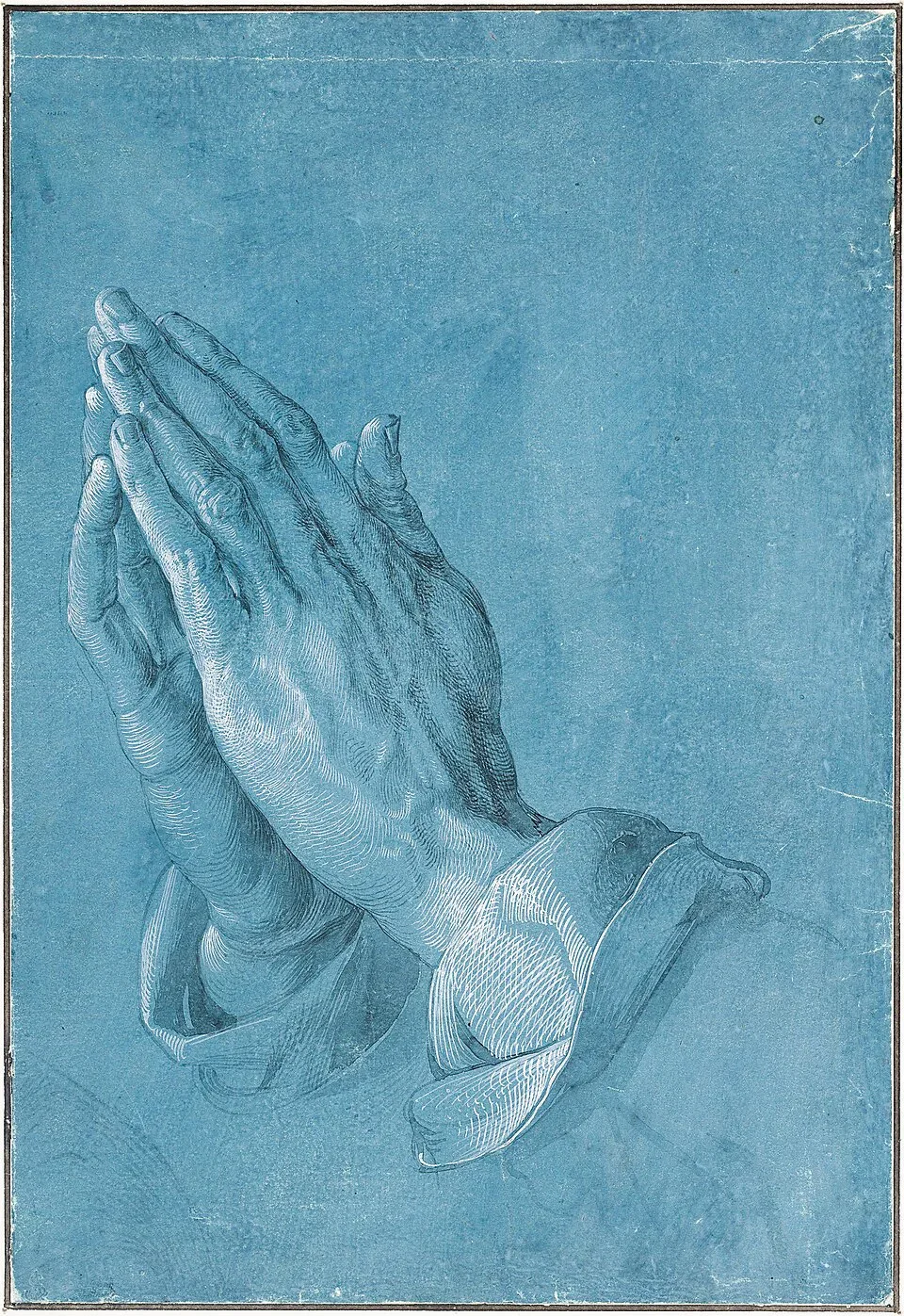
Praying Hands
Whose hands are these? Two hands pressed together in prayer, the sleeves pushed back a little, drawn in black ink and white on blue paper. They look like two people's hands. They began as one. Dürer doubled his own left hand in a mirror, then used a second mirror to fix the angle, and drew what he saw. That was in 1508, a study for an apostle's hands in an altarpiece. A Frankfurt cloth merchant, Jakob Heller, commissioned it. The central scene was the Assumption of Mary, and that apostle kneels at the right edge. Eighteen sketches went into the altarpiece. The apostle's head was on this same sheet, until the sheet was divided. The altarpiece burned in 1729 and was lost. The hands were not. Separated from the face they belonged to, they became the most reproduced picture of prayer in the Western world.
Listen in the appAlbrecht Dürer · Public domain
06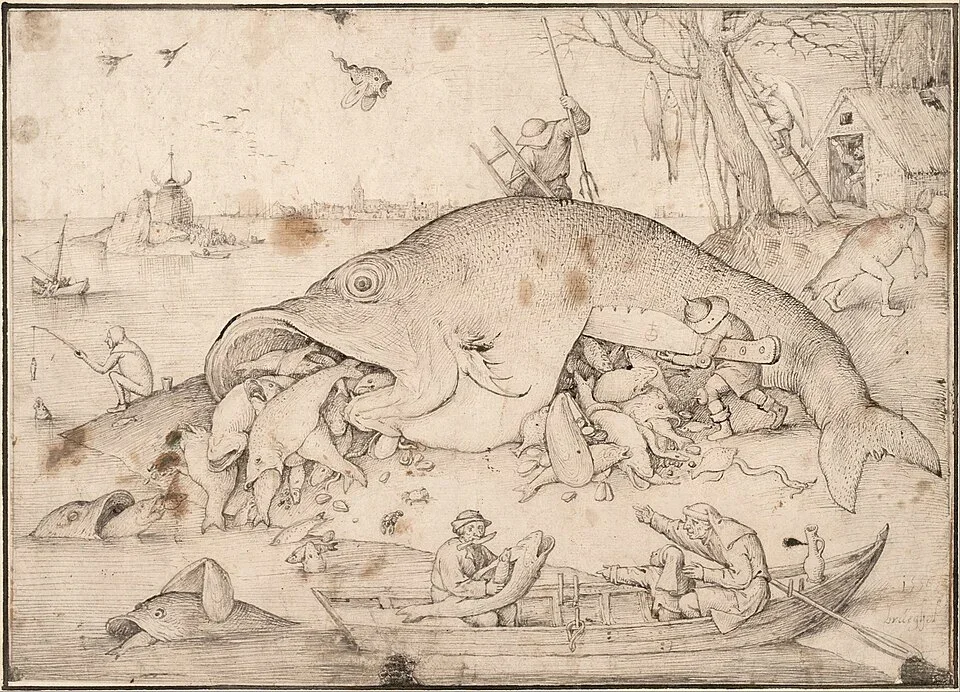
Big Fish Eat Little Fish
On the shore lies a huge fish, and it is being cut open with an enormous knife. Fish pour from its open mouth and its cut side, and those fish carry still smaller fish in their mouths. Out in the water, one fish swallows another even while a bigger one swallows it. Again and again, a creature here is eating something smaller. It is an old proverb, worked out in full. A father in a boat at the front is showing his son the scene. It is a world where the strong live at the expense of the weak. Near the hut on the right there is a creature half fish and half human. It tells you this is a moral lesson about people, the way an animal fable tells one. Bruegel made the drawing in 1556. The next year, Pieter van der Heyden turned it into an engraving, published by Hieronymus Cock. But the print carried Hieronymus Bosch's name instead, though Bosch had been dead for decades. Whether Bruegel worked from a lost original by Bosch, or simply chose a name that sold better, is still not known.
Listen in the appPieter Bruegel the Elder · Public domain
07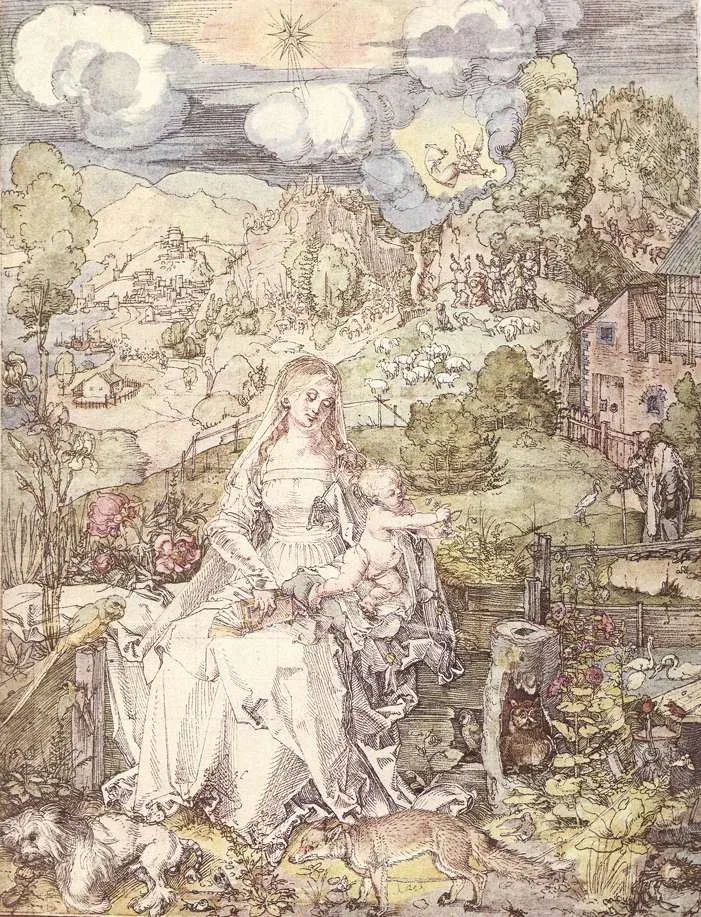
Madonna of the Animals
Two owls sit by a rotten stump, the sort of small detail you could walk straight past. They stand for the powers of darkness. The coming of Christ has taken their power away. And they are not the only creatures with a meaning here. Every creature in the drawing has one. A fox is in chains, and the chains stand for evil. Beside Mary, a parrot sits on a stake, a reminder of the miracle of the Immaculate Conception. Dürer drew it from an earlier study of his. He loved parrots and later bought several live ones in Holland. In the lower left, a large stag beetle teases Mary's faithful, sleepy little dog, and a butterfly has settled on the dog's back. Even here, among all these serious meanings, there is a small joke.
Listen in the appAlbrecht Dürer · Public domain
08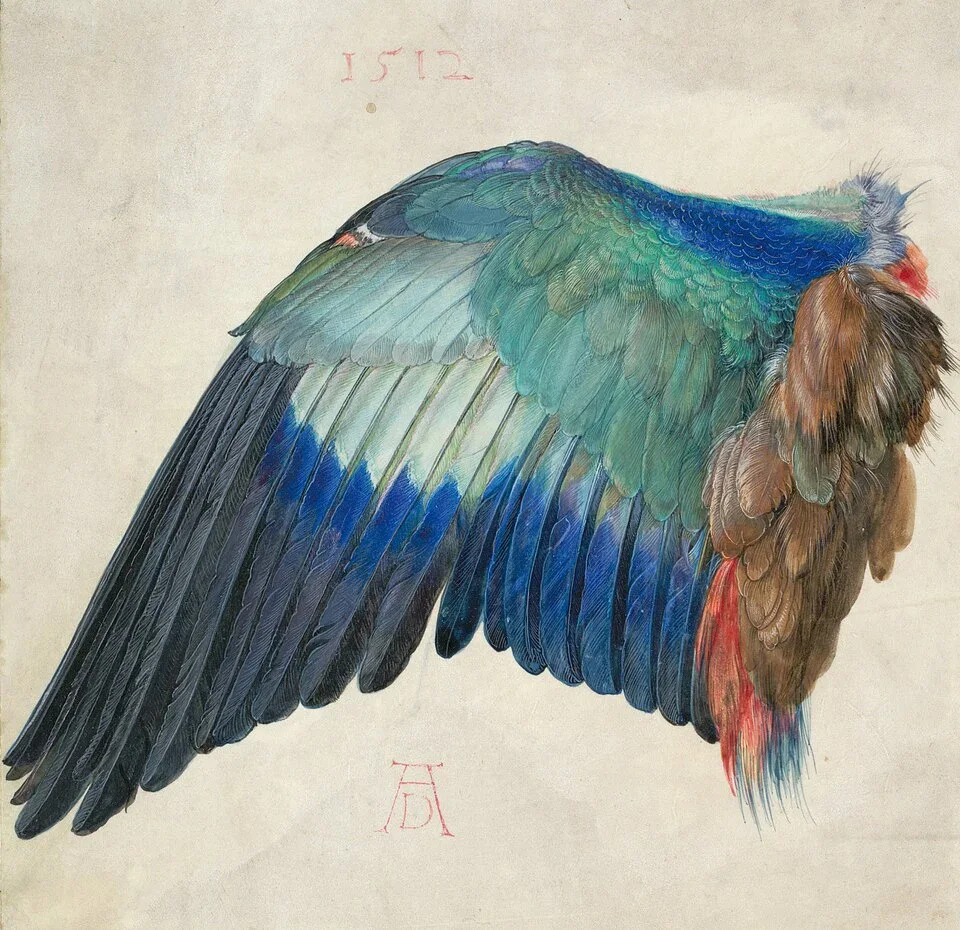
Wing of a European Roller
Albrecht Dürer took a dead bird and painted one of its wings. Just the wing, and nothing else. He wanted to set down exactly what was there in front of him. Around 1500 he became the first artist to paint plants and animals precisely, and this watercolor is one of those studies. He painted the whole dead bird too. The year 1512 is written on the wing, though it may have been made earlier. In 1528 he wrote down the idea behind it. Only faithfulness to nature, he wrote, makes a drawn thing a work of art.
Listen in the appAlbrecht Dürer · Public domain
09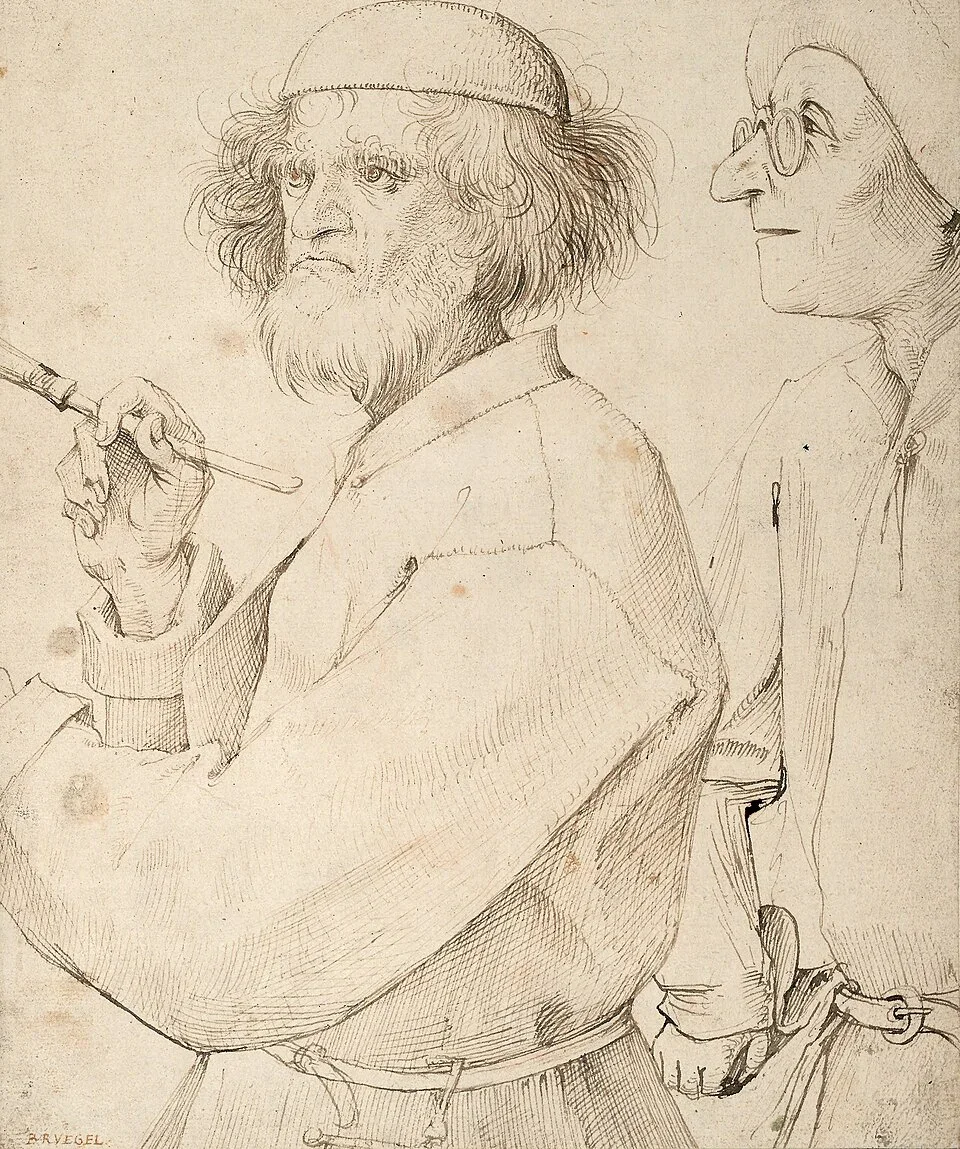
The Painter and The Buyer
Two men share this brown drawing. On the left, a painter holds a brush in his right hand. His hair is wild, his eyebrows bushy, his beard uncombed. His eyes go past us to the left, toward whatever he is painting. On the right, cut off by the edge of the paper, a second man looks over the painter's shoulder. He has a long nose, wears glasses, and his mouth is slightly open. The picture that holds both their attention is nowhere on the sheet. Bruegel leaves it out, and makes the making of art itself his subject. What remains is the maker and the man who watches him. In the Middle Ages artists worked inside a craft tradition, making things to order for the church, the aristocracy, and later for townspeople. This drawing shows something new. The painter now depends on the judgment of a single viewer at his shoulder. That is the man behind him. He is the buyer, the connoisseur. We still do not know whether the painter is Bruegel himself or Hieronymus Bosch.
Listen in the appPieter Brueghel the Elder · Public domain
10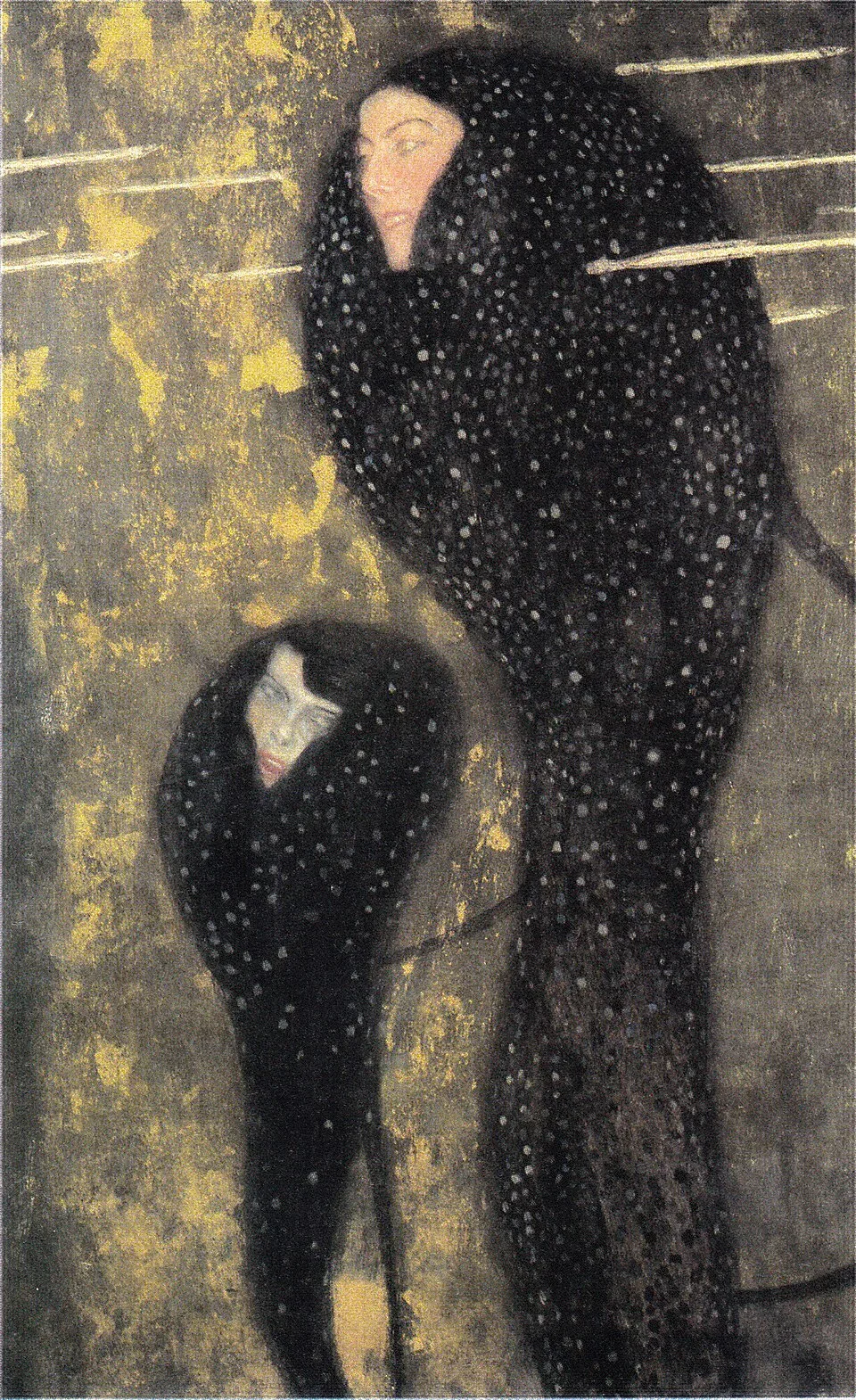
Silverfishes (Nixen, Sirens)
Small and rounded as tadpoles, they float upright in water that is green and gold. Matte dots speckle them like trout, and each has a sweet little face, like a mermaid's. They hang there like jewels in the depths. But they are not fish. They are water nymphs, and Klimt seems to have drawn their bodies out into wavy locks of hair, until you cannot tell where hair ends and body begins. When Klimt showed this at the Vienna Secession in 1903, it hung beside a portrait of a society woman, Rose von Rosthorn-Friedmann. Vienna read her face and her posture into the little silver fish and recognised her. One of the nymphs looked enough like the portrait that the likeness was remarked on. And the matte dots scattered over the figures look like the sequins on her formal portrait. He made it as one of a run of water nymph pictures, from Moving Water in 1898 to the two Water Snakes in 1907.
Listen in the appGustav Klimt · Public domain
- 11
The Penance of St. John Chrysostom
Albrecht Durer · 1496–1497
- 12
The Tree-Man
Hieronymus Bosch · 1500
- 13
The Dream of the Doctor
Albrecht Durer · c. 1498
- 14
Witch riding backwards on a goat
Albrecht Durer · c. 1500
- 15
An Oriental Family
Albrecht Durer · c. 1496
- 16
Hercules at the Crossroad
Albrecht Durer · 1498–1499
- 17
Saint Sebastian, Tied To a Tree
Albrecht Durer · c. 1501
- 18
Nude Studies
Raphael · 1515
- 19
Inner Alliance
Wassily Kandinsky · 1929
- 20
The Lady Riding and the Landsknecht
Albrecht Durer · c. 1497
- 21
The Abduction on a Unicorn
Albrecht Durer · 1516
- 22
Man in basket, old woman with pliers and children
Hieronymus Bosch
- 23
Madonna and child
Andrea Mantegna · 1480
- 24
Ghosts on a Tree-
Franz Sedlacek · 1933
- 25
Head of a Youth
Lorenzo di Credi · 15th century
- 26
The Shepherd's Dream
Henry Fuseli · 1786
- 27
Mary among a Multitude of Animals
Albrecht Durer · 1503
- 28
Saint George on Horseback
Albrecht Durer · 1505–1508
- 29
The Virgin with a Starry Crown
Albrecht Durer · 1508
- 30
The Bagpiper
Albrecht Durer · 1514
- 31
Saint Bartholomew
Albrecht Durer · 1523
- 32
Saint Simon
Albrecht Durer · 1523
- 33
Saint Philip
Albrecht Durer · 1523–1526
- 34
Man of Sorrows with Hands Bound
Albrecht Durer · 1512
- 35
The Angel with the Sudarium
Albrecht Durer · 1516
- 36
Group of Five Figures
Albrecht Durer · c. 1515
- 37
The Great Passion: Title Page - Christ, Man of Sorrows
Albrecht Durer · 1510
- 38
The Resurrection
Albrecht Durer · 1510
- 39
The Betrothal of the Virgin
Albrecht Durer · c. 1504
- 40
The Virgin and Child Surrounded by Saints and Angels
Albrecht Durer · c. 1500
- 41
Head of an African
Albrecht Durer · 1508
- 42
The Large Passion: The Crucifixion
Albrecht Durer · 1498
- 43
Christ on the Cross with Three Angels
Albrecht Durer · 1523–1525
- 44
Courtyard of Innsbruck Castle (Without Clouds)
Albrecht Durer · c. 1494
- 45
Portrait of a Young Woman with a Fan
Bernardino Luini · 1520–1525
- 46
Antwerp harbour
Albrecht Durer · 1520
Albertina
Frequently asked questions
How much does the guide cost?
Free app download. Free until 1 January. Listed guide price: $1.99. Audio guide only. Venue admission is separate.
Can I listen without internet?
Yes. Download the guide’s audio, images, and maps in the app before your visit. Your downloaded content is then available offline.
Can I listen in my language?
In English for now. More languages soon.
Do I need to follow a schedule?
No. This is a self-guided experience. Choose your stops, pause whenever you like, and return to a story at your own pace.
Which artworks are in the Albertina audio guide?
46 artworks, including Knight, Death, and the Devil (Albrecht Durer), Young Hare (Albrecht Durer), Great Piece of Turf (Albrecht Durer), Self-portrait at Thirteen (Albrecht Durer), Praying Hands (Albrecht Durer), Big Fish Eat Little Fish (Pieter Bruegel the Elder), Madonna of the Animals (Albrecht Durer), and Wing of a European Roller (Albrecht Durer). The full list is on this page.
Is this the museum’s official audio guide?
No. Stanza is an independent audio guide app and is not affiliated with Albertina. Museum admission is separate.
At your own pace
Explore Albertina.
Download Stanza, then search for “Albertina”.
Free app download · Guide price shown in the app
Keep exploring
Nearby audio guides
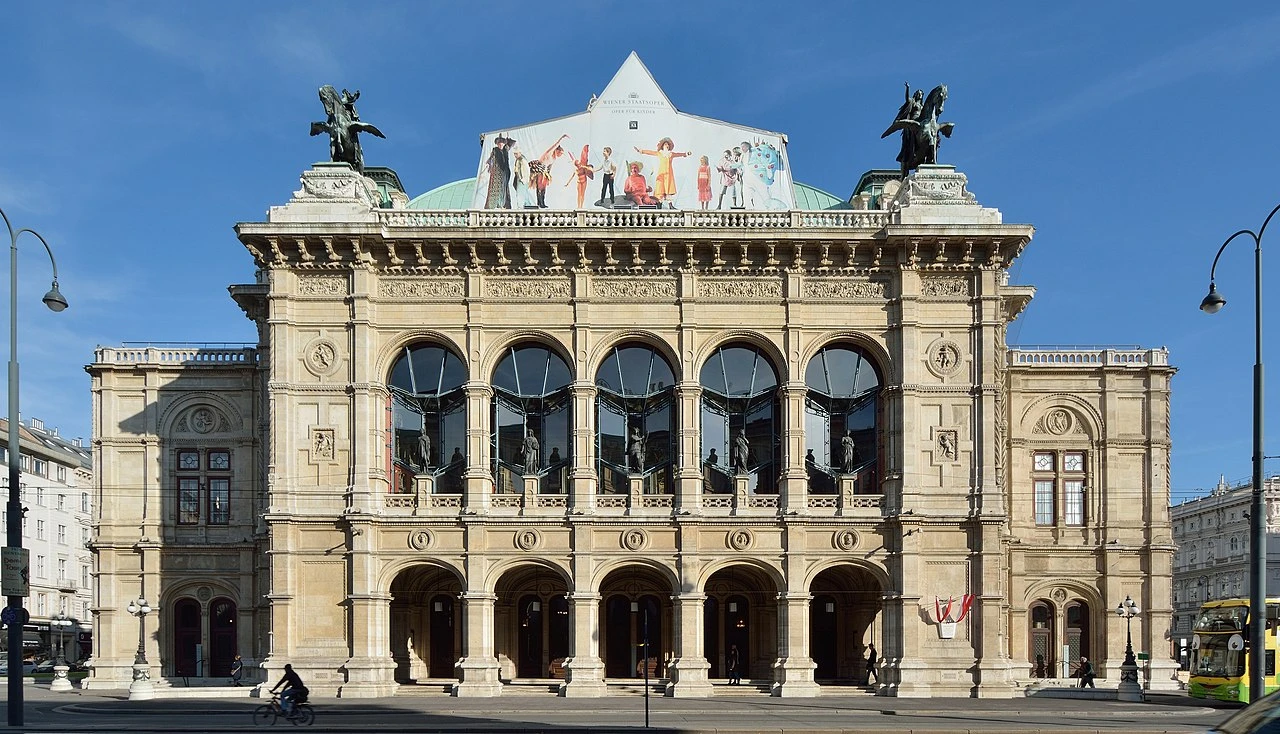
Vienna · 1 km
Vienna State Opera
Content & sources
Photo: P e z i · CC BY-SA 3.0 at
Vienna · 1 km
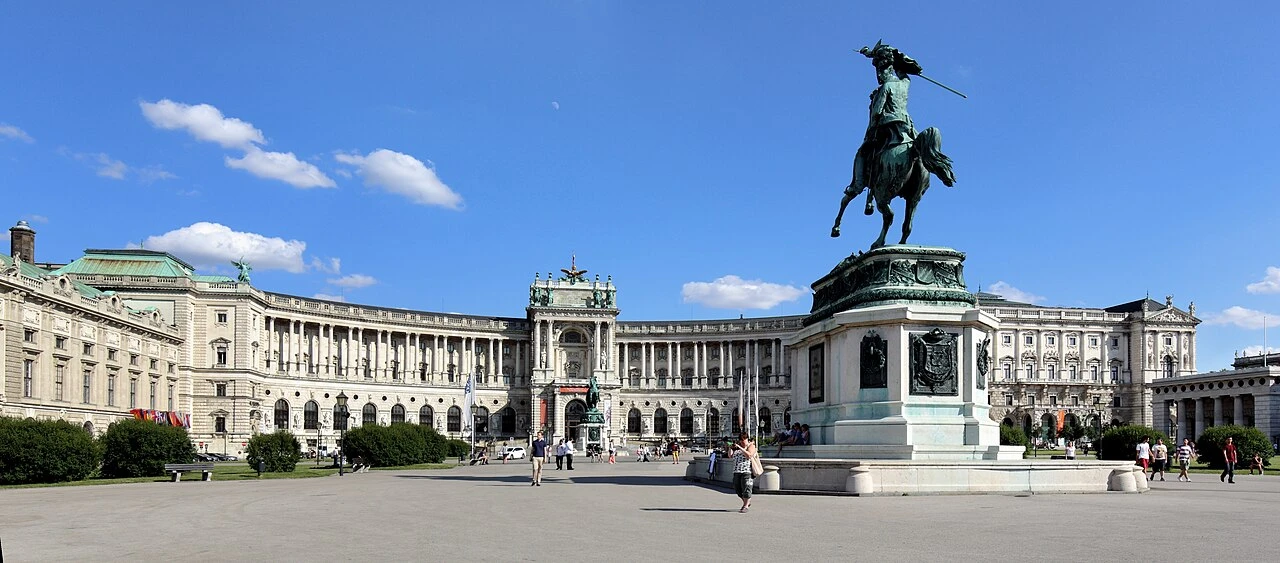
Hofburg
Content & sources
C.Stadler/Bwag · CC BY-SA 3.0 at
Vienna · 1 km
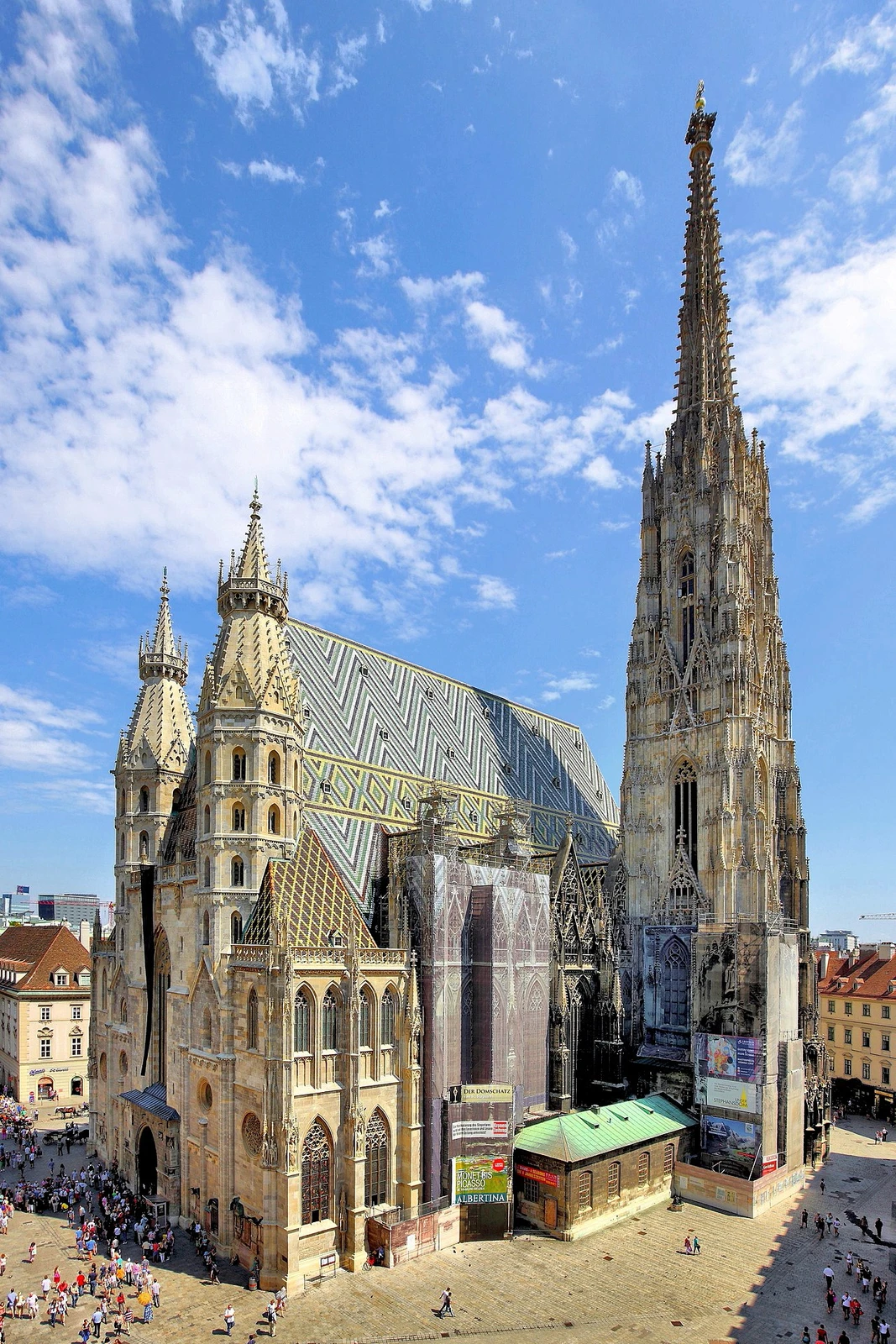
St. Stephen's Cathedral
Content & sources
C.Stadler/Bwag · CC BY-SA 4.0
Vienna · 1 km
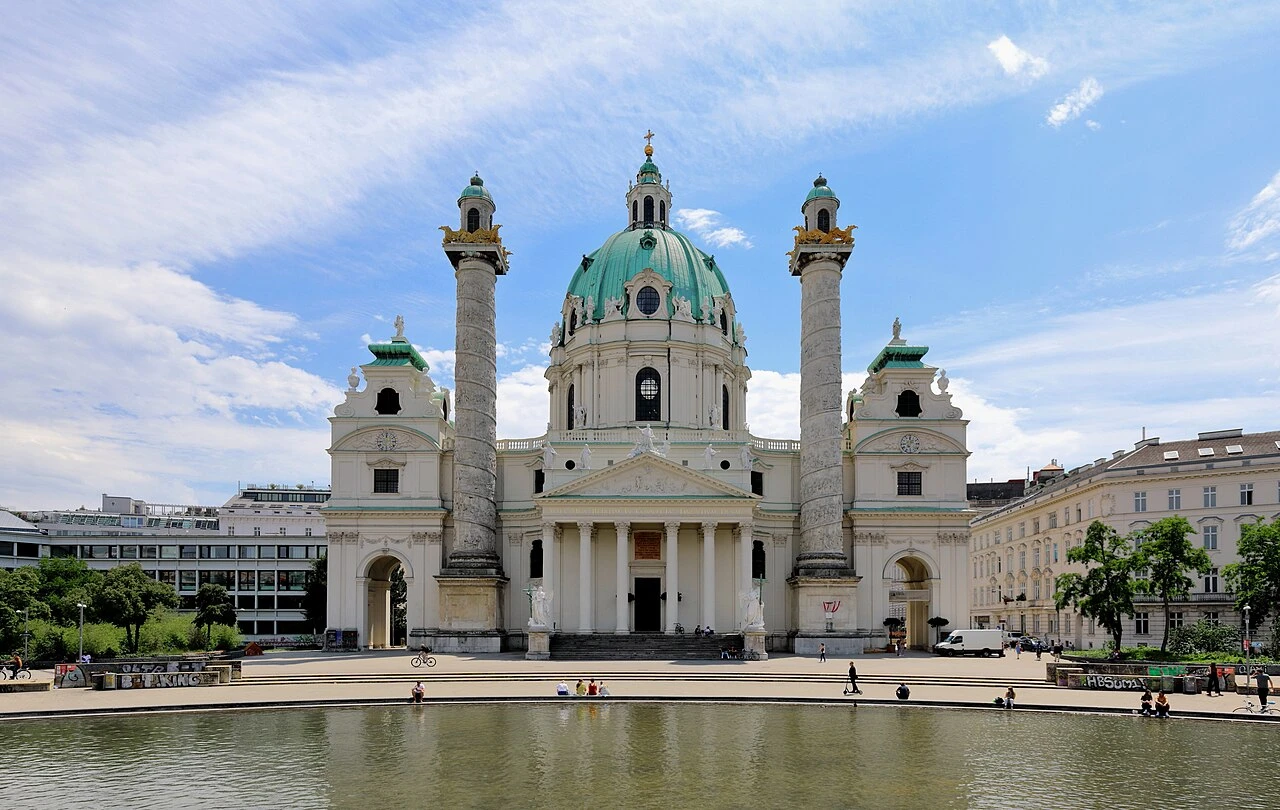
Wiener Karlskirche
Content & sources
C.Stadler/Bwag · CC BY-SA 4.0
Art museums
More art museum audio guides
Budapest · 29 artworks
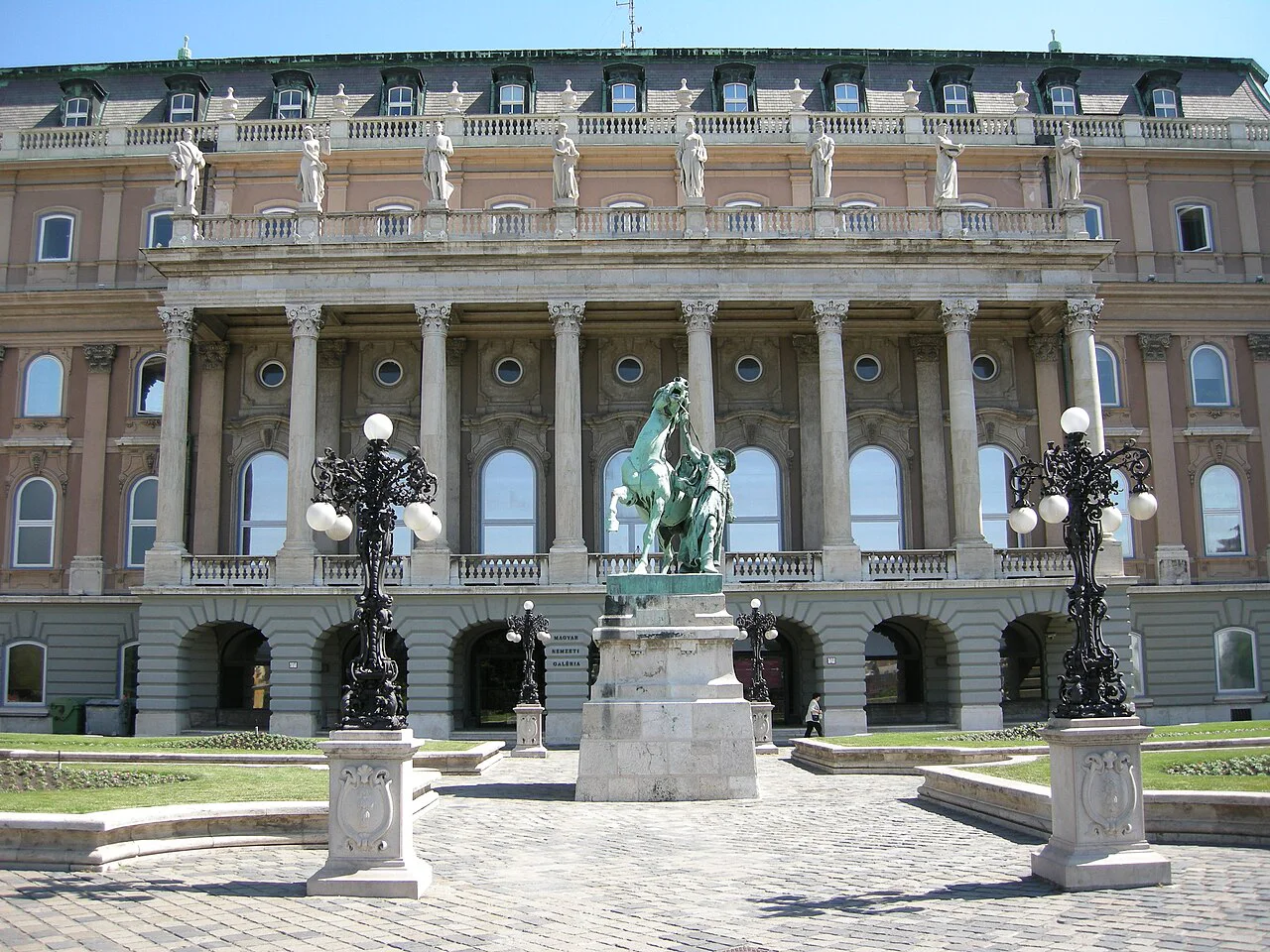
Hungarian National Gallery
Content & sources
Yoav Dothan · Public domain
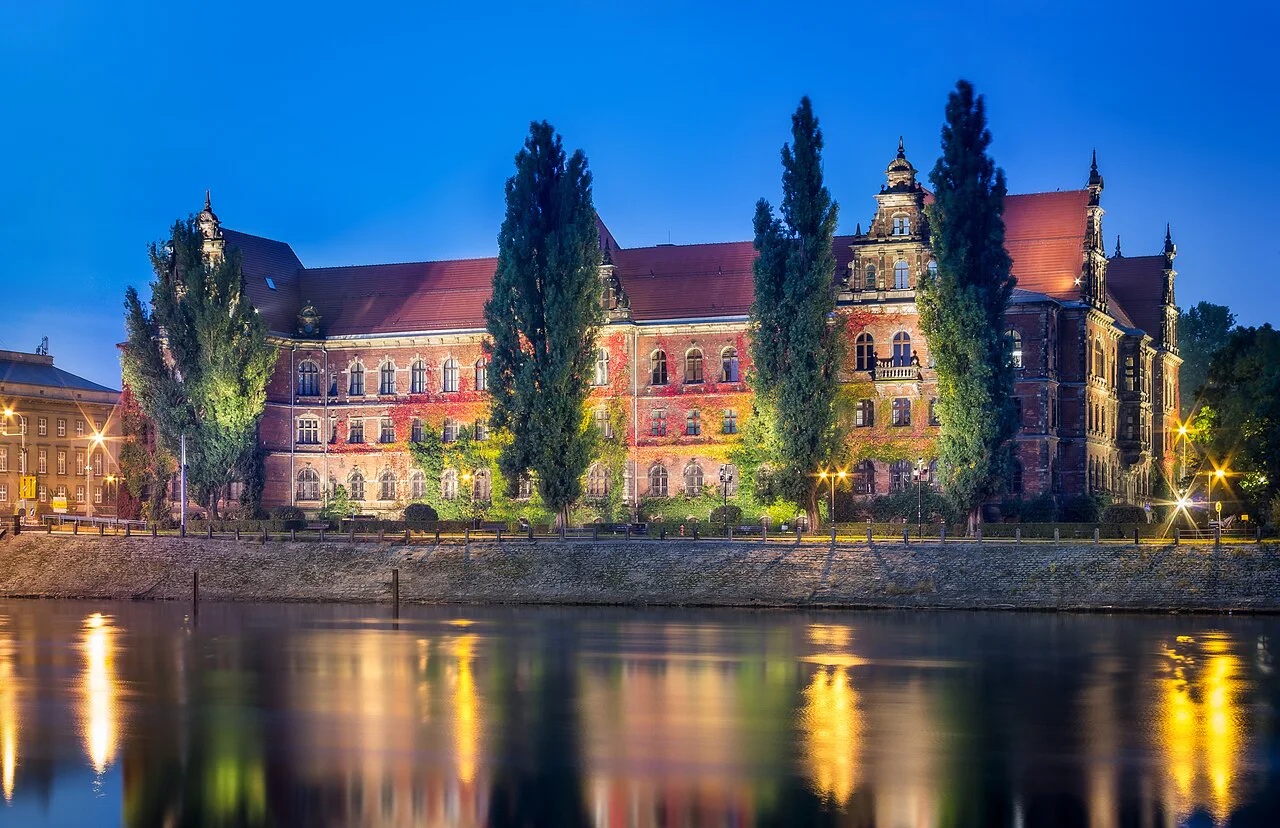
Wrocław · 44 artworks
Muzeum Narodowe we Wrocławiu
Content & sources
Photo: Jar.ciurus · CC BY-SA 3.0 pl
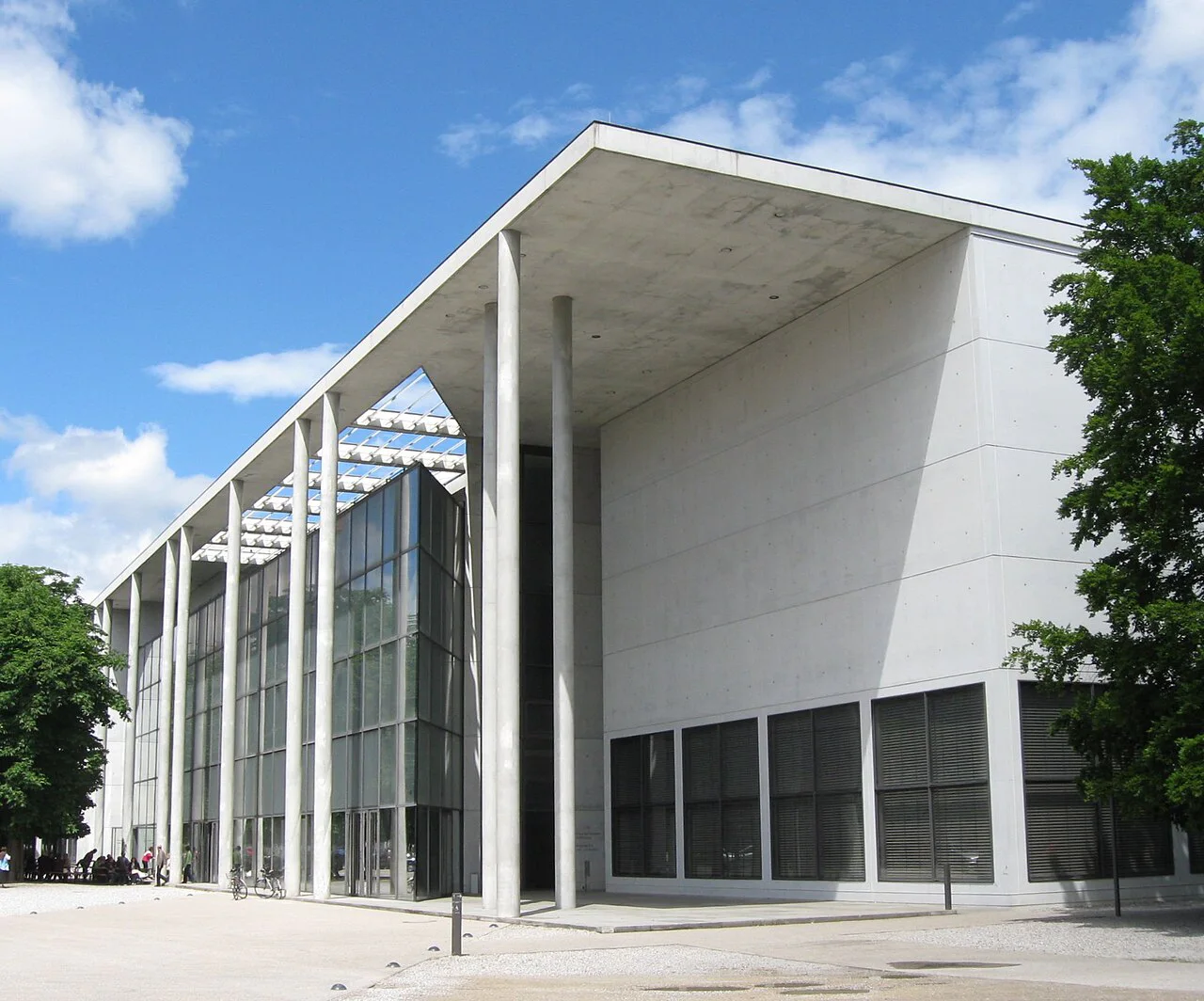
Munich · 6 artworks
Pinakothek der Moderne
Content & sources
Photo: Rufus46 · CC BY-SA 3.0
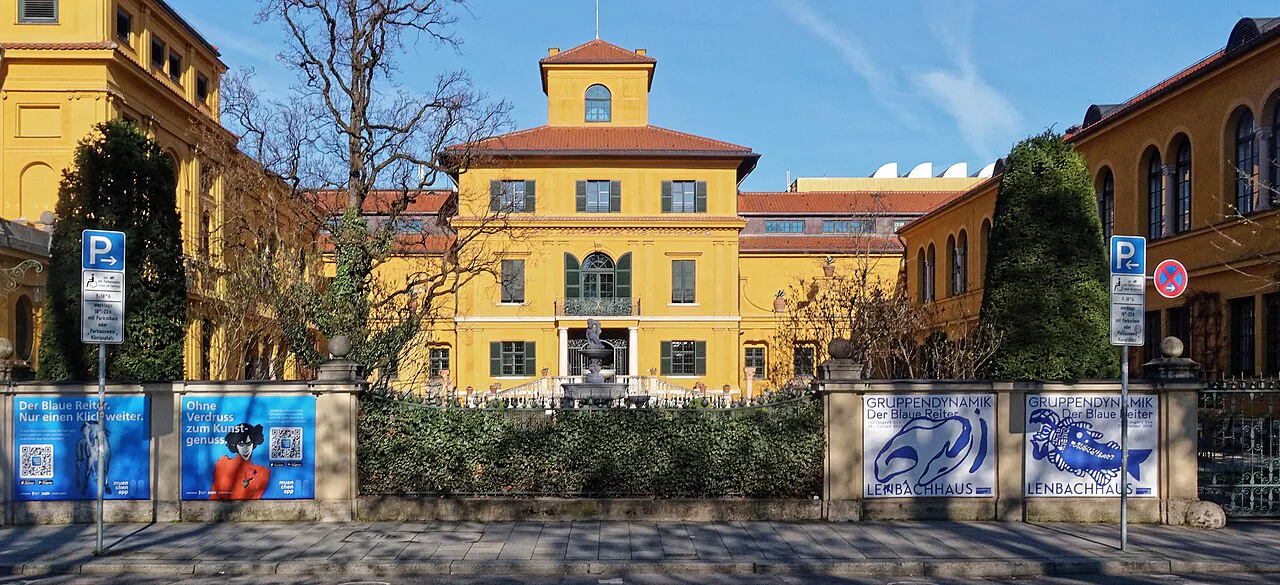
Munich · 33 artworks
Städtische Galerie im Lenbachhaus
Content & sources
Burkhard Mücke · CC BY-SA 4.0
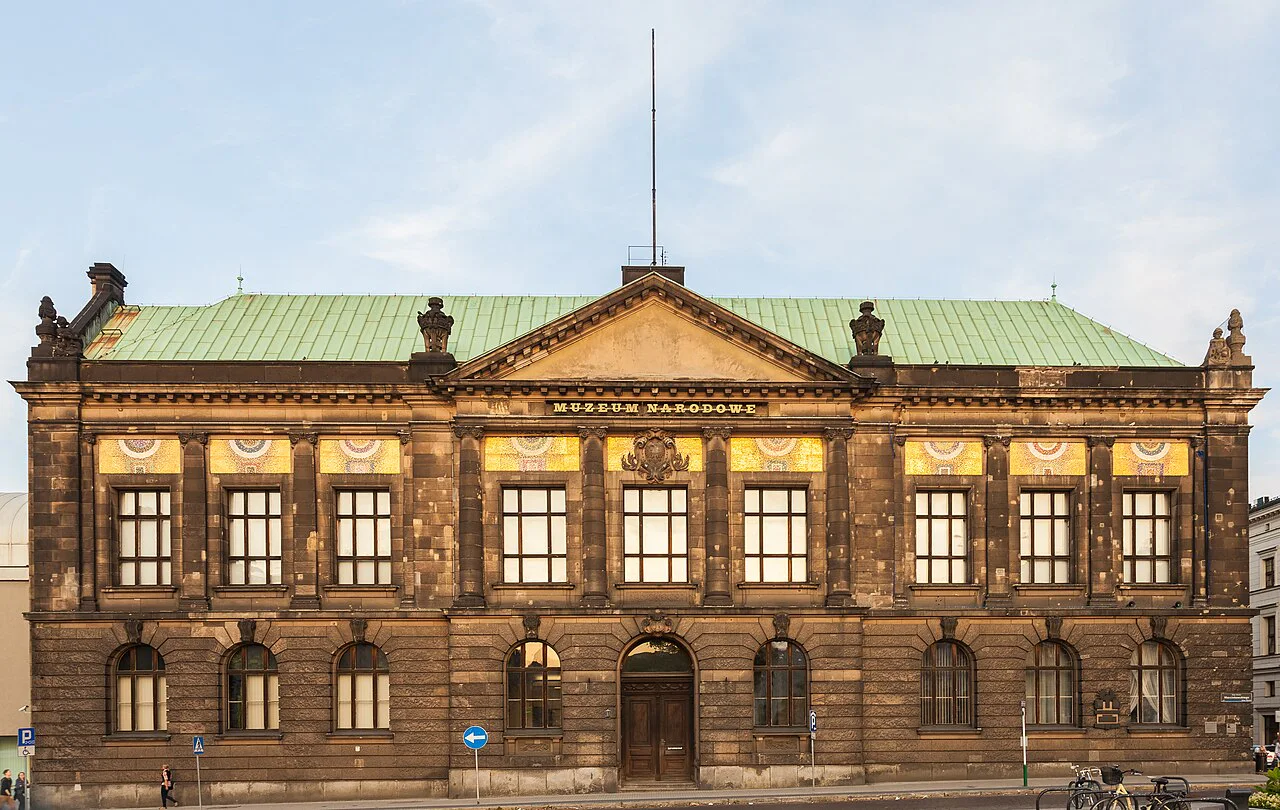
Poznań · 28 artworks
Muzeum Narodowe w Poznaniu
Content & sources
Diego Delso · CC BY-SA 4.0
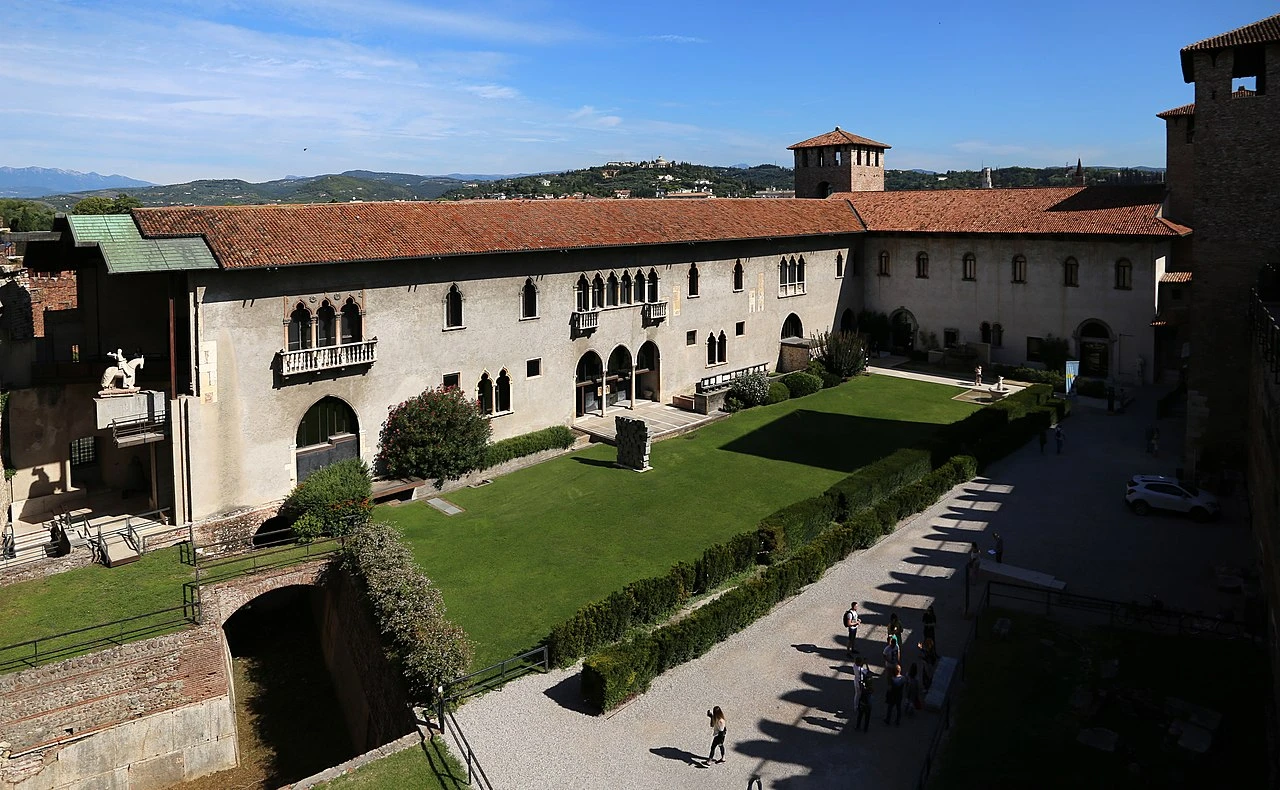
Verona · 65 artworks
Castelvecchio Museum
Content & sources
Photo: Sailko · CC BY-SA 4.0