Stanza · Audio guide
Μουσείο Ακρόπολης Audio Guide
A place to remember. A story to take with you.
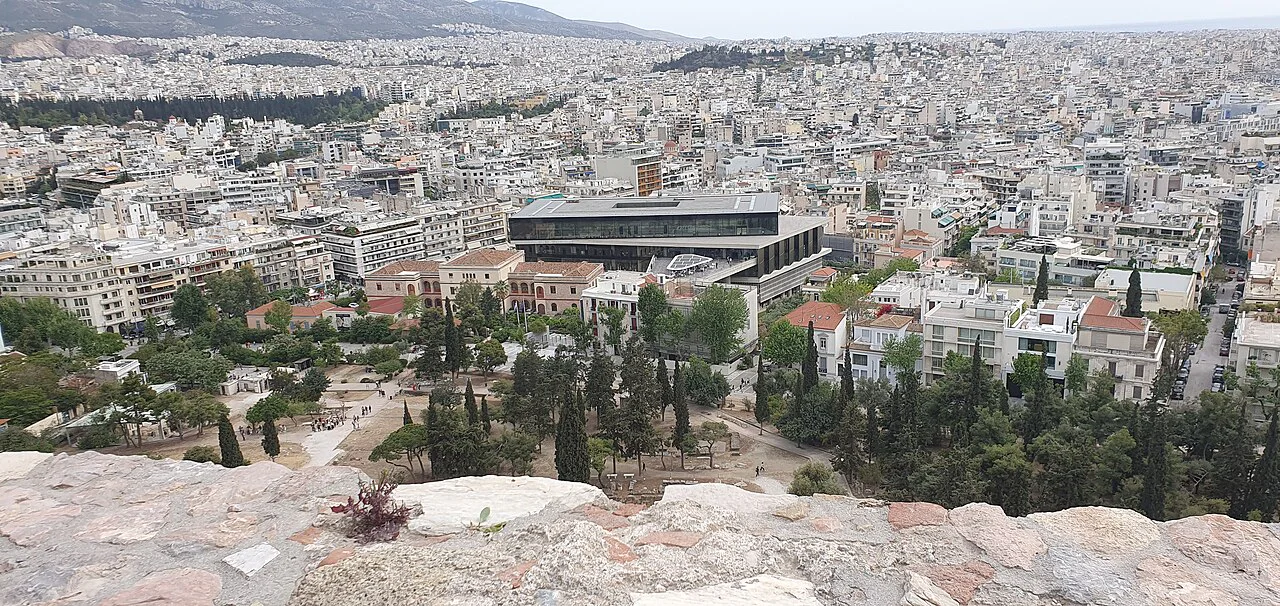
The Acropolis Museum is an archaeological museum focused on the findings of the archaeological site of the Acropolis of Athens. It was built to house every artifact found on the rock and on the surrounding…
Download Stanza, then search for “Μουσείο Ακρόπολης”.
About the tour
One guide. Your kind of visit.
The Acropolis Museum is an archaeological museum focused on the findings of the archaeological site of the Acropolis of Athens. It was built to house every artifact found on the rock and on the surrounding slopes, from the Greek Bronze Age to Roman and Byzantine Greece.
The Μουσείο Ακρόπολης guide tells the stories of 35 artworks, including Kritios Boy (Critius), Parthenon Frieze (Phidias), Rampin Rider (Roccuz [1]), Peplos Kore (Unknown Artist), Moschophoros (Unknown Artist), Antenor Kore (Antenor), Euthydikos Kore (Unknown Artist), and Kore of Lyons (Unknown Artist). Every artwork is free to hear in the Stanza app until 1 January.
Ready when you are.
- 01Get the free Stanza app.
iOS & Android
- 02Find your guide.
“Μουσείο Ακρόπολης”
- 03Download before you go.
Works offline
Audio guide / 35 artworks
Inside the guide
Get to know a few of the stories before you go. Open a stop to read more.
01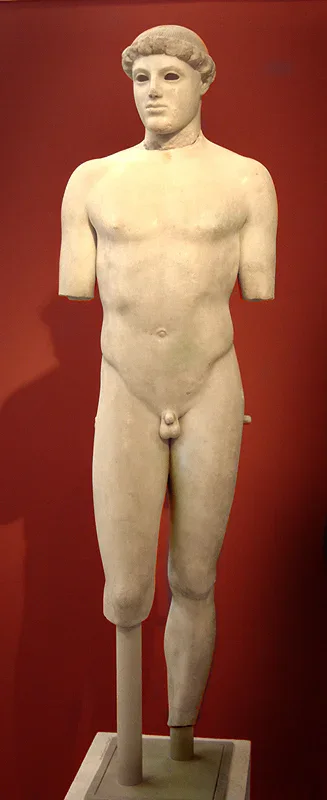
Kritios Boy
No statue we know of had stood this way before. His weight rests on his left leg, and his right foot steps forward with the knee bent. Earlier figures were stiff, built from simple shapes. Here the body works as one connected system. The pelvis lifts on the left, the spine curves like an S, and the shoulder line dips on the left to balance it. His head tilts a little toward his right shoulder. His ribs are spread as if he is breathing. He stood on the Acropolis as an offering for a young winner at the Panathenaic games, just before the Persians destroyed it in 480. He takes his name from Kritios, who worked with Nesiotes, though only a thin thread of evidence ties him to this boy. The Persian rubble buried him. His torso was found in 1865. His head turned up twenty three years later, between the museum and the south wall, and the two were joined. The old smile is gone. His lips are shaped plainly and his expression is grave, and that places him at the transition into classical sculpture.
Listen in the appUser:Tetraktys · CC BY-SA 3.0
02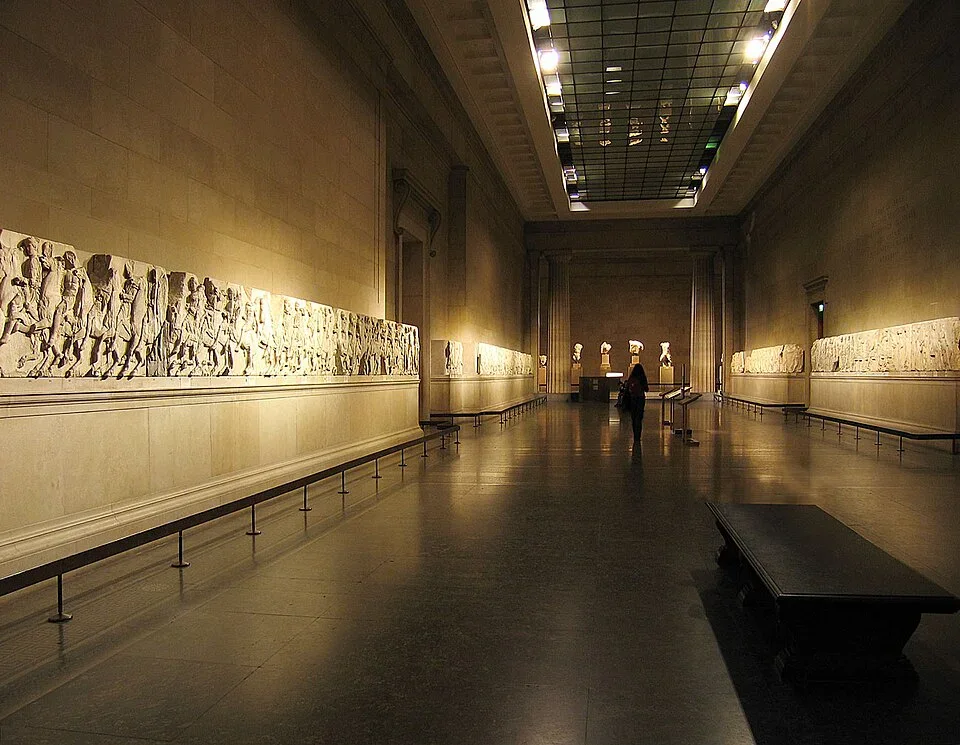
Parthenon Frieze
In the heads of two seated gods, Hera and Apollo, there are small holes drilled into the marble. They are not damage. They probably held wreaths of gilded bronze, so the bare stone you see is not how these figures were meant to look. The whole frieze was once painted, and some figures may have held painted objects as well. None of that colour survives. This strip ran around the top of the Parthenon's inner chamber. Phidias most likely directed the carving, between 443 and 437 BC. What remains seems to show the city's own festival rather than a myth. Horsemen ride, chariots follow, people lead animals to sacrifice, and women carry ritual objects. They move toward seated gods at the far end, a third taller than everyone else. The scene at the center appears to show a new robe being handed to Athena. A fifth of the whole strip was destroyed when the Venetians bombarded the temple in 1687. What is gone is known only from drawings made in 1674, thirteen years before. Nothing written at the time survives to say what the whole scene meant, and that is still not known.
Listen in the appPhoto: Solipsist~commonswiki · CC BY-SA 2.0
03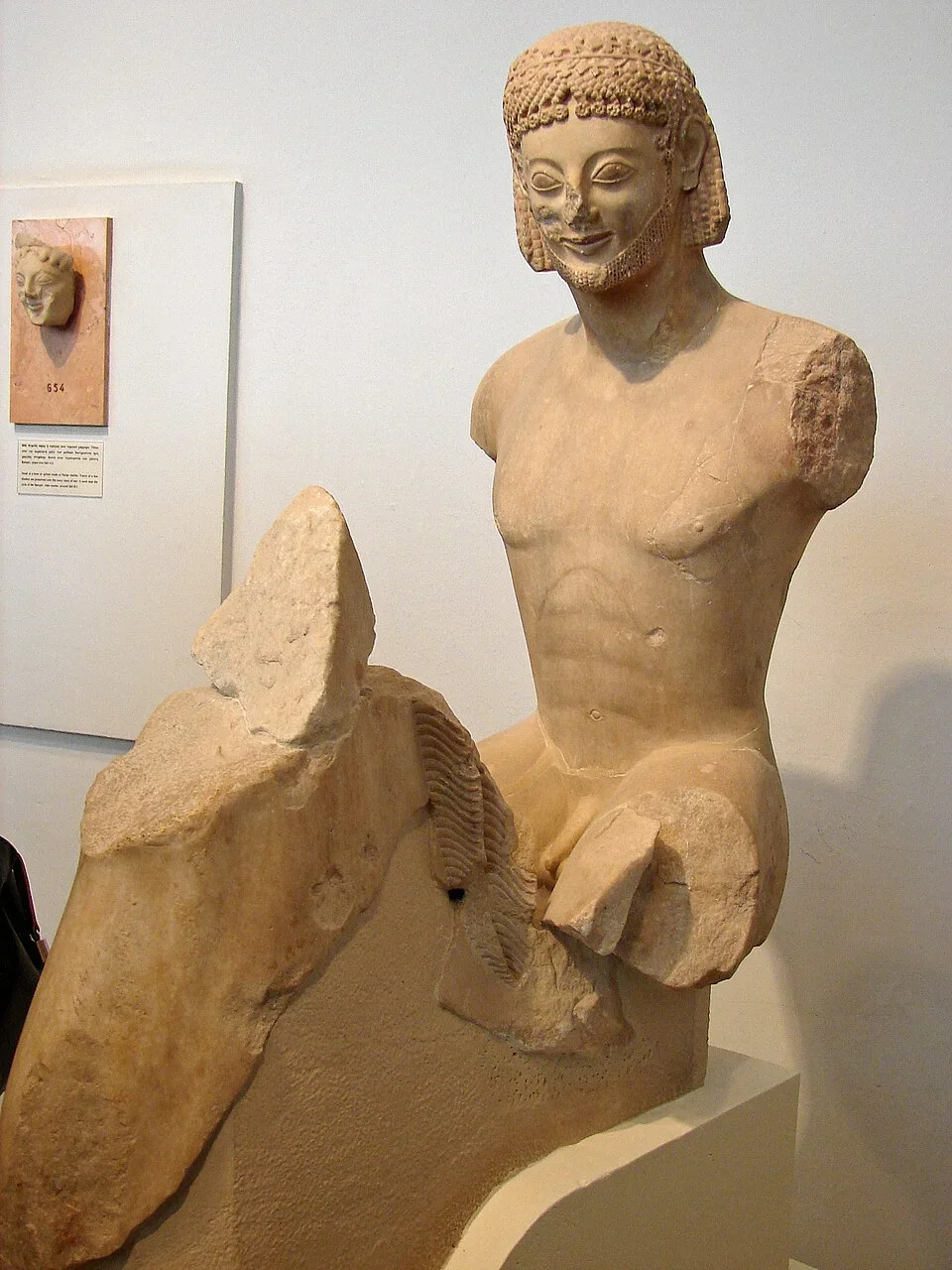
Rampin Rider
A rider sits on his horse, wearing a crown of lovage. That is the wreath given to winners of the Nemean and Isthmian Games, so he may be a victor in a race. But the head here is not the original marble. It is a plaster cast. The marble head is in Paris. It was found on the Acropolis in 1877 and given to the Louvre. The body and horse here came out of a ditch on the Acropolis. It was full of statues broken when the Persians sacked Athens in 480 BC. The two finds came ten years apart. For decades nobody connected them. Only in 1936 did it become clear they belonged to one rider. Now each city keeps its half and shows a cast of the other. In the Louvre, the marble head is displayed with a plaster copy of the body and horse.
Listen in the appRoccuz [1] · CC BY-SA 2.5 it
04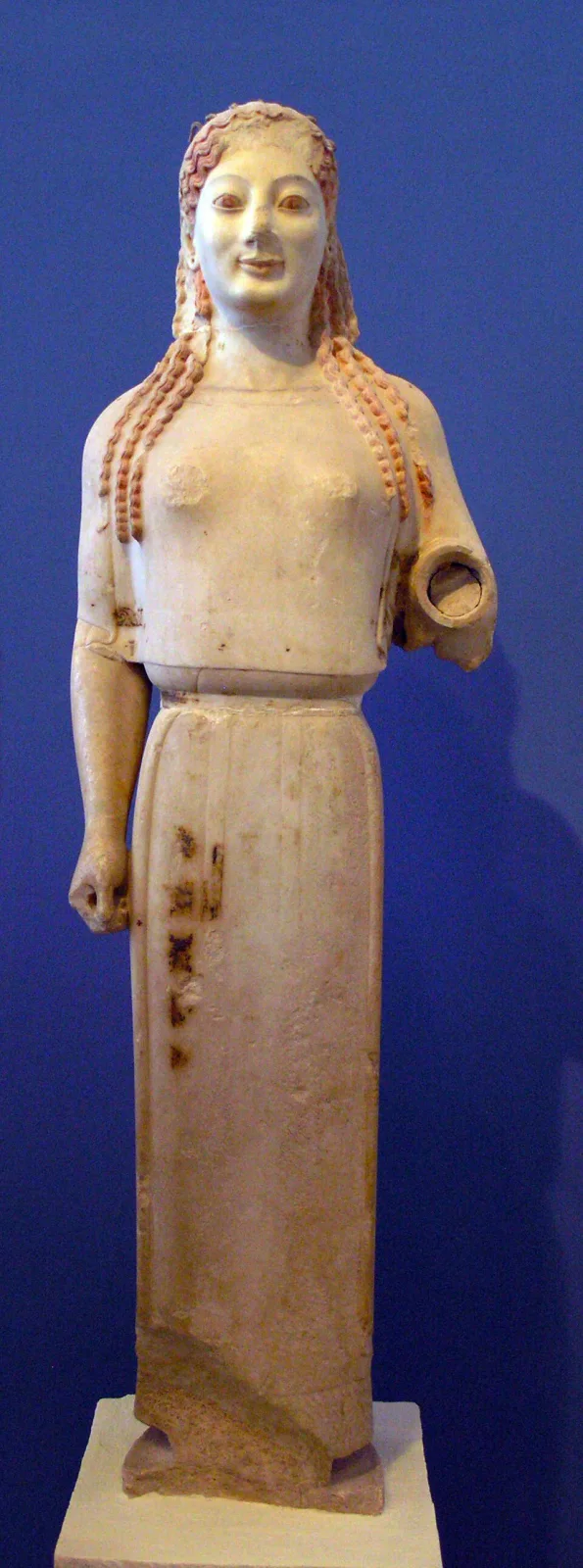
Peplos Kore
A young woman stands with her weight on one leg, her head tipped a little to one side, a smile on her face. Her right hand is closed into a fist against her thigh. Her left arm, made from a separate piece of stone, is gone. She is one of the best known korai on the Acropolis, statues of young women. But she is not a typical one. Most korai stand straight and look forward. When she was found in 1886, in three pieces, northwest of the Erechtheion, she was thought to wear a peplos, a woolen gown. That is where her name comes from. She wears no peplos. Her dress is far more likely a long Anatolian dress with a cape over it. Thirty-five holes run in two rows around her head, and one more sits in that closed right hand. They once held bronze. She may have worn a crown with rays, or a helmet, and held a bow and arrows, or a shield. That is why she may be a goddess. Traces of colour still cling to her. Red remains in her hair, and red and green on the dress. The white marble is not how she would have looked when she was made.
Listen in the appUnknown artist · CC BY-SA 2.5
05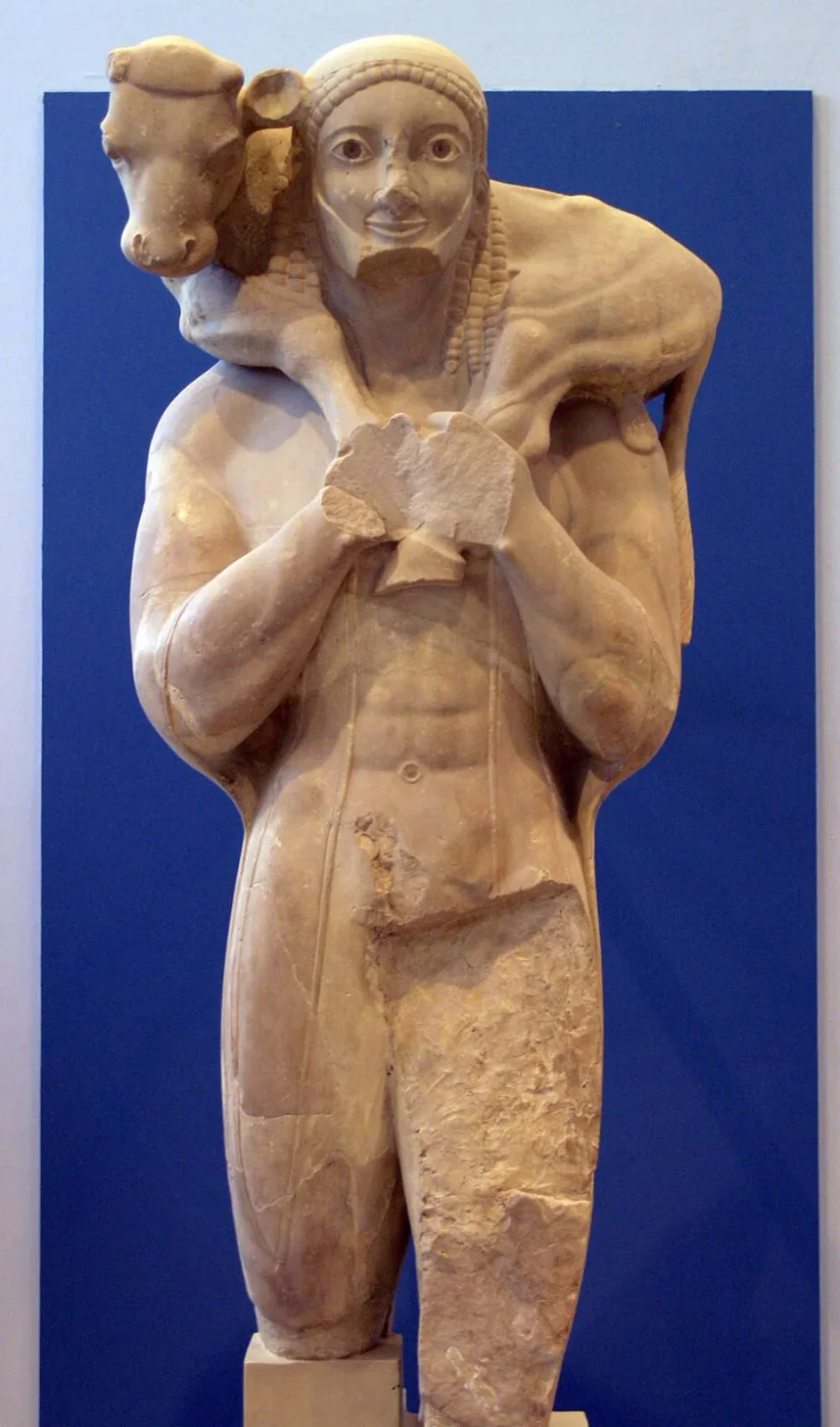
Moschophoros
For more than two thousand years this statue lay in the rubble on the Acropolis. That rubble was left when the old temple of Athena and the gifts around it were destroyed in 480 BC. It was dug out in fragments in 1864. Its base turned up by itself in 1887. By then both legs were gone below the knee, the hands had been broken off, and the chin was chipped away. The colored stones that once filled the eyes were lost too. What remains shows a young man stepping forward, his left foot a little ahead, a living calf on his shoulders. Its front legs are in his right hand, its back legs in his left, and the calf's legs cross into an X. The animal is gripped firmly, and that firmness was meant to show a strong bond between the two. The face still smiles, though the chin is gone. The calf came through whole and calm, while the man who carried it was left in pieces. The inscription on the base tells us who dedicated it. The name was probably Rhombos, son of Palos, a wealthy citizen of Attica. He could afford to pay a sculptor, whose name we do not know. He had himself carved carrying the calf he was about to give to a god, and set it on the Acropolis as his offering.
Listen in the appPhoto: Marsyas · CC BY-SA 2.5
06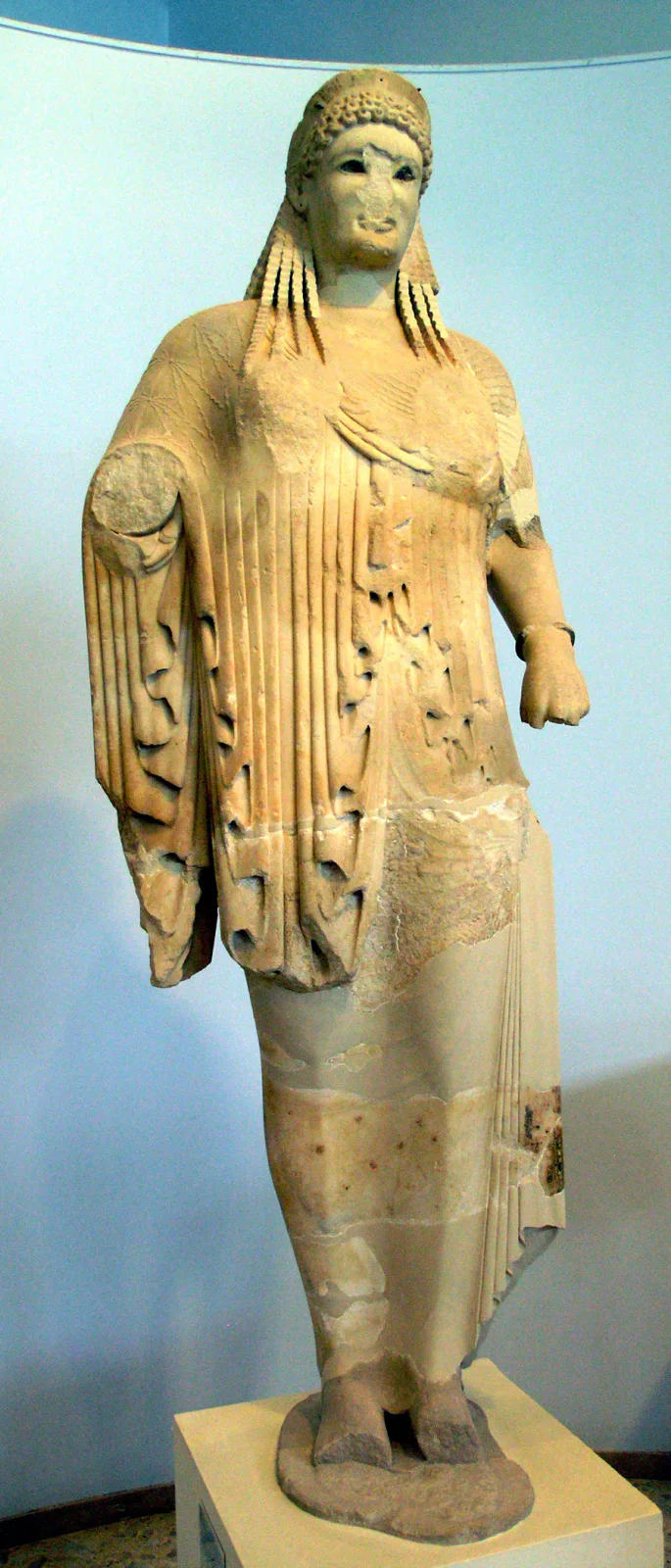
Antenor Kore
She stares straight at you, and her eyes are empty. The sockets once held inlays, probably glass, a rare thing in a marble statue of this time. She was set up in the sanctuary of Athena on the Acropolis, a statue of a girl given as an offering. Then she was broken. Her face is damaged, the lower right arm is gone, and the front of her feet is missing. The pieces ended up in the Persian rubble on the Acropolis. Her lower half and left arm were dug up east of the Parthenon in 1882. Her upper half turned up west of the Erechtheion in 1886, and parts of her calf followed. She was put back together from the scattered pieces. A base from the same excavation carries an inscription. It names the sculptor Antenor, the man who carved her, and a potter named Nearchos, who gave her to Athena. No one can be sure the base was ever hers.
Listen in the appAntenor · CC BY-SA 2.5
07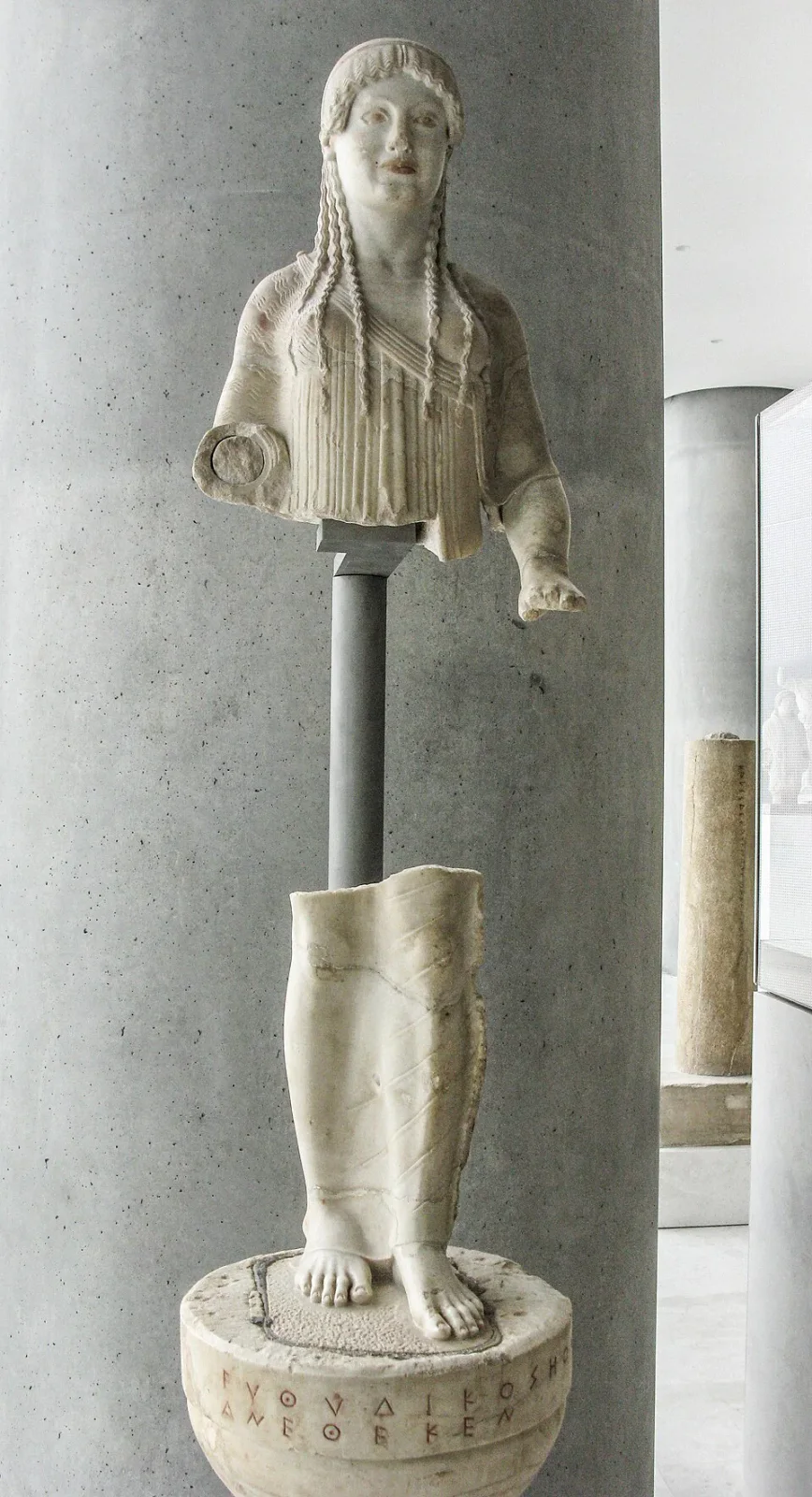
Euthydikos Kore
No one knows who carved this girl. We do know who gave her. His name was Euthydikos, son of Thaliarchos. He had the dedication cut into the round base in red letters, running right around it. To read it all, you had to walk around her. The corners of her mouth turn down, with no smile, unlike the girls carved before her. Her hair is worked with a care that runs around her neck and the neckline of her dress. And under the folds there is a body with a weight and solidity those earlier girls never had. Whoever made her may also have carved the Blonde Boy, another statue found on the Acropolis. She may be the last of the Acropolis girls, carved as a new, severer way was beginning. She did not come down to us whole. Her head and upper body were found in 1882, east of the Parthenon. Her legs, feet and base turned up near the Erechtheion in 1886 and 1887. It was Winter who understood that the two pieces were one girl.
Listen in the appPhoto: Ptyx · CC BY-SA 2.0
08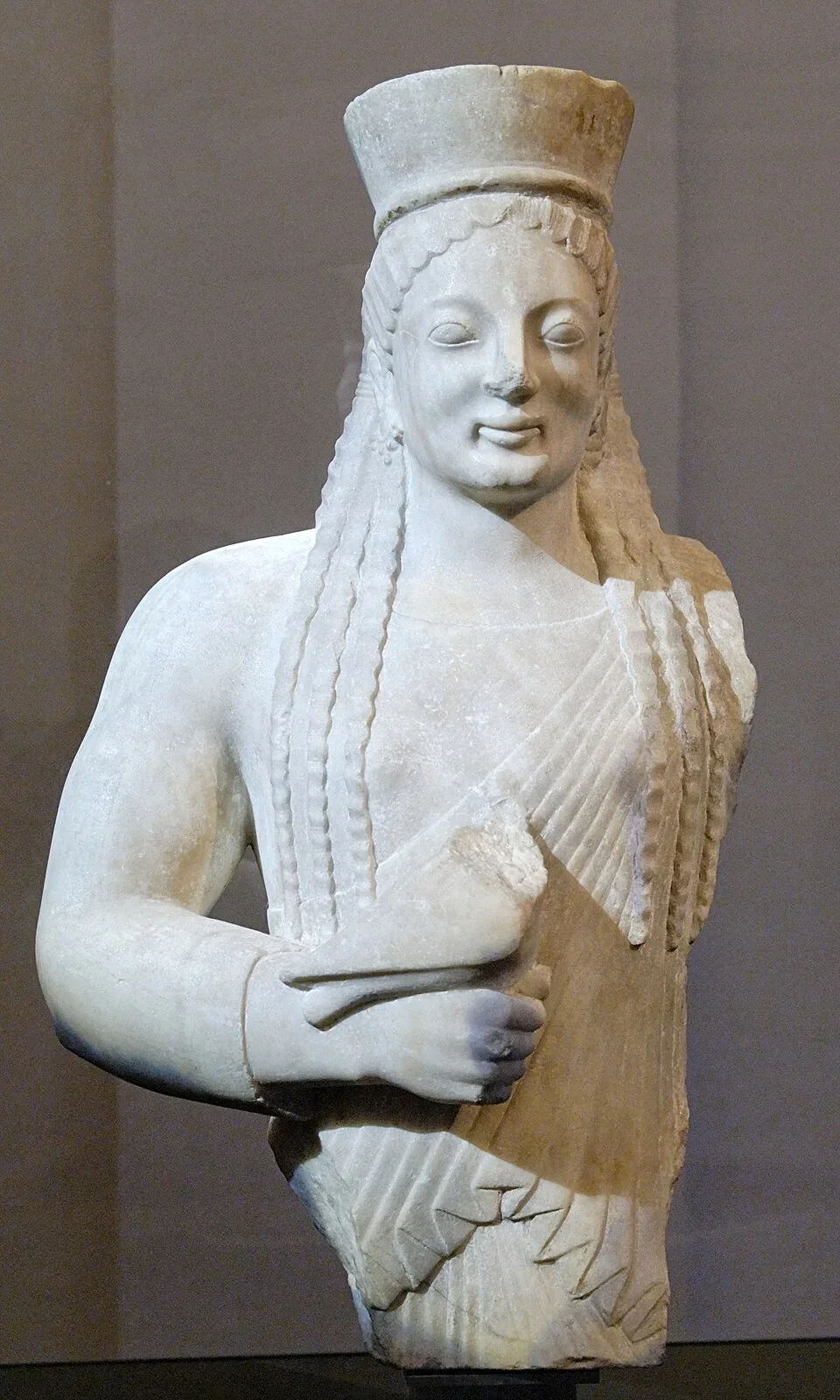
Kore of Lyons
When this girl was carved, nothing quite like her clothes had been seen on the Athenian Acropolis. She was the first statue there dressed in Ionian style. She wore a chiton with long sleeves, and a himation, a cloak, pinned diagonally over one shoulder. Women here wore a sleeveless peplos, with the cloak fastened at both shoulders. On her the diagonal runs the other way, over the left shoulder, which is usual on statues made in matching pairs. The cloak also curves above the buttocks, and Attic sculptors did not go on to copy that. The bird against her chest and the polos on her head were taken for the marks of a goddess. She was called Aphrodite, the Aphrodite of Marseille. When she was first written about in 1719, she was described as Egyptian in style. The diagonal cloak seemed to prove she had come from Ionia. She was found on the Acropolis, buried in the ruin left by the Persian Wars. The bust went to Lyon, while the lower part and part of the left arm came here. In 1935 a cast of the Lyon bust was matched to these fragments, and the two pieces were recognised as one girl.
Listen in the appPhoto: Jastrow · CC BY 2.5
09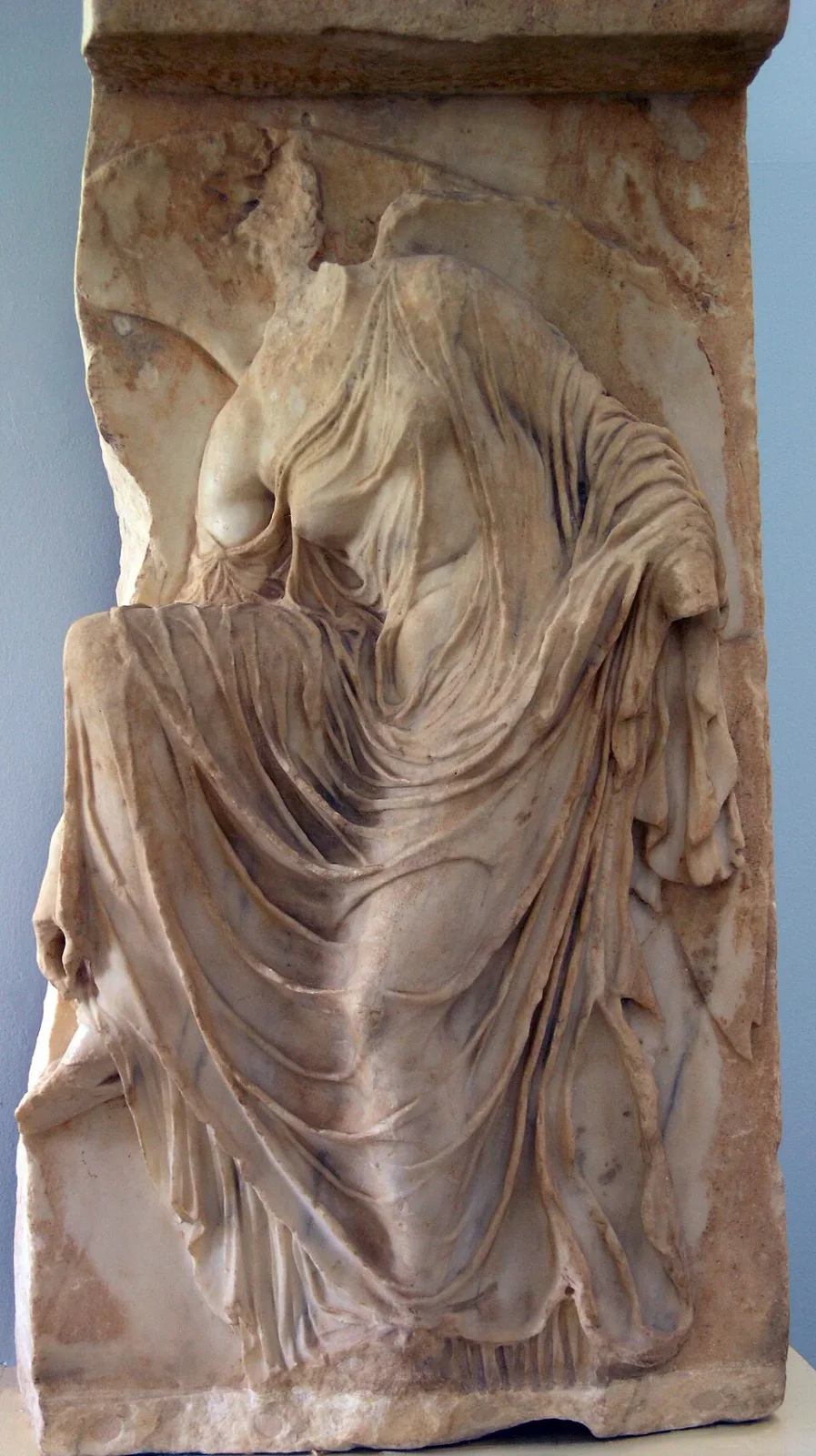
Nike untying her sandal
What is a goddess of victory doing, bent over her own foot? One foot rests on a rock, knee bent, the other leg taking her weight. Her wings frame her from behind, and her upper body turns toward you. The hand goes to the sandal. This was carved for a low wall around the Temple of Athena Nike, on the Acropolis. The wall was put up so people climbing there would not fall from the rock. Holes along its top once held a metal rail. The carvings celebrate Athens' victories, with winged Nikes leading bulls or decorating victory trophies. Here, instead, the goddess bends to her own sandal. In 1687 the Ottomans pulled the temple and its wall down to strengthen the rampart against the Venetians. The slab was dug up in 1835 near the temple. The sculptor, whose name is not known, carved the thin dress with sleeves pinned at both shoulders. One clasp has slipped, and the cloth has fallen from her right breast. It is cut so thin it seems wet and almost transparent, and it follows the turn of her body. And one hand seems to stop just short of the sandal. It looks like it holds the strap instead, and that act is what the relief is named for.
Listen in the appPhoto: Marsyas · CC BY-SA 2.5
10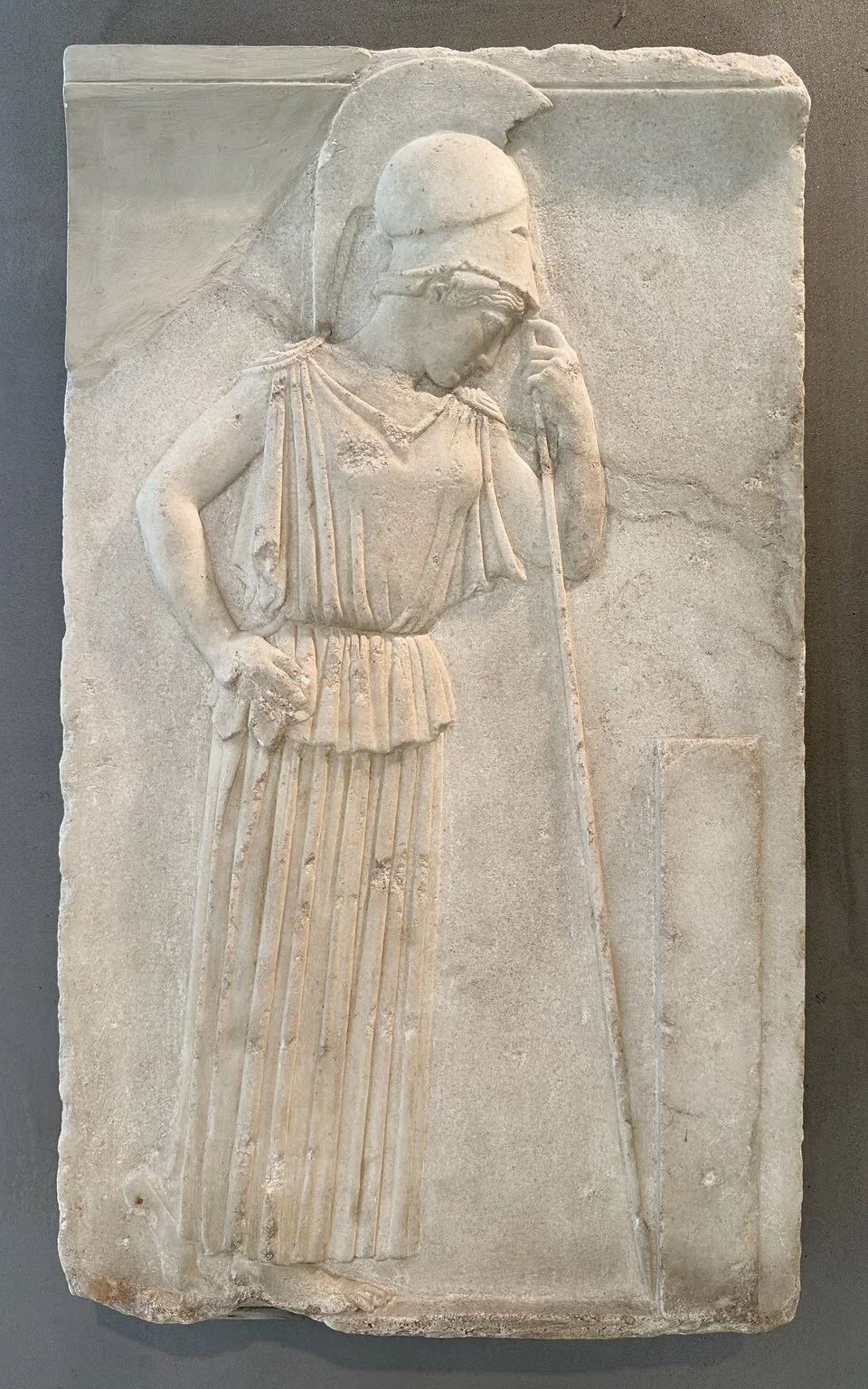
Mourning Athena
Her head dips a little toward the stone slab beside her. That small tilt is why she is called Mourning Athena. It has been argued about ever since she was found on the Acropolis in 1888. No one even knows who made her. She is Athena, goddess of wisdom and warfare, protector of Athens. A helmet sits on her head and she leans on a spear. One hand rests on her hip, one leg crossed over the other. Yet her head is bowed. Perhaps the slab marks the graves of Athenians killed in the Persian wars. Those wars devastated the Athenians, and this relief belongs to those very years. The helmet and the spear would fit a grave monument like that. She would be mourning her city's dead. The ground she stands on and the slab were painted blue.
Listen in the appNikos Kitsakis · CC BY 4.0
- 11
Persian horseman
Unknown Artist · -489
- 12
Angelitos Athena
Unknown Artist · c. 490–470 BC
- 13
Blond Kouros's Head of the Acropolis
Unknown Artist · 490–480 BC
- 14
Trisomatos Typhon
Unknown Artist · c. 570 BC
- 15
Procne and Itys
Alcamenes · c. 430 BC
- 16
Nike of Callimachus
NA · 489 BC
- 17
Apobates Base
Unknown Artist · 300–299 BC
- 18
Kore 670
Unknown Artist · 520–510 BC
- 19
Relief of Samioi voting
Unknown Artist · 403–402 BC
- 20
Sacrifice relief (Acropolis Museum n. 581)
Boetticher, Adolf, 1842-1901 · 6th century BC
- 21
Hydra pediment
Archaeological Society of Athens · c. 570 BC
- 22
Hermes and Charites relief
Unknown Artist
- 23
Bust of Alexander (Acropolis Museum n. 1331)
Euphranor, Leochares · -330
- 24
Kore (Acropolis Museum n. 682)
Unknown Artist · -500
- 25
Kore of Acropolis (Acropolis Museum n. 680)
Unknown Artist · -530
- 26
Akropolis Kore 674
Unknown Artist
- 27
Hercules Apotheosis Pediment
Unknown Artist
- 28
Relief of the Poet (Acropolis Museum)
de:Emil Krüger (1855 - 1925) · -400
- 29
Athena and Giant (Acropolis Museum n. 631)
Unknown Artist
- 30
Sphinx (Acropolis Museum n. 630)
Unknown Artist · 560–550 BC
- 31
Sphinx (Acropolis Museum n. 632)
Unknown Artist
- 32
Colossal Owl
Unknown Artist · -500
- 33
Horse bust (Acropolis Museum n. 697)
Unknown Artist
- 34
Elia pediment
Unknown Artist · 560–550 BC
- 35
Lioness Devouring a Small Bull New Acropolis Museum
Unknown Artist
Μουσείο Ακρόπολης
Frequently asked questions
How much does the guide cost?
Free app download. Free until 1 January. Listed guide price: $1.99. Audio guide only. Venue admission is separate.
Can I listen without internet?
Yes. Download the guide’s audio, images, and maps in the app before your visit. Your downloaded content is then available offline.
Can I listen in my language?
In English for now. More languages soon.
Do I need to follow a schedule?
No. This is a self-guided experience. Choose your stops, pause whenever you like, and return to a story at your own pace.
Which artworks are in the Μουσείο Ακρόπολης audio guide?
35 artworks, including Kritios Boy (Critius), Parthenon Frieze (Phidias), Rampin Rider (Roccuz [1]), Peplos Kore (Unknown Artist), Moschophoros (Unknown Artist), Antenor Kore (Antenor), Euthydikos Kore (Unknown Artist), and Kore of Lyons (Unknown Artist). The full list is on this page.
Is this the museum’s official audio guide?
No. Stanza is an independent audio guide app and is not affiliated with Μουσείο Ακρόπολης. Museum admission is separate.
At your own pace
Explore Μουσείο Ακρόπολης.
Download Stanza, then search for “Μουσείο Ακρόπολης”.
Free app download · Guide price shown in the app
Keep exploring
Nearby audio guides
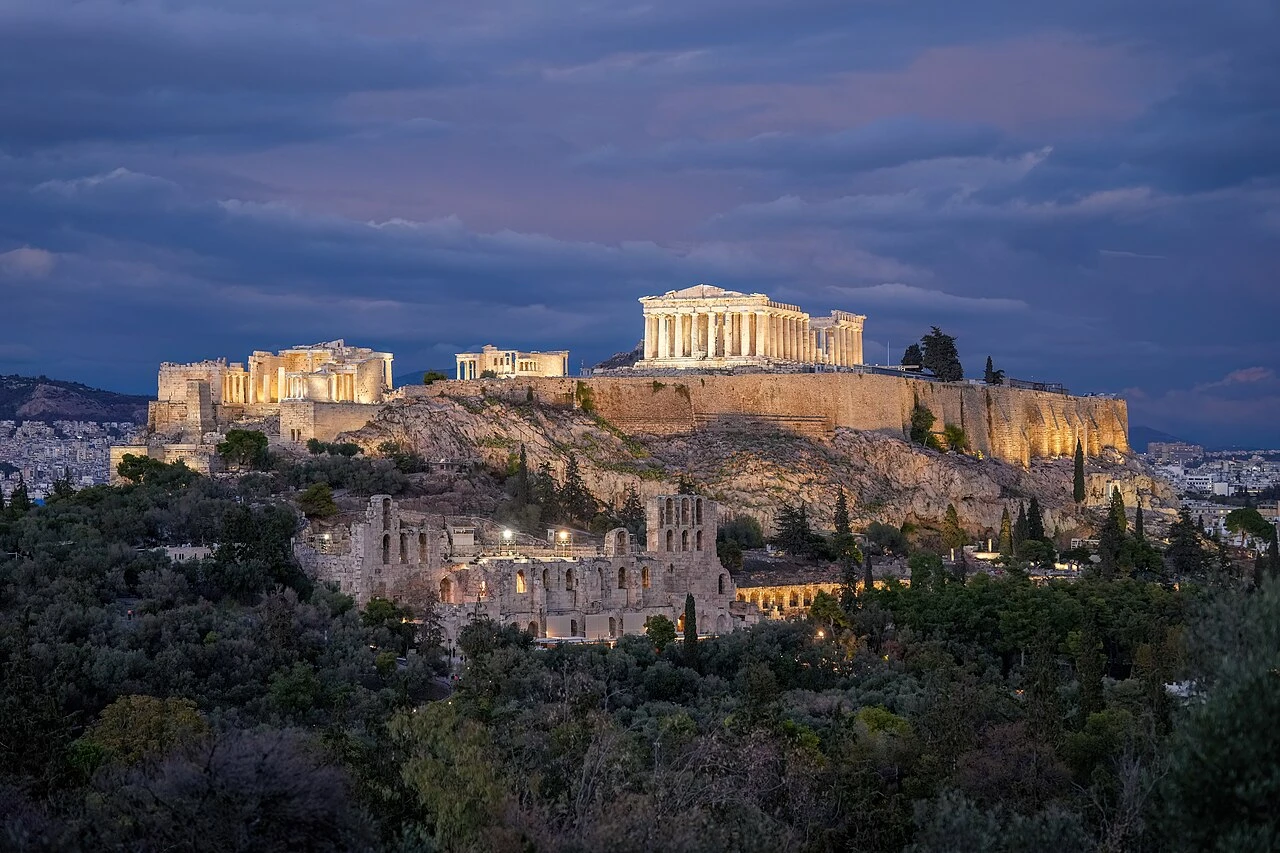
Athens · 1 km
Acropolis of Athens
Content & sources
Photo: Giles Laurent · CC BY-SA 4.0
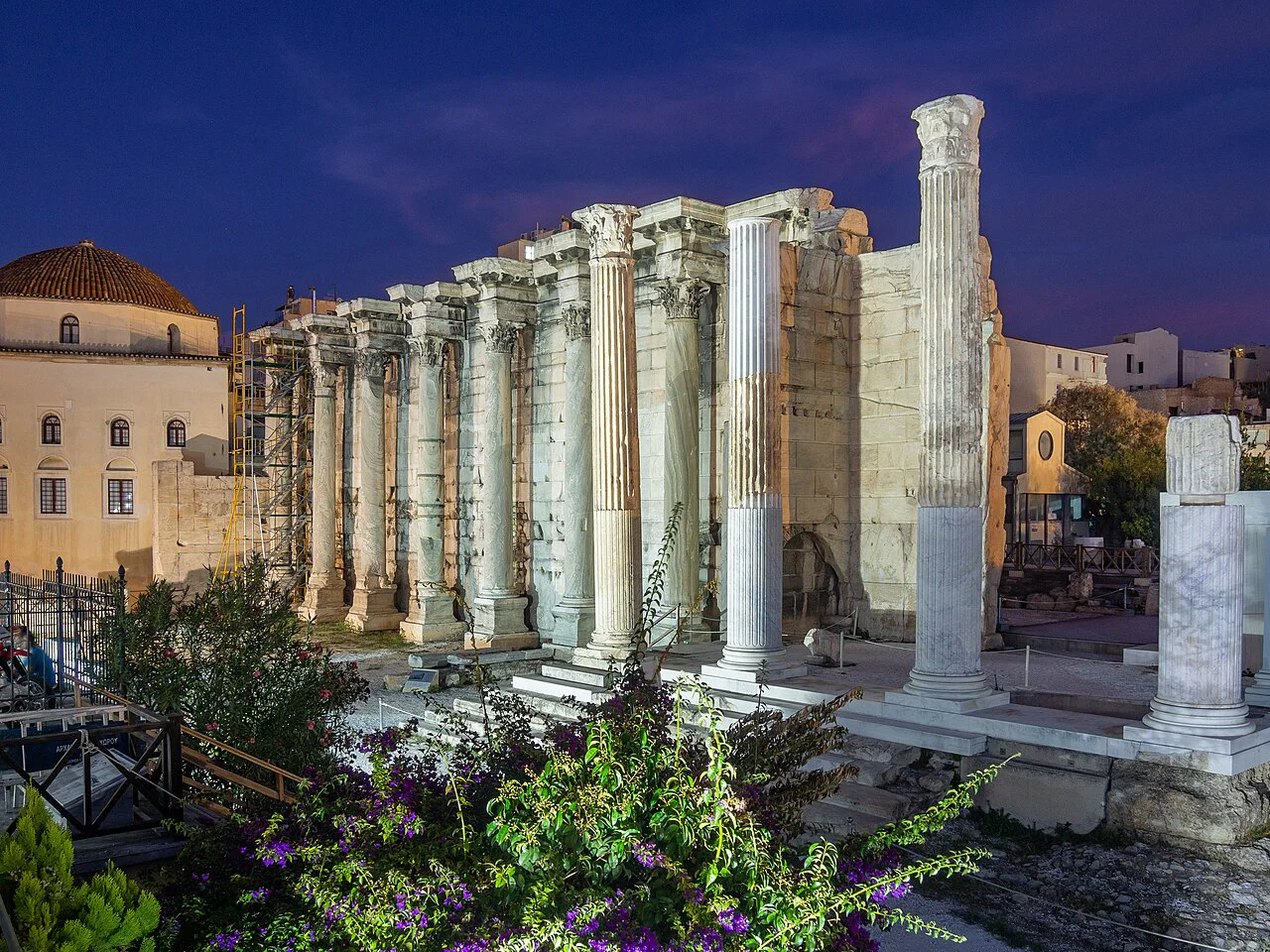
Athens · 1 km
Βιβλιοθήκη του Αδριανού
Content & sources
Photo: C messier · CC BY-SA 4.0
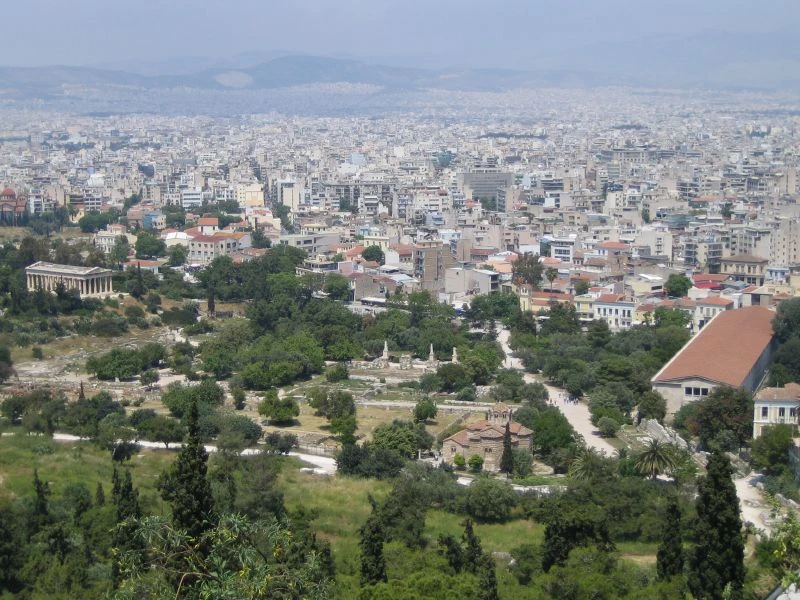
Athens · 1 km
Ancient Agora of Athens
Content & sources
https://www.flickr.com/people/jonezes/ · CC BY-SA 2.0
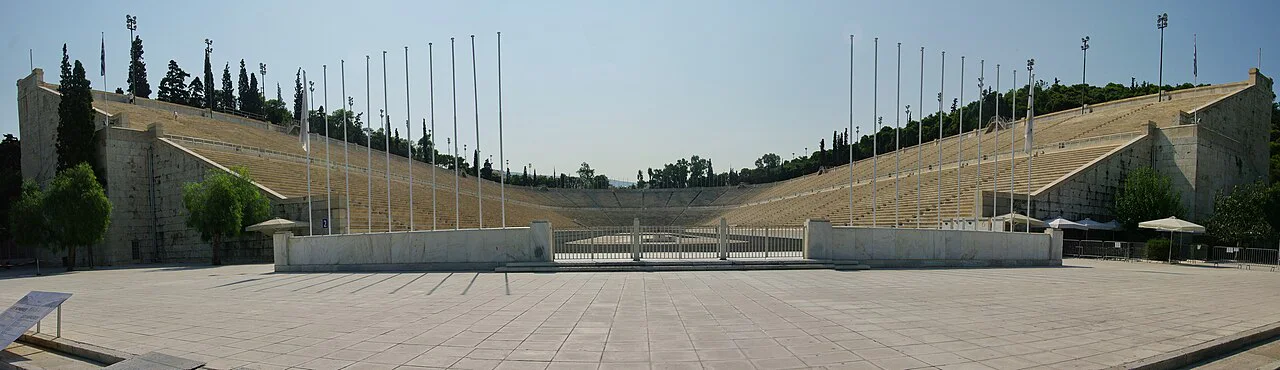
Athens · 1 km
Παναθηναϊκό Στάδιο
Content & sources
Bgabel · CC BY-SA 3.0
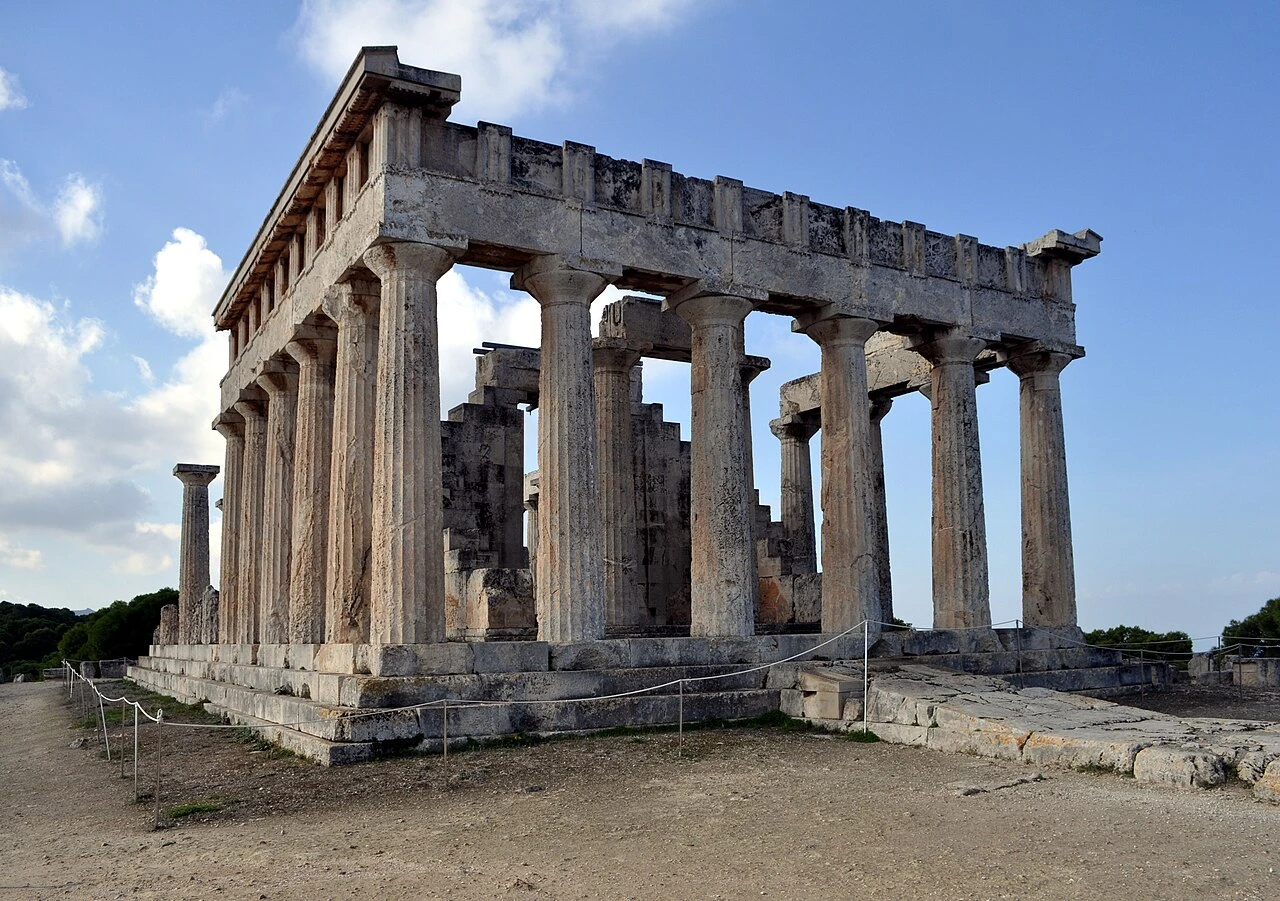
Mesagros · 29 km
Temple of Aphaea
Content & sources
Paweł 'pbm' Szubert (talk) · CC BY-SA 3.0
Art museums
More art museum audio guides

Athens · 25 artworks
Εθνική Πινακοθήκη-Μουσείο Αλεξάνδρου Σούτζου
Content & sources
Photo: Leeturtle · CC BY-SA 4.0

Bucharest · 28 artworks
National Museum of Art of Romania
Content & sources
Jorge Láscar from Australia · CC BY 2.0

Budapest · 29 artworks
Hungarian National Gallery
Content & sources
Yoav Dothan · Public domain
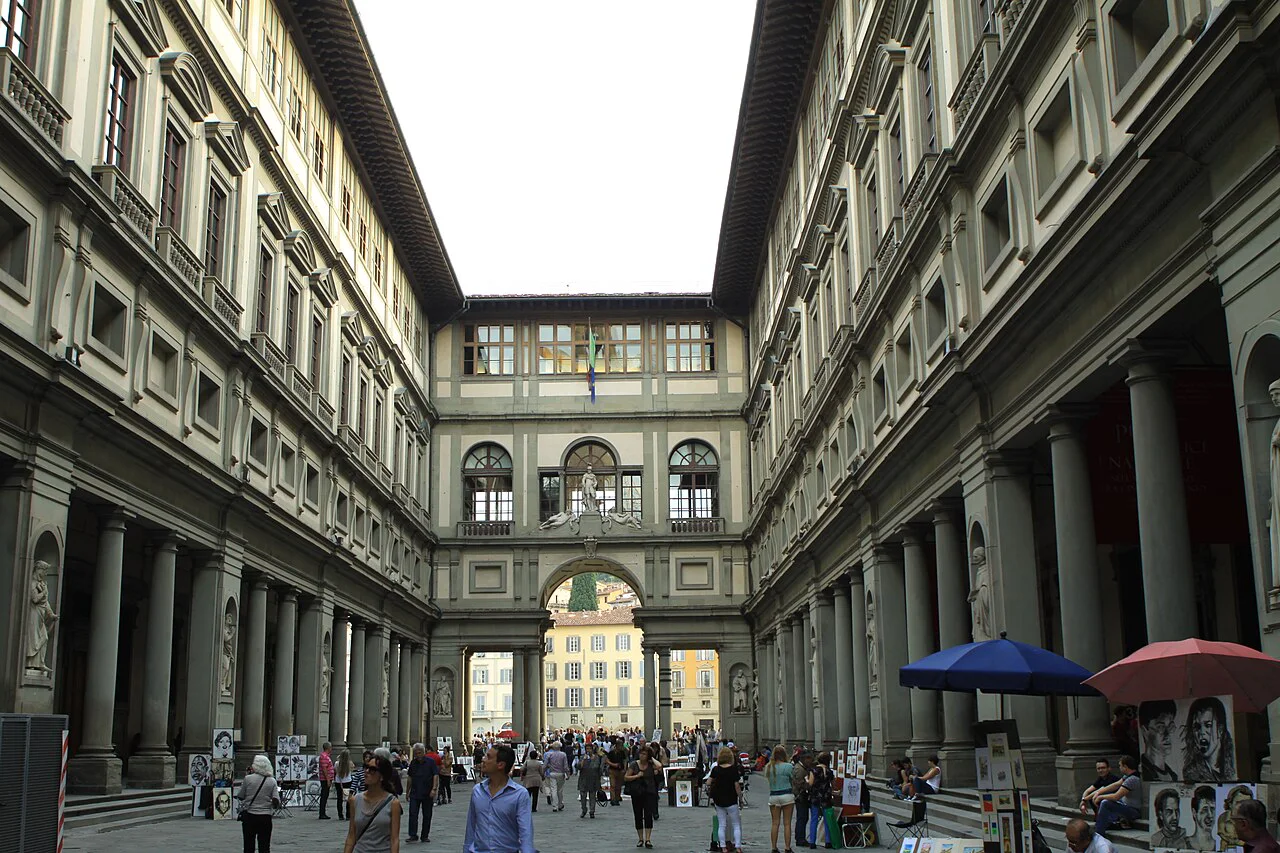
Florence · 70 artworks
Uffizi Gallery
Content & sources
Arek N. · CC BY-SA 3.0
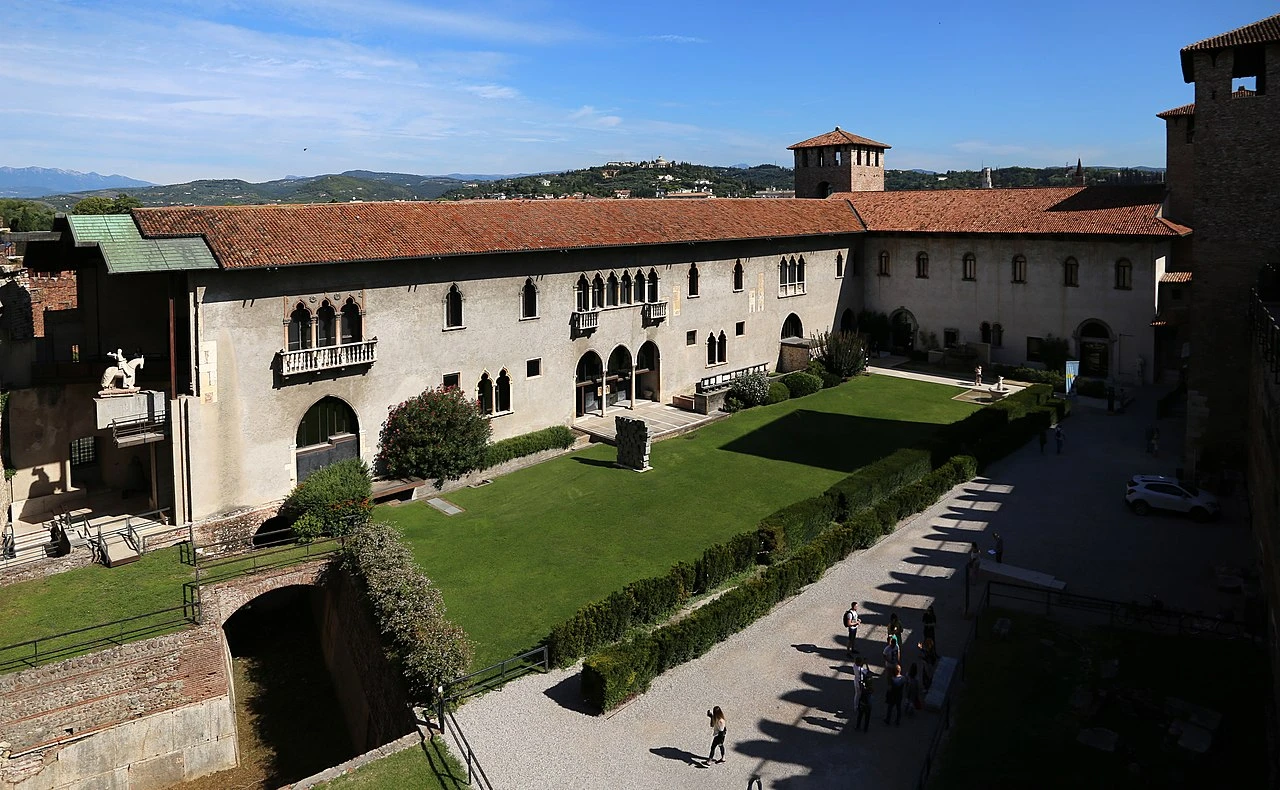
Verona · 65 artworks
Castelvecchio Museum
Content & sources
Photo: Sailko · CC BY-SA 4.0

Munich · 6 artworks
Pinakothek der Moderne
Content & sources
Photo: Rufus46 · CC BY-SA 3.0