Stanza · Audio guide
Taipei 101Audio guide
A place to remember. A story to take with you.
Taipei 101 is an iconic skyscraper located in the Xinyi District of Taipei, Taiwan. Formerly known as Taipei World Financial Center, it was the world's tallest building from 2004 to 2010 and remains a…
Download Stanza, then search for “Taipei 101”.
About the tour
One guide. Your kind of visit.
Taipei 101 is an iconic skyscraper located in the Xinyi District of Taipei, Taiwan. Formerly known as Taipei World Financial Center, it was the world's tallest building from 2004 to 2010 and remains a prominent symbol of modern Taiwan.
Ready when you are.
- 01Get the free Stanza app.
iOS & Android
- 02Find your guide.
“Taipei 101”
- 03Download before you go.
Works offline
Audio guide / 21 narrated stops
Inside the guide
Get to know a few of the stories before you go. Open a stop to read more.
01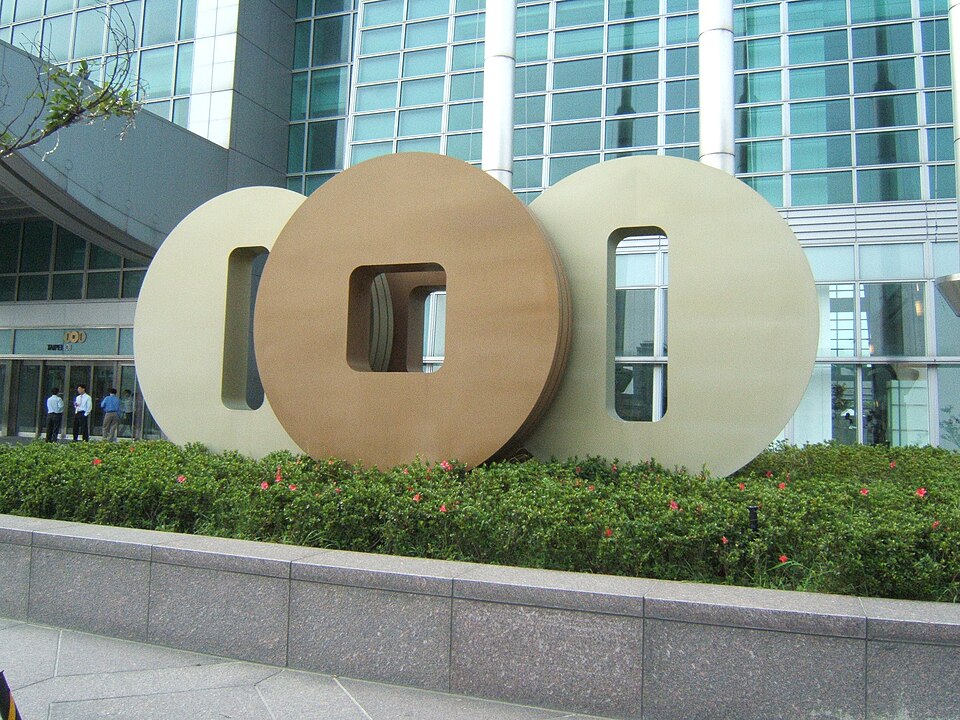 The Bamboo Tower: Exterior ArchitectureThe Bamboo Tower
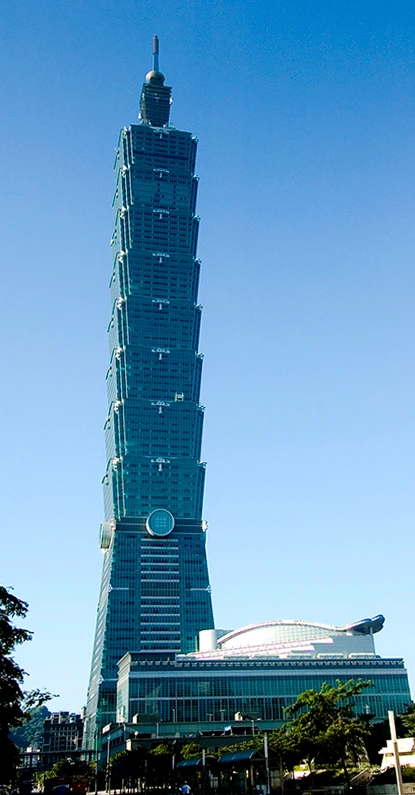
Welcome to one of the most recognizable structures in the world. Standing at a total height of 508 meters, Taipei 101 held the title of the world's tallest building for several years. Designed by renowned architect C.Y. Lee, the tower's silhouette is deeply rooted in local culture. Notice how the main body is composed of eight distinct, stacked segments. This configuration is no coincidence; it is designed to resemble a stalk of bamboo, a plant that symbolizes strength, flexibility, and resilience in Taiwanese culture. Just as bamboo grows in sections, the tower rises toward the heavens, embodying the spirit of progress and upward mobility. The number eight is also significant in Chinese culture, representing prosperity and good fortune. Beyond its aesthetic appeal, this segmented architecture serves a functional purpose, helping to disrupt high winds that frequently buffet the island. As you stand here, you are looking at more than just a skyscraper; it is a masterpiece of cultural engineering that redefined the skyline and became a symbol of Taiwan’s emergence on the global stage.
Photo: Neilpeart is god · CC BY-SA 3.0
02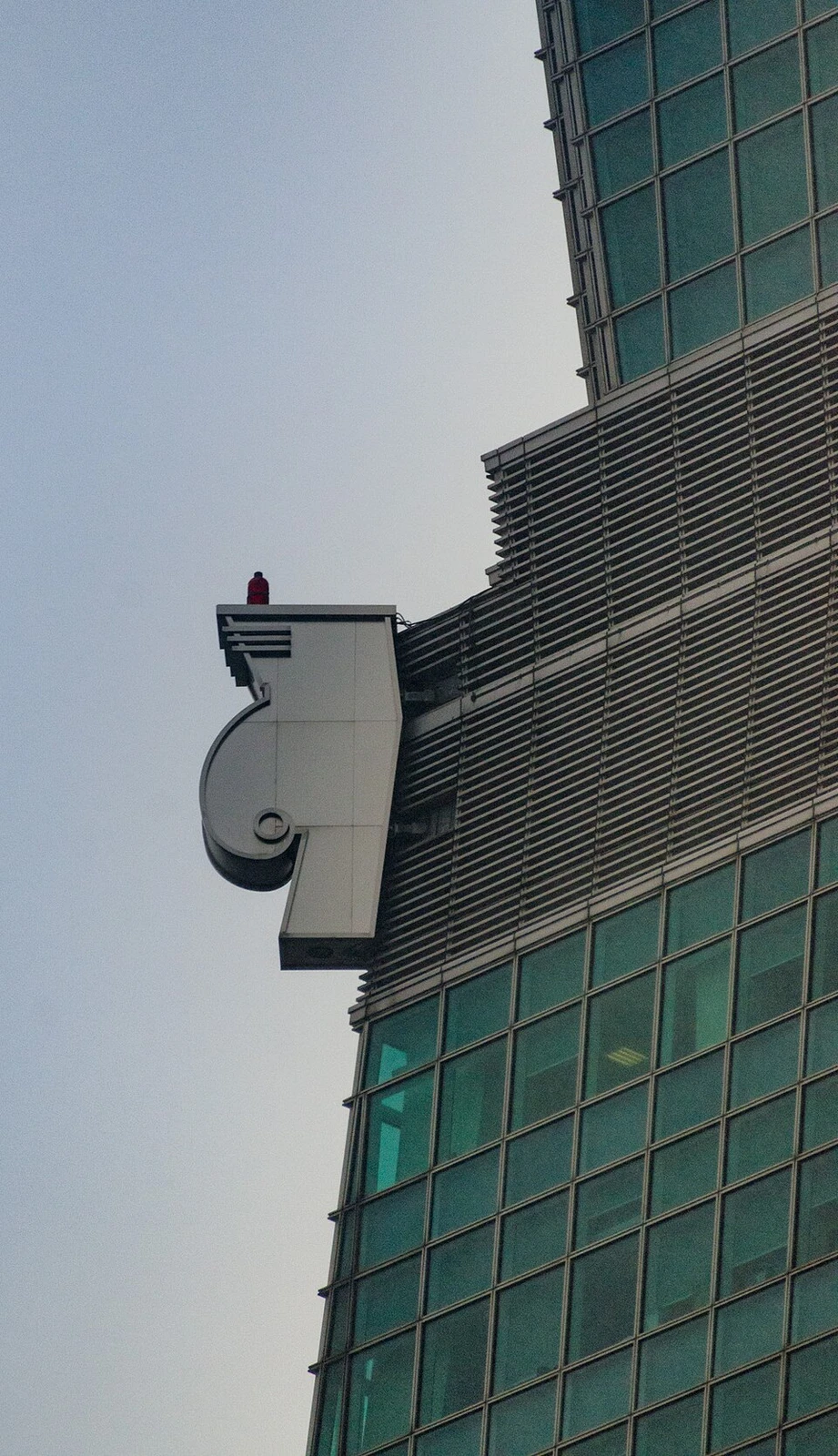 The Bamboo Tower: Exterior ArchitectureProtective Ruyi Symbols
As you examine the exterior corners of the tower's segments, your eyes might be drawn to the large, stylized silver ornaments. These are known as 'Ruyi' symbols. In traditional Chinese art and culture, the Ruyi is a curved decorative object that serves as a ceremonial scepter or a talisman, representing protection, fulfillment, and the idea that things will go 'as you wish.' By integrating these ancient motifs onto the facade of an ultra-modern skyscraper, the architects have masterfully blended high-tech materials with traditional aesthetic values. These symbols are not merely decorative; they are intended to cast a protective aura over the building and its occupants. The juxtaposition of the sleek, glass-and-steel curtain wall with these traditional silver emblems reflects a uniquely Taiwanese approach to modernity—one that respects and carries forward the wisdom and artistry of the past into the future. From this distance, they add a layer of intricate detail to the massive scale of the tower, softening its monumental presence with elements that feel personal and culturally significant.
xiquinhosilva · CC BY 2.0
03 The Bamboo Tower: Exterior ArchitectureThe Coins of Prosperity
Near the entrance of the tower, you will encounter large circular sculptures that catch the light. These are the 1-0-1 emblems, but a closer look reveals they are designed to mimic the appearance of ancient Chinese coins. Historically, these coins were round with a square hole in the center, representing the heavens and the earth. In the context of Taipei 101, these modern interpretations serve as powerful symbols of prosperity and commercial success for both the tower itself and the many businesses that call it home. The integration of the number '101' within the coin shape is a clever design choice that ties the building's identity directly to its financial and cultural aspirations. These 'coins' stand as silent sentinels, welcoming visitors and workers alike with a message of abundance. This theme of wealth and good fortune is a recurring thread throughout the building's design, reflecting the importance of auspicious symbolism in local business practices. It is a reminder that even in a hub of global finance and technology, traditional hopes for stability and growth remain foundational.
Listen in the appPhoto: Neilpeart is god · CC BY-SA 3.0
04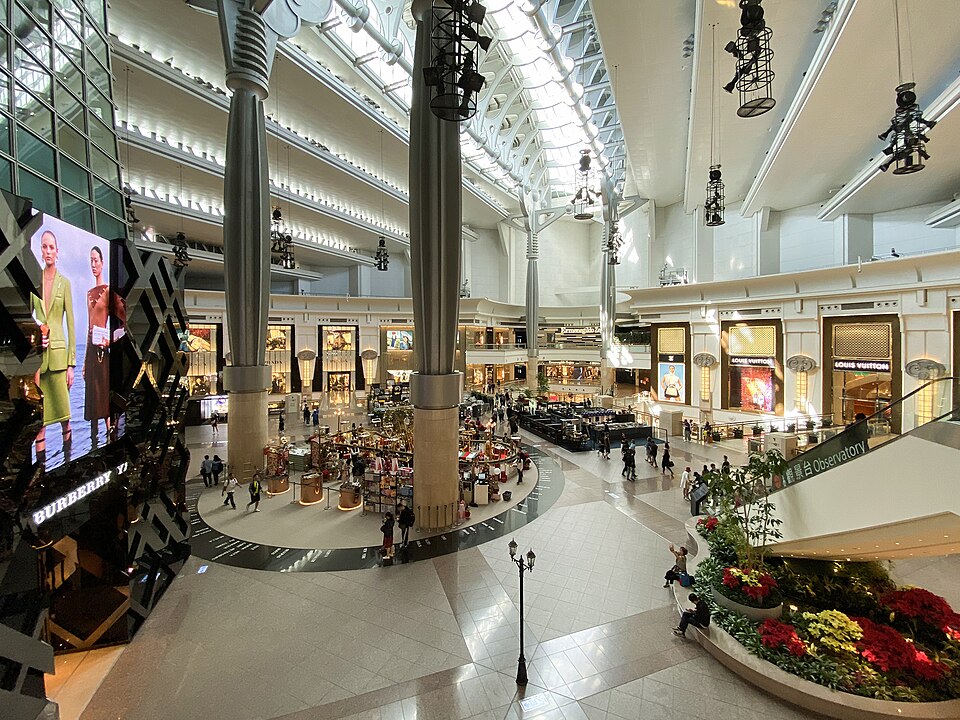 The Luxury Atrium and Apple StoreThe Grand Atrium
Entering the luxury shopping mall at the base of the tower, you find yourself in the Grand Atrium. This soaring space is a testament to the 'vertical city' concept that Taipei 101 embodies. It is not just an office building or an observatory; it is a vibrant urban hub where high-end commerce, dining, and public tourism intersect. The architecture here uses wide-open spaces and natural light to create an inviting atmosphere, transitioning you from the bustling streets of Taipei into the refined world of international luxury. As you look through the various levels, you can see how the mall is designed to facilitate the flow of thousands of people every day. This area serves as the gateway for visitors like yourself, preparing you for the journey toward the clouds. The high-end boutiques and world-class restaurants represent the pinnacle of global trade, making this one of the most prestigious addresses in Asia. Whether you are here for a bit of window shopping or heading straight for the elevators, the atrium sets a grand stage for the technological marvels that await you higher up.
Listen in the appPhoto: Wpcpey · CC BY 4.0
05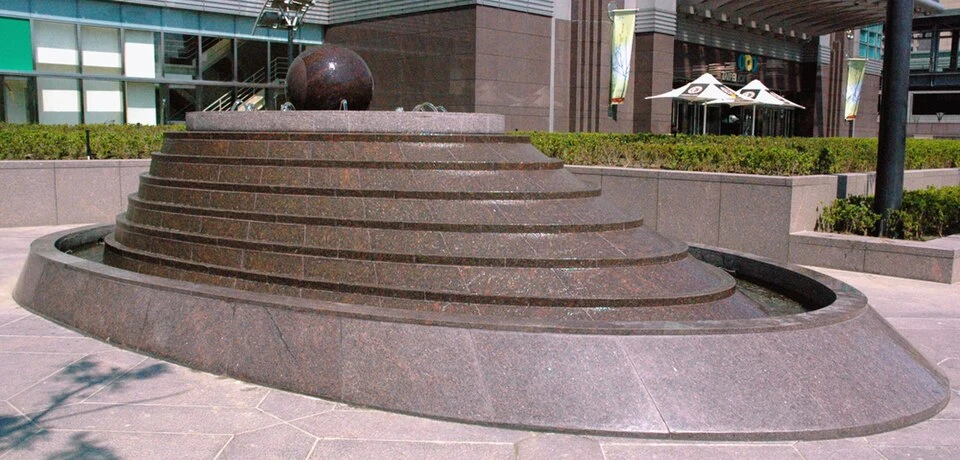 The Luxury Atrium and Apple StoreThe Energy Fountain
Standing outside at the intersection of Songlian Road, notice the granite fountain featuring a large, smoothly spinning stone ball. While it is a beautiful piece of public art, its placement and design are deeply functional within the principles of Feng Shui. In this traditional practice, moving water and rotating spheres are believed to redirect and harmonize the flow of energy, or 'Qi.' Because the building sits at a major traffic junction, the fountain is strategically positioned to mitigate the 'rushing' energy of the vehicles and guide a more positive, calm, and balanced flow toward the building’s main entrance. This helps create a stable environment for the businesses within. The constant movement of the ball, propelled only by a thin film of pressurized water, symbolizes continuous progress and the smooth operation of life and commerce. It is a fascinating example of how ancient philosophical beliefs continue to influence urban planning and architecture in modern Taipei, ensuring that the tower remains in harmony with its physical and spiritual surroundings.
Listen in the appAlton Thompson · CC BY-SA 3.0
06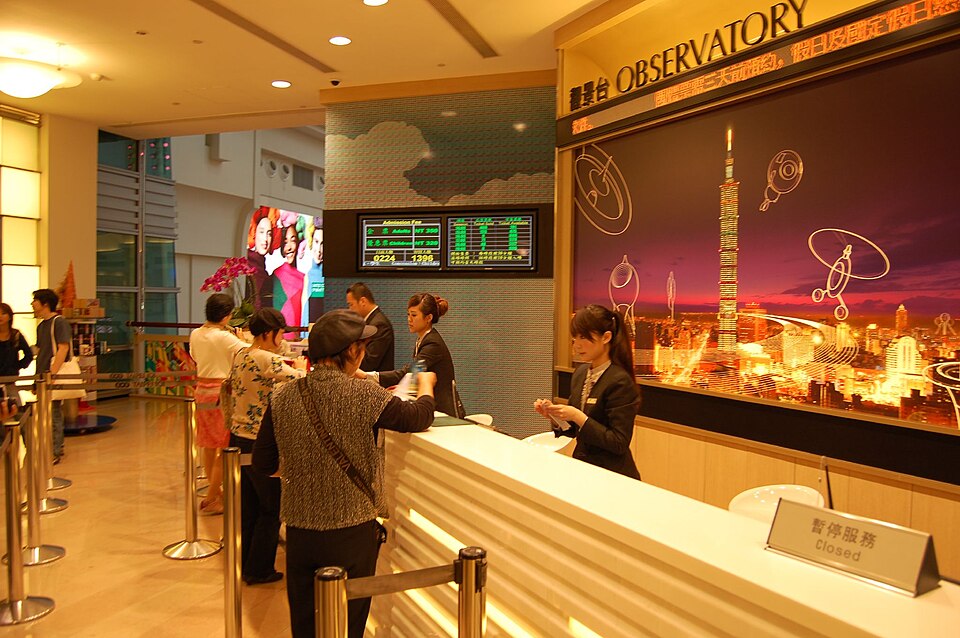 5th Floor: The Gateway to the SkyThe Observatory Gateway
Having moved through the retail spaces, you have reached the 5th-floor ticketing area, known as the Observatory Gateway. This is where your physical journey upward truly begins. This floor serves as a critical transition zone, moving visitors from the commercial and social atmosphere of the shopping mall into the technological heart of the Taipei 101 experience. The design shifts here, becoming more focused and streamlined as you prepare for the high-speed ascent. As you wait to scan your ticket, take a moment to look around at the sleek, modern environment. You are about to leave the ground level far behind and enter a space dedicated to the wonders of engineering and breathtaking vistas. The staff and digital displays here are ready to guide you through the logistics of the visit, ensuring a smooth transition into the elevator queue. It is the threshold between the city you know and a unique aerial perspective that few buildings in the world can offer.
Listen in the appzilupe · CC BY 2.0
07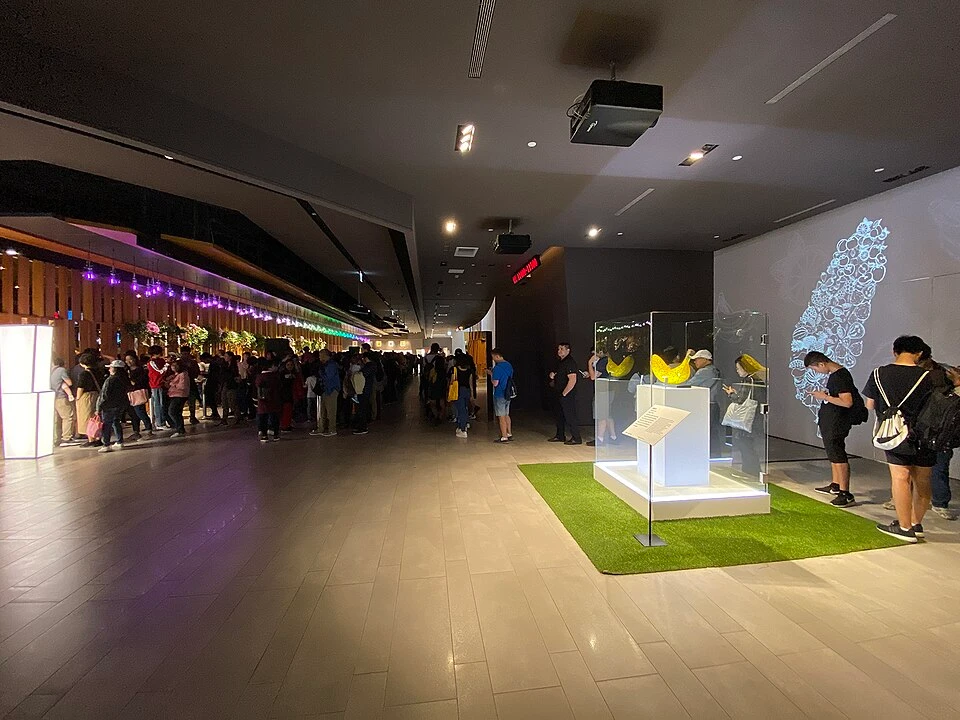 5th Floor: The Gateway to the SkyThe Staging Area
Now that you have passed through the gates, you enter the staging area. This space is intentionally designed to build anticipation for the record-breaking climb that is just moments away. Rather than a simple corridor, the queue is lined with large, vibrant digital murals and interactive displays that showcase the beauty and energy of Taipei. These visuals provide context for the panorama you are about to see from above, highlighting landmarks, local festivals, and the natural beauty of the surrounding basin. This 'build-up' is part of the overall experience, turning the wait into an educational and aesthetic journey. Notice the lighting and soundscapes that create a sense of movement and excitement. Every element here is calibrated to emphasize the height and technological prestige of the tower. By the time you reach the elevator doors, you will have a deeper appreciation for the city below, making the sudden reveal from the 89th-floor windows even more impactful.
Listen in the appPhoto: Wpcpey · CC BY 4.0
08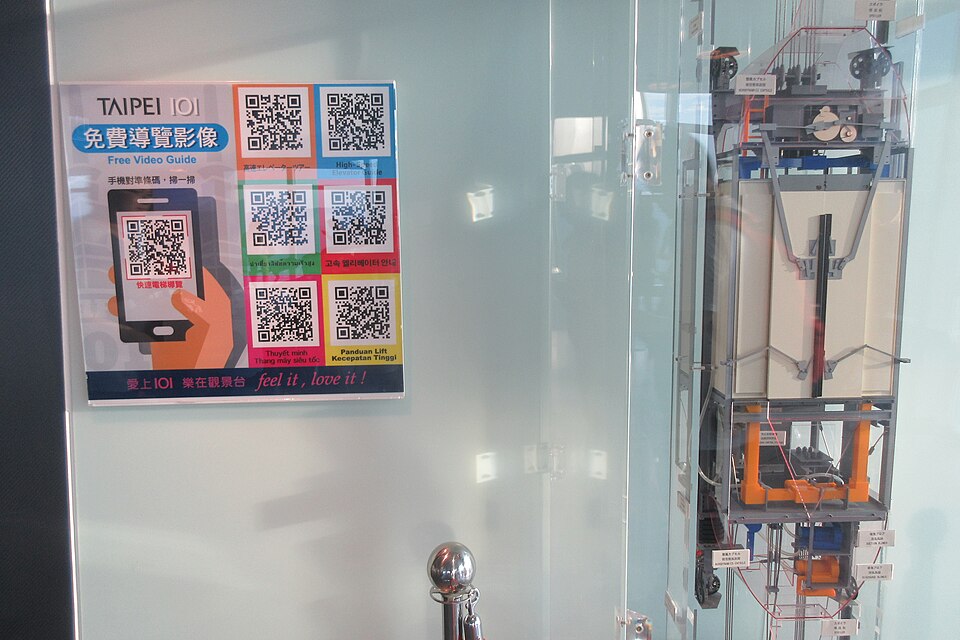 The World's Fastest ElevatorsThe Record Speedometer
As the doors slide shut, turn your attention to the internal digital screen. This is the record speedometer for the Toshiba high-speed elevators, which were once the fastest in the world. You are currently traveling at a staggering 60.6 kilometers per hour. To put that in perspective, you are being whisked from the 5th floor to the 89th floor in a mere 37 seconds. The display provides a real-time visualization of your altitude and speed, making the sheer physics of the ascent feel tangible. Most visitors are surprised by how smooth the ride is, despite the incredible velocity. This is a far cry from a standard office lift; it is a specialized vehicle designed for rapid vertical transport. As the numbers on the screen climb rapidly, you might feel a slight pressure in your ears, but the speed is so consistent that it is easy to forget you are moving faster than a car on a typical city street. It is a brief, exhilarating moment that perfectly demonstrates the technological ambition of Taipei 101.
Listen in the appPhoto: Hangz Leundra Rumma · CC BY-SA 4.0
09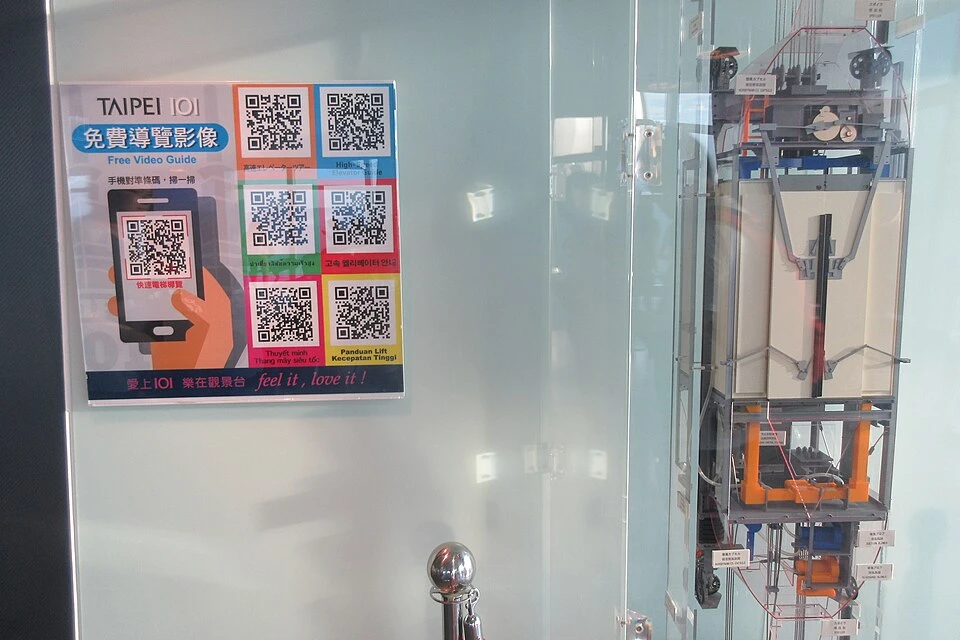 The World's Fastest ElevatorsEngineering the Ascent
Here you can examine a detailed cut-away model of the elevator system you just experienced. Building a lift that travels at over 60 kilometers per hour involves much more than just a powerful motor. Engineers had to overcome significant challenges, particularly regarding passenger comfort and safety. One of the most critical components is the advanced pressure-control system. When ascending or descending nearly 400 meters in such a short time, the change in atmospheric pressure would normally cause passengers' ears to pop painfully. To prevent this, the elevator cabs are hermetically sealed and pressurized, much like an airplane cabin, with computers adjusting the internal atmosphere in real-time. Additionally, the model shows the aerodynamic shaping of the cab and the sophisticated dampening systems that minimize vibration and noise, ensuring that the ride remains whisper-quiet and steady. Looking at the intricate cables and pulley systems, you get a sense of the sheer mechanical force required to move a heavily loaded cabin upward at such a record-breaking pace.
Listen in the appPhoto: Hangz Leundra Rumma · CC BY-SA 4.0
10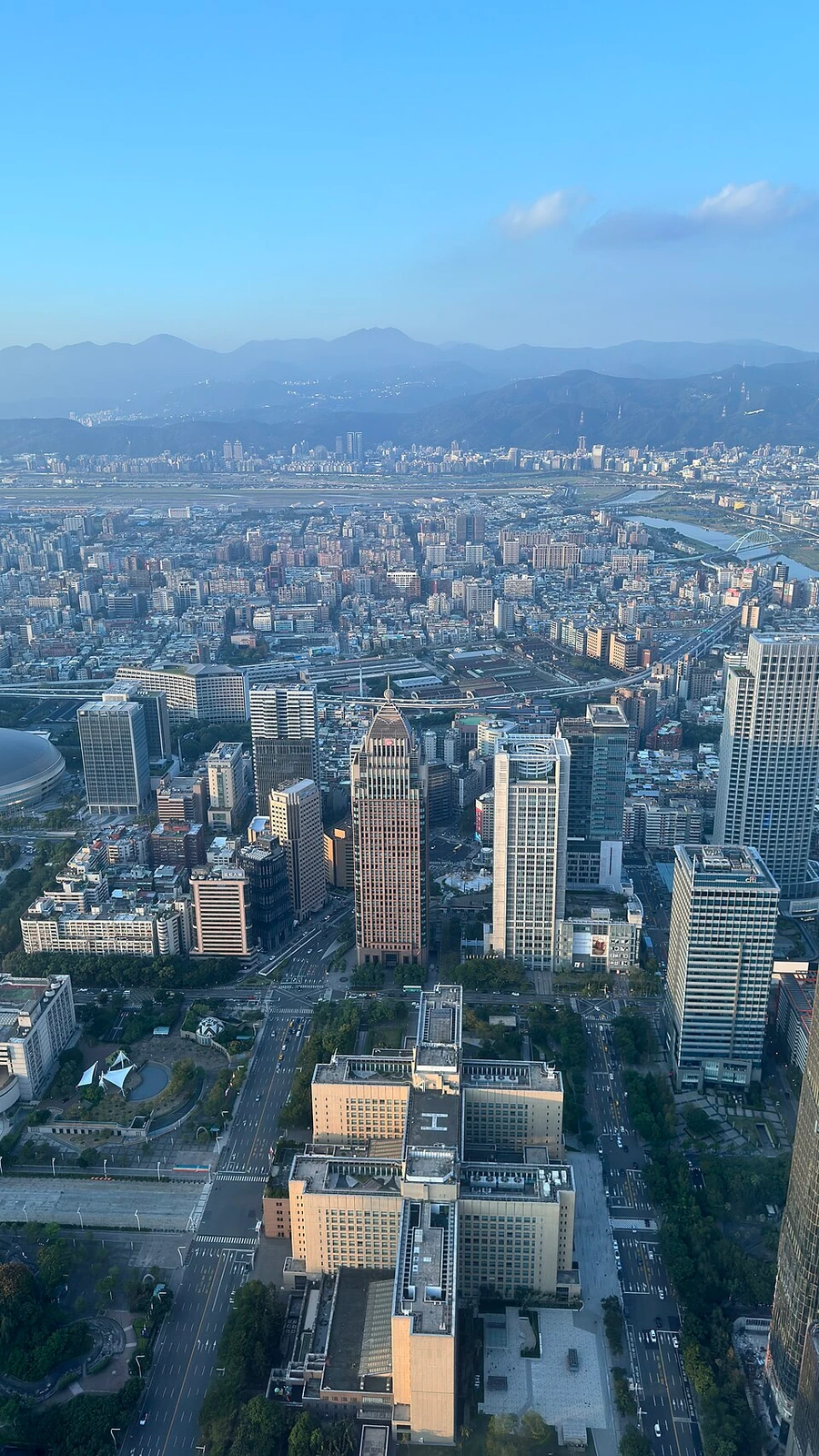 89th Floor: Indoor ObservatoryThe Taipei Panorama
Standing at the windows of the 89th-floor observatory, the city of Taipei is laid out before you like a vast, living map. From this incredible vantage point, you can truly appreciate the unique geography of the Taipei Basin. Notice how the dense urban grid, filled with millions of residents and thousands of buildings, is tightly cradled by lush, green mountain ranges on all sides. This natural bowl has historically defined the city's growth and climate. To the north, you can see the peaks of Yangmingshan National Park, while the smaller hills to the south and east provide a constant reminder of the island's volcanic and tectonic origins. The Keelung and Tamsui Rivers wind through the urban landscape, appearing like silver ribbons from this height. This 360-degree view offers a rare opportunity to see how the city has expanded to fill every corner of the basin, balanced between the modern steel skyline and the ancient, rugged terrain that surrounds it. It is a perspective that reveals the true scale of one of Asia’s most dynamic metropolises.
Listen in the appPhoto: Miyako Fujimiya · CC BY-SA 4.0
Taipei 101
Frequently asked questions
How much does the guide cost?
Free app download. Listed guide price: $1.99. Guide price shown in the app. Audio guide only. Venue admission is separate.
Can I listen without internet?
Yes. Download the guide’s audio, images, and maps in the app before your visit. Your downloaded content is then available offline.
Can I listen in my language?
Stanza supports 15 languages. Check the app for the languages available for this guide.
Do I need to follow a schedule?
No. This is a self-guided experience. Choose your stops, pause whenever you like, and return to a story at your own pace.
At your own pace
Explore Taipei 101.
Download Stanza, then search for “Taipei 101”.
Free app download · Guide price shown in the app