Stanza · Audio guide
Ayutthaya Historical ParkAudio guide
A place to remember. A story to take with you.
Ayutthaya Historical Park is a UNESCO World Heritage Site in Thailand, preserving the ruins of the ancient capital of the Ayutthaya Kingdom. It contains numerous temples, monasteries, and palaces, showcasing…
Download Stanza, then search for “Ayutthaya Historical Park”.
About the tour
One guide. Your kind of visit.
Ayutthaya Historical Park is a UNESCO World Heritage Site in Thailand, preserving the ruins of the ancient capital of the Ayutthaya Kingdom. It contains numerous temples, monasteries, and palaces, showcasing the grandeur of the former Siamese capital.
Ready when you are.
- 01Get the free Stanza app.
iOS & Android
- 02Find your guide.
“Ayutthaya Historical Park”
- 03Download before you go.
Works offline
Audio guide / 39 narrated stops
Inside the guide
Get to know a few of the stories before you go. Open a stop to read more.
01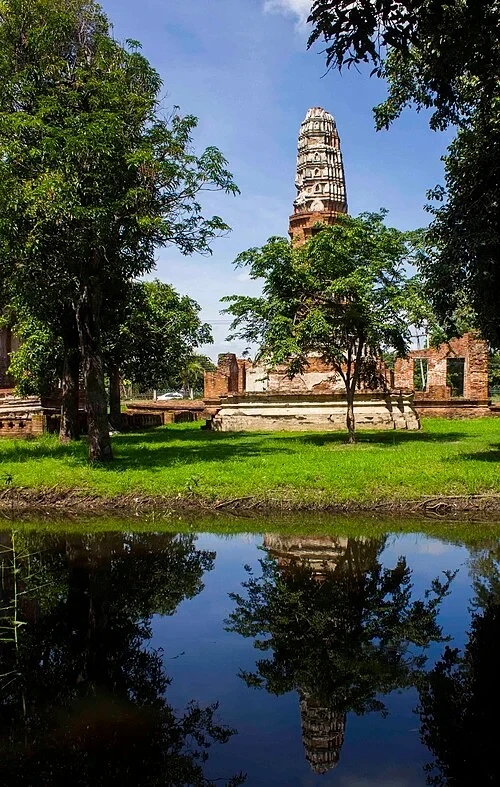 Temple of the Supreme Buddha (Wat Borom Phuttharam)Borom Phuttharam Temple
Welcome to the start of our journey through Ayutthaya. Before you stands Borom Phuttharam Temple, a site with a deeply personal origin story. In the late 17th century, King Phetracha commissioned this temple to be built on the exact ground where his childhood home once stood. It was a powerful symbolic gesture, honoring his family's modest beginnings before he seized the throne and established a new royal line. Notice the central structure, a tall, corn-cob shaped tower known as a 'prang.' This architectural style, influenced by Khmer traditions, was intended to represent the sacred Mount Meru. While it may look weathered now, this temple was once one of the city's most striking landmarks, famous for its unique yellow glazed roof tiles. It was the only temple in all of Ayutthaya to possess such a feature, earning it the nickname "The Golden Tile Temple." As you look at the ruins, imagine the vibrant yellow roof shimmering under the Siamese sun. This site marks a significant transition in history, representing the shift from the old dynasty to King Phetracha’s new lineage.
Photo: Wattana · CC BY-SA 3.0
02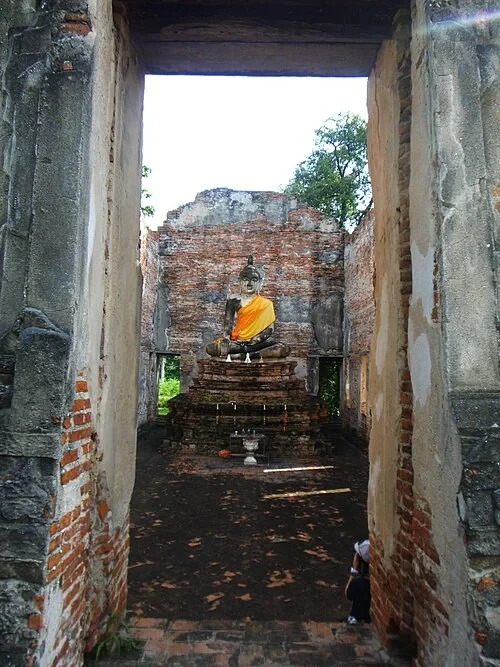 Temple of the Supreme Buddha (Wat Borom Phuttharam)Buddha of the Ruined Hall
Walking among these ruins, you'll encounter the "Buddha of the Ruined Hall." This seated figure is perfectly framed by the weathered, roofless brick walls of what was once a grand 'Wihan,' or assembly hall. The roof collapsed centuries ago following the city's abandonment in 1767, leaving the interior open to the elements. However, notice the bright saffron robe draped carefully over the figure's shoulder. This is not just a historical artifact; it is a clear sign that despite its ruined state, this space remains a sacred, living site for local people today. The contrast here is profound. While the brickwork around the statue is crumbling and weathered by time and conflict, the expression on the figure's face remains one of permanent, unshakable peace. It serves as a poignant reminder of the enduring nature of faith in the face of historical upheaval. As you observe the sunlight hitting the textured brick and the vibrant fabric, consider the centuries of history that have passed through these open walls while this silent figure kept watch.
Photo: กสิณธร ราชโอรส · CC BY-SA 4.0
03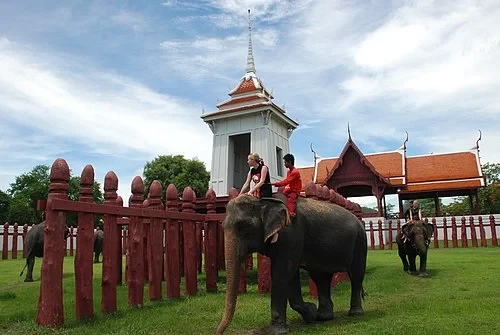 Ayutthaya Elephant Palace & Royal KraalAyutthaya Elephant Palace And Royal Kraal
This unique site is the Ayutthaya Elephant Palace and Royal Kraal, the heart of the kingdom's military might. In ancient Siamese warfare, the elephant functioned much like a modern tank—a massive, unstoppable force on the battlefield. This specific location was where wild elephants were captured, brought for selection, and rigorously trained for the King’s service. Look closely at the perimeter; you’ll see thick, reddish teak logs forming a formidable fence. These were specifically engineered to withstand the sheer weight and force of charging giants. In the center stands a white pavilion. This was the King’s vantage point, where he would personally oversee the selection of the most promising animals. Every major victory in Ayutthaya’s long history was achieved on the backs of these war elephants. They were central to the legendary "Elephant Duels," where kings would engage in one-on-one combat to decide the fate of their nations. This kraal is a rare surviving example of the specialized infrastructure required to maintain a superpower in Southeast Asia during the golden age of the Ayutthaya Kingdom.
Listen in the appPhoto: E20QS · CC BY-SA 4.0
04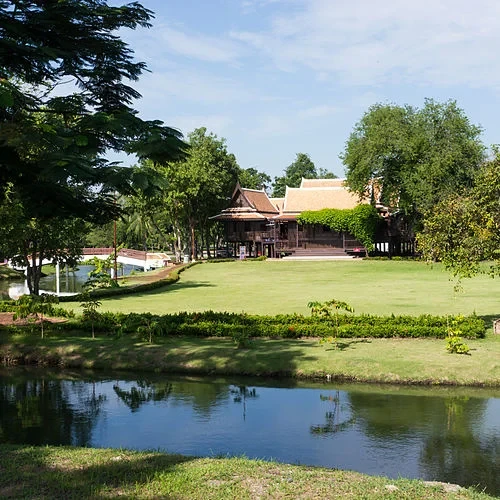 Khun Phaen's ResidenceKhun Phaen's Teak House
Beyond the temples and palaces, the people of Ayutthaya lived in wooden structures perfectly adapted to the local environment. This dark teak house, elevated on high stilts, is a beautiful example of traditional Thai architecture. It is named after the legendary Siamese epic 'Khun Chang Khun Phaen,' a tale of love, magic, and war that has been told for generations. The design is deeply practical. The stilts protected the residents from the inevitable annual flooding of the surrounding rivers and allowed cooling breezes to circulate beneath the floorboards, making the tropical heat more bearable. Notice the steep gabled roof, designed to shed heavy monsoon rains quickly. While the great stone monuments of the city fell into ruin, wooden homes like this were the standard for the wealthy elite during Ayutthaya's golden age. Seeing this house provides a rare and intimate glimpse into the domestic side of history, contrasting the monumental scale of the nearby temples with the practical, elegant living spaces of the people who once walked these streets.
Listen in the appPhoto: CKasa · CC BY-SA 3.0
05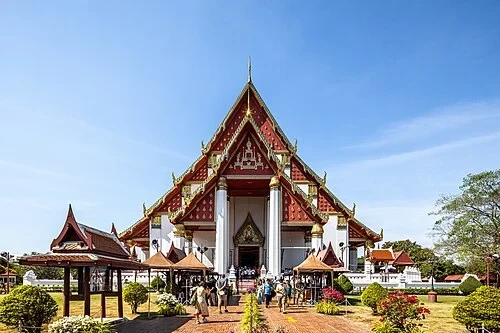 Sanctuary of the Auspicious Buddha (Wihan Phra Mongkhon Bophit)Phra Mongkhon Bophit Viharn
Standing before the Phra Mongkhon Bophit Viharn, you are looking at a remarkable story of resilience and restoration. Unlike the many ruins surrounding it, this grand assembly hall was reconstructed in the 1950s. The original structure had suffered centuries of neglect, including a devastating lightning strike that led to its decay long after the city's fall. The current building beautifully reflects classic Ayutthayan architectural style, characterized by its stark white columns, multi-tiered red roof, and ornate gold accents. The primary purpose of this massive undertaking was to provide a home for one of Thailand's most significant bronze Buddha images. After the city was conquered in 1767, that sacred statue sat in the open air, exposed to the rain and sun for nearly 200 years. The restoration of this vihara wasn't just about architectural heritage; it was a nationwide effort to honor and protect a spiritual icon that survived the kingdom’s darkest hours. As you approach the entrance, take a moment to appreciate the scale of the building, which was designed to match the grandeur of the statue it protects.
Listen in the appThis Photo was taken by Supanut Arunoprayote. Feel free to use any of my images, but please mention me as the author and may send me a message. (สามารถใช้ภาพได้อิสระ แต่กรุณาใส่เครดิตผู้ถ่ายและอาจส่งข้อความบอกกล่าวด้วย) Please do not upload an updated image here without consultation with the Author. The author would like to make corrections only at his own source. This ensures that the changes are preserved.Please if you think that any changes should be required, please inform the author.Otherwise you can upload a new image with a new name. Please use one of the templates derivative or extract. · CC BY 4.0
06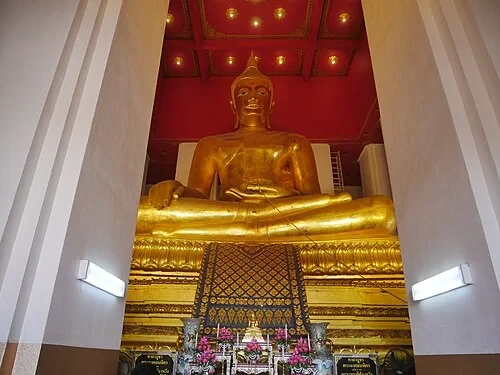 Sanctuary of the Auspicious Buddha (Wihan Phra Mongkhon Bophit)The Gilded Bronze Giant
Step inside and you will find yourself dwarfed by the sheer scale of this gold-covered figure. This is one of the largest bronze images in the country, a true masterpiece of ancient metalworking. However, its most fascinating secret was only revealed in the early 1900s during a restoration. Inside the main body of this giant figure, hundreds of smaller Buddha images were discovered hidden away. Historians believe they were placed there for protection during times of war, turning the statue into a literal vault of faith. As you look at the surface, you’ll notice it glows with countless tiny squares of gold. This is because visitors and pilgrims apply thin sheets of gold leaf to the figure as an act of "making merit," a Buddhist tradition of devotion. This massive figure has survived the fires of the 1767 invasion, multiple lightning strikes, and long periods of abandonment. Its gleaming presence today serves as a powerful symbol of the city’s endurance, standing as a bridge between the lost glory of the old kingdom and the living traditions of the present.
Listen in the appPhoto: กสิณธร ราชโอรส · CC BY-SA 4.0
07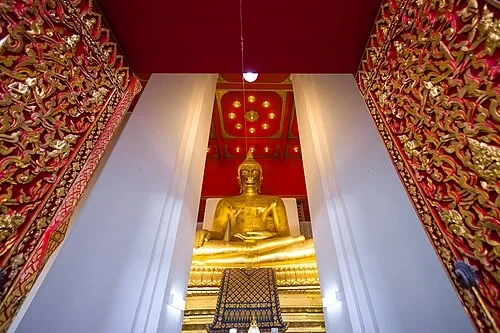 Sanctuary of the Auspicious Buddha (Wihan Phra Mongkhon Bophit)Sanctuary Interior Detail
While many of the sites you see today are silent, weathered brick, this sanctuary offers a rare look at the vibrant atmosphere of a functioning temple. Look up at the ceiling to appreciate the intricate red and gold geometric patterns. This level of opulence was once the standard for Ayutthaya’s major royal temples. Before the city was razed in 1767, the interiors would have been a spectacular display of color, gold leaf, and fine craftsmanship. Notice the massive red pillars that rise toward the roof. Their scale is necessary to support the heavy, multi-tiered ceiling, but they also serve an aesthetic purpose: their vertical lines are designed to lead your gaze directly toward the face of the Buddha. This interior allows you to experience the intended atmosphere of these sacred spaces—somber, yet incredibly grand. It provides a necessary contrast to the ruins outside, helping you imagine the glinting gold and colorful murals that would have originally adorned the now-empty halls of the historical park.
Listen in the appThis Photo was taken by Supanut Arunoprayote. Feel free to use any of my images, but please mention me as the author and may send me a message. (สามารถใช้ภาพได้อิสระ แต่กรุณาใส่เครดิตผู้ถ่ายและอาจส่งข้อความบอกกล่าวด้วย) Please do not upload an updated image here without consultation with the Author. The author would like to make corrections only at his own source. This ensures that the changes are preserved.Please if you think that any changes should be required, please inform the author.Otherwise you can upload a new image with a new name. Please use one of the templates derivative or extract. · CC BY 4.0
08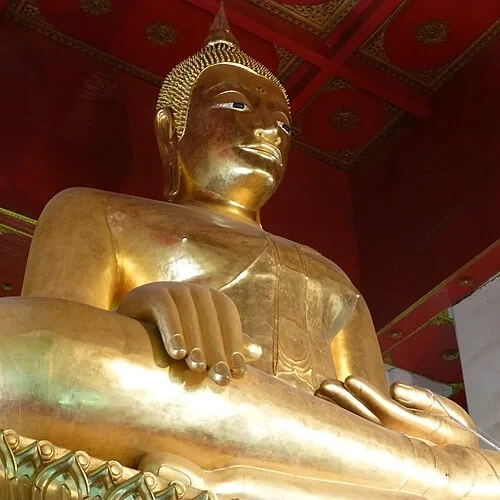 Sanctuary of the Auspicious Buddha (Wihan Phra Mongkhon Bophit)The Buddha's Serene Gaze
Take a close look at the face of this great figure to appreciate the specific artistic hallmarks of the "U Thong" style. Notice the delicate, thin lips, the elegantly connected eyebrows, and the peaceful, downward-turning eyes that seem to look inward. This statue has a traumatic history; it was originally cast in bronze and entirely covered in thick gold leaf. When the city was invaded in the 18th century, the attackers set fire to the temple specifically to melt and collect that gold. The heat was so intense that the head and right arm were severely damaged. If you look closely today, it is difficult to see the scars of that event. The seamless restoration work has made the figure look whole again, serving as a bridge between ancient craftsmanship and modern religious devotion. It stands as a testament to the skill of the original artists and the dedication of the restorers who brought it back from the brink of total destruction. The serene gaze remains unchanged, despite the fires that once roared around it.
Listen in the appPhoto Dharma from Sadao, Thailand · CC BY 2.0
09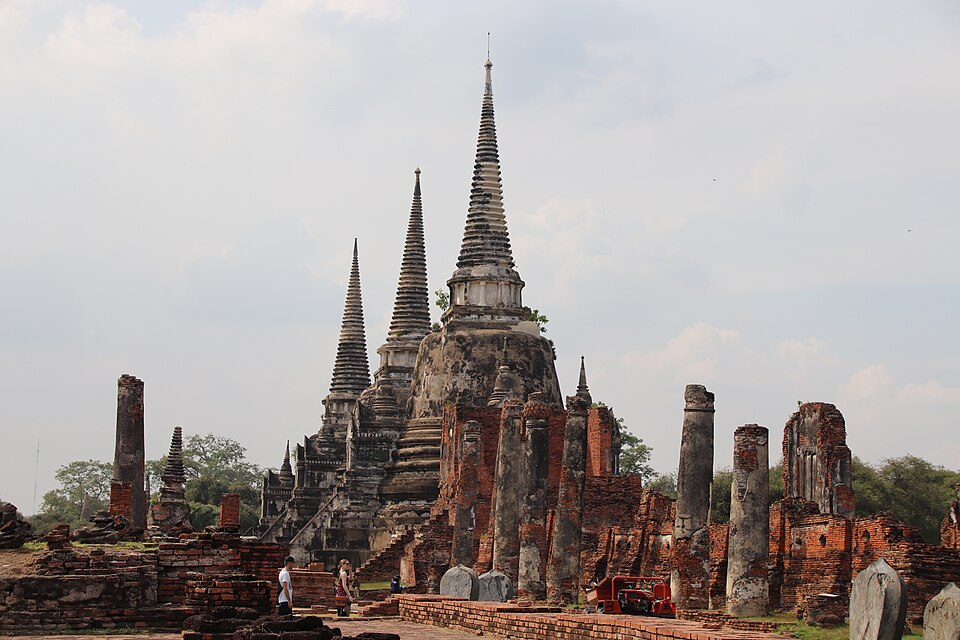 Temple of the Holy Splendid Omniscient (Wat Phra Sri Sanphet)Phra Sri Sanphet Temple
You are standing before the most iconic sight in Ayutthaya: the three towering, bell-shaped stupas of Phra Sri Sanphet Temple. Constructed in the late 15th century, these massive structures were built to house the cremated remains of three different kings. This was the holiest and most significant temple in the entire kingdom, serving a role very similar to the Temple of the Emerald Buddha in modern-day Bangkok. A crucial detail to remember is that no monks actually lived on these grounds; the temple was used exclusively for royal ceremonies and state rituals. Take a moment to look at the architecture of the stupas. Above the main "bell" is a square platform known as a 'harmika,' topped by a series of rings forming a spire that reaches toward the sky. This design symbolizes the various levels of heaven in Buddhist cosmology. In its prime, the area between these stupas was filled with grand halls and golden statues, making it the spiritual and ceremonial heart of the Siamese empire.
Listen in the appGary Todd from Xinzheng, China · CC0
10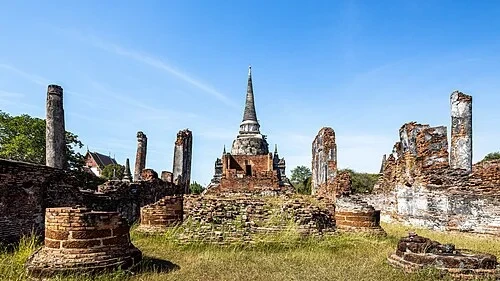 Temple of the Holy Splendid Omniscient (Wat Phra Sri Sanphet)Ruins of the Royal Hall
Looking at these massive brick pillars, it takes a leap of imagination to realize the grandeur they once supported. This was the main assembly hall of the royal temple, and in its prime, it housed a sixteen-meter-tall Buddha image. That statue was legendary, covered in more than three hundred kilograms of pure gold. During the invasion of 1767, this hall became what we might call "ground zero" for the city's destruction. The invaders were determined to strip the wealth of Ayutthaya, and they built massive fires around the base of the great Buddha statue. The heat was intended to melt the gold, allowing it to be scraped away and carried off. This process caused the heavy bronze core of the statue to expand and eventually crumble. As you stand in the empty spaces between these weathered pillars today, try to visualize the glint of gold that once filled this vast room. The silence here now stands in stark contrast to the roar of the fires and the frantic efforts to dismantle the city's most sacred treasures.
Listen in the appThis Photo was taken by Supanut Arunoprayote. Feel free to use any of my images, but please mention me as the author and may send me a message. (สามารถใช้ภาพได้อิสระ แต่กรุณาใส่เครดิตผู้ถ่ายและอาจส่งข้อความบอกกล่าวด้วย) Please do not upload an updated image here without consultation with the Author. The author would like to make corrections only at his own source. This ensures that the changes are preserved.Please if you think that any changes should be required, please inform the author.Otherwise you can upload a new image with a new name. Please use one of the templates derivative or extract. · CC BY 4.0
Ayutthaya Historical Park
Frequently asked questions
How much does the guide cost?
Free app download. Listed guide price: $3.99. Guide price shown in the app. Audio guide only. Venue admission is separate.
Can I listen without internet?
Yes. Download the guide’s audio, images, and maps in the app before your visit. Your downloaded content is then available offline.
Can I listen in my language?
Stanza supports 15 languages. Check the app for the languages available for this guide.
Do I need to follow a schedule?
No. This is a self-guided experience. Choose your stops, pause whenever you like, and return to a story at your own pace.
At your own pace
Explore Ayutthaya Historical Park.
Download Stanza, then search for “Ayutthaya Historical Park”.
Free app download · Guide price shown in the app
Keep exploring
Nearby audio guides
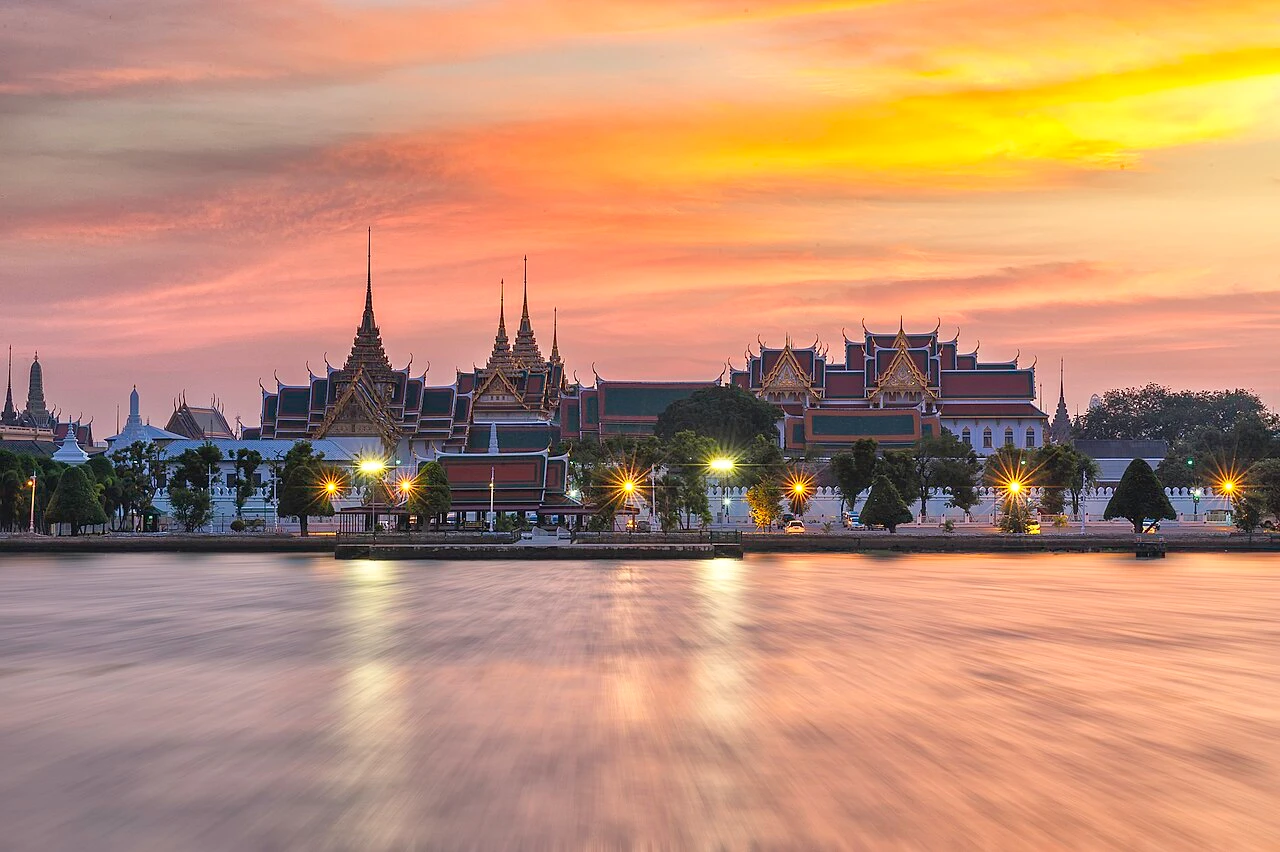
Bangkok
Grand Palace
Content & sources
Photo: Preecha.MJ · CC BY-SA 4.0
Bangkok
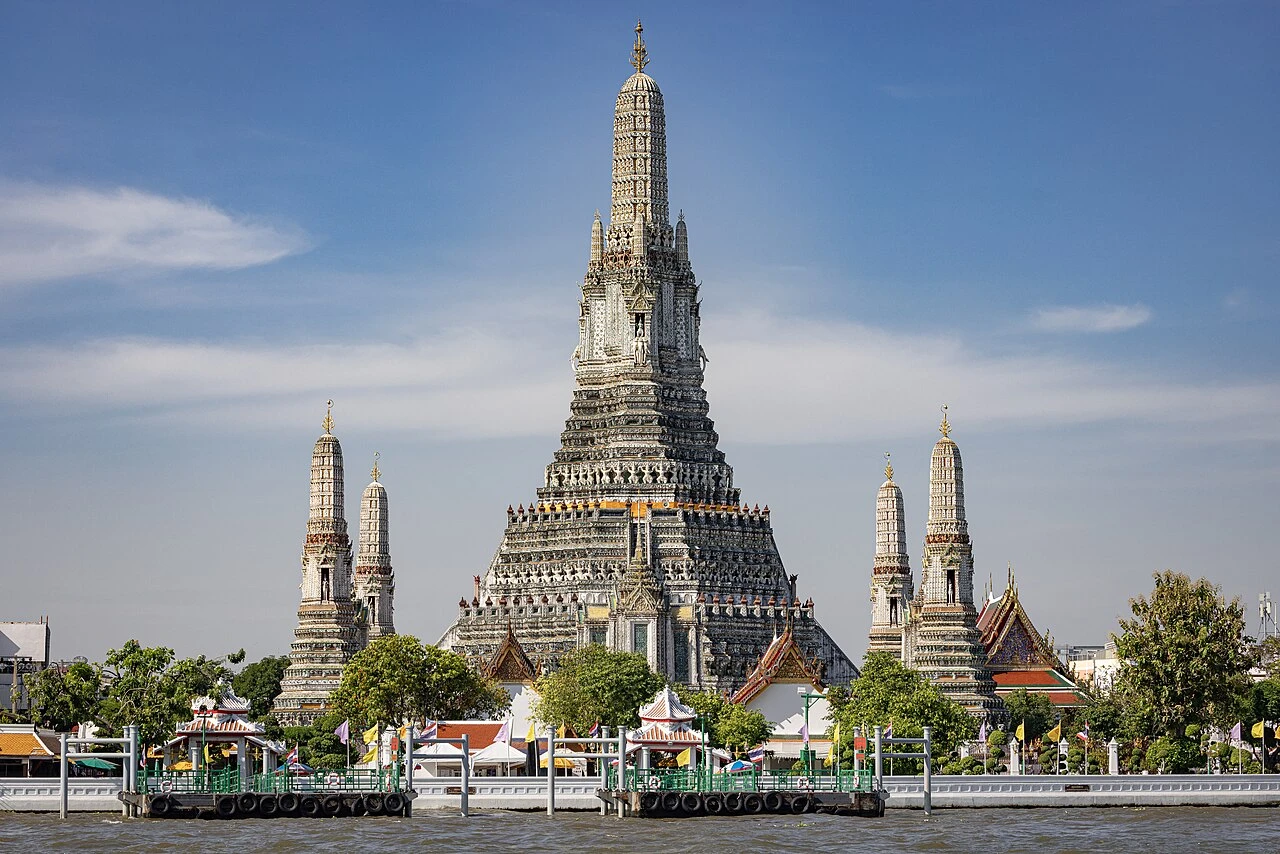
Wat Arun
Content & sources
Photo: Mastertongapollo · CC BY-SA 4.0
Bangkok
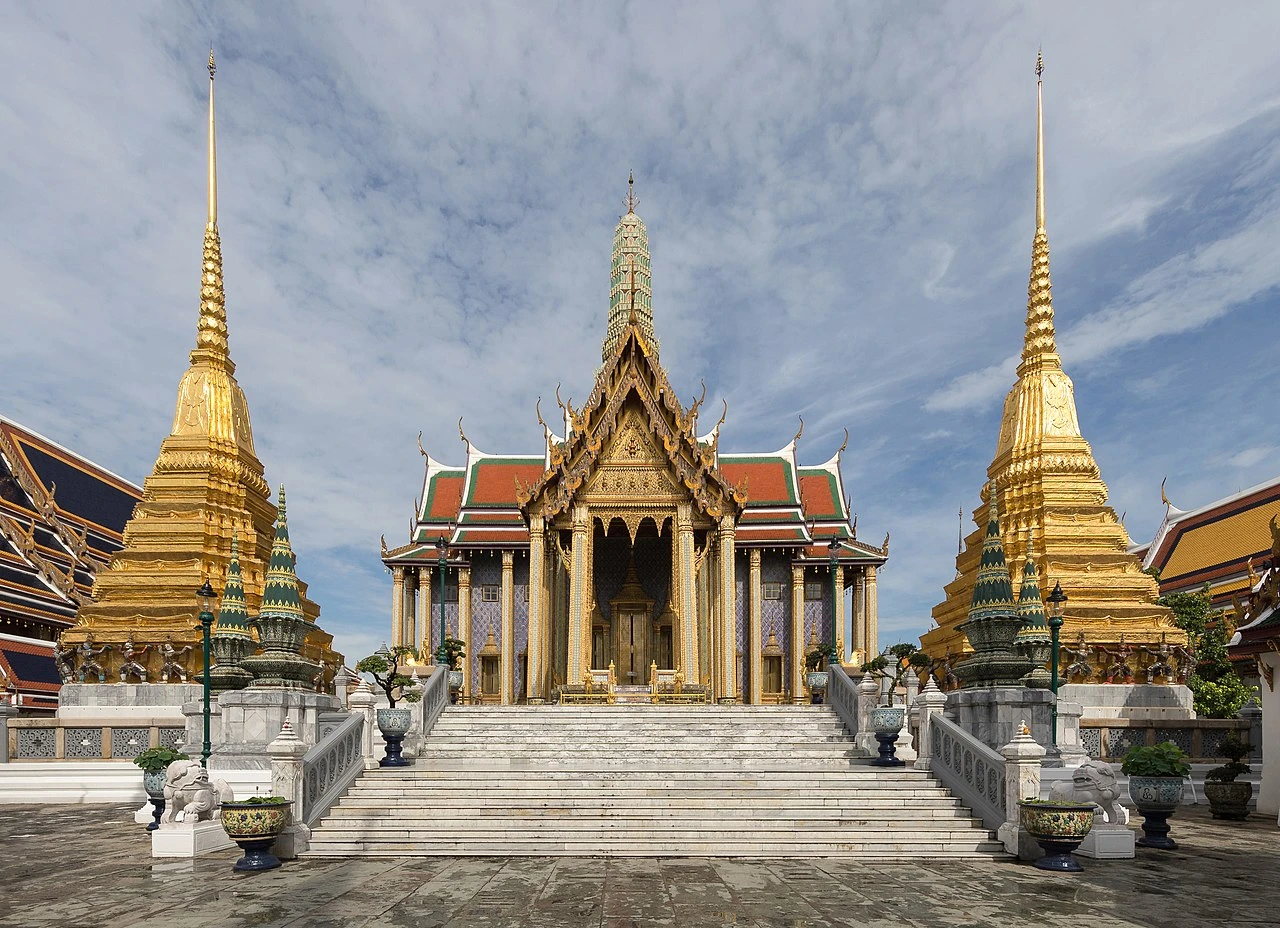
Wat Phra Kaew
Content & sources
Photo: Basile Morin · CC BY-SA 4.0