 Stanza / Audio guide
Content & sources
Stanza · Audio guide
Wat Benchamabophit Audio Guide
A place to remember. A story to take with you.
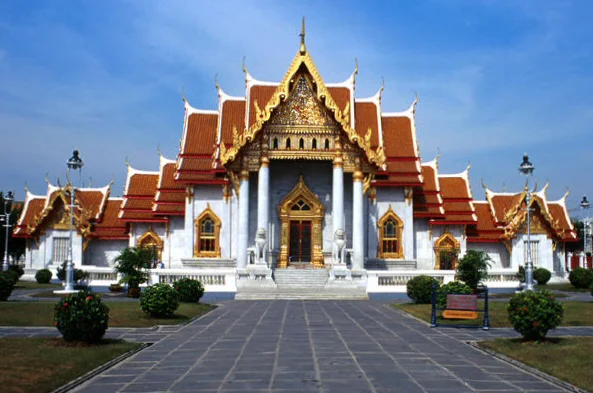
Wat Benchamabophit Dusitvanaram is a Buddhist temple located in Bangkok, Thailand. It is known as the Marble Temple and is celebrated for its refined architectural composition that blends traditional Thai…
Download Stanza, then search for “Wat Benchamabophit”.
About the tour
One guide. Your kind of visit.
Wat Benchamabophit Dusitvanaram is a Buddhist temple located in Bangkok, Thailand. It is known as the Marble Temple and is celebrated for its refined architectural composition that blends traditional Thai aesthetics with European influences.
Ready when you are.
- 01Get the free Stanza app.
iOS & Android
- 02Find your guide.
“Wat Benchamabophit”
- 03Download before you go.
Works offline
Audio guide / 11 narrated stops
Inside the guide
Get to know a few of the stories before you go. Open a stop to read more.
01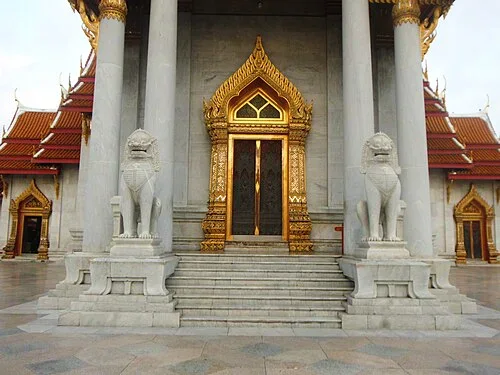 The Outer Courtyard and Guardian Lions
Guardian Lions at the Entrance to the Ordination Hall
Two great white lions sit on either side of the gilded doorway, guarding the entrance to the ordination hall. These guardian beasts are called singha, and they announce one of Bangkok's most remarkable royal temples. The temple behind them is known as the Marble Temple, the principal royal monastery serving Dusit Palace. Its story begins in 1899, after King Chulalongkorn built his new palace nearby. The palace grounds absorbed two older temples, and Buddhist tradition called for compensation. So the king founded a new temple nearby as compensation, giving it a name that means the Temple of the Fifth King. That name also honors the five royal siblings who had restored the old sanctuary in an earlier generation. The lions at the door have kept their watch ever since.
Photo: กสิณธร ราชโอรส · CC BY-SA 4.0
02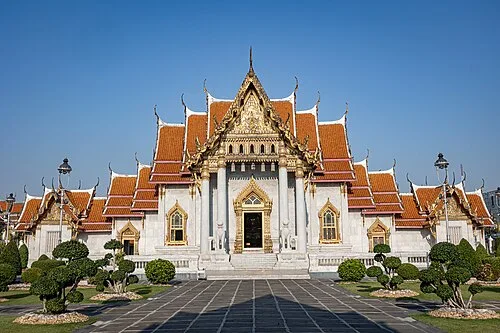 The Carrara Marble Facade and East Portico
The Marble Ordination Hall from the East
The pale stone covering the ordination hall came from Carrara in Italy, from quarries that have supplied sculptors for centuries. Imported marble faces the walls, the pillars and the courtyard, and it earned the whole temple its nickname, the Marble Temple. The design belongs to Prince Narisara Nuwattiwong, a half-brother of King Chulalongkorn, working with the master builder Phraya Ratchasongkhram. He laid the hall out in the shape of a cross, with a long eastern porch reaching out from the center. More than a decade of work separated the first groundbreaking from completion around 1911. The facade proved so beloved that it now appears on the reverse of the Thai five-baht coin.
Photo: Mastertongapollo · CC BY-SA 4.0
03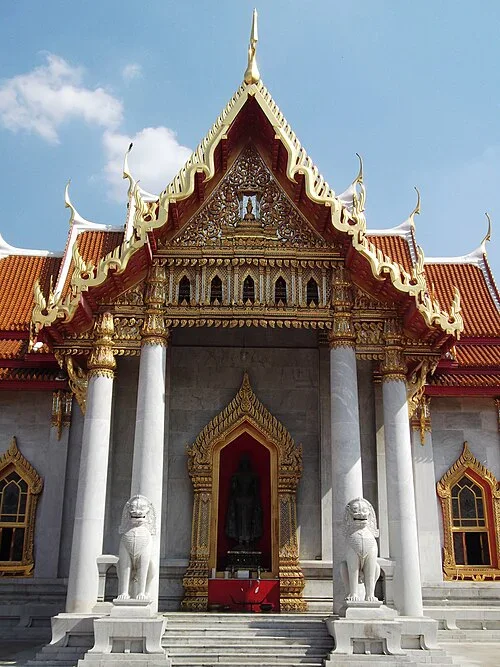 The Carrara Marble Facade and East Portico
Gilded Gable and Roof Detail of the Ubosot
Above the marble, the hall turns unmistakably Thai. The roofs rise in tiered layers of orange tile, each level sweeping out over the one below. At every roofline's tip curves the chofa, a slender finial shaped like a flame reaching for the sky. Over the porch spreads the pediment, carved and covered in gold, dense with traditional ornament. These roofs and gilded pediments follow Thai convention, sitting alongside the Western elements found elsewhere on the same building. The two marble lions appear at this porch as well, keeping their watch on every approach to the hall.
Listen in the appPhoto: กสิณธร ราชโอรส · CC BY-SA 4.0
04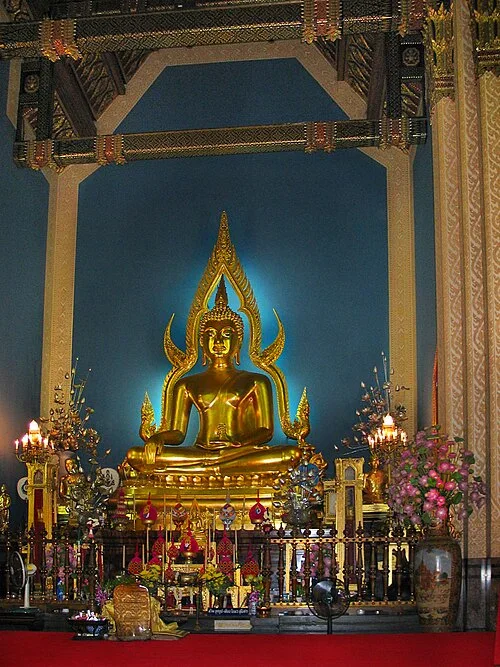 The Ubosot Sanctuary Interior
Phra Phuttha Chinnarat Replica and the Ashes of King Rama V
The golden Buddha at the heart of the sanctuary is a copy, deliberately and respectfully a copy. As a young man, King Chulalongkorn had visited the original Phra Buddha Chinarat at Phitsanulok, in 1866, alongside his father, King Mongkut. He wanted an image of exceptional beauty for his new royal temple, but he would not remove the revered original. So he assigned Prince Damrong Rajanubhab to supervise a replica, with Phra Prasit Pattima as the principal craftsman. In Phitsanulok they cast it in brass from melted, decommissioned cannons. The finished image was enshrined here in December 1901, followed by an eye-opening consecration. Its face is egg-shaped, its shoulders broad, with a flame-like aureole behind the head, in the Sukhothai manner, and the right hand rests in the posture of victory over temptation. Beneath this statue lie the ashes of King Chulalongkorn himself, making the sanctuary both the temple's devotional heart and his memorial.
Listen in the appFotograf / Photographer: Heinrich Damm (User:Hdamm, Hdamm at de.wikipedia.org) · CC BY 2.0
05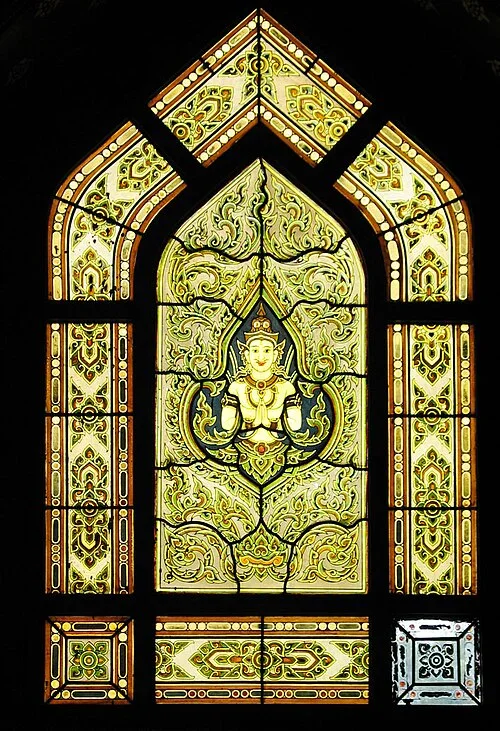 The Ubosot Sanctuary Interior
Stained Glass Window of the Ordination Hall
High above the windows, panels of stained glass throw coloured light into the hall. The effect recalls the churches of Europe, a clear Western borrowing in Prince Naris's design. Yet everything glowing in the glass is Thai. The figures are celestial beings in classic Thai style, framed by Thai ornament. A Western craft, carrying Thai imagery into a Buddhist sanctuary.
Listen in the appFotograf / Photographer: Heinrich Damm (User:Hdamm, Hdamm at de.wikipedia.org) · CC BY 2.0
06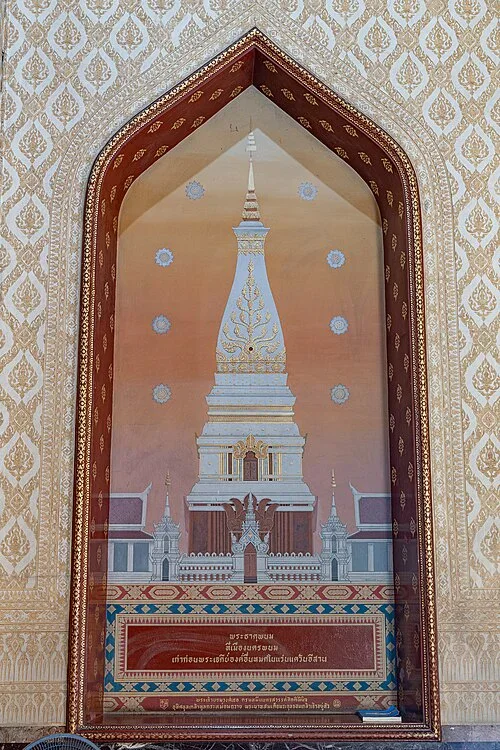 The Ubosot Sanctuary Interior
Mural of the Phra That Phanom Stupa
Set into the shallow niches of the walls are paintings of the realm's most sacred stupas. Together they form a painted geography of Siam's Buddhist heritage, eight great shrines in all. One panel shows Phra That Phanom, the revered stupa venerated in the northeast of the country. Its painted spire rises inside a gilded arch, ringed with stars against a warm sky. The whole series tied this new royal temple in Bangkok to shrines far beyond the capital.
Listen in the appPhoto: Mastertongapollo · CC BY-SA 4.0
07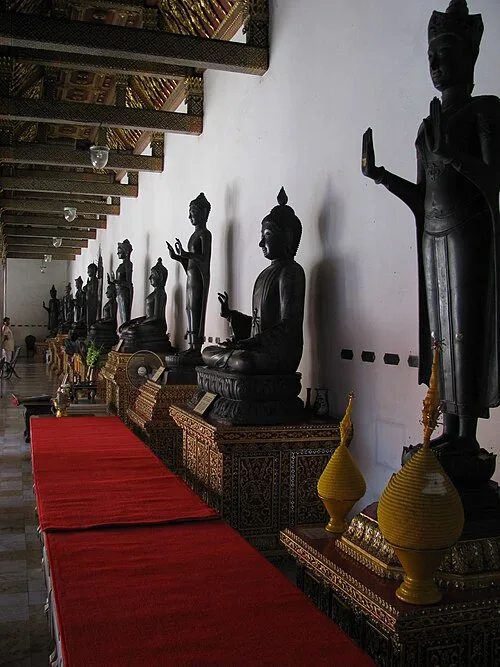 Phra Rabiang (The Cloister Gallery)
Phra Rabiang: The Cloister of Fifty-Two Buddhas
A covered gallery runs around the ordination hall, and it works as an open-air museum. Fifty-two Buddha images stand along its length, each displaying a different mudra, a different gesture of the hands. Prince Damrong Rajanubhab collected them for his king, the same prince who once supervised the casting of the sanctuary's golden Buddha. The gallery itself, with its barred blind windows, shows Khmer-inspired influence, another thread in the temple's blend of styles. Rows of small bells hang along the eaves, part of the cloister's quiet character.
Listen in the appPhoto: Aimaimyi · CC BY-SA 3.0
08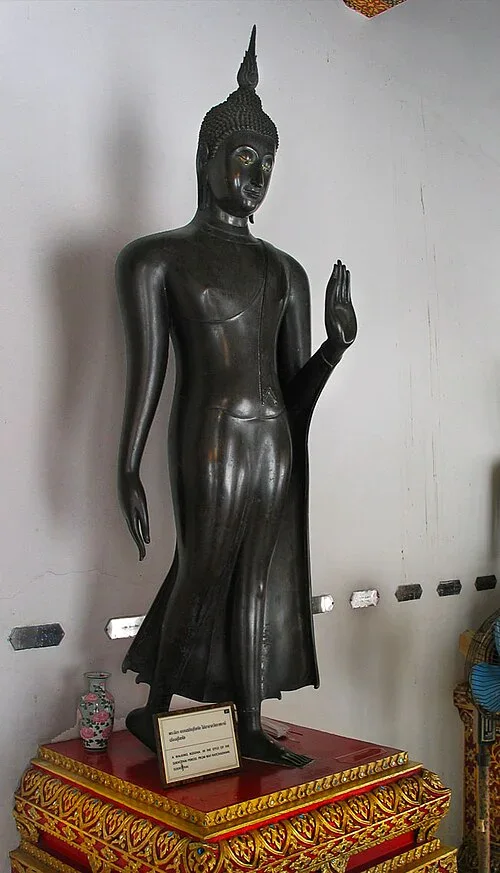 Phra Rabiang (The Cloister Gallery)
A Standing Buddha in Sukhothai Style
One standing figure among the fifty-two shows how much a Buddha image can tell. In images of the Sukhothai style, the finial above the head flames upward like a bud of fire, and the body is slender and graceful. A raised hand signals reassurance, one of the classic gestures visitors can learn to recognize. Reading the gestures and the proportions is how people tell where and when an image belongs. Among the fifty-two, regional schools and hand positions turn the gallery into a lesson in looking.
Listen in the appFotograf / Photographer: Heinrich Damm (User:Hdamm, Hdamm at de.wikipedia.org) · CC BY 2.0
09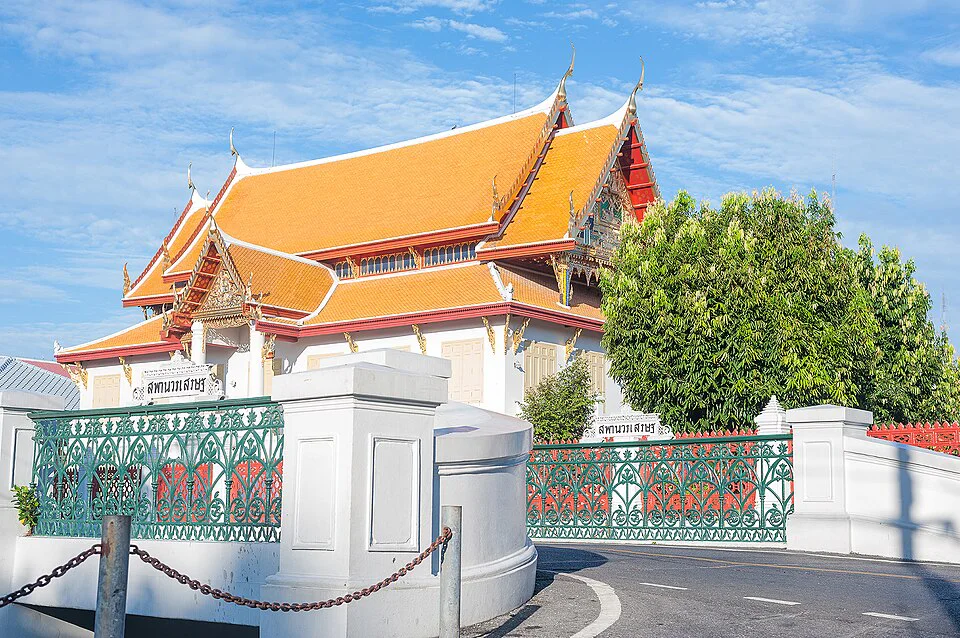 The Canal and Saphan Woraset
Saphan Woraset and the Temple Canal
A narrow canal runs beside the marble hall, and it divides two worlds. On one side lies the sacred zone around the ordination hall. On the other stand the monastic living quarters. Three ornate bridges cross the water: Saphan Phra Rup, Saphan Thuai and Saphan Ngan. Saphan Woraset, with its green cast-iron railings, is a fourth bridge over the water. Its neighbor Saphan Thuai carries an unusual story. Gilded teacups made for a royal cremation ceremony were sold, and the proceeds paid for that bridge. A plaque records King Chulalongkorn dedicating it in 1900, with completion in 1902. Objects of mourning became permanent religious infrastructure.
Listen in the appBerryJ · CC BY-SA 3.0
10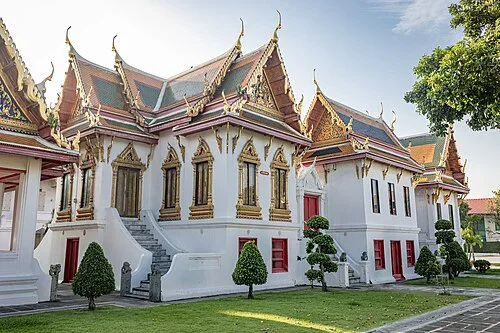 The Royal Pavilions and Bowonwong Bell Tower
Phra Thinang Song Phanuat Royal Pavilion
Across the canal, in the monastic quarter, stands a royal pavilion. Its walls are white, its structure timber and plaster, its roofs tiered and gabled in fully traditional Thai style. It was built within the temple grounds for royal use. The pavilion belongs to the residence zone of the monastery, reached over the canal bridges, a quiet counterpart to the marble splendor on the sacred side of the water.
Listen in the appPhoto: Mastertongapollo · CC BY-SA 4.0
- 11
Bowonwong Bell Tower
The marble bell tower of the Front Palace princes, and the temple's living daily rituals.
Wat Benchamabophit
Frequently asked questions
How much does the guide cost?
Free app download. Listed guide price: $0.99. Guide price shown in the app. Audio guide only. Venue admission is separate.
Can I listen without internet?
Yes. Download the guide’s audio, images, and maps in the app before your visit. Your downloaded content is then available offline.
Can I listen in my language?
This audio guide is available in 15 languages, including English.
Do I need to follow a schedule?
No. This is a self-guided experience. Choose your stops, pause whenever you like, and return to a story at your own pace.
At your own pace
Explore Wat Benchamabophit.
Download Stanza, then search for “Wat Benchamabophit”.
Free app download · Guide price shown in the app
Keep exploring
Nearby audio guides
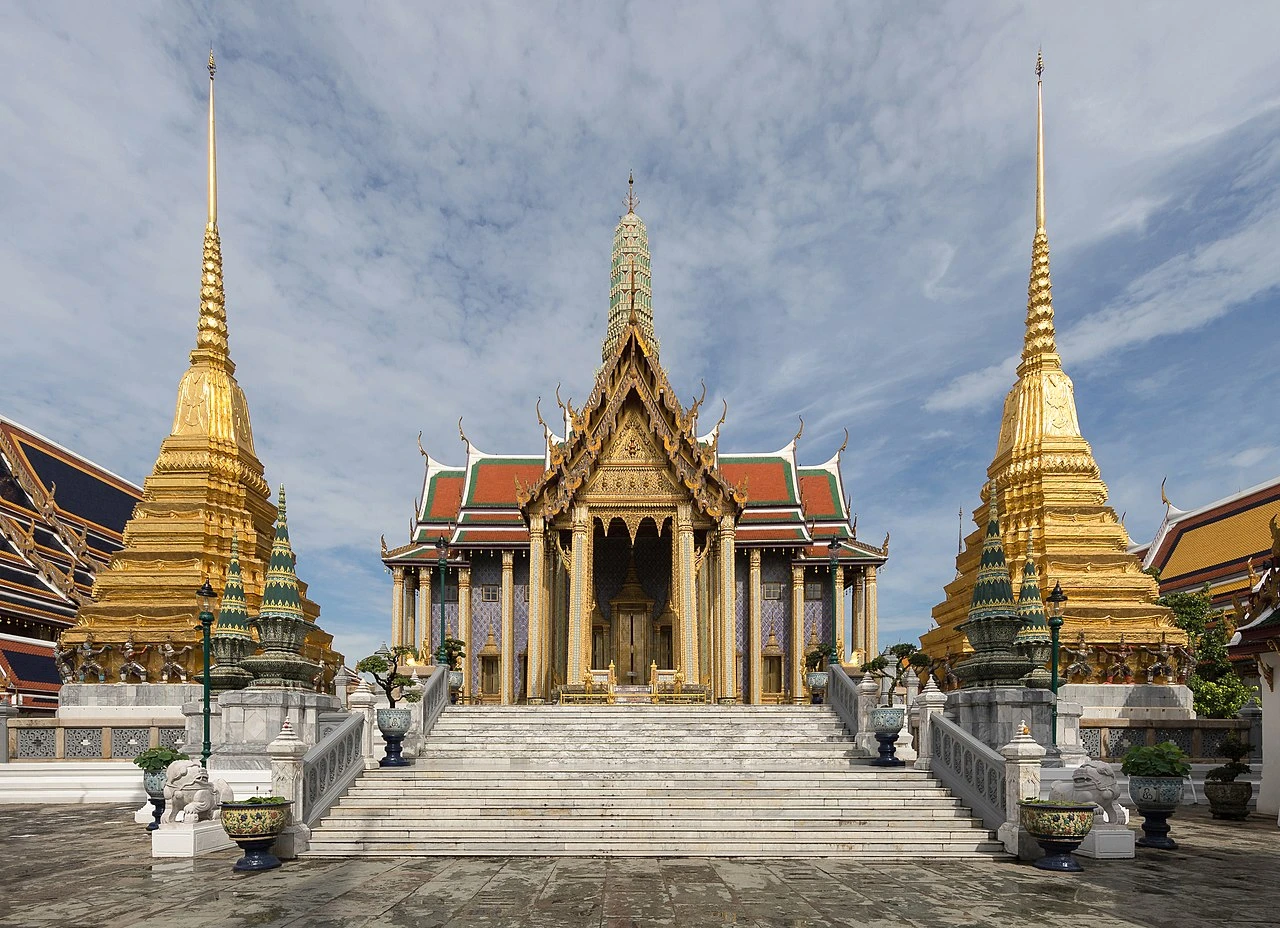
Bangkok · 3 km
Wat Phra Kaew
Content & sources
Photo: Basile Morin · CC BY-SA 4.0
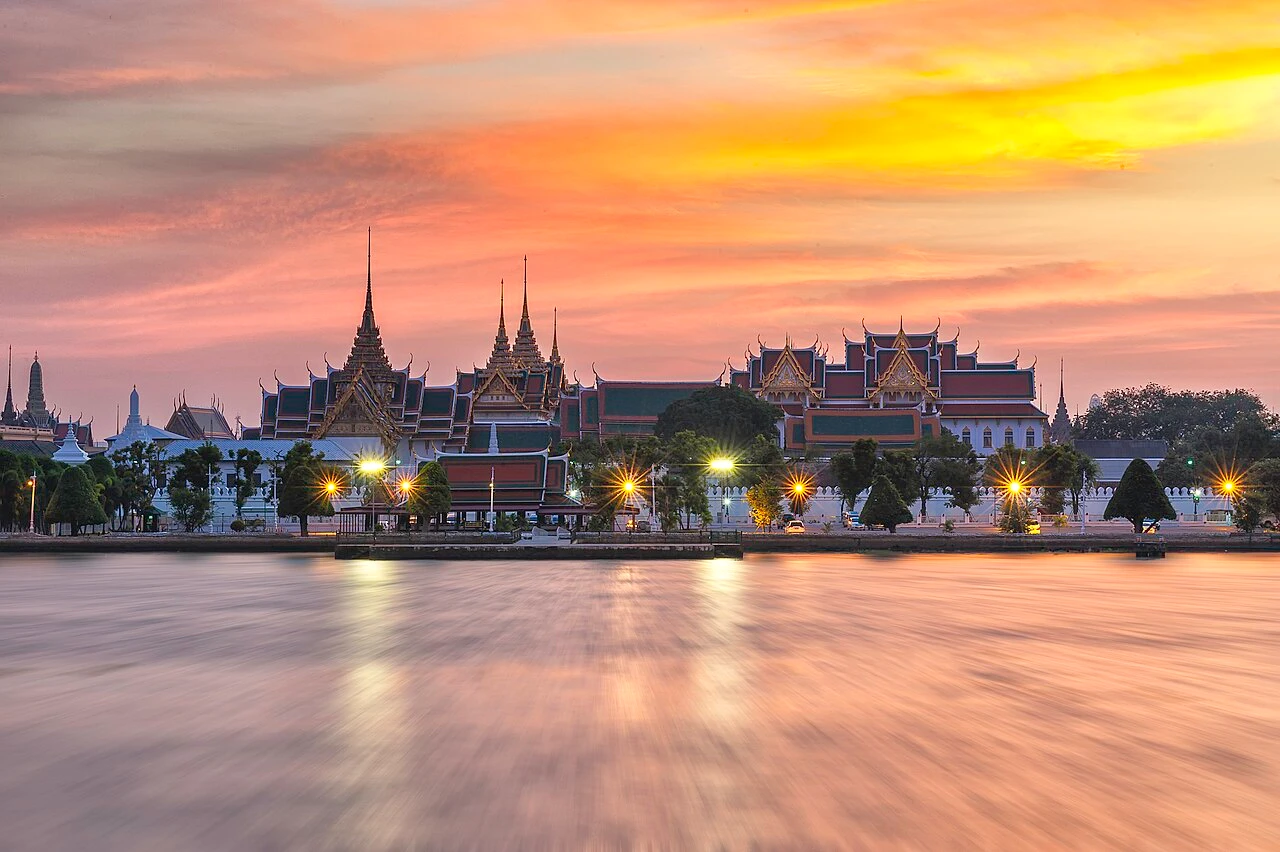
Bangkok · 3 km
Grand Palace
Content & sources
Photo: Preecha.MJ · CC BY-SA 4.0
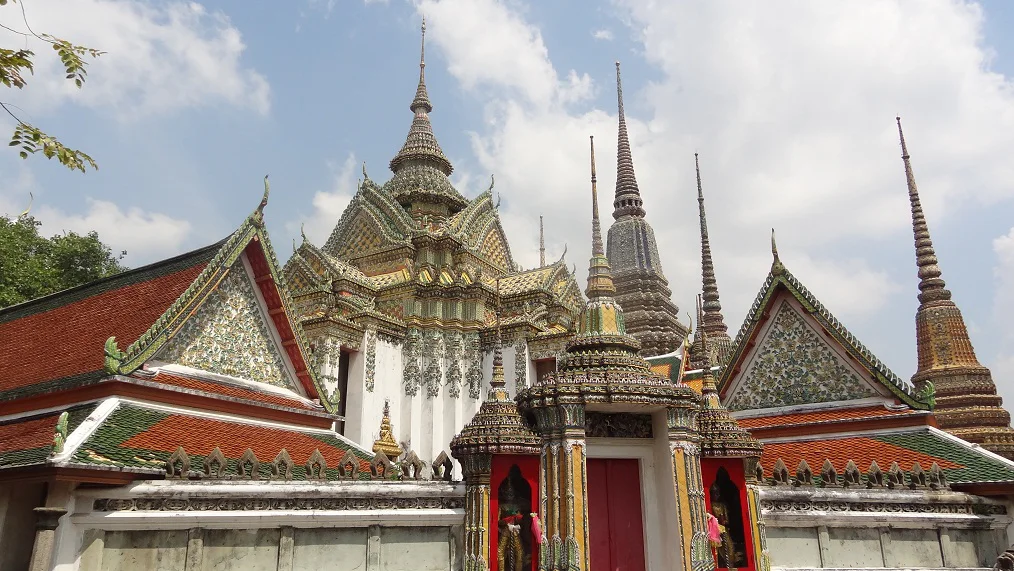
Bangkok · 3 km
Wat Pho
Content & sources
Photo: Emielwiki · CC BY-SA 3.0
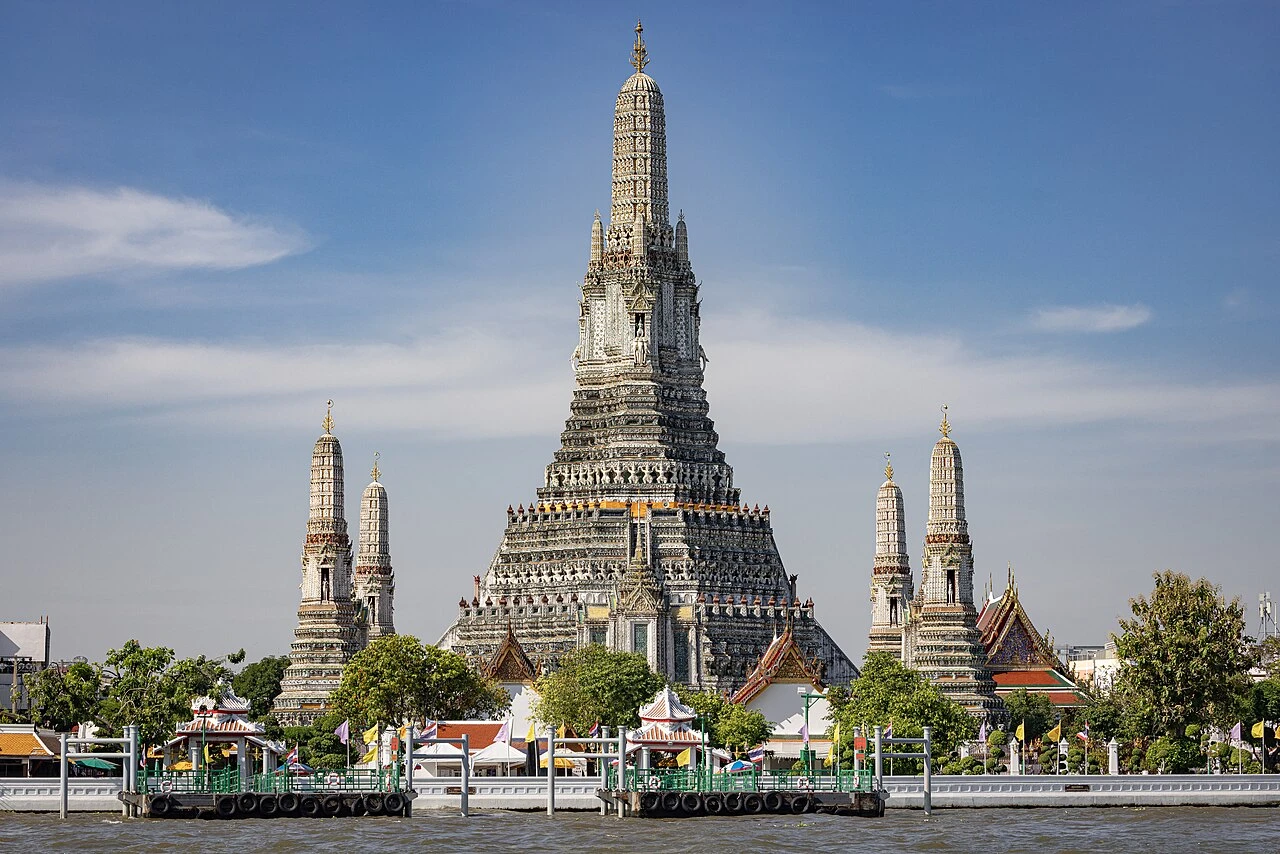
Bangkok · 4 km
Wat Arun
Content & sources
Photo: Mastertongapollo · CC BY-SA 4.0