Stanza · Audio guide
Wat Paknam Bhasicharoen Audio Guide
A place to remember. A story to take with you.
Wat Paknam Bhasicharoen is a royal temple located in the Phasi Charoen district of Bangkok. Established in 1610, it is the origin of the Dhammakaya tradition.
Download Stanza, then search for “Wat Paknam Bhasicharoen”.
About the tour
One guide. Your kind of visit.
Wat Paknam Bhasicharoen is a royal temple located in the Phasi Charoen district of Bangkok. Established in 1610, it is the origin of the Dhammakaya tradition.
Ready when you are.
- 01Get the free Stanza app.
iOS & Android
- 02Find your guide.
“Wat Paknam Bhasicharoen”
- 03Download before you go.
Works offline
Audio guide / 12 narrated stops
Inside the guide
Get to know a few of the stories before you go. Open a stop to read more.
01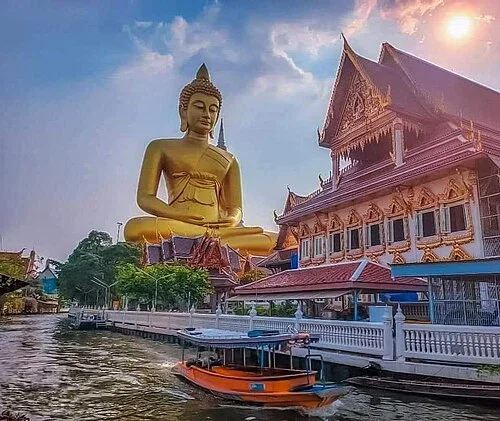 Canal Arrival and Temple Gateway
Arrival by the Canal: Wat Paknam
Wat Paknam. The name simply means the mouth of the water, and the water explains everything about this place. The temple sits in the Phasi Charoen district of Bangkok, on ground shaped like an island, wrapped around by canals that run to the Chao Phraya River. For as long as anyone can tell, worshippers have come the same way the long-tail boats still come: gliding up the canal to the temple's edge. Welcome to Wat Paknam Bhasicharoen, a royal temple with a story in three movements. It began as a monastery of the old Ayutthaya kingdom. A meditation master later pulled it back from near ruin. And today a giant golden Buddha rises over the rooftops. One detail of daily life survives from the temple's busiest days: a central kitchen feeds the whole community, because the neighbourhood around it is scattered and the monks cannot rely on alms rounds alone. They still walk those rounds, but the kitchen keeps everyone fed.
Photo: บุษยรังสี ฮั่วคิ้ว · CC BY-SA 4.0
02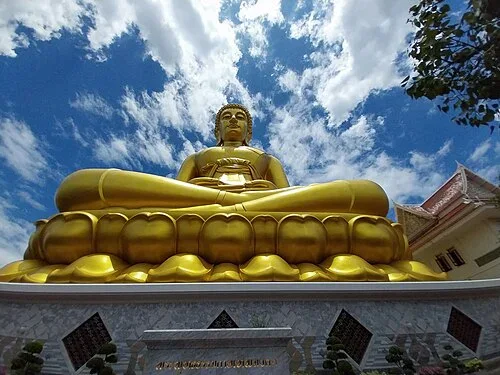 The Giant Bronze Buddha Plaza
The Giant Bronze Buddha
Work on this Buddha began on the fourth of March, 2017. The temple built it in honour of Luang Pu Sodh, a meditation master whose story belongs to a later stop, and of the Thai Royal Family. The figure sits in meditation posture, hands resting in its lap. It rises sixty-nine metres. Across the lap it spans forty. The temple's own spokespeople say the material is pure bronze, and that no Buddha image of this kind has been made anywhere in the world before. That claim comes from them, so hold it lightly. The statue was meant to be finished by mid-2020, but the pandemic in Thailand slowed the work, and it was completed in 2021 instead. It now stands so tall that passengers on the elevated skytrain can pick it out across the city. Temple officials say the number of visitors to Wat Paknam has doubled since it went up.
Photo: กสิณธร ราชโอรส · CC BY-SA 4.0
03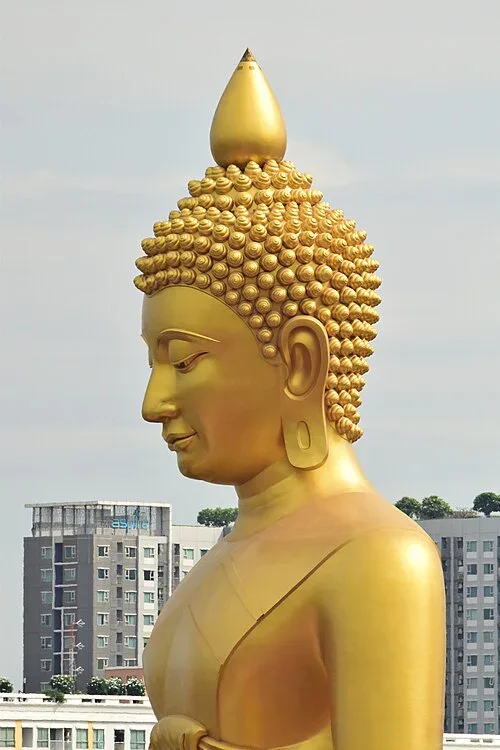 The Giant Bronze Buddha Plaza
The Buddha's Head and Lotus Bud
The finishing touches to this Buddha were the ones nobody sees. At the very top of the head sits a lotus bud, the pointed ornament crowning it. When the statue was consecrated, a relic and gold were placed inside that bud. And inside the left side of the chest, the builders set a structure of gold to serve as the image's heart. The work itself crossed borders. Thai artists designed the statue, and Chinese construction technicians helped assemble it. The posture was not chosen at random either. It follows the Buddha image used in the meditation method of Luang Pu Sodh, the master honoured by this whole monument. Meditators trained in his method picture exactly this form. The statue's full size, sixty-nine metres of it, is the story of the stop before this one.
Listen in the appPhoto: กสิณธร ราชโอรส · CC BY-SA 4.0
04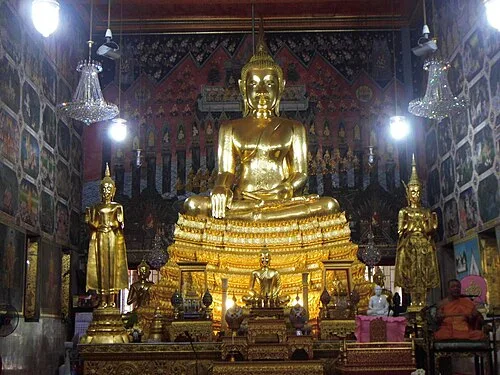 The Historic Ubosot (Ordination Hall)
The Historic Ordination Hall
The Buddha seated on this altar belongs to the oldest layer of Wat Paknam. So does the old monastic library. Both still carry the style of Ayutthaya, the kingdom that ruled Siam before Bangkok was capital. The temple itself was founded in 1610, deep in the Ayutthaya period. One king took a personal interest in it. Records show that King Suriyenthrathibodi, who reigned in the early eighteenth century, called it Wat Prasat Suan Sawan, the temple of the heavenly garden palace. The simpler name, Wat Paknam, appears in palace administration documents from 1780 onward. Three kings ordered renovations over the years: King Taksin, Rama the Third, and King Chulalongkorn. But patronage did not last. By the reign of King Rama VI, the buildings had badly deteriorated, and the temple had no abbot at all.
Listen in the appPhoto: กสิณธร ราชโอรส · CC BY-SA 4.0
05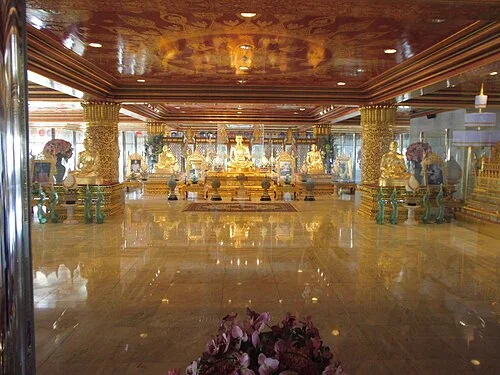 The Shrine of Luang Pu Sodh
The Shrine Hall of Luang Pu Sodh
In 1916, a senior monk named Somdet Puean assigned Luang Pu Sodh Candasaro to be abbot here. He took over a temple in disrepair with only thirteen monks. Within his lifetime it counted five hundred monks, the highest number in Thailand at the time, along with hundreds of mae chi, the temple's resident nuns. People remembered him for his charisma and for speaking his mind plainly. His meditation method drew the crowds, and with them came a prosperous community of supporters from Bangkok's upper classes. The local neighbourhood was poorer, and its children sometimes caused the temple trouble. So Luang Pu Sodh opened a free primary school, and when the Thai government began schooling the whole country, he handed the school over to it. He also built an institute for Pali, the language of the Buddhist scriptures, which grew into a leading centre of its kind. In its early days a thousand monks and novices studied there.
Listen in the appPhoto: กสิณธร ราชโอรส · CC BY-SA 4.0
06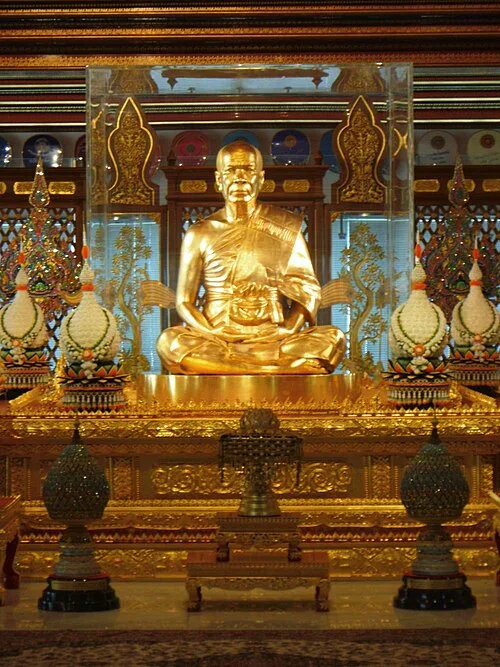 The Shrine of Luang Pu Sodh
The Abbot Remembered
Luang Pu Sodh died in 1959, and his body has never been cremated. The reason is the flow of people. So many kept arriving at the temple to pay their respects that the remains were left in a coffin, and they have stayed there ever since. The coffin remains one of the great points of attraction at Wat Paknam. Above it stands the golden likeness of the abbot, seated in meditation inside a glass case, dressed in his robes exactly as his followers remember him. The monks and nuns of the temple still hold memorial ceremonies for him on a regular basis. Everything that made this temple what it is, the revival, the school, the meditation halls, traces back to the man resting here.
Listen in the appPhoto: กสิณธร ราชโอรส · CC BY-SA 4.0
07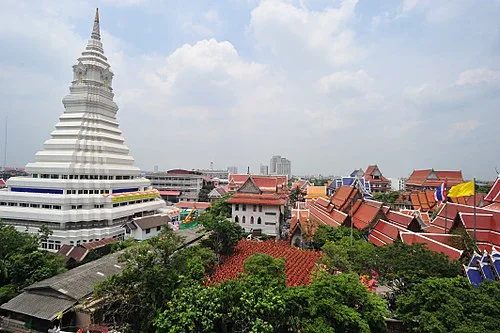 Maharatchamongkhon Stupa: The Museum Levels
The Maharatchamongkhon Stupa
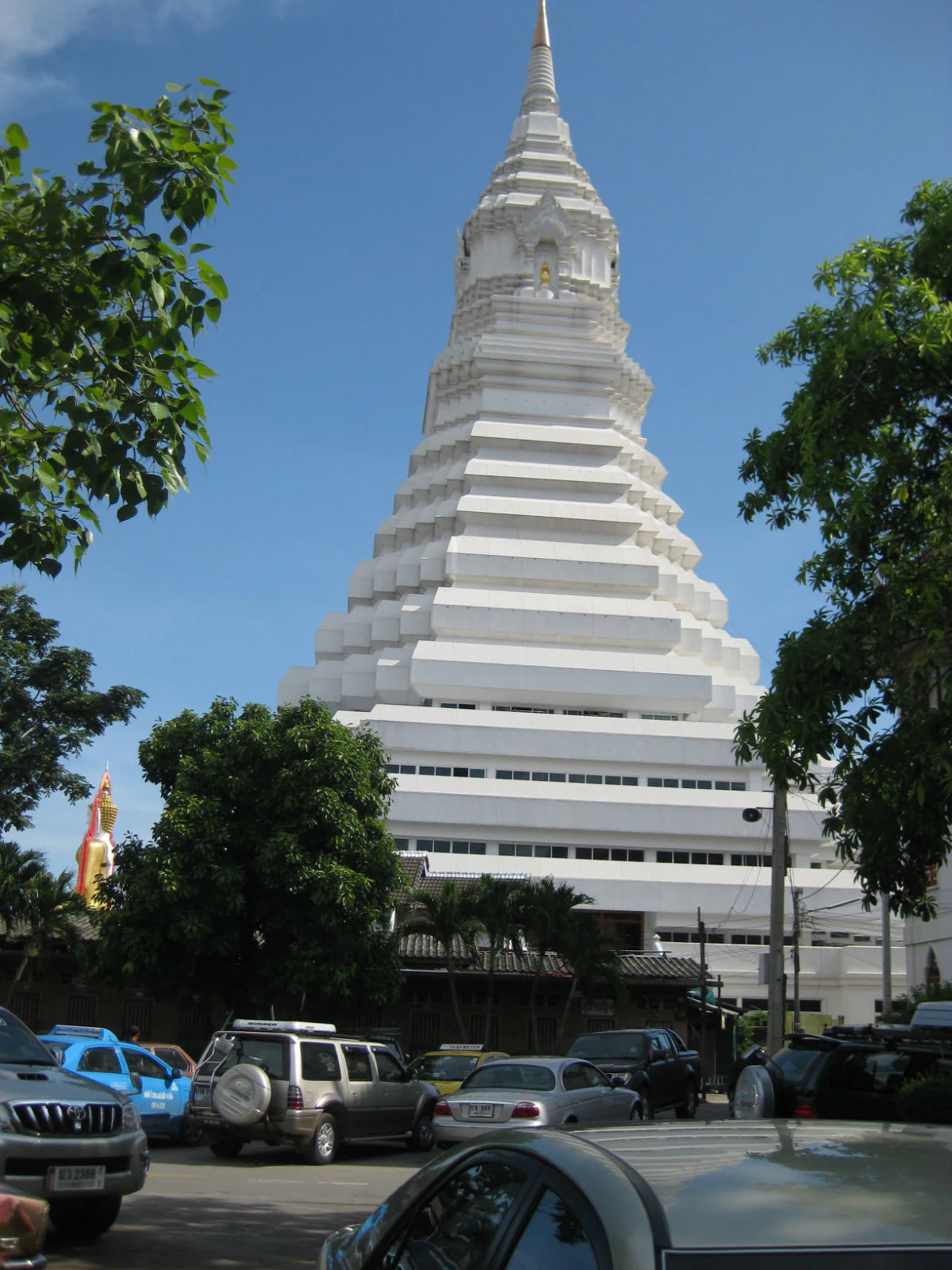
The white stupa rising over the temple rooftops took shape from 2004 to 2012. The man behind it was Somdet Chuang Varapuñño, abbot of Wat Paknam from 1960 until his death in 2021. He named it Maharatchamongkhon, which means a blessed, great land. The name points to Thailand under the Royal Family, to whom the stupa is dedicated, and it also echoes Somdet Chuang's own honorary name. It stands eighty metres tall, built as a twelve-sided polygon with five floors inside. The design mixes two styles. Part of it follows the shape of Luang Pu Sodh's well-known amulets. Part of it imitates the old stupa of Wat Lok Moli in Chiang Mai, bringing together the Rattanakosin and Lanna traditions. The whole project cost five hundred million baht, and Princess Srirasmi formally opened it. After that, international travellers began arriving in numbers.
Listen in the appHoney Kochphon Onshawee · CC0
08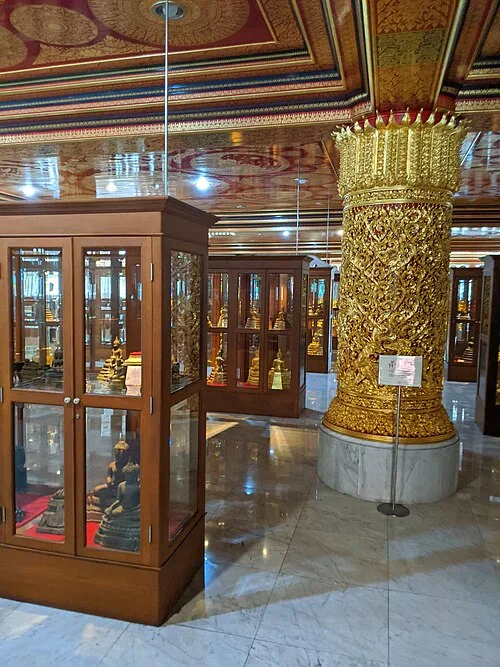 Maharatchamongkhon Stupa: The Museum Levels
The Stupa Museum Levels
Inside, several of the stupa's floors work as a museum. Glass cases hold Buddha images and objects given by devotees, set among pillars covered in gold ornament. The building also holds a meditation hall, a car park, and a lift, practical things people forget stupas need. But this stupa is tied to one of the hardest chapters in the temple's recent history. In 2016, Somdet Chuang was nominated to become Supreme Patriarch, the acting head of Thailand's entire monastic community. The appointment stalled and was finally withdrawn, for reasons most observers read as political. Protest and heated debate followed across the country. Then came a criminal accusation: tax evasion, over a vintage car some eighty years old that had been donated to the temple's museum. The charges against Somdet Chuang were dropped. His assistant was acquitted for lack of evidence, two days after the nomination was withdrawn.
Listen in the appPhoto: Wikiman5676 · CC BY-SA 4.0
09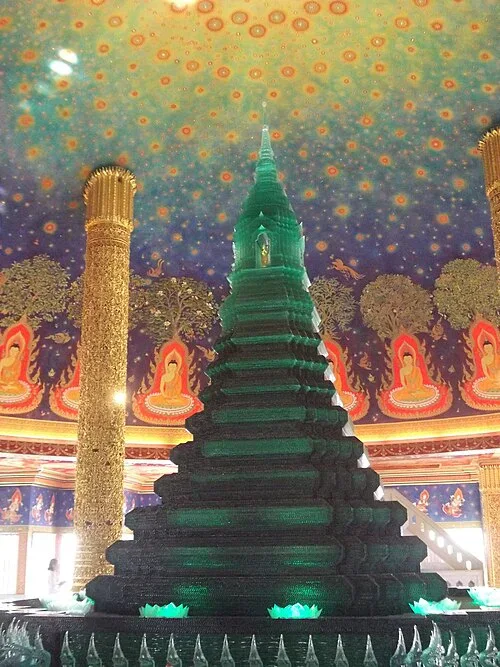 The Emerald Glass Stupa and Celestial Dome
The Emerald Glass Stupa
At the top of the climb, the stupa's centrepiece waits: a stupa within the stupa, eight metres tall, made of emerald-green glass. Light moves through it, and the whole form glows against a ceiling scattered with painted stars and seated Buddhas. The upper levels of the great stupa hold more than this sight. There is a room of relics here, along with Buddha images and portraits of monks held in deep respect. Among the portraits is Luang Pu Sodh, the meditation master whose coffin pilgrims visit in the shrine hall below. It is a strange and beautiful thing to stand before, a traditional monument rendered entirely in glowing glass.
Listen in the appPhoto: กสิณธร ราชโอรส · CC BY-SA 4.0
10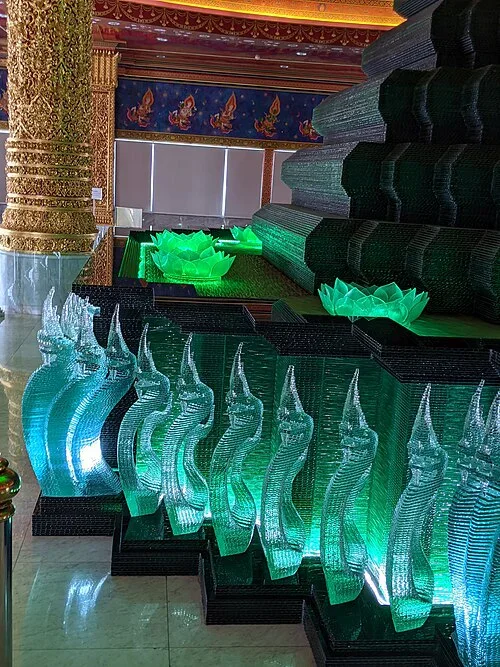 The Emerald Glass Stupa and Celestial Dome
The Glass Nagas
Around the base of the green stupa, the temple's guardian serpents take a modern form. In Thai temples the naga, a great mythical serpent, usually appears carved in stone or cast in metal. Here the nagas are shaped from translucent glass, lit from within so they glow green and blue, rising in a row with their hoods flared. Glass lotuses float nearby, catching the same light. All of this interior work was completed along with the stupa in 2012. It is traditional temple art seen through a new material, and the craftsmen behind it go unnamed.
Listen in the appPhoto: Wikiman5676 · CC BY-SA 4.0
- 11
The Cosmic Dome
A painted Buddhist cosmos overhead, and golden precepts carved at the very top.
- 12
The Canal Promenade: A Living Tradition
The meditation tradition that spread from this canal to temples around the world.
Wat Paknam Bhasicharoen
Frequently asked questions
How much does the guide cost?
Free app download. Listed guide price: $0.99. Guide price shown in the app. Audio guide only. Venue admission is separate.
Can I listen without internet?
Yes. Download the guide’s audio, images, and maps in the app before your visit. Your downloaded content is then available offline.
Can I listen in my language?
This audio guide is available in 15 languages, including English.
Do I need to follow a schedule?
No. This is a self-guided experience. Choose your stops, pause whenever you like, and return to a story at your own pace.
At your own pace
Explore Wat Paknam Bhasicharoen.
Download Stanza, then search for “Wat Paknam Bhasicharoen”.
Free app download · Guide price shown in the app
Keep exploring
Nearby audio guides
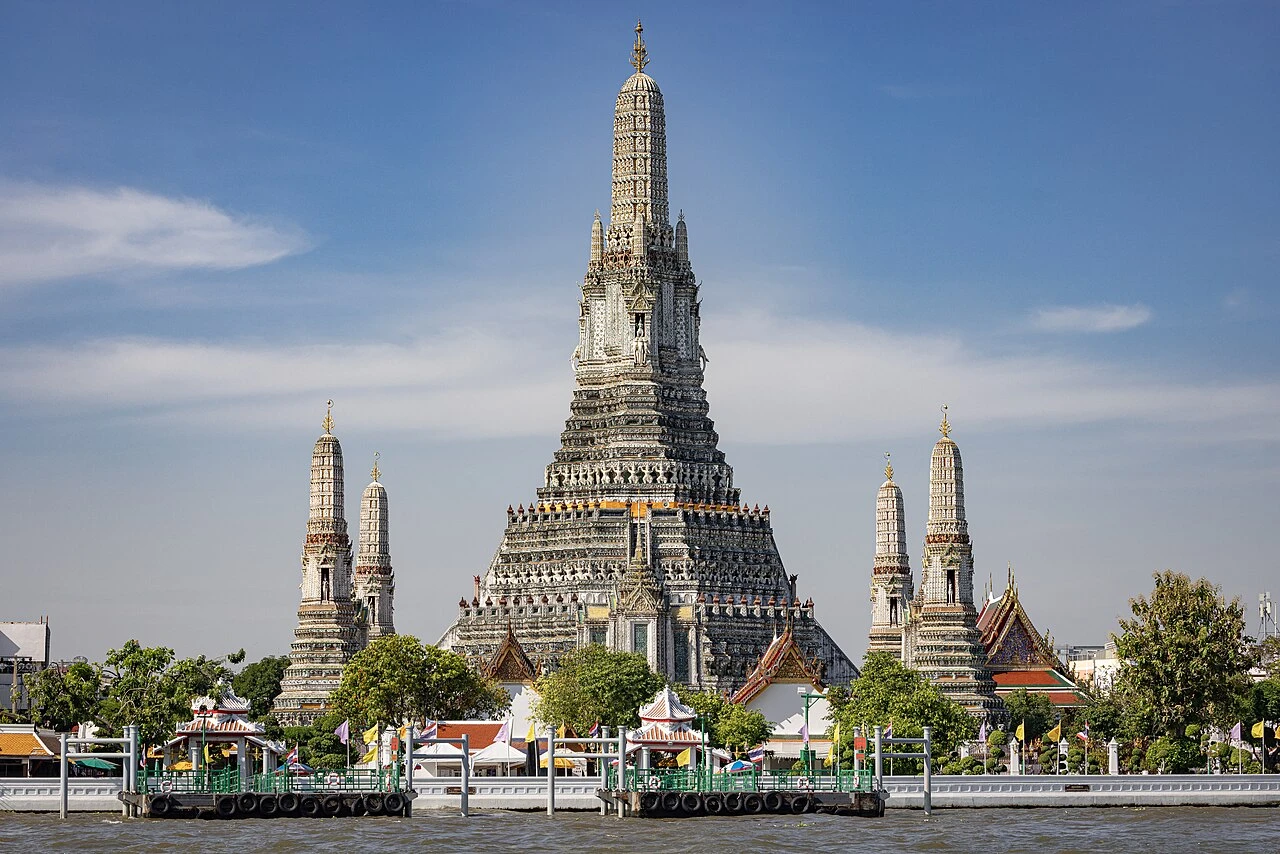
Bangkok · 3 km
Wat Arun
Content & sources
Photo: Mastertongapollo · CC BY-SA 4.0
Bangkok · 4 km
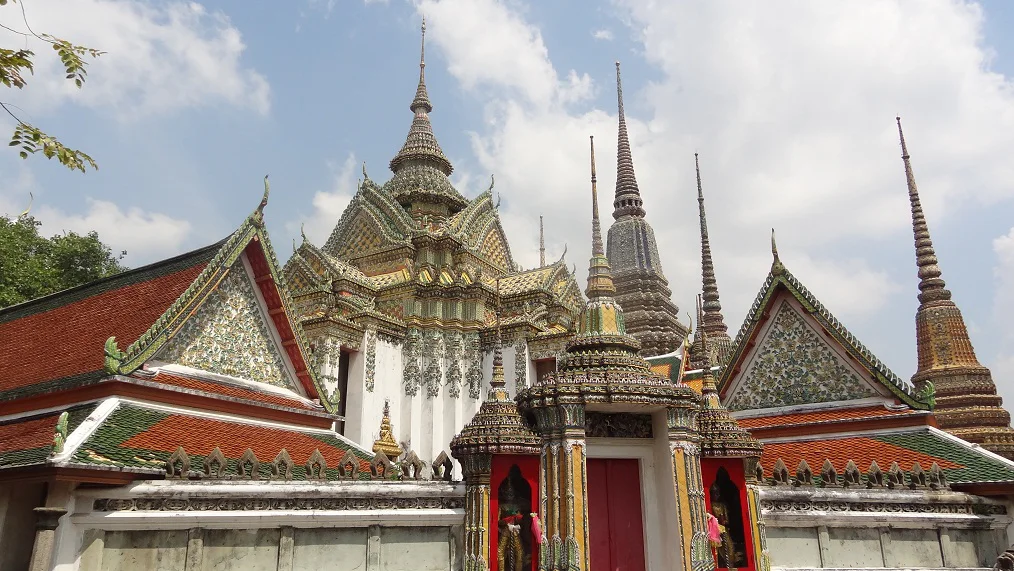
Wat Pho
Content & sources
Photo: Emielwiki · CC BY-SA 3.0
Bangkok · 4 km
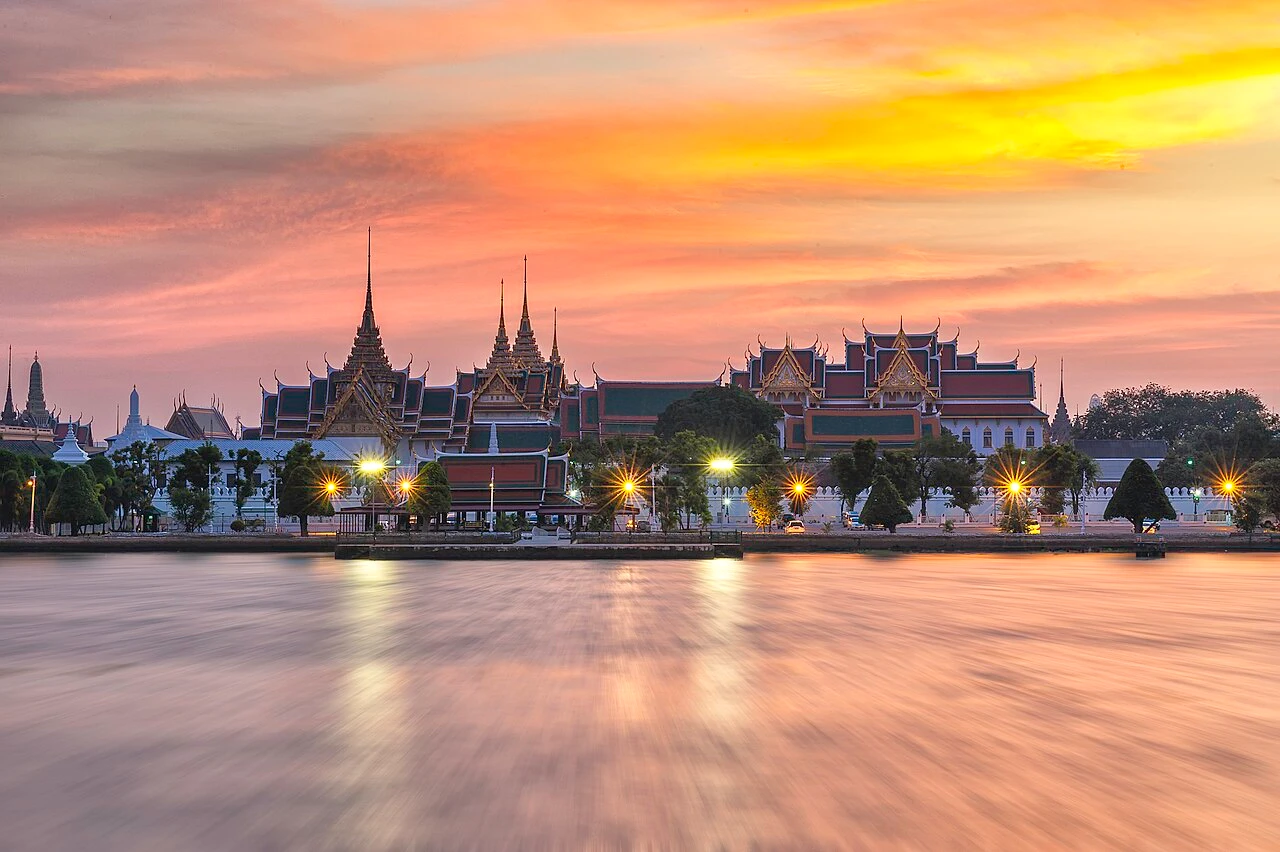
Grand Palace
Content & sources
Photo: Preecha.MJ · CC BY-SA 4.0
Bangkok · 4 km
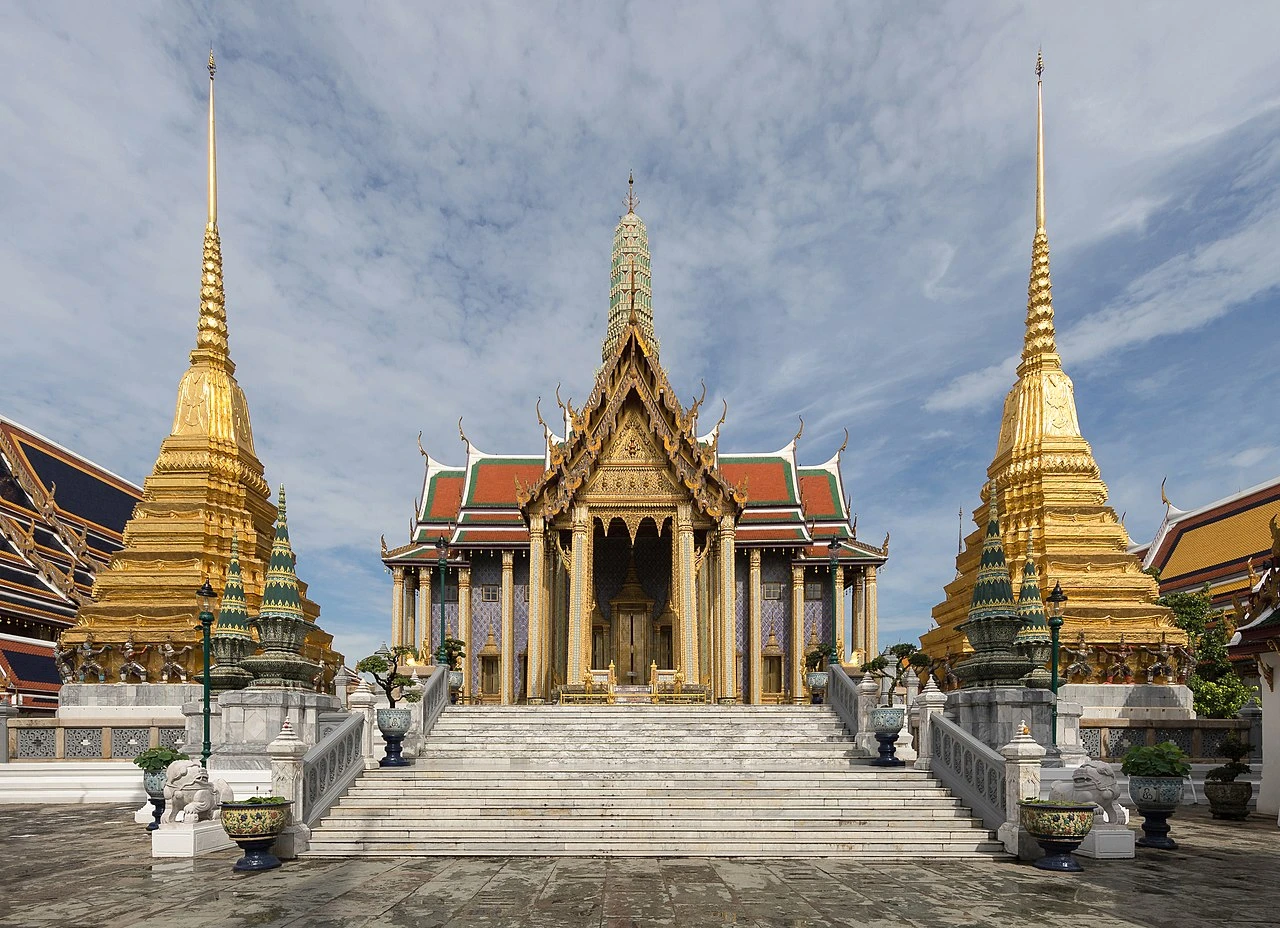
Wat Phra Kaew
Content & sources
Photo: Basile Morin · CC BY-SA 4.0