 Stanza / Audio guide
Content & sources
Stanza · Audio guide
Wat Chedi Luang Audio Guide
A place to remember. A story to take with you.
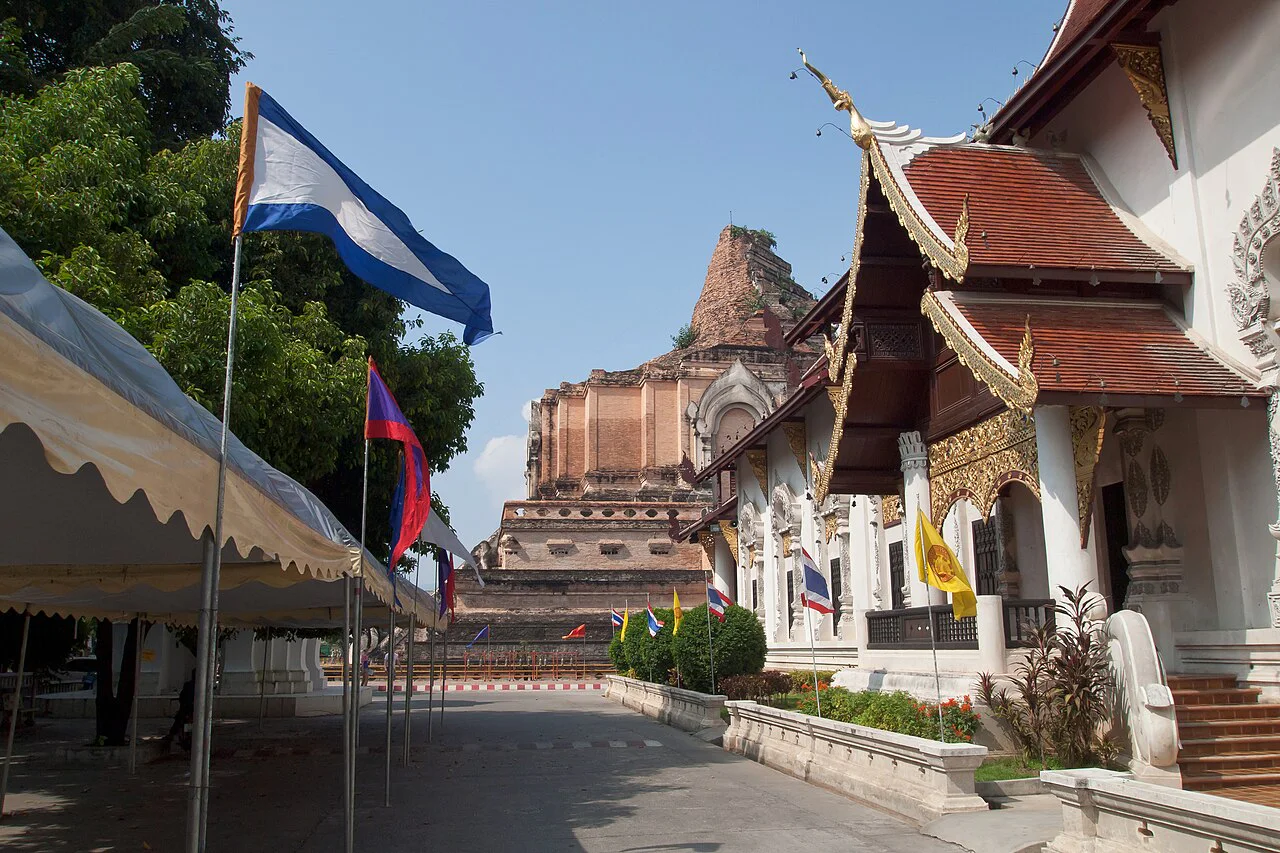
Wat Chedi Luang is a Buddhist temple located in the historic centre of Chiang Mai, Thailand. The current temple grounds were originally formed by the combination of three separate temples.
Download Stanza, then search for “Wat Chedi Luang”.
About the tour
One guide. Your kind of visit.
Wat Chedi Luang is a Buddhist temple located in the historic centre of Chiang Mai, Thailand. The current temple grounds were originally formed by the combination of three separate temples.
Ready when you are.
- 01Get the free Stanza app.
iOS & Android
- 02Find your guide.
“Wat Chedi Luang”
- 03Download before you go.
Works offline
Audio guide / 10 narrated stops
Inside the guide
Get to know a few of the stories before you go. Open a stop to read more.
01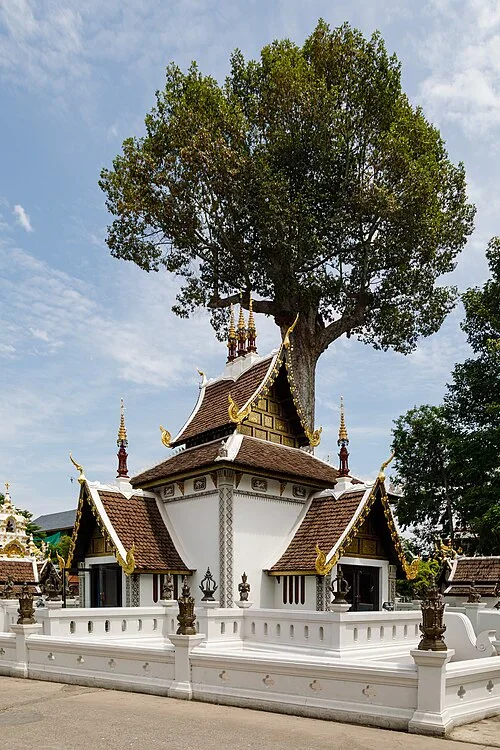 The Entrance and Sao Inthakin City Pillar Shrine
The Sao Inthakin City Pillar Shrine
Welcome to Wat Chedi Luang, once the royal temple of the Lanna kingdom. Before its walls, near the entrance, stands the spiritual heart of Chiang Mai itself: the city pillar, called Sao Inthakin. In 1800 King Kawila had it moved here from an old temple called Wat Sadeu Muang, so the pillar would watch over the city from royal ground. He also planted three great resin trees beside it, meant to help the pillar protect the town. One of those towering guardians rises straight up behind the shrine, its crown spreading wider than the rooflines below. The shrine itself is small and ornate, with layered roofs and gilded finials, all set behind a white balustrade. Every May the city honors the pillar with a festival that runs six to eight days. Out of old Lanna belief, women do not enter the shrine's interior.
CEphoto, Uwe Aranas · CC BY-SA 4.0
02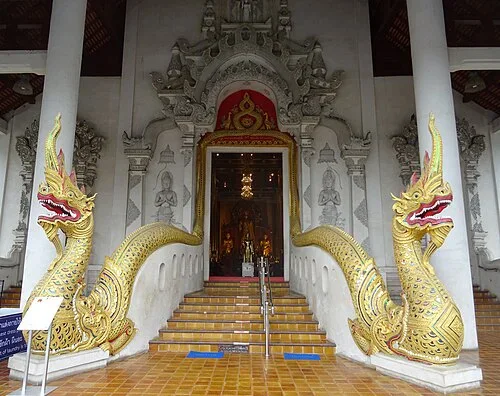 The Main Assembly Hall (Wihan Luang)
Entrance to the Main Wihan
The main assembly hall announces itself with a wide stairway and a carved entrance canopy, its doorway framed in stucco and crowned with a red pediment. The temple began in the late 1300s, when King Saen Mueang Ma started building here to enshrine the ashes of his father, King Kue Na. Ten years of work left it unfinished, and the project outlived its king. After Saen Mueang Ma died, his widow carried the building on. There is also a story the locals tell about the father. The legend says King Kue Na's spirit appeared to a merchant in Burma, asking for a monument on this spot that could be seen from far away. Whether he asked or not, his son built one.
Photo: Christophe95 · CC BY-SA 4.0
03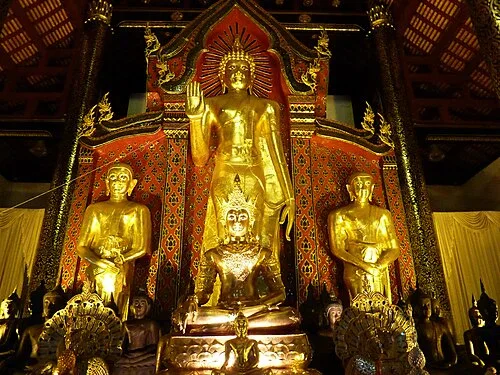 The Main Assembly Hall (Wihan Luang)
Phra Chao Attarot in the Main Wihan
Inside the assembly hall, a golden figure rises nearly the height of the ceiling, one hand lifted in blessing. This is Phra Chao Attarot, the Eighteen-cubit Buddha, the principal image of the hall. It was cast in the late 14th century, at roughly the same time the temple's founding king was starting work on these grounds. Smaller gilded images gather at its feet, and the pillars around it are lacquered in red and gold. The hall is no museum piece; it remains a working place of worship, where monks still chant among the candles.
Listen in the appPhoto Dharma from Sadao, Thailand · CC BY 2.0
04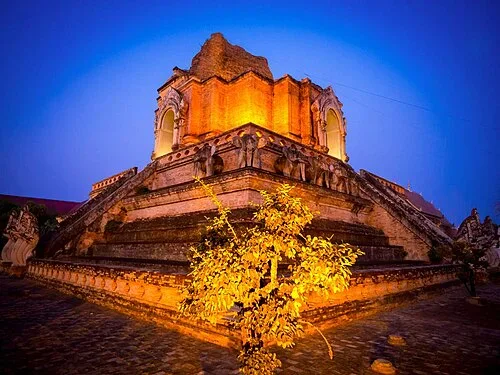 The Grand Ruined Chedi
The great stupa is the reason for the temple's name, which means the temple of the grand chedi. Completed in the mid-15th century under King Tilokaraj after decades of work, it rose about 82 meters high, then the largest building in the entire Lanna kingdom. The chronicles say the people of the city later pooled their own silver to have the chedi sheathed in gold. Then came 1545. In the reign of Queen Chiraprapha, an earthquake and torrential rains struck together, and the upper 30 meters of the stupa came down in a single catastrophe. What was left was abandoned for more than four centuries, a jagged flat-topped brick mass. That broken silhouette, floodlit against the evening sky, is the shape the whole city has lived with ever since.
Listen in the appPhoto: C980040 · CC BY-SA 4.0
05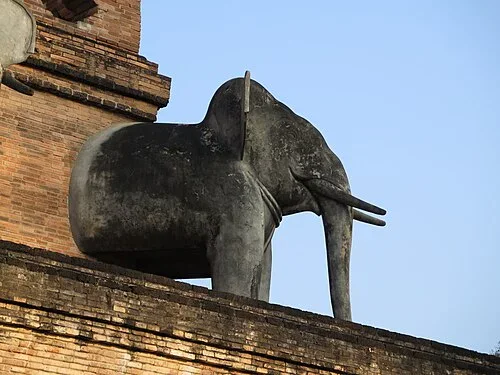 The Guardian Sculptures of the Chedi
Guardian Elephant of the Chedi
Around the base of the chedi, stucco elephants stand braced against the brickwork, their bodies darkened by age. There were once 28 of them ringing the monument, each one shouldering a tier of the stupa above. Local tradition singles out eight of these, giving each a name of its own. Those eight were consecrated as magical guardians, charged with shielding Chiang Mai from its enemies. The powers credited to them come straight from legend: dark mists, fire, and other forces raised against attackers. Which of the weathered figures around the chedi belongs to that named eight, the tradition does not say.
Listen in the appDouglas Perkins · CC BY 4.0
06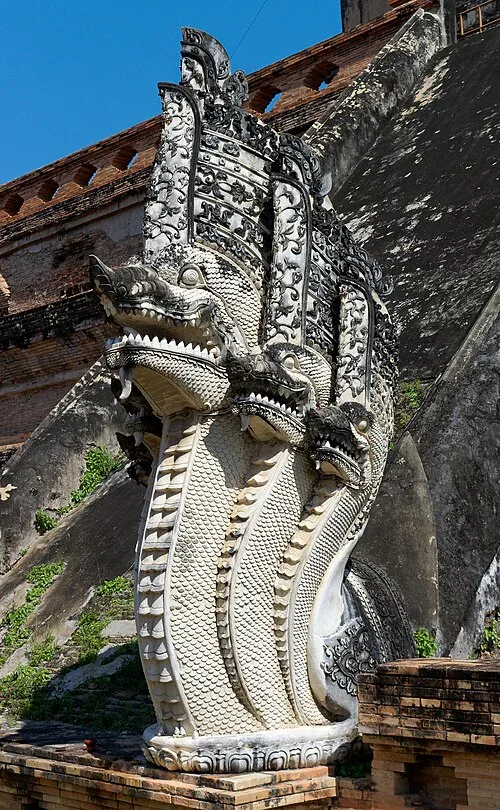 The Guardian Sculptures of the Chedi
The Naga Guardians of the Stairway
At the foot of the chedi's stairways, great serpents rear up with their hoods spread wide. Each of the stupa's four stairways is flanked by these naga guardians, and each naga carries five heads fanning out from a single scaled body. The carving is remarkably sharp, from the teeth in the open jaws to the patterned scales running down the necks. In Buddhist temple architecture, the naga is a protector: it stands at the threshold between the ordinary world and the sacred, guarding the approach. Climbing toward a stupa meant passing between them, under the eyes of the guardian.
Listen in the appJakub Hałun · CC BY-SA 4.0
07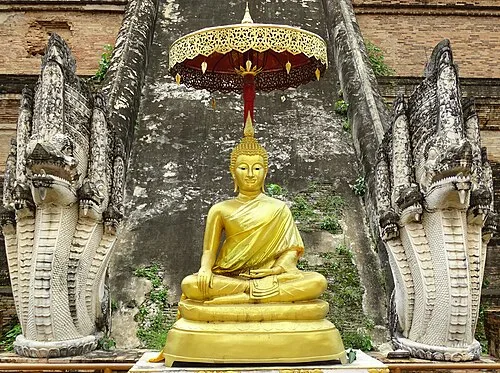 The Eastern Niche and Jade Buddha
The Eastern Niche and the Emerald Buddha
On the eastern face of the chedi sits a niche with a story to match the monument's size. In 1468 the Emerald Buddha was installed there. It stayed through the collapse of the stupa above it, and in 1551 it was taken away to Luang Prabang, after more than eighty years in residence. In the 1990s the ruined chedi was reconstructed, financed by UNESCO and the Japanese government. The work drew criticism: some restorers claimed the new elements were done in Central Thai style rather than the Lanna style of the original. For the chedi's 600th anniversary in 1995, a copy of the Emerald Buddha, carved from black jade, was placed in the rebuilt eastern niche. Its official name is Phra Phut Chaloem Sirirat, but nearly everyone calls it Phra Yok.
Listen in the appAdam Jones from Kelowna, BC, Canada · CC BY-SA 2.0
08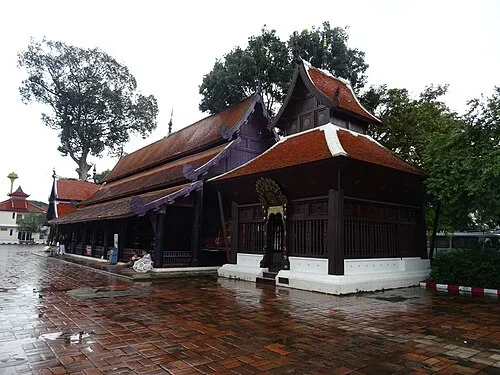 The Reclining Buddha Pavilion
On the far side of the chedi, directly opposite the main assembly hall, stands a dark timber pavilion with steep red-tiled roofs. This hall was built to house a reclining Buddha. Its carved wooden walls and layered rooflines belong to the older Lanna building tradition, and the wet paving stones around it catch the light after rain. Inside waits the image that gives the pavilion its name.
Listen in the appPhoto: Christophe95 · CC BY-SA 4.0
09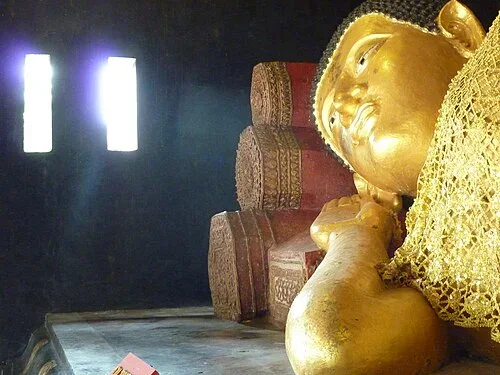 The Reclining Buddha Pavilion
The Reclining Buddha
Inside the dim pavilion, a golden Buddha reclines with his head propped on one hand, his robe patterned in gold mesh. In Buddhist tradition this posture shows the parinibbana, the Buddha's final passing, the moment his earthly life came to its close. It is an image of rest rather than death: the teaching finished, the mind at complete peace. The scale here is intimate, a world away from the towering standing Buddha of the main hall, and two small windows throw narrow bars of daylight across the dark room. The figure seems less like a monument and more like someone asleep.
Listen in the appPhoto Dharma from Sadao, Thailand · CC BY 2.0
10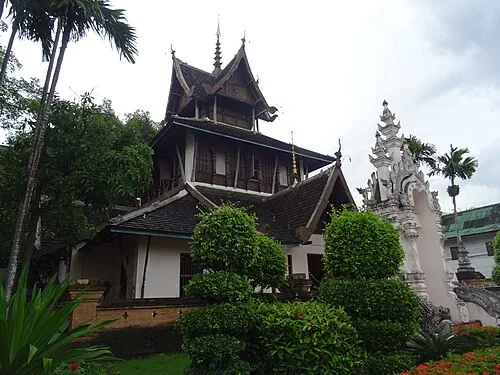 Buddhist Manuscript Library and Museum
The Manuscript Library and a Living Temple
This graceful tiered timber building, all sweeping roofs and carved eaves, is the temple's manuscript library and museum. It keeps the written heritage of Lanna, the old northern kingdom whose script spells out the temple's very name on its signage. The grounds themselves tell a story of joining: this was once three separate monasteries, Wat Chedi Luang, Wat Ho Tham and Wat Sukmin, later merged into a single temple. Teaching continues here daily in an unexpected form. The temple hosts monk chats every day, where visitors sit down with the monks, usually young novices, and ask them anything at all about Buddhism or Thailand. A royal monument that lost its crown to an earthquake still does the work its founders built it for.
Listen in the appPhoto: Christophe95 · CC BY-SA 4.0
Wat Chedi Luang
Frequently asked questions
How much does the guide cost?
Free app download. Listed guide price: $0.99. Guide price shown in the app. Audio guide only. Venue admission is separate.
Can I listen without internet?
Yes. Download the guide’s audio, images, and maps in the app before your visit. Your downloaded content is then available offline.
Can I listen in my language?
This audio guide is available in 15 languages, including English.
Do I need to follow a schedule?
No. This is a self-guided experience. Choose your stops, pause whenever you like, and return to a story at your own pace.
At your own pace
Explore Wat Chedi Luang.
Download Stanza, then search for “Wat Chedi Luang”.
Free app download · Guide price shown in the app
Keep exploring
Audio guides — Thailand
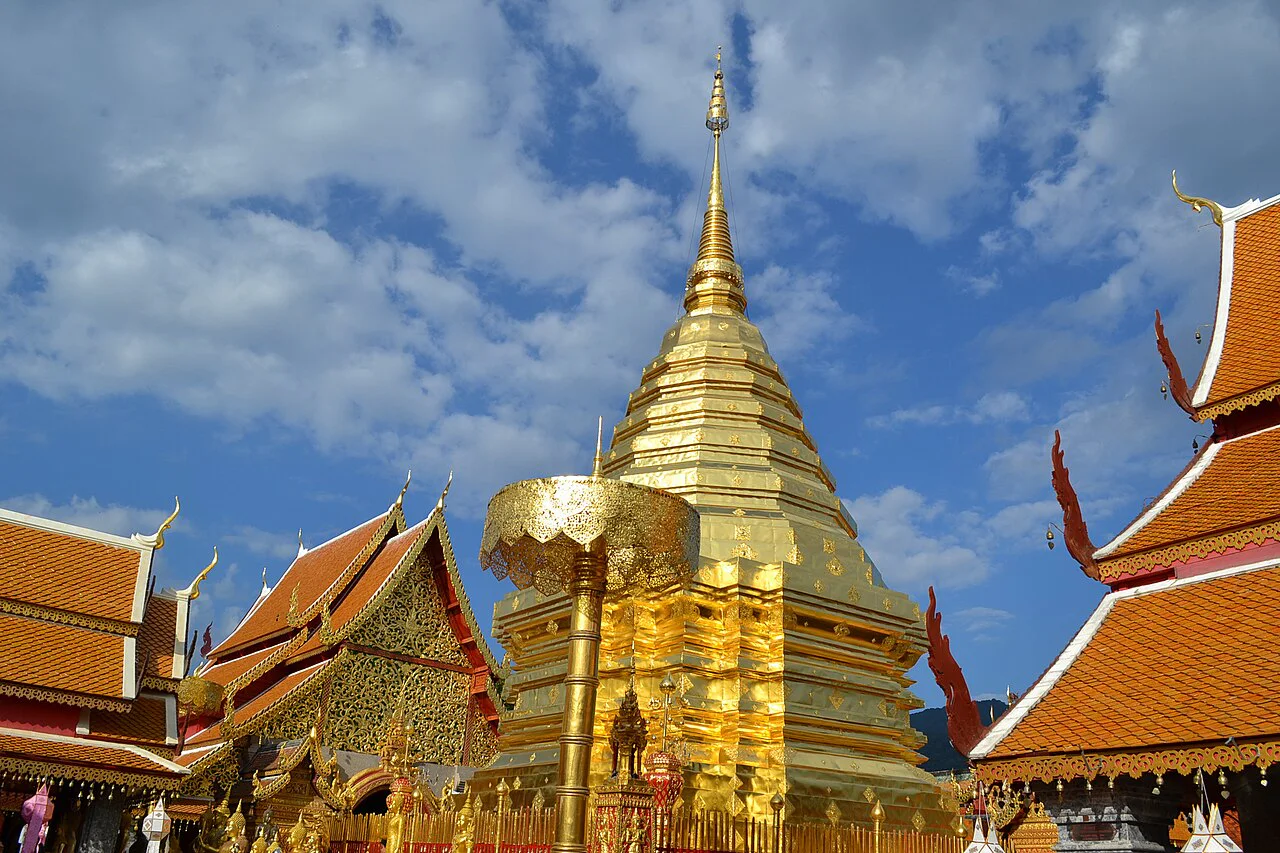
Chiang Mai · 7 km
Wat Phra That Doi Suthep
Content & sources
ผู้สร้างสรรค์ผลงาน/ส่งข้อมูลเก็บในคลังข้อมูลเสรีวิกิมีเดียคอมมอนส์ - เทวประภาส มากคล้าย · CC BY 3.0
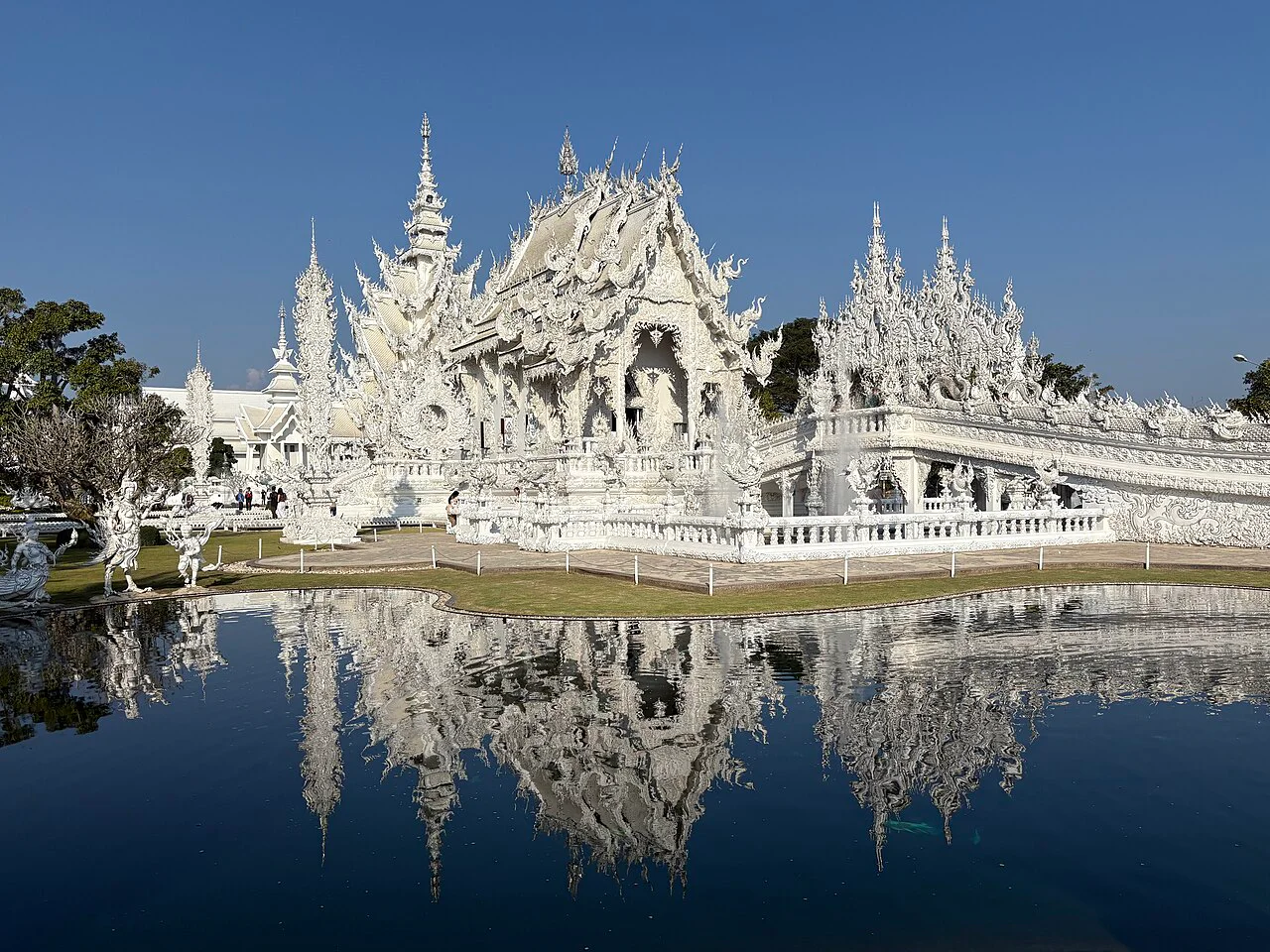
Ban Rong Khun · 141 km
Wat Rong Khun
Content & sources
Photo: Chainwit. · CC BY 4.0
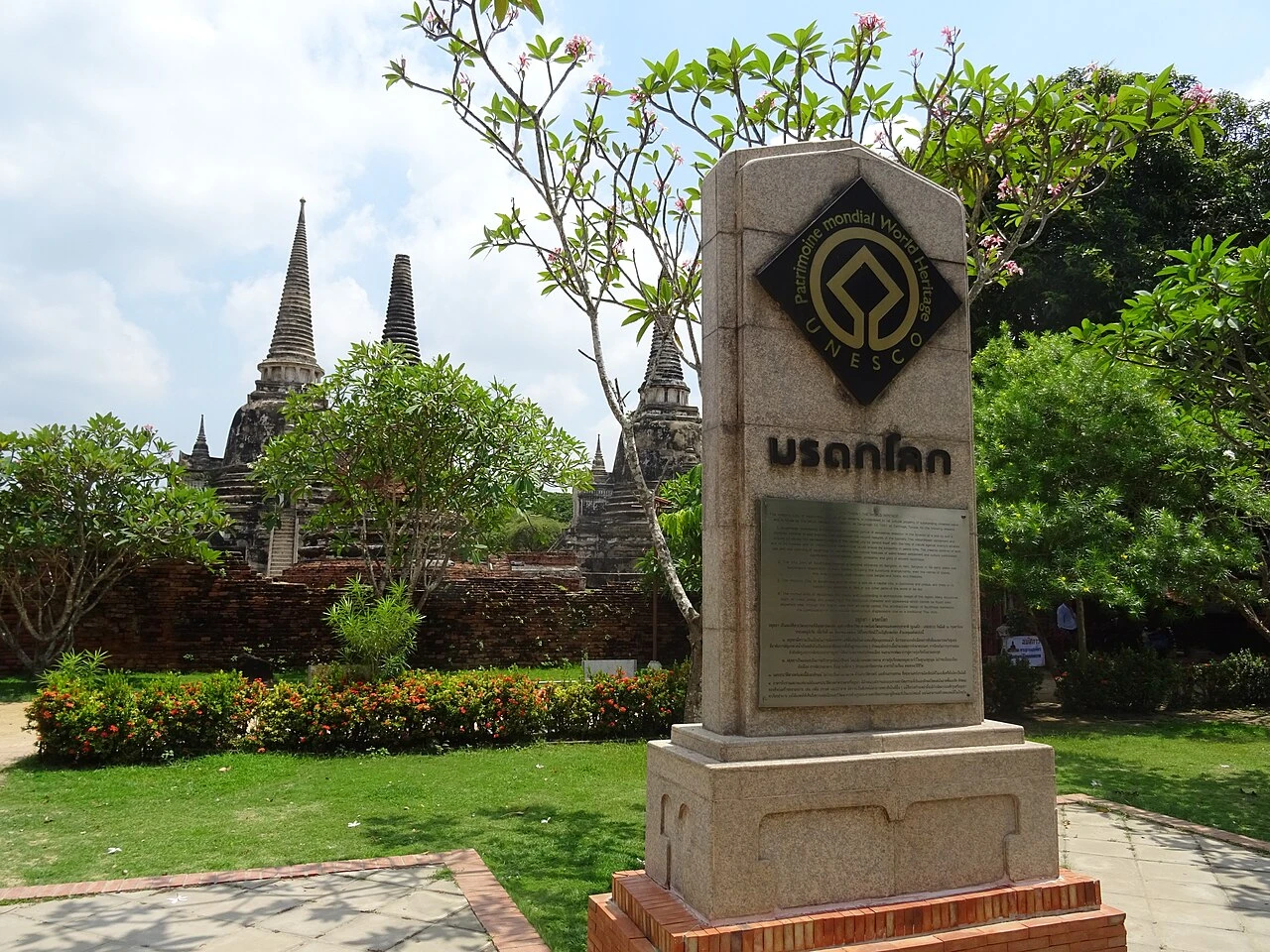
Ayutthaya
Ayutthaya Historical Park
Content & sources
Photo: Christophe95 · CC BY-SA 4.0
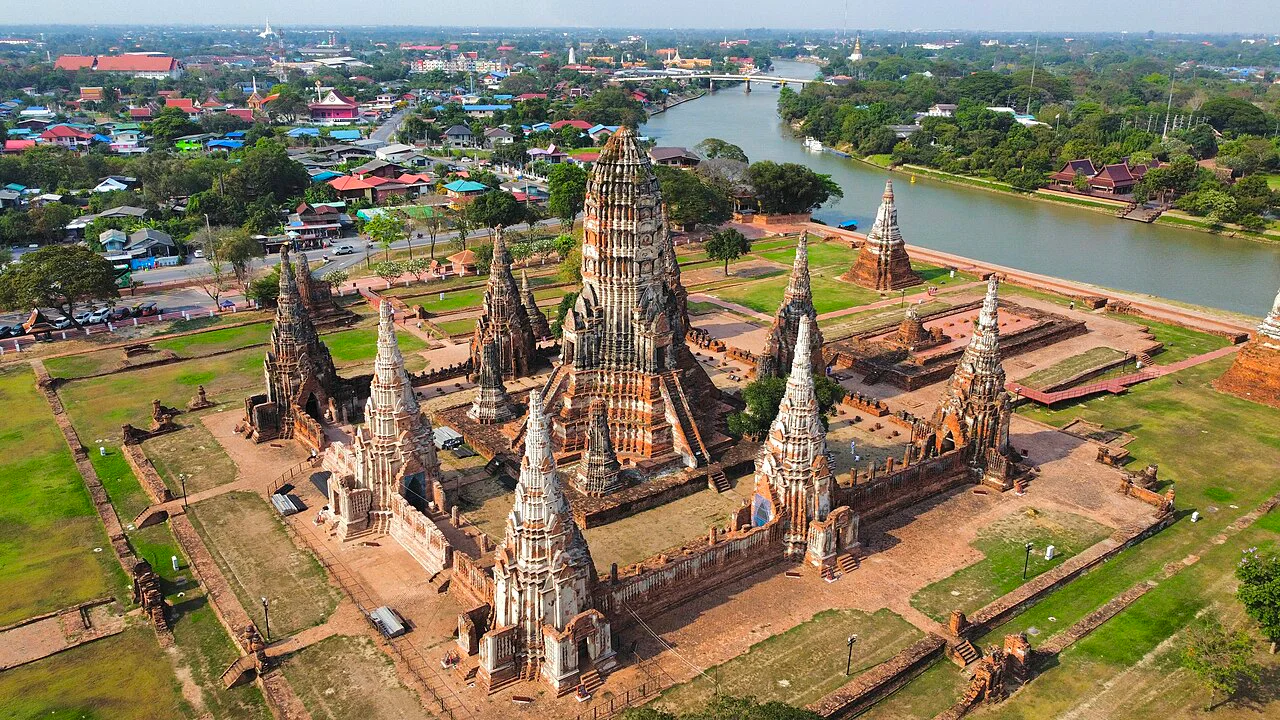
Ban Pom Subdistrict
Wat Chaiwatthanaram
Content & sources
Photo: Average trinmo · CC BY-SA 4.0