Languages
15Eilean Donan Castle Audio Guide
Eilean Donan Castle is a landmark in Dornie, United Kingdom. Explore it with Stanza's GPS-triggered offline audio guide — available in 15 languages.
Quick Facts
22
Stops
15
Languages
100%
Offline
📍 Dornie, United Kingdom · 57.2739°N, -5.5161°E
About Eilean Donan Castle
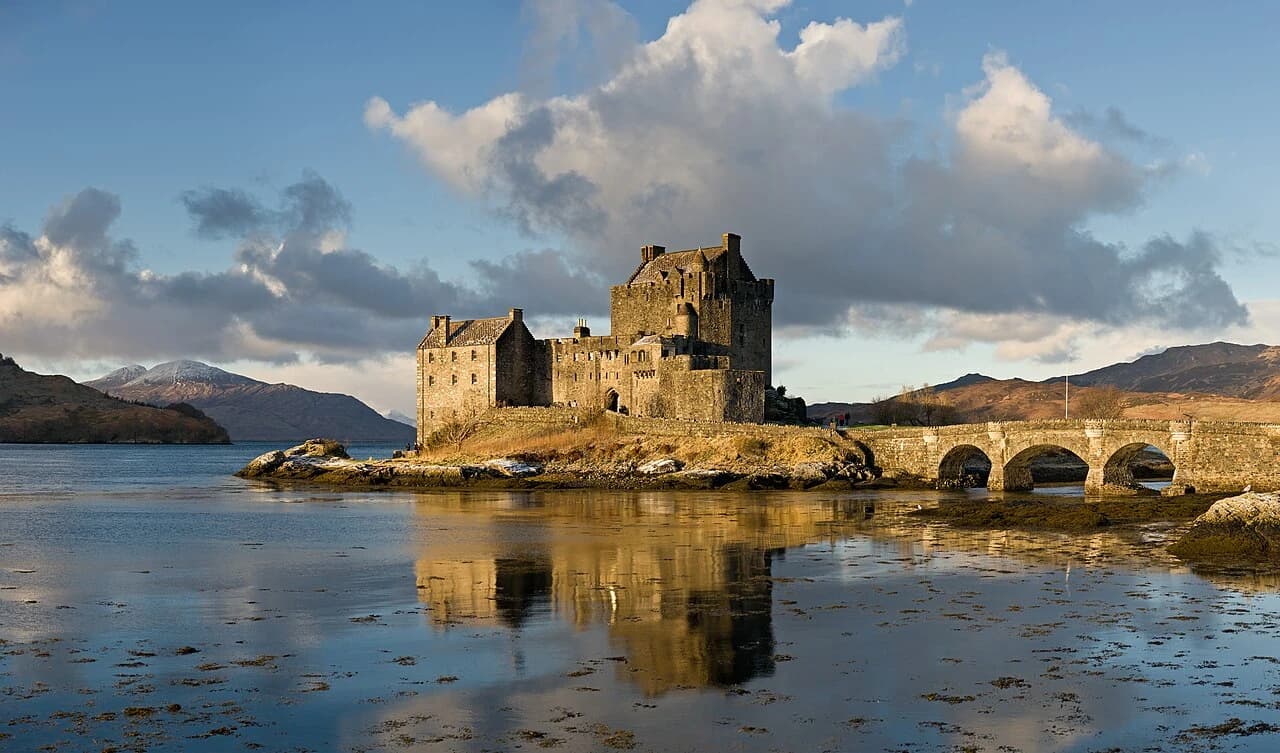
Eilean Donan Castle is a picturesque castle situated on an island where three sea lochs meet in the Scottish Highlands. It is one of Scotland's most iconic and photographed castles, featuring a stone bridge connecting it to the mainland.
Eilean Donan Castle is also known as Castle Donan.
This self-guided audio tour features 22 narrated stops organized across 6 sections, including The Arched Bridge, The Main Gate and Heraldry, The Courtyard and Clan Memorial, The Billeting Hall, The Banqueting Hall, Ramparts and Sea Loch Views. As a castle, Eilean Donan Castle offers a unique cultural experience in the heart of Dornie, United Kingdom.
The Stanza audio guide is available in 15 languages and works entirely offline — download the complete tour including audio narration, maps, and images before your visit. As you walk through Eilean Donan Castle, GPS-triggered narration plays automatically at each point of interest.
Last updated:
What you will hear
The Arched Bridge
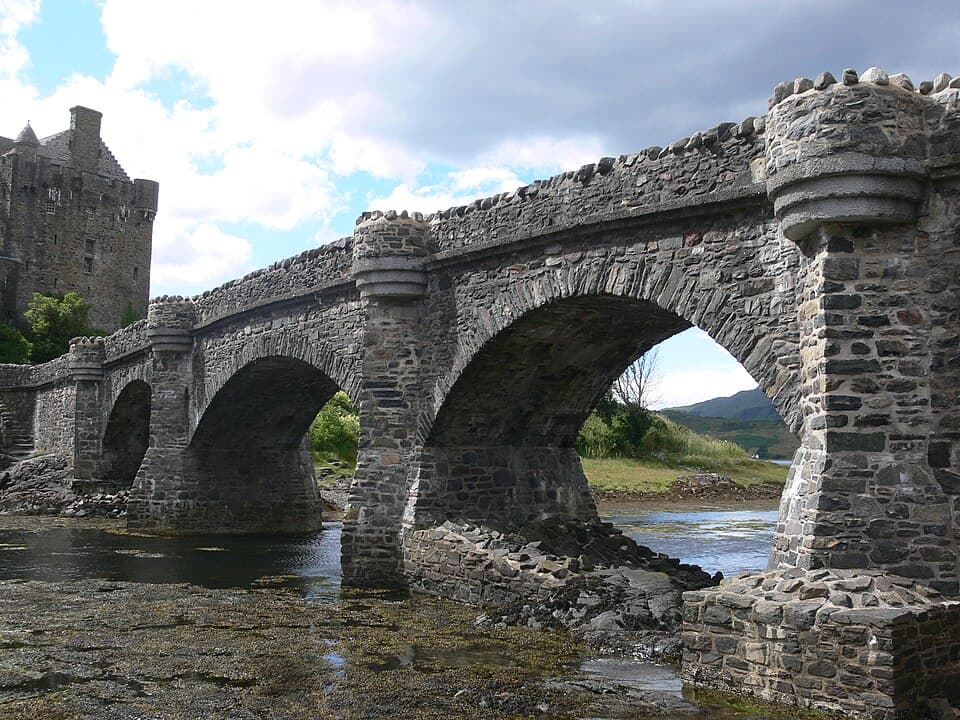
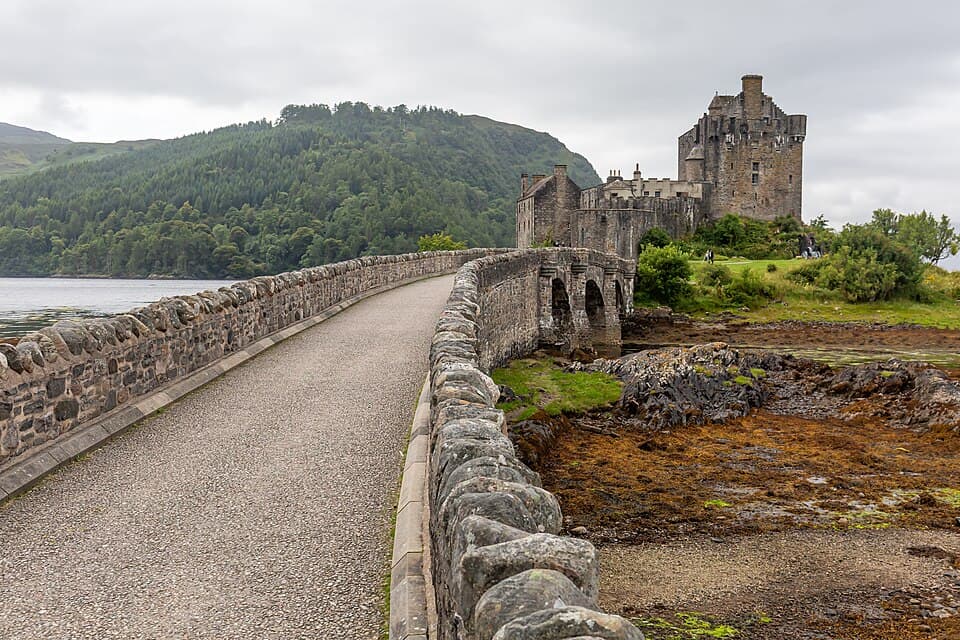
Focuses on the 20th-century reconstruction effort by Macrae-Gilstrap. I used the verified bridge POI image and a perspective shot to illustrate the approach.
Eilean Donan Castle bridge
The stone bridge you see stretching across the water is perhaps the most famous feature of Eilean Donan, but it is much newer than the castle itself. For centuries, the island was accessible only by boat or a very difficult tidal crossing. The bridge was actually part of a massive 20th-century restoration project. Lieutenant-Colonel John Macrae-Gilstrap purchased the island in 1911 and dedicated twenty years of his life, from 1912 to 1932, to bringing the castle back from a state of total ruin. The construction of this arched bridge was a critical part of his vision, allowing for easier access for materials during the build and for visitors thereafter. If you look closely at the arches, you can see the meticulous masonry work involved. The stones were carefully chosen and laid to harmonize with the reconstructed castle walls, giving the entire site a unified, medieval appearance. The bridge features several low-slung arches that allow the tide to flow freely beneath, maintaining the island's isolation while providing a stable walkway. It serves as a symbolic link between the modern world and the ancient history of the Macrae and Mackenzie clans, standing as a testament to the Colonel's devotion to his family's heritage.
The Causeway Restoration
Approaching Eilean Donan along the long, grey causeway is an experience designed to evoke the feeling of entering a medieval stronghold. This entire route, like much of the castle we see today, is the result of intensive labor during the early 20th century. The reconstruction project was an enormous undertaking, finally reaching completion in 1932 after fourteen years of near-constant work. The causeway provides a unique perspective, allowing you to see the castle gradually loom larger as you approach from the mainland. From this low vantage point, the walls appear even more imposing, rising steeply from the rocky outcrop of the island. Although the build is relatively modern in historical terms, the craftsmen involved used traditional techniques to ensure it felt authentic. The path is narrow and flanked by low stone walls, mirroring the defensive walkways of old. This approach path serves to slow down the visitor, heightening the sense of anticipation. It transforms the simple act of arriving into a journey back in time, effectively separating the island fortress from the modern developments of the mainland and setting the stage for the historic interior that awaits beyond the gate.
The Main Gate and Heraldry
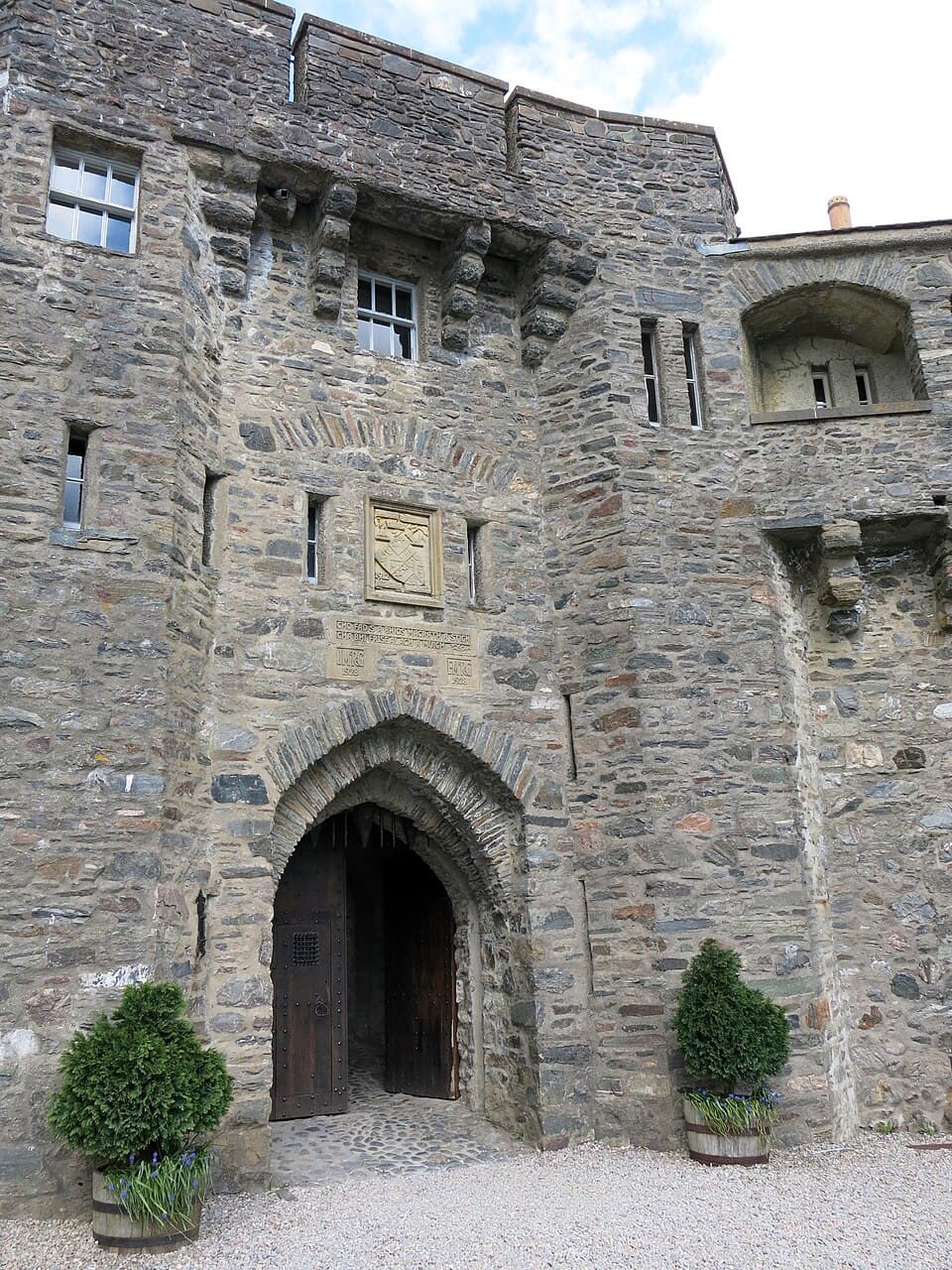
Examines the defensive entrance and the clan identity. I selected images showing the portcullis area and the heraldic plaques.
Defensive Stone Architecture
The exterior of Eilean Donan is a masterclass in defensive stone architecture. Around the gateway and throughout the walls, you will notice several specialized features designed for protection. Look for the narrow slit windows, known as arrow loops. These openings were intentionally small on the outside to provide a difficult target for enemy archers, while wider on the inside to allow the castle's defenders a broad field of fire. High above the entrance, you can see stone projections called machicolations. These were more than just decorative accents; they served a grim purpose. During a siege, soldiers would stand on the battlements and use the gaps between these projections to drop stones, boiling water, or other projectiles directly onto anyone attempting to breach the gate below. Every element of the architecture was planned with survival in mind. These thick stone walls were built not only to repel human invaders but also to withstand the fierce Highland weather. The salt spray from the three surrounding lochs and the relentless Atlantic winds are as much a threat as any army, and the dense masonry has stood as a silent guardian against both for nearly a century since its restoration.
The Courtyard and Clan Memorial
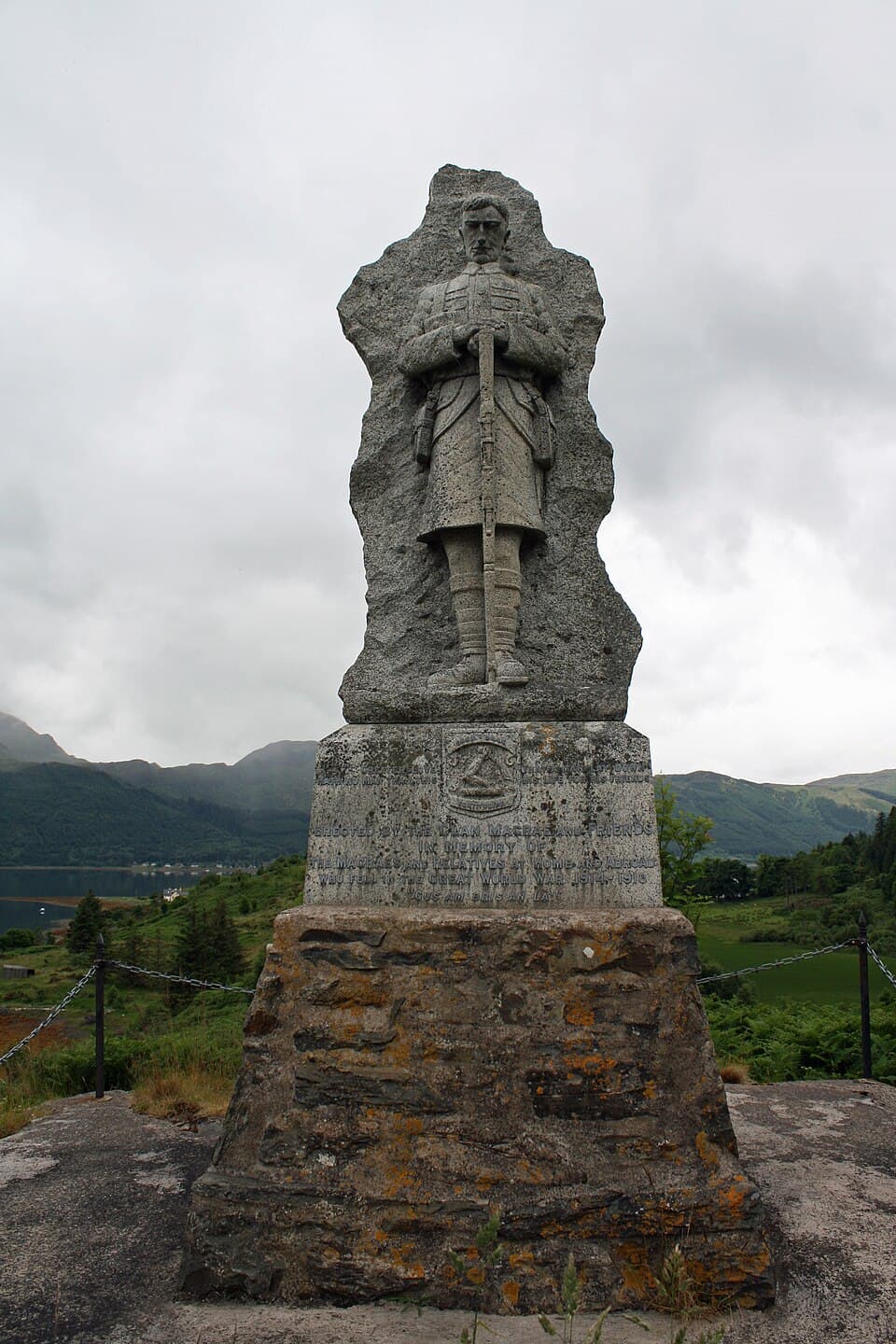
Covers the 'Mackenzie's Shirt of Mail' theme and the Macrae family legacy. Includes the WWI memorial and courtyard architecture.
The Inner Keep
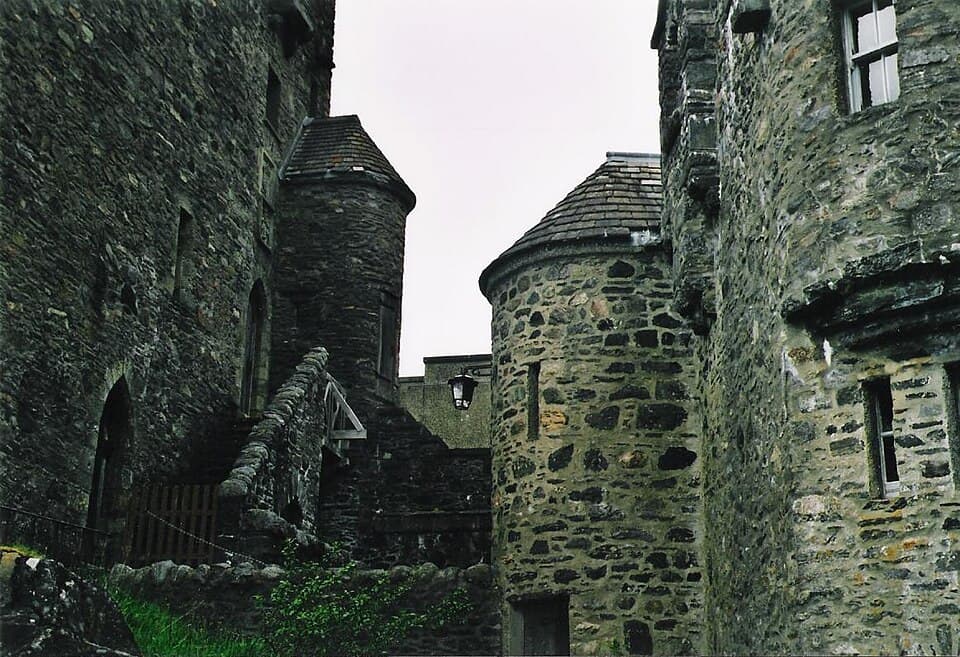
The path through the castle leads you into a narrower, more intimate part of the inner courtyard. Here, the sheer height of the walls creates a sense of enclosure and protection. Notice the circular stair-tower that rises from one corner of the courtyard. This feature is a classic element of the traditional Scottish tower house design. In medieval architecture, spiral stairs were almost always built into such towers. They were often designed to wind clockwise upwards, which gave an advantage to a right-handed defender swinging a sword downward at an attacker coming up the stairs. This tower provides the primary access to the upper floors and the battlements, linking the various levels of the keep. The masonry here shows the characteristic irregular stones used in the reconstruction, which gives the walls a rugged and authentic texture. This part of the castle feels like a true fortress, where space was at a premium and every corner was designed with security in mind. As you look up at the towering grey stone, you get a real sense of the vertical nature of Highland castles, where living quarters were stacked on top of each other to maximize defense.
Clan Macrae War Memorial
Standing prominently in the courtyard area is a poignant memorial dedicated to the members of Clan Macrae who lost their lives during the First World War. This monument connects the ancient history of the castle's defenders with the global tragedies of the early 20th century. Carved into the stone is the figure of a kilted Highlander, standing in a position of quiet reflection. This representation pays homage to the traditional dress and warrior spirit of the clan. The memorial also features a deeply moving inscription: lines from the famous poem 'In Flanders Fields.' Written by John McCrae, a Canadian physician and soldier of Macrae descent, the poem has become a universal symbol of remembrance. Its presence here bridges the gap between the Scottish Highlands and the battlefields of Europe, highlighting the widespread impact of the war on even the most remote communities. The Macrae-Gilstrap family, who were responsible for the castle's restoration, felt it was vital to honor their ancestors' sacrifice in this meaningful way. It reminds us that while the castle is a place of legend, the people who lived and died for it were real individuals whose names are now etched into the very heart of the island.
The Billeting Hall
Explores the ground floor garrison life. I chose an interior shot showing the stone vaulting and Macrae artifacts.
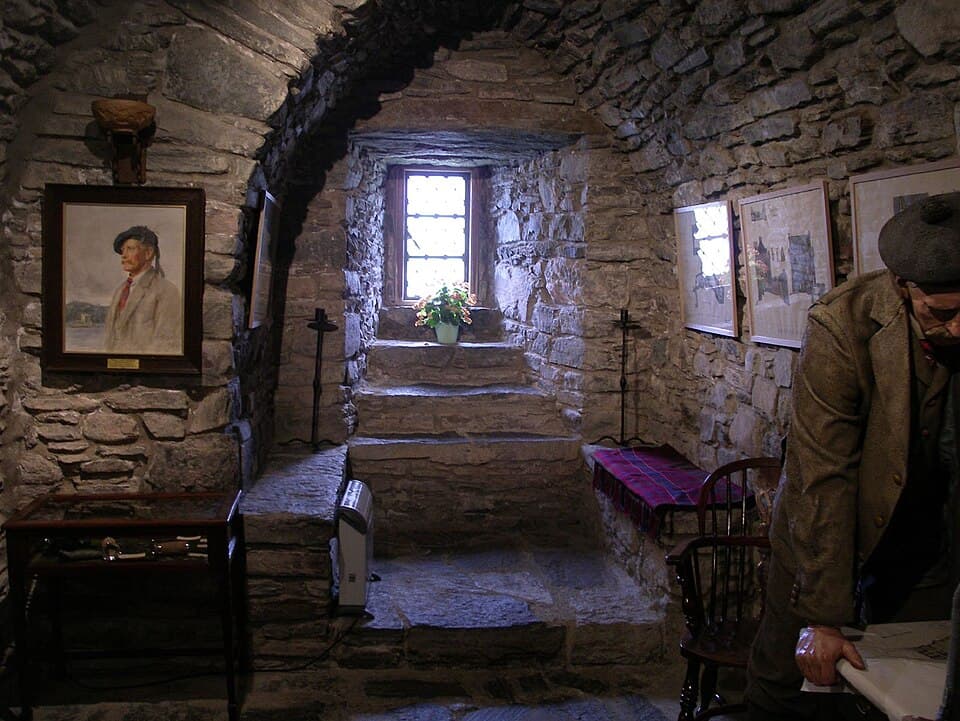
The Billeting Hall
On the ground floor of the main keep lies the Billeting Hall, a room that served as the primary living space for the castle's garrison. The most striking feature of this hall is the massive tunnel-vaulted stone ceiling. These thick, rounded arches were built to support the immense weight of the banquet hall above while also providing a fireproof and secure area for the soldiers. Historically, this room would have been crowded and loud, filled with the men responsible for the day-to-day defense of the island. Today, the hall serves as a small museum, showcasing a collection of artifacts and weapons that help bring that history to life. You can see various swords, pikes, and early firearms on display, reflecting the evolution of Highland combat. The walls are thick and cool to the touch, and the small, deep-set windows remind you that even the interior rooms were part of the castle's defensive network. This was the heart of the military operation at Eilean Donan, where the 'Shirt of Mail' rested, ate, and prepared for battle, always ready to spring into action if the signal was given from the watchtowers above.
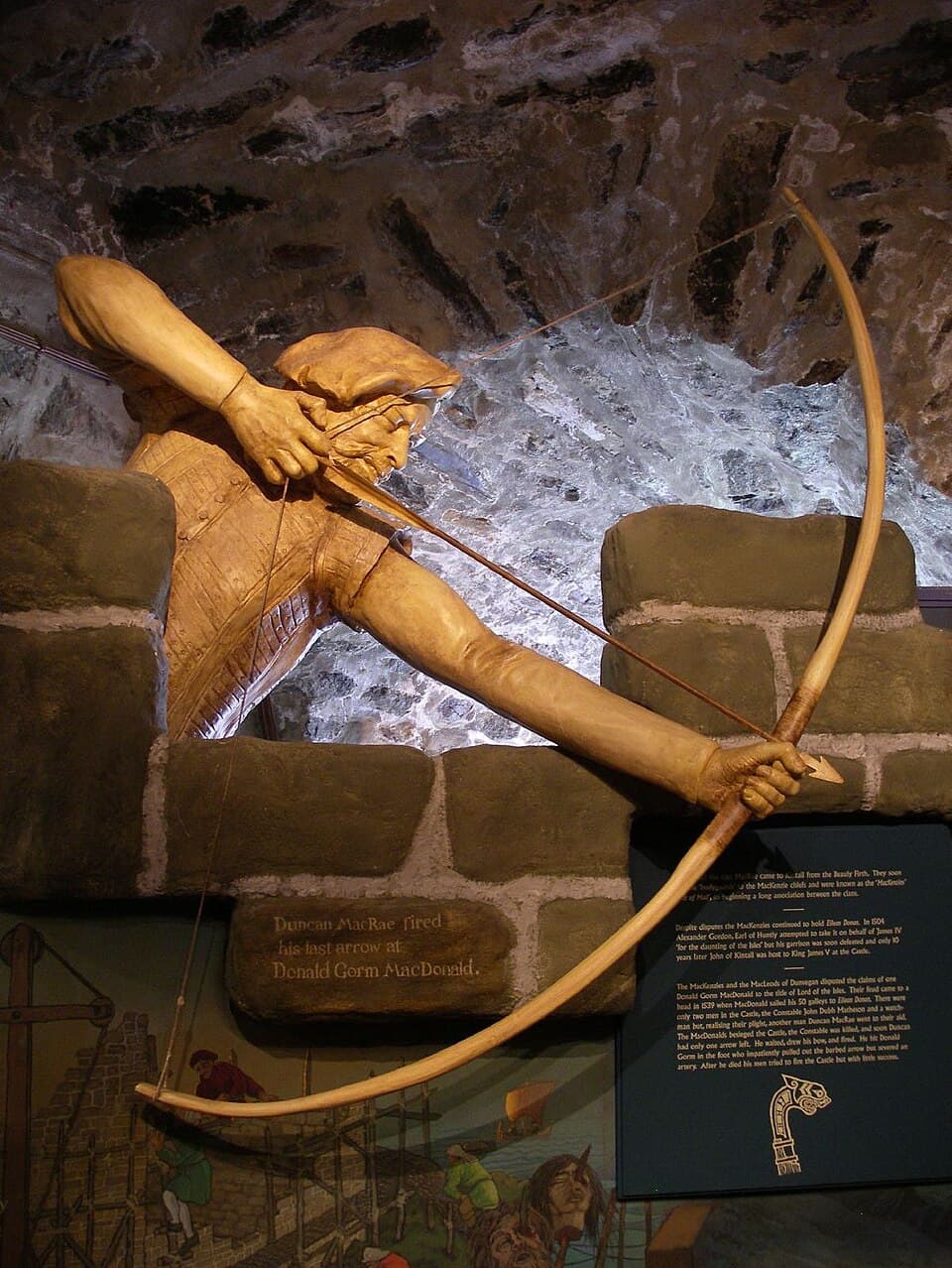
The Legend of the Archer
One of the most famous stories in the castle's history took place during the Siege of Donald Gorm in 1539. At that time, the castle was incredibly vulnerable, held by only two men and a visitor named Duncan Macrae. Donald Gorm, the Lord of Sleat and a powerful rival, arrived with a large fleet, determined to seize the stronghold. The situation seemed hopeless until Duncan Macrae climbed to the battlements with his bow. With a single, legendary arrow, he managed to strike Donald Gorm in the knee. While it sounds like a minor wound, the arrow severed an artery, and the attacker bled to death on the shore. Seeing their leader fall, the invading fleet lost heart and retreated, leaving the tiny garrison victorious. This wooden figure of an archer captures that pivotal moment, showing Duncan in mid-draw. It serves as a tribute to the resourcefulness and skill that often decided the fate of these Highland fortresses. This legend is a point of pride for the Macrae clan, illustrating how one man's precision could change the course of history and preserve the castle for his descendants for generations to come.
The Banqueting Hall
The grandest interior space, featuring the Douglas Fir ceiling and clan portraits. I selected images that show the scale and decoration of the Great Hall.
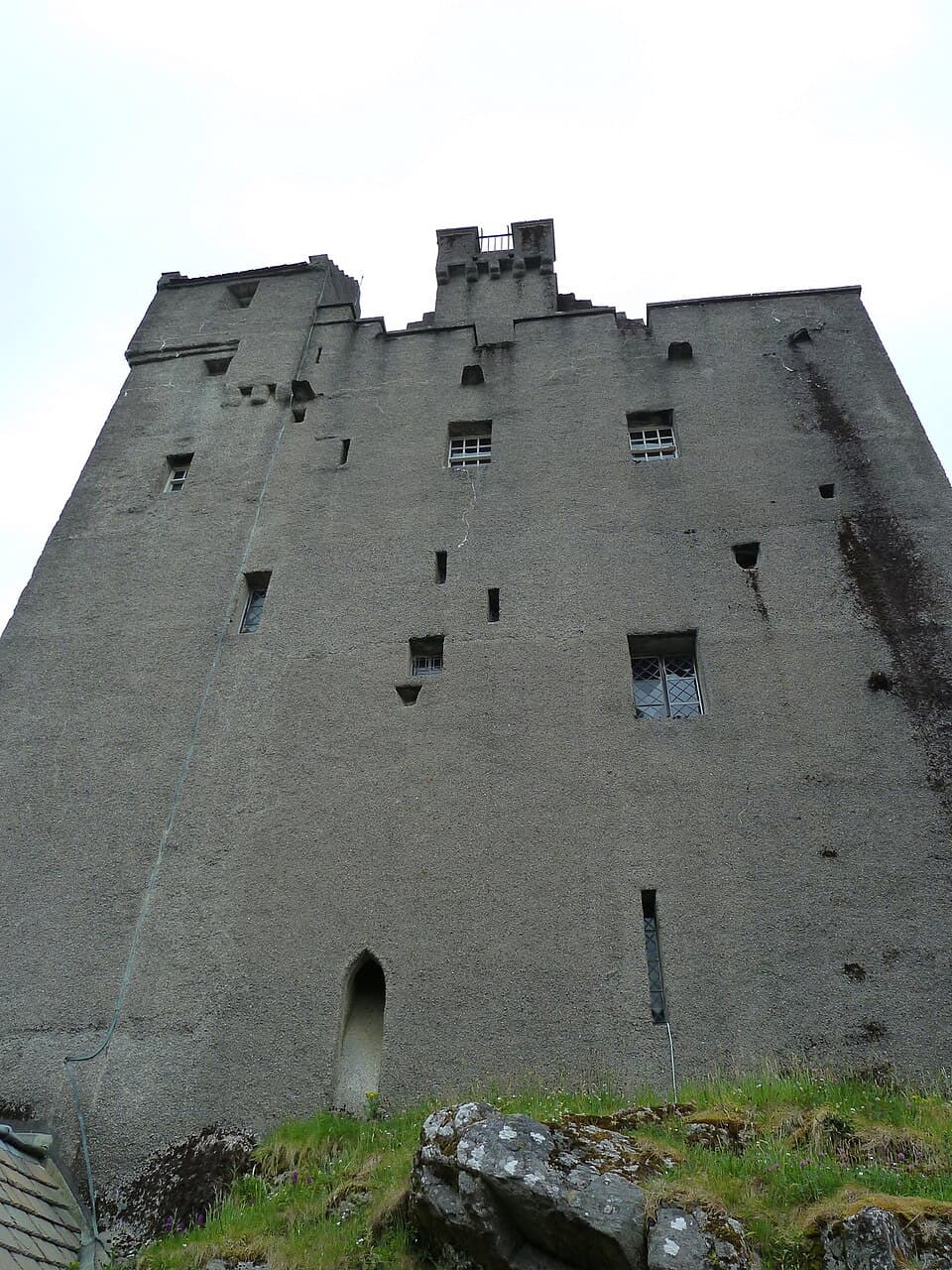
The Keep Exterior
Standing outside and looking up at the main keep, the sheer scale of the reconstruction becomes apparent. The towering walls are composed of local grey stone, painstakingly gathered and shaped to match the original structure's aesthetic. One of the most telling features of these walls is the irregular and seemingly random placement of the windows. In a modern building, windows are aligned for symmetry and light, but in a defensive keep, they were kept small and scattered. Each opening represented a potential weak point in the masonry, so architects prioritized the integrity of the solid stone to ensure the structure could withstand a bombardment. The small size also helped to keep the interior warm against the biting Highland winds. You can see how the tower rises in several distinct levels, culminating in the crenelated battlements. This vertical design allowed for a layered defense, where defenders could move between floors without exposing themselves to outside fire. The overall impression is one of strength and endurance, a fortress built to last for centuries, whether against the cannons of the Royal Navy or the relentless passage of time in this rugged coastal environment.
Ramparts and Sea Loch Views
Highlights the defensive advantages of the island. I used views looking out from the battlements and narrow arrow loops.
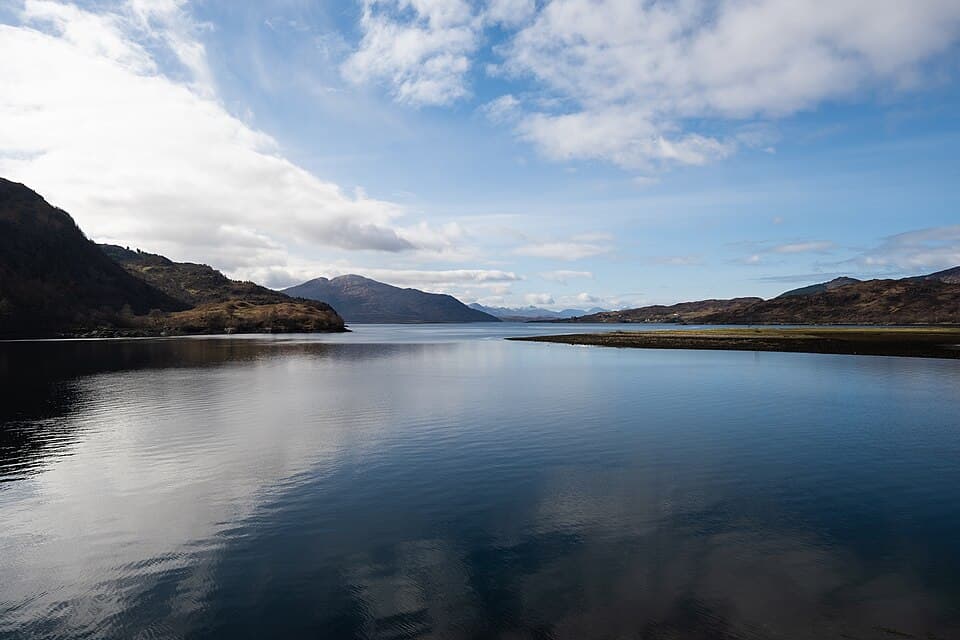
Vistas of Loch Duich
From this vantage point, the calm, glassy surface of Loch Duich stretches out before you, framed by the rugged hills of Kintail. It is hard to imagine that this peaceful scene was once the site of a fierce naval engagement. In May 1719, during the short-lived Jacobite Rising, the loch was filled with the smoke and thunder of cannon fire. Three Royal Navy frigates—the HMS Worcester, HMS Flamborough, and HMS Enterprise—sailed into these waters with a clear mission: to neutralise the castle. The Jacobites, supported by a small force of Spanish soldiers, had made Eilean Donan their base. For several days, the powerful frigates bombarded these stone walls with heavy shells. Imagine standing here then, the air thick with the smell of gunpowder and the sound of iron striking masonry. The naval assault was relentless, eventually forcing the defenders to surrender. Today, the loch has returned to its natural serenity, offering one of the most photographed vistas in the Highlands, but the memory of the frigates remains a pivotal chapter in the castle’s long and turbulent history.
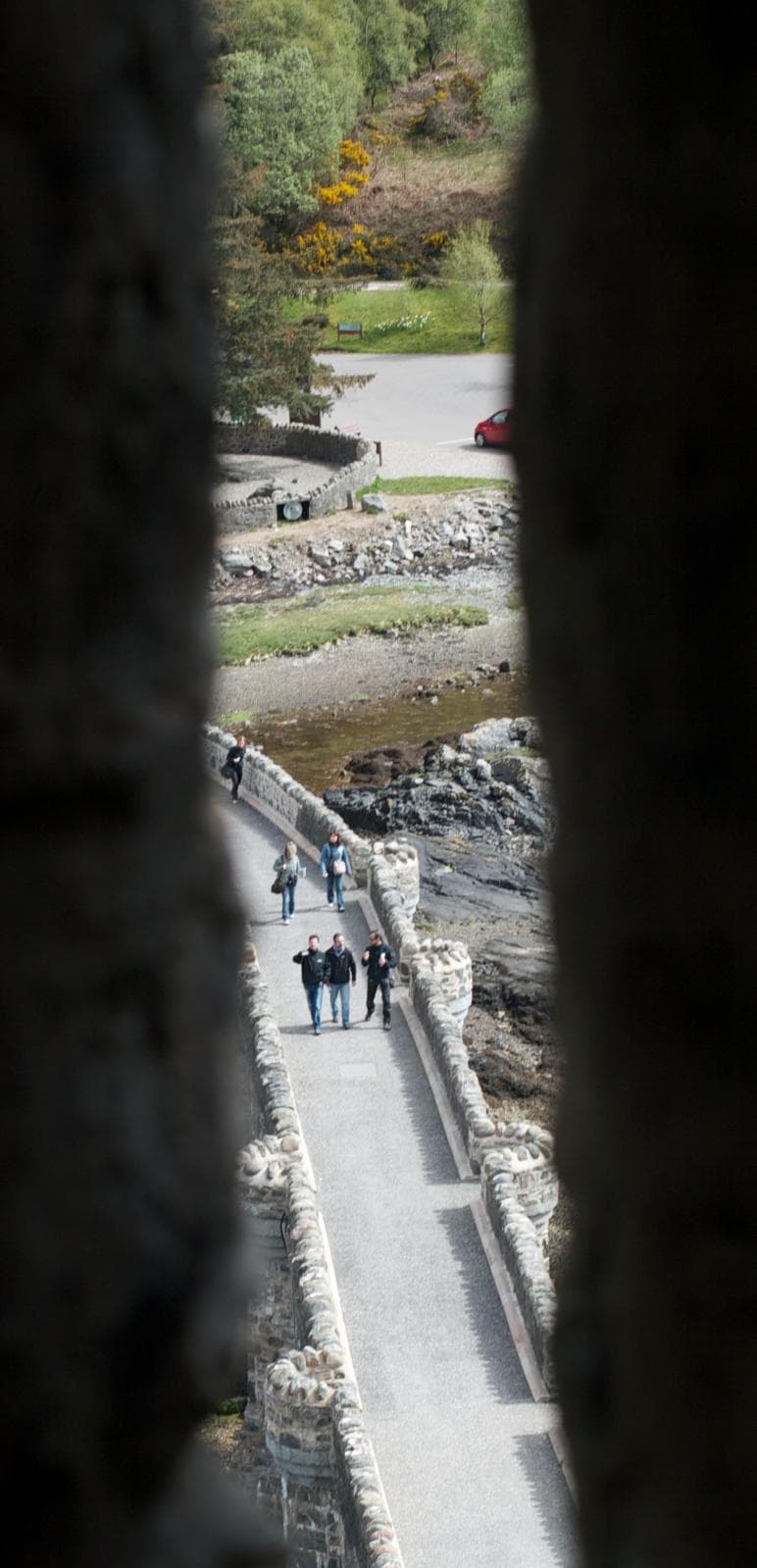
The Arrow Loop View
Stepping into the thickness of the castle wall and peering through this narrow slit, you experience the world as a medieval defender would have. These openings, known as arrow loops, are ingenious pieces of military engineering. From the outside, they appear as nothing more than thin, vertical cracks in the stone—nearly impossible targets for an attacker to hit with an arrow or bolt. However, on the inside, the masonry tapers inward, creating a wide recess. This design allowed an archer to stand close to the opening and pivot their bow, providing a surprisingly broad field of vision and fire across the surrounding approach. You can imagine the focus required, watching for movement through the sliver of light while remaining shrouded in the shadows of the keep. These loops were the primary means of defense before the age of gunpowder, turning the massive stone walls into an active fighting platform. The sheer thickness of the stone surrounding you today emphasizes just how much protection these small apertures provided, ensuring that even a small garrison could hold off a much larger force by controlling the perimeter from safety.
Want to hear the rest?
Download the Stanza app to unlock all 22 stops and full GPS-guided navigation.
Frequently Asked Questions
How long does the Eilean Donan Castle audio tour take?
The Eilean Donan Castle audio guide includes 22 narrated stops. Most visitors spend 45 minutes to 1.5 hours exploring the complete tour, though you can listen at your own pace and skip or revisit any stop.
Is the Eilean Donan Castle audio guide available in my language?
Stanza supports 15 languages: English, Spanish, French, German, Italian, Portuguese, Russian, Japanese, Chinese, Korean, Arabic, Hindi, Polish, Dutch, Hebrew. Check the guide in the app to confirm the languages currently available for this tour.
Can I use the audio guide offline at Eilean Donan Castle?
Yes! Download the complete Eilean Donan Castle tour — including all audio, maps, and images — before your visit. The Stanza app works completely offline, so you don't need WiFi or mobile data at the venue.
How much does the Eilean Donan Castle audio guide cost?
The Stanza app is free to download. The current listed price for the Eilean Donan Castle audio guide is $2.99; app-store region and currency may affect the final price.
How do I use the Stanza audio guide at Eilean Donan Castle?
Download the free Stanza app, search for "Eilean Donan Castle", and download the tour. When you arrive at the venue, the app uses GPS to detect your location and automatically plays the relevant narration as you move between points of interest — completely hands-free.
What makes the Stanza audio guide different from other Eilean Donan Castle tours?
Stanza offers GPS-triggered narration that plays automatically as you walk through Eilean Donan Castle — no need to manually select stops. The tour is available in 15 languages, works fully offline, and includes 22 expertly narrated stops with images and historical context.
What other audio guides are available near Eilean Donan Castle?
Stanza offers multiple audio guides in Dornie, United Kingdom and nearby areas. After downloading the app, browse the map to discover all available tours near Eilean Donan Castle. Each guide can be downloaded for offline use.