Languages
15Dunvegan Castle Audio Guide
Dunvegan Castle is a landmark in Dunvegan, United Kingdom. Explore it with Stanza's GPS-triggered offline audio guide — available in 15 languages.
Quick Facts
22
Stops
15
Languages
100%
Offline
📍 Dunvegan, United Kingdom · 57.4485°N, -6.5900°E
About Dunvegan Castle
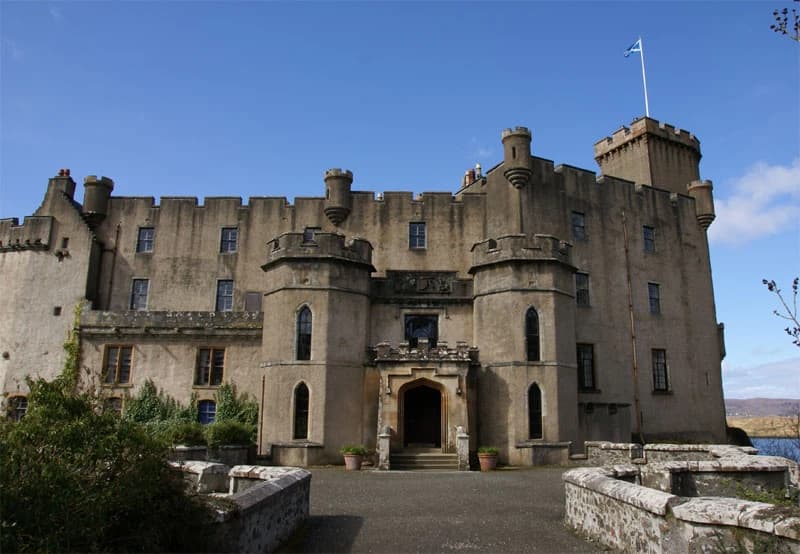
Dunvegan Castle is the oldest continuously inhabited castle in Scotland and has been the seat of the chiefs of Clan MacLeod for 800 years. It features extensive gardens and houses a collection of significant clan heirlooms.
This self-guided audio tour features 22 narrated stops organized across 8 sections. As a castle, Dunvegan Castle offers a unique cultural experience in the heart of Dunvegan, United Kingdom.
The Stanza audio guide is available in 15 languages and works entirely offline — download the complete tour including audio narration, maps, and images before your visit. As you walk through Dunvegan Castle, GPS-triggered narration plays automatically at each point of interest.
Last updated:
What you will hear
The Historic Approach Bridge
The tour begins at the 13th-century site's entrance, crossing the bridge that spans the defensive ditch. This stop features the verified POI bridge and an overview of the castle's imposing arrival path.
View from the Rock
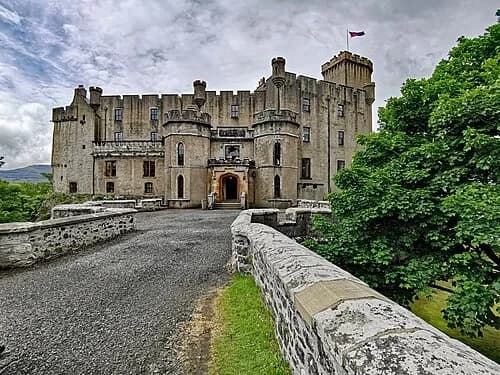
Dunvegan Castle's imposing presence is largely due to its foundation on a massive basalt rock. This natural elevation rises 15 meters, or roughly 50 feet, above the high-water mark of Loch Dunvegan. When the first fortifications were established here in the 13th century, the site was almost entirely surrounded by sea at high tide, making it a naturally occurring island fortress. Builders utilized the uneven, rocky surface to create multiple levels of defense, ensuring that any attacker would have to fight uphill against gravity and stone walls. This strategic advantage allowed the MacLeods to maintain control over the surrounding sea lanes and nearby territories. The height offered an unobstructed view of the loch, providing early warning of approaching galleys or hostile clans. Over time, as military technology changed, the rock remained the core of the castle’s identity, dictating how new wings and towers were added. The base of the rock shows the weathering of centuries of Atlantic spray, yet it remains the steadfast anchor for the structure above. This elevation was not just about defense; it was a visible statement of the Clan MacLeod’s dominance over the Hebridean landscape.
Main Entrance and Gatehouse
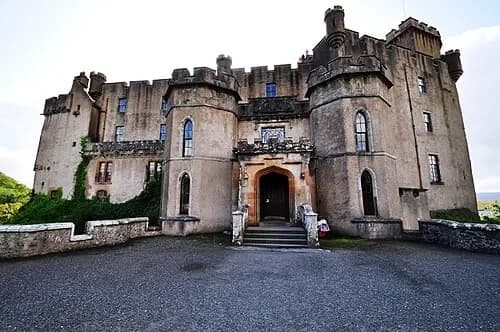
The grand entrance showcases the 19th-century 'baronialisation' that gave the castle its romantic, mock-medieval look. Look for the MacLeod heraldic stone carving above the door.
The Main Gatehouse
The current appearance of the gatehouse is the result of a significant architectural transformation that took place around 1840. This period of 'baronialisation' sought to replace the castle's earlier, more utilitarian defensive features with a romanticized version of medieval architecture. Under the direction of the 25th Chief, the castle was reimagined in the Victorian Baronial style, which was highly popular in Scotland at the time. Architects added the prominent battlements and the small, rounded turrets that project from the corners of the walls. While these elements look like functional fortifications from a bygone era, they are primarily decorative additions intended to evoke a sense of ancient chivalry and power. This remodeling effort unified the various historical structures of the castle into one cohesive, grand residence. The heavy stone masonry and the uniform gray finish create an impression of antiquity, masking the fact that much of this outward facing facade is less than two centuries old. This Victorian vision has become the defining image of Dunvegan, blending genuine history with a 19th-century appreciation for the dramatic and the picturesque.
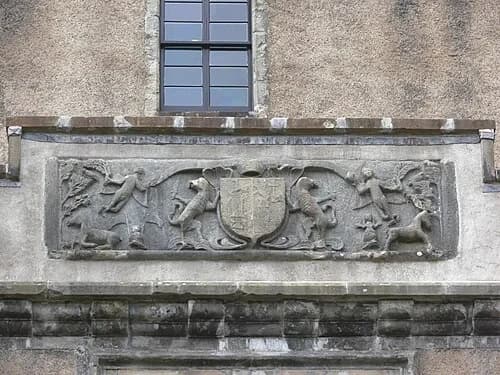
The MacLeod Heraldry
High above the main entrance, a detailed stone relief presents the heraldic identity of the Clan MacLeod. The central focus of this carving is the bull’s head, a symbol deeply rooted in clan legend. According to tradition, an early chief encountered a wild bull in the woods and wrestled it to the ground, an act of strength commemorated in the family crest. Accompanying the imagery is the clan motto: 'Hold Fast.' These two words serve as a literal and metaphorical command, referencing the need to maintain a firm grip during the struggle with the bull, while also signifying the clan's determination to keep their ancestral lands through centuries of conflict. The surrounding carvings include elements of traditional Scottish heraldry, such as stylized foliage and supports. Because these carvings are exposed to the salt-heavy air of the Western Isles, the details have softened over time. This crest marks the transition from the rugged exterior of the fortress to the domestic interior, reminding all who enter of the long lineage that has called this rock home since the Middle Ages. The bull's head remains a potent reminder of the clan's physical strength and endurance.
The Grand Staircase
Upon entering, visitors encounter the grand staircase, which serves as the transition into the lived-in history of the MacLeod chiefs. This area reflects the Victorian remodelling of the interior.
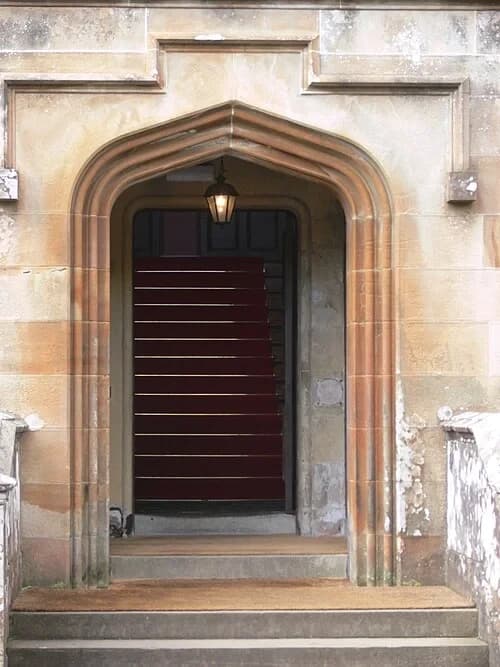
The Entrance Portal
The entrance portal reflects the Victorian fascination with Gothic architecture, a style that dominated the 1840 remodeling of Dunvegan. This architectural choice was deliberate; the use of pointed arches and deep, heavy stone moldings was intended to evoke the atmosphere of a medieval cathedral or an ancient fortress. By incorporating these elements into the newer parts of the building, architects created a seamless transition between the genuine 15th-century structures and the 19th-century expansions. Deep, layered carvings draw the eye inward, emphasizing the thickness of the walls and the perceived strength of the residence. Above the door, a traditional lantern provides a touch of warmth against the cool gray of the masonry. This style, often called 'Mock Gothic,' prioritized visual drama and historical association over modern simplicity. It served to reinforce the prestige of the MacLeod family by surrounding them with architectural reminders of their long and storied past. Crafted to look as though they had stood for half a millennium, these stones blend the old and new into a singular romantic vision. Even though this specific entrance was set in place during the reign of Queen Victoria, it was designed to command respect like a medieval gate.
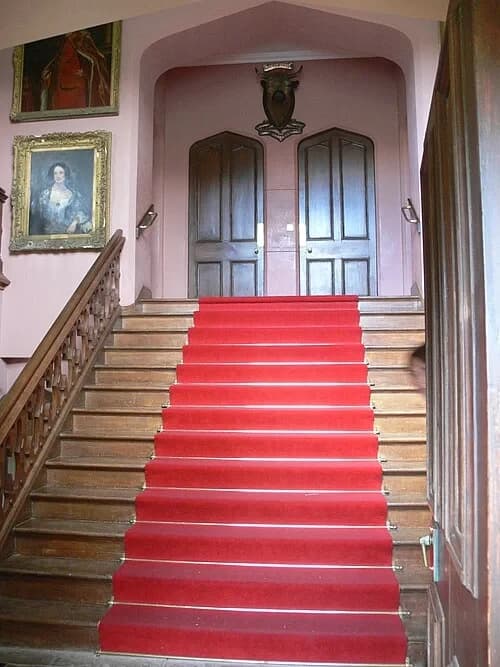
The Grand Staircase
Moving into the heart of the castle, the grand staircase illustrates the dramatic shift in domestic life for the MacLeod chiefs. During the 19th century, the dark, narrow passages of the medieval stronghold were replaced or expanded to create this more open, welcoming space. The red carpet and polished wood handrails represent the Victorian desire for elegance and status, moving away from the cold utility of a purely defensive structure. However, building such a grand feature within the constraints of ancient stone walls presented significant architectural challenges. Architects had to navigate the thick, irregular masonry of the earlier castle layers, resulting in the unique proportions and turns seen here. These stairs connect the public reception areas with the private living quarters above, serving as a functional spine for the modernized house. The walls are adorned with historic portraits, creating a gallery that visitors pass through as they ascend. This space perfectly captures the dual nature of Dunvegan: it remains a fortress at its core, yet functions as a stately home designed for the social expectations of the 1800s. The solid stone underfoot serves as a quiet reminder of the centuries of history encased within the newer finishes.
The Great Hall and Ancestry
The Great Hall is the heart of the clan's lineage. Here, portraits of the MacLeod chiefs watch over the room, accompanied by the formidable Great Sword of Dunvegan.
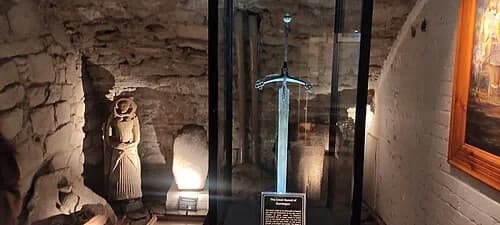
The Great Sword
Displayed within the castle is a formidable two-handed sword, known as a claymore. This weapon is a striking physical reminder of the violent and martial history of the Scottish Highlands. Its sheer scale required immense strength and skill to wield effectively in battle. Unlike the lighter broadswords of later centuries, a claymore of this size was designed for sweeping, devastating blows that could break through spear shafts and heavy armor. During the medieval and early modern periods, the MacLeod chiefs were not just landowners; they were powerful warlords who commanded large numbers of fighting men. The presence of such a weapon at the heart of their home served as a symbol of their authority and their ability to defend their territory by force. The simple, cross-shaped hilt and the long, heavy blade are characteristic of the weapons used by high-ranking Scottish warriors between the 15th and 17th centuries. While the drawing rooms nearby reflect Victorian peace and comfort, this sword speaks to a much harsher reality of clan warfare, where survival on this rock often depended on the strength of a leader’s arm and the sharpness of their steel. It remains a key artifact of the clan’s military heritage.
The Fairy Tower
Commissioned by the 8th chief around 1500, this tower is the medieval core of the castle. Its stone masonry stands as a testament to the structure's 800-year evolution.

The Fairy Tower
The Fairy Tower is one of the oldest and most legendary parts of the castle complex. It was constructed around the year 1500 by Alasdair Crotach, the 8th Chief of Clan MacLeod. This tower represents the true medieval heart of the fortress, built with massive stone walls designed to withstand sieges and the fierce Atlantic weather. Its name is derived from the most famous of the MacLeod heirlooms: the Fairy Flag. Tradition holds that this ancient silk banner was given to the clan by a fairy woman, endowed with the power to save the MacLeods from defeat in battle on three separate occasions. The flag was historically kept in a secret chamber within this tower for safety. Architecturally, the tower features the small windows and thick masonry typical of the late medieval period in Scotland, predating the more decorative Victorian changes seen elsewhere. It served as the primary living quarters for the chief's family for generations. The presence of the Fairy Tower ensures that the castle's connection to its mystical and martial past remains central to its identity. Even as the rest of the building was modernized, this structure stood as a firm anchor to the 16th-century history of the clan's endurance.
Lochside Terrace and Viewpoint
The castle's position 15 meters above the sea was vital for maritime power. From this terrace, visitors can see the cannons that once protected the approach from Loch Dunvegan.
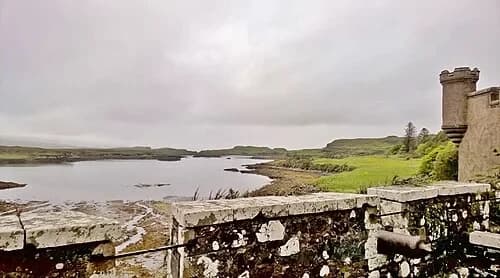
Lochside Terrace View
From this vantage point, you can appreciate the strategic importance of the castle's position overlooking Loch Dunvegan. For centuries, the sea was not just a scenic backdrop but the primary highway for the MacLeods. As a maritime power, the clan's influence extended far beyond this rock, thanks to their formidable fleet of galleys. These vessels, modeled after the longships of their Norse ancestors, allowed the chiefs to control the surrounding waters, conduct trade, and transport warriors rapidly between the islands. Possession of this specific site gave the MacLeods a sheltered harbor and an unobstructed view of anyone approaching from the sea. Control of the loch was essential for survival and prosperity in the medieval Highlands, where overland travel was often impossible. At low tide, the rugged shoreline reveals the shallow waters that made a naval approach difficult for those unfamiliar with the local geography. Today, the loch is a place of peace, often visited by seals and local fishing boats, but it remains the historical gateway to the castle. The view across the water to the distant hills of Skye serves as a final reminder of the vast maritime territory once commanded from this elevated stone seat.
The Walled Garden and Waterfall
A sanctuary within the grounds, the walled garden houses a rectangular pond and vibrant floral displays, while the nearby waterfall adds a romantic natural element to the estate.
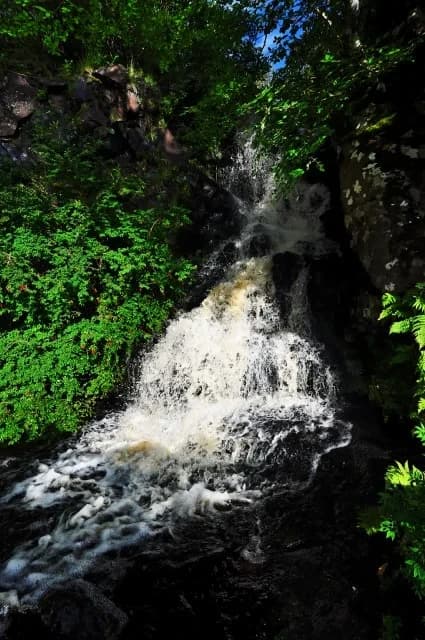
The Castle Waterfall
Tucked away in the greenery is a natural waterfall, where water cascades over dark rocks into a pool below. While it is a picturesque feature for modern visitors, its historical importance was purely practical. Eight centuries ago, when the MacLeods were first looking for a place to build their permanent seat, access to a reliable fresh water source was just as important as the defensive height of the castle rock. This stream would have provided the necessary water for the inhabitants and their livestock, making a long-term siege or permanent habitation possible on an otherwise isolated outcrop. The presence of this waterfall likely cemented the decision to settle in this specific location. Today, the sound of rushing water adds a rhythmic backdrop to the garden paths. The moisture from the falls supports a lush growth of ferns and mosses along the rocky banks, creating a verdant pocket that feels ancient and wild. It serves as a reminder that before the castle was a grand Victorian estate, it was a survivalist’s choice, dictated by the fundamental needs of life in the medieval Highlands.
Shoreline and Castle Reflections
Concluding the tour at the shoreline provides the iconic view of Dunvegan Castle perched on its elevated rock. At high tide, the castle's reflection in the loch captures its romantic spirit.
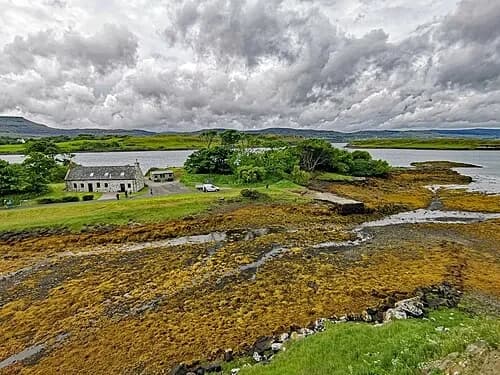
The Sea Shoreline
Standing here at the shoreline, looking back toward the castle on its elevated rock, the true scale of the MacLeod legacy becomes apparent. For over 800 years, the chiefs of this clan have held this ground, surviving through centuries of clan warfare, political upheaval, and social change. This continuity is a rare feat in Scottish history, making Dunvegan one of the most significant ancestral seats in the country. From this perspective, you can see how the castle commands the surrounding landscape and the sea beyond, once the highway for the clan’s galleys. The shoreline itself is a reminder of the maritime roots that sustained the family’s power for generations. The building has evolved from a simple stone keep into the complex structure seen today, reflecting the changing fortunes and tastes of the people who lived within its walls. As the tour concludes, consider the sheer endurance required to maintain a presence on this windswept Atlantic coast for nearly a millennium. The castle remains not just a family home, but a focal point for the global MacLeod diaspora, anchored firmly to the rock that has supported them since the 13th century.
Want to hear the rest?
Download the Stanza app to unlock all 22 stops and full GPS-guided navigation.
Frequently Asked Questions
How long does the Dunvegan Castle audio tour take?
The Dunvegan Castle audio guide includes 22 narrated stops. Most visitors spend 45 minutes to 1.5 hours exploring the complete tour, though you can listen at your own pace and skip or revisit any stop.
Is the Dunvegan Castle audio guide available in my language?
Stanza supports 15 languages: English, Spanish, French, German, Italian, Portuguese, Russian, Japanese, Chinese, Korean, Arabic, Hindi, Polish, Dutch, Hebrew. Check the guide in the app to confirm the languages currently available for this tour.
Can I use the audio guide offline at Dunvegan Castle?
Yes! Download the complete Dunvegan Castle tour — including all audio, maps, and images — before your visit. The Stanza app works completely offline, so you don't need WiFi or mobile data at the venue.
How much does the Dunvegan Castle audio guide cost?
The Stanza app is free to download. Free and paid audio guides are available; current prices are shown in the app.
How do I use the Stanza audio guide at Dunvegan Castle?
Download the free Stanza app, search for "Dunvegan Castle", and download the tour. When you arrive at the venue, the app uses GPS to detect your location and automatically plays the relevant narration as you move between points of interest — completely hands-free.
What makes the Stanza audio guide different from other Dunvegan Castle tours?
Stanza offers GPS-triggered narration that plays automatically as you walk through Dunvegan Castle — no need to manually select stops. The tour is available in 15 languages, works fully offline, and includes 22 expertly narrated stops with images and historical context.
What other audio guides are available near Dunvegan Castle?
Stanza offers multiple audio guides in Dunvegan, United Kingdom and nearby areas. After downloading the app, browse the map to discover all available tours near Dunvegan Castle. Each guide can be downloaded for offline use.