Stanza · Audio guide
Creswell Crags Audio Guide
A place to remember. A story to take with you.
Creswell Crags is a limestone gorge on the border between Derbyshire and Nottinghamshire, England. The caves in the ravine contain Upper Palaeolithic cave art and were occupied by Neanderthals and modern…
Download Stanza, then search for “Creswell Crags”.
About the tour
One guide. Your kind of visit.
Creswell Crags is a limestone gorge on the border between Derbyshire and Nottinghamshire, England. The caves in the ravine contain Upper Palaeolithic cave art and were occupied by Neanderthals and modern humans during the Last Glacial Period.
Ready when you are.
- 01Get the free Stanza app.
iOS & Android
- 02Find your guide.
“Creswell Crags”
- 03Download before you go.
Works offline
Audio guide / 11 narrated stops
Inside the guide
Get to know a few of the stories before you go. Open a stop to read more.
01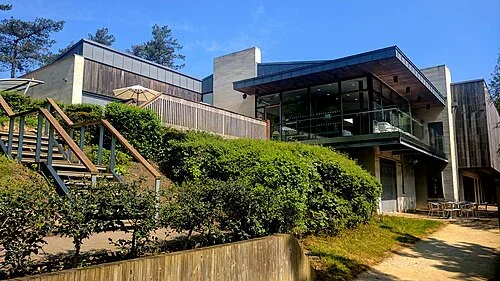 Creswell Crags Visitor Centre and Museum
Creswell Crags Museum and Heritage Centre
Welcome to Creswell Crags, an enclosed limestone gorge on the border of Derbyshire and Nottinghamshire. Its cliffs are hollowed with caves where Neanderthals and modern humans sheltered during the Last Glacial Period. The deepest of those visits reach back around sixty thousand years. Few places in Britain can match what the gorge has given up. It holds the northernmost cave art in Europe, and the strongest evidence for Neanderthal occupation of any site in the country. The museum here is the doorway to all of it. Its cases hold finds from more than a hundred and forty years of digging, from stone tools to engraved bone, and a model of a cave hyena stands among them. This tour follows that long story, from the first people in the gorge to the artists of the late Ice Age.
Photo: Enchufla Con Clave · CC BY-SA 4.0
02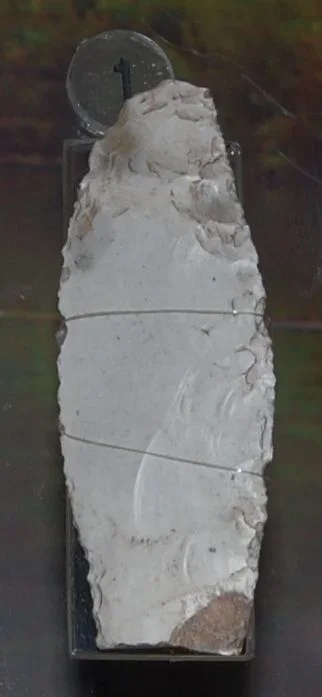 Creswell Crags Visitor Centre and Museum
Leaf-Point Flint Tool
This leaf-shaped flint point from Creswell is now kept at the Derby Museum and Art Gallery. Points of this kind mark some of the earliest modern humans in Britain. Examples came out of both Robin Hood Cave and Pin Hole Cave. They belong to a tool-making tradition with a long name, Lincombian-Ranisian-Jerzmanowician, usually shortened to LRJ. Those tools are likely more than thirty-six thousand years old, which makes them among the oldest evidence for modern humans in the country. Shaping a point like this took a practiced hand, thinning a flint flake from both faces until it tapered to a leaf form. A human-worked antler from Pin Hole has been dated to around thirty-seven thousand years ago, from the same early chapter. The gorge, it seems, drew modern humans in from the very beginning of their story in Britain.
Andy Mabbett · CC BY 3.0
03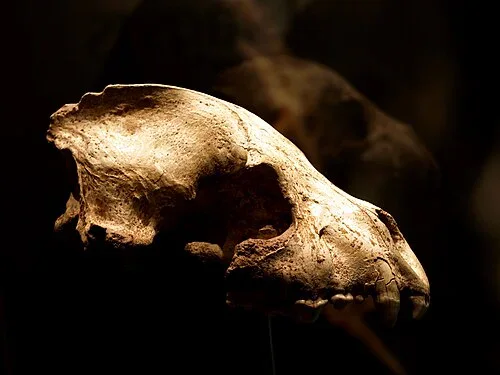 Creswell Crags Visitor Centre and Museum
Cave Hyena Skull
This skull belonged to a cave hyena, one of the Ice Age animals that shared the gorge with its human visitors. Remains of these hyenas have been found in Robin Hood Cave, along with wolves, woolly mammoth and reindeer. The hyenas were cave users in their own right, denning in the same shelters the people would later occupy. Brown bears and wild horse passed through the caves as well. Life here was not only about the great beasts, though. Bones of mountain hare in the cave carry the marks of human butchery, evidence of small-game hunting alongside everything else.
Listen in the appDave from Nottingham, England · CC BY 2.0
04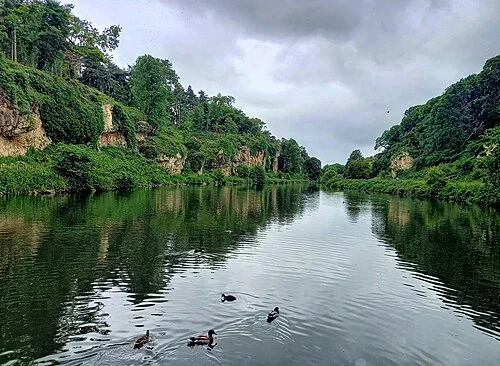 The Limestone Gorge Trail
The Limestone Gorge
The gorge itself is the reason any of this happened. Water and ice worked on a band of Permian magnesium limestone over hundreds of thousands of years, carving this narrow, enclosed ravine. Its cliffs opened into a string of deep caves, dry and sheltered, many facing the valley floor. That shelter is what drew animals, and then people, here again and again. Today a pond lies along its floor, with ducks and reflected trees. Because the caves kept their undisturbed layers of sediment, the record of everything that happened here survived intact, layer upon layer.
Listen in the appDonnchadh H · CC BY 2.0
05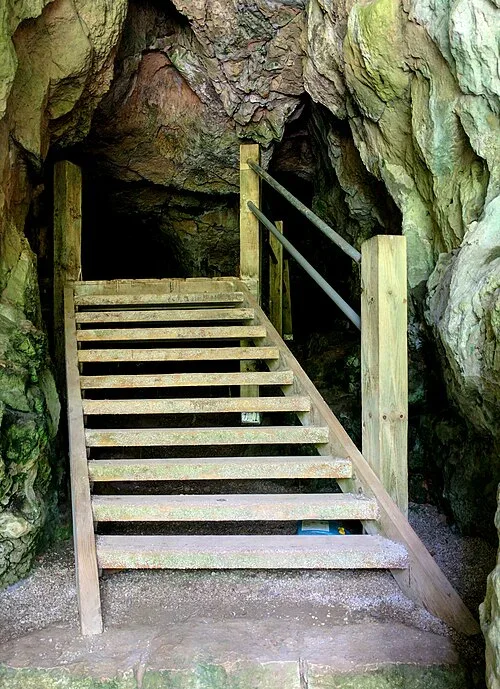 Robin Hood Cave
 Entrance
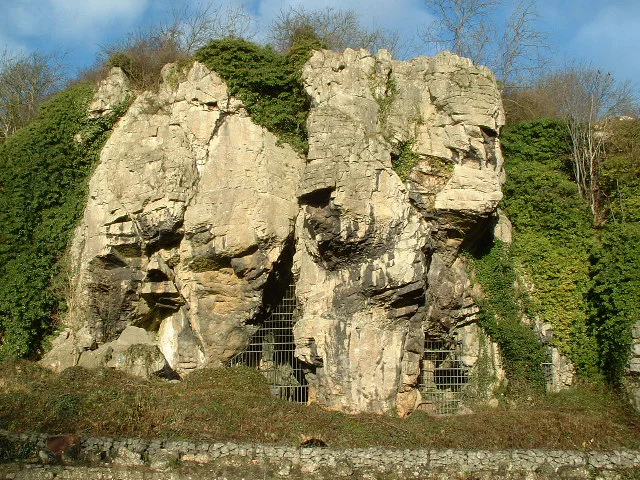
Robin Hood Cave is the largest in the gorge, and the heart of its Neanderthal story. Every major cave here shows occupation in the late Middle Palaeolithic, but Robin Hood shows it most strongly of all. Their toolkits were practical and local: scrapers, choppers and bifacial tools, struck mainly from quartzite pebbles gathered from the bunter beds of the region. The wooden steps climb to the mouth of the cave, where those generations of occupants left their layers behind. The cave's layers run from just before the Last Glacial Period right through to historical times.
Listen in the appPhoto: Enchufla Con Clave · CC BY-SA 4.0
06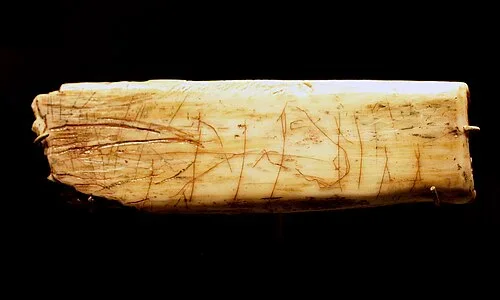 Robin Hood Cave
The Ochre Horse
On the twenty-ninth of June 1876, excavators reached the back of the western chamber in Robin Hood Cave and found a bone engraved with a horse's head. It has been known ever since as the Ochre Horse. In 2003 it was estimated to be between eleven and thirteen thousand years old. It is the only piece of Ice Age portable art showing an animal ever found in Britain. The original is now kept in the British Museum in London, and the museum here shows a replica. Also in 1876, in the same cave, a canine tooth of the sabre-toothed cat Homotherium came to light, one of only a handful known from Britain. Some suggest people may have carried that tooth into the cave themselves. Digging at the gorge has continued, on and off, since that summer of 1876.
Listen in the appDave from Nottingham, England · CC BY 2.0
07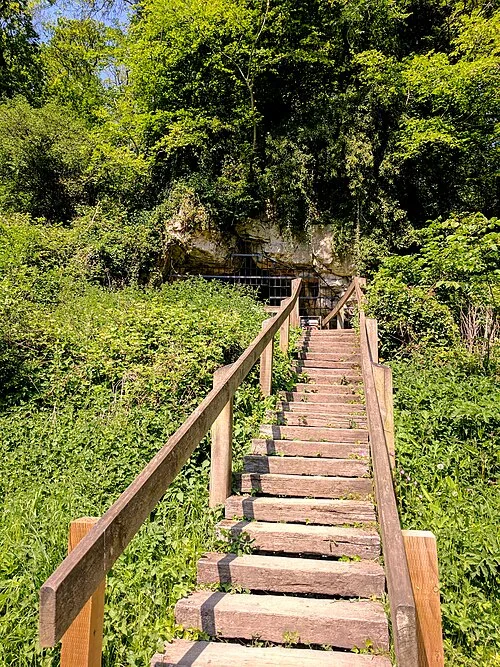 Mother Grundy's Parlour
Mother Grundy's Parlour holds the gorge's deepest layers. In deposits dating to the Last Interglacial, a warm stretch beginning about one hundred and thirty thousand years ago, Britain had a temperate, forested landscape much like today's. People were probably absent from the country altogether in that period. The animals were not. Remains of hippopotamus and the extinct narrow-nosed rhinoceros came from those warm-climate layers in this cave. The Parlour also produced numerous flint tools and split bones from later times. People were still using it into the Mesolithic, long after the Ice Age had ended.
Listen in the appPhoto: Enchufla Con Clave · CC BY-SA 4.0
08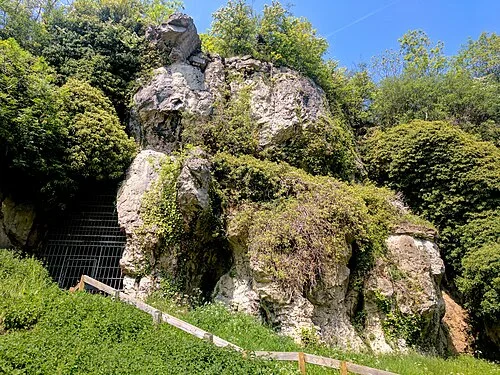 Pin Hole Cave
This is Pin Hole Cave, one of the caves where the story picks up again. When the harshest cold of the Last Glacial Maximum emptied Britain of people, the gorge fell silent. Magdalenian groups returned around sixteen to fifteen thousand years ago, and their stone tools here are distinctive enough to carry a name of their own: the Creswellian, named after this site. Tools of the same style have turned up in sediments of the same period as far away as Kents Cavern in Devon. The caves of this gorge stack the whole sequence, from the Neanderthal Mousterian through the Gravettian of early modern humans to the Creswellian on top. Few places give an entire culture its name. This one did.
Listen in the appPhoto: Enchufla Con Clave · CC BY-SA 4.0
09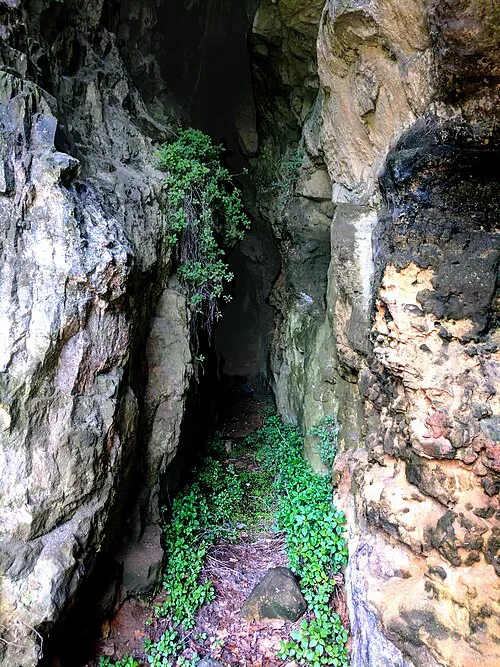 Pin Hole Cave
The Narrow Fissure of Pin Hole
Pin Hole is not a spacious chamber but a narrow slot, a fissure splitting the cliff with rock walls close on either side. From that tight passage came two of the gorge's most famous finds. One is the Pinhole Cave Man, a human figure engraved on bone, discovered in the 1920s and among the rare images of a person from the Ice Age. It is now kept in the British Museum in London. The other is an ivory pin, its surface etched with lines. The cave also held animals absent from Robin Hood Cave, among them cave lions and the giant Irish elk. Its bestiary, like its narrow entrance, is all its own.
Listen in the appPhoto: Enchufla Con Clave · CC BY-SA 4.0
10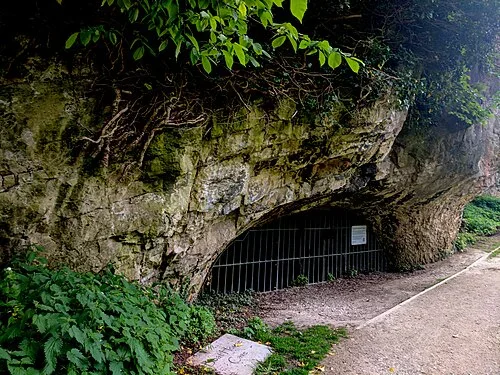 Church Hole and Boat House Caves
Boat House Cave and the Protected Gorge
The iron grille across the mouth of Boat House Cave is there on purpose. Creswell Crags has been a Site of Special Scientific Interest since 1981, and the gorge is also a scheduled monument. The grilles keep the cave floors undisturbed, protecting intact sediment sequences and the unexamined archaeology inside them. Recognition has been pursued on the international stage as well. Creswell first sought World Heritage Site status in 1986 and was unsuccessful. It was added to the United Kingdom's tentative list in 2012, the step before formal nomination, and taken off that list in 2023.
Listen in the appPhoto: Enchufla Con Clave · CC BY-SA 4.0
- 11
Church Hole Cave
The 2003 discovery of more than eighty Ice Age engravings, the northernmost cave art in Europe.
Creswell Crags
Frequently asked questions
How much does the guide cost?
Free app download. Listed guide price: $0.99. Guide price shown in the app. Audio guide only. Venue admission is separate.
Can I listen without internet?
Yes. Download the guide’s audio, images, and maps in the app before your visit. Your downloaded content is then available offline.
Can I listen in my language?
This audio guide is available in 15 languages, including English.
Do I need to follow a schedule?
No. This is a self-guided experience. Choose your stops, pause whenever you like, and return to a story at your own pace.
At your own pace
Explore Creswell Crags.
Download Stanza, then search for “Creswell Crags”.
Free app download · Guide price shown in the app
Keep exploring
Nearby audio guides
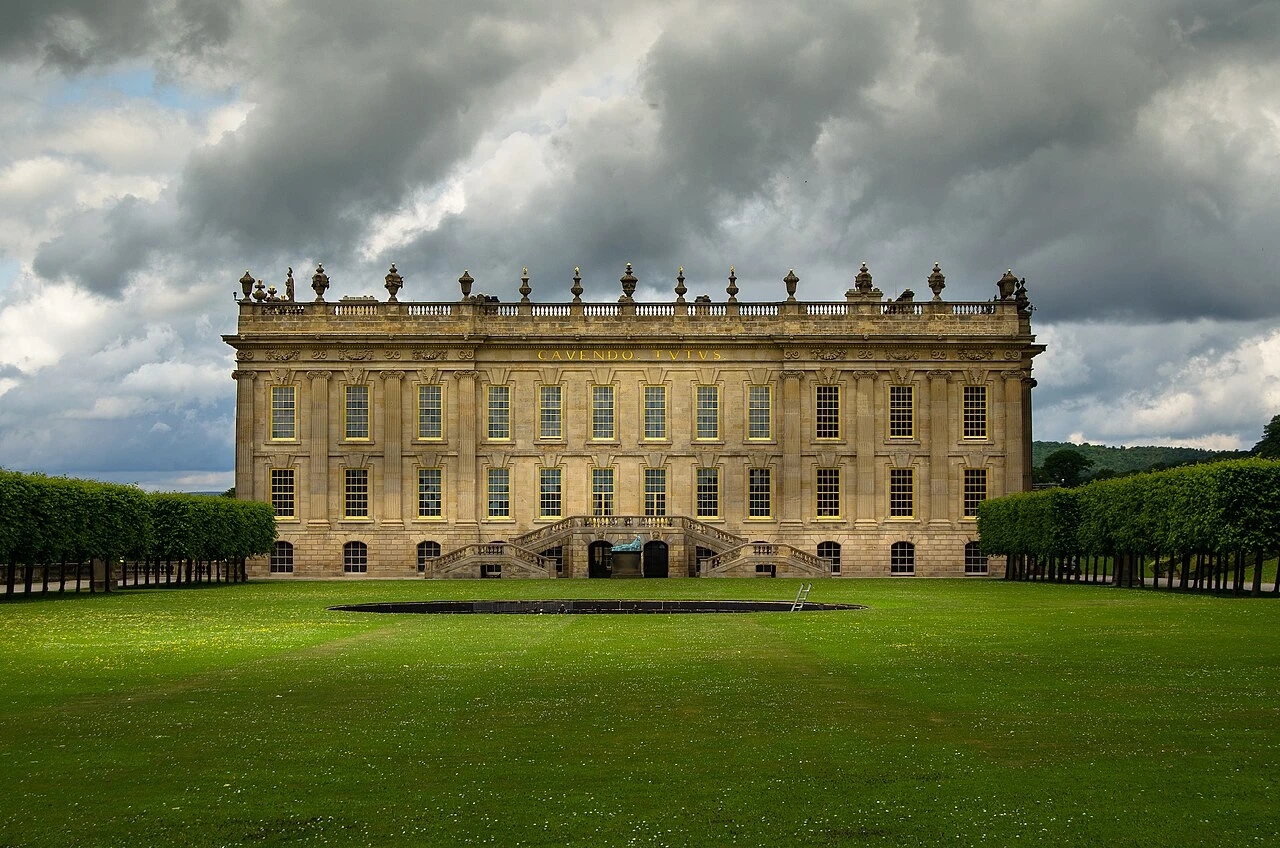
Derbyshire Dales · 28 km
Chatsworth House
Content & sources
Photo: Rprof · CC BY-SA 3.0
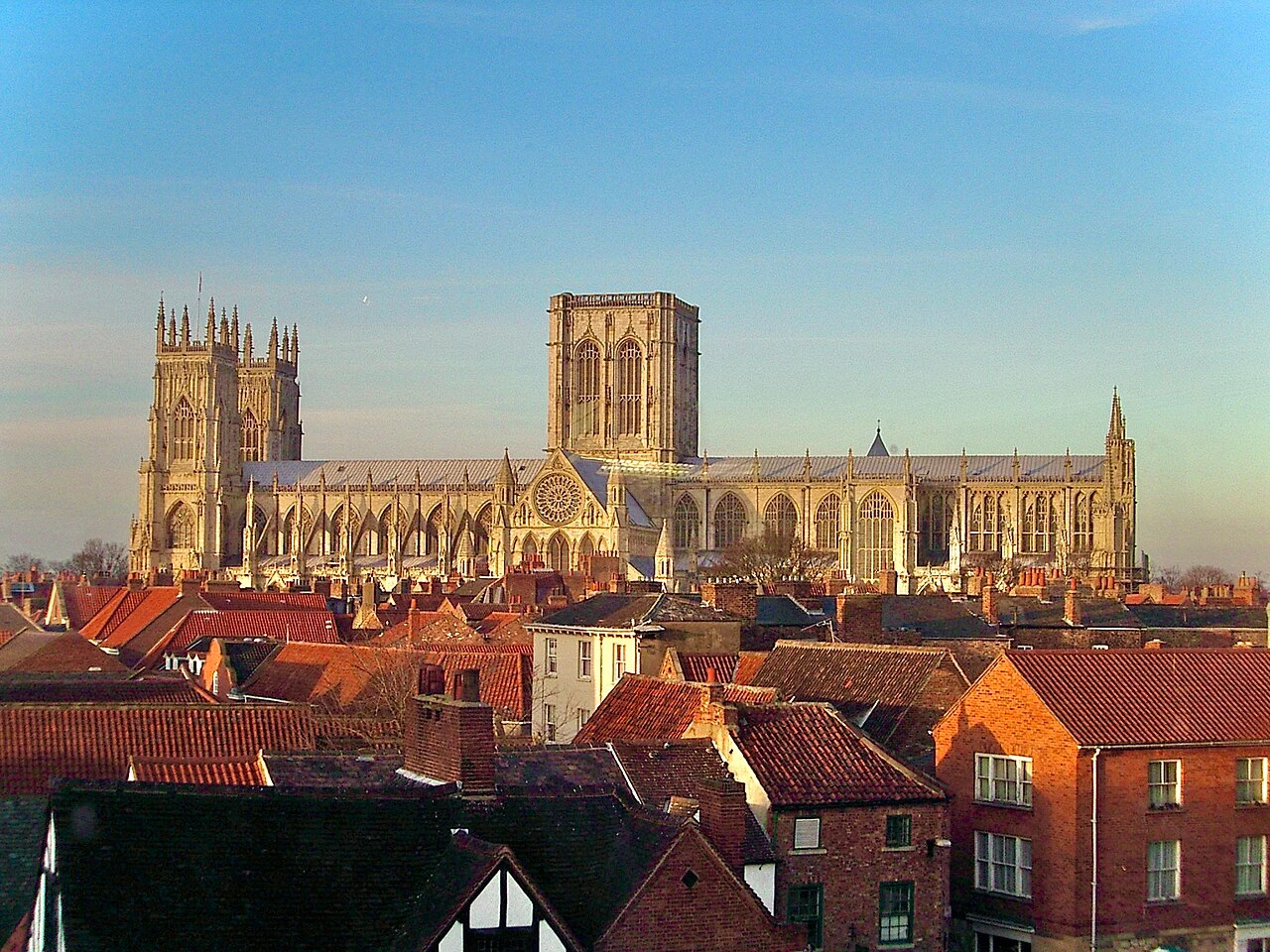
York · 78 km
York Minster
Content & sources
MatzeTrier · CC BY-SA 3.0
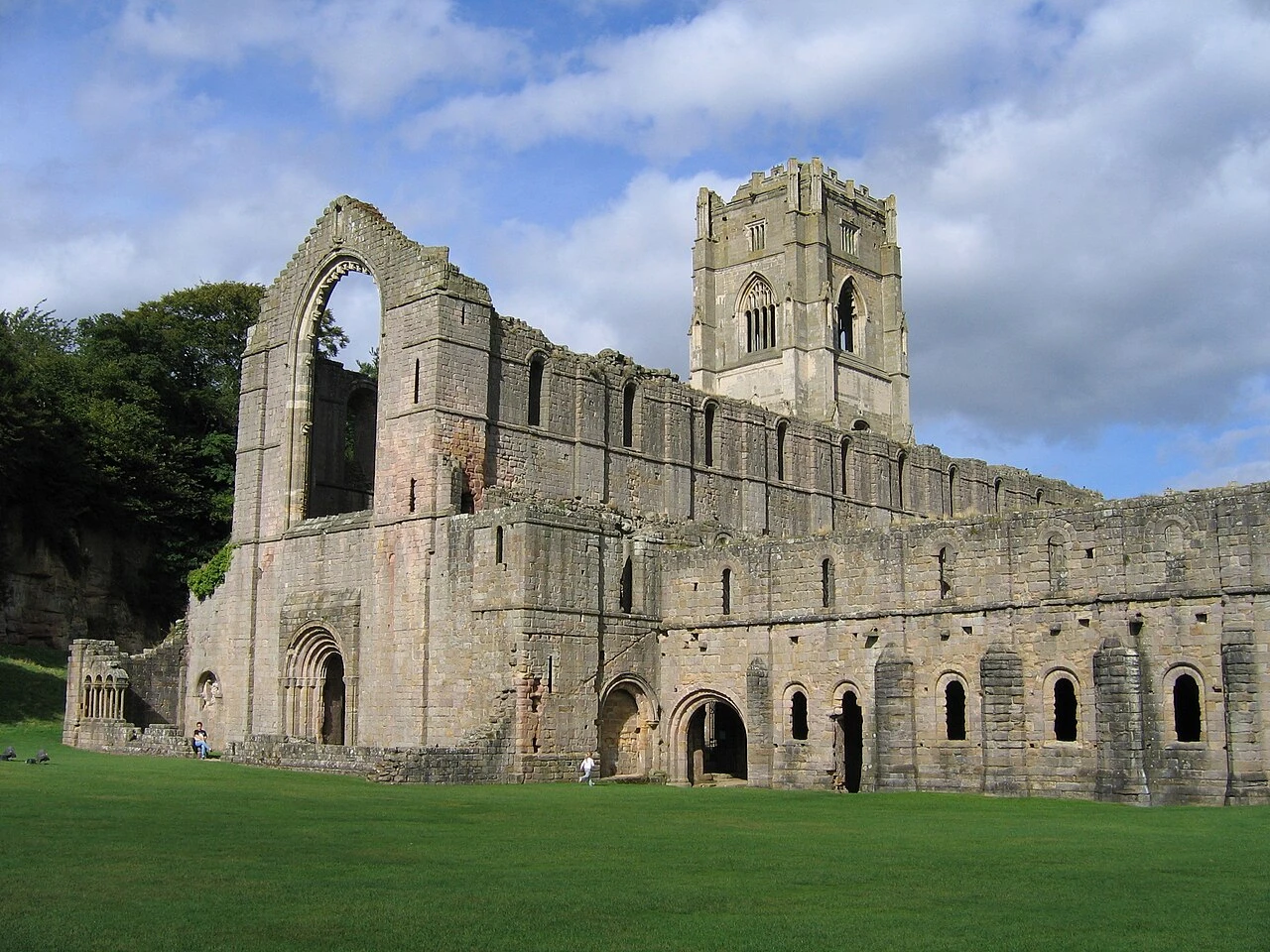
Ripon · 98 km
Fountains Abbey
Content & sources
User:Klaus with K · CC BY-SA 3.0
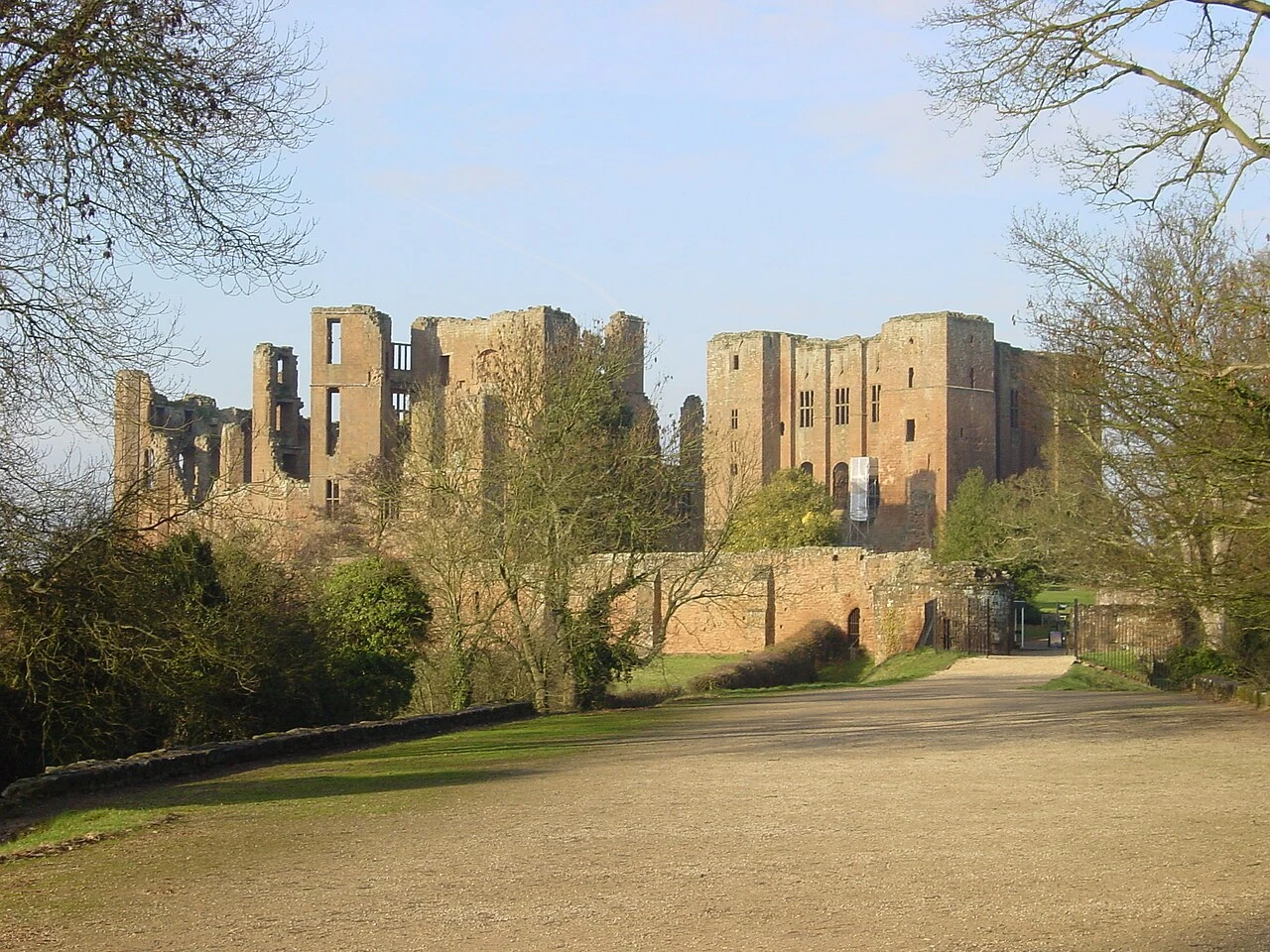
Kenilworth · 105 km
Kenilworth Castle
Content & sources
Photo: Jdforrester · CC BY 1.0