Languages
15Fountains Abbey Audio Guide
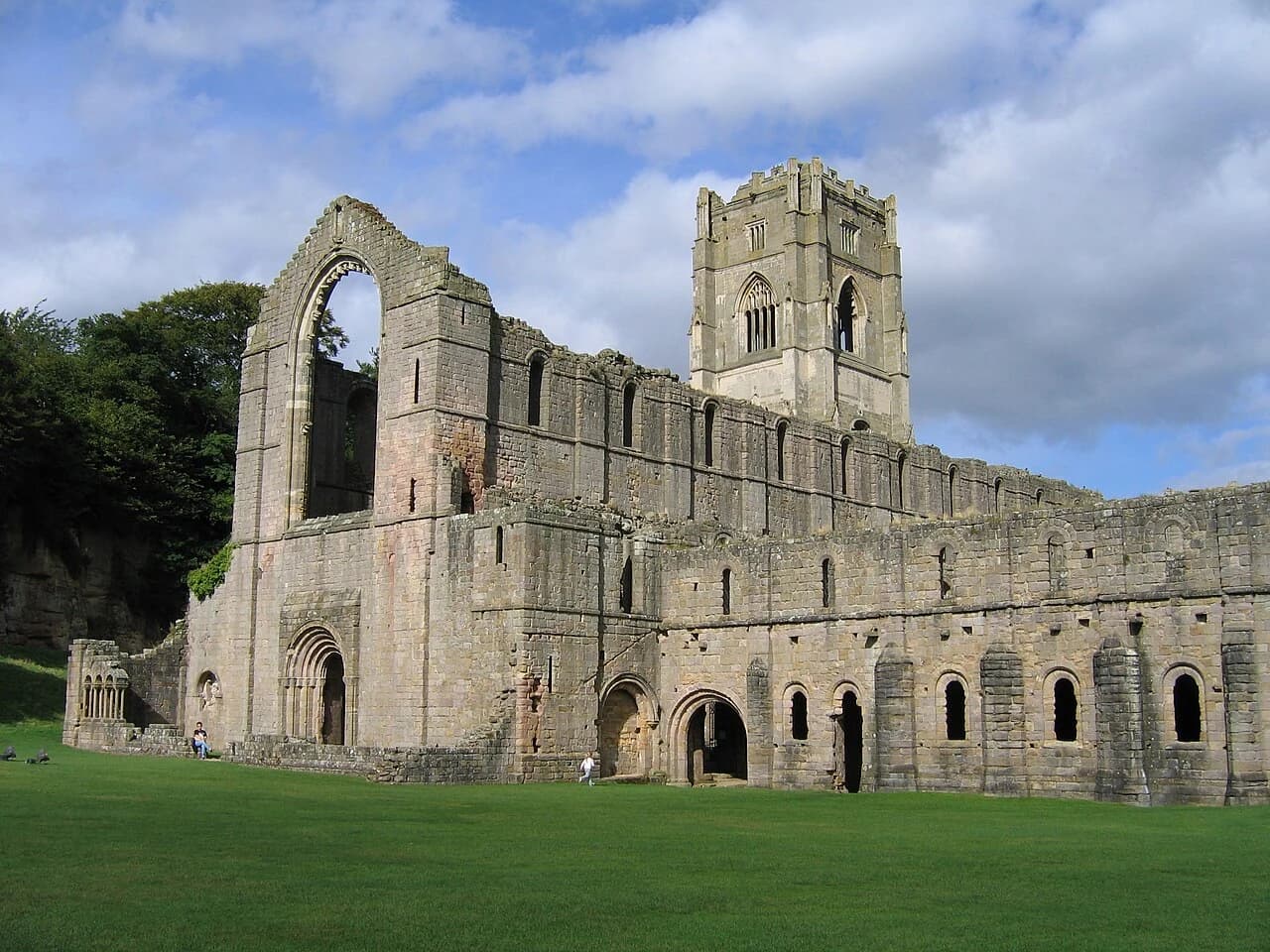
Fountains Abbey is a landmark in Ripon, United Kingdom. Explore it with Stanza's GPS-triggered offline audio guide — available in 15 languages.
Quick Facts
34
Stops
15
Languages
100%
Offline
📍 Ripon, United Kingdom · 54.1097°N, -1.5814°E
About Fountains Abbey
Fountains Abbey is a ruined Cistercian abbey located in North Yorkshire, England. It is one of the largest and best-preserved monastic ruins in England.
Fountains Abbey is also known as Fountains Cistercian Abbey.
This self-guided audio tour features 34 narrated stops organized across 9 sections. As a abbey, Fountains Abbey offers a unique cultural experience in the heart of Ripon, United Kingdom.
The Stanza audio guide is available in 15 languages and works entirely offline — download the complete tour including audio narration, maps, and images before your visit. As you walk through Fountains Abbey, GPS-triggered narration plays automatically at each point of interest.
Last updated:
What you will hear
The Abbey Mill
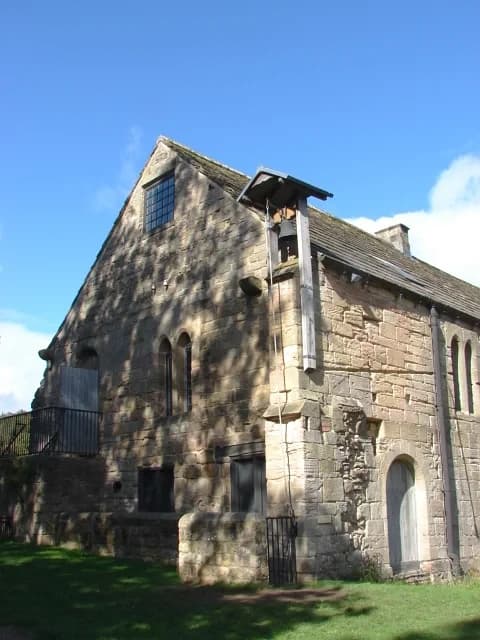
Visit the best-preserved Cistercian corn mill in the UK, a testament to the monks' industrial prowess.
The Mill Bell Tower
The small turret perched atop the roof was a vital tool for managing the community's time. In a world without modern timekeeping, the sound of bells dictated every aspect of life at Fountains. While the Great Tower's bells called the monks to prayer, the bell here at the mill governed the pace of labor. It signaled when shifts began, when it was time to eat, and when work ended for the day. Notice the heavy masonry of the building below the turret; the thick stone walls were built to withstand the constant vibrations and damp environment of a working watermill. The architecture is functional and robust, reflecting the Cistercian emphasis on simplicity and utility. Even in this industrial setting, the presence of the bell turret connected physical labor back to the spiritual discipline of the monastery. Each strike of the bell reminded the workers that their efforts were part of a larger, divinely ordered schedule. The weathered stone of the turret stands as a quiet reminder of a time when the entire valley moved in unison to the tolling of bronze.
Huby's Tower
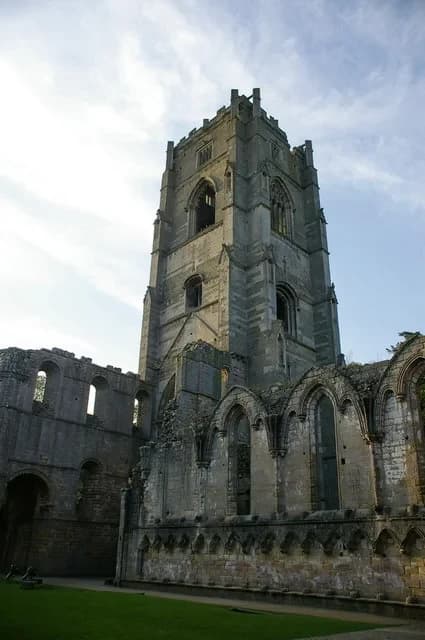
Look up at the 160-foot tower, a late-medieval addition that signaled the abbey's wealth before its fall.
Huby's Tower
Direct your gaze upward to the magnificent structure known as Huby’s Tower. Standing at approximately 160 feet, or 49 meters tall, it is a late and highly significant addition to the abbey, built in the early 16th century by Abbot Marmaduke Huby. Interestingly, Cistercian rules originally forbade the construction of tall, decorative towers, as they were seen as a sign of pride. However, by Huby's time, those rules had relaxed, and he commissioned this tower to demonstrate the abbey's continued wealth and influence. It was a defiant act of architectural ambition, intended to show that Fountains was still the most important monastic house in the North. Ironically, this grand tower was completed just a few decades before the abbey was dissolved by the crown. The intricate stone carvings and multiple stages of windows reflect the Perpendicular Gothic style, characterized by strong vertical lines. Even today, as a ruin, the tower dominates the valley, serving as a landmark that can be seen from miles away. It stands as a silent witness to the final chapter of monastic glory before the world changed forever.
The Chapter House
The administrative center where monks met daily to discuss business and confess faults.
Medieval Mason Marks
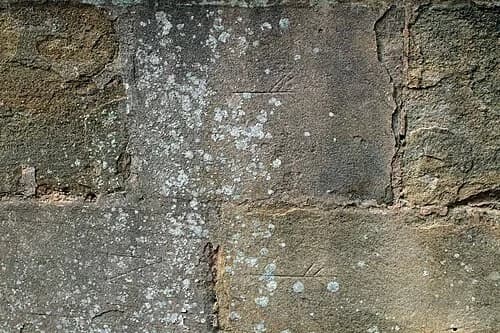
These faint markings, known as mason marks, provide a rare and direct human connection to the thousands of anonymous laborers who constructed Fountains Abbey. Each geometric shape—a cross, an arrow, or a simple star—was the personal 'signature' of an individual stonemason. Because these craftsmen were often paid by the piece, they carved their unique mark into each stone they finished so the master mason could track their work and ensure they were paid correctly at the end of the week. While the names of these men have been lost to time, their marks remain etched into the fabric of the building, serving as a permanent record of their skill and sweat. You can find them scattered throughout the ruins, often hidden in corners or high up on the walls. They remind us that this massive spiritual monument wasn't just built by divine inspiration, but by the hands of ordinary workers who spent years painstakingly shaping these limestone blocks. It is a humble detail that bridges the centuries, bringing us face-to-face with the people whose physical effort created the grandeur that surrounds you today.
The Refectory and Warming House
Discover the domestic side of monastic life, including the massive communal dining hall.
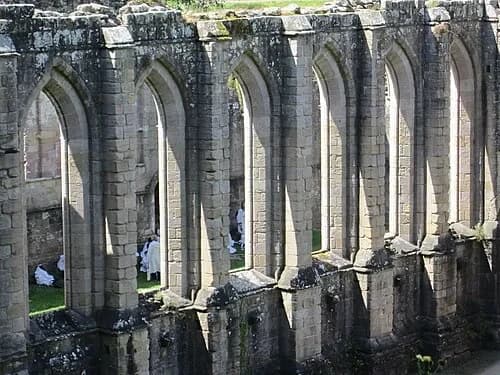
The Refectory Windows
This grand space was the Refectory, or dining hall. At its peak, a community of about fifty-two choir monks would gather here once or twice a day to eat. Following the strict Rule of Saint Benedict, the monks did not speak during their meals; they communicated their needs using a complex system of hand signals. While they ate their simple rations of bread, vegetables, and ale, one brother would stand in a raised stone pulpit, which you can see built into the wall. From there, he would read aloud from religious texts or the lives of the saints, ensuring that even during physical nourishment, the monks remained focused on their spiritual duties. The tall, narrow windows provided the necessary light for reading while maintaining the somber, disciplined atmosphere of the room. The height of the ceiling and the quality of the stonework show that even a common activity like eating was treated with great importance and dignity. Imagine the sound of fifty men eating in total silence, with only the distant voice of the reader echoing through this vast hall. It was a daily exercise in communal discipline.
The Infirmary and the River Skell
The abbey's hospital and the engineering marvels that tamed the river.
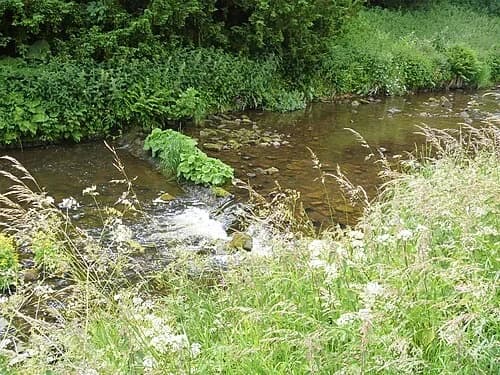
The River Skell
Water was the fundamental element that allowed Fountains Abbey to thrive, and the River Skell provided it in abundance. The Cistercian monks were master hydraulic engineers, carefully diverting and harnessing this flow to serve multiple purposes across the seventy-acre precinct. It was far more than a scenic feature; the river was the lifeblood of the monastery’s industrial and domestic success. It powered the great corn mill, provided fresh water for the kitchens, and flushed the advanced medieval sanitation systems. By integrating the river so deeply into their layout, the monks created a self-sufficient commercial powerhouse. This mastery of the local geography was central to their economic success, turning a rugged valley into a productive estate. The Skell effectively acted as an automated labor force, allowing the monks to process grain and manage waste with remarkable efficiency for the twelfth century. Today, the river still follows much of the course determined by those medieval laborers, flowing steadily past the ruins it once sustained and into the ornamental ponds of the later Georgian estate.
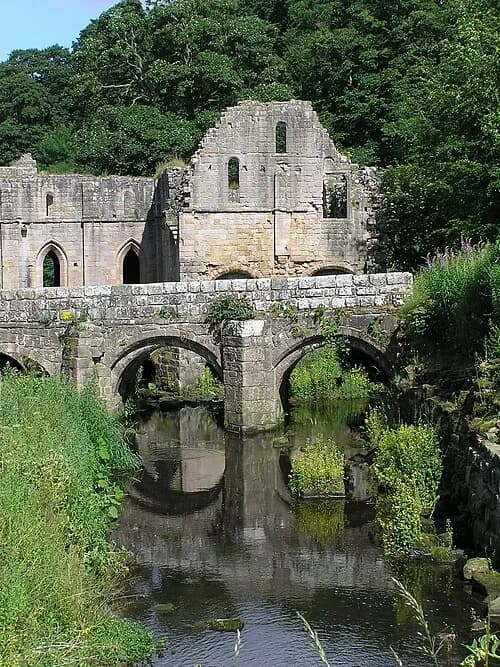
The Infirmary Hall Bridge
These stone arches standing over the river once supported the floor of the great infirmary, a structure of immense scale for its time. Measuring approximately 171 feet by 69 feet, this hall was among the largest medieval hospitals in the country. Its placement directly over the River Skell was a deliberate choice, utilizing the moving water to help with waste disposal and cooling. This building was the dedicated space for the elderly, the chronically ill, and monks recovering from surgery or regular bloodletting. Inside, the atmosphere was quite different from the rest of the abbey; the strict Cistercian rules were often relaxed here to allow for meat consumption and a quieter environment for healing. The sheer size of the ruins reflects the community's commitment to caring for its vulnerable members. You can still see the stout stone piers that braved the river's current to hold up the massive hall above. It represents a sophisticated understanding of communal care and engineering, where the health of the individual was supported by the wealth and skill of the entire monastic order.
The Surprise View
The famous viewpoint where the medieval ruins become a dramatic focal point for the Georgian garden.
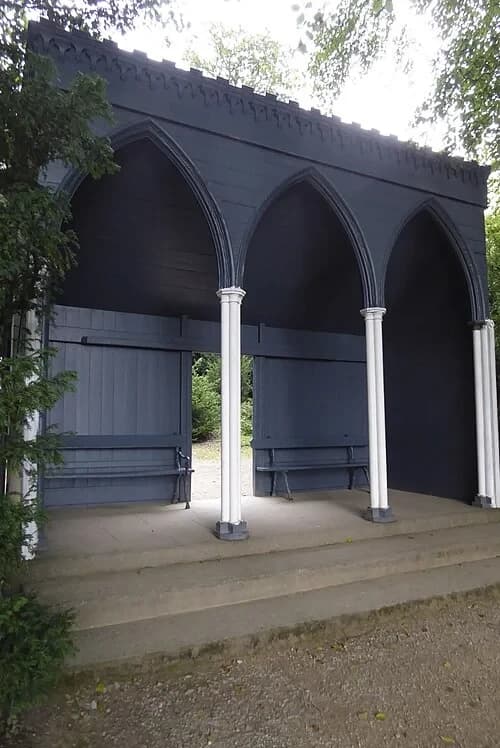
Anne Boleyn's Seat
Perched above the valley, this Gothic-style structure is a classic example of an eighteenth-century 'folly.' While the name 'Anne Boleyn’s Seat' suggests a tragic historical connection, it was actually a bit of romantic marketing invented by the estate owners long after the queen’s time. There is no evidence she ever visited this spot. Instead, it was built as a purposeful stage for visitors to pause and admire the spectacular landscape of the water gardens and the abbey ruins below. These small buildings were essential features of grand landscape gardens, providing shelter and a thematic architectural flourish to the walking route. The use of pointed arches and decorative stone reflects the Georgian fascination with the medieval past, even as they enjoyed the modern comforts of their own era. Standing here, it is clear why the Aislabie family chose this location. It offers a broad perspective on the entire valley, allowing the viewer to appreciate the vast scale of their landscape project. It remains a quiet, shaded spot that invites you to look out over the intersection of medieval history and Georgian artifice.
The Moon and Crescent Ponds
The formal heart of the water gardens, featuring classical statues and geometric pools.

The Wrestlers
This sculpture, known as 'The Wrestlers,' captures a moment of intense physical struggle. It was created in 1730 by the artist Andrew Carpenter and is a fine example of the lead statuary popular in high-end Georgian gardens. The figures are modeled after a famous classical Greek original, and their dynamic, twisting poses offer a sharp contrast to the still, geometric ponds nearby. For the Aislabie family, owning such a piece was a major status symbol; it demonstrated their wealth and their appreciation for the refined arts of the ancient world. Lead was a preferred material for outdoor statues because it could be cast into intricate shapes and stood up well to the damp English climate. Notice the tension in the limbs and the detailed musculature, which brings a sense of energy to this corner of the park. These statues were more than just decorations; they were meant to prompt conversation and reflection among the guests who strolled through the grounds. Positioned on its sturdy stone base, the statue remains a permanent participant in the formal theater of the water gardens.
The Temple of Piety
A classical garden pavilion dedicated to the virtue of familial love, reflected in the still waters.
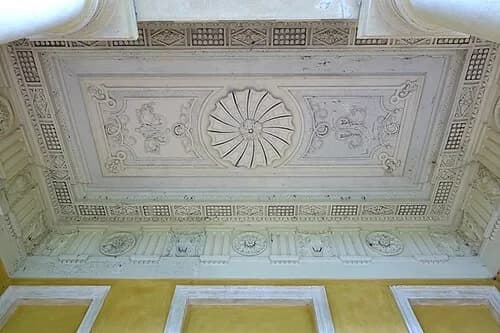
Plasterwork of the Temple Ceiling
The exterior of the Temple of Piety is undeniably grand, but the interior reveals an even finer level of craftsmanship. Looking up at the ceiling, you can see intricate plaster moldings that were common in the highest-quality eighteenth-century buildings. The design features traditional classical motifs, including central rosettes and crisp geometric borders that echo the symmetry of the garden outside. This level of ornamentation was a direct display of the Aislabie family's immense wealth and their sophisticated taste. It took skilled artisans to create such detailed work, which would have been brightly painted or gilded in its prime. The ceiling serves to complete the temple's transformation from a mere garden shelter into a fully realized piece of classical architecture. It is a reminder that every detail of this estate, from the massive ponds to the smallest decorative molding, was carefully considered to impress. Even in this secluded spot, the owners ensured that the standards of Georgian elegance were upheld. The preservation of these delicate patterns allows us to appreciate the private, interior world that existed alongside the public spectacle of the grand landscape garden.
The Octagon Tower and Banqueting House
Two of the most prominent architectural 'follies' designed to entertain and impress visitors.
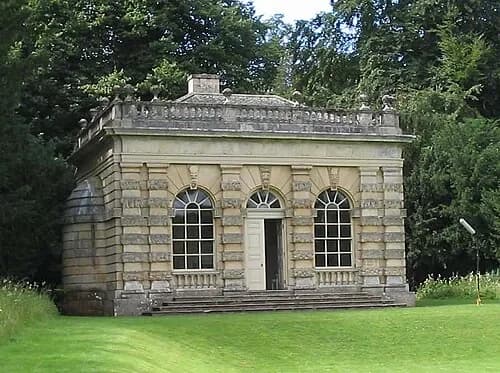
The Banqueting House
The Banqueting House was designed as a sophisticated venue for entertaining the most important guests of the Studley Royal estate. Unlike the grand halls of the main house, this building was intended for intimate, light meals and musical performances in a more relaxed, garden setting. The architecture is notable for its rusticated stone walls—a style that uses heavily textured blocks to create a rugged, yet refined, appearance. On the front, three large arched windows were designed to flood the interior with light and provide clear views back across the formal water gardens and toward the abbey. Imagine the sound of strings or woodwinds drifting from this building across the ponds during a summer evening. It was a space dedicated entirely to pleasure and social display, embodying the leisured lifestyle of the eighteenth-century elite. Its location ensured that guests remained immersed in the beauty of the landscape even while they dined. The Banqueting House stands as a testament to the way the Aislabie family used their land not just for farming or industry, but as a theater for the sophisticated social rituals of their time.
Want to hear the rest?
Download the Stanza app to unlock all 34 stops and full GPS-guided navigation.
Frequently Asked Questions
How long does the Fountains Abbey audio tour take?
The Fountains Abbey audio guide includes 34 narrated stops. Most visitors spend 45 minutes to 1.5 hours exploring the complete tour, though you can listen at your own pace and skip or revisit any stop.
Is the Fountains Abbey audio guide available in my language?
Stanza supports 15 languages: English, Spanish, French, German, Italian, Portuguese, Russian, Japanese, Chinese, Korean, Arabic, Hindi, Polish, Dutch, Hebrew. Check the guide in the app to confirm the languages currently available for this tour.
Can I use the audio guide offline at Fountains Abbey?
Yes! Download the complete Fountains Abbey tour — including all audio, maps, and images — before your visit. The Stanza app works completely offline, so you don't need WiFi or mobile data at the venue.
How much does the Fountains Abbey audio guide cost?
The Stanza app is free to download. The current listed price for the Fountains Abbey audio guide is $1.99; app-store region and currency may affect the final price.
How do I use the Stanza audio guide at Fountains Abbey?
Download the free Stanza app, search for "Fountains Abbey", and download the tour. When you arrive at the venue, the app uses GPS to detect your location and automatically plays the relevant narration as you move between points of interest — completely hands-free.
What makes the Stanza audio guide different from other Fountains Abbey tours?
Stanza offers GPS-triggered narration that plays automatically as you walk through Fountains Abbey — no need to manually select stops. The tour is available in 15 languages, works fully offline, and includes 34 expertly narrated stops with images and historical context.
What other audio guides are available near Fountains Abbey?
Stanza offers multiple audio guides in Ripon, United Kingdom and nearby areas. After downloading the app, browse the map to discover all available tours near Fountains Abbey. Each guide can be downloaded for offline use.